
RODRIGO DUTERTE
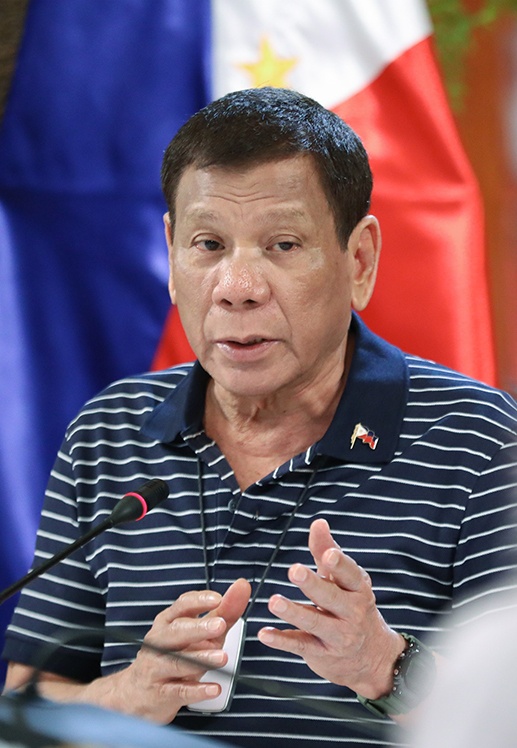
Rodrigo Duterte (born 1945) is a Filipino lawyer and politician who served as the 16th president of the Philippines from 2016 to 2022. Prior to the presidency, he was long-time mayor of Davao City and became the first president from Mindanao, as well as the oldest person to assume the office at age 71. During his presidency, he chaired Partido Demokratiko Pilipino–Lakas ng Bayan (PDP–Laban), the ruling party at the time. [Source: Wikipedia]
Duterte moved to Davao in childhood, where his father, Vicente Duterte, served as provincial governor. He earned a political science degree from Lyceum of the Philippines University in 1968 and a law degree from San Beda University in 1972. After working as a lawyer and prosecutor in Davao City, he became vice mayor and later mayor following the People Power Revolution. Over seven terms spanning more than 22 years, he cultivated a reputation for transforming Davao from a crime-plagued city into one seen as orderly and business-friendly.
Duterte’s leadership style has been described as populist and nationalist, and his presidency was marked by controversy over human rights, particularly allegations of extrajudicial killings linked to his anti-drug campaign and earlier tenure in Davao. In 2018, the International Criminal Court opened a preliminary examination into the drug war, prompting the Philippines’ withdrawal from the court. In March 2025, Duterte was arrested and transferred to The Hague to face ICC proceedings, becoming the first Philippine president to appear before an international tribunal. Despite this, he won reelection as Davao City mayor in 2025 but was later disqualified for failing to take his oath within the period required under Philippine law.
"Beyond Will & Power" by Earl Parreno is a biography about Duterte. “A Thousand Cuts” by director Ramona Diaz is a documentary about him and his battles with journalist Maria Ressa.
RELATED ARTICLES:
DUTERTE, MAYOR OF DAVAO: THE FRIENDLY LAW-AND-ORDER CITY WITH DEATH SQUADS factsanddetails.com
RODRIGO DUTERTE AS PRESIDENT factsanddetails.com
DUTERTE’S WAR ON DRUGS: DEATHS, TACTICS, RHETORIC, FAILURES factsanddetails.com
VICTIMS AND KILLERS IN DUTERTE’S WAR ON DRUGS: factsanddetails.com
ILLEGAL DRUG USE IN THE PHILIPPINES: MAINLY CANNABIS AND METH factsanddetails.com
ILLEGAL DRUG TRADE IN THE PHILIPPINES factsanddetails.com
POLITICAL COMEBACK OF THE MARCOSES factsanddetails.com
FERDINAND “BONGBONG” MARCOS factsanddetails.com
2022 PHILIPPINE ELECTIONS factsanddetails.com
GLORIA MACAPAGAL-ARROYO — PHILIPPINES PRESIDENT 2001-2010 — HER LIFE, CAREER AND PROBLEMS factsanddetails.com
MAGUINDANAO MASSACRE: EVENTS, KILLERS, POLITICS, TRIAL factsanddetails.com
BENIGNO AQUINO III — PHILIPPINES PRESIDENT 2010-201 — HIS LIFE, CAREER, ANTI-CORRUPTION FIGHT factsanddetails.com
Duterte’s Early Life
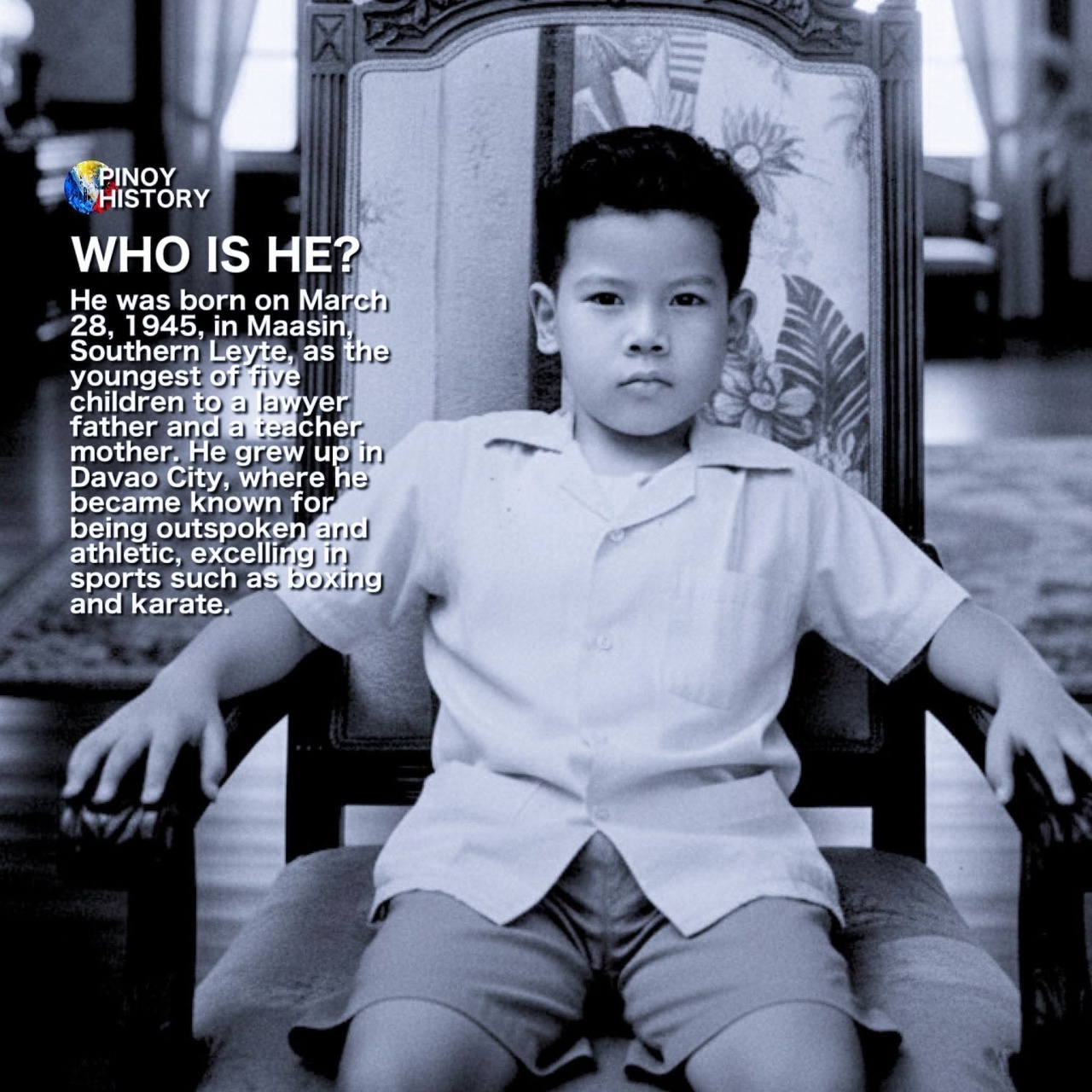
The second of five children, Rodrigo Duterte was born on March 28, 1945, in Maasin, Leyte, an island north of Mindanao. During his early childhood, Duterte’s family lived in Maasin and Danao before moving to Mindanao. Although they relocated in 1948, they traveled back and forth to the Visayas until finally settling in the Davao Region in 1950.
Adrian Chen wrote in The New Yorker: After the Second World War, Filipinos flocked to sparsely populated areas of Mindanao, seeking economic opportunity. In 1950, the Duterte family moved to Davao, a frontier town of plantations and indigenous tribes that was settled by American military veterans. Property disputes were common, and Duterte says that his family’s first home was demolished because it was built on someone else’s land. [Source: Adrian Chen, The New Yorker, November 21, 2016]
Duterte’s younger sister, Jocellyn works as a real-estate agent. She described a childhood dominated by her father’s political career. Starting at 8 A.M., the house would fill with locals seeking jobs or favors. “You’re always in the public eye,” she said. “You hardly had any freedom.” Rodrigo Duterte was fascinated by his family’s bodyguards. “He was always in the company of policemen, military men,” Jocellyn said. As a teen-ager, he was fond of motorcycles, girls, and guns, interests that distracted him from his studies. It took him seven years to finish high school.
Duterte’s mother, Soledad, was a strict disciplinarian who often punished Rodrigo by making him kneel on the ground and pray for hours at a time. When she got fed up with his staying out late, she locked him out of the house. He started sleeping in a shed. Vicente Duterte was briefly a member of Marcos’s cabinet—Duterte has said that his father was a supporter “until the end”—while Soledad was a leading anti-Marcos protester in Davao. Duterte, at least initially, took after his mother.
Duterte’s Family
Rodrigo Duterte's father, Vicente Duterte (1911–1968), was a Cebuano lawyer who later entered politics, while his mother, Soledad Gonzales Roa (1916–2012), was a schoolteacher and civic leader from Cabadbaran, Agusan, of Chinese and Spanish mestizo heritage. Duterte has said that his grandfather was Chinese and came from Xiamen in Fujian, China. Rodrigo's four siblings are Eleanor, Emmanuel, Jocelyn, and Benjamin (“Bong”). Duterte has been married twice. He has four children. He is officially single, but has claimed to have several girlfriends.[Source: Wikipedia +, BBC]
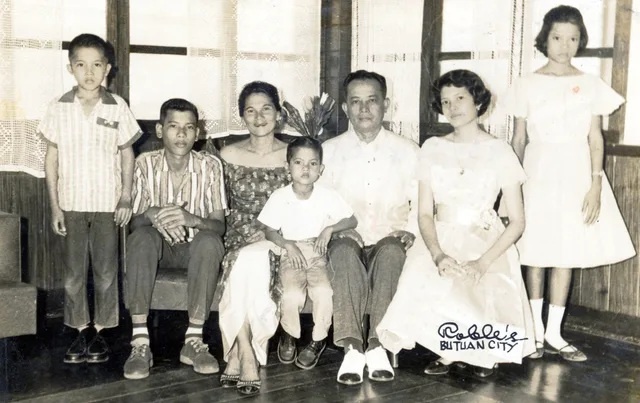
Chen wrote: Duterte comes from a provincial political dynasty. His father, Vicente, was related to Ramon Durano, a notorious warlord in the central province of Cebu. In 1959, Vicente became governor of the province of Davao, and today the Dutertes are the dominant political force in the region. Duterte’s daughter, Sara, is the mayor of Davao City, and his eldest son, Paolo, is vice-mayor. His younger brother, Benjamin, has served as a city councilman. [Source: Adrian Chen, The New Yorker, November 21, 2016]
The Dutertes remain popular and one of the most well-connected and powerful clans in the south. Vincent Duterte er served as mayor of Danao, Cebu, and later as governor of the then-undivided Davao province. Politics ran in the extended family: his cousin Ronald Duterte was mayor of Cebu City from 1983 to 1986, while Ronald’s father, Ramon Duterte, also previously held the same office. The Dutertes have ties to prominent Cebu-based political clans such as the Durano and Almendras families, and through his mother’s side, to the Roa clan of Leyte. Vicente Duterte practiced law privately before fully entering politics, while Soledad worked as a teacher until 1952. Duterte has often described his mother as a strong anti-Marcos activist, which influenced his complex and sometimes conflicting views about former president Ferdinand Marcos. +
Duterte Wives, Women and Children
Duterte was married at least once and had a common law wife. He has four children. He is officially single, but has claimed to have several girlfriends. According to CNN: Duterte has also come under fire for his flirty behavior on the campaign trail, as well as the large number of women in his life. Duterte has three children from his first marriage to Elizabeth Zimmerman, a partnership that has since been annulled, and currently has a common-law wife, Cielito Avancena, who is better known as Honeylet. Far from monogamous, he has publicly admitted to having as many as three girlfriends. Duterte's relationships and his public behavior — he has faced allegations of sexual harassment, after photos of him kissing women seated on his lap during the election campaign started circulating locally — have led many to question his attitude to women. He has told people that at age 71 he needs Viagra to perform with his mistresses because he is separated from his wife. [Source: Georgia McCafferty, for CNN, April 21, 2016]
“If you want me to become your president, you should know everything about me,” Duterte told his supporters. “They are telling me that they heard I am a womanizer. That is very true.” Duterte said he had more than one wife and there was another woman he’d gotten pregnant on a trip to the United States, adding he had two other girlfriends on the side. “I do not support them with the money from the government,” he promised, “but from my own money and allowances.” His mistresses, he said, weren’t expensive. “When I was young, I could do overnight [stays at a hotel], which is more expensive.” Today, though, he “could do a short time only . . . After one erection, that’s it. No more.” [Source: Mark Oliver, Listverse, October 9, 2016]

Duterte’s four children who have become prominent figures in Philippine politics and public life. Three of them—Sara, Paolo, and Sebastian—have held high-ranking positions in Davao City and in the national government. His eldest daughter, Sara Duterte, also known as Inday Sara, is a lawyer and seasoned politician. She previously served as mayor of Davao City and was elected as the 15th Vice President of the Philippines in 2022. Known for her firm leadership style, she has emerged as one of the country’s most influential political figures.
His eldest son, Paolo Duterte, commonly called Pulong, has also built a political career. He has served as barangay captain and vice mayor of Davao City before becoming the representative of Davao City’s 1st District in the House of Representatives. Another son, Sebastian Duterte, known as Baste, is the youngest son from Duterte’s annulled marriage to Elizabeth Zimmerman. Before entering politics, he was known as a businessman, musician, and surfer. He later served as Davao City Vice Mayor and eventually became acting and then permanent mayor. Often described as having a “bad boy” image, he is generally seen as more laid-back compared to his siblings.
Sara, Paolo, and Sebastian are children from Duterte’s annulled marriage to Elizabeth Zimmerman. The youngest child, Veronica Duterte, also known as Kitty, was born to Duterte and his partner Honeylet Avanceña. Unlike her older siblings, she is not involved in politics but is widely recognized as a social media personality.
Duterte’s Education and Early Career
Rodrigo Duterte attended Laboon Elementary School in Maasin for a year before transferring to Santa Ana Elementary School in Davao City, where he completed his primary education in 1956. For high school, he studied at the High School Department of Holy Cross College of Digos (now Cor Jesu College) in Digos, Davao province. He had previously been expelled from two schools, including the high school of Ateneo de Davao University, due to misconduct. In 1968, he earned a Bachelor of Arts degree in political science from Lyceum of the Philippines University in Manila. [Source: Wikipedia]
In 1972, Duterte completed his law degree at San Beda College of Law and passed the bar examination that same year. He later taught at the Philippine National Police Academy and became involved with the Nationalist Alliance for Justice, Freedom and Democracy. Duterte subsequently entered public service in Davao City, first serving as officer-in-charge vice mayor, where he helped evacuees from remote areas and worked to secure the release of soldiers captured by the New People’s Army. He then built his career in the City Prosecution Office, serving as special counsel from 1977 to 1979, fourth assistant city prosecutor from 1979 to 1981, third assistant city prosecutor from 1981 to 1983, and second assistant city prosecutor from 1983 to 1986.
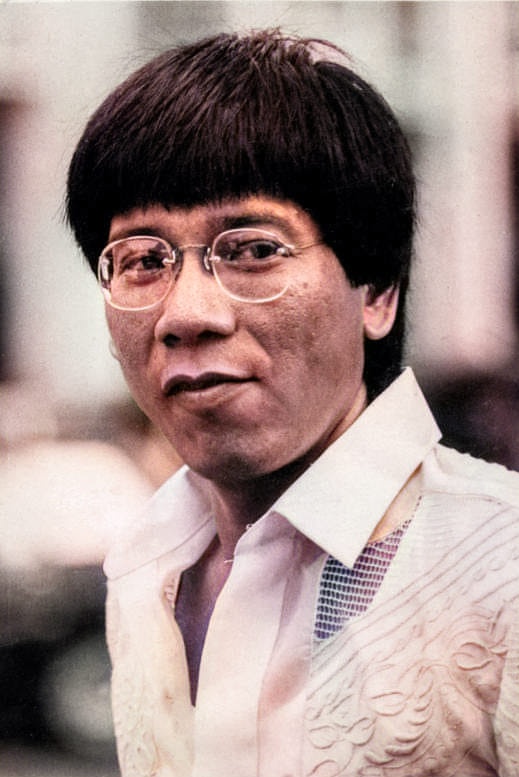
Adrian Chen wrote in The New Yorker: At the Lyceum of the Philippines University, in Manila, Duterte studied under José Maria Sison, the now exiled founder of the Communist Party of the Philippines. Sison saw U.S. imperialism and the Philippines’ feudal state as inextricably linked: in exchange for maintaining access to military bases during the Vietnam War, the U.S. allowed Marcos to continue to oppress the Philippines. Duterte joined Sison’s “nationalist youth” organization, Kabataang Makabayan, and he still occasionally speaks fondly of Sison. Soon after Duterte was elected President, Sison released a recording of a Skype call in which an unusually deferential Duterte chats with him about ongoing peace talks with the New People’s Army. [Source: Adrian Chen, The New Yorker, November 21, 2016]
Duterte attended law school in Manila. According to a story he recounted with glee the intervention of sympathetic professors, allowed Duterte to graduate after he shot the student in the leg. Despite his leftist tendencies, he took a job as a prosecutor in Davao. The Marcos regime had jailed tens of thousands of prisoners, and one of Duterte’s tasks was prosecuting political subversives. According to Luz Ilagan, a former congresswoman from Davao, Duterte was able to help dissidents without compromising his position in the government. Ilagan’s husband, Laurente Ilagan, was one of three human-rights attorneys in Davao who were arrested in the nineteen-eighties. Duterte made sure that he wasn’t abused, and they later became friends.“The best he could do was to take custody of the activists, to insure that they would be physically safe,” Ilagan told me.
Duterte’s Sexual Abuse Claims and Shooting of Another Student
Rodrigo Duterte has stated that he was sexually abused by a priest when he was 14. He told the press, “It was a case of fondling—you know what—he did during confession.” After being urged by the Catholic Bishops' Conference of the Philippines (CBCP) and officials of Ateneo de Davao University to identify the priest and pursue legal action, Duterte named him as Mark Falvey, who died in 1975. When questioned about why he did not report the alleged abuse at the time, Duterte said he was too young and felt intimidated by authorities. He also explained that he never disclosed the incident after being expelled and transferring to another high school, nor did he tell his family.
The Philippine Jesuits confirmed that, according to U.S. press reports, the Society of Jesus agreed in May 2007 to a tentative US$16 million settlement involving allegations that Falvey sexually abused at least nine children in Los Angeles between 1959 and 1975. The accusations surfaced in 2002, but Falvey was never criminally charged. In May 2008, the Roman Catholic Diocese of Sacramento paid $100,000 to settle a separate claim involving Arthur Falvey, Mark’s brother, who was accused of rape and molestation. Reports did not clearly state whether Mark Falvey had been assigned to the Jesuit-run Ateneo de Davao.
During an April 2016 campaign rally, Duterte said that while studying at San Beda College of Law, he shot a fellow student who had mocked him and other students for their Visayan background. He recounted that shortly before graduation, he shot the student in a hallway after being insulted again. Duterte later told reporters that the student survived but declined to provide additional details about the incident.
In an interview aired on 24 Oras and published by GMA News Online on April 22, 2016, retired labor arbiter Arthur Amansec, a former classmate of Duterte at San Beda, gave a different account. Amansec said Duterte and another student, Octavio Goco, were handling a gun at the time, which he claimed was not unusual in the 1970s. According to Amansec, the firearm discharged accidentally, and the bullet struck and lodged in the school’s wooden floor. He added that Duterte and Goco remained friends until Goco later died in the United States.
Duterte’s Character and Personality
Adrian Chen wrote in The New Yorker: Duterte thinks out loud, in long, rambling monologues, laced with inscrutable jokes and wild exaggeration. His manner is central to his populist image, but it inevitably leads to misunderstanding, even among Filipino journalists. Ernie Abella, Duterte’s spokesman, recently pleaded with the Presidential press corps to use its “creative imagination” when interpreting Duterte’s comments. [Source: Adrian Chen, The New Yorker, November 21, 2016]
According to his sister Jocellyn, Duterte was peculiarly sensitive. “He could look at a dead body or a gunshot victim, but when he sees his own blood he faints,” she said. She recalled one day when he was playing with a gun and his finger got caught in the slide. “We were all looking at it, and it looked all right,” she said. “We saw him getting paler by the minute.” Jocellyn told me that when Duterte feels threatened he lashes out. He is also hypersensitive to criticism. “Duterte’s weakness is, really, he’s a tough guy,” Greco Belgica, a Filipino politician and an ally of Duterte’s, said. “You do not talk down to a tough guy. He’ll snap.”
A psychiatric evaluation of Duterte, filed during divorce proceedings with his then-wife in 1998, said his personality was characterized by "gross indifference, insensitivity and self-centeredness," "grandiose sense of self-entitlement and manipulative behaviors" and "pervasive tendency to demean, humiliate others and violate their rights and feelings." [Source: Ishaan Tharoor, Washington Post, April 20, 2016]
After becoming president Duterte said he didn’t plan on turning up to work until 1:00pm each day. "I don’t care about your 8:00a.m.-5:00 p.m. schedule," Duterte said Saturday at a news conference in Davao City that began around midnight. "I’ll be sleeping by then. How can you make me work?” Duterte also said that he planned to commute from Davao at least some of the time. “My bed is here. My room is here. My home is my comfort zone. It’s important that I can sleep and take a shower comfortably,” he said. [Source: Norman P Aquino and Andreo Calonzo, Bloomberg, May 30, 2016]
Duterte was known for his busy schedule and lengthy speeches often several times a day after becoming President at age 71. After he was not seen in public for a week there were concerns about his health. At that time he said he was experiencing some fatigue but that was all. [Source: Reuters, June 27, 2017]
Duterte’s Public Image
Duterte’s speech announcing his candidacy for the presidency in 2016 was an hour-long ramble, according to The New Yorker, "offering an account of personally killing kidnappers and setting their car on fire, pledging to kill “up to a hundred thousand criminals” when elected, and boasting of his womanizing. “If I can love a hundred million and one, I can love four women at the same time,” he said. Duterte’s language confirmed his image as a political outsider. “It was something people could relate to,” Pia Ranada, a reporter at the news Web site Rappler, told me. She said that Duterte came across as “the father who would protect you but also the masa leader, the populist leader who will look after your interests, who cares for you because he’s one of you.” [Source: Adrian Chen, The New Yorker, November 21, 2016]
On the campaign trail, Duterte typically wore a plaid shirt and jeans. On the rare occasions when he wore a barong, a formal embroidered shirt, he rolled up the sleeves. He spoke not in the English-Tagalog mixture of the capital but in a creole of English, Tagalog, and Bisaya known as Davao Tagalog. At the beginning of the campaign, he ushered Ranada and another journalist into his house in Davao and showed off the traditional tabò, or water dipper, that he used to bathe. His one extravagance was a large collection of shoes, which he joked was the only thing that he had in common with Imelda Marcos.
But soon after it became apparent from election results that Duterte would be president of the Philippines, he drove at 3:00am to a cemetery to visit his parents' tomb. Associated Press reported: And there he wept. Gone was the rough, tough-talking, vulgar personality that voters had seen in stump speeches and campaign rallies. At that moment it was an emotional son seeking blessings from his parents for a monumental task ahead. He had come a long way from being the problem child who often got into trouble and even was kicked out of school. "Help me Mom," he said in the local Bisaya dialect as he sobbed quietly in front of his parent's tomb. "I'm just a nobody." [Source: Bullit Marquez and Jim Gomez, Associated Press, May 10, 2016]
The display of emotion, caught on video and photos and posted on Facebook, showed a starkly different man from the Duterte that critics have dubbed a "butcher" for advocating the murder of drug traffickers and other criminals. His campaign manager says the brash image, the obscene jokes, the outlandish promises that became the Duterte persona were a strategy to attract voters. "That's part of the game. You know in Philippine elections you have to act like a comic, you have to find ways for you be in the headlines," Peter Lavina, Duterte's spokesman, speech writer and campaign manager told The Associated Press. "The jester, the jokes. That's part of the game."
Outrageous Things Duterte Has Said
Duterte was nicknamed the "The Punisher" and "Duterte Harry". He once vowed to kill 100,000 criminals, telling them: "I'll dump all of you into Manila Bay, and fatten all the fish there." Later, he said, “I will retire with the reputation of Idi Amin. I am not afraid of human rights. I will not allow my country to go to the dogs.” [Source: Mark Oliver, Listverse, October 9, 2016, BBC, May 10, 2016]
Duterte compared himself to Hitler and called President Obama a “son of a whore.” When people started to protest against Duterte’s plans to massacre thousands of drug users, Duterte said in a speech: “Hitler massacred three million Jews... Now, there are three million drug addicts . . . I’d be happy to slaughter them.”
Duterte cursed Pope Francis, who had caused a huge traffic jam during a visit to Manila in 2015 that trapped the mayor for hours. When stunned bishops reacted, Duterte apologized but then condemned the church, criticizing claims that priests can give absolution for sin. He promised to limit families to three children to go against Catholic doctrines, and declared, “The most hypocritical institution is the Catholic Church.” Despite his profanity, repeated calls to violence and the Philippines being 80 percent Catholic, Duterte was one the Philippines’s most popular leaders ever. [Source: Listverse, Jonathan Kaiman, Los Angeles Times, October 10, 2016]
According to the Los Angeles Times: Although Duterte’s fiery campaign rhetoric has made Donald Trump look tame, it has only seemed to boost his popularity. At a rally last month, he joked about an Australian missionary who was raped and killed during a prison break in 1989. "I was angry because she was raped, that's one thing," he said, "But she was so beautiful, the mayor should have been first. What a waste.” American and Australian ambassadors rebuked Duterte for the comment; he told them to “shut up.” Duterte's daughter later told the press that she had been a rape victim herself. Duterte responded later by rolling his eyes when the press brought it up. “She is a drama queen,” Duterte said, brushing off his daughter’s rape as a made-up story. “She can’t be raped. She carries a gun.” [Source: Listverse, Jonathan Kaiman and Sunshine de Leon, Los Angeles Times, May 8, 2016]
According to Fortune: “Silly” and crazy” are two of the adjectives Duterte flung at “Women Against Duterte,” a consortium of activist groups that filed a complaint with the election commission for his rape comment. “Go to hell,” he told them. “Nobody can touch my mouth.” Like Donald Trump, Duterte may have found a winning formula for a campaign that resonates on a mass level. What many want is someone whose actions speak still louder than his words. [Source: Donald Kirk, Forbes, April 24, 2016]
In October 2016 Duterte promised to stop swearing, saying God spoke to him on a flight from Japan warning him the plane would crash if he kept using bad language. "I was looking at the skies while I was coming over here ... everybody was asleep, snoring, but a voice said that, 'you know, if you don't stop epithets, I will bring this plane down now'," Duterte said at a news conference arrival in his home city of Davao. "And I said, 'who is this?' So, of course, it's God. OK. So, I promise God ... not to express slang, cuss words and everything."
Image Sources: Wikimedia Commons
Text Sources: Wikipedia, New York Times, Washington Post, Los Angeles Times, Smithsonian magazine, Encyclopedia.com, Times of London, Library of Congress, The Conversation, The New Yorker, Time, BBC, CNN, Reuters, Associated Press, AFP, Lonely Planet Guides, Google AI, The Guardian and various websites, books and other publications.
Last updated February 2026