
ITACHI (JAPANESE WEASEL)

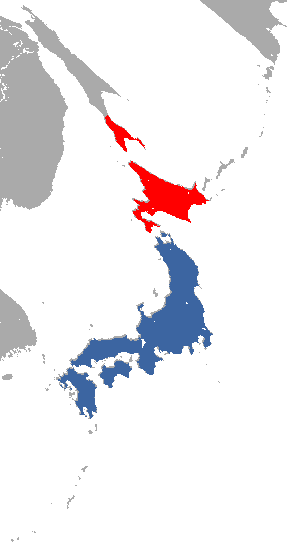
The “itachi” (Mustela itatsi), or Japanese weasel, is endemic to Honshu, Shikoku and Kyushu and has been introduced to other islands as a means of controlling the rodent populations there. A carnivore, it thrives in both the country where they often feed on snakes, frogs, crayfish and crabs from rice paddies, and in urban areas, where they feed on mice and large insects such as grasshoppers. Siberian weasel have been introduced to Japan and in some places are displacing Japanese natives.
Kevin Short wrote in the Daily Yomiuri: Once in a while a lucky observer in the Japanese countryside catches a fleeting glimpse of a small brown animal darting along an irrigation ditch. With a long, narrow tubular body and short legs, and able to run very fast and very low to the ground, this is an itachi, or Japanese weasel. As is the case with many Japanese mammals, the itachi's natural distribution includes Kyushu, Shikoku and Honshu but not Hokkaido. [Source: Kevin Short, April 5, 2012]
Out here in the rice paddy countryside of northern Chiba Prefecture, I most frequently spot weasels along the drainage canals that run through the center of the valleys. Here fish, frogs, crabs and crayfish are plentiful in and around the water, and rodents and small birds hide in the tall grasses that flourish on the banks. The Japanese itachi, however, also eats many fruits and berries available in the nearby fields and thickets, and in some areas may even be an important disperser for plant seeds.
The lifespan of itachi is similar to that of other mustelids (See Below). Clesely-related Siberian weasels has lived up to eight years in captivity. Longevity in the wild is highly dependent on food availability. The average lifespan is likely to be two to three years. A common misunderstanding among people is that itachi and Siberian weasels (Mustela sibirica) are the same species with different common names. Studies have show proven this to be false. These two species are distinguished from one another by specific body/tail ratios and unique genotypes. [Source: Eric VanNatta, Animal Diversity Web (ADW) /=]
See Separate Article: WEASELS factsanddetails.com
RELATED ARTICLES:
ANIMALS IN JAPAN: WILDLIFE, BIODIVERSITY, RESEARCH factsanddetails.com
ENDANGERED ANIMALS AND JAPAN: MAMMALS, BIRDS, SPECIES, PROTECTION, ILLEGAL WILDLIFE TRADE factsanddetails.com
EXTINCT ANIMALS IN JAPAN: WOLVES, BIRDS AND OTTERS factsanddetails.com
TANUKIS (JAPANESE RACCOON DOGS): CHARACTERISTICS, BEHAVIOR, FOLKLORE factsanddetails.com
IRIOMOTE CATS: CHARACTERISTICS, BEHAVIOR, CONSERVATION factsanddetails.com
JAPANESE BADGERS: CHARACTERISTICS, BEHAVIOR, FOLKLORE factsanddetails.com
SMALL MAMMALS IN JAPAN: SABLES, CUTE STOATS, MARTENS, SHREW MOLES factsanddetails.com
FLYING SQUIRRELS IN JAPAN: CHARACTERISTICS, BEHAVIOR, SPECIES, REPRODUCTION factsanddetails.com
JAPANESE SEROW: CHARACTERISTICS, BEHAVIOR. CONSERVATION factsanddetails.com
BEARS IN JAPAN: CHARACTERISTICS, BEHAVIOR, SPECIES, HUMANS factsanddetails.com
Mustelids
Itachi are mustelids (Mustelidae), a diverse family of carnivoran mammals, including weasels, badgers, otters, stoats, mink, sables, ermine, fishers, ferrets, polecats, martens, grisons, wolverines, hog badgers, honey badgers and ferret badgers. Mustelids, make up the largest family within Carnivora with about 66 to 70 species in eight or nine subfamilies and 22 genera. Skunks were considered a subfamily within Mustelidae, but recent molecular evidence has led their removal from the mustelid group. They are now recognized as a their own single family, Mephitidae. [Source: Wikipedia, Matt Wund, Animal Diversity Web (ADW) |=|]

itachi painted by Maruyama Okyo in 1760
Mustelids inhabit all continents except Australia and Antarctica, and do not live on Madagascar or oceanic islands. They are found in diverse terrestrial and aquatic habitats in temperate, tropical and polar environments — in tundra, taiga (boreal forest), conifer forests, temperate forests, deserts, dune areas, savanna, grasslands, steppe, chaparral forests, tropical and temperate rainforests, scrub forests, mountains, lakes, ponds, rivers, streams. coastal brackish water, wetlands such as marshes, swamps and bogs, suburban areas, farms, orchard and areas near rivers, estuaries and intertidal (littoral) zones.
Mustelids vary greatly in behavior. They are mainly carnivorous and exploit a wide diversity of both vertebrate and invertebrate prey, with different members specializing in certain kinds of prey. Most mustelids are adept hunters with some weasels able take prey much larger than themselves. Many species hunt in burrows and crevices; some species have evolved to become adept at climbing trees (such as martens) or swimming (such as otters and mink) in search of prey. Wolverines can crush bones as thick as the femur of a moose to get at the marrow, and have been seen attempting to drive bears away from their kills. Mustelids typically live between five and 20 years in the wild. |=|
See Separate Article: MUSTELIDS: CHARACTERISTICS, BEHAVIOR, REPRODUCTION, TYPES, SPECIES factsanddetails.com
Itachi Habitat and Where They Are Found
Itachi have historically been native to three of Japan’s four larger islands: Honshu, Kyushu, and Shikoku but not Hokkaido . Over the past century or so, they have been introduced to most other Japanese islands for the purpose of rodent control. The current range includes Hokkaido and the majority of the Ryukyu Islands. [Source: Eric VanNatta, Animal Diversity Web (ADW) /=]
Itachi are found in a wide variety of habitats in Japan: mountains, rice fields, forests, even urban areas. They prefer mountainous and forested areas near moving water. They do much of their hunting along streams, rivers and other water sources. They are often seen venture in grasslands or suburban areas. In the countryside they often move along irrigation ditches and rice paddy edges.
Itachi live in temperate areas with a climate similar to that of the U.S. and Europe. In the winter, in northern Japan, these slim-bodied mammals spend much of their time beneath the snow, where they sometimes chase small rodents in undergound of tunnels. After catching and eating such prey, Itachi often seek warmth in the prey’s nest. /=\
Itachi Characteristics and Diet
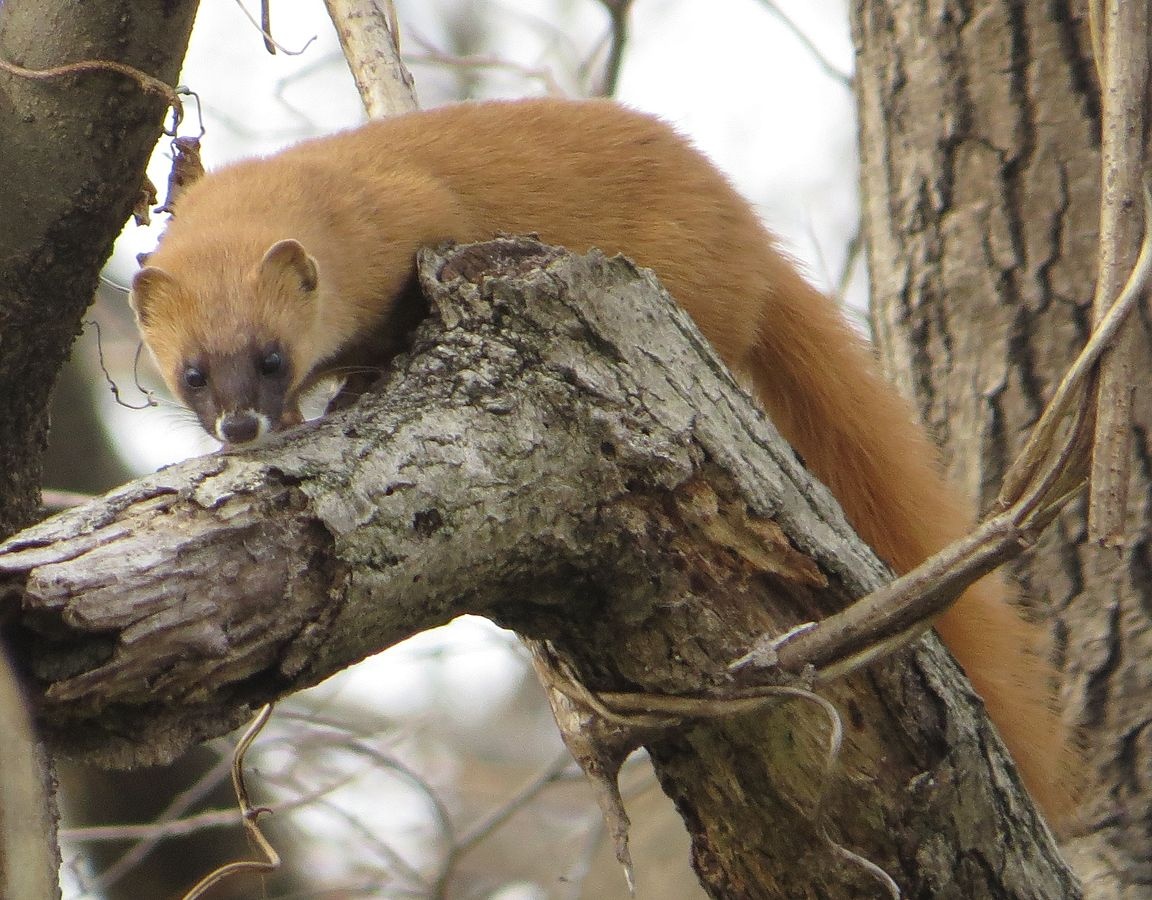
Itachi are reddish brown with some white and dark gray markings on their faces. They are very small animals but a large for weasels. They range in weight from 150 to 450 grams (5.29 to 15.86 ounces) and range in length from 40 to 52 centimeters (15.7 to 20.5 inches), including their tail which can reach 17 centimeters (6.7 inches). Despite their size, these weasels can be viscous predators, willing to take on prey much larger than themselves. There are stories of them bringing down hares twice their size. [Source: Kevin Short, April 5, 2012; Eric VanNatta, Animal Diversity Web (ADW) /=]
Itachi are endothermic (use their metabolism to generate heat and regulate body temperature independent of the temperatures around them) and warm-blooded (homoiothermic, have a constant body temperature, usually higher than the temperature of their surroundings). Sexual Dimorphism (differences between males and females) is present: Males are larger than females. The body of a male, excluding the tail is usually only slightly more than 30 centimeters (one foot). Females about 10 centimeter shorter, and in some areas weigh only one-third that of males.
As is the case with all weasels,itachi have a long, slender body with short legs and a stout neck and head. As winter approaches, in response to the shortening of daylight, weasels stop producing melanin and their coat turns white and becomes thicker. Although their body is well-suited for scurrying through tunnels and tight spaces, it is not very efficient for retaining heat and energy. Weasels must continually eat to overcome this. /=\
Itachi are primarily carnivores (eat meat or animal parts), feeding mostly on terrestrial vertebrates, but are also considered omnivores (eat a variety of things, including plants and animals).. Animal foods include birds, mammals, amphibians, reptiles, fish eggs, insects, worms and aquatic crustaceans. Among the plant foods they eat are fruit. As they live in a wide range of habitats, these weasels have a wide variety of prey. They prefer to catch live prey such as rodents, amphibians, reptiles and birds, and but are also known to raid nests and eat bird eggs and chicks. A common prey bird species is the Japanese bush warbler (Cettia diphone). When prey is scarce they resort to eating various fruits and berries. When food is abundant it is common for them to cache food and eat it later.
Itachi Behavior and Communication
Itachi are terricolous (live on the ground), diurnal (active during the daytime), nocturnal (active at night), crepuscular (active at dawn and dusk), motile (move around as opposed to being stationary) and sedentary (remain in the same area), solitary, territorial (defend an area within the home range). [Source: Eric VanNatta, Animal Diversity Web (ADW) /=]
Itachi tend to be solitary animals, except during the mating courtships, and when mothers are with young. They are very territorial and aggressively defend their home range, especially dominant males. All weasels put an an aggressive defense against threating animals, even one that are much larger than themselves. When attacked, cornered or frightened, weasels release a skunk-like scent to deter them. /=\
Itachi are adept hunters, who are known for chasing prey wherever they go: down tunnels, up trees, into water — hunting both during the day and at night. As a reult of this, itachi have a very high hunting success rate. is achieved through these abilities.
Itachi sense using vision, touch, sound and chemicals usually detected with smell and communicate with sound and chemicals known as musk. They leave scent marks produced by special anal glands and placed so others can smell and taste them. Weasels use scent to establish territorial boundaries. They do this by rubbing their glands over objects such as branches and stones. Scent marks provide information on age, social status, gender, health, and breeding status.
Itachi also emit a wide range of calls and sounds. According to Animal Diversity Web: Primary calls include a low intensity trill, chirp, bark, screech, and hiss. Trilling generally signifies comfort when a mother is with her young. Chirping is another content call when danger is not present. Barking, screeching, and hissing all indicate imminent danger. /=\
Itachi Mating, Reproduction and Offspring

Itachi are polygynous (males have more than one female as a mate at one time). They engage in seasonal breeding. They generally breed once a year, although second litters may occur in years with abundant food supplies. Mating occurs from early May to late June or into August in the case of a second litter. The number of offspring ranges from two to 12, with the average number being five.The gestation period ranges from 26 to 29 days. The age in which they are weaned ranges from eight to nine weeks. On average males females reach sexual or reproductive maturity at one year. [Source:Eric VanNatta, Animal Diversity Web (ADW) /=]
Eric VanNatta wrote in Animal Diversity Web: The mating process for itachi starts off with the male seeking out females by smelling and analyzing their scent marks. Once he tracks down a female, a mix of play and biting occurs from a few hours to several days. When the female is ready, she allows the male to bite her around the neck and pin her down. Copulation is brief, but may take place multiple times for each couple. Soon after, they go their own ways and likely never see each other again. /=\
Itachi are altricial. This means that young are born relatively underdeveloped and are unable to feed or care for themselves or move independently for a period of time after birth. Parental care is provided by females from conception to independence. Males leave females once mating is over. Female build nests in abandoned holes, cavities, or logs using grasses, feathers, and animal fur. After kits are born, their mother feeds them milk until their canines develop fully and they can consume flesh. Once old enough to move about, young weasels practice hunting skills through play behavior. Soon after, they tag along with their mother on hunting trips. Once they can hunt on their own, they’re considered independent and leave their mothers and seek their own territory. /=\
Itachi, Humans and Conservation
Although their populations may be slightly declining, itachi are not endangered and are fairly abundant in their range. On the International Union for Conservation of Nature (IUCN) Red List they are listed as a species of Least Concern. In CITES (Convention on International Trade in Endangered Species of Wild) they have no special status. Their mains threat are habitat loss due to residential and commercial development and the degradation of their habit due to logging. [Source: Eric VanNatta, Animal Diversity Web (ADW) /=]
In the past century or so itachi have been introduced to Hokkaido and many of Japan's small islands to kill rats that were damaging crops. They have also been trapped and used in the fur industry. Itachi occasionally prey on domestic birds, such as chickens and ducks. /=\
In November 2024, Associated Press posted a video about an itachi under title “Stolen shoe mystery solved at Japanese kindergarten when security camera catches weasel in the act” and the caption: Police thought a shoe thief was on the loose at a kindergarten in southwestern Japan, until a security camera caught the furry culprit in action. A weasel with a tiny shoe in its mouth was spotted on video footage after police installed three cameras in the school in the prefecture of Fukuoka. [Source Associated Press Videos, November 25, 2024]
Itachi Weasels and Japanese Folklore
Kevin Short wrote in the Daily Yomiuri: Like many Japanese animals, the itachi appears in various avatars. In addition to the simple living creature that hunts along the ditches, there are several superpowered yokai versions, known as Kama-itachi, or "sickle weasels." The tip of each Kama-itachi limb is fitted with a razor-sharp sickle, and the creatures move about in whirlwinds too fast to follow with the naked eye. [Source: Kevin Short, April 5, 2012]
Kama-itachi have been reported in various regions of Japan. Whenever people working outside find small, previously unnoticed cuts on their bare skin, they attribute it to a Kama-itachi. These stories are especially popular in the colder regions, and some researchers think that the idea of a Kama-itachi may have developed from small cuts that can easily form in skin that has been heavily chapped by the wind and cold.
In some regions, the Kama-itachi is believed to be actually three weasels working together. The first one prepares the skin surface, the second delivers the cut, and the third rubs on some herbal medicine that seals the wound. All this happens in a blink of an eye!
Sometimes the Kama-itachi is said to be an izuna, which is actually the name of a different species of mustelid, the least weasel (M. nivalis). This is the smallest of all the mustelids, but enjoys a wide distribution from the arctic through the cool temperate zones clear across both the North American and Eurasian continents. Here in Japan, the izuna is found on Hokkaido and the northern tip of Honshu. In these cases, however, one must keep in mind that Japanese common names for animals vary widely from region to region, and the term izuna may also refer to the Japanese weasel as well.
Another belief regarding weasels, prevalent in mountain villages, is that women in certain households have under their control a number of miniature weasel spirits, which can be used for fortune-telling or prophesies, or sent on magical errands across the countryside to do their mistress's bidding. These families, called izuna-tsukai, are traditionally feared and segregated against. In some regions, the animal spirits under their control may be instead dogs, foxes or snakes. The magical rites and spells for controlling the spirits are passed down from woman to woman.
Kama-itachi no Yoru, or "Night of the Kama-itachi," is the title of a long-selling computer game in which characters trapped in a hotel must solve the mystery of a serial killer in their midst. There is also a popular owarai-konbi, a comedian duo, called Kama-itachi.
Image Sources: Wikimedia Commons
Text Sources: Animal Diversity Web animaldiversity.org ; National Geographic, Live Science, Natural History magazine, David Attenborough books, New York Times, Washington Post, Los Angeles Times, Smithsonian magazine, Discover magazine, The New Yorker, Time, BBC, CNN, Reuters, Associated Press, AFP, Lonely Planet Guides, Wikipedia, The Guardian, Top Secret Animal Attack Files website and various books and other publications.
Last updated March 2025