
FLYING SQUIRRELS IN JAPAN
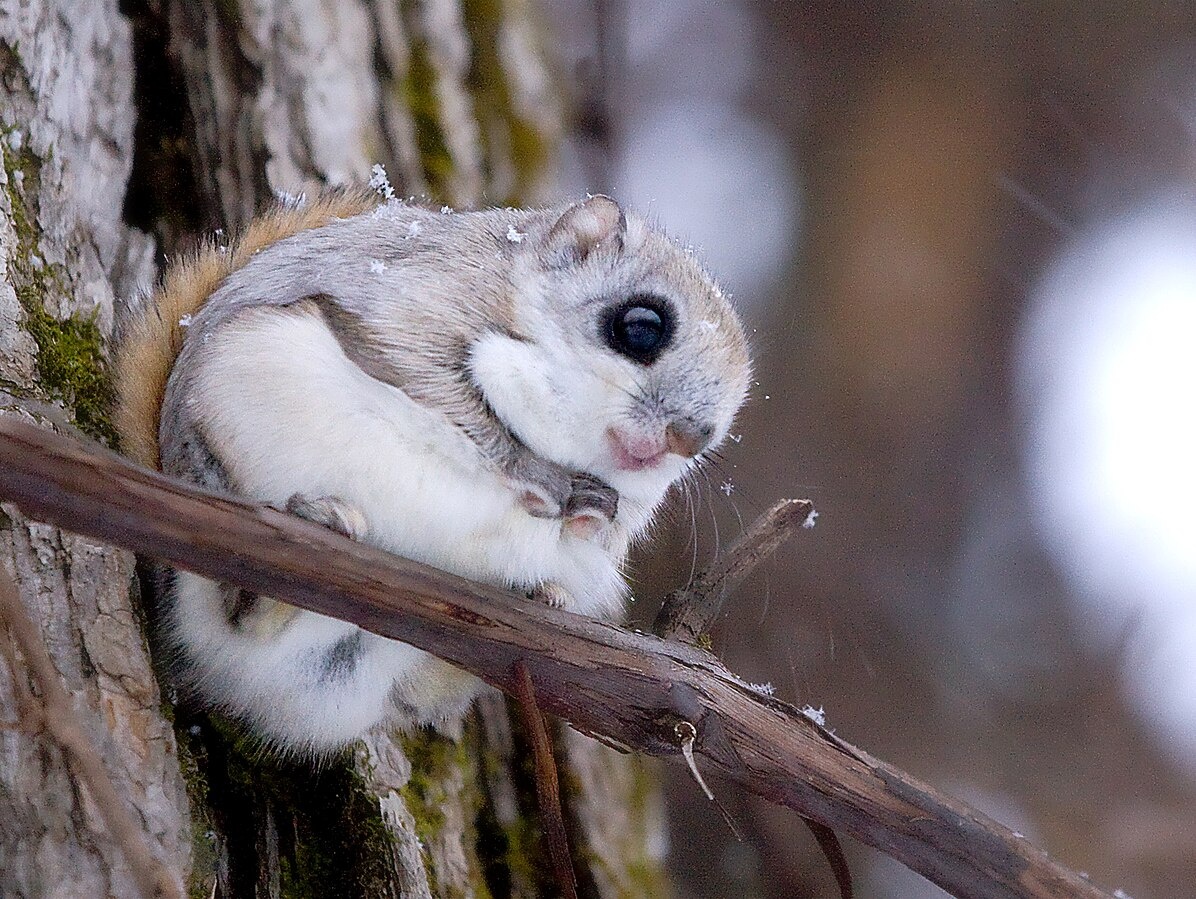
Japan is home to three species of flying squirrel. Ezo momonga live only in northern Hokkaido. Regarded as a subspecies of the Russian flying squirrel or Siberian flying squirrel, they live in holes in trees and measure 15 centimeters (4.3 inches) from their snout to the tip of their tails. For information on the Ezo momonga See SIBERIAN FLYING SQUIRRELS: CHARACTERISTICS, BEHAVIOR AND REPRODUCTION factsanddetails.com
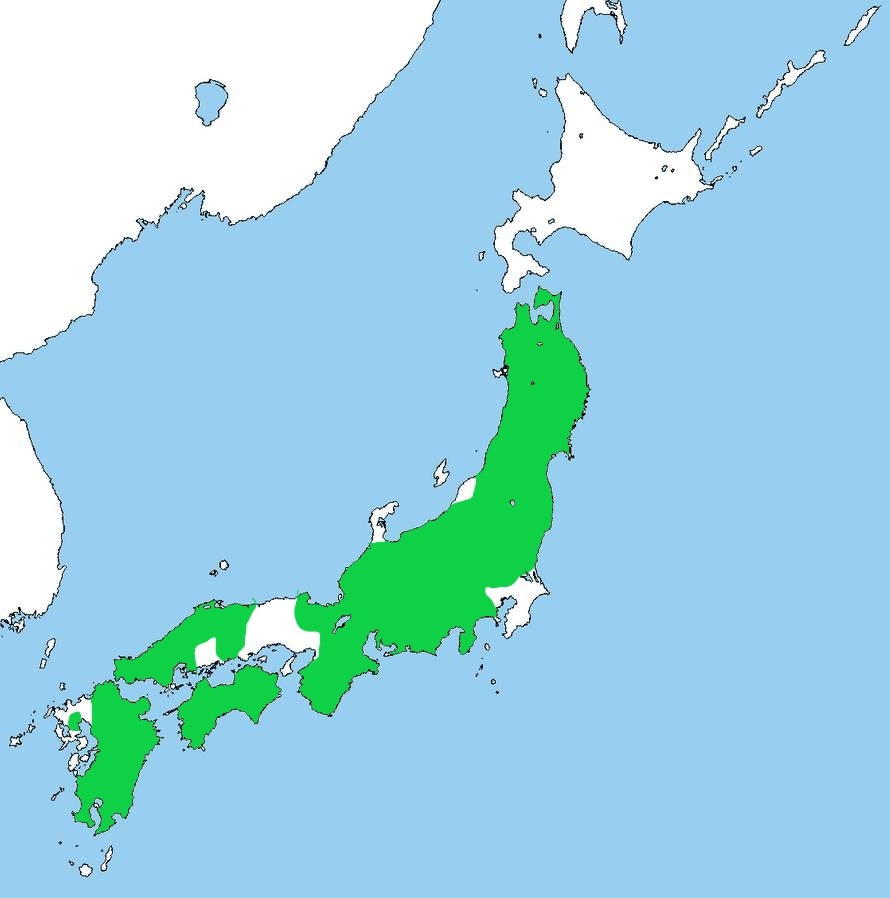
Among the largest flying squirrel in the world is the Japanese giant flying squirrel, or musasabi. Found on Honshu, Kyushu and Shikoku and parts of China, it measures 60 centimeters (two feet) from the top of its head to the tip of its tail, has a wingspan of more than 45 centimeters (1½ feet) and weighs up to 2.2 kilograms (five pounds). Japanese giant flying squirrels glide low and slow. The longest recorded flight on flat land is 50 meters (165 feet). Flights of over 150 meters (500 feet) have been reported on downhill slopes.
The momonga is a small Japanese flying squirrel. Found in Honshu, Kyushu and Shikoku, it is only 15 centimeters long (six inches), not including the tail, and weighs less than 200 grams. The musabi and momonga are primarily herbivorous, eating most tree leaves, buds, flowers, fruits, nuts, seeds and bark and occasionally insects. The Ainu people worshiped flying squirrels as protector gods of children.
RELATED ARTICLES:
ANIMALS IN JAPAN: WILDLIFE, BIODIVERSITY, RESEARCH factsanddetails.com
ENDANGERED ANIMALS AND JAPAN: MAMMALS, BIRDS, SPECIES, PROTECTION, ILLEGAL WILDLIFE TRADE factsanddetails.com
EXTINCT ANIMALS IN JAPAN: WOLVES, BIRDS AND OTTERS factsanddetails.com
TANUKIS (JAPANESE RACCOON DOGS): CHARACTERISTICS, BEHAVIOR, FOLKLORE factsanddetails.com
IRIOMOTE CATS: CHARACTERISTICS, BEHAVIOR, CONSERVATION factsanddetails.com
JAPANESE BADGERS: CHARACTERISTICS, BEHAVIOR, FOLKLORE factsanddetails.com
SMALL MAMMALS IN JAPAN: SABLES, CUTE STOATS, MARTENS, SHREW MOLES factsanddetails.com
ITACHI (JAPANESE WEASEL): CHARACTERISTICS, BEHAVIOR, FOLKLORE factsanddetails.com
JAPANESE SEROW: CHARACTERISTICS, BEHAVIOR. CONSERVATION factsanddetails.com
BEARS IN JAPAN: CHARACTERISTICS, BEHAVIOR, SPECIES, HUMANS factsanddetails.com
Flying Squirrels in Japan Japanese Giant Flying Squirrel on Japan Animals japan-animals.blogspot.com ; Wikipedia article on the Momonga wikipedia.org/wiki/Japanese_dwarf_flying_squirrel
Flying Squirrels and Gliding Animals
There are 44 species of flying squirrel worldwide. The fact that most of them live in Asia has led some scientists to hypothesize that they originated there. Only two species are found in the Americas: the Northern flying squirrel and the Southern flying squirrel. [Source: Wikipedia]
Gliding has evolved independently in a variety of arboreal animals. Among mammals, these include the marsupial gliding possums of Australia, the colugos of Southeast Asia, and the scaly-tailed flying squirrels of Africa. Each group glides in a slightly different way, with their patagia being controlled by different morphological adaptations. In some marsupial gliders for example, the patagium attaches at the elbows, whereas in colugos it extends into webbed digits. The fact that all flying squirrels are “wrist gliders” with shared wrist anatomy suggests that they are all descended from a common ancestor, presumably some sort of primitive tree squirrel. Non-mammalian arboreal gliders include frogs, geckos, snakes, lizards, and even ants.
Before taking off, flying squirrels bob and rotate their heads to gauge the route, and then leap into the air, spreading their patagia between cartilaginous spurs on their wrists and ankles. Small adjustments to these spurs give them some control over their speed and direction. Their flattened tails aid in steering. As their destination nears, they pull upright, prepare their padded feet to cushion the shock of impact, and ready their sharp claws to grip the bark. Gliding is an efficient way to travel but maneuverability in the air is limited. By keeping nocturnal habits, flying squirrels avoid predation by more skilled fliers, such as hawks and eagles. Owls, however, may still be a threat.
Flying Squirrel Mating
The two small species breed twice a year, once in the early spring and then again in the late summer. The musasabi also mates twice a year, but once in the winter and then again in early summer. Females establish and defend a small territory around their hole . Males cover more territory . When the female in estrus males chase each other and screech loudly. Usually the one closest the female is able to chase the others away and mate with the female.
Once mating is complete, the males often engages in another screeching battle. While this going on the female often drifts away to find another mate, and may mate as many as 19 times during the brief estrus period. The males inset a paste-like substance after their sperm in the female’s vagina. This helps push their sperm towards the egg and blocks the sperm of rival males. But this does not guarantee success. The male penis is outfit with a corkscrew-like devise that can pull out the plug of the pervious male and release his sperm so the new a rival can insert his sperm.
Momonga
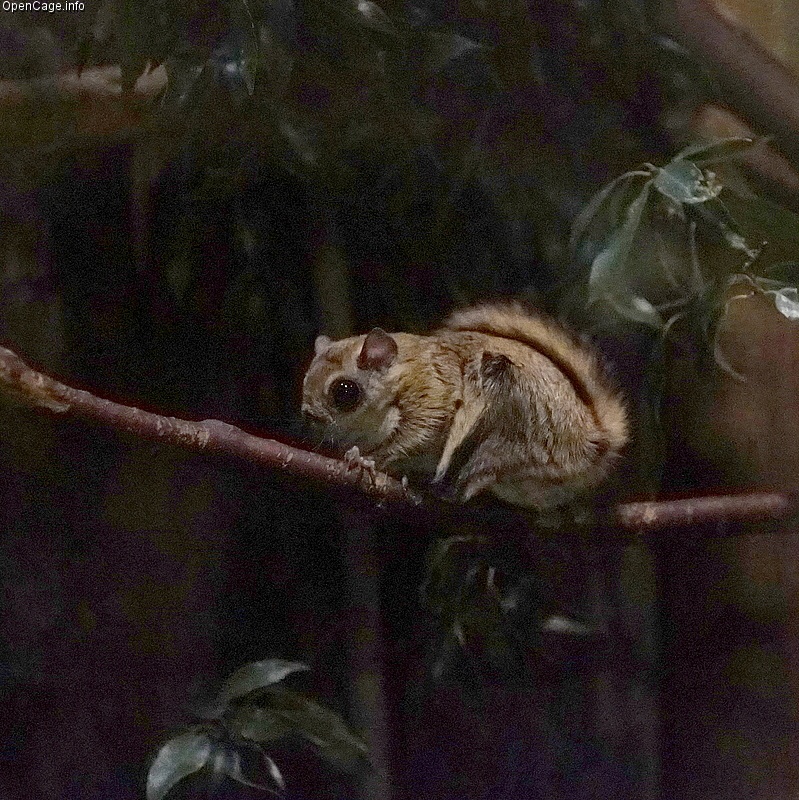
Momonga (Pteromys momonga) are small flying squirrels found in Japan and known in English as Japanese dwarf flying squirrels or simply Japanese flying squirrels. They are one of two species of Old World flying squirrels in the genus Pteromys. During the day, they hide in a hole, usually in a coniferous tree, emerging at night to feed. Momonga are found on Honshu and Kyushu islands. They prefer boreal evergreen forests and make nests composed of moss or lichen at the junctions of a branch and the trunk of a tree, particularly pine or spruce. [Source: Tracy Watkins, Animal Diversity Web (ADW) /=]
Momonga are not endangered and seem fairly plentiful in their range. Japan has lots of forests. They do not seem to be too adversely affected humans as they live in forested areas where humans seldom go. On the International Union for Conservation of Nature (IUCN) Red List momonga are listed as a species of Least Concern. In CITES (Convention on International Trade in Endangered Species of Wild) they have no special status.
Momonga have evolved differently from other squirrels. The differences are most noticeable when comparing the morphology of their mandible and the genetic code with that of other flying squirrels and rodents. The mandible the momonga does not have a coronoid process like American dwarf squirrels (Microsciurus) have. Marmots (Marmota) also have a more elongated mandible than Japanese dwarf flying squirrels. This is due to phylogeny and ecology. There are also large differences in chromosome structure between momonga and the only other member of the genus Pteromys, Pteromys volans and that momonga more closely related their ancestor species. [Source: Wikipedia]
Specific predators of momonga have not been reported. However, being small, nocturnal mammals, they are probably preyed upon by owls. The main defenses of the momonga are camouflage and gliding. Their cryptic coloration helps them blend into their environment. If necessary they can use their gliding ability to make an escape.
Momonga Characteristics and Diet
Momonga have a head and body length that ranges from 12 to 22.8 centimeters (4.7 to 9 inches). and a tail length of between 10 and 14 centimeters (3.9–5.5 inches). They weigh 150–220 grams (5.3–7.8 ounces), considerably less than Japanese giant flying squirrels, which can reach 1.5 kilograms (3.3 pounds) in weight. Momonga are endothermic (use their metabolism to generate heat and regulate body temperature independent of the temperatures around them). Sexual Dimorphism (differences between males and females) is not present: Both sexes are roughly equal in size and look similar. [Source: Tracy Watkins, Animal Diversity Web (ADW) /=]
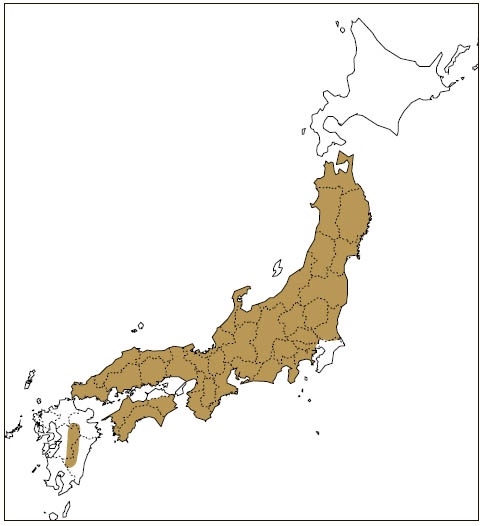
Momonga are silvery to buffy gray on their back and a buffy white on their front. Their gliding membrane — patagium — extends from their ankles to the wrists. They lack a membrane between their hind legs and the base of their tail like some other gliding mammals have. Their coloring helps them blend in so well with gray tree bark they are almost impossible to see. /=\
Momonga are primarily herbivores (primarily eat plants or plants parts). Animal foods include insects. Among the plant foods they eat are leaves, wood, bark, stems, seeds, grains, nuts, fruit and flowers. Their diet consists mainly of nuts, pine seeds and the buds and bark of certain trees. Studies have shown they don’t use their forepaws to hold and when on a perch, they turn their bodies sideways in order to bring food to the mouth. /=\
Momonga Behavior, Communication and Reproduction
Momonga are strictly nocturnal (active at night), arboreal (live mainly in trees), have the ability to glide, motile (move around as opposed to being stationary) and social (associates with others of its species; forms social groups). They are near silent when they fly and hardly ever touch they ground. During the day, momonga spend their time in their nests or in a hole in trees. They emerge at dusk, moving quickly about the treetops — probably to avoid predators. Sometimes many individuals of the same sex are found in a single tree. The exception to this is during the mating season, when both sexes occupy the tree. [Source: Tracy Watkins, Animal Diversity Web (ADW) /=]
Momonga sense using vision, touch, sound and chemicals usually detected with smell. They communicate with touch and sound. They may rely on vocal communication, such as chittering noises, which what many other flying squirrels. Mothers keep their young their tree nests for at least six weeks, and likely they engage in some forms of tactile communication during that time.
Momonga engage in seasonal breeding: once or twice a year, mostly from May through July. The number of offspring ranges from one to five, with the average number of offspring being two or three. The average gestation period is four weeks and the average weaning age is six weeks. The mating system of momonga has not been reported. A pair of adults usually shares a nest.
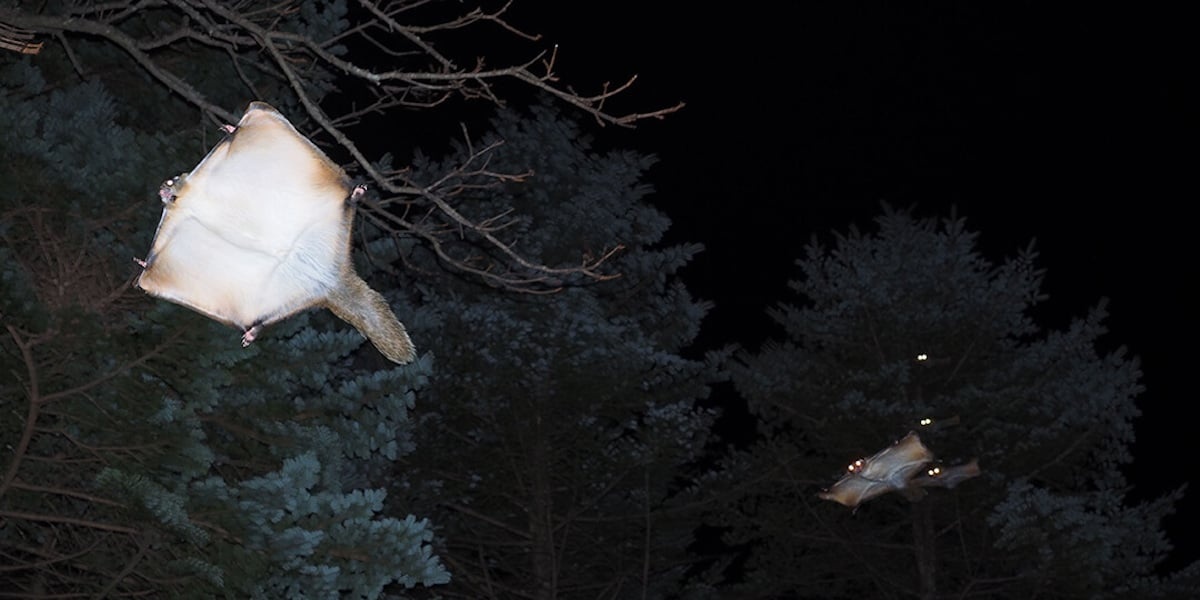
Details of the parental behavior of momonga have not been reported but if it is like other flying squirrels, females do all the parental duties and young are altricial, meaning that they are born relatively underdeveloped and are unable to feed or care for themselves or move independently for a period of time after birth. Young squirrels are typically naked at birth, with blood vessels and internal organs visible through the skin. After a week, their skin darkens and short hairs begin to develop. Some babies can right themselves at this age. At two weeks old, more fur develops, the toes are separated, and the ear canals begin to open. Soon after thus the young are able to move their tail and facial whiskers voluntarily. At three weeks lateral hairs begin to develop on the tail and the baby responds to loud noises. At four weeks, the baby is completely furry, and the eyes open. They move about energetically and sample food that the mother brings. At five weeks they start some exploration outside of the nest.
Japanese Giant Flying Squirrels
Japanese giant flying squirrels (Petaurista leucogenys) are known in Japan by the name musasabi. They are found on the Japanese islands of Honshu, Kyushu and Shikoku. Several studies of these animals have been carried out in Nara City, near Osaka and Kyoto in central Japan. [Source: Shanna Wheeler, Animal Diversity Web (ADW) /=]
Japanese giant flying squirrels live in temperate and tropical areas in forests as well as urban areas in climates like those in the U.S. and Europe. They prefer forests with a mixture of deciduous and coniferous trees in hills, plains and mountains. They are often seen by people around shrines and temples. Information on their lifespan is limited but they have lived up to 19.2 years in captivity.
Japanese giant flying squirrels are not endangered. On the IUCN Red List they are listed as a species of Least Concern. In CITES they have no special status. The only threats that adults face comes from humans. It is possible that young are taken by birds of prey such as owls and kites. The main impact that Japanese giant flying squirrels have on the ecosystem is seed dispersal. There are lots of forests in Japan where can make their homes. Even so they my reside highly populated areas largely unnoticed by humans. In some areas their numbers are high enough that are considered crop pests by farmers.
Japanese Giant Flying Squirrel Characteristics
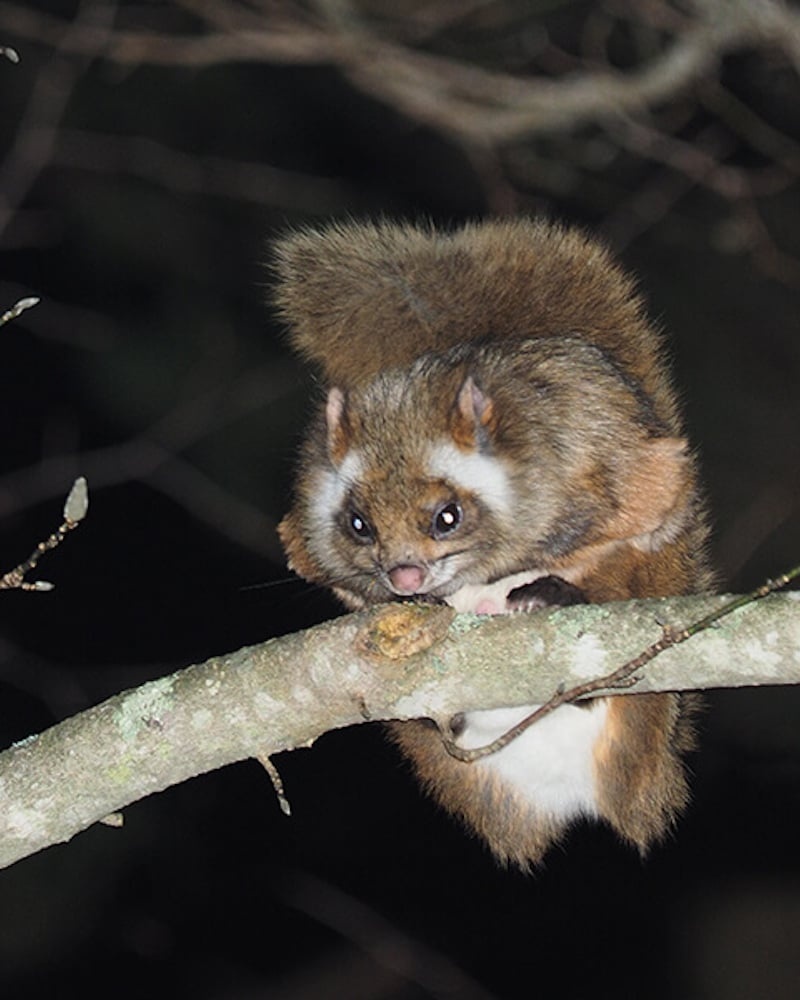
Japanese giant flying squirrels generally range in weight from one to 1.3 kilograms (2.2 to 2.9 pounds) and can reach 1.5 kilograms (3.3 pounds). They have a head and body length that ranges from 30 to 58.5 centimeters (12 to 23 inches). They are endothermic (use their metabolism to generate heat and regulate body temperature independent of the temperatures around them), warm-blooded (homoiothermic, have a constant body temperature, usually higher than the temperature of their surroundings). [Source: Shanna Wheeler, Animal Diversity Web (ADW) /=]
There are about 18 species of giant flying squirrels in the genus Petaurista. Up until relatively recently only about seven or eight were recognized. Japanese giant flying squirrels are regarded as one of the larger ones. The largest is the red and white giant flying squirrel of China. Also known as the Chinese giant flying squirrel, it has a Head-and-body length of 35–58 centimeters (14–23 inches) and tail length of 43–61.5 centimeters (16.9–24.2 inches). One specimen weighed weighed 4.3 kilograms (9.5pounds),
Japanese giant flying squirrels have long, soft fur ranging in color on their back from yellow-gray, brown and chestnut to black. Their tail is usually longer than the body and is the color of the fur on the back. The front side is yellow, buff, brown or white. A fur-covered membrane — patagium — extends from the side of their body from their wrists to their ankles. This what allows them to glide between trees.
Flying squirrels generally have longer limbs than non-gliding squirrels. There are nine carpal bones in the wrists of of the Japanese giant flying squirrel, which have special, long accessory styliform cartilage that supports the flying membrane while gliding. The skull is broad with distinct post-orbital processes and a short rostrum (hard, beak-like structures projecting out from the head or mouth). The face is almost raccoon-like in color, with black bands around the eyes. Extending down from the ears on the side of the face are white bands of fur. The nose and lips are pink./=\
Japanese Giant Flying Squirrel Diet and Feeding Behavior
Japanese giant flying squirrels are primarily herbivores (primarily eat plants or plants parts) but are also recognized as folivores (eat leaves), frugivores (eat fruits), granivores (eat seeds and grain) and lignivores (eat wood). Among the plant foods they eat are leaves, roots, tubers, wood, bark, conifer needles, stems, seeds, grains, nuts and fruit flowers. They sometimes store or cache food. [Source: Shanna Wheeler, Animal Diversity Web(ADW) /=]
Shanna Wheeler wrote in Animal Diversity Web: Japanese giant flying squirrels have unique foraging behaviors that allow them to feed from the skinniest of branches. They are able to extend their bodies to reach distant branches without shifting the position of their hind feet. This behavior allows them to maneuver around branches in search of food. They use their forepaws to grab onto skinny branches that would otherwise be off limits.
Availability of food determines diet choice; from March to May they mainly feed on buds, young leaves and flowers. In June through the month of October, they eat seeds, mature leaves and fruit. During the winter months they eat buds and cones. Their main diet consists of leaves during periods when other food is absent. Feeding usually begins 35 minutes after sunset. There are two feeding peaks during the night, but the second feeding peak is the most active. Body size, nocturnal (active at night), feeding pattern, and home range size seem to have an impact on the foliage eating habits of this species.
Japanese Giant Flying Squirrels Behavior
Japanese giant flying squirrels have the ability to glide and are arboreal (live mainly in trees), nocturnal (active at night), motile (move around as opposed to being stationary), sedentary (remain in the same area), territorial (defend an area within the home range) and social (associates with others of its species; forms social groups). The size of their range territory is .46 hectares to five hectares (1 to 12 acres). Most species of flying squirrels are territorial, often with the the intensity of territoriality increasing during the breeding season. Adult Japanese giant flying squirrel female, however, have territories that overlap throughout the year. [Source: Shanna Wheeler, Animal Diversity Web (ADW) /=]
Japanese giant flying squirrels almost never touch the ground. They spend the day resting in tree hollow or on branches. At night they move among tree branches and glidefrom tree to tree. Their incredible gliding abilities allow them to utilize a variety of habitats. It is not unusual for them to to glide 50 meters (164 feet) per glide. The longest recorded glide was 160.2 meters (525.6 feet). These squirrels travel between 111 and 620 meters (364 to 2024 feet) each night. Smaller glides in many ways are more advantageous: they are more efficient energy-wise and they allow squirrels to forage more thoroughly in their limited ranges.
Japanese giant flying squirrels communicate with vision and sound and sense using vision, touch, sound and chemicals usually detected with smell. Despite their nocturnal lifestyle, they rely heavily on sight. Members of the flying squirrel family display a variety of social behaviors. Some have loud, high-pitched calls that are similar to those of birds. /=\
Japanese Giant Flying Squirrel Mating, Reproduction and Offspring
Japanese giant flying squirrels are monogamous (having one mate at a time) with males mating and nesting with only one female. They engage in seasonal breeding: breeding twice annually: in the winter (mid-November to mid-January) and summer (mid-May to mid-June). The number of offspring ranges from one to two. [Source: Shanna Wheeler, Animal Diversity Web (ADW) /=]
The gestation period is around 74 days. The age in which young are weaned ranges is around 91 days and the age in which they become independent ranges from 12 to 18 months. Females and males reach sexual or reproductive maturity at 21 to 22 months. Female young disperse from their natal territories before they reach sexual maturity.
Because Japanese giant flying squirrels breed twice a year and produce up to four offspring a year they invest a lot of energy in breeding and parental care . It also means that males born in the summer reach sexual maturity faster than males born in the spring. Spermatogenesis ceases in most males from July to August and from December to March, which is between the two mating seasons. The size of the testes regresses during these time periods. /=\
Pre-birth, pre-weaning and pre-independence parenting and protection seems to be done by females. It is not clear whether giant Japanese flying squirrel males participate in raising young, and if so how much. Studies indicate young to stay with their mothers until they are sexually mature around one to one and half years.
After they have emerged from their nest at 40 days, they begin following their mothers. Juveniles are able to glide a few days after their first emergence from their nests. Mothers return to their nests at night to feed the young. Whenever a juvenile falls from the nest, the mother returns them to the nest. The amount of care mothers invest in their offspring is believed to be related to how well and how quickly offspring learn to glide proficiently — a skill that requires coordination and strength. /=\
Image Sources: Wikimedia Commons, Picchio
Text Sources: Animal Diversity Web animaldiversity.org ; National Geographic, Live Science, Natural History magazine, David Attenborough books, Daily Yomiuri, Yomiuri Shimbun, Japan National Tourist Organization (JNTO), New York Times, Washington Post, Los Angeles Times, Smithsonian magazine, Discover magazine, The New Yorker, Time, BBC, CNN, Reuters, Associated Press, AFP, Lonely Planet Guides, Wikipedia, The Guardian, Top Secret Animal Attack Files website and various books and other publications.
Last updated March 2025