
JAPANESE BADGERS
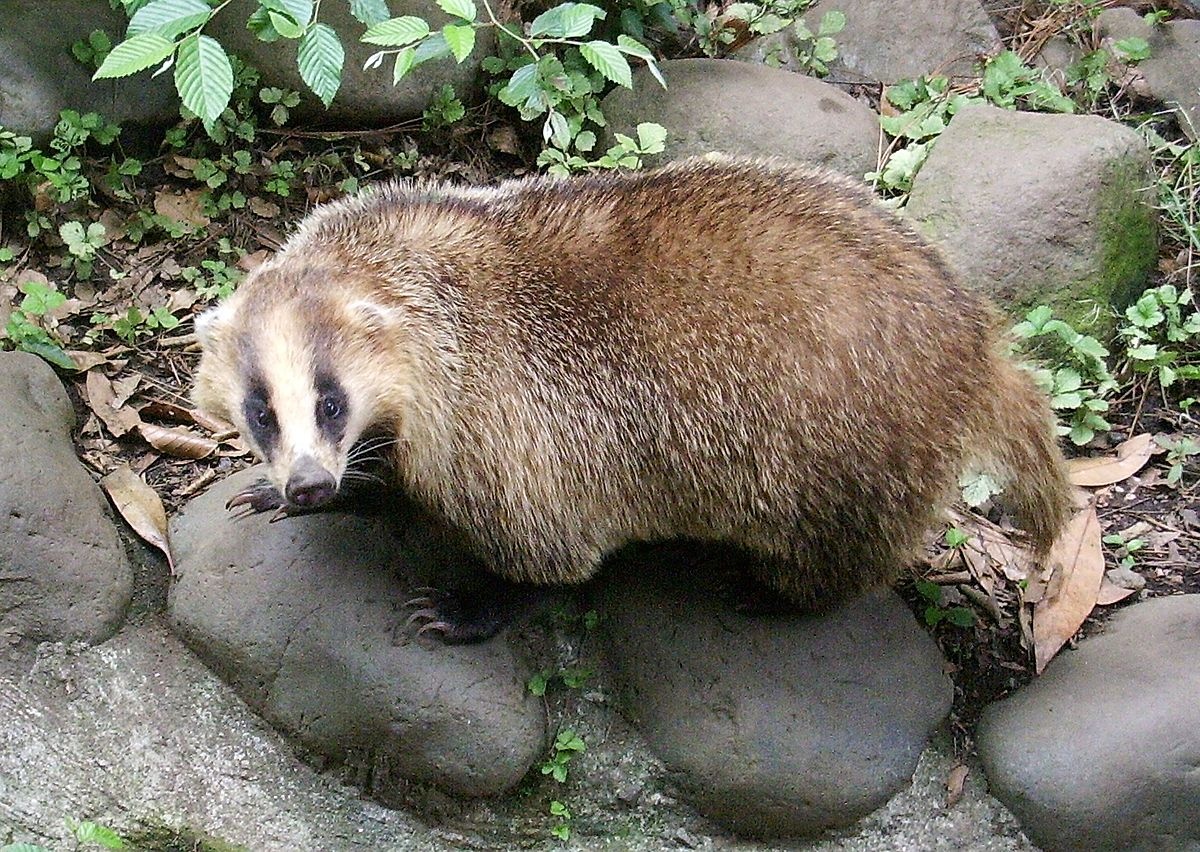
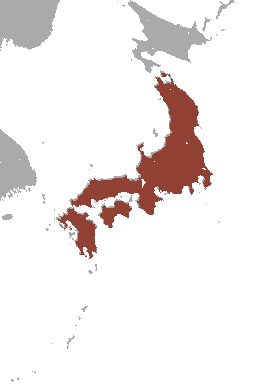
Japanese badgers (Meles anakuma) are endemic to Japan, inhabiting the islands of Honshu, Kyushu, Shikoku, and Shodoshima. A close relative of Eurasian badgers and once regarded as subspecies of them, Japanese badgers are known as anaguma (literally "hole bear") in Japan. Their distribution and absence in Hokkaido tends to suggest that they arrived on a land bridge from Korea in ancient times. They like to make their dens on heavily forested slopes.
Japanese badgers are terrestrial mammals that inhabit deciduous woods, mixed woods and thickets up to 1700 meters (5577 feet). They are occasionally observed in suburban and agricultural areas. Their dens, known as setts, tend to be dug in covered areas to allow the animals emerge and return without being noticed. Hills and slopes are preferred locations for dens because the drainage is better and it is easier to remove dirt. Their lifespan in captivity is up to 19.5 years. Their average lifespan in the wild is around 10 years.[Source: Julie Riney, Animal Diversity Web (ADW) /=]
Japanese badgers are primarily carnivores (eat meat or animal parts) but are also recognized as insectivores (eat insects), vermivores (eat worms) and omnivores (eat a variety of things, including plants and animals). Their diet consists mainly of insects, earthworms, and fruit. They are opportunistic foragers, rather than hunters and have been known to eat carrion, nuts, acorns, leaves, acorns, other items from the forest and small animals. Japanese badgers rely heavily on their sense of smell to locate food and prey.
Keven Short wrote in the Japan News: Two closely related species, the Asian badger (M. leucurus) and the European badger (M. meles) inhabit the continent. The American badger (Taxidea taxus) is a distantly related cousin. Japanese badgers have a special fondness for earthworms. Their keen noses are adapted for sniffing out underground food; and their long sharp claws are perfect for digging it up; and also for excavating the dens. [Source:Keven Short, Japan News, April 1, 2014]
RELATED ARTICLES:
BADGERS: CHARACTERISTICS, BEHAVIOR AND REPRODUCTION factsanddetails.com
BADGER SPECIES factsanddetails.com
MUSTELIDS: CHARACTERISTICS, BEHAVIOR, REPRODUCTION, TYPES, SPECIES factsanddetails.com
WOLVERINES: CHARACTERISTICS, BEHAVIOR AND REPRODUCTION factsanddetails.com
HOG BADGERS: CHARACTERISTICS, BEHAVIOR AND REPRODUCTION factsanddetails.com
FERRET-BADGERS: CHARACTERISTICS, BEHAVIOR, SPECIES factsanddetails.com
STINK BADGERS: CHARACTERISTICS, BEHAVIOR, SPECIES factsanddetails.com
ANIMALS IN JAPAN: WILDLIFE, BIODIVERSITY, RESEARCH factsanddetails.com
ENDANGERED ANIMALS AND JAPAN: MAMMALS, BIRDS, SPECIES, PROTECTION, ILLEGAL WILDLIFE TRADE factsanddetails.com
MEDIUM-SIZED MAMMALS IN JAPAN: FOXES, LARGE BATS, RABBITS, HARES, FOLKLORE factsanddetails.com
TANUKIS (JAPANESE RACCOON DOGS): CHARACTERISTICS, BEHAVIOR, FOLKLORE factsanddetails.com
ITACHI (JAPANESE WEASEL): CHARACTERISTICS, BEHAVIOR, FOLKLORE factsanddetails.com
BEARS IN JAPAN: CHARACTERISTICS, BEHAVIOR, SPECIES, HUMANS factsanddetails.com
Japanese Badger Characteristics
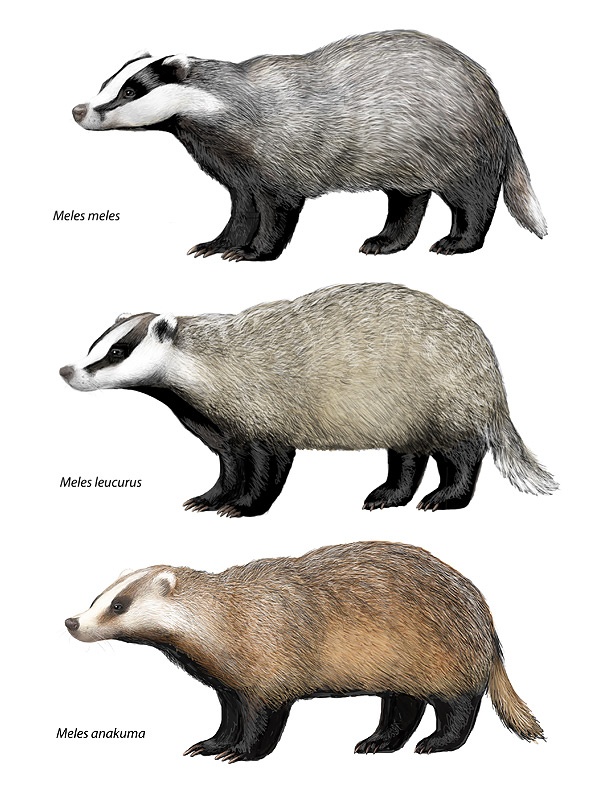
Japanese badgers range in weight from 3.9 to 11 kilograms (8.6 to 24.2 pounds), with their average weight being 5.1 kilograms (11.2 pounds). They have a head and body length that ranges from 70 to 79 centimeters (27.7 to 31 inches), with their average such length being 75 centimeters (29.5 inches). They are endothermic (use their metabolism to generate heat and regulate body temperature independent of the temperatures around them), warm-blooded (homoiothermic, have a constant body temperature, usually higher than the temperature of their surroundings). Sexual Dimorphism (differences between males and females) is present: Males are larger than females, Adult males average around 78.7 centimeters while adult females are around 72 centimeters long.[Source: Julie Riney, Animal Diversity Web (ADW) /=]
Japanese badgers are dark brown with a white face and a chocolate-brown eye stripe on their face that runs from the snout to the ear. In some individuals the stripe is reduced to a ring around the eye giving the animal a panda-like appearance. Males and females are indistinguishable by fur color. Japanese badgers are stocky with short robust limbs and a short tail. Vibrissae (whiskers) are present on the elongated snout and serve as a tactile sense organ. Their ears are small and lie close to the side of the head. Feet are broad and have five digits with non-retractable claws.
On average, Japanese badgers are smaller than Eurasian badgers. Skull size and sexual dimorphism is present is less pronounced than in Eurasian badgers. Average body weight during spring (April to July) varies according to location. In Yamaguchi, it is around 5.7 kilograms for males and 4.5 kilograms for females, whereas in Tokyo, it 7.7 kilograms in males and 5.4 kilograms in females. Year-old females weigh around 3.6 kilograms, while year-old males weigh 4.2 kilograms.
Mustelids
Badgers are mustelids (Mustelidae), a diverse family of carnivoran mammals, including weasels, badgers, otters, stoats, mink, sables, ermine, fishers, ferrets, polecats, martens, grisons, wolverines, hog badgers, honey badgers and ferret badgers. Mustelids, make up the largest family within Carnivora with about 66 to 70 species in eight or nine subfamilies and 22 genera. Skunks were considered a subfamily within Mustelidae, but recent molecular evidence has led their removal from the mustelid group. They are now recognized as a their own single family, Mephitidae. [Source: Wikipedia, Matt Wund, Animal Diversity Web (ADW) |=|]
Mustelids inhabit all continents except Australia and Antarctica, and do not live on Madagascar or oceanic islands. They are found in diverse terrestrial and aquatic habitats in temperate, tropical and polar environments — in tundra, taiga (boreal forest), conifer forests, temperate forests, deserts, dune areas, savanna, grasslands, steppe, chaparral forests, tropical and temperate rainforests, scrub forests, mountains, lakes, ponds, rivers, streams. coastal brackish water, wetlands such as marshes, swamps and bogs, suburban areas, farms, orchard and areas near rivers, estuaries and intertidal (littoral) zones.
Mustelids vary greatly in behavior. They are mainly carnivorous and exploit a wide diversity of both vertebrate and invertebrate prey, with different members specializing in certain kinds of prey. Most mustelids are adept hunters with some weasels able take prey much larger than themselves. Many species hunt in burrows and crevices; some species have evolved to become adept at climbing trees (such as martens) or swimming (such as otters and mink) in search of prey. Wolverines can crush bones as thick as the femur of a moose to get at the marrow, and have been seen attempting to drive bears away from their kills. Mustelids typically live between five and 20 years in the wild. |=|
See Separate Article: MUSTELIDS: CHARACTERISTICS, BEHAVIOR, REPRODUCTION, TYPES, SPECIES factsanddetails.com
Japanese Badger Behavior
Japanese badgers are terricolous (live on the ground), fossorial (engaged in a burrowing life-style or behavior, and good at digging or burrowing), nocturnal (active at night), motile (move around as opposed to being stationary), sedentary (remain in the same area), hibernate (the state that some animals enter during winter in which normal physiological processes are significantly reduced, thus lowering the animal’s energy requirements) and territorial (defend an area within the home range). Their home range territory can be up to 1575 square meters, with the average being around 304 square meters. [Source:Julie Riney, Animal Diversity Web (ADW) /=]
Most badgers are social and often live together in groups but Japanese badgers tend to more solitary. Even mating pairs of Japanese badgers often live in separate dens. Usually Japanese badgers hibernate during the winter, from mid-December to February. During the they often sleep in their dens but during spring, breeding females are active during the daytime. /=\
Julie Riney wrote in Animal Diversity Web: Badgers inherit underground burrow systems called "setts". The interlocking tunnels provide shelter during the day and are also used for breeding. Setts vary in size and are expanded and refined throughout the year. Communal setts are passed on for generations, although Japanese badgers have been known to relocate. Numerous setts can be located within one home range of a particular badger. On average an adult male badger has 32 to 71 setts, while females have 20 to 41 setts. There are four different types of setts: main, annex, subsidiary, and outlier. Setts are classified based on the number of entrances and paths nearby. A main sett has more than five entrances, numerous worn paths, and large heaps of scat. Japanese badgers are territorial (defend an area within the home range), and often mark the outside of setts and boundaries of their territory with secretions from their subcaudal glands. /=\
Japanese Badger Senses and Communication
Japanese badgers sense and communicate with vision, touch, sound and chemicals usually detected by smelling. They also employ pheromones (chemicals released into air or water that are detected by and responded to by other animals of the same species) and scent marks produced by special glands and placed so others can smell and taste them. Evidence suggests urine is probably used as a scent marker.[Source: Julie Riney, Animal Diversity Web (ADW) /=]
Japanese badgers eyes are unusually small for animals that are most active at night), suggesting that sight is less important than other senses. Tapetum lucidum and a high number of rod photo-receptors help Japanese badgers see in the dark. Facial stripes are thought to accentuate any aggressive signals towards members of their own species. /=\
Japanese badgers have an extremely well developed sense of smell. Secretions from the sub-caudal gland are used by to 'mark' territorial boundaries. Among Eurasian badgers, dominant members of a social group often scent mark each member of their group, which helps the badgers identify dominant individuals as well as group membership. /=\
Japanese Badger Mating, Reproduction and Offspring

Japanese badgers are polygynandrous (promiscuous), with both males and females having multiple partners and copulating with multiple mates throughout the year. But they do tend to give birth around the same time which suggests they employ delayed implantation (a condition in which a fertilized egg reaches the uterus but delays its implantation in the uterine lining, sometimes for several months).
Japanese badgers give birth once a year in spring. The number of offspring ranges from one to six, with the average number of offspring being three. The average gestation period is 49 days. The age in which they are weaned ranges from four to six months and the average time to independence is 15 months. Females reach sexual or reproductive maturity at one to three years and males do so at 12 to 16 weeks. [Source: Julie Riney, Animal Diversity Web (ADW) /=]
Male Japanese badgers are solitary most of the year, but form temporary bonds with one or several females during the breeding season. At this time, males expand their home range to overlap with those of two to three females. During mating, male Japanese badgers signal their interest to females by raising their tails into a vertical position while emitting a deep whinny purr. Prior to mating, violent interactions may occur and can include musk emission.
Reproduction in Japanese badgers is similar to that of Eurasian badgers. Birthing takes place in underground dens during the spring (April to June) and parental care is provided by females.. But unlike Eurasian badgers, Japanese badgers do not form male-female bonds for rearing cubs. Birth weights ranges from 75 to 90 grams, with an average of 80 grams. Male offspring remain with their mother for up to 26 months, whereas female offspring share a den with their mother for only 14 months. /=\
Japanese Badgers, Humans and Conservation
Japanese badgers are not considered endangered species. On the International Union for Conservation of Nature (IUCN) Red List they are listed as a species of Least Concern. In CITES (Convention on International Trade in Endangered Species of Wild) they have no special status. Their biggest threats are loss of habitat and the degradation of their habitat, which results in less food. Many are killed by road and rail traffic and they may be outcompeted for food by invasive raccoons. In some places tunnels have been built for badgers under roads so they don’t get run over. Japanese badgers may be preyed on by foxes or dogs but like other badgers they are known for putting up a vicious fight if attacked. Japanese badgers can eat crops and dig up fields are thus sometimes regarded as crop pests
Keven Short wrote in the Japan News:“In more than 25 years living in the countryside of northern Chiba Prefecture I have never seen a single badger. Nor have I been able to spot their tracks. Despite being extremely conscientious about checking road-kills, I have never come across a badger carcass. But badgers are almost exclusively nocturnal, spending the daytime hours hidden away in their setts. In addition, unlike their European relatives, which often live in large colonies, the Japanese badgers tend to lead solitary lives, and are usually present at very low densities. [Source: Keven Short, Japan News, April 1, 2014]
“Badgers are not listed in the Environment Ministry’s Red Data Book of threatened and endangered species. They are, however, listed in some prefectures. In Chiba Prefecture they are placed in the C category, meaning that they are not quite yet endangered, but their numbers and range do appear to be shrinking. In some regions badgers are still hunted for their meat, said to be tastier than the tanuki’s. Badgers are smoked out of their setts, or pulled out by fierce, highly-trained hunting dogs.
Badgers in Japanese Folklore
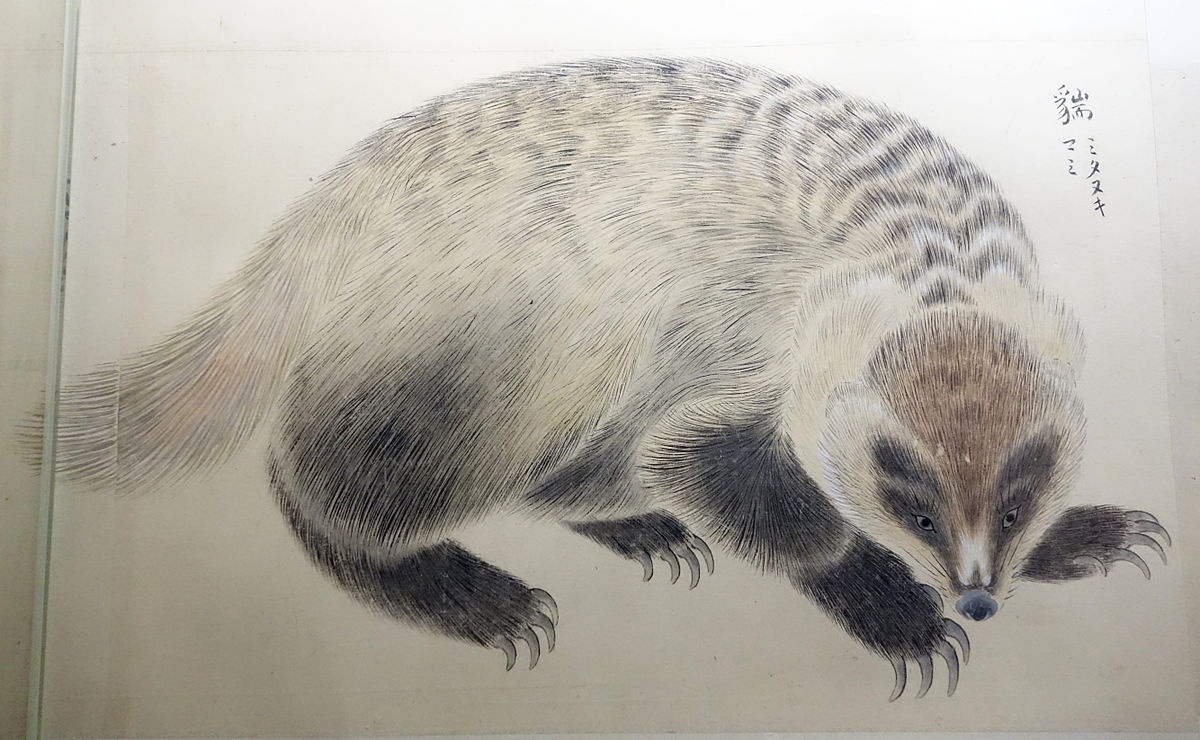
In Japanese folklore, badgers are sometimes called mujina. Keven Short wrote in the Japan News: ““In some stories the mujina is endowed with mystic qualities, able to appear out of nowhere, and to disappear in a flash. At first I thought the farmers might be talking about some sort of legendary creature, like the tengu or kappa. But they assured me time and again that this animal is real, and their descriptions of it were both detailed and consistent. [Source: Keven Short, Japan News, April 1, 2014]
“I also thought for a while that perhaps the farmers might be describing a tanuki or tanukis. “The mujina does looks a little bit like a tanuki,” they insisted, “but has shorter legs and a more powerful, heavy-set body. The nose is longer than a tanuki’s, and the eyes are smaller. Also, the mujina has exceptionally long claws, and the paw-print always shows five toes. The tanuki, being a member in good standing of the dog family, only shows four.
“From these precise descriptions I soon realized that the farmers could only be talking about the Japanese badger. The correct name for them is ana-guma or ‘hole-bear,’ but in many country districts it is known as mujina. The badger, along with the red fox and the tanuki, ranks among Japan’s premier trickster animals. These critters play prominent roles in local folklore, especially as talented shape-shifters able to assume any form they like. Their specialties, of course, are beautiful women. Many a Japanese man has spent long years in married bliss only to eventually discover that his beloved wife is really a badger, fox or tanuki in disguise.
“The first mention of a mujina in Japanese literature comes from the Nihonshoki, a compendium of Japanese early history and classic mythology completed in the year 720. According to the chronicles, a mujina appeared in the northern provinces in the 35th year of the reign of the Empress Suiko (627). This mujina not only impersonated a man, but was able to sing as well.
Image Sources: Wikimedia Commons
Text Sources: Animal Diversity Web animaldiversity.org ; National Geographic, Live Science, Natural History magazine, David Attenborough books, New York Times, Washington Post, Los Angeles Times, Smithsonian magazine, Discover magazine, The New Yorker, Time, BBC, CNN, Reuters, Associated Press, AFP, Lonely Planet Guides, Wikipedia, The Guardian, Top Secret Animal Attack Files website and various books and other publications.
Last updated March 2025