
TANUKIS

Tanuki is the Japanese name for a mammal that resembles a cross between a badger and a raccoon. Sometimes referred to as raccoon dogs in English, tanukis (Nyctereutes viverrinus) are members of the dog (Canidae) family. Their English name is a bit misleading because raccoons are not members of the dog family. Their closest relative is the common raccoon dog ((Nyctereutes procyonoides) which is native to eastern Asia.
Tanukis are arguably the best-known and most widely recognized wild animal in Japan. Kevin Short wrote: Even small children and hard-core urbanites can immediately pick out this canine's somewhat porky shape and distinctive black eye-mask. The common English name raccoon-dog, and the scientific species name procynoides (procyon is the genus name for the raccoon) both derive from this eye-mask. [Source: Kevin Short, Daily Yomiuri, September 13, 2012]
Tanukis are not closely related to any other member of Canidae. Thought to represent a primitive member of the dog family, they have the unusual characteristic of supernumerary chromosomes and shares homologous chromosomes with members of Felidae (cat) family. For these reasons, the taxonomic position of tanukis and raccoon dogs is not clear. It was long thought that the tanuki was a subspecies of raccoon dog but is now recognized as a separate species. Tanukis have smaller stomachs and shorter fur with lesser insulation than mainland raccoon dogs. A rare, white color type can also be found. [Source: Wikipedia, Kelly Carr, Animal Diversity Web (ADW) /=]
Tanukis originally evolved in North America, but later crossed over the Bering land bridge to Asia. The North American forms have since become extinct. Modern-day tanuki are widely distributed throughout East and Southeast Asia. In Japan, they are found on the islands of Kyushu, Shikoku, Honshu and Hokkaido. The Hokkaido forms, or Ezo-tanuki, are usually considered a separate subspecies from the other Japanese animals, or Hondo-tanuki.
Tanukis thrive in a number of different habitats. Their success is due in large part to their adaptability, high reproductive rate, tolerance of human presence, and opportunistic foraging behavior. Their lifespan s in the wild is 7.5 to 11 years. Their lifespan in captivity has been more than 14 years. /=\
Good Websites and Sources: Raccoon Dog on Canid.org canids.org/species/Nyctereutes_procyonoides ; Raccoon Dog: a Successful Canid canids.org ; Wikipedia article on Tanukis Wikipedia ;Tanuki Statues onmarkproductions.com/html ; Folk Tale About a Wicked Tanuki mythfolklore.net ; Animal Info animalinfo.org/country/japan
RELATED ARTICLES:
RACCOON DOGS: CHARACTERISTICS, BEHAVIOR AND REPRODUCTION factsanddetails.com
ANIMALS IN JAPAN: WILDLIFE, BIODIVERSITY, RESEARCH factsanddetails.com
IRIOMOTE CATS: CHARACTERISTICS, BEHAVIOR, CONSERVATION factsanddetails.com
JAPANESE BADGERS: CHARACTERISTICS, BEHAVIOR, FOLKLORE factsanddetails.com
SMALL MAMMALS IN JAPAN: SABLES, CUTE STOATS, MARTENS, SHREW MOLES factsanddetails.com
ITACHI (JAPANESE WEASEL): CHARACTERISTICS, BEHAVIOR, FOLKLORE factsanddetails.com
FLYING SQUIRRELS IN JAPAN: CHARACTERISTICS, BEHAVIOR, SPECIES, REPRODUCTION factsanddetails.com
JAPANESE SEROW: CHARACTERISTICS, BEHAVIOR. CONSERVATION factsanddetails.com
BEARS IN JAPAN: CHARACTERISTICS, BEHAVIOR, SPECIES, HUMANS factsanddetails.com
Tanuki Habitat and Where They Are Found
In Japan, tanukis live primarily in lowlands, forests and mountain valleys on Honshu, Kyushu, Shikoku and Hokkaido and are found near and in human-settled areas, even cities. Scientists recognize about a half dozen regional subspecies. Common raccoon dogs are found in eastern and northeastern Asia. In some places in eastern Europe they were introduced as a fur-bearing animals.
Japanese tanukis originally came to Japan as common raccoon dogs by a land bridge from Siberia. Common raccoon dogs are native to eastern Siberia, northern China, North Vietnam, Korea, and Japan. Between 1927 and 1957, the fur-farming industry introduced between 4,000 to 9,000 tanukis to the European and Asian U.S.S.R. Today, Tanukis are widespread throughout northern and western Europe in countries including Finland, Sweden, Norway, Poland, Romania, Czech Republic, Slovakia, Germany, France, Austria, and Hungary. [Source: Kelly Carr, Animal Diversity Web (ADW) /=]
Tanukis are found in subarctic and subtropical climates. They prefers forest, forest borders, or dense vegetation — particularly areas of thick underbrush, marshes, and reedbeds — for cover. They have been spotted at elevations up to 3000 meters (9843 feet) and like to be near water. They mostly commonly encroach human settlements when scavenging for food.
Canids and Canines (Foxes, Jackals, Wolves, Coyotes, Dogs)
 Tanukis are canids. Canidae is a biological family of caniform carnivorans ("dog-like" carnivores). It constitutes a clade (group of organisms composed of a common ancestor and all of its descendants) Members of this family are called canids. The family includes three subfamilies: Caninae, and extinct Borophaginae and Hesperocyoninae. Caninae are known as canines,and include domestic dogs, wolves, coyotes, raccoon dogs, foxes, jackals and other species. [Source: Wikipedia]
The Canidae family is comprised of 13 genera and 37 species. Canids are widely distributed around the globe. They occur on all continents except Antarctica and are only member of the Order Carnivora that found in Australia (we’re talking about dingoes, introduced by humans during prehistoric times). Canidae fossils have been dated to the to the Oligocene Period (33 million to 23.9 million years ago) and Miocene Period (23 million to 5.3 million years ago), which makes them among the oldest extant groups of carnivores. Canids are probably an early offshoot of the caniform lineage (which includes mustelids (weasels),procyonids (raccoons and their relatives), ursids (bears), phocids and otariids (seals), and odobenids (walruses).[Source: Bridget Fahey and Phil Myers, Animal Diversity Web (ADW)]
Canids have deep-chested bodies and a long muzzle. Their legs and feet are moderately elongated. They move in a digitigrade fashion — on their toes, not touching the ground with their heels,. Usually, they five toes are found on the forefeet and four on the hindfeet. Their metapodials (long bones of the feet that connect the toes to the ankle bones) are long but not fused. Unlike the Felidae (cats), canids have non-retractile claws. This means that they are worn down by activity and are not used much as weapons as is the case with some other carnivores. All male canids have a well-developed baculum (penis bone). The skulls of canids have an elongated facial region. Canids have nearly a full set of teeth with the following dental formula: 3/3, 1/1, 4/4, 1-2/2-3 = 38-42. Canine teeth are large but unspecialized. Molars are of the crushing type. The carnassial pair (teeth used for shearing and cutting meat) are strongly built.
Canids are primarily medium-sized flesh eaters, but they more omnivorous (eat plants and animals) than many carnivores, consuming invertebrates, plant matter, and carrion as well as the prey they kill themselves. Canids are known more for endurance than for speed, although they be pretty fast. They typically catch prey by pursuit over long distances in relatively open terrain until the prey tires. Kills are made by grabbing for the nape of neck and tackling the prey to the ground. The neck grab is followed by a violent shake, which may dislocate the neck of the prey. Large prey may be immobilized by biting into the soft parts of the underbelly, often resulting in disembowelment and death from shock. The senses of smell and hearing are acute and important to these animals in hunting and socializing. Vision is less developed. Canids tend to very territorial. Territory marking occurs in many species through repeated urination on objects on the periphery and within territories. Other scent glands are also important in the social behavior of these species; these include anal glands and glands on the dorsal surface of the tail near the base.
Tanuki Characteristics
Tanukis have stout, rounded bodies, short legs and black and grey fur. They have distinctive stripes of black fur under their eyes, a bit like pandas or raccoons. Males have large testicles and scrotums which allows them to mate frequently. Tanakis range in weight from four to 10 kilograms (8.8 to 22 pounds) and have a head and body length that ranges from 50 to 68 centimeters (19.7 to 26.8 inches). Their tail is 13 to 25 centimeters (5.1 to 9.8 inches) long. They are endothermic (use their metabolism to generate heat and regulate body temperature independent of the temperatures around them) and warm-blooded (homoiothermic, having a constant body temperature, usually higher than the temperature of their surroundings). Sexual Dimorphism (differences between males and females) is present: Females are larger than males. The weight of adult females in China and Japan is 0.5 kilograms more than males. [Source: Kelly Carr, Animal Diversity Web (ADW) /=]
Tanukis have small heads (greatest length 13.3 centimeters) with pointed, low-profile rostra (face and snout). Their height ranges from 38.1 to 50.8 centimeters (14 to 20 inches). Body weight ranges from four to six kilograms (8.8 to 11 pounds) in the summer to six to 10 kilograms (11 to 22 pounds) in the winter before hibernation. On average, tanukis in Europe tend to be larger than those in China and Japan. The existence and dispersal of several subspecies of tanukis may be the reason why. The dental formula of tanukis is i 3/3, c 1/1, p 4/4, m. two or 3/3, total 42 or 44. Tanukis have reduced carnassials and relatively large molars.
The fur markings of tanukis is similar to those of raccoons. Tanuki fur is dense and soft. According to Animal Diversity Web: Markings on the head include a white muzzle, white face, and black fur surrounding the eyes. A black marking runs across both shoulders and down the back, forming the shape of a cross. Ears are rounded and short; black hair one the ears trims the white hair inside. Body color is dusky brown to yellow-brown dorsally but varies greatly. Long guard hairs, found throughout the dorsal side, are tipped black. On the belly, the fur is lighter brown or tan. Limbs and chest are blackish-brown. Tanukis have thick, bushy tails that are black dorsally and light-yellow ventrally with a black tip. Winter fur is thicker and darker than summer fur. Tanukis goes through a molt in the summer between July and October. The winter fur grows in during September, October, and November. Tanukis also have a spring molt that begins in April when the underfur is shed. The summer coat is in by mid-June.
Tanuki Behavior
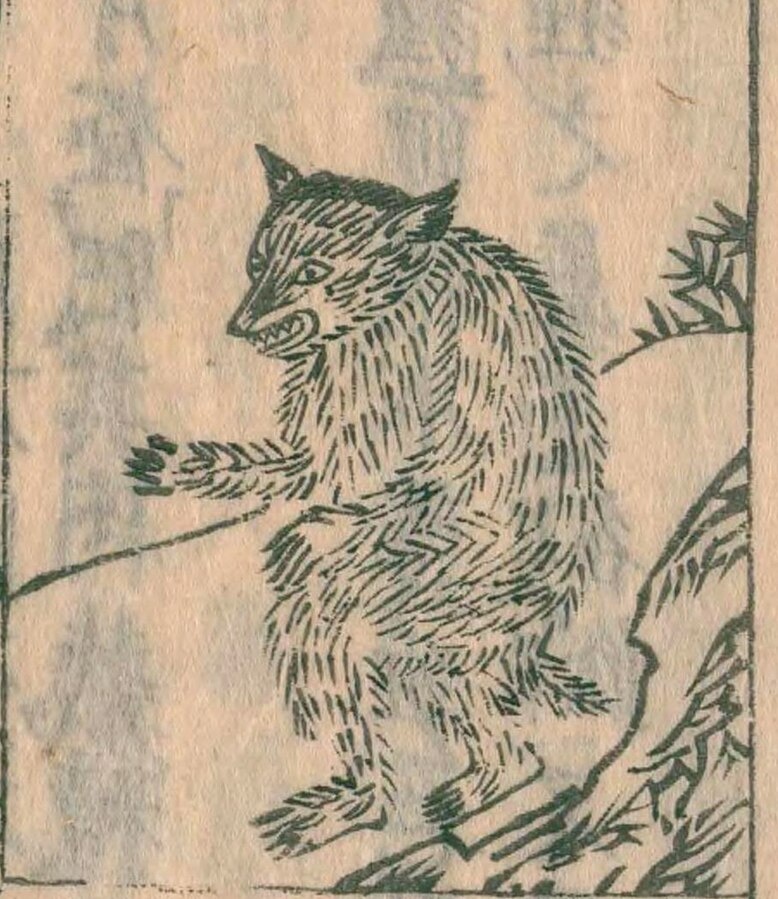
Tanukis are terricolous (live on the ground), natatorial (equipped for swimming), diurnal (active during the daytime), nocturnal (active at night), crepuscular (active at dawn and dusk), motile (move around as opposed to being stationary), hibernate and are social. While studies in the past had shown that tanukis tended to be primarily nocturnal more recent studies indicate they are diurnal and crepuscular as well as nocturnal. This could be related to needing more time to locate food. [Source: Kelly Carr, Animal Diversity Web (ADW) /=]
Kevin Short wrote in the Daily Yomiuri: Most members of the dog family are adapted to open habitats, and sport long legs for running down prey. The tanuki's "black-stockinged" legs, however, are way too short for the chase. They prefer a lifestyle of leisurely foraging in the forest floor. Tanuki are said to be excellent swimmers, and unusual for canines, can also climb trees. Persimmons are among their favorite tree foods. Unlike many members of the dog family, which are fast and travel in packs, tanukis are largely slow-moving solitary animals. In the autumn and winter however they can often be seen in small family groups. Their short legs and compact profile are adapted for life in the forest. Rather than chasing down prey they are they more likely to amble along, foraging whatever they can find. [Source: Kevin Short, Daily Yomiuri, September 13, 2012]
Tanukis play dead. They can be attacked and vigorously shaken by a dog and kicked by a hunter and lie without moving for about 30 minutes with a glazed over look in their eyes and then “wake up” and walk away. The size of their range territory is 0.26 to 20 square kilometers, with their average territory size being 3.4 square kilometers. A male-female pair often share the same home range and may remain close together when active. In areas where home-range overlaps, neighbors do not interact, showing that tanukis are not territorial and do not defend an area within their home range. The population density of tanukis in Japan (ranging from 0.46 to 0.86/ha) is greater than that of raccoon dogs in Europe (ranging from 0.0014 to 0.048/ha). This disparity may be explained by environmental differences or the occurrence of different subspecies in each area.
Radiotelemetry studies show that tanukis live and hunt in pairs or small family groups. In most sightings by humans, however, they are solitary. It is unknown whether the duration of the pair bond formed during reproduction lasts the entire year. When sleeping or resting, pairs usually remain in contact with one another. Social grooming is also important in tanukis. This behavior is linked to the dark facial mask in both this species and bat-eared foxes (Otocyon)./=\
Tanukis hibernate in pairs. Hibernation refers to the state that some animals enter during winter in which normal physiological processes are significantly reduced, thus lowering the animal’s energy requirements). For tanukis, hibernation begins in November and may extend through early April, depending on local weather conditions. Tanukis have been known to gain as much as 50 percent of their body weight before hibernation. Hibernation is not always necessary or absolute. If the climate is warm enough and food is available they may not hibernate at all. In the southernmost part of their range, tanukis do not hibernate. And, if an individual is unable to store enough fat beforehand, it may emerge from the den on warm winter days to forage.
Tanuki Senses and Communication
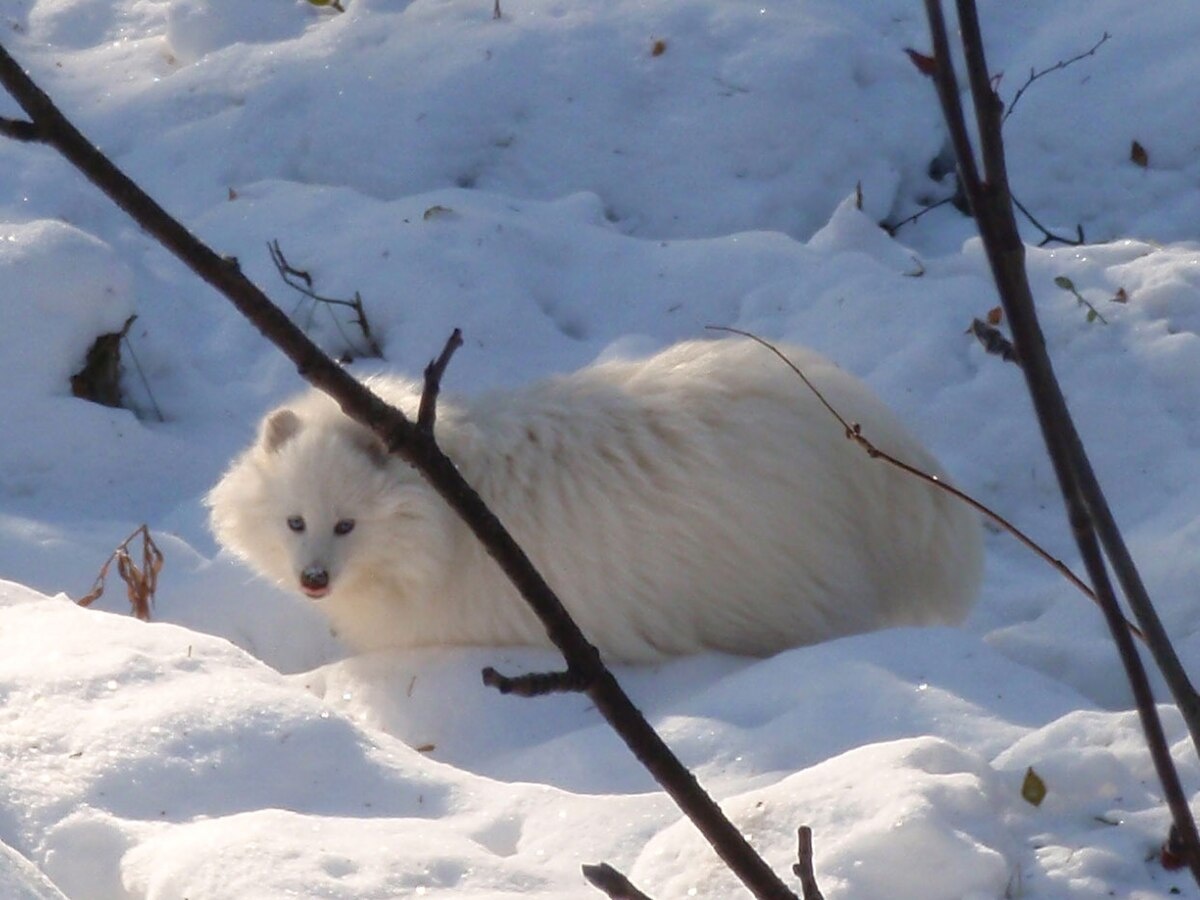
Tanukis sense and communicate with vision, touch, sound and chemicals usually detected by smelling. They also leave scent marks produced by special glands and placed so others can smell and taste them. Tanukis are vocal animals. The sounds they produce are different than those of other canids. For example, they do not bark and some of their vocalizations are more cat-like than dog-like. They may mew, whine or whimper in combination with friendly or submissive behavior and growl when frightened or aggressive. [Source: Kelly Carr, Animal Diversity Web (ADW) /=]
Tanukis uses latrines to communicate with other members of the species. A latrine is a definite site where an entire group of tanukis will both urinate and defecate. Research has suggested that tanukis use latrines for information exchange among family members as well strangers. When they encounter one another tanukis may modify their behavior based on olfactory information they pick up.
In addition to scent cues and sound communication, tanukis use some body postures — such as tail position — to indicate dominance and readiness to mate. Tactile communication if probably important between parents and offspring, as well as between mates.
Tanuki Diet and Feeding Behavior
Tanukis are opportunistic omnivores (eat a variety of things, including plants and animals), who eat pretty much anything. Animal foods include insects, crabs, grubs, crawfish, worms, centipedes, spiders, rodents, lizards, frogs, slugs, snails, birds, mammals, amphibians, reptiles, fish eggs, carrion, mollusks. aquatic crustaceans and echinoderms. They even eat poisonous toads, apparently by diluting the poison with large amounts of saliva. Among the plant foods they eat are nuts, fruits, honey, leaves, berries, acorns, roots, tubers, bulbs, wood, bark, stems, seeds and grains. [Source:Kelly Carr, Animal Diversity Web (ADW) /=]
On land, tanukis hunt insects, small rodents, snakes, lizards, amphibians and birds and eat eggs. They also seek animals in lakes, rivers, and streams using their paws to scoop prey out of the water. Tanukis have been observed diving underwater in search of food. By the sea In addition, tanukis eat mollusks,; on the seashore, crabs, sea urchins, and sea carrion are also consumed. (Colby, 1965; Sheldon, 1992) /=\
Tanukis also eat plant material according to the season and location. Kelly Carr wrote in Animal Diversity Web: During the fall, they eat mainly vegetables, including a variety of fruits, wild berries, and seeds such as oats. In the winter, when food sources are limited, they may survive on human garbage and carrion. Throughout the year, tanukis rely heavily on garbage, insects, fish, crabs, and plants such as buckthorn (Rhamnus), hornbeam (Carpinus), and the shrub Aucuba japonica. /=\
Tanukis are not cursorial (with limbs adapted to running) and thus generally don’t chase after prey like dogs and other canids can. Tanukis tend to forage on the ground or on low vegetation using their sense of smell to locate food. They have relatively poor vision for a canid. When foraging, theu tend have their nose near the ground and are relentless in their search for food. /=\
Tanuki Mating, Reproduction and Offspring
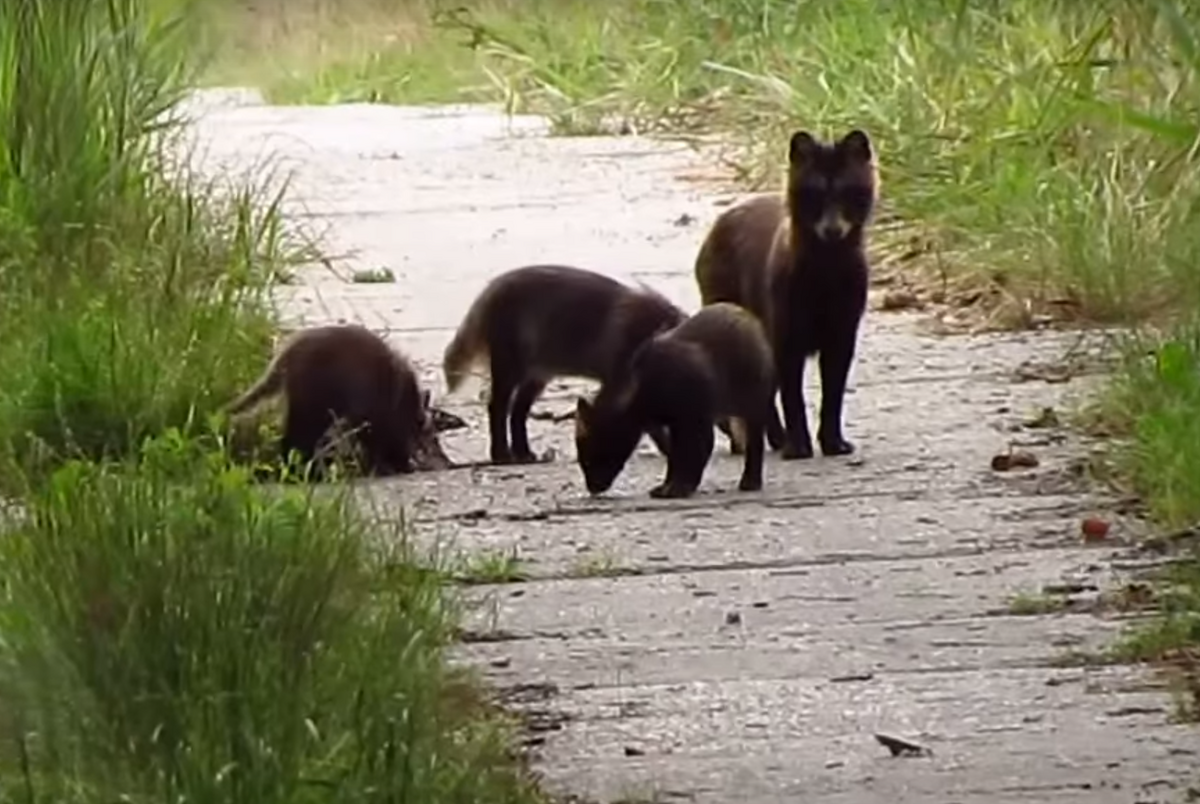
Tanukis are generally monogamous (having one mate at a time) but polygamy (males having more than one female as a mate at one time) has been reported in captivity. Tanukis engage in seasonal breeding only once per year. Mating occurs in January, February or March in late winter or early spring. The number of offspring ranges from one to 19, with the average number being six. Tanuki young are born in a den in early summer. Both parents care for the cubs, which grow quickly. The gestation period ranges from 59 to 64 days, with the average being 61 days. The age at which young are weaned ranges from 30 to 70 days and the age in which they become independent ranges from four to five months. Females and males reach sexual or reproductive maturity at nine to 11 months. [Source: Kelly Carr, Animal Diversity Web (ADW) /=]
Studies have shown that tanukis form mating pairs from year to year. Females come into heat once a year, after hibernation. Studies of tanukis in captivity show that estrus lasts from three to five days. During the breeding season, females are courted by three to four males. An inverted U-shaped tail posture in males is associated sexual arousal and expresses dominance. There is little fighting among males for mates. Copulation ties last an average of six minutes. In captivity, both scent marking and male-female interaction increased during proestrus. Pair bonds form before copulation and remain until after offspring have become independent. After pairs mate and the female gives birth, males and females spend a significant amount of time together raising the pups. /=\
Tanukis usually gives birth in dense vegetation or in burrows that have been abandoned by foxes or badgers. They are altricial. This means that young are born relatively underdeveloped and are unable to feed or care for themselves or move independently for a period of time after birth. Tanuki pups are born blind and have soft, black fur. They weigh between 60 and 115 grams at birth depending on subspecies. On the 9th and 10th day, pups open their eyes. Teeth appear by 14 to 16 days. When young are 30 to 40 days of age, about the time they are weaned, the typical face mask and guard hairs are fully developed. Juveniles are the size of small adults at 80 to 85 days of age. /=\
Male tanukis take part in the raising of young. Pre-birth provisioning and protecting are provided by the male. During the pre-weaning and pre-independence stages provisioning and protecting are done by males and females. During late pregnancy, the male brings the female food. After the young are weaned, at 30 to 40 days, the male typically watches over them while the female hunts for food. The male may also hunt while the female watches the young. At four months, the pups begin learning how to hunt for themselves by watching their parents. After a relatively short period time, they are self-supporting although they may remain with their parents, and hunt as a family, until the fall. At that point, they are independent.. /=\
Tanukis and Humans
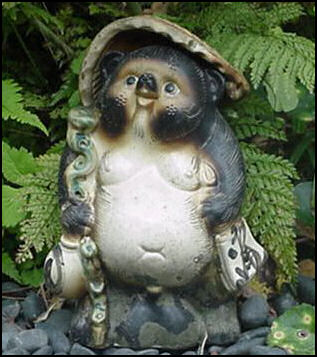
tanuki statue, with large scrotum Kevin Short wrote in the Daily Yomiuri: “The kanji used for tanuki in Japanese is the radical for a wild mammal combined with the symbol for a village. Indeed, the tanuki has always been very much at home in the agricultural countryside. Tanuki-nabe, or tanuki stew, is eaten in some mountainous areas. The fur of the tanuki is also valuable, and in the first half of the 20th century the animals were artificially introduced into eastern Europe. They have since spread and are considered an invasive alien species. [Source: Kevin Short, Daily Yomiuri, September 13, 2012]
Tanukis are capable of living in areas close to humans but they are also capable of carrying human diseases and passing on diseases from other animals to humans. Raccoon dogs were one possible intermediaries for the spread of the coronavirus — that produced Covid-19 — from bats to humans. Tanukis have been killed as possible carriers of diseases and because they sometimes eat crops and prey on small-game animals and other wildlife. Finland and the former U.S.S.R. have benefitted from the trading of the fur of Raccoon dogs. Pelts have been used for necklets, collars, and fur coats. In Japan, people used to eat raccoon dogs and use their fur for bristles for calligraphy brushes. Today, many are killed by road and rail traffic and they may be outcompeted for food by invasive raccoons. /=\
Tanukis sometimes come into gardens, farms and fields looking for food. Tanukis have adapted better than many animals to urban sprawl. They can be found in many suburbs and sometimes survive in the inner city. In Tokyo many live in storm drains around railroad tracks. Over 1,000 tanukis live in central Tokyo. In June 2008, the Japanese Emperor released an academic report with other researchers on the ecology of tanuki living on the grounds of the Imperial Palace. Tanukis are frequently seen in the bushes near railroad tracks and thrive in places with lots of trees and greenery. They generally live in groups of around 10 and thrive because of the absence of stray dogs, one of their primary enemies in rural areas.
Tanuki Conservation
Tanukis are not endangered. On the International Union for Conservation of Nature (IUCN) Red List they are listed as a species of Least Concern. In CITES (Convention on International Trade in Endangered Species of Wild) they have no special status. Their traditional habitats have been disrupted but they have adapted to new ones. In some places they are (or were) eaten for meat and their body parts were sources of traditional medicines. The bones have been used in medicines and as aphrodisiacs.[Source: Kelly Carr, Animal Diversity Web (ADW) /=]
Tanukis are very proficient at taking advantage of whatever food sources are available. They are not above forging in garbage dumps, stealing food left for cats and dogs, or raiding chicken coops, sometimes biting off the heads of birds that stick their necks out of their cages. Sometimes their interaction with dogs causes them to get distemper and other diseases.
In some places tanukis are so numerous major culls are carried out. In Shibumura, a village on an island in the Oki Islands, a major cull was carried after the animals began taking cattle feed and radishes and other vegetables from farms. Tanukis are not native to the island. A pair introduced in World War II produced a population over 2,000, three the number of people on the islands, by the early 2000s. The population has continued to grow even with the culling of 30 to 100 tanukis a year. There is now a plan to reduce the number of tanukis to 1,000 over three years using traps. Many residents oppose the move and say more should be done to promote tanuki tourism as Shibumura is one of the few places one can easily encounter and approach tanukis even during the day.
Tanuki Folk Stories
In Japanese folklore, tanukis are regarded as mischievous creatures with high sex drives and magical powers that enable them to change their shape at will. Statues of fat, jolly tanukis holding a bottle of sake are the Japanese equivalent of garden gnomes. They can be found everywhere and are said to bring good luck. Tanukis and badgers have traditionally been hunted for meat and fur. Mujina is the name a stew eaten in mountain areas made from badger, tanuki or both.
According to folklore tanukis drum their stomach and can change their shape and cause people to have hallucinations who are then tricked by tanukis. Tanukis appear more often in Japanese legends and fairy tales than almost any other animal. They are often tricksters who play practical jokes and set traps, especially if they help them get some food.
Tanukis are known in folklore for crashing parties, drinking up sake and then paying with dry leaves instead of real money. Many stories revolve around battles of wits between tanukis and farmers or are fantastic tales with tanukis changing into monsters or beautiful women. Some Japanese porno web sites offer tanuki sex toys.
Grisly Tanuki Folk Stories
Kevin Short wrote in the Daily Yomiuri: Tanuki are the absolute stars of Japanese folklore. In stories and legends, they usually appear as trickster characters, able to bakeru, or change shape at will. Perhaps because they do cause some crop damage, these bake-tanuki shape-shifters are often portrayed as mischievous or outright malicious. A typical example can be seen in the popular fairy tale known as Kachi-kachi Yama. [Source: Kevin Short, Daily Yomiuri, September 13, 2012]
This story starts off, as do many traditional Japanese fairy tales, with an elderly farm couple. The man goes out daily to work his fields, but is constantly troubled by an annoying tanuki. One day, the man uses some sticky paste to catch the critter, then trusses him up tightly and hangs him from a hook in the farmhouse. The man plans to have tanuki stew for dinner. He then goes back out to work, leaving the tanuki alone with his wife.
The clever tanuki, promising to help with the household chores, convinces the kind-hearted but very gullible woman to untie him. Free of his bonds, he bonks her over the head with a heavy pan and goes skipping away. The farmer comes home to find his wife unconscious. Later, a hare whom the old woman had befriended hears what happened, and vows to punish the naughty tanuki.
First the hare invites the tanuki on a mushroom picnic in the nearby mountains. The hare brings along the pot for making the stew, and has the tanuki carry a load of brushwood on his back for the cooking fire. Along the way, the hare slips behind the tanuki, and uses some flint stones to set the brushwood on fire. The name kachi-kachi is an onomatopoeic word for the clacking sound made by striking the flint stones against each other. Later, when the tanuki's burns heal, the hare invites him to go fishing, but sets him out in a boat made of dried mud. The mud soon melts and the tanuki falls into the river.
In most of the sterilized happy-ending versions available today, the thoroughly chastised tanuki apologizes to the old couple and mends his evil ways. The original story, however, is far crueler and scarier. The freed tanuki bashes in the poor old woman's skull, then cuts her body up into chunks and drops them into the cooking pot. The cunning trickster then shapeshifts into the form of the woman. When the man comes home, he and what he thinks is his wife enjoy a steaming hot bowl of what he thinks is delicious tanuki stew. Afterwards the tanuki shifts back into his original form, and the man realizes his horrible mistake. In the end, the tanuki is drowned in the river.
Tanukis, Arts and Crafts
The Hayao Miyazaki anime film “Hesei Tanuki Wars” (“Hesei Tanuki Gassen Ponpoko” in Japanese) is about tanukis use their magic to try to get their land back but eventually are forced to change into humans to survive. The film is set in the Tama Hills west of Tokyo, where tanuki habitat is being replaced by a housing project.
Ceramic tanukis commonly have a sake bottle in one hand, a passbook around their waist and sedge hat on their head. Some hold up a tool or object associated with profession or hobby of the owner. Statues outside restaurants and bakeries often carry a piece of cake or a bowl. Kevin Short wrote in the Daily Yomiuri: “Smiling ceramic statues of rotund tanuki can often be seen standing in front of shops and restaurants. In these cases, the tanuki is treated as a symbol of prosperity, especially for forging ahead of the competition. These statues sometimes hold a a daifukucho, or traditional account book used by merchants. [Source: Kevin Short, Daily Yomiuri, September 13, 2012]
The Shigaraki area of Koga, Shiga Prefecture, near Kyoto, is famous for producing porcelain tanukis. The first major tanuki-making kiln was started by Tesuzo Fujiwara (1876-1966), who was reportedly inspired bu seeing a tanuki on a river bank beating its belly. Making the facial expressions is said to be the hardest part of making a tanuki statue.
Image Sources: Japan Animals blogs except tanuki statues (Ray Kinnane), Wikimedia Commons
Text Sources: Animal Diversity Web animaldiversity.org ; National Geographic, Live Science, Natural History magazine, David Attenborough books, Daily Yomiuri, Yomiuri Shimbun, Japan National Tourist Organization (JNTO), New York Times, Washington Post, Los Angeles Times, Smithsonian magazine, Discover magazine, The New Yorker, Time, BBC, CNN, Reuters, Associated Press, AFP, Lonely Planet Guides, Wikipedia, The Guardian, Top Secret Animal Attack Files website and various books and other publications.
Last updated March 2025