
ENDANGERED AND THREATENED SPECIES IN JAPAN
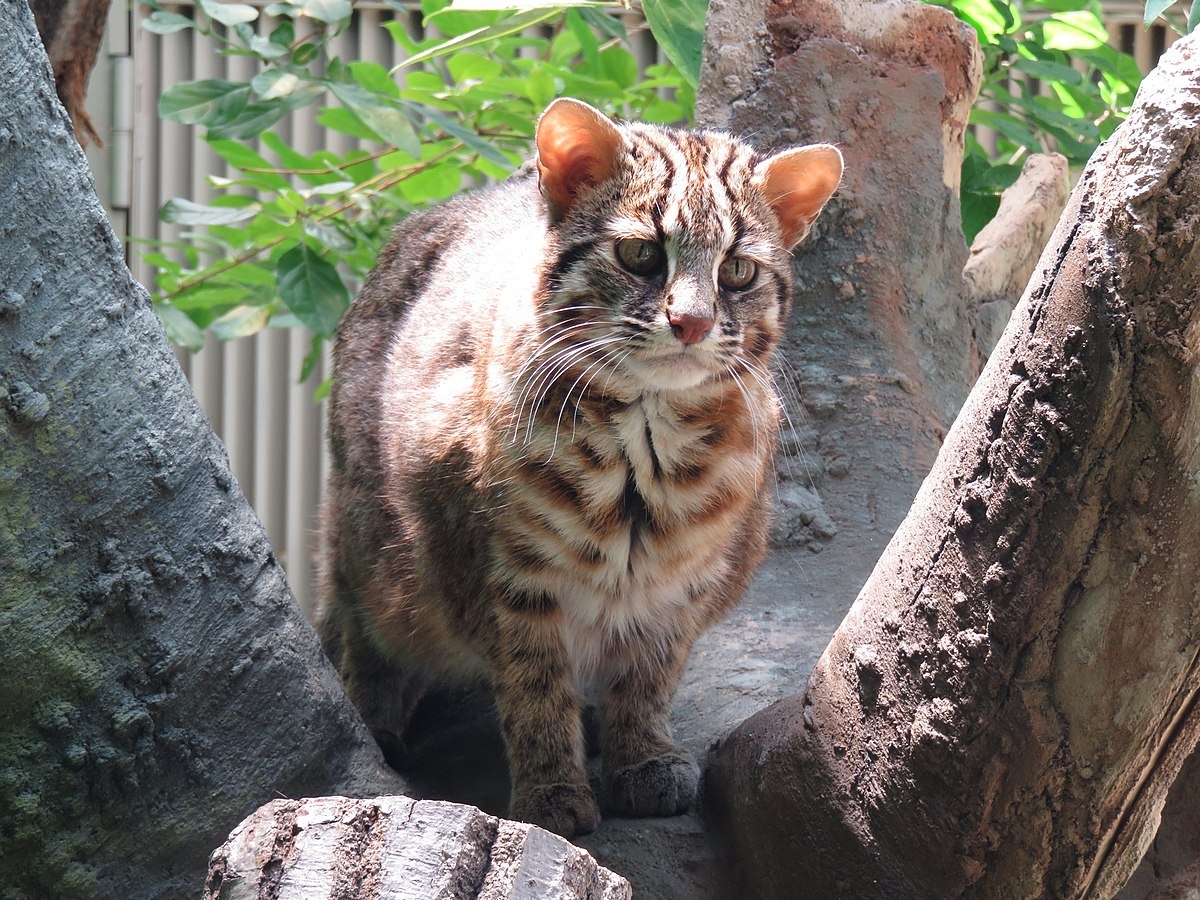
According to the 2023 International Union for Conservation of Nature (IUCN) Red List, there were 634 endangered species in Japan, including 86 species that were critically endangered, many of them insects. Endangered and threatened iconic animals in Japan include the Amami rabbit, Iriomote cat (Mayailurus iriomotensis), Japanese giant salamander, Japanese crested ibis, Short-tailed albatross, Blakiston's fish-owl, Japanese crane, Tsushima cat (Tsushima leopard cat, Felis euptilura), regarded as a subspecies of leopard cat, and Common guillemot. Amami rabbits are threatened by habitat loss and degradation due to deforestation, agriculture, and urbanization. Iriomote cats have been listed as critically a endangered species since 2008 They are threatened by loss of habitat, traffic accidents, tourist activity, and invasive dogs and feral cats. Japanese giant salamanders are protected, but still under threat as its habitats are disappearing due to concrete walls and dams.
According to a 2006 report issued by the International Union for Conservation of Nature and Natural Resources (IUCN), threatened species in Japan included 37 types of mammals, 53 species of birds, 11 types of reptiles, 20 species of amphibians, 27 species of fish, 25 types of mollusks, 20 species of other invertebrates, and 12 species of plants. Endangered species in Japan in addition to the ones named above are the Ryukyu sika, Southern Ryukyu robin, Okinawa woodpecker, Oriental white stork, green sea turtle, and tailless blue butterfly.[Source: Junior Worldmark Encyclopedia of the Nations, Thomson Gale, 2007]
Endangered Reptiles and Amphibians in Japan
Kikuzato's brook-snake, Kikuzato's stream snake (Opisthotropis kikuzatoi)
Hokuriku salamander (Hynobius takedai)
Abe's salamander (Hynobius abei)
Endangered Brackish-Water or Fresh-Water Fishes in Japan
Salvelinus japonicus
Oncorhynchus ishikawai
Oncorhynchus iwame
Plecoglossus altivelis ryukyuensis
Salanx ariakensis
Neosalanx regani
Aphyocypris chinensis
Pseudorasbora pumila
Acheilognathus longipinnis
Rhodeus ocellatus smithii
Rhodeus atremius suigensis
Tanakia tanago
Leptobotia curta
Coreobagrus ichikawai
Pseudobagrus
Pungitius
RELATED ARTICLES:
ANIMALS IN JAPAN: WILDLIFE, BIODIVERSITY, RESEARCH factsanddetails.com
JAPANESE HABITATS: FORESTS, SATOYAMA AND RICE PADDY ECOSYSTEMS factsanddetails.com
DINOSAURS AND PREHISTORIC ANIMALS IN JAPAN factsanddetails.com
EXTINCT ANIMALS IN JAPAN: WOLVES, BIRDS AND OTTERS factsanddetails.com
ALIEN SPECIES IN JAPAN: FISH, TURTLES, MONGOOSES, RACCOONS, NUTRIA factsanddetails.com
TANUKIS (JAPANESE RACCOON DOGS): CHARACTERISTICS, BEHAVIOR, FOLKLORE factsanddetails.com
BEARS IN JAPAN: CHARACTERISTICS, BEHAVIOR, SPECIES, HUMANS factsanddetails.com
Animals in Japan: Animal Info animalinfo.org/country/japan Endangered Animals in Japan: Animal Info animalinfo.org/country/japan ; List of Extinct Animals env.go.jp/en/nature Animal Info on the Amami Rabbit animalinfo.org ; Edge of Existence on the Amami Rabbit edgeofexistence.org ;
Endangered Birds in Japan
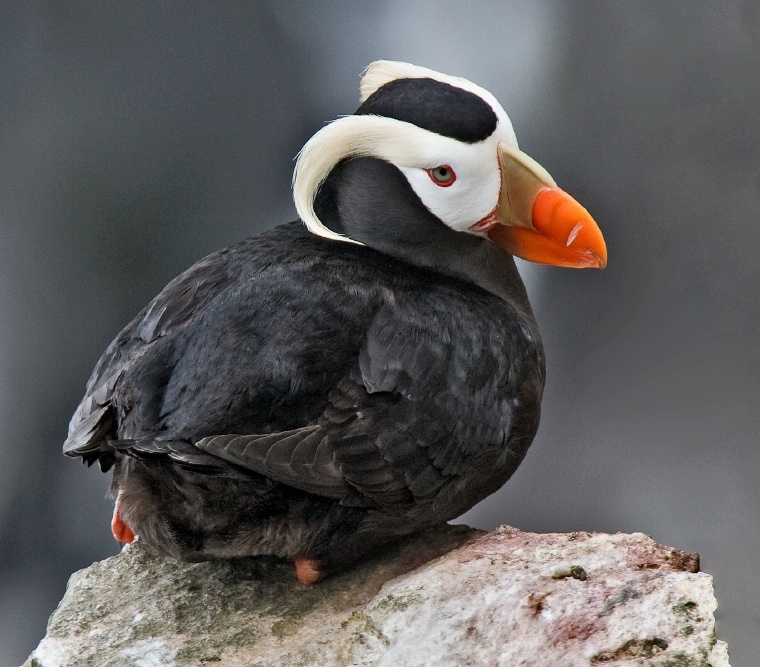
Tufted puffins were once found all over Hokkaido. Now they have largely disappeared from the area because of fishing nets that ringed much of Hokkaido and strangled the birds. The short-tailed albatross has been nearly hunted to extinction. So too with the ezo-kuroten sable, a species native to Hokkaido.
Short-tailed albatross (Diomedea albatrus)
Red-faced cormorant (Phalacrocorax urile)
White stork (Ciconia ciconia boyciana, East Asiatic subspecies)
Japanese crested ibis (Nipponia nippon)
White-tailed sea-eagle (Haliaeetus albicilla)
Buzzard (Buteo buteo toyoshimai, Ogasawara islands subuspecies)
Buzzard (Buteo buteo oshiroi, (Daito islands subspecies)
Hodgson's hawk eagle (Spizaetus nipalensis orientalis, Japanese sub-species)
Golden eagle (Aquila chrysaetos japonica, Japanese subspecies)
Crested serpent eagle (Spilornis cheela perplexus, Ryukyu islands subspecies)
Ptarmigan (Lagopus mutus japonicus, Japanese subspecies)
Japanese crane (Grus japonensis, Red-crowned crane)
Okinawa rail (Rallus okinawae)
Amami woodcock (Scolopax mira)
Guillemot, Common murre (Uria aalge inornata, Japanese sub-species)
Tufted puffin (Lunda cirrhata)
Japanese wood pigeon (Columba janthina stejnegeri, Yaeyama islands subspecies)
Japanese wood pigeon (Columba janthina nitens, Ogasawara and Iwo islands subspecies)
Emerald dove Chalcophaps indica yamashinai, Ryukyu islands subspecies)
Blakiston's fish owl (Ketupa blakistoni blakistoni, Japanese sub-species)
Pryer's woodpecker (Sapheopipo noguchii)
White-backed woodpecker (Dendrocopos Ieucotos owstoni, Amami-oshima subuspecies)
Three-toed woodpecker (Picoides tridactylus inouyei, Japanese sub-species)
Fairy pitta (Pitta brachyura nympha, East Asiatic subspecies)
White's ground thrush (Turdus dauma amami, Amami-oshima subspecies)
Bonin islands honeyeater (Apalopteron familiare hahasima, Hahajima islands subspecies)
Oriental greenfinch (Carduelis sinica kittlitzi, Ogasawara and Iwo island subspecies)
Iriomote Cats
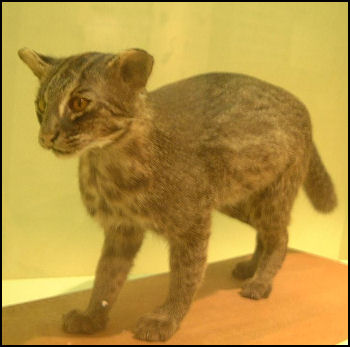
stuffed Iriomote cat Iriomote cats (Prionailurus iriomotensis) have been designated an endangered species. Only about 100 are believed to be left, all of them living on 289-square-kilometer (111-square-mile) Iriomote island in Okinawa. They are one of the world's most endangered cats and were only discovered in 1965 and confirmed as a unique species in 1967. Even so they closely resemble cats that lived three million years ago and are thought have developed from mainland Asia’s leopard cat.
Iriomote cats are solitary, nocturnal animals. About the size of house cats, they are dark, mottled brown in colored and have a rounded club-like tail. They eat lizards, fruit bats, birds, snakes, crabs, fish and insects and are equally comfortable in forests, in the trees or on the beach. They prefer coastal regions and areas around streams and rivers. The make dens and give birth in the hollows of large tree trunks and usually don’t eat like many cats do by holding their prey with their fore paws, an adaption that seems to have come from spending a lot of time in trees.
Iriomote cats are closely related to leopard cats. It was once thought they were a subspecies to leopard cats. An analysis of DNA from both cats suggests that Iriomote cats are in fact a distinct species. The population of Iriomote cats has experienced at least one if not many "extreme demographic bottlenecks". Current evidence suggests that the entire population of this species is derived from as few as two females and one male. [Source: Holly Schroeder, Animal Diversity Web (ADW) /=]
See Separate Article: IRIOMOTE CATS: CHARACTERISTICS, BEHAVIOR, CONSERVATION factsanddetails.com
Tsushima Cats
The (Tsushima leopard cat, Felis euptilura) is regarded as a subspecies of leopard cat. Known in Japanese as tsushima yamaneko, it is indigenous to Tsushima Island in Nagasaki Prefecture. The animal has a pale yellow body marked by leopard-like patterns, weighs three to five kilograms and is 50 to 60 centimeters from the tip of its tail to its nose. Their numbers have been decimated by loss of habitat due to development and struck by vehicles.
Tsushima cats have been designated by the Japanese government as a national natural treasure. There are believed to be to be only 80 to 110 left in the wild. A few more are in zoos,. A captive breeding program at the Fukuoka Zoo in Fukuoka has managed to produce a couple of offspring.
In 2014, a female Tsushima cat at Yokohama Zoorasia died after a male of the same species attacked her when they were placed together in an enclosure for breeding purposes. The female cat, named Kokoro, was estimated to be nine years old. Kokoro was bitten on the head and throat by the male after she was placed in the enclosure. The incident took place during a 35-minute absence by a zookeeper. [Source: Yomiuri Shimbun, February 5, 2014]
Amami Rabbit
Amami rabbits (Pentalagus furnessi) are found only on two small southern islands, Amami Oshima and nearby Tokunoshima between Kyushu and Okinawa. Primarily nocturnal forest dwellers and also known as Ryukyu rabbits, they are believed to be an ancestral form of rabbit that evolved before its fast-hopping, long-eared cousins. Measuring 39.7 to 53 centimeters (15.6 to 21 inches) from head to rear end, with a two to three centimeter tail and weighing two to 2.9 kilograms (6.4 pounds), they are squat and have a long snout, small ears, tiny eyes that glow red in the dark, and a stout body supported by short legs. The feet are equipped with long, sharp claws used for digging. They feeds on shoots and grasses from spring to autumn and acorns in the short winter.

fate of many Amami rabbits Amami rabbits have been described as living fossils,dating related to ancient rabbits that once lived on the Asian mainland, where they died out.
Amami and Tokuno Islands of the Nansei archipelago have a subtropical climate and were separated from the mainland of Japan about 1.5 million years ago. Amami Island covers about 932 square kilometers (360 square miles) and Tokuno Island covers about 250 square kilometers (96 square miles). Amami rabbits live in forested areas and use tree hollows and burrows for cover during the day and forage at night [Source: Claire Woodbury, Animal Diversity Web (ADW) /=]
There are estimated to be 2,000 to 4,800 Amami rabbits on Amami-oshima Island and 120 to 300 on Tokuno-shima Island. This is down from of 2,500 to 5,800 in 1986. Their numbers have been reduced by severe habitat loss and introduced predators such as domestic cats, feral dogs and mongooses, brought to Amami Oshima island in 1970 to eradicate the poisonous habu snake. Amami rabbits are particularly susceptible to predation by feral cats because of the ability of cats to climb the mountainous slopes of Amami Island. Attempts to captively breed Amami rabbits such as at Kagoshima Hirakawa Zoo, in Japan have had some success.
On the International Union for Conservation of Nature (IUCN) Red List Amami rabbits are listed as Endangered. On the US Federal List they are classified as Endangered. In CITES (Convention on International Trade in Endangered Species of Wild) they have no special status. Amami rabbits were declared a Special National Monument by the government of Japan in 1963 and that hunting and trapping them was banned. Some of their habitat was cleared to provide wood for the paper industry. [Source: Claire Woodbury, Animal Diversity Web (ADW) /=]
See Amami Rabbits Under MEDIUM-SIZED MAMMALS IN JAPAN: FOXES, LARGE BATS, RABBITS, HARES, FOLKLORE factsanddetails.com
Flying Foxes
Bonin flying foxes are among the endangered animals in the Ogasawara island. When lemon and agave production was introduced to the islands the bats began eating these and neglecting their role in spreading the seeds of rare plants on the island. Now the bats are considered a pest by farmers and are threatened by feral cats. An effort is being made to round up feral cats and ship them to Honshu.
Ryukyu flying foxes (Pteropus dasymallus) range from the Ryukyu islands of Japan, which run from southern Japan to Taiwan, through parts of Taiwan. Japanese Ryukyu islands on which they are found include (Kuchinoerabu, Takara, Okinawa, Ishigaki, Iriomote, Hatoma, Obama, Yonakuni and some smaller islands. In Taiwan the reside in Kashoto Island, east coast Taiwan, and the Daito Islands. Ryukyu flying foxes are in the suborder Megachiroptera of bats, which is comprised of large fruit bats and flying foxes, which are the world’s largest bats. Their average weight is 0.44 kilogram (a little less than a pound). Ryukyu flying foxes are slightly smaller than Indian flying foxes, which are among the world’s largest bats. Ryukyu flying foxes have a a wingspan of 1.24 to 1.41 meters (4 foot 1 inch – 4 foot 8 inches.
On the IUCN Red List Ryukyu flying foxes are listed as Near Threatened. In CITES (Convention on International Trade in Endangered Species of Wild) they are in Appendix II, which lists species not necessarily threatened with extinction now but that may become so unless trade is closely controlled. Deforestation, hunting, and typhoons are threats. Clearing away forests for agriculture takes away roosting and food supplies. The Taiwanese fruit bat’s extinction in the wild is believed to have been caused by hunting and deforestation. Typhoons can have a big impact on forest structure by knocking down trees.
See Ryukyu Flying Foxes Under MEDIUM-SIZED MAMMALS IN JAPAN: FOXES, LARGE BATS, RABBITS, HARES, FOLKLORE factsanddetails.com
Endangered Animal List of Japan in 2012
In August, The Yomiuri Shimbun reported, the Environment Ministry compiled a revised Red List of animals and plants, dividing them into nine groups according to their respective degree of extinction risk. The list officially classified nihon-kawauso, or Japanese otter, as an extinct species. It also named hamaguri clams and gengoro, or diving beetle, as endangered species for the first time. It was surprising to see the list expanded to include such familiar living things. [Source: Yomiuri Shimbun, November 1, 2012]
Does this mean we can't eat hamaguri clams anymore? Although the list is not legally binding, the Species Preservation Law prohibits hunting species whose population is dwindling. The law also restricts development projects in areas where such species live. Hamaguri clams are not covered by the law, meaning fishermen are not banned from gathering them. At any rate, a large amount of hamaguri consumed in Japan are imports. To increase the volume of domestically grown hamaguri, it may be necessary to impose stricter controls on collecting them as a food resource.
Can the status of the animals and plants on the Red List change? The populations of the sea lion (todo), and white-tailed eagle (ojirowashi) has rebounded. The revised Red List has lowered these species' degree of extinction risk. The list retained the status of toki, or Japanese crested ibis, which had been classified as "extinct in the wild." This year, several ibises were born in the wild, marking the first such births in 36 years. The ministry explained why it decided to retain the protected bird's status, saying, "It is necessary to closely watch whether the species will be able to breed in a stable manner." It is hoped the ibis' status on the Red List will be lowered when the list is revised again in five years.
Efforts to Help Endangered and Threatened Animals in Japan
Japan founded an environmental agency in 1971 but took 20 years to put together an endangered animal list. As of the mid 2000s, a total of animals had become extinct in Japan, most of the insects, and another 303 were listed as in the danger of extinction. Some species of plants and animals have been designated as “natural monuments,” cultural assets of the people protected by special laws that make destroying them a crime. Among the 200 species that rank as monuments are red-crowned cranes, Blakiston fish-owls, and serows. But while such designations protect the animals protection of their habits is often overlooked or neglected.
A large network of national parks has been established to protect important areas of flora and fauna as well as thirty-seven Ramsar wetland sites. Four sites have been inscribed on the UNESCO World Heritage List for their outstanding natural value. Japan’s first national parks were created in 1934 not for the benefit of wildlife but to provide recreational areas for visitors and money for local people. Today Japan’s national parks and quasi national parks are administered by the Ministry of the Environment whose mandate is to secure “the coexistence of people and nature.” According to ministry literature the management of parks “requires consideration of people’s property rights and various industrial activities in the areas concerned.”
There have been calls for the protection and breeding of rare species but funding for such initiatives has been minimal. The Bonin fruit bat is the only mammal native to the Ogasawara Islands. In 2009 a special 14 hectare protection zone was set up for the endangered species. The islands have many unique species of land snails.
Mikado-chozame sturgeon, a species of sturgeon believed to have become extinct in rivers in Japan, has been bred in captivity by scientist at Hokkaido University. The achievement not only is good for the species and returning them to the wild but is also for people who want to raise the fish for caviar. Only a few of the fish exist in the wild on Sakhalin Island in Russia.
Japanese serows have been designated as protected species and special natural monument by the Japanese government. They were hunted to near extinction by people in the past but now are found in relatively healthy numbers in many places. Their main threats are habitat loss and degradation but there are a lot of forests in Japan, may with few humans nearby, where they can live. Because they browse on trees, they are sometimes regarded as pests by forestry officials as they damage planted trees. They have been killed in the name of forest management to control damage to forestry plantations. They are also regarded as crop pests in some places. See Separate Article: JAPANESE SEROW: CHARACTERISTICS, BEHAVIOR. CONSERVATION factsanddetails.com
Elephants and Ivory in Japan
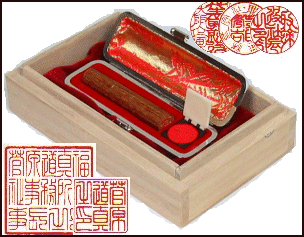
signature stamp (chop) Japan was once a major destination for ivory from elephants but not so much anymore. Much of the ivory used in Japan was used to make signature stamps (chops).
In June 1997, at a CITES (Convention in International Trade in Endangered Species) conference, a secret-ballot pushed by Botswana, Namibia and Zimbabwe ended the eight-year ivory ban. According to the deal most of the world’s stockpiled ivory would be sold to Japan in a tightly controlled operation to make sure no poached ivory entered the market. In June 2007, three African nation—South Africa, Botswana and Namibia — were given permission to sell 60 tons of ivory to Japan by CITIES.
About 2.8 tons of ivory from African elephants was confiscated at a port in Osaka in August 2006 from a cargo ship that sailed from Malaysia. The tusks were found in 608 pieces and came from the equivalent of 130 elephants. There were also 18,000 pieces of ivory cut in blocks to make seals. It was the largest seizure of ivory ever. Government officials had difficultly deciding whether to destroy or preserve the confiscated ivory. Smuggled ivory is usually incinerated but the cache was so large incinerating it was regarded as wasteful. A company president who was supposed to receive the shipment received a one-year suspended prison sentence and was fined ¥800,000.
Illegal Animal Trade in Japan
Many illegally sold wild animals end up in the Japan as well as the United States and Germany. Single back lizards and other protected reptiles are sometimes mailed from Australia to Japan where they sell on the black market for up to $5,000. Rare radiated tortoises and ring-tailed lemurs from Madagascar have been stolen from research centers and children’s zoos in Japan offered for sale on the illegal animal market through pet shops.
Four baby orangutans were once seized from the apartment of a former pet shop employee in Osaka. Five people, including the pet shop owner and the people who smuggled the animals into Japan, were arrested on charges of smuggling rare animals. The animals were purchased on the black market, sedated and brought into Japan in their carry-on luggage. The animals passed through customs at Kansai Airport without being discovered.
There is strong demand for rare reptiles in Japan. In December 2002, a gavial was seized by customs officials at Kansai International Airport. In August 2005, a pet shop owner and the head of a tropical garden were arrested for trying to sell rare false gavial crocodile hatchlings. In May 2004, three Japanese men were arrested in South Africa with 37 endangered armadillo-girdle lizards, which sell for around $3,500 each in Japan. There only believed to be around 2,000 to 3,000 of them left in wild due to over hunting for the pet trade.
Tortoises and turtles are particularly sought after because their association with long life. Some offer rare star tortoises from India and Pakistan can fetch between $20,000 and $25,000 in Japan. In January 2011, two Japanese men were arrested at Los Angeles International Airport for trying to smuggle 50 live endangered tortoises and turtles — hidden in snack food boxes — into the United States.
There are illegal auctions for wild birds’such as white eyes, Japanese bush warblers and blue and white flycatchers — caught in Japan. Most of the birds are caught in forests using mist nets that are hung between trees by poachers. The birds are frequently bought by bird fanciers who value them for their songs. In some cases poachers are paid ¥1,500 for a bird that is bought at an action for ¥3,000 and ultimately sold to a bird fancier for ¥10,000.
In May 2007, 40 slow lorises — lemur-like creatures from South Asia that are a protected species under the CITES international treaty — were seized by customs officials at Narita Airport. The animals were found in small boxes brought in by a 38-year-old man on a flight from Bangkok. The animals were alive when seized but about a dozen died later.
There is lax enforcement against smuggling animals and the penalties are light if you get caught. There is a thriving underground market and a number of websites that offer rare animals. In some cases you can get animals in shopping mall pet stores. Authorities don’t put a lot of emphasis on catching animal smugglers. They insist they have more important things to worry about.
Cracking Down on the Online Endangered Species Trade in Japan
In 2010, the Yomiuri Shimbun reported: The Environment Ministry has warned that a large number of endangered species and products made from them, including furs, are being traded on Internet auction websites and that this may violate a law. Even if users of auction websites offer endangered species or products made from them without realizing that this kind of trade is banned, they may face charges for violating the Law on the Conservation of Endangered Species of Wild Fauna and Flora, which restricts the domestic trade in endangered species and products derived from them. [Source: Yomiuri Shimbun, January 27, 2015]
“The ministry is calling on online users to not put such items up for auction. A company president was arrested in September on suspicion of violating the law for selling leopard pelts on Yafu-oku (Yahoo auction), the nation’s largest online auction site. “I thought it was all right to put it up for auction, because many fur coats and bags made of fur are sold on the Internet,” he said. The man, a secondhand store operator in Tokyo, had bought by January last year six leopard pelts, complete with heads, for about ¥60,000 from two persons, including a woman in Saitama Prefecture, and put them up for auction. Two of them were bought by a Saitama man for a total of ¥110,000.
“The law classifies leopards as an international endangered species. Those who wish to trade leopard pelts must register the products in advance at the Japan Wildlife Research Center, an incorporated foundation based in Sumida Ward, Tokyo, and must receive registration certificates. The pelts in question were not registered at the center, and the company president was indicted and fined ¥300,000.
“The two former owners of the leopard pelts and the man who bought them on the auction website were also referred to prosecutors, but they were not indicted. “I heard the two persons who sold the pelts to me did so to pay off inheritance taxes,” the company president said. “The other three involved are ordinary people, and I feel terribly sorry I caused them trouble.”
“According to the ministry’s Wildlife Division, those trading international endangered species on auction websites are also required to have the same registration certificates that stores are obliged to obtain. International endangered species include the leopard, elephant, sea turtle, slow loris and Asian arowana, a freshwater fish. A division official said, “If leopard pelts and unprocessed ivory are traded without the registration certificates, it constitutes a violation of the law even if the sellers and buyers are not professional traders.”
“However, on the Yahoo auction site, a leopard pelt was put up for auction from Jan. 17 to 19 by a person who claimed his father brought it into the country about 50 years ago. The person did not mention anything about a registration certificate. When a search online was made using such key words as “unprocessed ivory,” about 30 results were displayed. Some items did not have registration certificates attached. An official of Yahoo Japan Corp., which operates the auction website, said: “We have provided guidelines about the use of the auction site and issued warnings when items were put up for auction in trading categories in which endangered species may be sold. From now on, we’ll contact the authorities concerned more quickly.”
“The law was established in 1992 to protect wild animals and plants that are believed to be at risk of extinction. The law covers 688 animal and plant species under international protection, including leopards, and 89 domestic species designated by the Environment Ministry, including the toki (Japanese crested ibis). Except when permission is issued for academic research and some other purposes, the law prohibits capturing, gathering and trading those species of animals and plants.The law was revised in June 2013, and the punishments for violations were made more stringent with prison terms increased from one year to five years. The maximum fine was also raised 100 times to ¥100 million.
Image Sources: Japan-Animals blog,Wikimedia Commons
Text Sources: Animal Diversity Web animaldiversity.org ; National Geographic, Live Science, Natural History magazine, David Attenborough books, Daily Yomiuri, Yomiuri Shimbun, Japan National Tourist Organization (JNTO), New York Times, Washington Post, Los Angeles Times, Smithsonian magazine, Discover magazine, The New Yorker, Time, BBC, CNN, Reuters, Associated Press, AFP, Lonely Planet Guides, Wikipedia, The Guardian, Top Secret Animal Attack Files website and various books and other publications.
Last updated March 2025