
ASIAN BADGERS

Asian badgers (Meles leucurus) are also known as sand badgers. Their range extends from eastern Russia to Mongolia and China and is bordered in the south by the Himalayas, Kazakhstan, Kyrgyzstan and the Korean Peninsula. The western boundary of their range is the Ural-Volga region of Russia, along which, they are sympatric with European badgers (Meles meles). |=|
Asian badgers occupy a diverse range of habitats — deciduous, coniferous and mixed forests, steppes, semi-deserts, tundra, mountains and alpine meadows. In forested areas they often dig burrows on the south-facing slopes of ravines, where the snow melts earlier. They prefer areas with well-drained soil. In steppe regions they often occupy gullies. They may burrow in the banks of coastal lakes, as well as near the bottom of sand dunes. They always stay near a water source. In the Caucasus Mountains, they range vertically from sea level up to 3000 meters (to 9843 feet).
On the International Union for Conservation of Nature (IUCN) Red List Asian badgers are classified as a species of “Least Concern”. In the past Asian badger's hair was used for various types of brushes. Their hide was used to make rugs and leatherwork. Asian badgers are sometimes regarded as crop and livestock pests. There is evidence of Asian badgers preying on calves and foals. They like to eat grapes in vineyards, and have damaged fences to reach them.
RELATED ARTICLES:
BADGERS: CHARACTERISTICS, BEHAVIOR AND REPRODUCTION factsanddetails.com
JAPANESE BADGERS: CHARACTERISTICS, BEHAVIOR, FOLKLORE factsanddetails.com
MUSTELIDS: CHARACTERISTICS, BEHAVIOR, REPRODUCTION, TYPES, SPECIES factsanddetails.com
WOLVERINES: CHARACTERISTICS, BEHAVIOR AND REPRODUCTION factsanddetails.com
HOG BADGERS: CHARACTERISTICS, BEHAVIOR AND REPRODUCTION factsanddetails.com
FERRET-BADGERS: CHARACTERISTICS, BEHAVIOR, SPECIES factsanddetails.com
STINK BADGERS: CHARACTERISTICS, BEHAVIOR, SPECIES factsanddetails.com
Asian Badger Characteristics and Diet
Asian badgers are one of the smaller badger species. They range in weight from 3.5 to nine kilograms (7.7 to 19.8 pounds) and have a head and body length that ranges from 49.5 to 70 centimeters (19.5 to 27.5 inches). The average size and weight of Asian badgers varies regionally. Those found in Siberia are larger than those from the far-Eastern part of the range. Their weight also varies according to the time of the year, peaking in the fall before winter. Sexual Dimorphism (differences between males and females) is present: Males are generally larger, but there is variation in the degree of sexual dimorphism between different populations.[Source: Corey Oldham, Animal Diversity Web (ADW) |=|]
Asian badgers have a stocky, somewhat wedge-shaped body. Their limbs are short, with strong elongated claws that are 2.2 to 2.6 centimeters in length and are well-adapted for digging. The fur of Asian badgers is dense and coarse. They are generally grayish-silver with a white face and dark brown or black stripes running over each eye. There are regional fur color variations. Specimens from Mongolia have a relatively lighter coat, while those from the Amur region are particularly dark in color. Those that live in mountains are generally darker than those that live in the plains. |=|
Asian badgers are omnivores (eat a variety of things, including plants and animals) and consume a wide variety of foods. Animal foods include birds, mammals, amphibians, reptiles, fish eggs, insects mollusk and earthworms. Among the plant foods they eat are berries, pine nuts, leaves, wood, bark, stems, seeds, grains, nuts and fruit. Diet is determined largely by food availability. Throughout much of their range, earthworms are the most common food source. Insects make up a large chunk of the diet of badgers living in more arid regions, such as southern Mongolia. A population on Bol’shoi Chukhtinskii Island in Russia may subsist largely on pine nuts.
Asian Badger Behavior and Reproduction
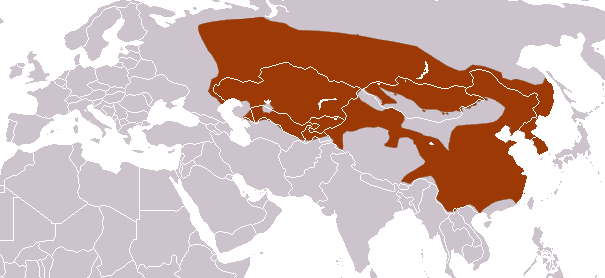
Asian badgers are fossorial (engaged in a burrowing life-style or behavior, and good at digging or burrowing), nocturnal (active at night), motile (move around as opposed to being stationary), sedentary (remain in the same area) and engage in hibernation (the state that some animals enter during winter in which normal physiological processes are significantly reduced, thus lowering the animal’s energy requirements). They are most active within approximately 400 to 500 meters of their den. [Source: Corey Oldham, Animal Diversity Web (ADW) |=|]
Asian badgers are primarily active at night. They can be fairly gregarious, living in communal setts (underground burrows) with multiple tunnels and entrances. Asian badgers often hibernate in family groups, adults share dens with cubs born during the previous year. Yearlings and older single badgers occupy individual dens. In places with limited food availability, the badgers are often solitary.
Asian badgers sense and communicate with vision, sound and chemicals usually detected by smelling. They also leave scent marks produced by special glands and placed so others can smell and taste them. Badgers of the genus Meles have a relatively high ratio rod to cone cells and have a tapetum which reflects light back through the retina — two features that boost night vision. The eyes of Meles badgers are relatively small for nocturnal mammals. This means that eyesight may be of less importance to the animal than other senses. Meles badgers have an extremely well developed sense of smell. Scroll bones in the nasal cavity provide a large surface area for sensory tissue. Meles badgers produce a large variety of noises covering a wide range of frequencies.
Asian badgers are polygynandrous (promiscuous), with both males and females having multiple partners. They engage in delayed implantation (a condition in which a fertilized egg reaches the uterus but delays its implantation in the uterine lining, sometimes for several months). Mating occurs primarily in the spring but they can mate year-round and fertilization can occur at any time, but cubs are generally only born between mid-January and mid-March as a result of the delayed implantation. The number of offspring ranges from one to five. Females reach sexual or reproductive maturity at 13 to 14 months; males do so at 12 to 15 months. Parental care is carried out by females. |=| Badgers of genus Meles show alloparental behavior, where related individuals help raise the young. These relatives may chase the young into the den when they are threatened, or chase away predators.
Japanese Badgers
Japanese badgers (Meles anakuma) are endemic to Japan, inhabiting the islands of Honshu, Kyushu, Shikoku, and Shodoshima. A close relative of Eurasian badgers and once regarded as subspecies of them, Japanese badgers are known as anaguma (literally "hole bear") in Japan. Their distribution and absence in Hokkaido tends to suggest that they arrived on a land bridge from Korea in ancient times. They like to make their dens on heavily forested slopes.
Japanese badgers are terrestrial mammals that inhabit deciduous woods, mixed woods and thickets up to 1700 meters (5577 feet). They are occasionally observed in suburban and agricultural areas. Their dens, known as setts, tend to be dug in covered areas to allow the animals emerge and return without being noticed. Hills and slopes are preferred locations for dens because the drainage is better and it is easier to remove dirt. Their lifespan in captivity is up to 19.5 years. Their average lifespan in the wild is around 10 years.[Source: Julie Riney, Animal Diversity Web (ADW) /=]
Japanese badgers are primarily carnivores (eat meat or animal parts) but are also recognized as insectivores (eat insects), vermivores (eat worms) and omnivores (eat a variety of things, including plants and animals). Their diet consists mainly of insects, earthworms, and fruit. They are opportunistic foragers, rather than hunters and have been known to eat carrion, nuts, acorns, leaves, acorns, other items from the forest and small animals. Japanese badgers rely heavily on their sense of smell to locate food and prey.
See Separate Article: JAPANESE BADGERS: CHARACTERISTICS, BEHAVIOR, FOLKLORE factsanddetails.com
European Badgers
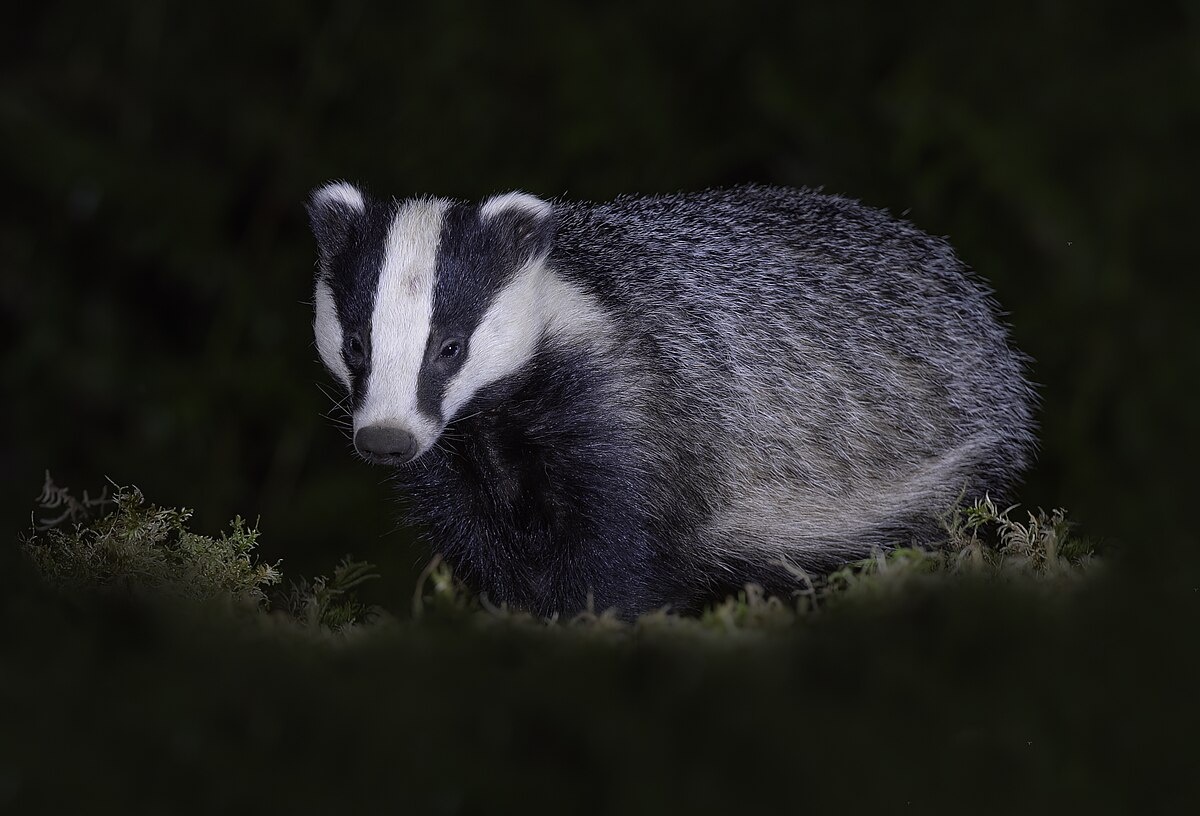
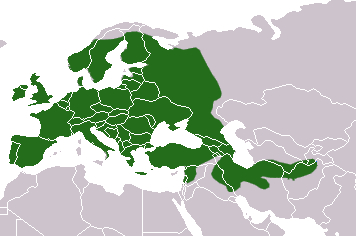
European badgers (Meles meles) are fairly widespread throughout Europe as far east as the Ural Mountains in Russia. They are present as far west as Ireland and Spain, as far north as the Arctic Circle and as far south and east as Turkey, Iran and Afghanistan. European badgers are designated as a species of least concern on the International Union for Conservation of Nature (IUCN) Red List and have no special status on the Convention on International Trade in Endangered Species (CITES). [Source: Annie Wang, Animal Diversity Web (ADW) |=|]
European badgers are highly adaptable and live in a wide variety of environments. They prefer deciduous, conifer, or mixed woodlands adjacent to open fields but also live in hedgerow areas, scrub, riverine habitats, farms, grasslands, steppes, and semi-deserts. When searching for a sett (den) location, they favor tree-, shrub- and rock-covered areas that will cover the entrance to their sett. Other favorable sett conditions include well-drained soils that that are easy to excavate and are relatively free of human disturbance. They also prefer areas with a moderately wet climate and rich pastures, as this is conducive earthworms, one of their primary prey. They are typically at elevation of 1000 meters ((3280 feet) or less. Occasionally, they are found in suburban and urban areas of Great Britain, where human population densities are high. |=|
The average lifespan of European badgers in captivity is 16 years. One individual lived to be 19 years old. The oldest known wild European badger lived to be 14 years old, but it is believed few live longer than six years in the wild. Mortality rates of cubs within their first year are high, ranging from 50 to 65 percent. The mortality rate for adults is 30 percent for males and 24 percent for females. |=|
European badgers may control hedgehog and wasp populations. Their hair is sometimes used to make brushes and their skin has been used to make rugs. These animals can be crop pests and carry domestic animal diseases. They have been known to damage agricultural crops and fruit gardens. Their burrowing activity can damage buildings, fences, and gardens. They occasionally kill poultry and vectors for animal strains of tuberculosis. |=|
European Badger Characteristics and Diet
European badgers have a stocky body with short robust limbs and a short tail. They range in weight from 6.6 to 16.7 kilograms (14.5 to 36.8 pounds), with their average weight being 11.7 kilograms (25.7 pounds). They have a head and body length ranging from 56 to 90 centimeters (22 to 35.4 inches). Their tail is 11.5 to 20.2 centimeters (4.5 to 8 inches) long. Their average basal metabolic rate is 16.647 watts. Sexual Dimorphism (differences between males and females) is present: Males are larger than females. Females range in weight from 6.6 to 13.9 kilograms (14.5 to 30.6 pounds), and males range in weight from 9.1 to 16.7 kilograms (20 to 36.8 pounds). Males and females have roughly the same head-body length. [Source:Annie Wang, Animal Diversity Web (ADW) |=|]
European badgers have distinguishing dark stripes that run from their nose, over their eyes, to each ear. These two dark stripes are separated by a white stripe. The fur on their back is grizzled gray. Each individual hair is white at the base and darker at the tip. Belly fur tends to be dark gray or black. Their skulls are massive and heavy. Their teeth are suited for an omnivores diet comprised of plants and animals. European badgers have flattened molars, small incisors, and prominent canines. The dental formula is I3/3, C1/1, P4/4/, M1/2 = 38. There are eight recognized European badger subspecies. They tend to differ from one another based on color pattern and often on general dimensions, skull size, upper molar form, and presence of premolars. However, most of these characteristics are not well-defined. |=|
European badgers are primarily carnivores (eat meat or animal parts) but are also recognized as vermivores (eat worms), omnivores (eat a variety of things, including plants and animals). Animal foods include worms, insects, mammals, amphibians, birds, reptiles, fish carrion and mollusks. Among the plant foods they eat are roots, tubers, seeds, grains, nuts and fruit. They also eat fungus.
Earthworms are a major food source for European badgers. Many aspects of their behavior and lifestyle revolve around attaining them. Annie Wang wrote in Animal Diversity Web: European badgers eat multiple species of earthworms. When foraging for earthworms, badgers remain in a relatively small space (roughly one hectare). They grab ahold of their prey using their incisors, and if the earthworm breaks into multiple pieces, European badgers find and eat the remaining pieces. European badgers are solitary foragers, regardless of social structure. In addition to earthworms, European badgers also prey on rabbits, voles, shrews, moles, mice, rats and hedgehogs. They also eat a wide variety of large insects, including beetles, leatherjackets, caterpillars, and wasps. They target wasps, in particular, by eating their nests. Wasps are consumed by badgers seasonally and in larger volumes. European badgers also eat carrion and occasionally eat birds, frogs, fish, newts, lizards, slugs, and snails. European badgers also feed on more than 30 different kinds of fruit, including pears, plums, raspberries, cherries, strawberries, acorns, beechmast, and blackberries. Some cereals that they consume include maize, oats, wheat, and occasionally barley. Badgers also eat tubers and occasionally fungi. |=|
European Badger Behavior
European badgers are terricolous (live on the ground), fossorial (engaged in a burrowing life-style or behavior, and good at digging or burrowing), nocturnal (active at night), crepuscular (active at dawn and dusk), motile (move around as opposed to being stationary), territorial (defend an area within the home range), solitary and social (associates with others of its species; forms social groups). European badger territories range in size from a little as 2500 square meters up to 1.5 few square kilometers. Territory size depends on food quality and abundance as well as the amount of area suitable for excavating setts (dens). When food availability is low, home ranges tend to be larger. European badgers demarcate territorial boundaries at latrine sights with gland secretions. Although they are territorial they are fairly tolerant of animals from other groups. [Source:Annie Wang, Animal Diversity Web (ADW) |=|]
Compared to most other Mustelid species, Annie Wang wrote in Animal Diversity Web: European badgers are very gregarious. Social groups may have between two and 23 individuals. Average groups consist of one to six adults and their offspring, and group-size depends on resource quality and abundance. Social behavior in European badgers may be due to instability in food availability and foraging conditions. In social populations, each group contains a single dominant breeding pair that performs a majority of reproductive efforts. However, when resources are plentiful other individuals tend to reproduce as well. There is no hierarchy after the dominant breeding pair. Although dominant males have the largest individual territories, male territories frequently overlap. Social groups form primarily through the retention of offspring within their natal group. Migration between groups also takes place. The degree of sociality in European badgers depends great on environmental conditions. Badgers in low-density populations tend to be more solitary while badgers in high-density populations tend to live in groups. Food availability also influences badger sociality. When food availability is low, badgers belonging to clans may revert to more solitary behavior. |=|
Group living in European badgers decreases female reproductive success as typically only the dominant female breeds. Dominant females are also known to kill intra-group cubs that are not their own. Various factors drive European badgers to form groups rather than remain solitary. Food resources that have high renewal rates or have patchy spatial distribution favor group living because resources are plentiful and localized. Lack of unoccupied habitat suitable for setts also makes group living more favorable because retention of offspring within a natal group is less costly than dispersal. European badgers do not exhibit the high degree sociality known in other social carnivores, (such as gray wolves). For example, they exhibit little cooperative behavior in their breeding biology, suggesting that European badgers represent an early stage in the evolution of carnivores (eat meat or animal parts), sociality.|=|
European badgers construct large, communal burrow systems called setts. Throughout each group territory there are multiple setts. The main sett generally contains many adults and is centrally located in the group's territory. Younger individuals tend to reside in peripheral setts. Badgers often line their setts with dried grass or other plant material, which are primarily used during winter and autumn. Other resting sites include under rocks, in shrubs, in tree hollows, and in man-made structures that may be scattered throughout a group's territory. Non-sett resting sites are used more frequently during spring and summer. European badgers are nocturnal (active at night), with peak activity periods occurring during dusk and dawn. |=|
European Badger Mating, Reproduction and Offspring
European badgers are polygynous (males have more than one female as a mate at one time) and polygynandrous (promiscuous), with both males and females having multiple partners. They engage in year-round breeding and employ delayed implantation (a condition in which a fertilized egg reaches the uterus but delays its implantation in the uterine lining, sometimes for several months). They breed once a year and can breed throughout the year, but breeding peaks from February to May and June to September. The gestation period ranges from nine to 12 months, with the delayed implantation time included. The number of offspring ranges from one to six, with the average number of offspring being three. [Source: Annie Wang, Animal Diversity Web (ADW) |=|]
European badgers are usually polygynous. Among those living in social groups, a dominant male and female pair are the primary breeders. Males do not defend access to estrus females from other males. Often, males expand territory ranges during breeding season in an attempt to include more females within their territories, and thus increase their number of matings. Extra-group matings occur frequently. Females may advertise estrus to extra-group males through scent marking. Female European badgers have the ability to conceive while pregnant (superfetation). This combined with delayed implantation means that mixed-paternity litters are not uncommon. This is beneficial to females as it reduces the risk of infanticide by male badgers. |=|
In areas with low population densities where badgers tend to be solitary, 90 to 95 percent of adult females successfully produce and implant embryos that proceed to full term pregnancy. Only around 40 percent of females from high population density areas successfully implant embryos and proceed to full term pregnancy. Although more than 90 percent of females in a given social group are capable of reproducing, most do not. Usually, a single dominant female reproduces, and dominant sows are known to kill the cubs of intragroup sows. However, more than one female in the social group may successfully breed depending upon the quality and abundance of available food resources and the number of setts in the group's territory. |=|
European badger cubs (young) are altricial, meaning they are relatively underdeveloped at birth. Average birth-weight is 75 grams. Parental investment is is minimal, Parental care is provided by females. Males are not involved in the care of cubs. Females nurse cubs as well as provide solid food after weaning. Cubs emerge from their dens around eight to 10 weeks after birth. The average weaning age is 2.5 months. Offspring often have a post-independence association with their mother. Non-breeding females have been observed grooming and guarding young in the absence of their mother, but generally European badgers are not cooperative breeders. On average males and females reach sexual or reproductive maturity at one year.
American Badgers
American badgers (Taxidea taxus) are found primarily in the Great Plains region of North America but occur north through the central western Canadian provinces, throughout the western United States, and south into the mountainous areas of Mexico. They have expanded their range since the turn of the 20th century and are now found as far east as Ontario, Canada. Badgers prefer to live in dry, open grasslands, fields, and pastures but are also found in forests, high alpine meadows, deserts, dune areas, grasslands, chaparrals, mountains, marshes and other wetlands and agricultural areas.[Source: Nancy Shefferly, Animal Diversity Web (ADW) |=|]
American badgers range in weight from four to 12 kilograms (8.8 to 26.4 pounds). They have a head and body length ranging from 52 to 87.5 centimeters (20.5 to 34.5 inches). Their tail is only 10 to 15 centimeters (four to six inches) in length. Their average basal metabolic rate is 15.062 watts. Sexual Dimorphism (differences between males and females) is present: Males are significantly larger than females. [Source: Nancy Shefferly, Animal Diversity Web (ADW) |=|]
American badgers are stocky and have a flattened body and short legs. The fur on their back and flanks ranges from grayish to reddish. Their belly area is a buffy color. Their face is very distinct. The throat and chin are whitish, and the face has black patches. A white dorsal stripe extends back over the head from the nose. In northern populations, this stripe ends near the shoulders. In southern populations, however, it continues over the back to the rump. Badgers in northern populations are larger than those from southern populations.
American badgers are not endangered and fairly common in their much of their range. They are designated as a species of least concern on the International Union for Conservation of Nature (IUCN) Red List and have no special status on according to the Convention on International Trade in Endangered Species (CITES). Badgers eat some rodent pests, which may carry disease or damage crops. Their burrows provide shelter for small mammals such as rabbits. The fur was traditionally used used as a trim on Native American garments and was used to make shaving and painting brushes. Badger burrows may present a hazard to cattle and horses. These animals have been known to break legs by stepping into badger holes. |=|

Badger, hog badger and honey badger species: 1) American Badger (Taxidea taxus), 2) Honey Badger (Mellivora capensis), 3) Hog Badger (Arctonyx collars), 4) Japanese Badger (Meles anakuma), 5) Asian Badger (Meles leucurus), 6) European Badger (Meles meles)
Image Sources: Wikimedia Commons
Text Sources: Animal Diversity Web animaldiversity.org ; National Geographic, Live Science, Natural History magazine, CNTO (China National Tourism Administration) David Attenborough books, New York Times, Washington Post, Los Angeles Times, Smithsonian magazine, Discover magazine, The New Yorker, Time, BBC, CNN, Reuters, Associated Press, AFP, Lonely Planet Guides, Wikipedia, The Guardian, Top Secret Animal Attack Files website and various books and other publications.
Last updated May 2025