
MAKASSAR SOCIETY
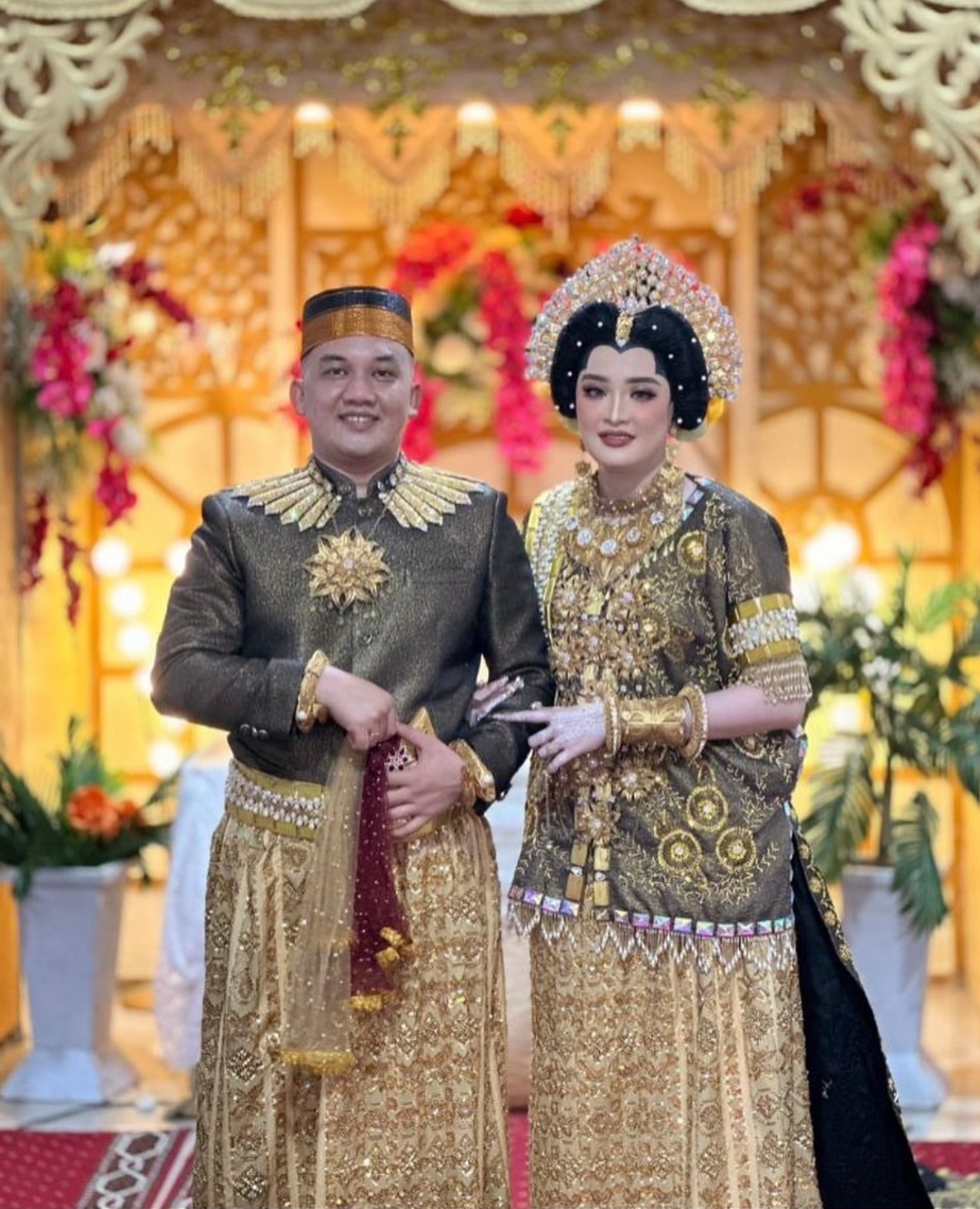
There have traditionally been three ranks in Makassar society: nobility ("descendants of kings"); commoners ("freemen"); and slaves (war captives, violators of custom, and those selling themselves to pay debts). In the 20th century, the category of slave has disappeared. Noble titles (Karaenta, Puatta, Andi, Daeng, Puang) are still used, but, since World War II, education and bureaucratic position earn as much or more deference than ancestry alone. [Source: Martin Rössler, “Encyclopedia of World Cultures Volume 5: East/Southeast Asia:” edited by Paul Hockings, 1993]
Among the Makassar social rank still plays an important role in defining one’s place in the community and such ranking is defined to some extent by which groups one’s ancestors belong to. Rank can be passed on both on the mother’s and father’s side and marriage has traditionally been a way for one to improve their rank.
There is some upward mobility through merit, skill, talent or accumulation of wealth and lower descent rank can be offset by other qualities, such as bravery, religious or esoteric knowledge, education, wealth, good manners, and, more recently, occupation. As a result, social boundaries between major classes and their subdivisions are relatively fluid and not as rigid as marriage rank rules might suggest. Both ramages and village kin groups function as social units for the worship of ancestors and sacred heirlooms. Because descent is bilateral, membership in these ritual groups is flexible.
RELATED ARTICLES:
MAKASSAR HISTORY, GOWA, TRADE, RELIGION AND SIRI (HONOR) factsanddetails.com
MAKASSAR CITY AND REGION factsanddetails.com
BUGIS: LANGUAGE, HISTORY, RELIGION. ECONOMIC ACTIVITY factsanddetails.com
BUGIS LIFE AND CULTURE: SOCIETY, FAMILY, FIVE-GENDERS factsanddetails.com
BUGIS SAILING TRADITIONS: SHIPS, PIRACY, WHALE SHARKS factsanddetails.com
ETHNIC GROUPS ON SOUTHERN SULAWESI factsanddetails.com
SOUTHERN SULAWESI: HISTORY, GEOGRAPHY, RELIGION factsanddetails.com
PEOPLE AND CULTURE OF SOUTHERN SULAWESI: LIFE, SOCIETY, BOATS factsanddetails.com
SOUTH SULAWESI factsanddetails.com
SOUTH EAST SULAWESI factsanddetails.com
SULAWESI factsanddetails.com
TORAJA: HISTORY, LANGUAGE, DEMOGRAPHICS, GROUPS factsanddetails.com
Makassar Kinship
In theory, villages are organized around kin groups that trace their origins to real or mythical ancestors. In practice, however, there is extensive mixing among kin groups. Descent is bilateral, and villagers often view themselves—and neighboring settlements—as part of a single localized kin group that is ideally endogamous. In reality, intermarriage between villages is common, creating broad and overlapping kin networks with no clear boundaries. [Source: Martin Rössler, “Encyclopedia of World Cultures Volume 5: East/Southeast Asia:” edited by Paul Hockings, 1993]
Kinship closeness is defined through an individual’s personal kindred (pammanakang), which includes blood relatives and their spouses. This network is especially important for marriage decisions, since marriage prohibitions are based on it. Social rank, however, depends more on membership in bilateral descent groups known as ramages. Members of a ramage trace descent to a real or fictive ancestor through either parent. Ramages are not tied to a single place and may include large numbers of people spread across wide areas. Only those ramages that confer rights to traditional political offices are specifically named. Because all ramages are exogamous, most individuals belong to two or more descent groups, which are ranked hierarchically.
Although descent is traced through both men and women, ties through the father’s line are emphasized for succession to offices, while maternal ties are often more important in rituals honoring founding ancestors. Kinship terminology follows the Eskimo type. Gender distinctions appear mainly in terms for father, mother, husband, and wife; other kin terms add a qualifier for “male” or “female.” Age distinctions are made through separate terms for older and younger siblings, or by adding descriptors such as “young” or “old.” Teknonymy—referring to parents by the name of their child—is common, though not universal.
Makassar Family
A typical household consists of a nuclear family along with close relatives who do not own a separate house. These often include the spouses of adult children. A household is defined primarily as a group of people who live together and share daily consumption, while kinship ties, though important, are secondary to co-residence in defining the domestic unit. [Source: Martin Rössler, “Encyclopedia of World Cultures Volume 5: East/Southeast Asia:” edited by Paul Hockings, 1993]
Childrearing is a shared responsibility involving parents, older siblings, and other relatives or household members. Children are expected to show respect to all adults, elder siblings, and cousins, addressing them with appropriate honorific terms. Traditionally, girls over the age of seven were not permitted to interact with unrelated males until marriage, except in the case of close relatives. Cultural expectations emphasize mobility and bravery as desirable traits for boys, while girls are expected to play stabilizing and mediating roles within the social group. Physical punishment has traditionally been a common disciplinary practice.
Inheritance rules provide equal shares to sons and daughters. When a deceased person leaves no children, property is transferred to other blood relatives. In cases of divorce, children inherit the house and the bride-wealth or rank-price that was originally given to their mother.
Makassar Marriage and Weddings
Many marriages are still arranged and communication between unmarried young men and women is either forbidden or frowned upon. In many cases the most desired unions are between second cousins. Social rank is important in choosing a partner. Men are expected to marry women who are their rank or below. The groom’s family pays a bride price to the bride’s family, part of which is supposed to cover the cost of the wedding feasts. Elopement sometimes take place if there is a problem getting parental approval. Polygyny is discouraged, even among the wealthy. Divorce is done in accordance with Muslim law. ~
Marriage among the Bugis and Makassar follows a clearly defined sequence of customary steps. The process begins with a formal visit by the man’s family to the woman’s family to explore the possibility of a marriage. If the proposal is welcomed, a representative from the man’s family is sent to negotiate the bride-price, set a wedding date, and agree on wedding expenses and feast arrangements. Once these matters are settled, the marriage is formally announced to the extended families of both sides. [Source: A. J. Abalahin, “Worldmark Encyclopedia of Cultures and Daily Life,” Cengage Learning, 2009]
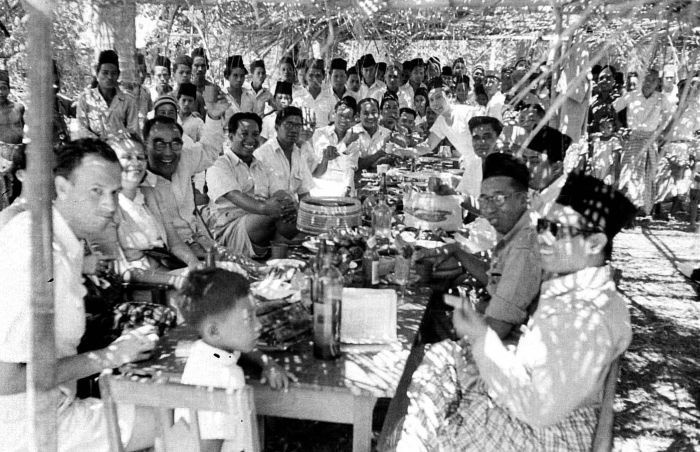
On the wedding day, the groom arrives at the bride’s house in a ceremonial procession accompanied by relatives of all ages and genders. He brings the agreed bride-price, women’s clothing, and various kinds of food. The wedding ceremony then takes place, followed by a reception in which guests are welcomed into the house. Guests present gifts or money—formerly including paddy fields, gardens, or livestock—in what is often seen as a symbolic competition between the families of the bride and groom.
In the days following the wedding, the newly married couple pays visits first to the groom’s family and then to the bride’s, distributing gifts to relatives on both sides. Initially, the couple resides with the bride’s parents before eventually establishing an independent household.
If the woman’s family rejects the proposal or demands excessively high wedding expenses as a subtle form of refusal, the couple may choose to elope. Such an elopement brings shame upon the woman’s family, and her male relatives may pursue the man with violent intent. In these cases, the man typically seeks the protection of a powerful intermediary who attempts to calm the woman’s family. If the family later signals acceptance of the union, the man’s family may initiate a formal reconciliation meeting to restore social harmony.
Makassar Villages and Houses
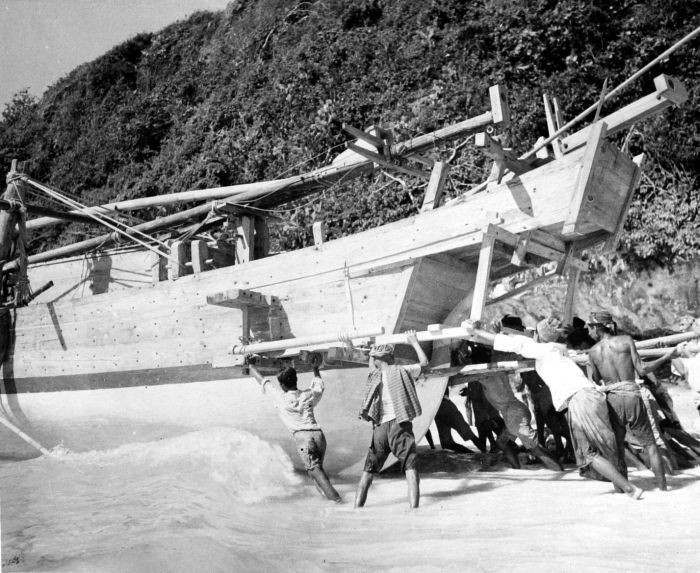
Makassar settlements and economic activities are similar to those of the Bugis In the old days many rural homes were built of bamboo and were scattered among rice fields and gardens. These days houses are built mostly of wood or bricks and have metal roofs and are clustered together near roads. The Makassar are renowned as traders and boat builders and are considered better fishermen than the Bugis. [Source: Martin Rössler, “Encyclopedia of World Cultures Volume 5: East/Southeast Asia:” edited by Paul Hockings, 1993]
Settlements on the coastal plains typically consist of several hundred houses, whereas villages in the interior are much smaller, usually containing between 10 and 150 houses. In some areas, houses are grouped around sacred sites, while in others they are arranged along a pathway, with their front gables facing the sacred peaks of Mount Bawakaraeng and Mount Lompobattang.
Traditionally, villages were situated among rice fields and gardens, with an average distance of about three kilometers separating one settlement from another. Recent resettlement programs, however, have relocated many highland communities to sites accessible by paved roads. As a result, long-established settlement patterns have often been disrupted and cannot always be preserved.
Traditional Makassar are built on raised wooden piles, which and are rectangular in shape form and covered with gabled roofs, with the number of gable partitions once serving as a marker of the owner’s social status. Decoration is minimal, with no carved ornamentation. Inside, the house is divided into a main living space, a kitchen, and usually a single sleeping area. In the past, as many as twenty people might live in one house, but today households typically consist of around five residents. The shift to wood and brick houses has reduced mobility, as traditional houses could be dismantled and moved within hours, a flexibility no longer possible with modern construction materials.
Makassar Food and Clothes
Makassar cuisine blends agrarian and maritime ingredients and traditions. On the west of Makassar coastal zones lie directly adjacent to rice fields, creating extensive agricultural landscapes, particularly in the Maros and Pangkep areas. Rice is produced in abundance, along with other crops such as bananas. As a result, many local foods—especially traditional kue and desserts—are primarily made from rice and bananas. [Source: Wikipedia]
The coastal regions of South Sulawesi are also major centers of fish production. Fish ponds along the west coast are commonly stocked with bolu (milkfish), sunu (grouper), as well as shrimp and crabs. Fishing traditions in both coastal and open-sea waters are well established, with tuna among the most frequently caught species.
Makassarese cuisine reflects what is often described as an “agrarian pattern,” particularly in dishes based on beef or buffalo. Well-known examples include coto, konro, sop saudara, and pallubasa. In contrast, communities living in coastal towns with abundant marine resources tend to rely more heavily on fish as their primary source of protein.
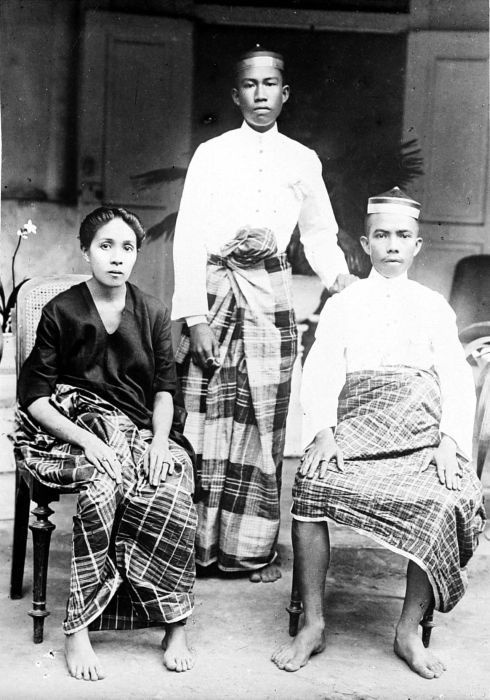
The baju bodo—literally meaning “short blouse” in Makassarese—is a traditional garment worn by Makassarese women. Rectangular in shape and typically short-sleeved to just above the elbow, the blouse traditionally signified the wearer’s age or social status through its color. While the baju bodo has long been associated with ceremonial occasions such as weddings, it has experienced a revival in modern contexts, including dance performances and formal welcoming ceremonies.
Agriculture and Work Among the Makassar
Wet-rice farming is practiced in both lowland and mountainous regions, and in the highlands it is complemented by dry rice, maize, and cassava. Other important crops include coconuts, coffee, bananas, cloves, and a wide variety of fruits and vegetables. Agriculture remains largely non-mechanized, especially in upland areas.
Only some wet-rice fields are mechanically irrigated, and plowing and harvesting are mostly done using traditional methods. Domestic animals include water buffalo and cattle, used mainly for plowing, as well as goats, chickens, and dogs. With the exception of dogs, livestock is consumed mainly on ritual occasions, while everyday meals typically consist of rice, maize, cassava, vegetables, and dried fish purchased from markets. [Source: Martin Rössler, “Encyclopedia of World Cultures Volume 5: East/Southeast Asia:” edited by Paul Hockings, 1993]
The division of labor is strongly influenced by a rigid separation of gender roles in everyday life. Domestic tasks are traditionally assigned to women, and female traders are a common presence in local markets. In agriculture, men generally perform the heavier labor, including plowing, transporting harvested rice, and, in some areas, harvesting itself.
Rice fields and gardens within traditional village territories are individually owned by either men or women. In theory, land that was once controlled by the nobility and is now state-owned can be rented or purchased. However, because such land is costly, this option is rarely used. In some areas, large portions of land are controlled by wealthy, often noble, patrons, but sharecropping arrangements—particularly among relatives—are widespread throughout the region.
Image Sources: Wikimedia Commons
Text Sources: “Encyclopedia of World Cultures Volume 5: East/Southeast Asia:” edited by Paul Hockings, 1993; National Geographic; New York Times, Washington Post, Los Angeles Times, Lonely Planet Guides, Library of Congress, Smithsonian magazine, The New Yorker, Time, Reuters, AP, AFP, Wikipedia, BBC, CNN, and various books and other publications.
Last Updated January 2026