
MAKASSAR PEOPLE
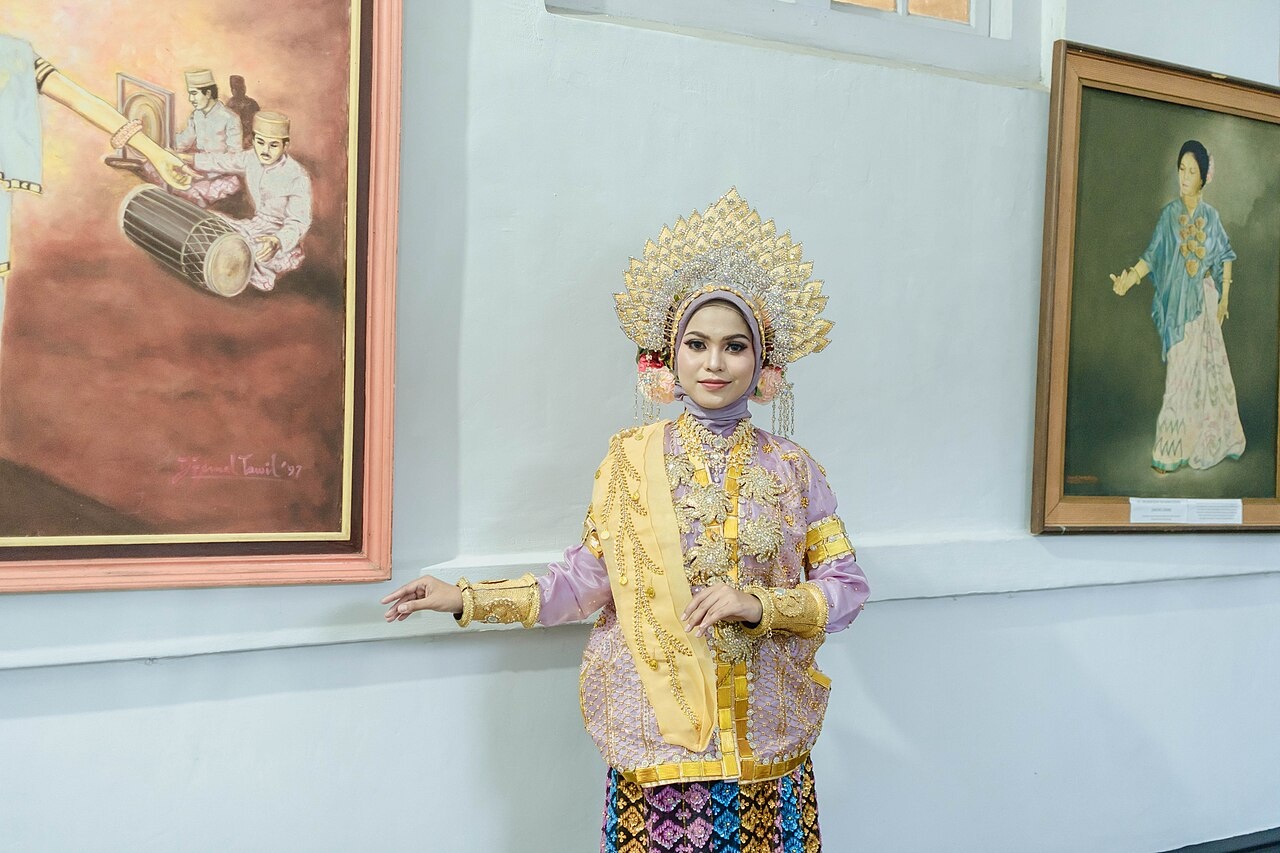
The Makassar people live in southwestern Sulawesi. Also known as the Makassarese, Makassaren and Mangkasaren, they once ruled a powerful maritime kingdom and have traditionally been rivals and cultural cousins of the Bugis, occupying an area of southern peninsula of Sulawesi south of the area occupied by the Bugis. Their name for themselves is “Tu Mangkasara,” meaning “people who behave frankly.” As is true with the Bugis the have been staunchly Islamic and independent minded and the rhythm of their agricultural and maritime life is influenced by the monsoon seasons. [Source: Martin Rössler, “Encyclopedia of World Cultures Volume 5: East/Southeast Asia:” edited by Paul Hockings, 1993]
The region where the Makassar live is located between latitudes 5° and 7° S and longitudes 119°20' and 120°30' E, organization the island of Salayar. The Makassar inhabit the volcanic, mountainous area around Mount Bawakaraeng/Lompobattang, which is traversed by a number of rivers. They also inhabit the coastal plains, where most settlements are mixed Bugis-Makassar populations. Except for areas east of the volcanic massif where rainfall is more evenly distributed throughout the year, the rainy season lasts from October to April. ~
There were about 1.8 million Makassar people in the 1990s, with an average population density of about 245 people per square kilometer at that time (excluding the provincial capital of Makassar city, also known as ,Ujung Pandang). The population growth rate in rural areas was low due to increased migration to towns and national birth control projects. In the 1990s Makassar constituted about 72 percent of Makassar city’s population, and the rest of the population is composed of ethnic groups from all over Indonesia, including a large number of Chinese. ~
Makassar Language belongs to the West Indonesian subgroup of the Austronesian language family and is most closely related to Bugis, Mandar, and several Toraja languages. The Makassar peopleshare an ancient written language with the Bugis (see the Bugis).. language is divided into five mutually intelligible dialects—Lakiung, Bantaeng, Turatea, Selayar, and Konjo, the last of which some linguists classify as a separate language. The Lakiung dialect, spoken in the western regions and commonly referred to as “Standard Makassar,” is the most widely used, accounting for approximately 74 percent of speakers.
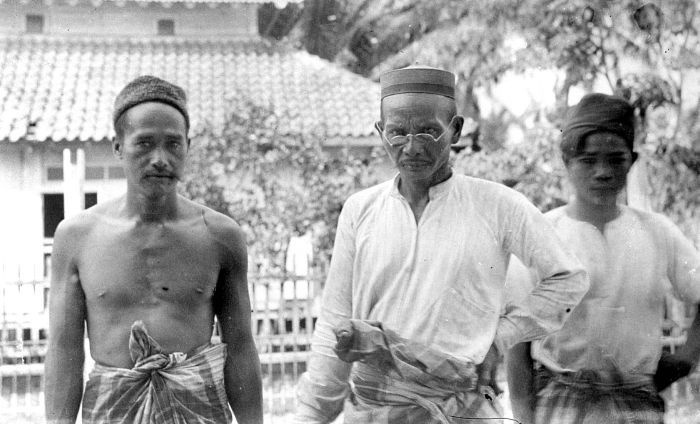
Makassar has two speech levels, with the higher level characterized by greater morphological and lexical complexity. Today, only a small number of speakers are proficient in this elevated variety. The Makassarese traditionally used a syllabic writing system consisting of nineteen base characters and four additional vowel signs. Developed in the sixteenth century and influenced by Sanskrit script traditions, this writing system is now used primarily by older generations.
Total Makassar population: 2,672,590 (2010 census)
South Sulawesi: 2,380,208
Southeast Sulawesi: 59,301
West Papua: 41,239
East Kalimantan: 31,701
Jakarta: 29,444
West Sulawesi: 25,367 [Source: Wikipedia]
RELATED ARTICLES:
MAKASSAR PEOPLE: LIFE, SOCIETY, CULTURE factsanddetails.com
MAKASSAR CITY AND REGION factsanddetails.com
BUGIS: LANGUAGE, HISTORY, RELIGION. ECONOMIC ACTIVITY factsanddetails.com
BUGIS LIFE AND CULTURE: SOCIETY, FAMILY, FIVE-GENDERS factsanddetails.com
BUGIS SAILING TRADITIONS: SHIPS, PIRACY, WHALE SHARKS factsanddetails.com
ETHNIC GROUPS ON SOUTHERN SULAWESI factsanddetails.com
SOUTHERN SULAWESI: HISTORY, GEOGRAPHY, RELIGION factsanddetails.com
PEOPLE AND CULTURE OF SOUTHERN SULAWESI: LIFE, SOCIETY, BOATS factsanddetails.com
SOUTH SULAWESI factsanddetails.com
SOUTH EAST SULAWESI factsanddetails.com
SULAWESI factsanddetails.com
TORAJA: HISTORY, LANGUAGE, DEMOGRAPHICS, GROUPS factsanddetails.com
Makassar History
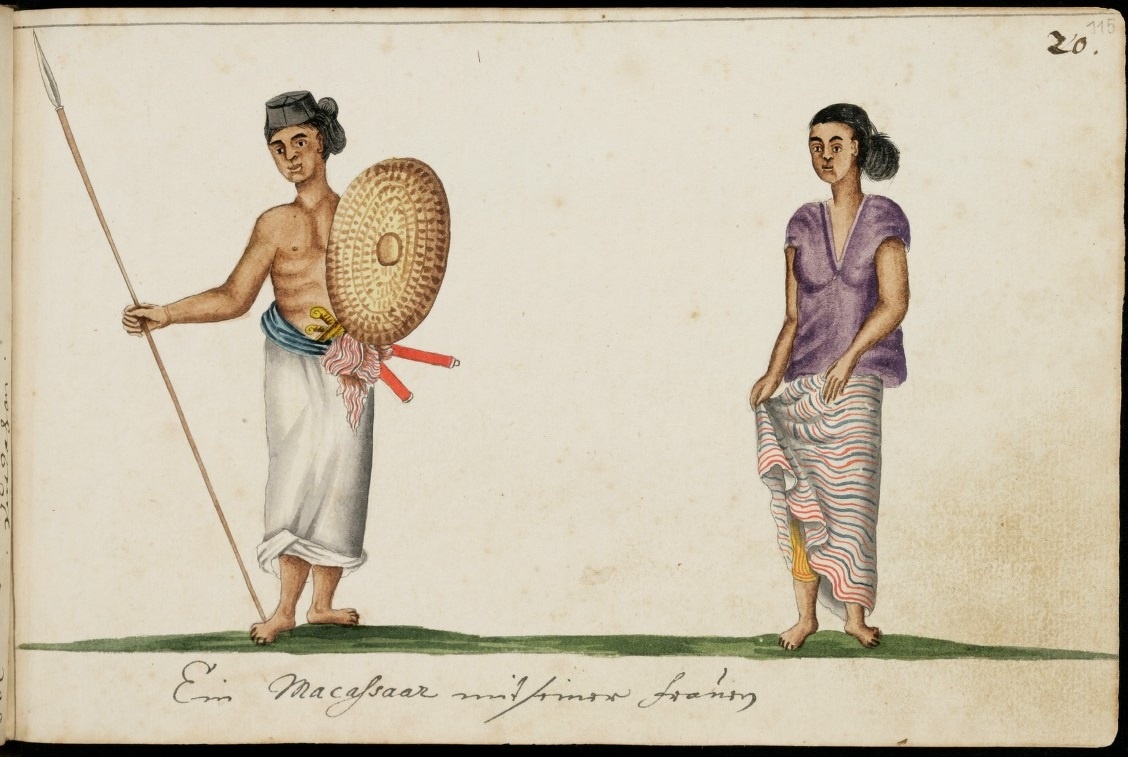
The first mention of the Makassar people is around 1400. At that time there were a number of Makassar principalities, each of which was said to have been founded by a princess or prince who descended from heavenly beings. Islam arrived in 1605. [Source: Martin Rössler, “Encyclopedia of World Cultures Volume 5: East/Southeast Asia:” edited by Paul Hockings, 1993]
The Makassar state of Gowa became the most powerful state in Indonesia, outmuscling its rivals the Bugis of southeastern Sulawesi and exerting control over much of what is now eastern Indonesia in the 16th and 17th century. Early European explorers to the region encountered Makassar fleets trading as far east as New Guinea and as far south as Australia. The Makassar people were among the first outsiders to have contact with Australian Aborigines, introducing metal tools, pottery and tobacco to them. Gowa endured until it was defeated by Dutch and Bugi forces in 1669. ~
The Dutch East India Company viewed Gowa as a threat to its spice monopoly. It allied itself with a Bugi prince to fight them. After a year of fighting the sultan of Gowa was forced to sign the Treaty of Bungaya in 1668 that greatly reduced Gowa’s power and gave the Dutch control of sea lanes and the sources of spices that it wanted. ~ After that the Makassar periodically rebelled and were not brought under Dutch control until 1906 when Dutch forces conquered the interior of their homeland and killed the king of Gowa. Colonialism was only made possible by the incorporation of Makassar people nobles into the colonial system. Even today Makassar nobles occupy many positions of authority in the Indonesian government. ~
Traditionally, a kingdom consisted of several principalities, each made up of multiple village territories. At every level, political authority was grounded in a founding myth that traced leadership to a divine being known as the tumanurung. Before returning to heaven, the tumanurung was believed to have left behind a sacred object imbued with divine power. These heirlooms, called kalompoang, served to legitimize the authority of noble rulers at the levels of kingdoms and principalities, as well as that of commoner leaders at the village level. Both noble and commoner rulers were supported by councils of officials who assisted in governance. In the present day, this traditional system has been adapted to Indonesia’s national administrative framework. In many areas, Makassar nobles continue to occupy influential positions within the kabupaten, kecamatan, and desa administrations, while traditional village rulers have either become formal village heads or been replaced by them. Despite these changes, kalompoang and informal traditional leaders remain highly respected within the community.
Gowa, South Africa and the Sea Cucumber Trade
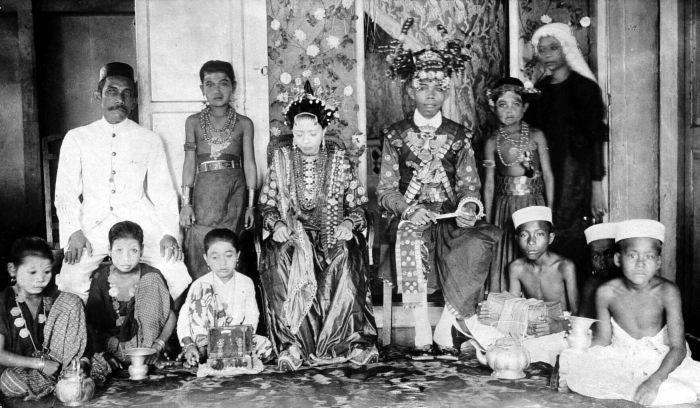
The Kingdom of Gowa, which flourished between the 14th and 17th centuries, emerged as a powerful Islamic state with a strong navy and extensive territorial reach. At its height, Gowa controlled almost all of Sulawesi, eastern Kalimantan, East Nusa Tenggara, parts of West Nusa Tenggara and Maluku, as well as several surrounding islands. The Makassar people forged alliances and trade agreements with Bali and cooperated with major regional powers such as Malacca and Banten, along with other kingdoms in the archipelago. They also concluded treaties with foreign powers, most notably the Portuguese. Nevertheless, Gowa remained in almost constant conflict with the Dutch until its eventual defeat. [Source: Wikipedia]
Makassar sailors were renowned for their maritime skills and are believed to have explored vast stretches of the world’s oceans, reaching as far as South Africa. In South Africa, an area known as “Macassar” reflects this historical connection, and it is thought that some local populations may be of mixed indigenous and Makassar ancestry. The place name “Maccassar,” found in several locations in South Africa and neighboring Mozambique, is generally believed to derive from the ancestral homeland of the Makassar people.
From the early 18th century, and possibly earlier, Makassar trepangers from southwestern Sulawesi regularly sailed to northern Australia to harvest trepang, or sea cucumber. Fishing fleets are documented as visiting the Australian coast from about 1720 onward. The crews established semi-permanent camps along the coast, where they boiled and dried the trepang before returning home after several months to sell their cargo to Chinese merchants.
This trepang trade gradually declined toward the end of the 19th century, largely due to the introduction of customs duties and licensing fees, and likely also as a result of overfishing. The final Makassar perahu to leave Arnhem Land was commanded by Daeng Rangka in 1907, marking the end of a long era of Makassar–Australian maritime contact.
Makassar Religion
According to the Christian group Joshua Project, 97 percent of Makassarese are Muslims. Conservative Islam is relatively strong. In urban areas, various Muslim brotherhoods exert considerable influence. Girls and women are expected y have no contact with non-relative males until they are married. Iman preside over marriage ceremonies, funerals and over life cycle events but many Makassar people seek out the help of traditional healers for illnesses believed to be caused by malevolent spirits. [Source: “Encyclopedia of World Cultures Volume 5: East/Southeast Asia:” edited by Paul Hockings, 1993 ~]
In rural areas traditional beliefs about spirits and ancestors remain and traditional priests perform various rituals. In the indigenous religious system, a number of deities—believed to dwell on the summit of a sacred mountain—occupy central positions. Soil, plants, and animals are regarded as the property of supernatural beings and therefore require regular offerings. Ancestors’ souls are also believed to have a direct and ongoing influence on the daily lives of their descendants. With the growing influence of Islam, however, syncretic forms of belief now prevail, even in relatively remote areas.
In most villages, traditional ritual specialists known as sanro or pinati continue to conduct customary ceremonies, while Islamic officials (imang) play a key role in formal religious life. In rural communities, the position of imang is largely honorary. These officials are called upon to officiate at marriages, circumcisions, and funerals, all of which incorporate elements drawn from both traditional religion and Islam. Divorces conducted according to Islamic law are handled by imang who hold official posts within the local administration.
Agricultural rituals continue to be performed according to established traditions. Particularly important are ceremonies centered on sacred heirlooms, which often involve the making or fulfillment of personal vows. In addition, all major Islamic festivals are regularly observed. During funerary rituals, the soul of the deceased is believed to enter the supernatural realm. Whether the soul becomes benevolent or malevolent is thought to depend largely on the individual’s conduct during life. In the past, the community of ancestral spirits was viewed as an integral extension of the living social group; more recently, however, Islamic concepts of heaven and hell have assumed increasing importance in local understandings of the afterlife.
Makassar Honor and Customs
There is a strong sense of honor expressed in the concept of “siri” (shame. honor and self respect). Those who insult another person’s siri risk being killed. In the old days there were many conflicts and disputes tied to the siri of an individual, his family or female relatives. In the old days, people who violated marriage taboos were drowned to death. [Source: Martin Rössler, “Encyclopedia of World Cultures Volume 5: East/Southeast Asia:” edited by Paul Hockings, 1993]
It has been said that Makassar look for conflict rather than avoid it. Conflict can arise quickly and each dangerous levels over matters of siri' and issues regarding one's female relatives. These days police try to keep such matters from getting out of hand. Non- honor disputes are often settled with the help of community and religious leaders.
Linguistic etiquette among the Makassar is comparatively straightforward when set against the more elaborate speech levels of Java or Bali. Nonetheless, speakers still adjust their language according to the social relationship involved, modifying their speech when addressing a social superior, an equal, or someone of lower status. [Source: A. J. Abalahin, “Worldmark Encyclopedia of Cultures and Daily Life,” Cengage Learning, 2009 ^^]
Social interaction between unrelated men and women remains carefully regulated. Contact outside the supervision of older family members is generally discouraged, although modern schooling and employment have introduced new, limited opportunities for such interaction. In traditional custom, a socially acceptable way for a young man to signal romantic interest was to discreetly take a girl’s underwear while she bathed at a river, later returning it to her without informing others. If the incident became publicly known, however, it could bring shame upon the girl’s family and potentially provoke retaliation against the young man.
Makassar Economic Activity
Along the coasts, fishing forms the backbone of the local economy, while rice cultivation dominates inland areas where rice is the main staple food. Despite government efforts to boost rice production through improved seeds, fertilizers, and pesticides, rice farming in remote areas is largely geared toward subsistence. Coffee stands out as the primary cash crop in these regions. [Source: Martin Rössler, “Encyclopedia of World Cultures Volume 5: East/Southeast Asia:” edited by Paul Hockings, 1993]
For centuries, the Makassar have been renowned as skilled traders, and maritime trade remains central to economic life in coastal communities. Markets are widespread and are usually dominated by professional traders. For much of the population, essential goods such as tobacco, salt, dried fish, and clothing are obtained primarily through these markets.
The Makassar people are also well known for their early expertise in harvesting and processing sea cucumbers (holothuroidea), a practice widely known as trepanging, derived from the Makassarese word taripang. In addition to marine knowledge, Makassar expertise extended to herbal products. Makassar oil, traditionally made from Makassar ebony mixed with other herbal ingredients, was once widely used in Europe as a hair treatment. In parts of Oceania, one of its key ingredients, Cananga odorata, is still commonly referred to as “Makassar.”
Traditional weaving has declined in most regions, but house construction, basket making, and mat production remain common professional activities. Blacksmithing is still practiced by full-time specialists in many villages, although blacksmiths generally occupy a low social status. Along several coastal areas, traditional boat building continues to survive, despite the increasing use of motorized vessels.
Image Sources: Wikimedia Commons
Text Sources: “Encyclopedia of World Cultures Volume 5: East/Southeast Asia:” edited by Paul Hockings, 1993; National Geographic; New York Times, Washington Post, Los Angeles Times, Lonely Planet Guides, Library of Congress, Smithsonian magazine, The New Yorker, Time, Reuters, AP, AFP, Wikipedia, BBC, CNN, and various books and other publications.
Last Updated January 2026