
ALORESE
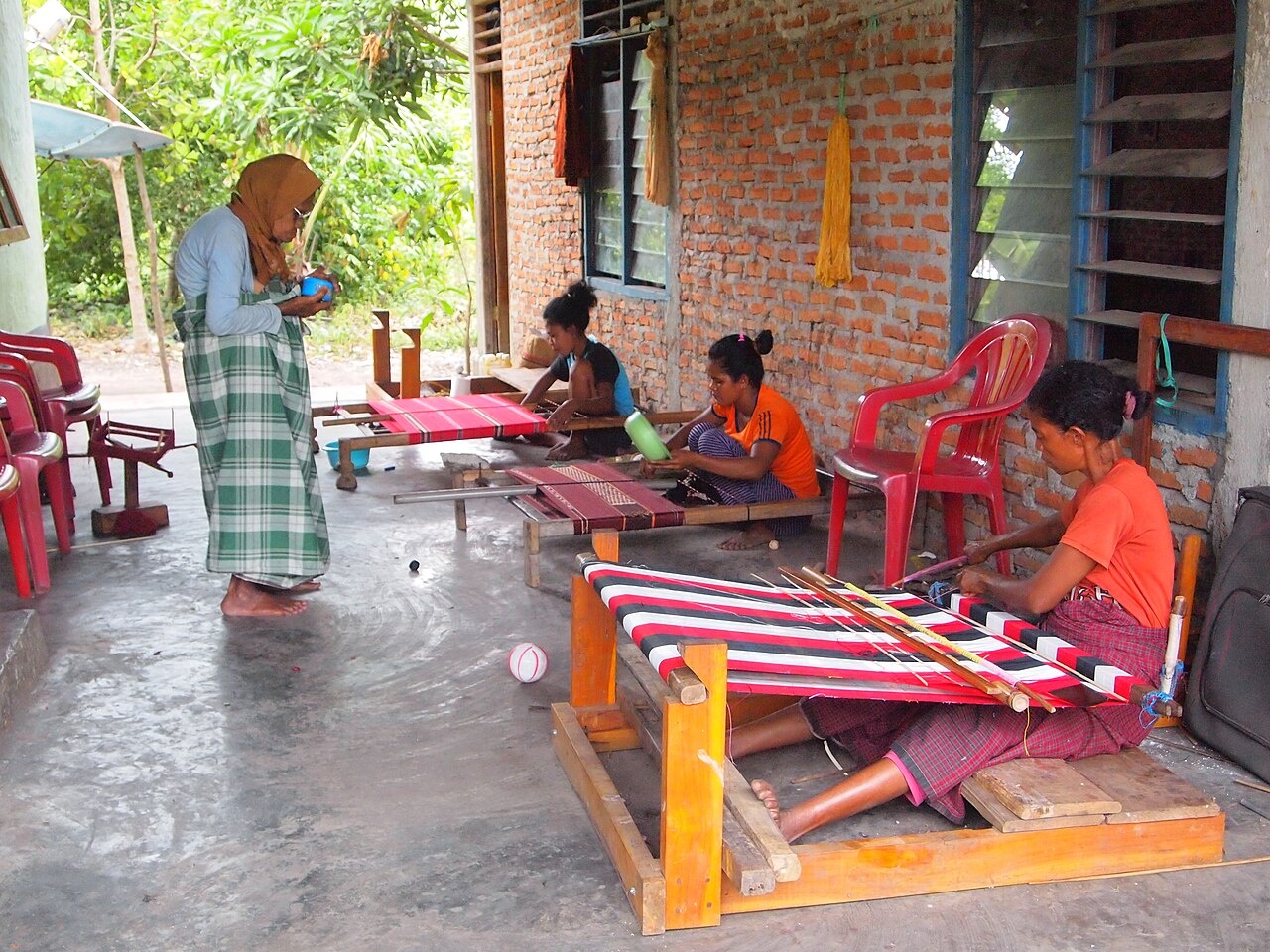
The Alorese live on the island of Alor, which lies in East Nusa Tengarra, north of Timor and east of Bali and Flores. Also known as the Aloreezen and Baranusa, they embrace a wide range of groups that speak different languages—a number of them mutually unintelligible—and have different defining characteristics that at least are partly attributable to Alor’s rugged mountainous terrain. Exactly what it means to be Alorese is still a matter of debate. Most Alorese are Christians. Many of the those that live the mountains are Papuan. Most of the Muslims live on the coast and many of these are immigrants from elsewhere in Indonesia. [Source: Kathleen M. Adams,“Encyclopedia of World Cultures Volume 5: East/Southeast Asia:” edited by Paul Hockings, 1993]
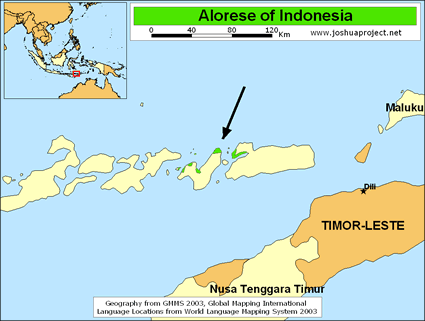
The Alorese people inhabit the western coast of Alor, the northern part of Pantar Island, and Pura Island in Alor Regency. Their residential areas cover several districts: Teluk Mutiara, Northwest Alor, Southwest Alor, Pura Island, Pantar, West Pantar, and Northwest Pantar. Most of the inhabited areas are coastal, though a small portion is hilly or mountainous with varying degrees of slope. According to Joshua Project and Wikipedia the Alorese Population is 44.000 out of a total population of 174,000 on the Alor Islands..
Genetic studies conducted by the Eijkman Institute for Molecular Biology, which began in 2003 with blood samples from 97 ethnic group representatives in Alor, including the Alorese people, found the indigenous peoples of Alor have 90 percent Papuan genetic motifs and 10 percent Austronesian motifs. Examination using Y chromosome markers to determine kinship through the male line corroborates this finding. This finding is also consistent with linguistic aspects and oral histories held by local residents. [Source: Wikipedia]
RELATED ARTICLES:
ALOR ISLAND factsanddetails.com
LARANTUKA AND LAMALERA IN EAST FLORES: UNUSUAL FESTIVALS, WHALE AND MANTA RAY HUNTS factsanddetails.com
LAMAHOLOT PEOPLE OF FLORES: HISTORY, RELIGION, SOCIETY, LIFE factsanddetails.com
CENTRAL-EASTERN FLORES; ENDE, KELIMUTU. MAUMERE factsanddetails.com
ENDE PEOPLE: HISTORY, RELIGION, SOCIETY, LIFE factsanddetails.com
FLORES: VOLCANOS, SIGHTS, LABUAN BAJO factsanddetails.com
PEOPLE OF FLORES factsanddetails.com
ETHNIC GROUPS ON FLORES factsanddetails.com
NUSA TENGGARA factsanddetails.com
PEOPLE OF NUSA TENGARRA (ISLANDS EAST OF BALI) factsanddetails.com
Alor Island
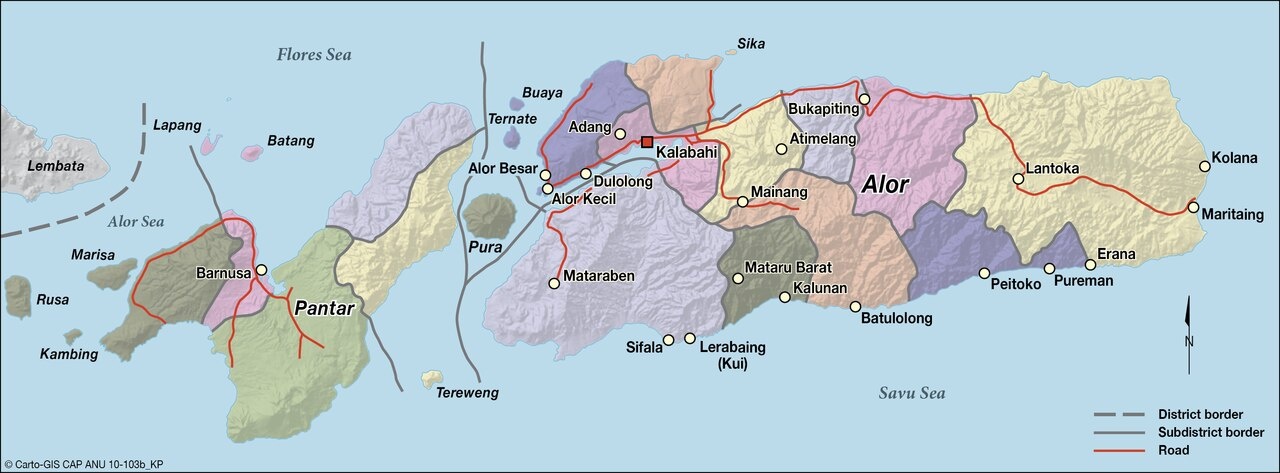
Alor (Indonesian: Pulau Alor) is the largest island in the Alor Archipelago, The main islands of the Alor Archipelago are Alor, the easternmost island with the main town of Kalabahi, and Pantar, the second-largest, located just west of Alor, separated by the Pantar Strait. Smaller inhabited island include Kepa, Pura, Ternate, and Tereweng. [Source: Kathleen M. Adams,“Encyclopedia of World Cultures Volume 5: East/Southeast Asia:” edited by Paul Hockings, 1993; Indonesia Tourism website]
Alor is east of Flores and lies approximately 80 kilometers off north of Timor, between 8 degrees 8 minutes and 8 degrees 36 minutes south latitude and 123 degrees 49 minutes and 125 degrees 8 minutes east longitude. Covering 2,124.92 square kilometers (820.5 square miles), it is very mountainous, with limited coastal lowlands. The climate is tropical with a rainy season lasting from October to April. The name of Alor Island is taken from the name of this ethnic group. It is also the name attached to the regency and the archipelago.
Alor extends from the easternmost tip of Flores Island, still in the province of East Nusa Tenggara, The Alor Archipelago comprises 20 islands and 17 sub-districts. Among these, only 9 islands are inhabited: Alor, Pantar, Pura, Terewang, Ternate (not to be confused with Ternate in Maluku), Kepa, Buaya, Kangge, and Kura. The other 11 uninhabited islands are: Sikka, Kapas, Batang, Lapang, Rusa, Kambing, Watu Manu, Batu Bawa, Batu Ille, Ikan Ruing, and Nubu.
People on Alor Island
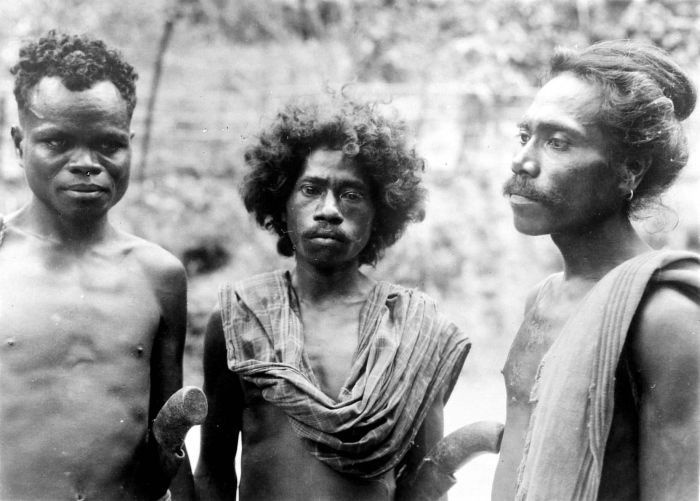
Alor is one of the world’s most ethnically diverse places. On the island there are 174,000 people, up from 136,559 in the mid-1980s, divided among 50 tribes, each of which speaks a distinct languages or dialects that fall into seven distinct language groups. Some groups practiced head headhunting up until the 1950s. They used arrows tipped with chicken bones that splintered inside the body, producing a very nasty wound. Occasionally, it tribal warfare still breaks out between different groups.[Source: Kathleen M. Adams,“Encyclopedia of World Cultures Volume 5: East/Southeast Asia:” edited by Paul Hockings, 1993]
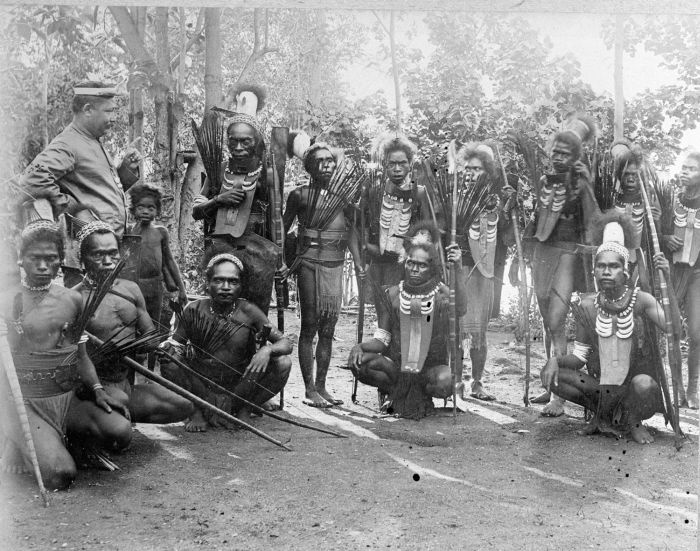
Alor was a Portuguese holding until 1854 when it was handed over to the Dutch. The mountain Alorese have traditionally lived in mutually hostile highland villages that remained largely untouched by the outside world until Indonesia became independent in 1949. The coastal Alorese have had more contact with the outside world. The Alorese languages resemble those spoken elsewhere in Indonesia, particularly on Timor, although some have a strong Papuan influence. Traditionally there has been little organization beyond the village level. ~
Estimates of the number of ethnolinguistic groups on Alor island vary widely. Brouwer (1935) identified seven major physical and linguistic divisions, while local officials have since distinguished thirteen separate “tribes” (Enga 1988). Alorese informants, however, report a much greater diversity, citing between forty-eight and sixty distinct languages spoken across the island (Adams 1989). Much of the Muslim coastal population descends from migrants who arrived from Timor, Flores, South Sulawesi, Java, Ambon, and other nearby islands.
Non-Alorese ethnic groups include the Abui, Kafoa, Sawila, and Kula in the interior. The Abui are a significant group in central Alor, traditionally animistic but also Christian, known for their distinctive languages and historical ties to Papuan cultures. The Kafoa (Jafoo, Habollat) are found in North Probur, they are multilingual and maintain their own traditions, as noted by their unique dances. The Sawila and Kula are located in Eastern Alor. They are recognized for their unique 'Moko' drums and cultural diversity.
Alorese Language
Alorese is an Austronesian language spoken by the Alorese people on Alor and the neighboring islands of the Alor Archipelago. Alorese is closely related to Lamaholot, a language spoken by the Lamaholot of eastern Flores, and is often classified as a dialect of Lamaholot. Researchers like Klamer (2011), who found that Alorese shares only half its basic vocabulary with Lamaholot, consider Alorese to be distinct enough to be considered its own language.
Unlike other indigenous groups on Alor Island, the Alorese are the only community that speaks an Austronesian language; the rest of the island’s indigenous populations speak non-Austronesian languages belonging to the Alor–Pantar language family. [Source: Kathleen M. Adams and John Beierle, e Human Relations Area Files (eHRAF) World Cultures, Yale University; Wikipedia]
Linguistically, the languages spoken on Alor fall into both Austronesian and non-Austronesian categories. The Austronesian languages show affinities with those spoken on nearby Timor and are also thought to have connections with Papuan and East Solorese languages. Cora DuBois, who carried out the most extensive anthropological research on Alor, identified at least eight major language groups on the island. Other scholars have proposed seven principal groupings: Abui, Adang, Kamang, Kawel, Kelong, Kolana, and Kui–Kramang. Local Alorese estimates of linguistic diversity are even higher, ranging from forty-eight to sixty mutually unintelligible languages.
Bahasa Indonesia and Alor Malay function as important intermediary languages for communication between the Alorese and other ethnic groups. About 40 percent of the population of Alor island use Bahasa Indonesia as their primary daily language, while another 40 percent can speak it but mainly use a local language in everyday life. The remaining 20 percent of the population do not speak Bahasa Indonesia.
History of the Alor Islands
In 2018, archaeologists from the Australian National University announced they had uncovered five Pleistocene-era fish hooks—about 12,000 years old—on Alor Island. The set includes one shaped hook and four circular rotating hooks, all crafted from sea-snail shell. They were discovered as part of a ritual burial, arranged beneath the chin and around the jaws of a female individual. [Source: heritagedaily.com, Ancientfoods, March 3, 2018]
Early historical records for Alor Island are limited. Alorese communities living in the mountainous interior remained relatively isolated until Indonesian independence. For centuries, these indigenous groups inhabited autonomous—and at times mutually hostile—highland villages, with political organization likely extending no further than the village level. [Source: Kathleen M. Adams,“Encyclopedia of World Cultures Volume 5: East/Southeast Asia:” edited by Paul Hockings, 1993 ~]
In contrast, coastal populations maintained much longer and more sustained contact with the outside world. Tradition holds that Javanese aristocrats from the Majapahit kingdom settled along the coast and intermarried with local inhabitants. Alor later came under Portuguese control before being transferred to the Dutch in 1854. In the late 19th century, additional groups began to settle along the coast. The Dutch conquest of South Sulawesi led Buginese and Makassarese refugees to migrate to Alor, while Chinese merchants established trading activities in coastal areas.
It was only with the arrival of the first Dutch colonial official around 1908 that coastal leaders were formally designated as “rajahs” and granted nominal authority over the island’s interior. According to DuBois, this new political structure had little effect on highland communities, whose political organization remained centered on the village, apart from limited trade relations with coastal groups.
During World War II, the region was occupied by Japanese forces. After the war, Alor became part of the newly independent Republic of Indonesia. Protestant missionaries arrived in the 1940s, followed by Catholic missionaries in the decades that followed, further reshaping religious life on the island.
The spread of Islam in the Alor Archipelago, particularly among the Alorese, is closely linked to envoys from the Sultanate of Ternate in the 15th century. These agents Islamized the northern coastal region known as Galiau Watang Lema, an alliance of five kingdoms: Pandai, Blagar, and Baranusa on Pantar, and Kui and Bungabali on Alor. Christianity, introduced later through Protestant and Catholic missions, became influential in the interior.
Alorese Religion
According to Christian group Joshua 72 percent of Alorese are Muslims. Many are Christians. Islam predominates in coastal communities, while Christianity is more common in the mountainous interior. Alongside these religions, a significant number of Alorese continue to observe elements of indigenous belief systems, often blending them with Islamic or Christian practices. Relations with the supernatural were generally pragmatic rather than devotional. Spirits were largely ignored unless misfortune struck or assistance was needed, such as ensuring a successful harvest. [Source: Kathleen M. Adams,“Encyclopedia of World Cultures Volume 5: East/Southeast Asia:” edited by Paul Hockings, 1993]
One group believes that every individual has two souls and after death one goes to the “village above” if a death is natural and the other goes to the “village below” if the death is violent. Unappeased souls, it is believed, can cause trouble. Funerals often incorporate rituals that are intended to send souls away peacefully.
Beliefs in lineages and village guardian spirits remain strong and are often represented with crocodile-like carvings. Many believe that disease is caused when a malevolent spirits urinates on them or enters their body and eats their liver. Important spiritual being include lara or lera (sun), wulang (moon), neda (river), addi (forest), hari (sea), and Nayaning Lahatal as a supreme divine presence.
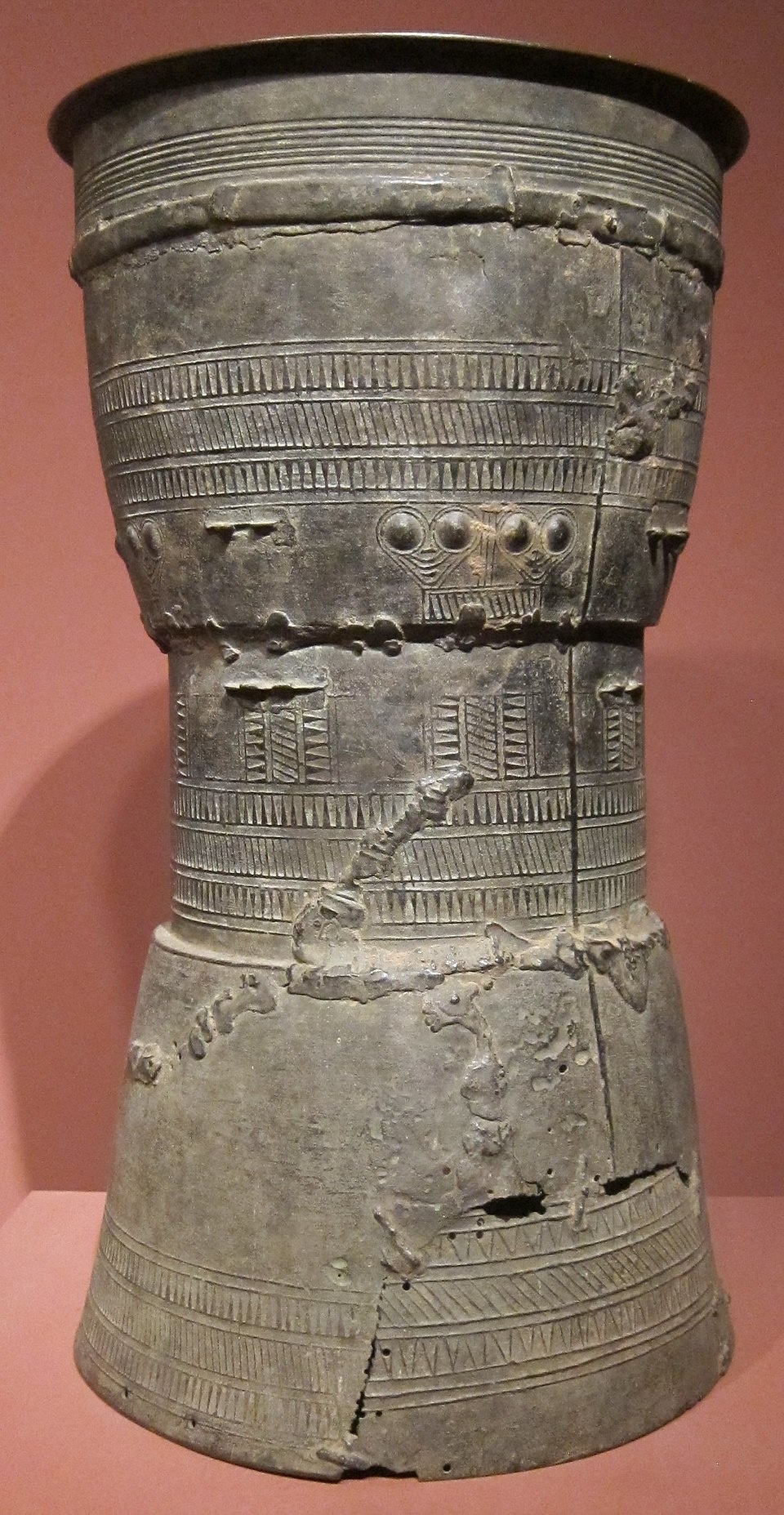
Important ceremonies include death feasts, rites associated with good harvests and sacrifices for guardian spirits. There are not many religious practitioners. They are involved more with healing than with religious ceremonies.“Water Lords” (je-adua) presided over agricultural rites connected to the harvest, while seers (timang), assisted by spirits, conducted healing ceremonies. Funerals feasts are often expensive, elaborate affairs wrapped up in settling debts and fulfilling financial obligations and often involve the transfer of “mokos” (bronze drums), gongs and pigs. Sometimes there are several feasts with the last one held at the time soul is expected to leave the earth for good. ~
Funerals have traditionally been the most elaborate and socially significant rituals. According to DuBois, when a person of status died, people in the village of Atimelang invested enormous effort and resources in funeral feasts, incurring heavy debts in valuables such as mokos (bronze drums), gongs, and pigs. One soul of the deceased was believed to linger until the final memorial feast, which might not take place for many years. Until then, the soul’s destination remained ambiguous, reflecting the generally vague Alorese conception of the afterlife. Apart from funerary obligations, however, the dead did not occupy a central place in everyday ritual life.
Alorese Society and Political Organization
Alorese society is not organized into formal, hierarchical ranks. While age, sex, occupation, and kinship play a role in determining one's standing, wealth is the primary means of achieving prestige. Men become wealthy and prestigious by negotiating a traditional credit system involving mokos (bronze drums), pigs, and gongs. Mokos, in particular, are required for payments such as those for marriages, funerals, and the construction of new lineage houses. They may also be loaned out for interest. The more mokos, gongs, and pigs a man can amass, the more prestigious he becomes. [Source: Kathleen M. Adams,“Encyclopedia of World Cultures Volume 5: East/Southeast Asia:” edited by Paul Hockings, 1993l Wikipedia]
Kinship is reckoned bilaterally along both male female lines. Central to the Abui kinship system are patrilineages (hieta), male houses (neng fala), the idea that all descendants of the father's and mother's older siblings (fengfala); and cross-cousins on the mother's side (Nengfala). Female houses (mayoa falah) also exist, but their functions are less clearly defined than those of male houses. DuBois describes six types of male houses consisting of six patrilineal descent lines that carry an assortment of mutual obligations pertaining to marriage, death, finances, and so on. The kinship terminology is classified as Hawaiian-type. In the Abui language, individuals are distinguished by generation and sex.
Traditionally, there was no indigenous system of political organization beyond the village level. Today, the head of the Alor Regency is called a bupati and is appointed by the Indonesian government. A council of local representatives (DPRD) assists the bupati in decision-making. The regency is divided into five smaller administrative districts, called "kecamatan," each overseen by a "camat." The five districts are Northwest Alor, Southwest Alor, South Alor, East Alor, and Pantar. Each kecamatan consists of several villages (desa), each with a village head (lurah). The Indonesian government provides the usual range of services, including schools, police stations, health clinics, tax collection, and road maintenance. ~ . Ridicule and shame are the primary means of sanction on Alor.Female houses (mayoa falah) also exist, but their functions are less clearly defined than those of male houses. DuBois describes six types of male houses consisting of six patrilineal descent lines that carry an assortment of mutual obligations pertaining to marriage, death, finances, and so on. The kinship terminology is classified as Hawaiian-type. In the Abui language, individuals are distinguished by generation and sex.
Alorese Marriage and Family
Although polygamy was practiced in the past, monogamy is the rule among Alorese. Marriages have traditionally been love matches rather that arranged unions. The people who cook and share meals around a hearth are considered the most basic domestic unit. The average size of this household group is five persons. In Atimelang, where DuBois conducted her research, the domestic unit ranged from one to eight persons. As a household member, one is generally expected to share in the tasks of everyday living—cooking, cleaning, farming, or contributing part of one's wages to the family. Sons inherit their fathers' wealth, although much of the inheritance may be spent in costly death feasts. [Source: Kathleen M. Adams,“Encyclopedia of World Cultures Volume 5: East/Southeast Asia:” edited by Paul Hockings, 1993]
Children are reared by their parents, older siblings, and older adult relatives. DuBois notes that as the women are often away in the fields during the day, children are most frequently in the care of their older siblings or left to fend for themselves. Discipline is minimal: ridicule is most frequently used to discourage misbehavior, although corporal punishment may also be administered. Girls are called upon to work in the fields at an earlier age than boys. Children are not considered full-fledged members of society until they become parents.
The Alorese have a clear concept of romantic love. Although marriage with first and second cousins is prohibited, marriages between second cousins do occur. There are several traditional marriage systems, including marriage with the payment of belis 'dowry' in cash which begins with the proposal process and non-cash belis payments. Then there are several other marriages, namely "girl swaps" and "tied marriages".
Marriage are often sealed by an exchange of gifts, often involving mokos (bronze drums) but also includes gongs, pigs and grain. Throughout the island, including urban Kalabahi, men speak of being unable to marry without mokos. Couples tend live with the farther’s parents and divorce is common. It is not unusual to find Alorese that have been divorced several times. ~
Alorese Life, Villages and Houses
Alorse men have traditionally done the heavy work while women have worked in the fields. The ownership of fields is handed over to children when they are 10 to 13. In every traditional ceremony or daily activity, the Alorese people usually serves traditional foods, namely jagung bose and jagung titi, a food preparation made from corn. [Source: Kathleen M. Adams,“Encyclopedia of World Cultures Volume 5: East/Southeast Asia:” edited by Paul Hockings, 1993, Wikipedia]
In regards to health matters, Alorese communities have long combined multiple systems of care. Alongside Western-style medical practitioners, seers are frequently consulted to diagnose and treat illness. Parents have postponed major death feasts out of fear that their children’s illnesses were caused by offended spirits. Atimelang villagers also made use of a range of traditional “medicines,” particularly those addressing women’s concerns, such as regulating menstruation, inducing infertility, or delaying conception.
Settlement patterns historically reflected both geography and social organization. The Alorese traditionally lived in small, isolated mountaintop villages, rarely exceeding 150 inhabitants. During the colonial period, the Dutch relocated a number of these settlements for administrative convenience. As described by DuBois, a traditional Abui village typically consisted of a cluster of houses arranged around a central dance ground (masang). Each lineage usually maintained its own dance place, so some villages contained several such ceremonial spaces. Fields were cultivated behind and between the houses.
Architecturally, three main types of structures were distinguished: large, carefully constructed lineage houses (kadang) used for feasts and major rituals; ordinary family dwellings (fala); and simple field shelters. Traditional houses were raised off the ground and built from wood and bamboo, with conical roofs of thatch. By the late twentieth century, some of these structures had been replaced or supplemented by cement houses with corrugated metal roofs. Many villages also came to include a church and an elementary school, reflecting the growing influence of Christianity and formal education.
Alorese Culture, Music and Art
Traditional Alorese expressive culture is centered on song, music, and communal dance. Well-known traditional songs include Eti Lola, Handek, and Heelora, which are performed in ritual and social contexts. Central to Alorese musical life is the moko, a distinctive bronze drum that accompanies ceremonies and is also one of the most important items used in bridewealth (belis). [Source: Wikipedia, Kathleen M. Adams,“Encyclopedia of World Cultures Volume 5: East/Southeast Asia:” edited by Paul Hockings, 1993]
Mokos are typically about 50 centimeters high and 33 centimeters in diameter, with a slightly hourglass-shaped body and four ear-like handles. Cast in bronze rather than fitted with a leather membrane, they nonetheless produce a sound reminiscent of bongos when struck. Stylistically, some mokos resemble bronze objects from fifteenth-century Java, while others show affinities with cymbal-like forms known in Southeast Asia before 500 B.C., indicating their deep historical roots in Bronze Age culture. Today, mokos are among the most highly valued possessions in Alorese society.
The Alorese believe that mokos originate from the earth and that, because of their great value, they were traditionally owned only by nobles. No other ethnic group in the Indonesian archipelago is known to possess mokos in such large numbers as the peoples of Alor, a fact that has earned Alor the sobriquet “the island of a thousand mokos.”
Dance is another vital element of Alorese cultural life. One of the best-known traditional dances is the lego-lego, also called sohhe or darriz. This communal dance is performed by participants holding hands and forming a circle around three stacked stones known as a mesbah. Accompanied by singing in the Alorese language and the rhythmic sounds of gongs and mokos, the lego-lego may continue throughout the night, reinforcing social bonds and collective identity.
In the Atimelang area, material culture also includes wooden carvings associated with the spirit world. Village guardian spirits are represented by crocodile-like figures, alongside carvings linked to spirit familiars and symbolic “spirit boats.” DuBois observed that these carvings were generally simple in form and produced primarily for sacrificial purposes rather than aesthetic display. Other traditional arts in Atimelang were similarly restrained, with basketry characterized by minimal decoration and mythological narratives described as loosely structured.
Alorese Work and Economic Activity
Most Alorese are subsistence farmers who raise maize, rice, beats, millet and cassava, often in slash-and-burn fields, and raises pigs, goats and chickens. Crafts include wood carving, basket making, pottery and ikat weaving. In the past, mokos, gongs and pigs were important trade items. Although most Alorese today live in the cash economy, wealth is still measured by some by how many gongs one possesses and they often obtained through clever manipulation of the Alorese credit system and are used as payments for marriages, funerals and construction of lineage houses. ~
During the 1990s, more than 80 percent of residents worked as agriculturalists, while smaller numbers were employed as government workers (about 6 percent), fishermen (nearly 4 percent), and contractors, traders, or merchants (roughly 2–3 percent). At that time, most farmers planted and harvesting maize by hand in dry fields.
Land Tenure is based on individual ownership. Fields are commonly allocated to children—often daughters—between the ages of ten and thirteen, though the harvests are shared by the household until the children reach adulthood. Sons may also inherit land from their fathers, ensuring the continued transmission of agricultural resources within families.
Image Sources: Wikimedia Commons
Text Sources: “Encyclopedia of World Cultures Volume 5: East / Southeast Asia:” edited by Paul Hockings, 1993; National Geographic; New York Times, Washington Post, Los Angeles Times, Lonely Planet Guides, Library of Congress, Smithsonian magazine, The New Yorker, Time, Reuters, AP, AFP, Wikipedia, BBC, CNN, and various books and other publications.
Last Updated January 2026