
ARCHITECTURE OF THE PHILIPPINES
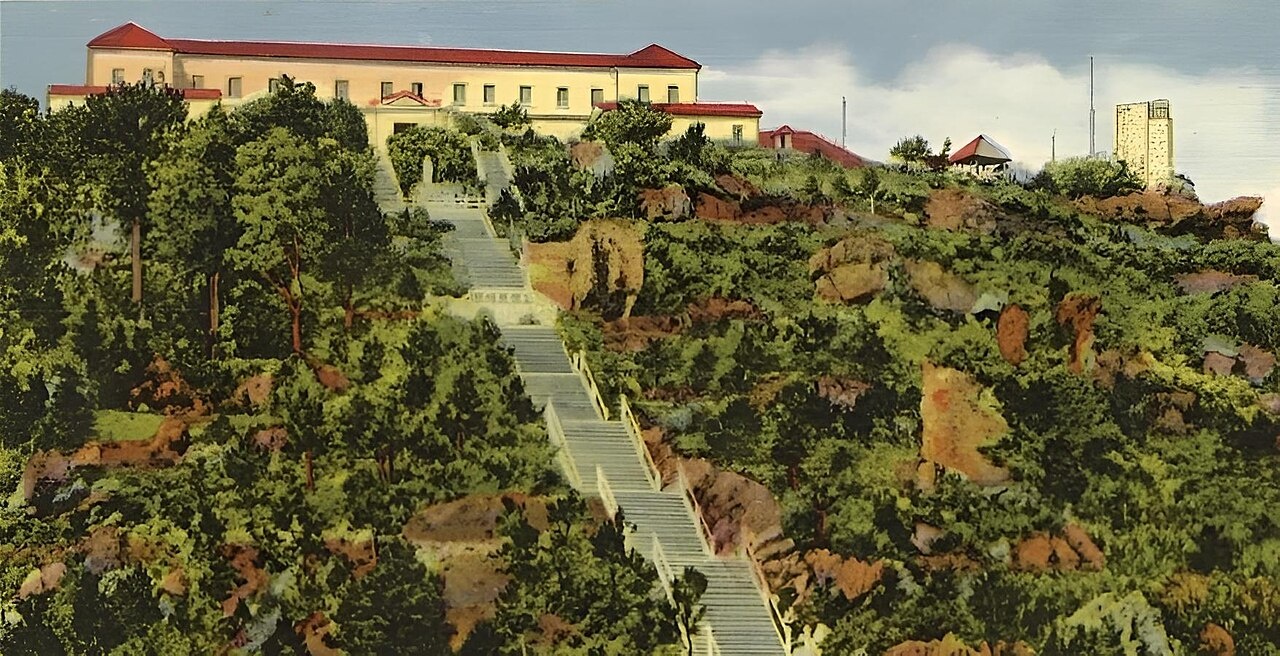
The architecture of the Philippines is known for its Spanish influences. Spanish stone and brick churches built during the colonial era dominate many towns. The churches are large and are different from traditional construction. The indigenous population in the seventeenth century probably had a hard time building them.
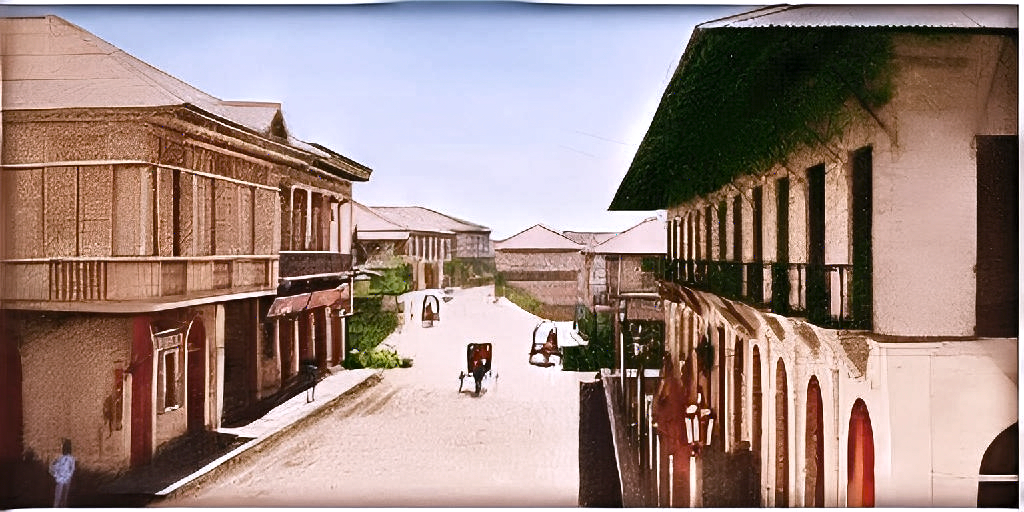
Seaports and government centers have a larger proportion of Spanish buildings with wide verandas and tiled roofs. Towns destroyed during World War II, especially in central and northern Luzon, were rebuilt using wood. Areas of Manila destroyed during World War II have been restored to their historical Spanish appearance. Newer buildings in Manila range from standard multistory offices to Western-style gated housing areas for the affluent, to tenements and shacks.
The Basilica of San Sebastian is the only all-steel church in Asia and is considered the second structure in the world built entirely of steel, following the Eiffel Tower in Paris. The largest church bell in Asia hangs in the belfry of the 221-year-old Panay Church. The bell measures about 2.13 meters (7 feet) in diameter and 2.13 meters (7 feet) in height, and weighs approximately 9,435 kilograms (10.4 tons). Its sound can be heard up to 8 kilometers (about 5 miles) away. Remarkably, it was cast from around 70 sacks of coins donated by townspeople as an expression of faith and gratitude.
The altar at the Holy Rosary Cathedral in Dipolog City was designed by Dr. Jose Rizal. The Cathedral was erected by the Spanish friars sometime in 1895, before Dipolog City became a municipality. The Rizal Shrine in Dapitan City is the original estate of Dr. Jose Rizal which he acquired by purchase during his exile in Dapitan from 1892 to 1896.
RELATED ARTICLES:
PHILIPPINE ART: HISTORY, PAINTERS, CRAFTS, CONTROVERSY factsanddetails.com
HOUSES IN THE PHILIPPINES: HISTORY, TRADITION, NIPA PALM HUTS, CUSTOMS, SECURITY factsanddetails.com
EVERYDAY LIFE IN THE PHILIPPINES: URBAN, RURAL, BARRIOS, TWO KITCHENS factsanddetails.com
For Information on the Houses of Different Ethnic Group See the Ethnic Groups and Minorities listed Under the MINORITIES factsanddetails.com
FAMILIES IN THE PHILIPPINES: GODPARENTS, KINSHIP, TIES, STRUCTURE factsanddetails.com
TONDO — MANILA LARGEST SLUM AND HOME TO SMOKY MOUNTAIN factsanddetails.com
PHILIPPINES CULTURE: HISTORY, MERGING TRADITIONS, THREATS factsanddetails.com
CATHOLIC, ASIAN, SPANISH AND AMERICAN INFLUENCES ON FILIPINO IDENTITY AND CULTURE factsanddetails.com
Pre-Colonial Tagala-Malay Architecture
Early Malay settlers introduced simple yet functional house designs, typically made of bamboo and wood with roofs thatched from grass, palm leaves, or nipa. These houses were elevated on stilts about 1.8 meters (6 feet) above the ground and featured steep gabled roofs, often decorated with motifs such as carabao skulls. The interiors were usually open, serving multiple purposes, with minimal partitions and flexible wall sections that could be adjusted for ventilation or security. Decoration came naturally from everyday objects like mats, weapons, and pottery, rather than fixed ornamentation. [Source: ternar.com/asianart_98]
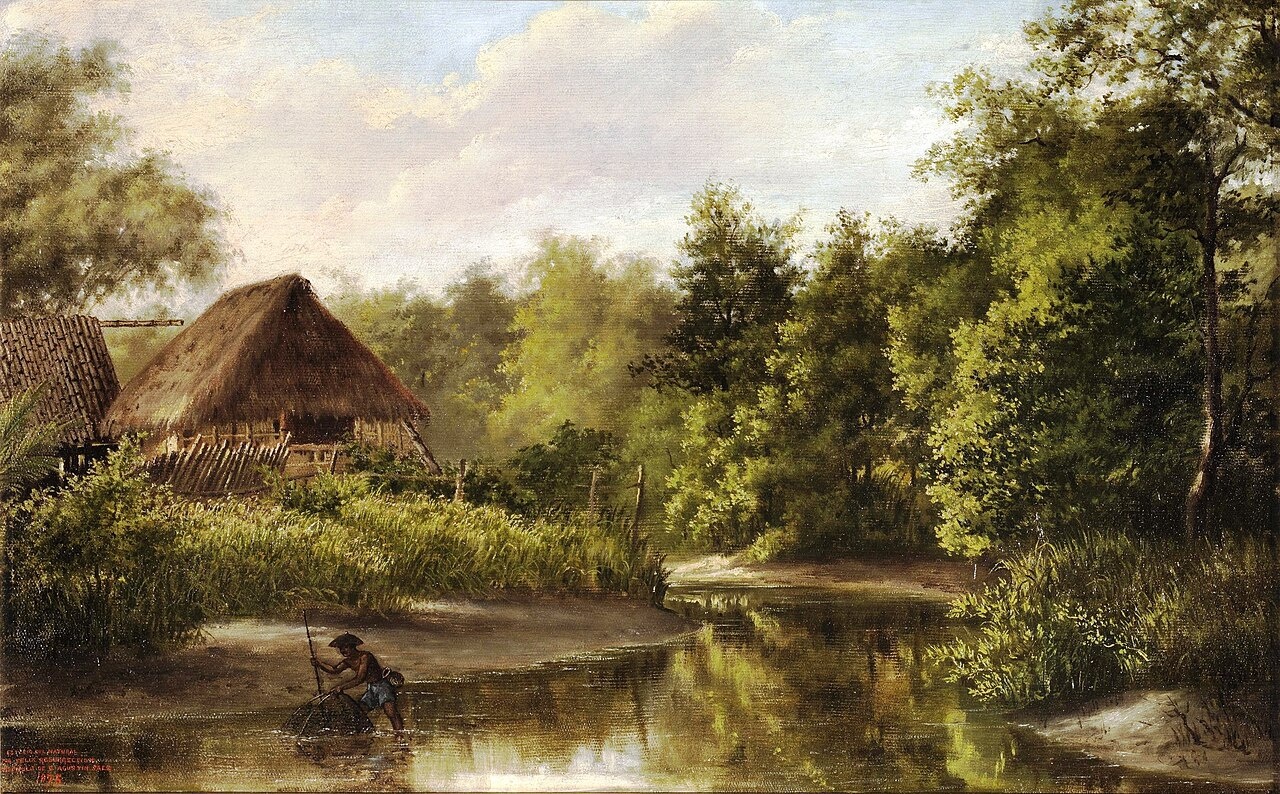
The house of the datu, or chief, was larger and more elaborate, reflecting social hierarchy. It featured multiple gabled roofs, intricate carvings, and symbolic decorations such as crocodile and carabao motifs. Inside was a spacious hall used for ceremonies, with a central dais for the datu. Surrounding the main residence were the homes of nobles, warriors’ barracks, and communal spaces, all arranged with attention to status and function.
Settlements were carefully planned for both defense and sustainability. Many were enclosed by palisades, watchtowers, and sometimes moats. The datu’s house stood at the center, with granaries positioned nearby and an ancestral shrine oriented toward the west. Within the settlement, residents cultivated fruits, herbs, and vegetables, while larger agricultural activities took place outside. Animals were kept beneath houses at night, maximizing space and protection.
Decorative arts played an important role in these communities, particularly the intricate okir designs seen in carvings and objects. Influences from Indonesian and later Malay migrations shaped architectural styles, from early rounded, grass-covered houses to elevated, square structures with pyramidal roofs. Over time, these evolved into more ornate dwellings, especially in southern regions like Mindanao, where artistic traditions such as the sarimanok motif and vibrant color schemes became defining features of local culture.
Spanish Architecture in the Philippines
When the Spaniards arrived in the Philippines, their architectural efforts centered on building churches and fortifications to consolidate power and promote Christianity. Early Spanish friars demonstrated practical skills in engineering and construction, particularly in response to threats such as Moro pirate raids. Among the earliest major projects was Fort Santiago, begun in 1581 by Antonio Sedeño at the mouth of the Pasig River, following plans originally conceived by Miguel López de Legazpi. Together with the walls of Intramuros, it became a key defensive structure. Other forts, such as Fort Pilar built by Melchor de Vera, and fortifications in Iligan and Misamis by Francisco Ducos, further strengthened Spanish control. Infrastructure projects also expanded, including early stone piers, bridges, and seawalls constructed in various regions. [Source: ternar.com/asianart_98]
Beyond defense, Spanish missionaries played a crucial role in establishing educational and civic institutions. They founded schools that offered instruction in fields such as navigation, commerce, agriculture, fine arts, medicine, and technical trades. Among the earliest institutions were San Juan de Letran and University of Santo Tomas, along with other colleges in Iloilo and Pangasinan. These schools became centers for learning and helped shape the intellectual and professional development of Filipino society.
The friars also contributed significantly to public works and infrastructure. Early artesian wells were introduced in Pampanga, improving access to clean water, while one of the first organized water systems in Manila was established in 1686 under the supervision of Juan Peguero—a precursor to what is now the Metropolitan Waterworks and Sewerage System. In addition, irrigation systems were developed, such as the one built in Tanay, Rizal, which supported agriculture and local livelihoods.
Through these efforts, Spanish missionaries not only reshaped the physical landscape of the Philippines but also laid the groundwork for its urban planning, education, and infrastructure. Their legacy can still be seen in the country’s historic structures, institutions, and systems that continue to serve communities today.
In the final years of Spanish rule, Filipino architects and engineers began to emerge after studying in Europe. Among the first were Felix Roxas and Diego Hervas, who contributed significantly to church reconstruction, public buildings, and elite residences in Manila. Their works included major religious structures, hospitals, convents, and prominent urban buildings, marking the rise of Filipino professionals in architecture.
At the same time, European and American influences introduced new construction technologies. Steel and concrete began to replace traditional materials, transforming building methods in the Philippines. Early examples of steel structures included the Compania General de Tabacalera building, the Puente Colgante (now Quezon Bridge), and the all-steel San Sebastian Basilica, completed in 1891.
Latin American and Mestizo Influences on Colonial Philippines Architecture
One interesting aspect of colonial architecture in the Philippines is that its influence did not come directly from Spain. Because of the long distance—ships from the Iberian Peninsula could take up to two years to arrive—many ideas and practices instead came through Spain’s colonies in the Americas, especially Mexico and, to a lesser extent, Peru. As a result, local building styles reflected a mix of cultural ideas that had already been adapted in other Spanish colonies before reaching the Philippines.[Source: architecturalmoleskine.blogspot.jp, January 18, 2012]
Another key feature was the development of mestizo architecture, a blend of different traditions. Native Filipinos were skilled in building with bamboo and wood but had limited experience with stone construction. To address this, Chinese and Muslim builders were brought in, contributing their own techniques and styles. Their influence can be seen in certain churches in Cebu and Manila, where local materials like coral were used and new methods were created to withstand typhoons and earthquakes.
Philippine architecture often showed a layering of styles over time. Due to limited resources and frequent natural disasters, damaged buildings were rarely torn down completely. Instead, they were repaired or rebuilt on top of existing foundations or walls, resulting in structures that combined elements from different periods and influences.
Spanish Churches in the Philippines
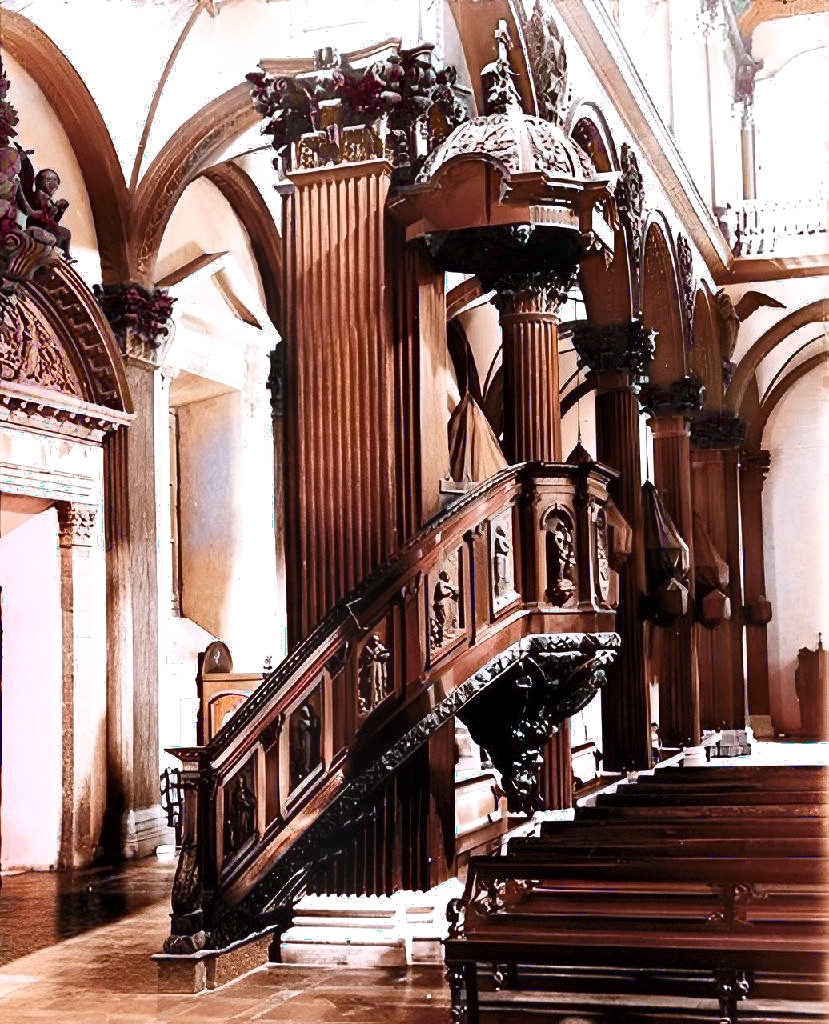
The construction of a Spanish church often marked the beginning of organized community life, with settlements forming around it. These churches, usually inspired by Baroque, Romanesque, or Byzantine styles, were designed by Spanish friars who relied on visual references rather than formal training. Built by Filipino and Chinese laborers, the structures combined Western and Asian influences, resulting in unique, sometimes irregular designs that became prominent landmarks in towns. [Source: ternar.com/asianart_98]
Structurally, these churches were typically rectangular or cruciform in layout, with thick adobe or brick walls reinforced by massive buttresses to withstand earthquakes. Small windows were placed between the supports, while facades were decorated with simple classical elements such as niches and reliefs. Over time, exposure to moisture and vegetation softened their appearance, adding character to their otherwise heavy and imposing forms.
By the end of Spanish rule, thousands of churches had been constructed across the country, showcasing a wide range of architectural styles, including Gothic, Moorish, and Greco-Roman influences. These churches also became centers for artistic development, supporting sculpture and painting through religious imagery, murals, and decorative elements. Their design and ornamentation often varied depending on available materials and the skill of the builders involved.
Several historic churches stand out for their significance. San Agustin Church in Manila, one of the oldest, survived multiple earthquakes and wartime destruction. Other notable examples include the Santo Niño Church in Cebu, Taal Church in Batangas, and Baclayon Church in Bohol. The Manila Cathedral, repeatedly rebuilt after disasters, reflects a blend of architectural styles, while Barasoain Church in Malolos holds historical importance as the site where the Philippine Constitution was proclaimed in 1899.
Basilica del Santo Niño
The original Basilica del Santo Niño was established in 1565 by Andrés de Urdaneta, one of the earliest missionaries in the Philippines. The first structure was modest, built from earth, wood, and thatch—materials typical of the time. However, repeated destruction caused by fires and earthquakes led to the construction of a more permanent structure. Between 1734 and 1739, the church was rebuilt in durable white stone, giving it the form that largely survives today. [Source: architecturalmoleskine.blogspot.jp, January 18, 2012]
The Santo Niño complex includes both the church and an adjoining convent, forming a cohesive religious center. Unlike many churches, its main entrance is positioned along the longer side of the building. This unusual orientation enhances the visual impact of its façade, which opens onto a spacious public area, allowing the structure to dominate its surroundings and welcome large gatherings of worshippers.
Architecturally, the façade is a remarkable fusion of styles, blending Muslim, Romanesque, and neoclassical elements into a unified design. It follows a classical arrangement divided into two levels, with shallow pilasters segmenting each story into three parts. The central section draws the eye, featuring a graceful trefoil-arched entrance flanked by rectangular niches that once held statues. Above, the design repeats in smaller scale, creating a layered “facade within a facade” effect, crowned by a triangular pediment that adds balance and symmetry.
The bell tower complements the overall composition, serving as a visual counterpoint to the convent on the opposite side. Its design incorporates alternating window forms and culminates in decorative pinnacles, a balustrade, and a dome influenced by Islamic architecture. Throughout the structure, the natural stone finish is preserved, emphasizing simplicity and refinement. Clean lines, restrained ornamentation, and a balanced composition give the church a sense of calm dignity and timeless elegance.
Beyond its architectural significance, the Basilica holds deep cultural and spiritual meaning. It is home to the revered image of the Santo Niño, making it one of the most important pilgrimage sites in the Philippines. Each year, it draws thousands of devotees, standing not only as a historic monument but also as a living center of faith and devotion.
Baroque Churches of the Philippines
Four Baroque churches in the Philippines built by the Spanish in the late 16th to 18th centuries — located in Manila, Santa Maria, Paoay and Miag-ao — were designated a UNESCO World Heritage site in 2013 for their architectural style, a unique reinterpretation of European Baroque by Chinese and Philippine craftsmen. According to UNESCO: “The Baroque Churches of the Philippines is a serial inscription consisting of four Roman Catholic churches constructed between the 16thand the18th centuries in the Spanish period of the Philippines. They are located in separate areas of the Philippine archipelago, two at the northern island of Luzon, one at the heart of Intramuros, Manila, and the other in the central Visayas island of Iloilo.
“This group of churches established a style of building and design that was adapted to the physical conditions in the Philippines and had an important influence on later church architecture in the region. The four churches are outstanding examples of the Philippine interpretation of the Baroque style, and represent the fusion of European church design and construction with local materials and decorative motifs to form a new church-building tradition. [Source: UNESCO]
“The common and specific attributes of the churches are their squat, monumental and massive appearance, which illustrates a fortress/protective-like character in response to pirates, marauders and to the geologic conditions of a country that is prone to seismic activities. The churches are made either of stone (tuff or coralline limestone), or brick, and consolidated with lime. They display specific features such as retablos (altars) of high Baroque style — (particularly seen in San Agustin Church, Intramuros), in the volutes of contrafuertes (buttresses) and in the pyramidal finials of wall facades — (particularly seen in Paoay Church), in wall buttresses separating criptocollateral chapels –(particularly seen in San Agustin Church, Intramuros) and in the iconography of the ornately decorated naïf/folk pediment expressing the local understanding of the life of Christ and demonstrated by the use of local elements (papaya, coconut and palm tree reliefs), and the depiction of Catholic Patron Saints (St. Christopher) dressed in local and traditional clothing (particularly seen in the Miagao Church).
The fusion of styles is also seen in the construction of bell towers that are either attached to the main church structure (particularly seen in San Agustin, Intramuros and in Miagao churches) or detached from the main church (particularly seen in Paoay and Sta Maria churches) and lastly, in ceiling paintings in the tromp l’oeil style (particularly seen in San Agustin Church, Intramuros). The Baroque churches reflect excellent site planning principles following the Ley de las Indias (Laws of the Indies) enacted by Philip II in 1563 for all newly-discovered settlements within Spanish colonial territories.”
See San Augustin Church Under COLONIAL-ERA SIGHTS IN MANILA factsanddetails.com
See Nuestra Señora dela Asunción in Santa Maria,I locos Sur Under VIGAN factsanddetails.com
See Church of San Agustin in Paoay, Ilocos Norte Under NORTHERN LUZON factsanddetails.com
See Santo Tomas de Villanueva Church in Miag-ao, Iloilo Under WESTERN AND EASTERN VISAYAS factsanddetails.com
San Sebastian — the Only Metal Church in Asia
The Basilica of San Sebastian, built in 1891 in Manila, is the only metal church in Asia. Designed in the Neo-Gothic style, it is often considered unique in the world. Because of its exceptional design and historical significance, it has been included in the tentative list for UNESCO World Heritage recognition. The church also holds a unique place in history for its resilience. While much of Manila was devastated during the battles of 1945 in Battle of Manila, San Sebastian Basilica remained largely intact. [Source: architecturalmoleskine.blogspot.jp, January 18, 2012]
The site where the church was built had a long history before the present structure. The first church built there in the 17th century was made of wood but was destroyed by fire in 1651. It was later rebuilt in brick, only to be ruined again by a powerful earthquake in 1859. These repeated disasters ultimately led to the decision to construct a more durable building—one that could better withstand both fire and seismic activity.
Unlike many colonial churches in the Philippines, San Sebastian does not have a large plaza or atrium in front of it. Instead, it occupies a prominent urban intersection, where its towering height and vertical design give it a commanding presence in the city skyline. Its symmetrical façade is defined by two slender towers flanking the main entrance, with a central rose window that draws attention to the intricate Gothic detailing. At the crossing of the nave and transept rises an octagonal dome, allowing natural light to filter into the interior and enhance its spiritual atmosphere.
What makes the basilica truly extraordinary is its construction. The design was prepared by the firm associated with Gustave Eiffel in France, while the steel components were manufactured in Binche, Belgium. Even the stained-glass windows were imported from Germany, crafted by the renowned Henri Oidtmann Company. These prefabricated parts were shipped to Manila and assembled on-site between 1888 and 1890, an impressive engineering feat completed in just two years before its inauguration in 1891.
Mansion and House Architecture in Colonial-Era Philippines
Domestic architecture during the Spanish colonial period placed great emphasis on the mansion-style homes of wealthy Filipino families. These residences, often referred to as bahay na bato, combined durability with elegance, reflecting both status and practicality. The ground floor was typically constructed from thick adobe stone, providing strength and protection, while the upper floor was made of wood and topped with clay tile roofing. This blend of materials created a structure well-suited to the tropical climate and the social needs of its inhabitants. [Source: ternar.com/asianart_98]
The main entrance served as a focal point of architectural detail and prestige. Grand wooden doors, often divided into two heavy panels, were reinforced with wrought iron or bronze fittings such as nails, knockers, and crossbars. These doors were framed by decorative pilasters and crowned with cornices and pediments, echoing European design influences. Elevated windows on the ground floor, sometimes fitted with ventanillas (small sliding panels), allowed for ventilation while maintaining privacy and security.
At the heart of the house was the patio, an open interior courtyard that provided light, air circulation, and a communal space for household activities. Access to this area was through the zaguan, a covered entrance hall that often doubled as a storage area for carriages or goods. Surrounding the patio on the upper level were open terraces lined with balustrades, creating a harmonious connection between indoor and outdoor living spaces.
The upper floor, where the family resided, was designed for comfort and airflow. Walls were made of wooden panels, and large sliding windows fitted with translucent capiz shell panes allowed natural light to filter in softly. Above and below these windows were wooden louvers and sliding ventanillas, which enhanced ventilation and helped regulate temperature. Wide, overhanging eaves protected the house from heavy rain and direct sunlight, demonstrating a thoughtful adaptation to local environmental conditions.
Over time, these homes became symbols of a distinctly Filipino architectural identity—blending Spanish, indigenous, and even Chinese influences. Beyond their aesthetic appeal, they embodied a lifestyle centered on family, social interaction, and climate responsiveness. Today, surviving examples of these grand houses stand as important cultural heritage sites, offering insight into the values, craftsmanship, and ingenuity of Filipino society during the colonial era.
World’s Largest Chicken-Shaped Building
The giant structure known as “Manok ni Cano” (“Cano’s Chicken”) rises nearly 35 meters high and spans about 12 meters wide, making it an unmistakable landmark in Negros Occidental. Located within Campuestohan Highland Resort, the massive rooster-shaped building holds the distinction of being the world’s largest structure designed in the form of a chicken—a title officially recognized by Guinness World Records in September. [Source Kathleen Magramo, CNN, November 28, 2024]
More than just a novelty, the six-story building functions as a hotel with 15 fully air-conditioned rooms. In keeping with its design, the rooms do not have windows, preserving the seamless illusion of the rooster’s feathered exterior. Despite its unusual appearance, the interior offers comfortable accommodations, with rooms priced affordably for both small groups and larger families.
The project was conceived by Ricardo Cano Gwapo Tan, a former local politician who envisioned the structure as a lasting legacy. Describing himself as “a big kid at heart,” Tan developed the resort as a creative playground filled with eye-catching attractions. The rooster building, however, stands as its centerpiece—an ambitious tribute meant to inspire awe.
Tan dedicated the structure to the gamefowl industry, a major source of livelihood in Negros Occidental that employs tens of thousands of people. Cockfighting, locally known as sabong, has deep historical roots dating back to pre-colonial times and remains widespread in parts of Southeast Asia. In Negros, the industry forms a billion-peso sector, supported by more than 2,000 breeding farms and closely tied to other local industries such as sugar production and livestock raising.
Beyond its economic symbolism, the rooster also carries cultural and religious meaning. For many Filipinos, the crowing of a rooster is associated with dawn and tradition, particularly during Misa de Gallo—a series of early morning masses leading up to Christmas. In this sense, the towering structure reflects both livelihood and heritage.
Today, the resort has transformed what was once a quiet mountaintop into a vibrant destination. Since its development in 2010, it has expanded into a sprawling complex featuring wave pools, dining areas, and whimsical attractions such as dinosaur and cartoon statues. Reaching the site requires a journey—typically a flight to Bacolod-Silay International Airport followed by a drive through farmland and uphill terrain—but for many visitors, the sight of the colossal rooster makes the trip worthwhile.
Image Sources: Wikimedia Commons
Text Sources: “Encyclopedia of World Cultures Volume 5: East/Southeast Asia:” edited by Paul Hockings, 1993; “Culture Shock!: Philippines” by Alfredo Roces and Grace Roces, Marshall Cavendish International, 2010; Metropolitan Museum of Art; National Geographic, Live Science, Philippines Department of Tourism, New York Times, Washington Post, Los Angeles Times, Smithsonian magazine, Encyclopedia.com, Library of Congress, The Conversation, The New Yorker, Time, BBC, CNN, Reuters, Associated Press, AFP, Lonely Planet Guides, Google AI, Wikipedia, The Guardian and various websites, books and other publications.
Last updated March 2026