
MALAYSIA’S CONSTITUTIONAL MONARCHY
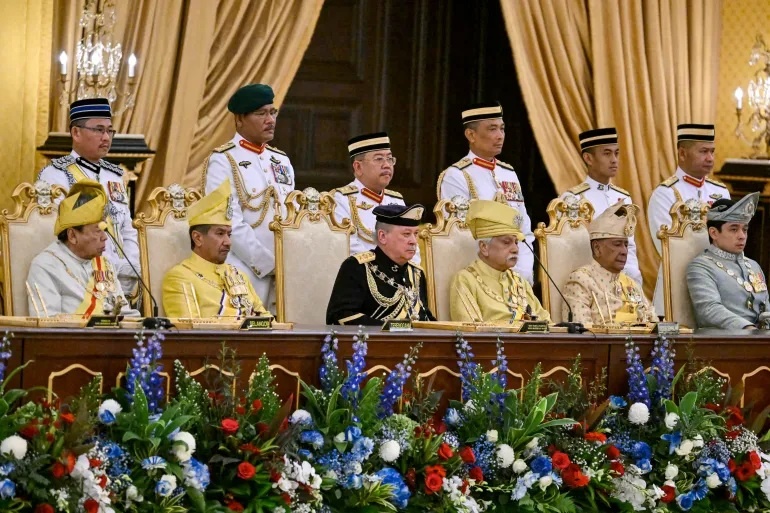
Malaysia is a Westminster parliamentary democracy like Britain with a constitutional monarch. Malaysia's constitutional monarchy is a a unique system in which the throne rotates every five years among the rulers of its nine states, who are descended from centuries-old Islamic royalty. The position of Yang di-Pertuan Agong — the King — dates back to 1957, when the Federation of Malaya gained independence from the British Empire. Every five years, the nine traditional leaders vote to determine who will take the throne next. [Source: BBC, January 24, 2019]
Dr Paridah Abd Samad wrote in the New Strait Times, ““Malaysia is an example of an elective monarchy, in which the supreme head of state, or "Yang di-Pertuan Agong", is elected to a five-year term by a "Conference of Rulers" who hold a secret ballot. Malaysia has acquired 14 Yang di-Pertuan Agong for 56 years since 1957. This explains the inconspicuous and the low profile of the Yang di-Pertuan Agong compared to life-long monarchs such as Emperor Akihito of Japan, Sultan of Brunei Hassanal Bolkiah, ex-King Norodom Sihanouk and even King Abdullah II of Jordan.” [Source: Dr Paridah Abd Samad, New Strait Times, June 1, 2013]
Nine of Malaysia's thirteen states (the majority of states in peninsular Malaysia) are still officially ruled by sultans and tunkas (princes), who have retained some power and control over the land as outlined by the constitution although their positions are largely ceremonial. Mostly their positions are hereditary. Every five years, or when a vacancy arises, the rulers meet as the Conference of Rulers (Majlis Raja-Raja) to elect from among themselves the Yang di-Pertuan Agong (King), who serves as Malaysia’s federal constitutional monarch and head of state. Because the Yang di-Pertuan Agong is selected rather than automatically succeeding to the position, Malaysia itself functions as an elective monarchy.
RELATED ARTICLES:
DUTIES, RESPONSIBILITIES, SELECTION AND CROWNING OF THE MALAYSIAN KING factsanddetails.com
MALACCA SULTANATE: ORIGIN, HISTORY, PARAMESVARA factsanddetails.com
EARLY KINGDOMS, EMPIRES AND THE ARRIVAL OF ISLAM IN MALAYSIA factsanddetails.com
KINGS OF MALAYSIA: POWERS, SELECTION, RICH, OLD AND SCANDALOUS ONES factsanddetails.com
ROYAL CEREMONIES, REGALIA, PALACES AND ETIQUETTE IN MALAYSIA factsanddetails.com
SCANDALS AND GOSSIP INVOLVING MALAYSIA’S ROYAL FAMILIES factsanddetails.com
GOVERNMENT OF MALAYSIA: SYMBOLS, CONSTITUTION, LEADERSHIP factsanddetails.com
GOVERNMENT BRANCHES OF MALAYSIA, PRIME MINISTER AND LEGISLATURE factsanddetails.com
Composition of Malaysia's Monarchy
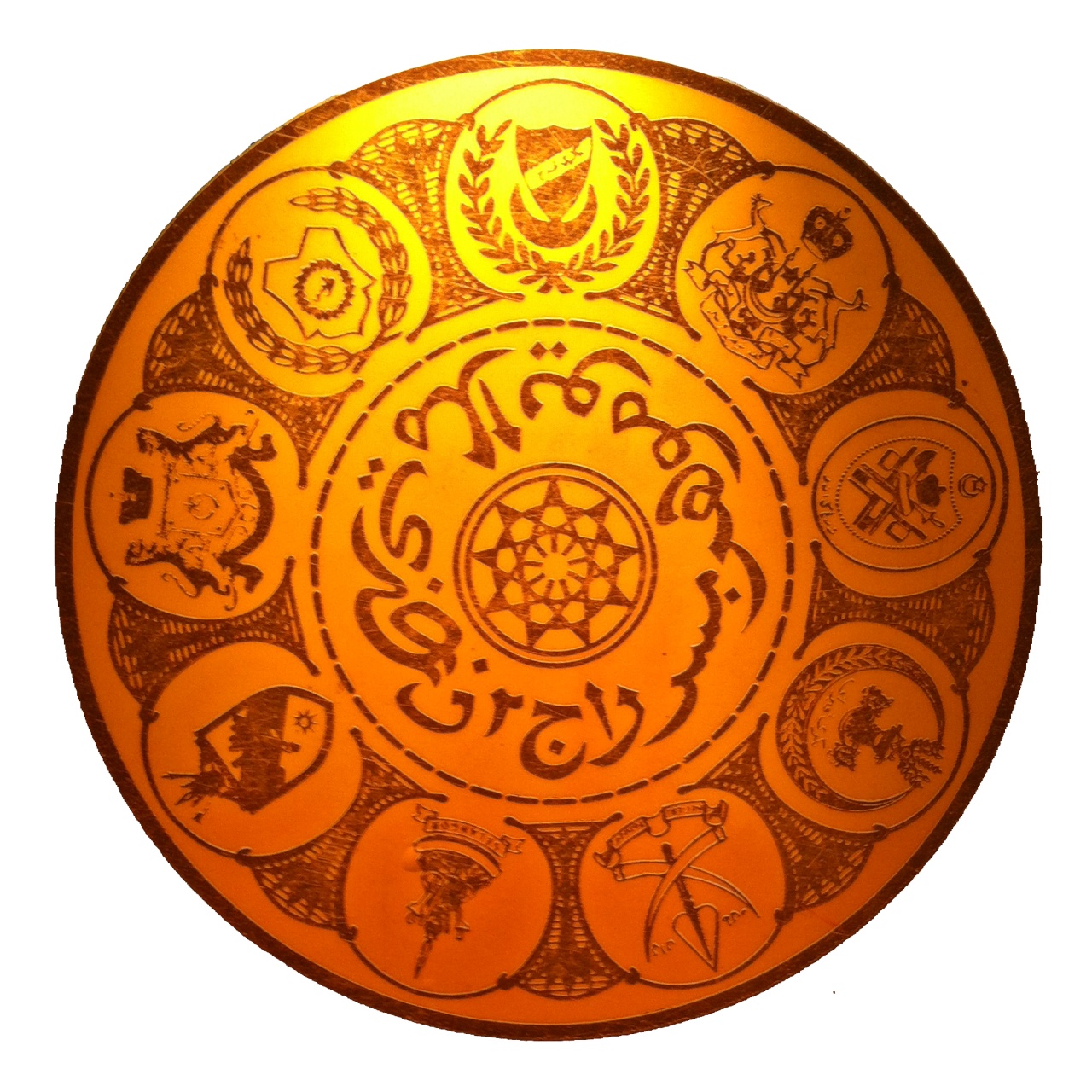
Malaysia operates under a constitutional monarchy in each of its nine Malay states. These nine states are constitutionally led by traditional Malay rulers, popularly known as sultans. State constitutions restrict succession to male Malay Muslims of royal lineage. Seven of the monarchies—Kedah, Kelantan, Johor, Perlis, Pahang, Selangor, and Terengganu—are hereditary and follow primogeniture traced through the male line. In Perak, the throne rotates among three branches of the royal family according to a system loosely based on agnatic seniority traced through the male line. Negeri Sembilan, by contrast, is an elective monarchy in which the ruler is chosen from eligible male royals by hereditary chiefs. All rulers bear the title of Sultan except in Perlis, where the ruler is styled Raja, and in Negeri Sembilan, where the ruler is known as the Yang di-Pertuan Besar. [Source: Wikipedia]
The thirteen states that comprise Malaysia each have a seat on the Conference of Rulers, a council consisting of the nine traditional Malay rulers and governors from the four states without royal families. The Conference of Rulers is the supreme institution in the country and unique because it is the only such institution in the world today. The Council of Rulers and Malaysia’s monarchy system were set up the way they were in part to avoid rivalry among Malaysia’s royal families by spreading power among them.
When Malaysia achieved independence, the Conference of Rulers was constituted under Article 38 of the Federal Constitution. It functions In accordance with the Fifth Schedule of the Constitution: His Majesty the Yang di-Pertuan Agong, is the Supreme Head of the country. The supreme institution in Malaysia is the Conference of Rulers (Majilis Raja-Raja), which is composed of the hereditary rulers of nine states in Peninsular Malaysia and four state governors appointed by the king. The nine hereditary rulers in the Conference of Rulers elect one of themselves as the “supreme sovereign” or king (Yang di-Pertuan Agong) who acts as head of state for a single five-year term. The deputy head of state is elected in the same manner and, although exercising no power, is available to fill the king’s position if the latter is absent or disabled.
Sultans of Malaysia
In Malaysia, the sultans are hereditary rulers and titular heads of 9 of the 13 states in Malaysia. The other four are governors appointed by the Federal Government. Effective executive power rests in the hands of the Chief Minister of each State, and the members of their State cabinets, selected from the members of the State assemblies. [Source: Worldmark Encyclopedia of Nations, Thomson Gale, 2007 ++]
Descended from centuries-old Malay kingdoms, the sultans wielded more than ceremonial influence. As guardians of Islam, they could withhold consent for dissolving state assemblies and appointing chief ministers. The rulers also formed the Conference of Rulers, which could block constitutional amendments affecting the special privileges of ethnic Malays over Chinese and Indian minorities.[Source: Anuradha Raghu and Stuart Grudgings, Reuters, October 6, 2014]
The nine hereditary sultans comprise the Conference of Rulers. The conference's consent is required for any law that alters state boundaries, affects the privileges, honors, or dignities of the rulers, or extends religious acts, observances, or ceremonies to the country as a whole. The Conference of Rulers must also be consulted on proposed changes to administrative policy that affect the special position of the Malays or the vital interests of other communities.” ++
What Exactly Is a Sultan
A sultan is the monarch or sovereign ruler of an Islamic state, traditionally exercising supreme political, military, and often religious authority. The title is derived from the Arabic word for “strength” or “authority,” reflecting the sultan’s status as an independent ruler who does not answer to a higher secular power. The territory governed by such a ruler is known as a sultanate. [Source: Google AI]
Historically, sultans were often absolute rulers, although in modern contexts their authority may be limited by constitutions or shared with elected governments. Beyond managing state affairs, they were expected to uphold Islamic law and maintain order within their realms. While some early holders of the title began as military governors, the designation gradually came to signify full sovereignty. It was prominently adopted by powerful dynasties such as the Seljuks and the Ottomans, as well as numerous regional rulers across the Islamic world. The title differs from that of a caliph, who is regarded as the spiritual successor to the Prophet Muhammad and the symbolic leader of the global Muslim community. A sultan’s authority, by contrast, has generally been territorial and political rather than universal and religious.
Although many historical sultanates have since transitioned to other forms of government, the title remains in use today in countries such as Oman and Brunei. While “sultan” is a male title, women within royal households—particularly mothers and wives—often wielded considerable influence. European writers sometimes used the term sultana to refer to these prominent female figures. The word "sultan" itself originates from the Arabic sul ah, meaning “authority” or “power.” Its earliest known use as a formal royal title dates to the 11th century, when Mahmud of Ghazna adopted it to emphasize his independence and legitimacy as a ruler.
Yang di-Pertuan Agong — the Malaysian King
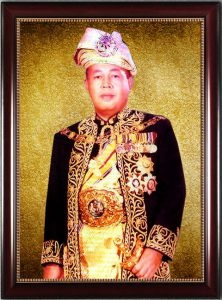
Tuanku Putra ftom Perlis, the Third Malaysian king
The King of Malaysia is called the “Yang di-Pertuan Agong” (“He Who is Made Lord”) or Agong for short. His largely ceremonial position is shared by nine different sultans who rotate the position every five years. For ethnic Malay Muslims the king is the supreme upholder of Malay tradition and the symbolic head of Islam — a legacy that dates back to the early 15th century. Yellow is the color of the king. It is featured on the Malaysian flag. The royal crest has two tigers. The 14th king who took the throne in 2011.
The duties of the king are somewhat similar to those of the British monarch. He is the nominal head of the government and armed forces. All laws and cabinet appointments require his assent. The prime minister customarily meets with the king before announcing the dissolution of parliament. The king is also considered the head of the Muslim faith in Malaysia. He has the power to pardon criminals.
Under a unique system in place since independence in 1957, Malaysia’s nine hereditary state rulers rotate the position of king for five-year terms. Although the role is largely ceremonial—real political power rests with the prime minister and parliament—the monarch is deeply revered by the Malay Muslim majority as the guardian of Malay tradition and the symbolic head of Islam. Acting on the prime minister’s advice, the king appoints cabinet ministers, senior judges, and top Islamic clerics, and he is regarded as the supreme commander of the armed forces. Public criticism of the king or state sultans is effectively illegal; Malaysia’s sedition laws allow prison terms of up to three years for inciting “hatred or contempt” toward the monarchy. [Source: Associated Press:, Dr Paridah Abd Samad, New Strait Times, June 1, 2013, Malaysian Government]
See Separate Article: KINGS OF MALAYSIA factsanddetails.com
Malaysia's Constitutional Monarchy Still Relevant?
According to the official website of the Malaysian monarchy: “The monarchy is seen as a symbol of power, authority, and government. It is an embodiment of strength, protection and justice for the people and personifies their love and loyalty towards the country. In countries, which practice parliamentary democracy and constitutional monarchy, the power of the people is conveyed through Parliament which in turn delegates its executive power to the Cabinet. In Malaysia, whatever action is taken by an authority is executed in the name of the Agong who acts on the advice of the Government. [Source: malaysianmonarchy.org]
Philip Bowring wrote in the International Herald Tribune, “Malaysia's unique system of rotating the crown every five years among nine hereditary state sultans ensures that the institution remains almost entirely symbolic. Most Malaysians have trouble remembering who is king. Such political influence as the sultans once enjoyed was largely stripped away when some atrocious personal behavior by certain royals provided then Prime Minister Mahathir bin Mohamad with the occasion to downgrade their role, which nominally still includes being head of Islam as well as head of state. [Source: Philip Bowring, International Herald Tribune, December 14, 2006]

Malay monarchs are traditionally more national than communal in their outlook compared to racial-based political parties. Dr Paridah Abd Samad wrote in the New Strait Times, “Although the role of king in Malaysia is largely ceremonial, he is looked upon by Muslim Malaysians as a symbol of Islam. He is also seen as the upholder of Malaysian traditions. The King's greatest role is to ensure there will be no cruelty and destruction to the people and to the country. At both federal and state levels, the Agong and the states' Malay rulers are theoretically constitutional monarchs. Unlike the figureheads who stay above the fray in the Bagehotian sense, the Malay monarchs are, however, tasked to protect the interests of the Malays and Islam. [Source: Dr Paridah Abd Samad, New Strait Times, June 1, 2013 +++]
“In theory, this could compromise their impartiality in the context of ethno-religious conflicts. In reality, free from electoral pressures to play communal champions, the Malay monarchs are traditionally more national than communal in their outlook compared to racial-based political parties. Since the existence of this constitutional monarch, the political conflicts involving the Malay rulers are in fact not inter-ethnic but rather intra-ethnic, between them and the politicians. Before Malaya's independence in 1957, the Malay nationalist party initially defended the royals and the feudal order opposed by the Malay leftists who were much influenced by republican Indonesia. +++
“ Despite their ceremonial roles, the relevance of Malaysia's constitutional monarch will be tested when a constitutional crisis arises. As a symbol of religion and tradition, but most importantly a key figure for national unity and loyalty of their subjects, the "Daulat Tuanku" is here to stay, and more likely for the better. +++
Businesses and Development Projects of the Malaysian Sultans
Several of the Malaysian sultans, including the rulers of Johor and wealthy Selangor, have extensive business interests. These include a controversial 2,000-hectare artificial island known as Forest City, a joint project between the Sultan of Johor and a Chinese developer.[Source: Anuradha Raghu and Stuart Grudgings, Reuters, October 6, 2014]
The massive development, which raised concerns in Singapore and among environmental groups about its impact on the narrow channel, reflected what critics described as the growing political and business influence of Malaysia’s traditional rulers. Sultan Ibrahim of Johor’s involvement in the state’s booming property market and his push for greater policy influence raised unease among some politicians and investors. One property investor warned that overreach could harm the economy, while UMNO lawmaker Sharir Samad defended the ruler’s right to conduct business if projects had government approval.
The Johor royal family controls a vast business empire with assets estimated by Bloomberg at at least $5.7 billion. Their interests include real estate, telecommunications, power plants, private property in Singapore, and involvement in the massive Forest City development in Johor. Sultan Ibrahim is also known for his lavish lifestyle, including a collection of more than 300 luxury and vintage cars—among them a pink Rolls-Royce—as well as private jets
Reigning in the Privileges of the Sultans
Royal powers were curtailed during Mahathir Mohamad’s 22-year premiership, when constitutional changes in 1993 removed the rulers’ immunity from prosecution amid public concern about royal excess. Though theoretically neutral, the sultans were often seen as closer to the ruling party because of their shared role as protectors of Malay dominance. [Source: Anuradha Raghu and Stuart Grudgings, Reuters, October 6, 2014]
After Mahathir Mohamad became Prime Minister in 1981, he strengthened his office by dramatically reducing the powers of the sultans and the king. The state sultans were once seen as potential counterweights to executive power. But their power has gradually eroded with constitutional amendments — the king’s veto power was stripped in 1983 and he was also not allowed to block bills passed by Parliament. A 1993 amendment stripped the country’s nine state sultans of immunity from prosecution.
In 1991 UMNO publicly challenged the conduct and political role of Malaysia’s nine hereditary rulers, reviving a 1990 resolution calling for limits on royal interference in politics. The issue escalated in November 1992 with proposals to amend the constitution to remove the rulers’ immunity from prosecution. These were prompted by several high-profile incidents, notably the assault of a hockey coach by the sultan of Johor and an earlier homicide conviction of the same ruler—before his accession—followed by a royal pardon. [Source: Worldmark Encyclopedia of Nations, Thomson Gale, 2007]
The constitutional amendments were passed in January 1993. Following their adoption, royal privileges not explicitly guaranteed by the constitution were withdrawn. Although the rulers initially rejected the changes, they later accepted a compromise that effectively ended their blanket legal immunity while preserving the requirement of royal assent for laws affecting the monarchy. Critics argued that Mahathir’s handling of the episode highlighted tensions between his authoritarian governing style and traditional Malay political norms, and underscored his broader efforts to strengthen executive power, weaken judicial independence, consolidate UMNO’s dominance of parliament, and tighten control over the press.
Increasing Powers of the Malaysian Monarchy
In May 2020, Richard C. Paddock wrote in the New York Times: The members of Malaysia’s Parliament, wearing face masks to match their crisp white uniforms, convened this week in the vast lower house chamber for the first time this year. Malaysia’s king, Sultan Abdullah Sultan Ahmad Shah, sat on an ornate golden throne and spoke for half an hour. No questions were allowed. No votes were taken. Afterward, Parliament was adjourned until July. “This is what passes today for democracy in Malaysia. With an assist from the country’s king, politicians from the previous government are back in power [Source:Richard C. Paddock, New York Times, May 22, 2020]
At that time, Malaysia’s palace denied allegations of a “royal coup” in the appointment of a new prime minister after veteran leader Mahathir Mohamad resigned, saying the king had acted within his constitutional discretionary powers. The response followed a Guardian editorial that claimed King Sultan Abdullah Sultan Ahmad Shah overturned a democratic election result by naming Muhyiddin Yassin despite rival claims of a parliamentary majority. [Source: Reuters, March 8, 2020]
Muhyiddin was sworn in as prime minister after forming a government with backing from a corruption-tainted party that voters had rejected in the 2018 general election, which had been won by a multi-ethnic coalition. The palace said it went beyond its duty by meeting all lawmakers and party leaders before concluding that Muhyiddin was the candidate most likely to command a majority in parliament. Only after this extensive and transparent consultation, conducted in line with the Federal Constitution, did the king exercise his authority to appoint a new premier. The palace stressed that the process could not be described as a “royal coup.”
In Selangor, the sultan appointed a chief minister who had not been formally nominated by the opposition coalition, a move analysts called an unprecedented royal snub of democratic norms. Sultan Sharafuddin Idris Shah responded that some politicians misunderstood his role as merely ceremonial, noting that while politicians came and went, his position would endure. A proposed bill granting the sultan broad authority over a new state Housing and Property Board was later revised after bipartisan opposition, limiting him to acting on the chief minister’s advice. Still, critics questioned whether that safeguard was sufficient to restrain royal influence in the fast-growing Iskandar economic zone. “The question is whether the chief minister dares to advise him,” said Hassan Abdul Karim of the opposition PKR party. “This is not good for our democratic system.” [Source: Anuradha Raghu and Stuart Grudgings, Reuters, October 6, 2014]
Malaysia King Made ‘Honorary’ Head of Police Force
In 2024, Malaysia’s government made King Ibrahim Iskandar the “honorary” head of the police force, a new position that expanded the monarch’s powers. The position — the “Honorary Commissioner-in-Chief” — was officially established on May 10, 2024, through the Police (Amendment) Act 2024, which added Section 6A to the Police Act 1967 to recognize the monarch's supreme position in the nation. [Source: Anisah Shukry, Bloomberg, March 21, 2024]
According to Bloomberg the move signaled the monarchy’s growing influence. Although largely ceremonial, Malaysia’s royal rulers had become increasingly important in deciding who held power in a country where the previous three prime ministers had each served less than two years on average.
Before his ascension, King Ibrahim, from the southern state of Johor, outlined plans to push for a revival of the Kuala Lumpur–Singapore high-speed rail, crack down on corruption, and act as a check on the government — suggesting a more active approach than his predecessors, who mostly stayed out of politics and the media.
The monarch said he would begin his “real way of ruling” once his reign reached the two-month mark. “I’m not a statue to be worshipped or an ornament for ceremonies, nor am I forced to follow everything ministers say or want,” he wrote in a Facebook post. Earlier King Ibrahim warned against actions that could threaten political stability under Prime Minister Anwar Ibrahim, urging those who wanted to “play politics” to wait until the next general election, which was not due until 2028.
Why and How the Powers of the Malaysia Sultans Have Increased
Analysts said declining support for the long-governing United Malays National Organisation (UMNO) had created a power vacuum that the country’s nine sultans increasingly filled, with quiet government backing. “If the national opposition had been in power in Putrajaya, this would not have happened,” said constitutional expert Abdul Aziz Bari, adding it showed UMNO’s desperation to retain control. Aziz himself later came under investigation under the Sedition Act for comments about a sultan. [Source: Anuradha Raghu and Stuart Grudgings, Reuters, October 6, 2014]
A government crackdown on dissent coincided with several cases involving allegedly seditious remarks about the rulers. Of more than a dozen prosecutions under the colonial-era Sedition Act that year — mostly targeting activists and opposition figures — five involved comments about Many observers traced the renewed assertion of royal power to the 2009 Perak crisis, when the state’s sultan rejected the opposition’s request for fresh elections after it lost its majority and instead allowed the ruling coalition to govern. The episode followed the coalition’s worst national election setback a year earlier.
“The reason the sultans are asserting themselves is the changing political landscape,” said law professor Azmi Sharom. “That is not necessarily a problem as long as they act within the constitution — but even pointing out their limits can put you at risk for sedition.” Days later, Azmi was charged for saying the Perak decision was legally wrong and the result of a “secret meeting.”
Image Sources: Wikimedia Commons
Text Sources: New York Times, Washington Post, Los Angeles Times, Times of London, Lonely Planet Guides, Library of Congress, Malaysia Tourism Promotion Board, Compton’s Encyclopedia, The Guardian, National Geographic, Smithsonian magazine, The New Yorker, Time, Newsweek, Reuters, AP, AFP, Wall Street Journal, The Atlantic Monthly, The Economist, Foreign Policy, Wikipedia, BBC, CNN, and various books, websites and other publications.
Last updated January 2026