
THE AGONG — MALAYSIA’S KING
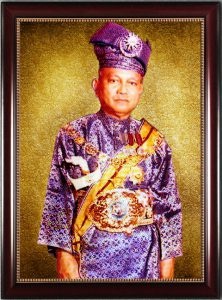
Tuanku Abdul Rahman of Negeri Sembilan, First King of Malaysia
The King of Malaysia is called the “Yang di-Pertuan Agong” (“He Who is Made Lord”) or Agong for short. His largely ceremonial position is shared by nine different sultans who rotate the position every five years. For ethnic Malay Muslims the king is the supreme upholder of Malay tradition and the symbolic head of Islam — a legacy that dates back to the early 15th century. Yellow is the color of the king. It is featured on the Malaysian flag. The royal crest has two tigers. The 14th king who took the throne in 2011.
The duties of the king are somewhat similar to those of the British monarch. He is the nominal head of the government and armed forces. All laws and cabinet appointments require his assent. The prime minister customarily meets with the king before announcing the dissolution of parliament. The king is also considered the head of the Muslim faith in Malaysia. He has the power to pardon criminals.
Under a unique system in place since independence in 1957, Malaysia’s nine hereditary state rulers rotate the position of king for five-year terms. Although the role is largely ceremonial—real political power rests with the prime minister and parliament—the monarch is deeply revered by the Malay Muslim majority as the guardian of Malay tradition and the symbolic head of Islam. Acting on the prime minister’s advice, the king appoints cabinet ministers, senior judges, and top Islamic clerics, and he is regarded as the supreme commander of the armed forces. Public criticism of the king or state sultans is effectively illegal; Malaysia’s sedition laws allow prison terms of up to three years for inciting “hatred or contempt” toward the monarchy. [Source: Associated Press:, Dr Paridah Abd Samad, New Strait Times, June 1, 2013, Malaysian Government]
RELATED ARTICLES:
MONARCHY OF MALAYSIA: SULTANS, POWER, RELEVANCY factsanddetails.com
DUTIES, RESPONSIBILITIES, SELECTION AND CROWNING OF THE MALAYSIAN KING factsanddetails.com
ROYAL CEREMONIES, REGALIA, PALACES AND ETIQUETTE IN MALAYSIA factsanddetails.com
SCANDALS AND GOSSIP INVOLVING MALAYSIA’S ROYAL FAMILIES factsanddetails.com
GOVERNMENT OF MALAYSIA: SYMBOLS, CONSTITUTION, LEADERSHIP factsanddetails.com
GOVERNMENT BRANCHES OF MALAYSIA, PRIME MINISTER AND LEGISLATURE factsanddetails.com
Malaysia's King Compared to Other Monarchs in Asia
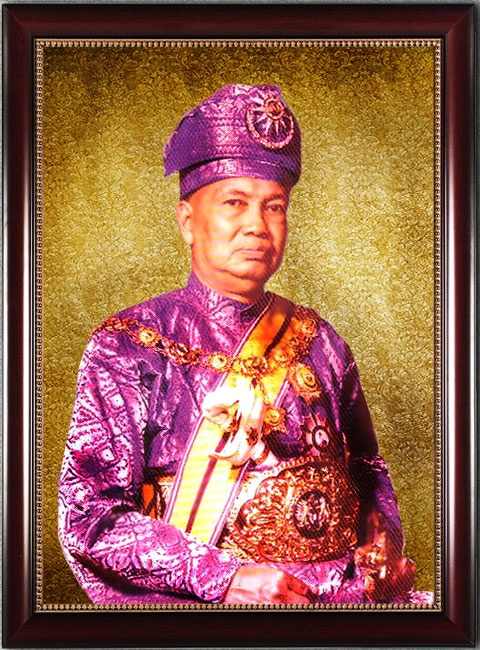
Philip Bowring wrote in the International Herald Tribune that Malaysia’s monarch wields even less political power than the bicycle-riding kings of Scandinavia, yet the installation of a new Agong highlights the continued presence—and diversity—of monarchies in East Asia. Watching Malaysia closely is Brunei’s sultan, the last absolute monarch in the region east of the Gulf, whose oil-dependent state may one day need to reinvent itself. Elsewhere, monarchies face far more precarious futures. In Nepal, King Gyanendra’s failed attempt at direct rule brought the institution to the brink of abolition—an outcome few would have imagined when the popular King Birendra was alive. [Source: Philip Bowring, International Herald Tribune, December 14, 2006; Dr Paridah Abd Samad, New Strait Times, June 1, 2013 +++]
In Thailand, King Bhumibol Adulyadej’s prestige and influence peaked late in his reign, even as the monarchy has historically come close to extinction. His successor, Bowring argued, would need to recognize that a modern monarch’s authority is earned, not inherited. Beyond Thailand, Bowring speculated whether Burma might one day revive its monarchy to help bridge the divide between military rulers and democratic forces, or whether Korea—long without a throne—might rediscover royal symbols to ease its own national divisions.
In smaller states, Bowring noted, monarchies can still provide a powerful sense of identity. Cambodia’s volatile King Norodom Sihanouk eventually passed the crown, if not real power, to his son Sihamoni. Laos, he suggested, might one day revive its abolished monarchy as revolutionary leaders fade from the scene. Even Vietnam, which has little affection for its last emperor, Bao Dai, may someday reassess his place in national history.
Writing in the New Strait Times, Dr. Paridah Abd Samad observed that Cambodia’s monarchy endures despite its loss of power. King Sihamoni has emerged as a unifying figurehead, while real authority rests with Prime Minister Hun Sen. By contrast, Brunei remains an absolute monarchy: under its 1959 constitution, the sultan holds full executive power and also serves as prime minister. Singapore, by contrast, abolished all royal titles and traditions when it became a republic after separating from Malaysia in 1965.
Malaysian King Versus Malaysian Prime Minister

Sultan Yahya Petra Kelantan, Sixth King of Malaysia
In March 2008, Malaysia’s constitutional monarchy was shaken by an unusually public clash between the prime minister and the king over the appointment of a state leader in Terengganu. The Associated Press reported that the dispute marked the first open confrontation between Malaysia’s royalty and its political leadership, compounding the troubles facing Prime Minister Abdullah Ahmad Badawi. [Source: AP, March 24, 2008 -]
The conflict centered on the post of chief minister of Terengganu, a northeastern state where the ruling National Front coalition had won the election. Abdullah’s United Malays National Organization (UMNO) backed the incumbent, Idris Jusoh, who was widely believed to command majority support in the state legislature. But the palace of Sultan Mizan Zainal Abidin—Terengganu’s ruler and at the time Malaysia’s king—unexpectedly appointed another UMNO lawmaker, Ahmad Said, to the post.
Under normal practice, state rulers appoint the candidate chosen by the majority party, and it was unclear whether the king had the authority to defy the prime minister. UMNO responded by threatening to expel Ahmad from the party to block his installation. Party leaders insisted Idris had delivered strong results and should remain in office.
Although Sultan Mizan did not personally make the appointment—leaving the decision to his advisory council while he served as king—the dispute appeared rooted in a personal rift between the sultan and Idris. The attorney general planned to seek an audience with the Terengganu palace to argue that appointing anyone other than Idris was unconstitutional, a claim the palace rejected.
The episode underscored a shift in Malaysia’s monarchy, traditionally ceremonial, toward a more assertive role. It followed a similar incident in the northern state of Perlis, where the palace had also rejected the prime minister’s nominee and installed another lawmaker with legislative backing.
King and Deputy King as Defined by the Malaysian Constitution

Article 32 of the Federal Constitution provides the status of the Yang di-Pertuan Agong and Raja Permaisuri Agong as follows: "32. Supreme Head of the Federation, and his Consort: 1) There shall be a Supreme Head of the Federation, to be called the Yang di-Pertuan Agong, who shall take precedence over all persons in the Federation and shall not be liable to any proceedings in any court except in the Special Court established under Part XV.2) The Consort of the Yang di-Pertuan Agong (to be called the Raja Permaisuri Agong) shall take precedence next after the Yang di-Pertuan Agong over all other persons in the Federation . 3) The Yang di-Pertuan Agong shall be elected by the Conference of Rulers for a term of five years, but may at any time resign his office by writing under his hand addressed to the Conference of Rulers or shall be removed from office by the Conference of Rulers, and shall cease to hold office on ceasing to be a Ruler. 4) The provisions of Part I and III of the Third Schedule shall apply to the election and removal of the Yang di-Pertuan Agong".
Article 33 of the Federal Constitution provides for the status of the Timbalan Yang di-Pertuan Agong as follows: "33. Deputy Supreme Head of the Federation 1) There shall be a Deputy Supreme Head of the Federation (to be called the Timbalan Yang di-Pertuan Agong) who shall exercise the functions and have the privileges of the Yang di-Pertuan Agong during any vacancy in the office of the Yang di-Pertuan Agong and during any period during which the Yang di-Pertuan Agong is unable to exercise the functions of his office owing to illness, absence from the Federation or any other cause, but the Timbalan Yang di-Pertuan Agong shall not exercise these functions during any inability or absence of the Yang di-Pertuan Agong which is expected to be less than fifteen days, unless the Timbalan Yang di-Pertuan Agong is satisfied that it is necessary or expedient to exercise such functions.
2) The Timbalan Yang di-Pertuan Agong shall be elected by the Conference of Rulers for a term of five years, or if elected during the term for which the Yang di-Pertuan Agong was elected, for the remainder of that term, but may at any time resign his office by writing under his hand addressed to the Conference of Rulers and shall cease to hold office on ceasing to be a Ruler. 3) If during the term for which the Timblan Yang di-Pertuan Agong was elected a vacancy occurs in the office of the Yang di-Pertuan Agong, his term shall expire on the cessation of the vacancy.
4) The provisions of Part II of the Third Schedule shall apply to the election of the Timbalan Yang di-Pertuan Agong. 5) Parliament may by law provide for the exercise by a Ruler of the functions of the Yang di-Pertuan Agong in cases where those functions would under Clause (1) fall to be exercised by the Timbalan Yang di-Pertuan Agong but cannot be so exercised owing to a vacancy in the office of the Yang di-Pertuan Agong or to his illness, absence from the Federation or to any other cause; but such a law shall not be passed without the consent of the Conference of Rulers.
Different Malaysian Kings
Ahmad Shah al-Musta'in Billah Ibni al-Marhum, the Sultan of Pahang, served as 7th Yang di-Pertuan Agong from 1979 to 1984. The leading candidate to succeed him was Idris al-Mutawakil Allahi Shah Ibni al-Marhum, the Sultan of Perak, but Idris died of a heart attack on 31 January 1984 before the selection could take place. Following Idris’s death, the Conference of Rulers chose Mahmud Iskandar Ibni al-Marhum Sultan Ismail as the 8th Malaysian king. As crown prince of Johor, he had been convicted of homicide in a 1977 shooting incident but was later pardoned by his father and ascended the Johor throne in 1981. [Source: Worldmark Encyclopedia of Nations, Thomson Gale, 2007]
In 1989, the Sultan of Perak,Azlan Muhibuddin Shah, became the 9th Yang di-Pertuan Agong. He was succeeded in 1994 by Tuanku Ja'afar ibni Al-Marhum Tuanku Abdul Rahman, the 10th Malaysian king. Tuanku Ja'afar’s reign was followed in 1999 by Salehuddin Abdul Aziz Shah ibni Al-Marhum Hismuddin Alam Shah, the 11th king. Salehuddin died in office on 21 November 2001. In 2002, Tuanku Syed Sirajuddin ibni Almarhum Tuanku Syed Putra Jamalullail, the Sultan of Perlis, was selected as the 12th Yang di-Pertuan Agong.
Syed Sirajuddin Syed Putra Jamalullail was from Malaysia's smallest state. In December 2001, he succeeded the late Sultan Salahuddin Abdul Aziz, who had died the previous month. Syed Sirajuddin was chosen by Malaysia’s nine hereditary Malay rulers in a secret ballot held at the National Palace in Kuala Lumpur. Aged 58 at the time, he had trained at Britain’s Royal Military Academy Sandhurst and served in the armed forces before ascending the throne of Perlis the year before, following his father’s death. Perlis, located in the northern part of Peninsular Malaysia along the Thai border, is the country’s smallest state and is largely rural, characterized by extensive rice fields. The 12th sultan and his wife, Fauziah Abdul Rashid, have two children. The 12th sultan was also known for his enthusiasm for sports—including golf, soccer, and rugby—as well as for photography.[Source: CNN, December 12, 2001]
Billionaire Sultan Becomes Malaysia 17th King
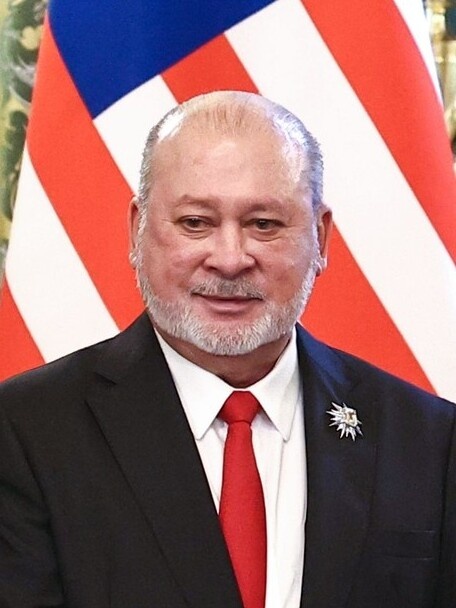
In January 2024 Sultan Ibrahim Iskandar of Johor was crowned Malaysia’s 17th king in Kuala Lumpur, beginning a five-year term under the country’s unique constitutional monarchy, in which the hereditary rulers of nine states rotate the throne. The ceremony, marked by the royal color yellow, was attended by Malay rulers and government leaders, with Prime Minister Anwar Ibrahim formally announcing the appointment at the royal palace. The king’s role is largely ceremonial, but it carries crucial authority during political deadlocks, including deciding who forms the government when no party has a parliamentary majority. His predecessor exercised that power three times, most recently after the country’s first hung parliament in 2022. [Source: Niluksi Koswanage and Kok Leong Chan, Bloomberg, January 31, 2024; Google AI]
At 65, Sultan Ibrahim is known as a modern and outspoken monarch. Born in 1958, he became Sultan of Johor in 2010 after succeeding his father, Sultan Iskandar. Often described as a motorcycle-riding, Ferrari-driving, Instagram-savvy royal, he maintains an active public presence while signaling a desire to play a strong role in promoting national unity, strengthening the country, and combating corruption.
The Johor royal family controls a vast business empire with assets estimated by Bloomberg at at least $5.7 billion. Their interests include real estate, telecommunications, power plants, private property in Singapore, and involvement in the massive Forest City development in Johor. Sultan Ibrahim is also known for his lavish lifestyle, including a collection of more than 300 luxury and vintage cars—among them a pink Rolls-Royce—as well as private jets.
He is regarded as one of Malaysia’s most influential rulers and is expected to bring a hands-on, business-minded approach to the throne. Notably, he commands the Johor Military Force, Malaysia’s only state-based private army, further underscoring his distinctive position within the nation’s monarchy.
Malaysia’s 15th King Abdicates After Marrying Russian Beauty Queen
In January 2019, the 15th king of Malaysia, Sultan Muhammad V, abdicated after it was rumoured he married a former Russian beauty queen. The announcement followed a leave of absence and weeks of speculation.and marked the first time a Malaysian king abdicated since Malaysia gained independence from Britain in 1957. “The National Palace informs that his majesty has resigned as the 15th king effective January 6,” a statement from the palace said. The palace did not give any reason for the 49-year-old royal’s move. [Source: AFP, January 6, 2019]
Muhammad V, who was 47 when he became king in December 2016, , was known for his enthusiasm for extreme sports such as off-road driving, shooting, and endurance challenges. In November 2018, he announced he was taking medical leave. Ithe next month, photos circulated on social media that appeared to show him marrying a former Miss Moscow in the Russian capital.
Reports soon spread online that the king had wed the Russian beauty queen, although Malaysian royal officials did not comment on the rumors. Speculation over Sultan Muhammad V’s future intensified when the country’s other royals reportedly convened a special meeting.
Following the shock abdication, Malaysia elected Sultan Abdullah of Pahang as the new king. The ruler of Pahang — a large state in Peninsular Malaysia — was sworn in on January 2019. He had only been Sultan of Pahang for two months.
Malaysia's 14th King Crowned When He Is 88
The 14th king of Malaysia—Yang di-Pertuan Agong XIV— was officially named AlMu'tasimu Billahi Muhibuddin Tuanku AlHaj Abdul Halim Mu'adzam Shah Ini AlMarhum Sultan Badlishah. He was the Sultan of Kedah state. In December, 2011, he was named king for the second time and became the oldest constitutional monarch in Malaysian history.
The Associated Press reported: "Abdul Halim Mu'adzam Shah took his oath of office in a nationally televised ceremony attended by hundreds of dignitaries at Malaysia's new federal palace." 'The king is the umbrella for the people, and the people are the pillars for the king,'" said Sultan Abdul Halim in comments issued through the national news agency Bernama. The king's greatest role is to ensure that the people and the country are not subjected to cruelty and destruction." [Source: Associated Press, December 13, 2011.]
Wearing black and yellow regalia, the king was sworn in after inspecting a military honor guard and receiving a 21-gun salute at Parliament. An avid golfer and sports fan, Abdul Halim is the constitutional ruler of Malaysia's northern Kedah state, nicknamed the country's rice bowl because of its vast paddy fields. Besides being Malaysia's 14th and oldest king, Abdul Halim is the first to ascend the throne twice. He previously reigned from 1970 to 1975, during which time the father of Malaysia's current prime minister, Najib Razak, was premier. Abdul Halim succeeds Sultan Mizan Zainal Abidin, who was 49 years old when he ascended the throne and is one of Malaysia's youngest kings.
The new king is in robust health for his age. In 2006, he walked more than a mile to a stadium to watch his state's soccer team play in a tournament because his car was stuck in traffic. Installed as ruler of his state in 1958, Abdul Halim has been described by his family as a caring leader and a fan of Frank Sinatra, Dean Martin, and Nat King Cole. When Abdul Halim became king in 1970, Malaysian media noted that he had to travel by train from Kedah to Kuala Lumpur, Malaysia's largest city. On Tuesday, he flew and was bid farewell by an estimated 30,000 people who crowded the roads to Kedah's airport.
Thirteenth King and Queen of Malaysia
Yang di-Pertuan Agong XIII—the king of Malaysia from 2006 to 2011— was the Sultan of Terengganu. His name is Al-Wathiqu Billah Tuanku Mizan Zainal Abidin Ibni Al-Marhum Sultan Mahmud Al-Muktafi Billah Shah. Sultan Mizan Zainal Abidin of Terengganu became Malaysia’s 13th Yang di-Pertuan Agong in December 2006, succeeding the Raja of Perlis, and was later named chancellor of Universiti Teknologi MARA. Known as the “People’s King,” he emphasized unity, religious values, and close ties with ordinary Malaysians, regularly praying with the public and undertaking the hajj and annual umrah.
Born in 1962, he was educated in Terengganu, Australia, Britain, and the United States, with training at Sandhurst and a degree in international relations. Appointed crown prince at 17, he served in various public and administrative roles before becoming Sultan of Terengganu in 1998. He was later elected deputy king and twice served as acting king before his full accession.
As king, Sultan Mizan promoted social development through the Yayasan DiRaja Sultan Mizan foundation and took an active interest in sports, particularly taekwondo, golf, football, scuba diving, and endurance horseback riding. He played a key role in developing Malaysia’s equestrian and endurance sports scene, personally competing internationally and helping bring major championships to the country.
Her Majesty Raja Permaisuri Agong Tuanku Nur Zahirah was born in 1973 and was educated in Alor Setar. She received an honorary doctorate in management in 2006 in recognition of her charitable work in Terengganu. She married Sultan Mizan Zainal Abidin in 1996, and the royal couple had four children. She was installed as Sultanah of Terengganu in 1998 and later became Raja Permaisuri Agong, receiving several high state and national honors.
She was deeply committed to religious values and family life, emphasizing Islamic education alongside Malay traditions in raising her children, who performed the hajj and umrah with their parents. She was known for her compassion and focused especially on issues affecting women and children, including emotional and intellectual development.
The Queen played an active role in charity and social welfare, supporting orphans, the poor, people with special needs, and disaster victims, notably during the tsunami relief effort. She served as patron of numerous social, educational, and youth organizations, helped establish a preschool in Terengganu, and was involved in healthcare and women’s initiatives. Despite her royal duties, she also pursued interests in interior design, cooking, fitness, and travel, and supported her husband’s involvement in endurance horseback riding.
Image Sources: Wikimedia Commons
Text Sources: New York Times, Washington Post, Los Angeles Times, Times of London, Lonely Planet Guides, Library of Congress, Malaysia Tourism Promotion Board, Compton’s Encyclopedia, The Guardian, National Geographic, Smithsonian magazine, The New Yorker, Time, Newsweek, Reuters, AP, AFP, Wall Street Journal, The Atlantic Monthly, The Economist, Foreign Policy, Wikipedia, BBC, CNN, and various books, websites and other publications.
Last updated January 2026