
BEAR CONTROL IN JAPAN
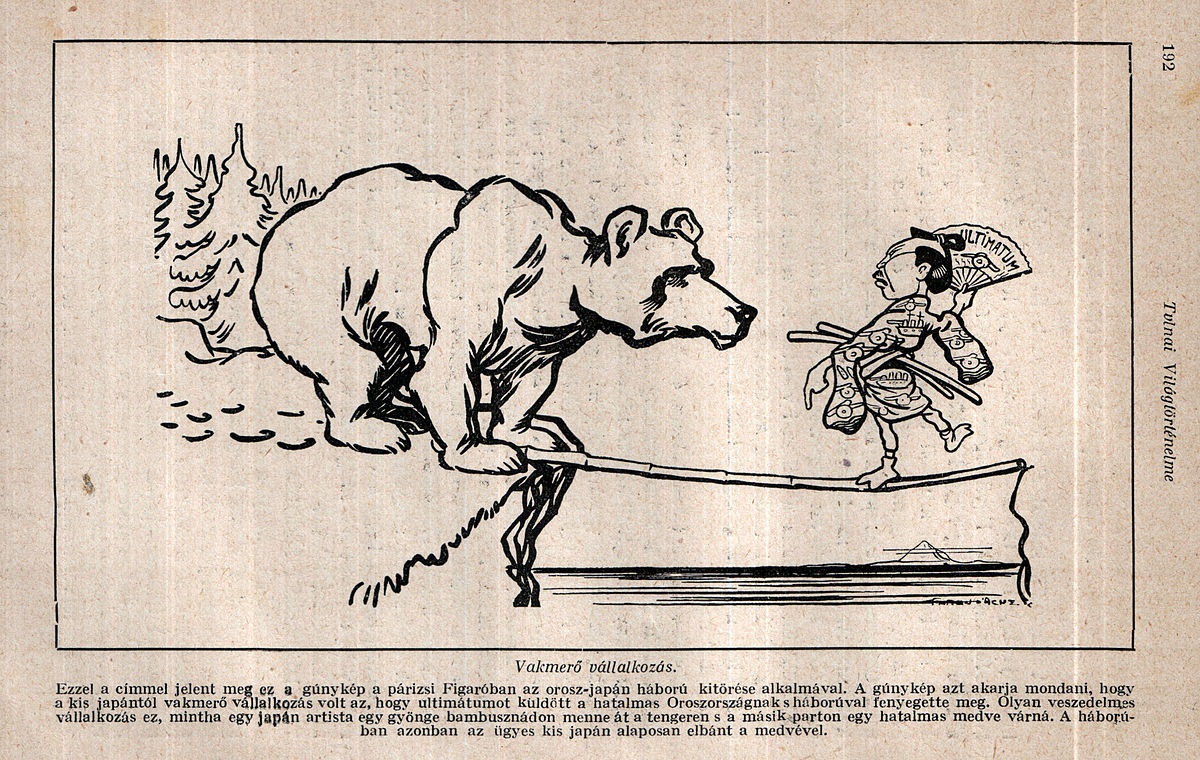
Bear encounters in Japan increased from around 4,800 in 2009 to over 20,000 in 2020, The Guardian reported, citing statistics from the Japanese environment ministry. In addition, more bears are venturing out of the forests and into urban areas to seek food, Yuko Murotani, president of Japan's Japan Bear and Forest Society, told The Guardian. "If they can't find enough acorns in the mountains, they will inevitably search for them in places where there are people," Murotani said. [Source: Aditi Bharade, Business Insider, April 3, 2023]
Shinsuke Koike, a bear expert at the Tokyo University of Agriculture and Technology, told The Washington Post in 2021 that killing bears that wander into cities is the only way to get rid of them. "Once a bear is in a residential area, in order to avoid any accidents, extermination is really the only way," Koike told The Post. "Tranquilizing guns will usually take up to 10 to 30 minutes for effectiveness, so in the process, the bear could act up in panic leading to further incidents."
According to the Yomiuri Shimbun: “A local government in Kyoto Prefecture has set up buffer zones between forests and residential communities by clearing undergrowth at the foot of mountains, where wild animals sometimes hide, so that people can easily spot them. While many such trial-and-error efforts are continuing across the nation, none have been successful in totally preventing bears from approaching areas where humans live.” An official of the local government in Kyoto Prefecture said: "We're dealing with wild animals. All we can do is try every possible option, one by one." [Source: Hiromasa Takeda and Takahiro Komazaki, Yomiuri Shimbun, October 24, 2010]
The Fukui government spent $800,000 to outfit four bears with radio collars and GPS device to monitor their progress. In Tochigi Prefecture their travel patterns are observed using a satellite designed to check the migratory patterns of whales.
One common way of dealing with problem bears is to trap them in a cage and relocate them. The cages typically have bait deep inside the cage and door that shuts when the bear tugs on some kind of bait. A bear in Kochi managed to secure a vat of honey from a trap without being captured. The door of the trap was designed to close when the bear tugged on the honey container. The bear managed to foil this system by grabbing the honey while keeping his hind legs out the trap, preventing the trap door from closing.
RELATED ARTICLES:
BEARS IN JAPAN: CHARACTERISTICS, BEHAVIOR, SPECIES, HUMANS factsanddetails.com
BLACK BEAR ATTACKS IN JAPAN: WHY, HOW, WHERE, WHEN factsanddetails.com
BROWN BEAR ATTACKS IN JAPAN: VICTIMS, HOKKAIDO, SANKEBETSU factsanddetails.com
BEAR BEHAVIOR: TERRITORIALITY, HABITUATED TO HUMANS, OPENING CARS factsanddetails.com
BEAR HIBERNATION, REPRODUCTION, CUBS factsanddetails.com
ASIATIC BLACK BEARS (MOON BEARS): CHARACTERISTICS, BEHAVIOR factsanddetails.com
BROWN BEARS: CHARACTERISTICS, HISTORY, SIZE factsanddetails.com
BROWN BEAR FEEDING: DIET, HABITS, HUNTING, SALMON factsanddetails.com
BROWN BEAR BEHAVIOR: SENSES, HIBERNATION, REPRODUCTION factsanddetails.com
BROWN BEARS AND HUMANS factsanddetails.com
BEARS: HISTORY, EVOLUTION, HABITAT, HUMANS, PIZZLIES factsanddetails.com
BEAR CHARACTERISTICS: PHYSIOLOGY, DIET, LIFESPAN factsanddetails.com
Bear Defenses and Protection in Japan
the Yomiuri Shimbun reported: Animal experts warn that bears in Japan have become accustomed to such sounds as radios and the ringing of bells used by humans to frighten them away and now may instead be attracted by the sounds as a marker of human prey. [Source: Teruo Miyazawa and Eimi Sakurai, Yomiuri Shimbun, July 30, 2016]
“To cope with the change in bears’ behavior, the Shiretoko Nature Foundation, a Hokkaido-based entity that seeks to protect and conduct research on wild animals, has for more than 10 years rented out cans of liquid pepper spray to drive away bears. Even though people need to be brave to use the spray, which must be used from four meters to five meters away, officials of the foundation said it has been highly effective in driving bears away.
In 2013, Japan Today reported: “A man escaped with his life thanks to a pair of pruning shears after he was attacked by a bear in Hokkaido. According to police, Takashi Okabe, 53, was picking edible wild plants in the mountains with his son and a friend in Hokkaido's Shinhidaka on Sunday morning when the incident occurred. TBS reported that shortly after arriving at the mountains at around 10 a.m., Okabe called the emergency services to report that he had been attacked by a 2-meter-tall bear.
“Okabe was struck multiple times across the face and chest by the animal, but was able to prevent serious injury by stabbing the bear using a pair of pruning shears he had carried with him.Doctors say Okabe's life is not in danger and that he remains conscious. Teams reportedly searched for the bear but could not locate it. Police are warning residents to be on their guard against bear attacks in the area. [Source: Japan Today, April 30, 2013]
Dealing with Pesky Bears in Japan
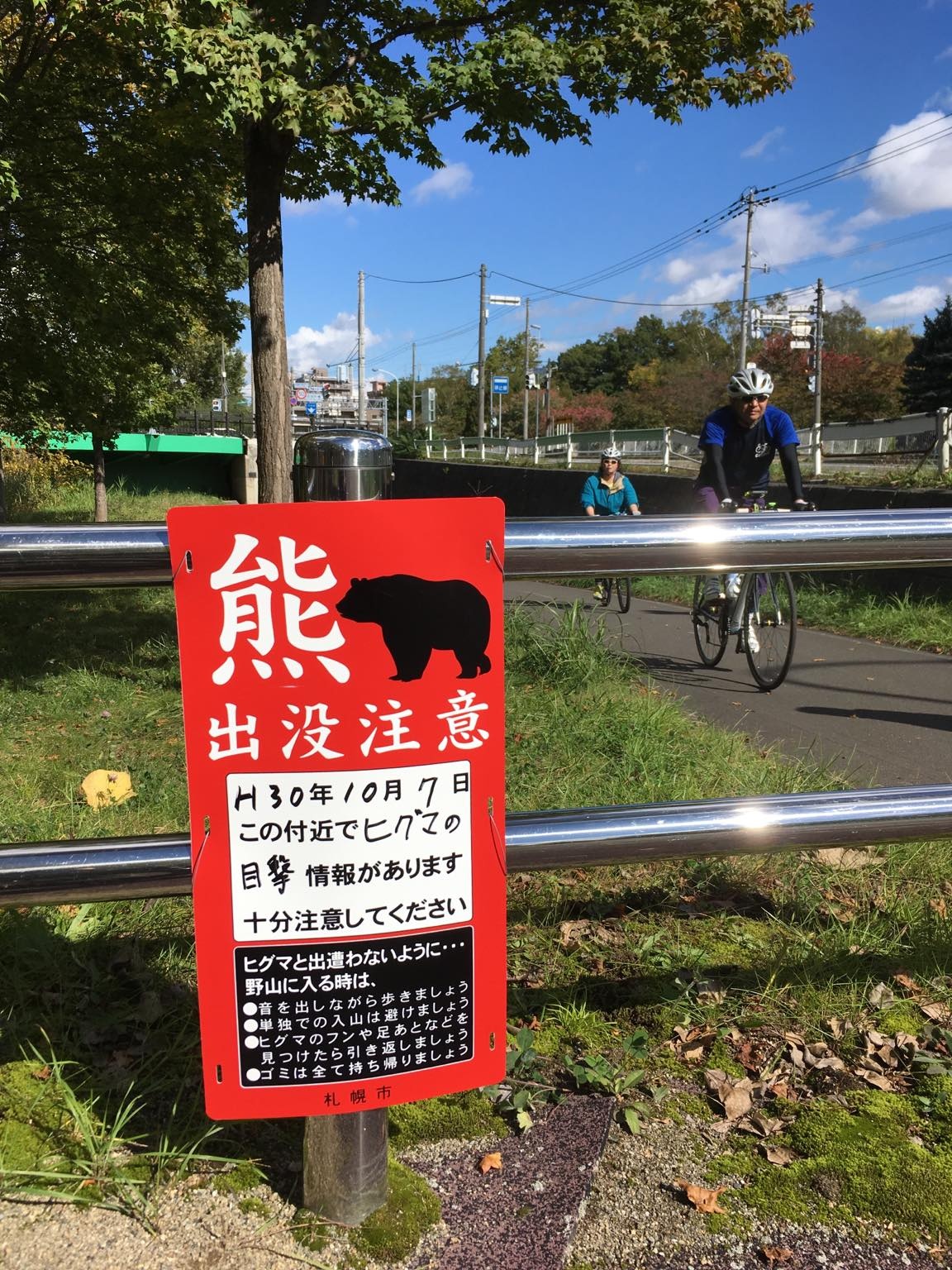
In 2004, the year of a high number of bear attacks, people became very scared. Rural people began wearing bells and other noisemakers. Children were escorted to schools. Elderly people traveled in groups. After numerous bear sightings in 2010, Hiromasa Takeda and Takahiro Komazaki wrote in the Yomiuri Shimbun, “Patrols have been organized and other precautions taken in areas frequented by bears...The city government of Uozu has issued an emergency warning about wild bears, and the town government of Iidemachi has advised residents to refrain from going outdoors in the morning and evening, when bear sightings have been most common. The Iidemachi government has given all local primary and middle schools loud bells to drive away bears, and some primary schools have asked parents to transport their children to and from school by car.” [Source: Hiromasa Takeda and Takahiro Komazaki, Yomiuri Shimbun, October 24, 2010]
“Sakue Ono, 60, who cultivates apples in Numata, Gunma Prefecture, sets off flares every morning to scare away any bears that might be near his property. He also installed electric fences, but even that has failed to stop bears from intruding in his field.” "I'm afraid the bears might have learned how to get around the fences. For example, maybe they push a fence over by using their hip, so the thick fur protects it from electric shock," he told the Yomiuri Shimbun.
In Hyogo Prefecture black bears have been trained to fear humans. Pesky bears that have frequently showed up in residential areas have been caught and frightened with firecrackers and pepper spray and other means and then released with transmitters so their movements could be monitored. After being released 75 percent of the bears avoided residential areas. Of these 62 percent did not go within two kilometers of residential areas and 12 percent came near residential area but did not enter them.
Killing Pesky Bears in Japan
In 2006, another year of a high number of bear attacks, the number of black bears trapped or killed because they were pests totaled 4,737, twice as the number of the previous record in 2004. Of these 4,251 were killed at the time or destroyed later. By some estimates this was 30 percent to 50 percent of the total bear population in Japan. Most were caught in Tohuku in northern Japan and the Nagano-Niigata regions. The high number of bears wandering into areas with human populations was again blamed on low yields of acorns and natural nuts.
In October 2006, hunters in Nagano were asked to voluntarily refrain from hunting black bears out of concern that their numbers might be declining as so many bears had been killed as pests.

It is not rare for bears to be caught and killed, but there are increasingly fewer hunters doing the job. Tadashi Kawagoe, 70, is chief of a division of the Yamagata prefectural hunters association that is responsible for eliminating harmful animals. He told the Yomiuri Shimbun "There are about 300 members who can work in the prefecture, and they've been dispatched almost every day since late August. I also canceled a planned trip to deal with the bears.”
“Some people are stressing for the need to protect bears as wildlife,” Takeda and Komazaki wrote. “In Karuizawamachi, Nagano Prefecture, a nonprofit organization called Picchio tries to teach bears of the risks of approaching populated areas, without killing them. Bears that become caught in traps are harassed for a time by barking dogs and then released back to the wild, hopefully with a lesson learned.”
In mid 2000s, a hunter had to be rescued after getting stuck in the cave of a hibernating bear for 24 hours in mountains in Takayama, Gifu Prefecture. The hunter got stuck in the three-meter-long cave while trying to pull the bear out after killing it with a shotgun. He stayed warm by huddling next his dog. A rescue was launched after his wife reported that he had not come home.
Dogs, Bounties and Hard Rock Used Against Bears in Japan
In the the resort town of Karuizawa, Nagano Prefecture, amid a spate of reports of bears in residential areas, trained dogs were enlisted to help promote “coexistence” for bears and humans. Ji Press reported: In 2004, Karuizawa-based nonprofit organization Picchio introduced a trained dog from a U.S. group working to implement the concept of “bear shepherding.”“The initiative of the Wind River Bear Institute calls for “teaching” bears to avoid humans while educating people on how to prevent conflicts with bears, according to its website.Under the initiative, Karelian bear dogs, traditionally bred for bear hunting, are trained to chase bears away from residential areas. “Bears come from the nearby forests,” said Junpei Tanaka, 43, the female dog’s handler. “At such times, the dogs can make the bears understand the risk of entering human territory without hurting them.” [Source: Jiji, January 17, 2017]
In Akita, Japanese officials are putting bounties on all bears after a string of deadly attacks there. "We will financially support responsible hunters so that they can hunt many more bears," said Akita governor Norihisa Satake in a press conference per a translation by Bloomberg. Akita has been one of the hardest-hit regions, with at least 53 people injured in bear attacks in 2023, almost triple the number of victims in 2022, NHK reported. In response, local officials are arranging to subsidize the cost of bullets for hunting clubs out of a $100,000 bear budget, per NHK. If a hunter captures a bear, they'll earn a reward of 5,000 yen, or $33, meant to cover transportation costs, according to the outlet, citing Akita officials. Satake urged hunters to "shoot immediately" if they see a bear, though with a caveat that they shouldn't go overboard, per Asahi Shimbun. [Source: Matthew Loh, Business Insider, October 27, 2023]
Residents in the northern Japanese prefecture of Iwate using rock music to deter bears. The local government there commissioned rock song that will be played across the region. ““So you think bear cubs are cute,” the song begins, accompanied by guitars and drums. “Discard that naive way of thinking! Nearby that cub is a parent bear, and it’ll suddenly attack you! Roar, roar, roar, roar, roar, roar — it’ll suddenly attack you!” “The track was written by a duo of local rock artists who are in their 60s. Their song offers lots of advice to those who may encounter one of nature’s scariest animals like “never turn your back and run away,” and “trying to play dead doesn’t work.” [Source: Brandon Sapienza, New York Daily News, October 1, 2021]
Red-Eyed Robot Wolves Deployed in Japan to Scare Off Bears
In 2020, the Hokkaido town of Takikawa deployed red-eyed "Monster Wolf" robots inteded to scare away bears that had been roaming around the the town. Bear encounters had been at an all-time high, prompting the local government to convene an emergency and the red-eyed wolves were one of the solutions. [Source: Sophia Ankel, Business Insider, November 14, 2020]
Business Insider reported: “City officials have said there had been no bear encounters since the robots have been set up. Takikawa purchased two wolf robots from maker Ohta Seiki. The so-called "Monster Wolf" is propped up on a stand and has bared-teeth and glowing red eyes. It also has built-in motion detectors that, when activated, cause the robots to flash its eyes and emit wolfish-like howls.
The mechanical wolves worked so well that upgraded versions were deployed in other towns. Declan Gallagher wrote in Men's Journal: Powered by solar energy, the admittedly frightful Monster Wolf was designed to minimize "friction between residents and bears." It emits a variety of realistic howls from its perch, complete with glowing red eyes, sharp fangs, and some fairly realistic fluttering fur. Its guttural utterances range from gunshots to a hunter’s voice and a dog’s bark. When a sensor alerts the creature to a nearby human or animal, it sets the terror campaign in motion. [Source: Declan Gallagher, Men's Journal, October 3, 2023]
The only thing keeping it from fully resembling a real wolf is its conspicuous lack of legs. At this point, Monster Wolf technology has only advanced far enough to mount the creature a pole, where its swiveling neck frightens bears throughout the area. Its design was inspired by the Japanese wolf, which populated the countryside more than 100 years ago before being hunted to extinction.
Success of the Red-Eyed Robot Wolves
Motohiro Miyasaka, president of the mechanical wolf’s manufacturer, Wolf Monster, told the BBC many local governments have ordered it. "It's been a success," Yuji Ohta, from Ohta Seiki, the company the invented told ABC News. "To date, no one has questioned its effectiveness, nor have we faced any returns due to dissatisfaction." [Source: Anthony Trotter, Good Morning America, October 31, 2023]
Anthony Trotter of Good Morning America reported: About 180 Monster Wolves have been deployed across the country, Ohta told ABC News. According to Ohta Monster Wolf can be useful on golf courses, near highway entrances, and railroad crossings. "I think it's much more cost-effective to threaten with a machine and drive it away from the village than the cost of a lot of people going out and exterminate it," Ohta said.
But there may be some challenges to the success of the bionic beasts, Zoologist NobuyukiYamaguchi of the University of Malaysia, Terengganu, told ABC News. "While the sudden lights and noises can startle wildlife, many animals learn and adapt. Once a sizeable segment of any species realizes the lack of actual harm, its deterrent effect may wane."
Ohta thinks Japanese wildlife instinctively fear the wolf. Among the sounds in Monster Wolf's repertoire are gunshots, howls, and barking dogs. He says repositioning Monster Wolf periodically will slow down animals from growing accustomed to its presence. ster Wolf's design, utilizing a mass-produced wolfman mask, has drawn chuckles and light-hearted criticism from the Japanese public. But the brilliance of the Monster Wolf may lie in its balance: It's convincingly crafted enough to deter pests but retains an element of theatrical artifice, ensuring humans aren't deceived. It's a melding of technology with tradition.
The robot in wolf's clothing has garnered international attention, with inquiries from around ten countries, the company said. Could Monster Wolf be a solution for marauding jackals in rural South Africa or trash-browsing bears in Alaska? "While the global interest is encouraging, the Monster Wolf requires specific on-site installations," Ohta told ABC News. "At present, we're not set up for international deployments."
Ohta is bullish on potential advancements. "We're excited to be collaborating with leading automotive firms and academic institutions to pioneer the next evolution of Monster Wolf," says Ohta. His vision includes GPS-enabled autonomous navigation, allowing the sentinel not just to deter intruders but to proactively patrol sensitive areas prone to wildlife encroachment. "When the sensors detect animals, Monster Wolf will chase and repel them."
Japanese Men Use Karate to Fight Off Bears
In August 2016, a 63-year-old was attacked by a black bear while fishing in a mountain creek in Gunma and his karate skills to fight back and ultimately survive. In an attack he said was unprovoked, Atsushi Aoki told Tokyo Broadcasting System he was bitten and scratched repeatedly, including on his head. "The bear was so strong, and it knocked me down," Aoki said. "It turned me over and bit me right here," he added, pointing to his bandaged leg.[Source: AFP, September 2, 2016]
AFP reported: “But instead of trying to outrun the beast — an Asian black bear — the fisherman decided he would use his well-honed karate skills. After assuming a fighting stance with his right fist in front of him, Aoki jabbed at his attacker's eyes, which sent the creature scrambling away into the woods. "I thought it's either 'I kill him or he kills me,'" Aoki told public broadcaster NHK. The plucky fisherman managed to get back to his car and get himself to a hospital, despite the mauling that left him with injuries to his head, arm and leg. "He drove himself to hospital, and he even remembered to grab the fish that he had caught," a local police officer told AFP.
On a somewhat similar altercation in Hokkaido in April 2024, CBSNews reported: A pair of bears picked the wrong person to mess with when they approached a 50-year-old karate practitioner only to be kicked away, police and media said. Masato Fukuda was lightly injured in his encounter with the bears in Nayoro city. The man was visiting from Japan's central Aichi region to see a waterfall in Nayoro's mountainous area when he chanced upon the two brown bears poking their faces out of bushes, the Mainichi newspaper reported. [Source: CBSNews, April 26, 2024]
One of them came towards him — but unfortunately for the animal, Fukuda was experienced in the martial art of karate, according to media reports. "I thought I should make my move or else I will be killed," he told a local broadcaster. Fukuda kicked it in the face — twice — and in the process twisted his leg, but his attack swiftly scared away the hapless duo, reports said. Both animals looked to be about five feet tall, according to media. Brown bears can weigh 1,100 pounds and outrun a human.
Japan’s Aging Bear Hunters
From Sunagawa in Hokkaido, Reuters reported: A gunshot rang out on a recent morning in a meadow in northern Japan. The brown bear slumped in the cage, watched by a handful of city officials and hunters. The bear had been roaming around a nearby house and eating its way through adjacent cornfields, so officials and hunters in Sunagawa city had set a trap with a deer carcass to lure the voracious creature. "For me, it's always a bit deflating when a bear gets caught," Haruo Ikegami, 75, who heads the local hunters' association, told Reuters hours beforehand.
Japan is grappling with a growing bear problem. A dwindling band of aging hunters is on the front line. Bbear expertise among local governments is spotty, and Japan's reliance on recreational hunters to protect settlements looks unsustainable as its population ages, according to Reuters interviews with almost two dozen people, including experts, hunters, officials and residents. Many called for changes to the way Japan manages human-bear conflict to address safety concerns while ensuring a future for the bears. In Hokkaido cities and towns like Sunagawa, Naie, Iwamizawa and Takikawa, which Reuters visited in October, some residents wonder what will happen when hunters can no longer do the job. [Source: Sakura Murakami, Adolfo Arranz and Han Huang, Reuters, December 3, 2024]
Toru Yoshino, a 66-year-old chicken farmer in Sunagawa, said he was "terrified" by a bear that would wander into his farm a few years ago. As local authorities weighed how to respond, they ultimately relied on the hunters' association, the Sunagawa Ryoyukai, to neutralise the threat, he said. Sunagawa's city government told Reuters that efforts to capture the bear were complicated by its proximity to homes and deliberations about what to do once the animal was trapped.
Although some hunters stalk bears as a hobby, Ikegami reckons not many are thrilled about culling trapped bears for local governments. "I don't want people to think of hunting as something fashionable. What we do is difficult. It's a big burden to take a life," he said. The burden is both mental and monetary. The hunter that shot the bear in Sunagawa would get about 8,000 yen (about $50), perhaps enough to cover fuel and expenses but little else, Ikegami said. Hunters also risk clashing with authorities. Ikegami's guns were seized by Hokkaido authorities in 2019 after they deemed his attempt to shoot a bear near a house was ill-judged. He is battling in court to have the weapons returned. The Hokkaido safety officials involved in the matter declined to address Reuters questions about the case.
For the complete article from which the material here is derived see “A grisly job” by Sakura Murakami, Adolfo Arranz and Han Huang, Reuters reuters.com
Image Sources: Wikimedia Commons
Text Sources: Animal Diversity Web animaldiversity.org ; National Geographic, Live Science, Natural History magazine, David Attenborough books, Daily Yomiuri, Yomiuri Shimbun, Japan National Tourist Organization (JNTO), New York Times, Washington Post, Los Angeles Times, Smithsonian magazine, Discover magazine, The New Yorker, Time, BBC, CNN, Reuters, Associated Press, AFP, Lonely Planet Guides, Wikipedia, The Guardian, Top Secret Animal Attack Files website and various books and other publications.
Last updated March 2025