
BROWN BEARS ATTACKS IN JAPAN

Japan Brown bear In May 1999, the Yomiuri Shimbun reported, a man was killed by a bear in Hokkaido. Two others were seriously injured. It was the first fatal bear attack in Japan in 9 years. The man was collecting wild plants when he was fatally attacked. When he did not return his family sent a search party out for him and found him dead. A short time later two women were out in the forest and presumably the same bear attacked them. They were not killed and are listed in serious condition in the hospital. Any animal is most dangerous when it loses it's fear of people. This bear was tracked down and killed. [Source: Yomiuri Shimbun, May 9, 1999]
In October 2005, a zookeeper died after being mauled on his head and leg by a brown bear at the Fuji Safari Park in Shizuoka. Japan Today reported: “Tomohiro Tamura, 34, who had been in charge of bears for three and a half years at the zoo, was pronounced dead at a hospital from blood loss, the police said. He had suffered injuries to his head and left leg. [Source: Japan Today, October 25, 2005]
In 2013, Japan Today reported: “A man escaped with his life thanks to a pair of pruning shears after he was attacked by a bear in Hokkaido. According to police, Takashi Okabe, 53, was picking edible wild plants in the mountains with his son and a friend in Hokkaido's Shinhidaka on Sunday morning when the incident occurred. TBS reported that shortly after arriving at the mountains at around 10 a.m., Okabe called the emergency services to report that he had been attacked by a 2-meter-tall bear.
“Okabe was struck multiple times across the face and chest by the animal, but was able to prevent serious injury by stabbing the bear using a pair of pruning shears he had carried with him.Doctors say Okabe's life is not in danger and that he remains conscious. Teams reportedly searched for the bear but could not locate it. Police are warning residents to be on their guard against bear attacks in the area. [Source: Japan Today, April 30, 2013]
RELATED ARTICLES:
BROWN BEAR ATTACKS factsanddetails.com
BEAR ATTACKS IN ALASKA factsanddetails.com
BEAR ATTACKS IN RUSSIA factsanddetails.com
BROWN BEARS: CHARACTERISTICS, HISTORY, SIZE factsanddetails.com
BROWN BEAR FEEDING: DIET, HABITS, HUNTING, SALMON factsanddetails.com
BROWN BEAR BEHAVIOR: SENSES, HIBERNATION, REPRODUCTION factsanddetails.com
BLACK BEAR ATTACKS IN JAPAN: WHY, HOW, WHERE, WHEN factsanddetails.com
BEARS IN JAPAN: CHARACTERISTICS, BEHAVIOR, SPECIES, HUMANS factsanddetails.com
DEALING WITH BEARS IN JAPAN: CONTROL, ROBOTS, DEFENSES, KILLING THEM factsanddetails.com
Brown Bears Eat Fisherman and Kill But Don't Eat 66 Cows
Cat Ellis wrote in Advture: Police in Hokkaido, Japan, are searching for any sign of a missing angler who they believe may have been eaten by a bear after a human head was found near the lake where he was fishing. According to Japanese news agency Kyodo News, 54-year-old Toshihiro Nishikawa, was last seen setting out on a fishing expedition on Lake Shumarinai, an artificial lake in Shumarinai Prefectural Natural Park. He was unaccompanied when a local boat operator dropped him off. [Source: Cat Ellis, Advture, May 16, 2023]
One of the operator's employees raised the alarm later that day after spotting a bear with a pair of waders dangling from his mouth. The employee tried to call Nishikawa, but the angler didn't answer. Local police began hunting for the bear, and according to a town official one animal was killed. The team also discovered a human head during their search. Work is currently underway to determine whether it belongs to Nishikawa.
A few months later, AFP reported: Hunters in Japan's remote north have killed an elusive and infamous brown bear nicknamed "Ninja" that attacked at least 66 cows, officials said. The exploits of "OSO18", as the bear was named, attracted considerable news coverage including dramatic television documentaries. The animal is believed to have started attacking livestock in 2019 in eastern areas of Hokkaido. Its habit of not eating the dairy cows that it attacked — only half of its 66 victims died — confused experts, and it eluded years of efforts to capture or kill it. [Source: AFP, August 22, 2023]
In July, the bear was shot dead. "A brown bear was hunted on July 30, and various analyses, including DNA testing, resulted in a confirmation that it was OSO18," Tadayoshi Takeda, an official with the Hokkaido regional government, told AFP. "I am sure local residents are relieved to hear this news," he said.
Brown Bear Attacks in 2017 and 2018
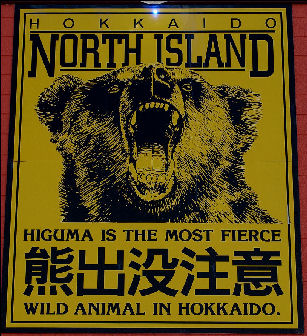
In late April 2018, a 66-year-old man was attacked and injured by a brown bear during a foraging excursion outside Hakodate. In October 2017, Hiroshi Matsuyama ventured into the woods early one morning just outside his home in Shiranuka, a town on the southern coast of Hokkaido about 160 miles east of Tomakomai.
In the second attack, Nathanial Gronewold wrote in E&E News: Sunset came and the 73-year-old Matsuyama failed to return home, so his daughter called the police. Authorities discovered his remains not far from the city limits. There were wounds on the back of his head, neck and thigh, and the body was covered in blood.[Source: Nathanial Gronewold, E&E News, Politico, July 5, 2018]
Spring in Japan is marked by blooming cherry blossoms and sansaitori — mountain foraging or vegetable harvesting, a popular pastime for older Japanese and seen here in northern Japan as a way of celebrating the end of winter. Enthusiasts follow up in the autumn by picking wild edible mushrooms in the forests before winter settles in. That’s what Matsuyama was doing when the bear attacked. Identified in news reports as a "part-time worker," Matsuyama was an enthusiast of spring sansaitori and fall kinoko mushroom hunting.
Sankebetsu Brown Bear Incident of 1915
The Sankebetsu brown bear incident, also referred to as the Rokusensawa bear attack or the Tomamae brown bear incident was the worst bear attack in Japanese history, killing seven settlers in Rokusensawa, Sankebetsu, Tomamae, Rumoi, Hokkaido.The incident took place between December 9 and 14, 1915 after a large brown bear woke up from hibernation and repeatedly attacked several houses in the area. At the time, Sankebetsu was a pioneer village, with very few people living in a largely wild area. [Source: Wikipedia]
At dawn on in mid-November in 1915, an Ussuri brown bear appeared at the Ikeda family's house in Sankebetsu Rokusensawa, about 30 kilometers inland from the west coast of Hokkaido. The surprise encounter panicked the family horse, but the bear fled after taking only harvested corn. On November 20, 1915, the bear reappeared. Worrying about the safety of the horse, the head of the Ikeda family called on his second son, Kametaro, and two Matagi from his own village and a neighbouring village. When the bear reappeared on November 30, they shot it but failed to kill it. The next morning they followed the bear's footprints, but a snowstorm forced them to turn back.
On December 9, 1915, at 10:30 a.m., the giant brown bear turned up at the home of the Ota family. Abe Mayu, the farmer's wife, and Hasumi Mikio, a baby being taken care of by Mayu, were at the house. Mikio was bitten on the head and killed. Mayu fought back, apparently by throwing firewood, and tried to escape. She was overtaken, knocked down, and dragged into the forest. According to contemporary descriptions the scene resembled a slaughterhouse, with blood puddled on the farmhouse floor.
December 10 of the Sankebetsu Brown Bear Incident
Early in the morning on December 10, Saito Ishigoro and Miyoke Yasutaro left the village on their respective errands. Meanwhile a search party comprising thirty men was organized to capture the brown bear and recover the remains of Mayu. This group entered the forest and had advanced no more than 150 meters when it met the brown bear. Five men shot at the bear, but only one managed to hit it. The enraged animal nevertheless retreated, and the men escaped injury. After the bear had fled, the hunters scouted the area and discovered dried blood on the snow at the base of a Sakhalin fir tree. Beneath the snow was the corpse of Mayu with only the head and parts of the legs remaining. The bear had cached the body of Mayu in the snow in an attempt to preserve it, as well as to hide it from scavengers. The villagers believed that once the bear had a taste for human flesh, its return to the settlement was assured. [Source: Wikipedia]
Later, Yayo, Miyoke Yasutaro's wife, was preparing a late meal while carrying her fourth son, Umekichi, on her back. She heard a rumbling noise outside, but before she could investigate, the bear broke through a window and entered the house. The cook pot on the hearth was overturned, dousing the flames, and in the ensuing panic the oil lamp was put out as well, plunging the house into darkness. Yayo tried to flee the house, but her second son, Yujiro, clung to her legs, tripping her as she ran. The bear attacked her and bit Umekichi.
Odo had remained at the house as the only bodyguard. When he ran for the door, the bear released the mother and child to pursue him. Yayo then escaped with her children. Odo attempted to hide behind furniture, but was clawed in the back. The bear then mauled Kinzo, the third son of the Miyoke family, and Haruyoshi, the fourth son of the Saito family, killing them, and bit Iwao, third son of Saito family. Next to be targeted was Take, Saito Ishigoro's pregnant wife. As the animal advanced she pled for her life and that of her unborn child, but it was in vain. She too was attacked, killed, and eaten.
The corps of guardsmen who had tracked the bear downriver realized that they were not, in fact, on its trail. As they hurried back to the settlement, a seriously injured Yayo met them and related the attack at the Miyoke family's house. The corps raced there to rescue any survivors. When they arrived, the house was dark, but sounds of an attack emerged. Believing that the bear had killed everyone inside, some of the guardsmen proposed setting the house on fire. Yayo, hoping that some of the children still lived, forbade this.
The guardsmen divided into two groups: one, consisting of ten men, stood guard at the door while the other group went to the back of the house. When given a signal, the group at the rear set up a racket, shouting and rattling their weapons. As expected, the bear appeared at the front door. The men there had bunched up, with lines of fire blocked by the guard at their head, whose own rifle misfired. Amid the general confusion and risk of crossfire, the bear escaped into the night. Carrying torches made of birch bark, they entered the house and beheld the results of the attack.
Rikizo and Hisano, first son and daughter of the same relatives, were injured, but lived. The village people gathered in the school, and seriously injured people were accommodated in the Tsuji family house near the river. In two days, six people had lost their lives, one of them pregnant. After the incident, only veterans of the Russo-Japanese War remained at their posts. Yamamoto Heikichi and "Kesagake" Meanwhile, Saito- Ishigoro-, unaware of the family's fate, filed a report with authorities and the district police before returning to Tomakomai and lodging at a local hotel there. Miyoke Yasutaro- had heard that a man named Yamamoto Heikichi was an expert bear hunter, and so paid a visit to his house. Yamamoto was certain that the bear was "Kesagake" or "the diagonal slash from the shoulder", which had previously been blamed for the mauling and deaths of three women but by now he had pawned his gun for money to buy alcohol, and refused Miyoke's request for aid. Unable to return home, Yasutaro- stayed in Onishika, now Obiracho-.
December 11th and 12th of the Sankebetsu Brown Bear Incident
On December 11, Miyoke Yasutaro- and Saito- Ishigoro- returned to Sankebetsu. Noticing the villagers gathered at the branch school, the two pieced together the story of the mauling. A group of men was formed to kill the bear, including Miyoke and Saito-. They decided to wait for the bear at Miyoke's residence, believing that the bear would reappear. The night passed with no attack. [Source: Wikipedia]
The news of the bear's appearance in Sankebetsu reached the Hokkaido Government Office, and under the leadership of the Hoboro (now Haboro town) branch police station, a sniper team was organized. Guns and volunteers for the team were gathered from nearby towns, and after getting permission from "Teishitsu Rinya kyoku" (the Imperial Forestry Agency", now "Rin'ya cho"), the sniper team went to Sankebetsu that evening. Chief Inspector Suga, the branch office commissioner, went up the Rokusen sawa with the aim of viewing the Miyoke family house and assessing the state of the sniper team and met all those who got off the mountain pass.
The brown bear did not appear on December 12. Thinking of the future, the team decided to exterminate the bear even if they had to mobilize every possible resource. It was decided that the brown bear would most probably try to retrieve the bodies of those it had killed but there were no remains in the Miyoke family house. Therefore, a new plan was proposed: to attempt to lure out the brown bear with the corpse of a victim. The plan was widely condemned, especially by the Ota, Saito, and Miyoke families but it was decided that, for the future of the village, it was the best plan. Within the day, the strategy was executed. The sniper team consisted of six members, which now included Yamamoto Heikichi waited, but the bear stopped and appeared to check the inside of the house then returned to the forest. The bear did not appear again that night, and so the plan ended in failure.
At dawn, a search team discovered that the Ota family's house was ransacked. The bear had eaten the people's winter food stockpile and ransacked the houses. The bear had damaged at least eight houses, but so far no one could find it. Suga motivated the men by cheering from the village outside. Given that there were now 60 armed men, it was decided that they should hunt in the surrounding mountains. Kesagake now seemed to lack prudence and stretched its territory downstream. The police captain, Suga, recognized the increasing risk of the situation. He made an ice bridge as a line of defence, then arranged snipers and guards.
That night, a sniper at the bridge thought he saw something in the shadows of the tree stumps on the opposite shore. Receiving this information, Suga thought it might be a man's shadow. When he spoke to it, however, he received no reply and ordered the snipers to open fire. At that moment the shadow, obviously that of the bear, disappeared into the forest. They were disappointed, having failed to kill the bear, but the captain thought he had heard some response from it.
End of the Sankebetsu Brown Bear Incident
The next morning, a team investigated the opposite shore and found a bear's footprint and blood there. Given that Kesagake had again been wounded, that snowstorms appeared imminent and since fresh snow could cover any tracks, it was decided that this was the most critical opportunity to hunt down and kill the bear. It was Yamamoto and Ikeda Kamejiro, a guide, who immediately set out after the bear. Yamamoto decided to track the bear with a team of two, as they would be quicker than a larger team. This was particularly important given the possibility of a snowstorm and the loss of any tracks. [Source: Wikipedia]
Yamamoto was familiar with Kesagake's behaviour and successfully tracked him down. Yamamoto spotted Kesagake resting near a Japanese oak. He approached to within 20 meters of the bear and shot at Kesagake. His first shot hit the bear's heart and the second shot his head. When measured, the bear was 340 centimeters (749 pound) and 2.7 meters (8.85 foot) tall. A necropsy was carried out on the bear during which parts of his victims were found in his stomach. While at the time the skull and some of the fur of the bear were kept, they later were lost and no traces of Kesagake are left.
Yayo, who received head wounds in the attack, made a full recovery, but Miyoke Umekichi, who was bitten by the bear as the child was being carried by its mother, died less than three years later from the wounds he had suffered. Odo recovered from injury and returned to work, but next spring he fell into a river and died. It was unclear whether the injury inflicted by the brown bear had caused the accident. After the attack, most of the villagers of Rokusen sawa soon left, and the town rapidly transformed into a ghost town.
Okawa Haruyoshi, who was seven years old and the son of the Sankebetsu village mayor at the time of the incident, grew up to become an excellent bear hunter. He swore an oath to kill ten bears for every victim of the attack. By the time he reached the age of 62, he had killed 102 bears. He then retired and constructed the bear harm cenotaph, a shrine where people can pray for the dead villagers. Takayoshi, Haruyoshi's son, in 1980 — after an eight-year chase — hunted down a 500 kilogram brown bear who was nicknamed the north sea Taro.
Six Bears Escape from a Bear Park and Kill Two People
In April 2012, six bears escaped from their enclosure at Japanese park, killing two women before hunters shot them dead. AP reported: “Police in northern Japan say a group of bears that escaped from their enclosure at a park have killed two people. Police said that two female employees in their 60s and 70s at the park near Kazuno City in Akita prefecture were believed to have been feeding the bears from outside the concrete fence before they escaped. Their mangled bodies were found hours after a colleague escaped and called for help. Hunters later shot and killed all six escaped bears. Police believe the bears climbed over the fence by climbing onto high-piled snowdrifts. They are investigating the case as possible professional negligence causing death. The privately owned park owns 32 other bears. [Source: AP, April 20, 2012]
The Yomiuri Shimbun reported: “Rescue workers witnessed a bear climbing over a concrete wall to escape from an open-air play area at the Hachimantai Bear Farm in Kazuno, Akita Prefecture, where two female employees were killed by brown bears, sources said. Six bears, including the one seen by rescue workers, were killed by local hunters. They were believed to have escaped from the enclosure, climbing over the 4.5-meter-high wall by climbing up accumulated snow left in a corner of the play area. The Akita prefectural police found several bear tracks in the snow when they searched the site on suspicion of professional negligence resulting in death. [Source: Yomiuri Shimbun, April 22, 2012]
“Meanwhile, a male employee who was unharmed admitted to The Yomiuri Shimbun that the farm's employees had not removed any snow from the play area this winter. According to a local fire station, three rescue workers arrived near the farm's entrance at about 10:30 a.m.. When they inspected the site based on a report that bears had escaped, they saw a bear climbing over the wall. The police said the two victims were believed to be Tachi Tatehana, 69, and Take Tatehana, 75, both of the Hachimantai-Sakabitai district of Kazuno.
How to Avoid Bear Attacks
Yellowstone National Park is bear country. There, park officials strongly encourage hikers to: 1) travel in groups of three or more; 2) carry bear spray which they know how to use and can easily grab; and 3) make noise or wear bells or some other noise maker so they don't accidentally startle a bear. If you encounter a bear do not run. Back away slowly. The park requires that people stay at least 100 yards from bears and wolves, and at least 25 yards from other large animals. [Source: CNN]
“If you come across a bear, never push a slower friend down … even if you feel the friendship has run its course,” the U.S. National Park Service wrote in a tweet in 2023. The tweet garnered more than 17,000 retweets and over 146,000 likes within a few days. Brooke Baitinger wrote in the Sacramento Bee: “In fact, if you do come face-to-face with a bear, you really shouldn’t run at all. That includes pushing your slower friend toward the bear to make a break for it. That’s because they’ll act like dogs and chase fleeing animals. You also don’t want them to see you as a prey animal. Here’s what you should do instead, according to the National Park Service:
Identify Yourself as a Human and Not a Prey Animal by talking calmly, and stay put. Slowly wave your arms. The bear might come closer or stand up on its back legs to get a better look or to smell you, which is usually a sign of curiosity and not aggression. Walk away slowly: Move sideways so you appear less threatening to the bear. This also lets you keep an eye out. [Source: Brooke Baitinger, Sacramento Bee, March 2, 2023]
Don’t Scream or Make Any Loud or High-pitched Noises since the bear might think it’s the sound of a prey animal. Screaming could trigger an attack. Pick up smaller children. Don’t let kids run away from a bear. It could think they’re small prey. Also, make yourself look as big as possible, including moving to higher ground if you can. Don’t make any sudden movements. Dogs have pluses and minuses. On one hand they can alert you to a bear's presence and drive it off. On the other hand dogs can also also startle bears, annoy and aggravate them and be seen as prey.
Stay Calm and remember that most bears do not want to attack you; they usually just want to be left alone. Talk slowly and with a low voice to the bear. Bears might bluff to avoid an encounter by charging and turning away at the last second.
Don’t Try Climbing a Tree. Black bears and grizzlies can both climb trees. Don’t drop your bag: A bag on your back can keep a bear from accessing food, and it can provide protection. If a bear attacks you deploy spray if you have it or strike the animal with anything: a rock, stick or hiking pole. Some say you should try to jab its eyes or punch it in the nose as you are told to do with sharks.
Hike in Groups: A group is noisier and smellier, the National Park Service said. Bears like to keep their distance from groups of people. Hikers in bear country are encouraged to keep their distance, especially with a mother and her cubs. Alaskan bear expert Larry Aumiller, who spends much of time escorting tourist around bears, told Smithsonian, "Sometimes it can get a little complicated depending on things like how many people we have, how loud or aggressive they are, which bears are present that day and how they're getting along with each other. If we seem to be making a bear nervous, I get the group to act more submissive. We may move closer together, which make the group's size appear less formidable. We stop making noise, we may sit down, we say even slowly move away. If, on the other hand, a bear starts acting assertive, we may do the opposite—spread out and stand up on logs or rocks, talk loudly, maybe even wave our arms around. Every interaction is different and it's up to us to read the people and the bears, and respond appropriately to each other."
One Russian guide told the New York Times, "Never look the bear on the eyes. And don't move. Just yell Russia swear words at it." If you surprise and are attacked by a brown bear some advise you to play dead since most of the time the bear is defending itself. If it stalks you fight back and don’t make yourself easy pray. In some places hikers carry pepper spray to ward off bears. Pepper spray may work in a close encounter.The jury is out on whether this really works. Some say pepper spray may actually attract bears. If sprayed at a campsite bears can get a whiff of it a quarter of a mile away.
Troublesome grizzly bears are driven away by loud yelling, firing shotgun blanks, throwing bean bags, igniting flares, or firing rubber bullets. Other measures employed to keep bears away include electric fencing around garbage sites, replacing conventional trash cans with bear-proof models and educating people on how to keep their trash stored out of harms way. In the United States, troublesome grizzly bears are driven away by chasing them with specially trained Finnish dogs and dealt with using the three-strikes-your-out policy in which troublemakers are caught and taken to a wilderness area. If they show up two more times and cause trouble they are killed.
Image Sources: Wikimedia Commons
Text Sources: Animal Diversity Web animaldiversity.org ; National Geographic, Live Science, Natural History magazine, David Attenborough books, Daily Yomiuri, Yomiuri Shimbun, Japan National Tourist Organization (JNTO), New York Times, Washington Post, Los Angeles Times, Smithsonian magazine, Discover magazine, The New Yorker, Time, BBC, CNN, Reuters, Associated Press, AFP, Lonely Planet Guides, Wikipedia, The Guardian, Top Secret Animal Attack Files website and various books and other publications.
Last updated March 2025