
LEBARAN (INDONESIA EID) — ONE OF WORLD LARGEST HUMAN MIGRATIONS
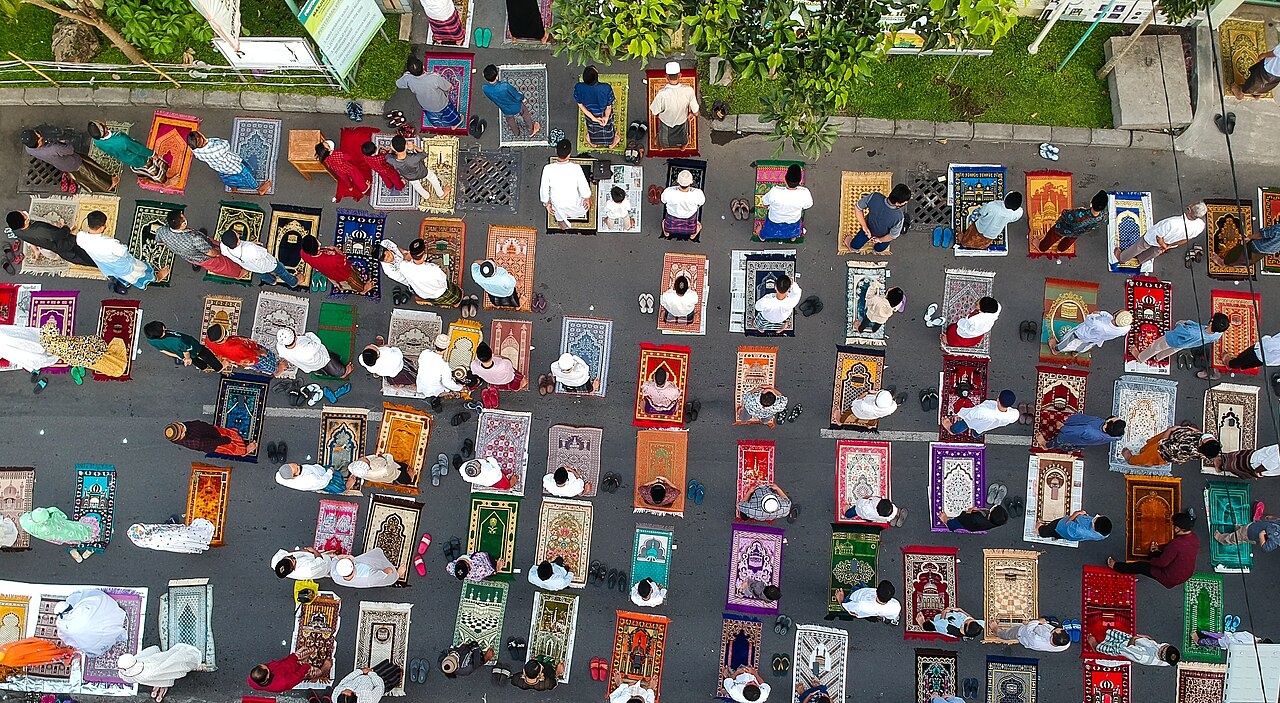
Lebaran, the Indonesian celebration of Eid al-Fitr at the end of Ramadan, is associated with one of the largest temporary human migrations in the world. Each year, tens of millions of people take part in mudik, the annual homecoming tradition in which workers leave major cities to return to their hometowns, celebrate with family, and seek forgiveness from parents and elders. [Source: Reuters, April 9, 2024; Edna Tarigan, Associated Press, April 9, 2024]
In 2024, Aditya Nugraha, a 21-year-old from Jakarta, traveled more than 500 kilometers to his hometown of Palembang in Sumatra to mark the holiday. Like many others, he endured long delays during the journey. After departing in the evening, he remained stuck in traffic for over 13 hours while trying to reach the port of Merak, where travelers board ferries from Java to Sumatra. Scenes such as this are common during mudik, with long lines of vehicles and heavy congestion on major roads, especially on the island of Java.
Lebaran is celebrated by more than 220 million people in Indonesia. The holiday typically spans several days, during which families gather, share meals, and observe religious traditions. The scale of movement during this period is enormous: in some years, government estimates suggest that around 190 million people—well over half the population of Indonesia —travel across the archipelago.
Transportation hubs become especially crowded during this time. In Jakarta, a city of more than 11 million people, bus terminals, train stations, airports, and highways fill with travelers in the days leading up to the holiday. Government projections have described the exodus as the largest movement of people in the country’s history, with numbers rising significantly compared to previous years.
RELATED ARTICLES:
HOLIDAYS AND FESTIVALS IN INDONESIA factsanddetails.com
CALENDARS USED IN INDONESIA factsanddetails.com
RAMADAN AND LEBARAN (EID) IN INDONESIA factsanddetails.com
BALINESE CALENDAR factsanddetails.com
BALINESE HOLIDAYS, FESTIVALS, RITUALS, CEREMONIES AND OFFERINGS factsanddetails.com
PEOPLE IN INDONESIA: UNITY, DIVERSITY, CHARACTERISTICS, ADAT factsanddetails.com
ETIQUETTE AND CUSTOMS IN INDONESIA factsanddetails.com
SOCIAL CUSTOMS IN INDONESIA factsanddetails.com
INDONESIAN CHARACTER AND PERSONALITY factsanddetails.com
SOCIAL RELATIONS IN INDONESIA: GOTONG-ROYONG, BAPAKISME AND CONFLICT AVOIDANCE factsanddetails.com
JAVANESE PEOPLE: HISTORY, DEMOGRAPHICS, LANGUAGE factsanddetails.com
JAVANESE SOCIETY: FAMILY, MARRIAGE, GENDER, CUSTOMS, CLASSES factsanddetails.com
Lebaran in a Fishing Village on an Island Off Sulawesi
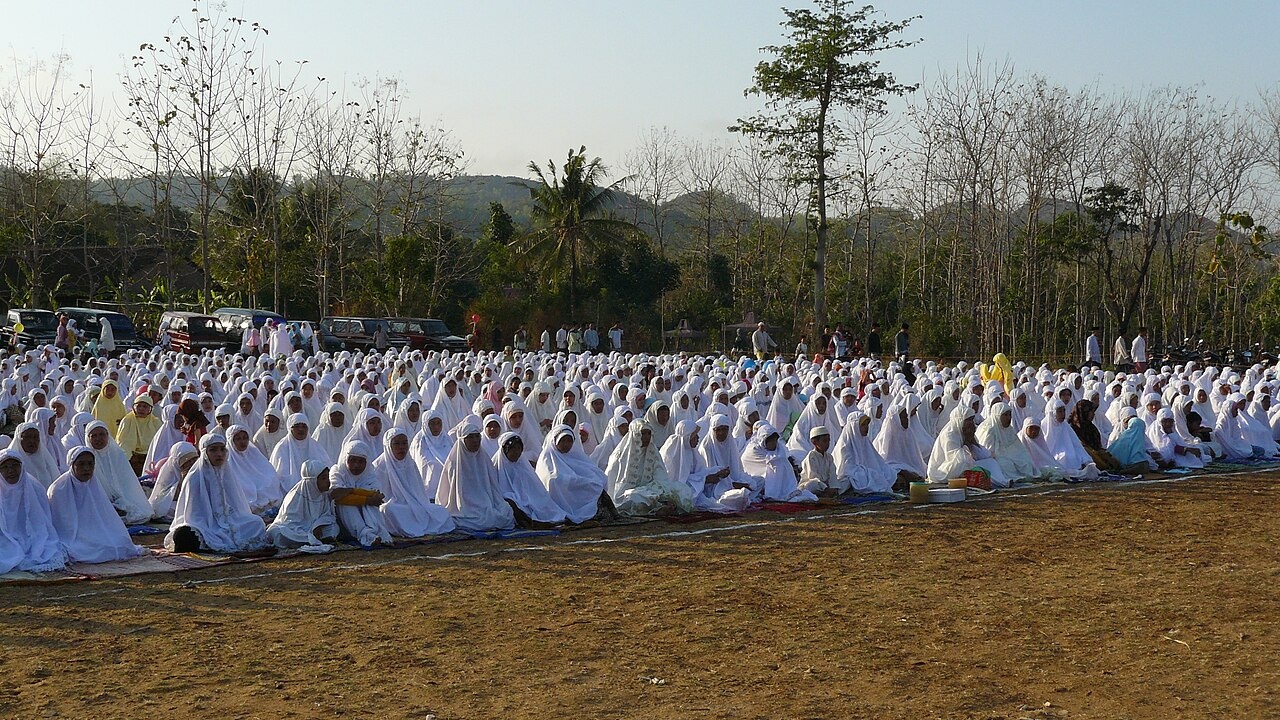
Lakansai is a village on the island of Buton off the south-east peninsula of Sulawesi. It is home to roughly 80 families, most of whom are Muslim. Vivien Cumming wrote for the BBC: During our stay, the people there were celebrating Lebaran. Villagers had returned home from all over the island, and the excitement was palpable. Freshly caught fish were being cooked, and drinks were made from fruit syrup and coconut water. It is custom on the days leading up to Lebaran to visit relatives’ graves with food and drink to share with them. And so, we were led to a graveyard where multiple families were eating and drinking over tombstones, laughing and crying, reminiscing and giving thanks for life. We ate and drank together in a vibrant celebration of lives gone by. [Source: Vivien Cumming, BBC, December 2, 2017]
On the morning of Lebaran, the villagers got dressed up for prayers at the small local mosque. Many Muslim-Indonesians will wear traditional clothing: embroidered shirts (“baju koko” for men and “kebaya kurung” for women), sarongs (“sarung”), a veil (“jilbab”) for some women who choose and an embroidered cap (“songkok”) for some men. “Ramadan is a time to reflect on my life and make peace with my family and friends. I also like to help people who need help during Ramadan,” said Adu, a local villager and one of our guides.
After morning prayers, people gathered on the streets to greet their family and neighbours before heading home for a feast to break their fast. Most villagers weren’t used to meeting people from outside Buton, and many families invited our entire group to join them for this meal. We went from house to house, first being led into the kitchen to see what they were preparing, and then eating a huge meal that lasted at least an hour each time.
The meals consisted of various chilli-spiked rice and fish dishes. Local specialities included “lapa lapa”, made from sticky rice and red beans cooked in coconut milk; followed by sweet dishes like “cucuru”, balls of deep-fried brown sugar and rice flour. At the start of each meal, the elder of the house would say a prayer and bless the food, and then welcome us to the floor where we would sit and eat in a circle. Indonesians often make small sweet biscuits for special occasions, and each family had made a huge bag for us to take to the jungle. We even got a chance to help make Indonesian “donats”, simple fried rings of dough dipped in sugar.
In the late afternoon after everyone had eaten, we were treated to a performance of an Indonesian marital art called Pencak Silat. One of our guides, Dedy Muldiana, explained; “They don’t normally do this for Eid celebration, it’s usually for almost all other events like marriage, but you guys are lucky they are showing us now.” The villagers fetched drums and gongs and formed a circle. Someone would enter the circle and challenge another person to a ‘fight’. They bowed, and then gracefully kicked and swung at each other, mostly with no contact. The winner seemed to be determined by whoever bowed out first.
Pencak Silat can be traced back as far as the 6th Century in Riau, a province of Sumatra. Traditionally the martial art was performed by women, as it originated in a society based around matrilineal custom. The Minang, an ethnic group indigenous to the highlands of West Sumatra, used it for defensive purposes and it spread throughout Indonesia. Today everyone joins in, male or female, experienced or not, and it is performed as a sport as well as for celebratory purposes. “You find Pencak Silat all over Indonesia, but the version they do here is more usual for this area and known as Silat. They normally dress in black with a headband, very like most expert martial art shows, but today it’s for fun.” Muldiana said.
What we witnessed was more of a dance than a fight. The whole village — including us — congregated and joined in. Some of us were even invited into the ring to attempt this martial art. Not having any idea what to do, we embarrassed ourselves with ungraceful moves while local children fell into hysterics. We were honoured that they’d invited us into their ritual, and they admired our bravery for attempting it in front of the whole village.
Parades and Processions in Indonesia
Historically, rulers in Indonesia staged grand festivals to display their authority by impressing large audiences. These events featured competitions, performances, dances, music, and elaborate parades. In Bali in particular, such spectacles were central to political power, as ceremonies and magnificent celebrations publicly dramatized key cultural concerns with hierarchy and status. The Balinese kingdom has often been described as a “theatre state,” in which rulers acted as impresarios, priests directed ritual, and ordinary people served as participants, laborers, and spectators. Through continuous pageantry, rulers and elites reinforced and legitimized their authority. [Source: “Culture and Customs of Indonesia” by Jill Forshee, Greenwood Press, 2006]
This tradition continues in modern ceremonial life, especially in Bali. Large-scale processions, such as cremation ceremonies, can draw thousands of participants and require extensive preparation, including the construction of elaborate towers and decorations. These events are not only ritual occasions but also social gatherings, with food and entertainment provided by gamelan orchestras. As important status symbols, such cremation festivals maintain their cultural significance. Processions remain a core feature of many celebrations, enhancing their impact through vivid displays of color, music, performance, and scale.
Elsewhere in Indonesia, similar traditions of ceremonial display are evident. Among the Minangkabau of Sumatra, women organize elaborate parades wearing distinctive headdresses that signify matrilineal identity. In Java, wedding celebrations often include family processions in which the bride, richly adorned, is carried in a palanquin while the groom follows on horseback. On many islands, ritual processions linking villages mark marriages, publicly affirming alliances between kin groups while also demonstrating wealth and social standing through the size of the procession and the splendor of costumes.
In East Java, the Reog Ponorogo procession features performers riding flat, woven bamboo hobbyhorses in a lively parade. At its center is a performer carrying a massive mask depicting a tiger’s face topped with an expansive fan of peacock feathers, sometimes as large as a bed. Masked dancers and musicians accompany the procession, which celebrates local myths associated with the tiger and peacock as well as the identity of the Ponorogo region. This dramatic performance appears at major public events and remains one of the most recognizable forms of traditional pageantry in Indonesia.
Festive Muslim Holidays in Indonesia
In Central Java, large ceremonial parades mark the birthday of the Prophet Muhammad, known as Maulud. Groups of men carry large platforms bearing decorated “mountains” of rice as they move in procession from royal palaces to mosques. Along the route, crowds gather to pray for the well-being of the community. At the end of the procession, people take portions of the rice as blessings. Similar celebrations include offerings shaped into symbolic male and female forms, presented on elaborate floats. Gamelan orchestras often accompany these events, their music attracting even larger crowds and enhancing the spectacle. [Source: “Culture and Customs of Indonesia” by Jill Forshee, Greenwood Press, 2006]
In South Sulawesi, Maulud is also celebrated with distinctive local traditions that commemorate the arrival of Islam in the region. Processions may feature symbolic boats with brightly colored sails, sometimes carried or displayed on water. After the ceremonies, cloth from the sails is distributed to the poor, reflecting the importance of charitable giving, or zakat, in Islamic practice. In some areas, celebrants travel by boat between islands, turning the sea itself into a stage for ritual processions. In parts of eastern Indonesia, such as the Tanimbar Islands in the Maluku archipelago, these sea-based parades create vibrant, moving displays as communities sail from one location to another.
On the island of East Sumba, an annual ritual procession takes place near the end of the long dry season, often in November, during a period known as the “hungry season” (musim lapar), when food supplies run low and communities await the monsoon rains. The event centers on large-scale “rain prayers” intended to ensure agricultural renewal. At dawn, men gather at an ancestral gravesite, and thousands of participants then march more than three miles to the sea, dressed in traditional ikat textiles and led by Marapu priests on horseback. Participants fast throughout the day.
At the point where a river meets the sea, priests look for signs of mythical red crocodiles, believed to symbolize fertility and the renewal of life. Their appearance is interpreted as an auspicious sign, and if they are seen, the crowd responds with excitement. The ritual concludes with the slaughter of water buffalo, communal feasting, and the drinking of palm wine. By evening, the atmosphere becomes celebratory, with abundant food and drink. Participants believe that rain typically follows within days, affirming the ritual’s significance in maintaining the balance between human communities and the natural world.
Tabruik Celebration in Pariaman in West Sumatra
Just over an hour’s drive—about 56 kilometers north of Padang—lies the coastal town of Pariaman, set along a scenic seven-mile shoreline. Once a thriving seaport, Pariaman is now best known for its annual Tabuik festival, a dramatic reenactment of the Battle of Karbala and the martyrdom of Hasan and Husayn, grandsons of the Prophet Muhammad, along with their family members.
The Tabuik celebrations take place during Muharram, the first month of the Islamic lunar calendar, with the main events culminating on the tenth day. Visitors who wish to witness the full sequence of rituals and processions typically arrive at the beginning of the month. Variations of this commemoration are found in many parts of the world under different names—such as Muharram, Hosay, or Tadjah—reflecting the global spread of traditions honoring Husayn, who was killed at Karbala. In Indonesia, Pariaman has become the central location for these observances.
The rituals begin on the first day of Muharram with the collection of red soil, symbolizing the bloodshed at Karbala. This act reflects a broader cultural memory, echoed in place names across Indonesia that refer to “red earth.” Two main groups—Tabuik Pasar and Tabuik Seberang—lead the ceremonies, each gathering soil from different villages and placing it into a daraga, a container within their respective tabuik towers. At the same time, other participants perform symbolic acts such as cutting banana trunks, representing the suffering and mutilation endured by Husayn.
As the days progress, further rituals unfold. On the seventh day, a ceremony called ma’atam commemorates Husayn’s suffering and evokes deep emotion among participants. The two groups then meet at a central crossroads, symbolically reenacting the confrontation at Karbala. On the eighth day, a replica of Husayn’s scarf is paraded through the town, emphasizing his role as a protector of the weak and a rightful spiritual leader.
The climax occurs on the tenth day of Muharram, when the two tabuik structures are joined into a single towering form, rising over 20 feet high and adorned with an effigy of the mythical buraq, the celestial steed. The procession then moves toward Gondoriah Beach, where the structure is carried into the sea and released. Many participants enter the water in hopes of retrieving pieces of the tabuik, believed to carry spiritual significance.
Beyond the festival, Pariaman’s coastline remains a place of everyday life and leisure. Beaches such as Cermin Beach and Teluk Belibis Beach offer quiet settings where local fishing communities live and work. Visitors can also rent boats to explore nearby small islands, adding to the town’s appeal as both a cultural and coastal destination.
Christian Celebrations in Indonesia
Christian holidays fall on the same days as in other countries. The following are national holidays: 1) Wafat Isa Almasih - Good Friday - Commemorates the death of Jesus. 2) Hari Paskah - Easter - Celebrates the day Jesus arose from the dead. 3) Kenaikan Isa Almasih - Ascension of Christ- Commemorates the day Jesus ascended into Heaven. 4) Hari Natal - Christmas - Celebrates the birth of Jesus Christ.
Jill Forshee wrote in “Culture and Customs of Indonesia”: Indonesian Christians hold more rituals at Easter than at Christmas. This likely reflects the historically local importance of rituals for the dead and ceremonies honoring ancestors. Catholics of Larantuka in eastern Flores have incorporated their own life cycle rituals with the birth and death of Christ since their conversion in the sixteenth century. Easter inspires a devout vigil for many Christians, beginning on Saturday night until the time of Christ’s resurrection on Sunday morning. [Source:Jill Forshee, “Culture and Customs of Indonesia”, Greenwood Press, 2006]
Catholics of the Toba Batak mix traditional ritual dances with Christian rituals. Asmats of West Papua receive Catholic communion in traditional headdresses and face paint. Sumba’s Christians drape ikat textiles with cross motifs over coffins of their dead. A large cement Sumbanese rendition of Christ clad in a traditionally worn ikat costume stands before a Catholic 1Church in the town of Waingapu. As always, newer world faiths overlay old ways in ceremonies and imagery. Christmas across Indonesia typically revolves around church events rather than major festivities at home. People dress up and sing seasonal hymns but rarely decorate their homes or buy and exchange gifts as in the West. Christmas is a time of socializing and people will take sweets to friends, sometimes visiting several homes in succession. While a holy day, Christmas does not carry the religious power of Easter.
Semana Santa — the Holy Week Rites of Larantuka, East Flores
Each year during the week before Easter Sunday, the small town of Larantuka comes alive with solemn rituals and distinctive traditions marking Holy Week, locally known as Semana Santa. During this period, a series of prayers and processions transforms the town into a major center of religious activity.
Thousands of Catholic pilgrims travel to Larantuka from across Flores, as well as from Java, Bali, and other parts of Indonesia, joined by international visitors. The significance of the event lies in its unique blend of local traditions and centuries-old Portuguese Catholic influences, dating back to the 16th century when Portuguese traders and missionaries arrived in the region.
The observances begin with Rabu Trewa (Shackled Wednesday), when congregations gather in chapels to pray and reflect on the betrayal of Jesus by Judas Iscariot. This marks the beginning of a deeply solemn period, during which the town adopts an atmosphere of mourning and spiritual reflection. On Maundy Thursday, the tikam turo ritual takes place, as participants prepare the route for the main procession by placing candles along a seven-kilometer path. At the chapel of Tuan Ma (the Virgin Mary), a statue that has been kept sealed for a year is ceremonially opened, cleansed, and dressed in mourning garments.
The climax of Semana Santa occurs on Good Friday, known locally as Sesta Vera. On this day, the statues of Jesus (Tuan Ana) and the Virgin Mary (Tuan Ma) are brought out for a major procession. The statue of Christ is carried through the town and toward the sea, where it is taken around the bay, accompanied by hundreds of boats. The event emphasizes the image of Mary as the grieving mother (Mater Dolorosa) and draws large crowds of participants and observers.
The ceremonies conclude with Holy Saturday (Sabtu Santo) and Easter Sunday (Minggu Paskah), celebrating the Resurrection. According to local tradition, the statue of Tuan Ma was discovered on a Larantuka beach in the early 16th century, reinforcing the area’s deep historical and spiritual connections to Catholicism. Over more than four centuries, the faith has been maintained not only by missionaries and rulers but also by local brotherhoods and community groups.
Today, Larantuka is widely known as one of the strongest centers of Catholic tradition in Indonesia. Due to the large number of pilgrims who attend Semana Santa, travel and accommodation must be arranged well in advance. Visitors typically reach the town by flying to Maumere and then traveling overland for several hours to Larantuka.
Chinese Lunar New Year in Indonesia
Imlek (Chinese New Year, or Lunar New Year) in January - February is celebrated by Indonesians of Chinese ancestry. Visiting of family and friends, special dishes Chinese New Year Cards used in Indonesiaand gifts of ampau (money) mark the day's activities.
In 2013, Associated Press reported: At Jakarta's 350-year-old Buddhist temple, Vihara Dharma Bhakti, thousands of celebrants from the Indonesian capital and surrounding regions prayed before burning incense sticks and performed other rituals. ." "Our hope for this new year is for our health, well-being and success to be even better than last year," worshipper Nio Ju-ie said. The Lunar New Year could be celebrated only in private under Gen. Suharto's brutal 32-year dictatorship, but the occasion is now a national holiday in Indonesia, honoring the country's small but highly influential Chinese community. [Source: Christopher Bodeen, Associated Press, February 10, 2013]
Normally a quiet city, Singkawang comes alive each Chinese New Year and reaches its climax on Cap Goh Meh, or the fifteenth day of Chinese New Year, closing the celebrations. For this event, Chinese from around the region, including those from Java and Sumatra but also from Singapore and Malaysia flock to Singkawang to celebrate the event with family and friends.
During these celebrations Tatung or Chinese shamans perform rituals and display their supernatural prowess --- doing things like piercing their bodies with sharp objects — in front of crowds with thousands gathered along the streets, while remaining totally unharmed. Before performing their feats the shaman pray for blessing at the temple of Toa Peh Kong. Famous Tatungs bend a sharp sword with their abdomen
Cap Go Meh Celebrations in Palembang
Since at least the 9th century, when the Srivijaya kingdom flourished as a major trading power and center of Buddhist learning, Chinese merchants have traveled to Palembang. Monks also stopped there to study Sanskrit before continuing on to India or returning home. Over time, many Chinese settlers remained in the city, and their culture and traditions became an integral part of Palembang’s history.
By the 17th century, Chinese communities were actively involved in local development, including the construction of the Kuto Besak Fortress, which served as the sultan’s palace. As the population grew, Chinese religious observances and celebrations gradually became incorporated into local culture. Today, one of the most important events is Cap Go Meh, held fifteen days after the Lunar New Year (locally known as Sin Cia).
The celebrations center on Kemaro Island, located in the middle of the Musi River. Each year, thousands of ethnic Chinese from Palembang and across Indonesia—as well as visitors from countries such as Singapore, Malaysia, Hong Kong, and Taiwan—travel to the island by boat to take part in the festivities. The island is home to Chinese temples and pagodas, making it a focal point for both religious devotion and cultural celebration.
Local legend links Kemaro Island to a tragic love story between Princess Siti Fatimah, daughter of a Srivijayan king, and a Chinese prince named Tan Bun An. According to the story, the prince came to Palembang to study and fell in love with the princess. After receiving the king’s approval to marry her, he requested valuable gifts from his family in China. When the shipment arrived filled with what appeared to be ordinary goods, he angrily threw them into the river, not realizing that they concealed gold. Upon discovering his mistake, he attempted to recover the treasure but drowned. The princess, grief-stricken, followed him into the river after leaving a message about their eternal love. It is said that Kemaro Island emerged at the spot where she perished, symbolizing their union.
Today, the island remains an important spiritual site, believed by some to be connected to the ancestors of the local Chinese community. The Hok Tjing Bio Temple, built in 1962, stands as a major place of worship and draws many visitors, especially during Cap Go Meh. On this occasion, the island becomes crowded with pilgrims and tourists who come to pray, visit the legendary graves, and enjoy performances such as Chinese opera, lion dances (barongsai), and musical shows.
Visitors reach the island by various boats, including traditional tongkang, small ketek, speedboats, and dragon boats. The celebrations last from morning until late at night, with food stalls, souvenir vendors, and religious offerings adding to the festive atmosphere. Bright red and gold decorations, the scent of burning incense, and the lively crowds create a vibrant and memorable experience. Cap Go Meh on Kemaro Island has become not only a key event for the Chinese Indonesian community but also a cultural celebration open to all who wish to take part.
Image Sources: Wikimedia Commons
Text Sources: “Encyclopedia of World Cultures Volume 5: East/Southeast Asia:” edited by Paul Hockings, 1993; “Culture and Customs of Indonesia” by Jill Forshee, Greenwood Press, 2006; National Geographic, New York Times, Washington Post, Los Angeles Times, Smithsonian magazine, Encyclopedia.com, Library of Congress, Indonesia Tourism website (indonesia.travel), Indonesia government websites, Live Science, The Conversation, The New Yorker, Time, BBC, CNN, Reuters, Associated Press, AFP, Lonely Planet Guides, Google AI, Wikipedia, The Guardian and various websites, books and other publications.
Last updated April 2026