
ACEHNESE SOCIETY
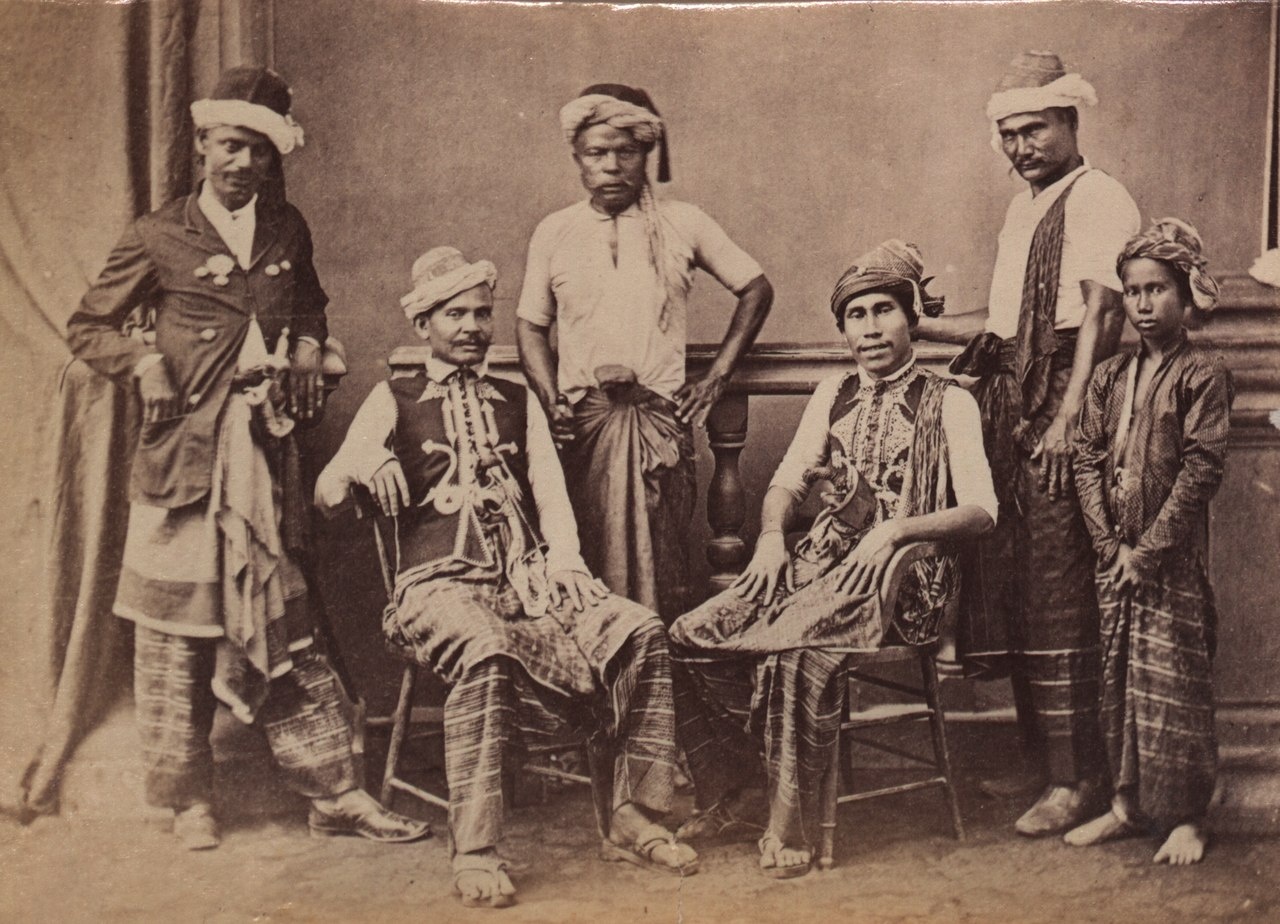
Acehnese society is organized primarily around the nuclear family, consisting of parents and children, rather than large descent groups. In contrast to Javanese or Balinese patterns, Acehnese family life is characterized by a pronounced division between male and female spheres of activity. Traditionally, women are associated with the domestic realm, while men are oriented outward toward trade and public life. This orientation is reinforced through the practice of merantau, in which young men leave their home villages to seek experience, wealth, and commercial reputation before eventually returning. Such journeys may take them to other villages, provinces, or islands. This period of mobility is viewed as a rite of passage, marking the transition from a female-dominated domestic world of sensuality to a male sphere defined by rationality and economic enterprise. [Source: Wikipedia]
Under the Acehnese sultanate, political organization followed a hierarchical structure. Several gampong (villages), each led by a keusyik (or geucik), were grouped into a mukim under the authority of an imeum. Multiple mukim fell under the jurisdiction of an uleebalang (a hereditary regional lord), or, in the capital region, were organized into one of three sagoe, each led by a panglima, often a relative of the sultan. Although the title imeum originally referred to the head of a mosque, some officeholders gradually accumulated secular authority and were formally recognized by the sultan as uleebalang. The uleebalang appointed and could dismiss keusyik, who were responsible for village security, prosperity, and dispute resolution. Each village also included a teungku, responsible for Islamic instruction and ritual life at the meunasah; ureung tua, an elected village council; and a tuha peut, an authority on customary law (adat). Of this traditional structure, only the gampong and mukim continue to function within the modern Indonesian administrative system. [Source: A. J. Abalahin,“Worldmark Encyclopedia of Cultures and Daily Life,” Cengage Learning, 2009]
The title "Teungku (Tgk)" is given to a prominent religious leader, while the titles "Tuanku" or "Sayed" and "Teuku (T)" are used for the descendants of important land-owning families during the sultanate. The titles "Cut Nyak," "Po Cut," and "Cut" are used for the women of these families.
In the nineteenth century, Acehnese society was stratified into several classes: the sultan and royal family; the uleebalang nobility; peasants; slaves; and the ulama, religious leaders not bound to specific territories. Distinctive titles marked these divisions—ampon for male royal descendants and cut for females; teuku for the uleebalang; and teungku for the ulama. In contemporary Aceh, however, such hereditary distinctions have largely faded, and social differentiation is primarily based on wealth rather than rank or lineage.
RELATED ARTICLES:
ACEH: GEOGRAPHY, POPULATION, GOVERMENT, RESOURCES factsanddetails.com
ACEH HISTORY: TRADE, ISLAM, KINGDOMS, ESCAPING COLONIALISM factsanddetails.com
ACEH INSURGENCY: GRIEVANCES, GAM, FIGHTING, PEACE factsanddetails.com
ACEHNESE: RELIGION, LANGUAGE, POPULATION, ORIGINS factsanddetails.com
ACEHNESE LIFE: VILLAGES, CUSTOMS, FOOD, CANNABIS factsanddetails.com
ACEHNESE CULTURE: CLOTHES, FOLKLORE, WEAPONS, DANCES factsanddetails.com
ACEH TRAVEL: BANDA ACEH, BEACHES, HIGHLANDS, SIGHTS factsanddetails.com
DECEMBER 2004 TSUNAMI IN INDONESIA: DAMAGE, VICTIMS AND SURVIVOR STORIES factsanddetails.com
RELIEF AND REBUILDING AFTER THE 2004 TSUNAMI IN INDONESIA factsanddetails.com
SHARIA IN ACEH factsanddetails.com
Acehnese Family Life

As noted above, Acehnese society is organized primarily around the nuclear family, and family life is marked by a clear division between male and female spheres of activity. Relations between parents-in-law and sons-in-law are traditionally formal and restrained until the birth of the couple’s first child. To avoid inappropriate contact, parents-in-law may sleep in a back room to prevent hearing or encountering the son-in-law and may even communicate with him only through a wall. In contrast, a man typically feels closer to his younger siblings-in-law, who can act as intermediaries between him and his parents-in-law, particularly when his wife is absent. [Source: A. J. Abalahin,“Worldmark Encyclopedia of Cultures and Daily Life,” Cengage Learning, 2009]
Children tend to form closer emotional bonds with their mothers than with their fathers and are more likely to share personal problems with them. Mothers usually assume primary responsibility for child-rearing, while fathers are often away from home for work. Relationships between fathers and grown children are frequently distant, with fathers perceived as authoritative or autocratic figures. Although the father’s siblings are traditionally responsible for the children if he dies, children often feel greater intimacy with their mother’s siblings. Grandparents are known to indulge their grandchildren, and for this reason, parents often prefer that children not live with them for extended periods.
Rites of passage generally resemble those found among Malay communities. At birth, a boy’s placenta is buried beneath the point where rainwater drains from the roof, while a girl’s placenta is buried beneath the entry ladder, symbolically reflecting gendered roles and spaces. Children are buried in their father’s family burial ground (bhom). Inheritance follows Muslim law.
One model of Acehnese family life is that a woman sends a man out of the house to trade and welcomes him back when he brings home money. When he has exhausted his money, she sends him out again. Meanwhile, women and their kin are responsible for working the fields and keeping the gardens and rice fields productive. This oscillating pattern of migration encountered some difficulties in the 1980s and 1990s as increasing numbers of men failed to return to the Acehnese homeland, instead remaining and marrying in remote locations, such as Jakarta or Kalimantan. In addition, many Acehnese felt pressure from the continuing influx of temporary workers seeking employment in the natural gas and timber industries, and the conflict between the Indonesian army and Acehnese separatists. [Source: Library of Congress]
Acehnese Marriage
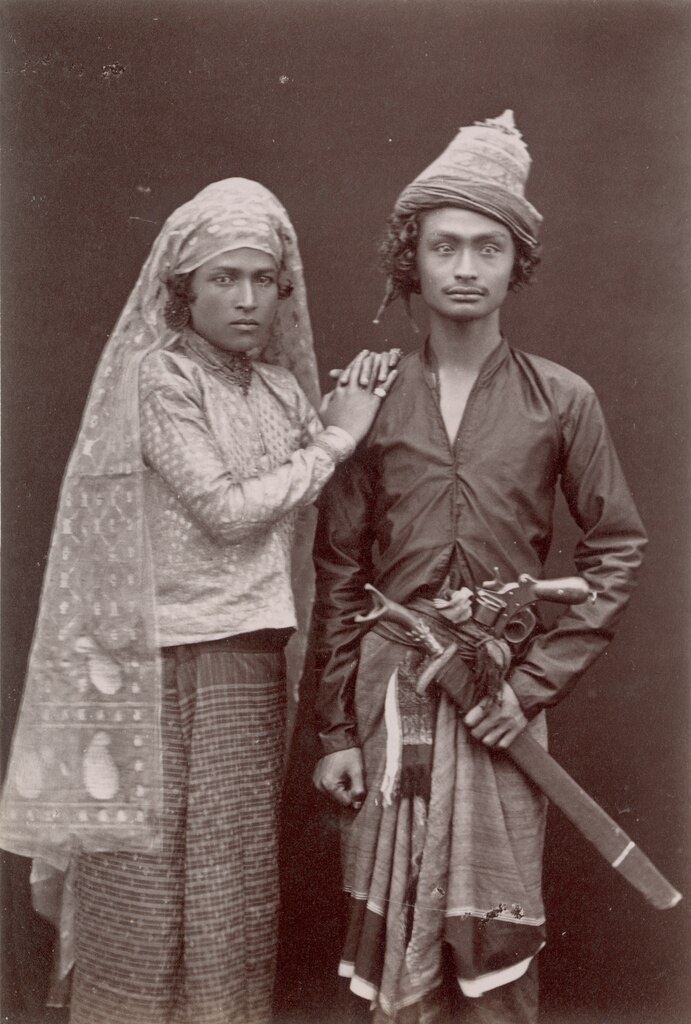
The Acehnese follow Islamic marriage laws and customs. A marriage needs the consent of parents of the bride and the groom and takes places after the payment of a bride price from the groom to a representative of the bride in a mosque or home. In accordance with Islamic law, marriage between uncles or aunts and nephews or nieces is strictly forbidden. Marriage between first cousins is also discouraged, particularly between the children of two brothers or two sisters (parallel cousins). Despite being considered highly unlucky, such marriages do occur. After marriage the couple has traditionally lived with the bride’s parents, who help raise the children.
In most cases, newly married couples reside with the wife’s parents, although in some areas residence depends on which family is wealthier. Under the marriage contract, the wife’s parents agree to support the couple until the birth of their first child or for three to four years, depending on the size of the bride-price. In poorer families, the husband may not live permanently in his in-laws’ house but instead visit his wife there, while continuing to regard his mother’s village as his true home. If the spouses come from the same village, the husband sleeps in the meunasah when not with his wife. In some regions, many husbands earn a living as traders or coffee farmers far from home and return only for Ramadan celebrations. [Source: A. J. Abalahin,“Worldmark Encyclopedia of Cultures and Daily Life,” Cengage Learning, 2009]
Polygyny is practiced only by wealthy men, and Islamic law recognizes legitimate grounds for it, such as the first wife’s inability to bear children. Interference by parents-in-law in marital affairs is the most common cause of divorce. If a wife dies while the couple is still being supported by her parents, they either refund half of the bride-price or offer another daughter in marriage to the widower. If a husband dies, it is customary for one of his brothers to marry the widow.
Acehnese Wedding
In Aceh, the best day and month for a wedding is carefully calculated. The day before the wedding, the bride’s house, which usually serves as the venue, is adorned with gold hangings and palm leaves. These are often quite elaborate, with designs that symbolise the cosmos. In North Sumatra and Aceh, large woven reed mats in shades of rose, green, black, red and yellow are used to adorn the walls and floors of the wedding venue, and a decorated throne is prepared for the bride and groom. [Source: George P. Monger, “Marriage Customs of the World From Henna to Honeymoons”, 2004 ^]
On her wedding day, the Acehese bride is treated like a queen. She wears golden hair combs, an ornamental collar, an elaborate headdress, bracelets, earrings, ankle decorations and three crescent-shaped breastplates on a chain. Her hairpins are mounted on springs to shimmer in the light. Inspired by royal regalia, she is usually dressed by a professional dresser.
Several aspects of the wedding process are distinctive to Acehnese culture. A representative (teulangke) from the groom’s family presents the bride’s family with gold and other valuables (kongnarit); acceptance makes the engagement binding. The groom’s family must also provide a bride-price (jeunamee) of 50–100 grams (1.75–3.5 ounces) of gold. Alternatively, this may later be given to the couple as peunalang to help purchase a house or rice land. Pre-wedding rituals include malam berinai, during which the bride is beautified and the bridal dais decorated, and mandi berlimau, a ceremonial final bath administered by an elderly woman. The groom’s procession (intat linto) to the bride’s house is accompanied by noisemakers and the chanting of Barzanji and selawat Nabi, recounting the life of the Prophet Muhammad. [Source: A. J. Abalahin,“Worldmark Encyclopedia of Cultures and Daily Life,” Cengage Learning, 2009]
Aceh Wedding Ceremony and Reception
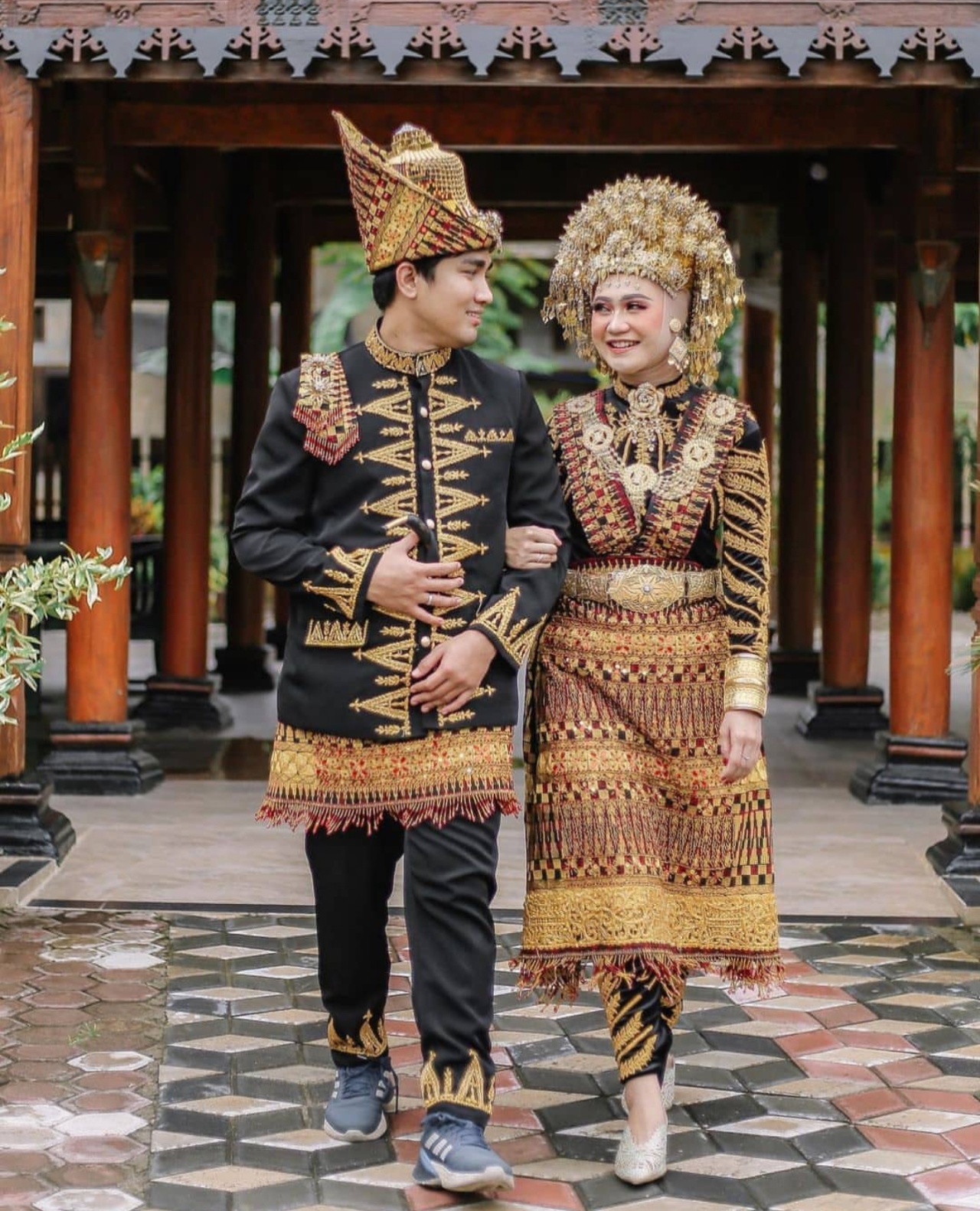
Mengenai Saya, an Acehnese, wrote: “In general, we hold two separate events for the wedding affairs; firstly, a performance of the marriage vow (official matrimony - a must) namely Nikah and the other one is a wedding reception/ceremony. Regarding the Nikah, people prefer to conduct it in a Mesjid (mosque) whereas the wedding reception is carried out at home, hotel or a wedding hall. However, the wedding reception is optional and it doesn't violate the customary law if a family does not hold one or only conduct a small reception (for instance, due to financial issue, such as a very low budget etc). In brief, it's just for the formal introduction of the bridal couple to public/community.
Process of the Nikah in the Mesjid: Here, I give you the example of my sister's nikah process. At the big day, both family and relatives of the bride and groom to-be gathered in the Mesjid around 9 a.m (the total was about 100 people). After everything was ready, the Nikah was processed. At first, the Qur'an reciting (certain Surah), continued with Khotbah Nikah - the speech for the bride and the groom-to be (the usual topic is about the aim/purpose of the marriage, how to lead the new life in Islamic way, etc). Then the main event, the declaration of the marriage vow (Ijab Kabul) by the groom and the final session, the signed of marriage paper/certificate by the bridal couple. This process was witnessed by the selected people.
“In the mid of the marriage process, the moderator would also convey to the audience the amount of the dowry for the bride (it would become the bride's possession, not the family). In Aceh, we use gold in the form of jewelry for the dowry and the amount depends on the request by the bride's family as well as the tradition (each region in Aceh sets different amount). However, there is a consideration for the ability of the groom's family to provide the dowry...Not too high and not too low as well.
The wedding reception was held at the bride’s house. It is important to note that the Aceh government actively encourages Acehnese people to preserve their cultural heritage, particularly in wedding ceremonies. One example is the performance of the traditional Acehnese dance Tari Ranup Lampuan, which is used to welcome the groom and bride to the house.
The groom, accompanied by his family and relatives, proceeded to the bride’s home. During the welcoming ceremony, the groom’s party presented Bate Ranup to the bride’s family. This was followed by the preparation of special items for Peusijuk and the performance of the Peusijuk blessing for the groom.
One room was reserved exclusively for men from the groom’s family and relatives. In this space, the bride and groom sat together on a small pelaminan for about one hour before moving to the main pelaminan in another room, where they remained until the end of the day, around 2 or 3 p.m. Food was then served to the bride and groom, who symbolically fed each other small portions. This practice is not an original Acehnese tradition but was adopted from other cultures, as explained by the wedding photographer. Such cultural blending illustrates how traditions continue to evolve. A separate area was designated for women from the groom’s family and relatives. They sat together and enjoyed the meal, which was presented in traditional Acehnese style using dalung to serve the main dishes. The rice was wrapped in banana leaves, reflecting local customs.
Women in Aceh
The social position of women in Acehnese society has traditionally been relatively high. A wife is not expected to submit automatically to her husband’s wishes; instead, she plays an active role both in economic life and within the household. Traditionally, Acehnese women have played a central role in preserving cultural continuity. [Source: A. J. Abalahin,“Worldmark Encyclopedia of Cultures and Daily Life,” Cengage Learning, 2009 *]
Acehnese women are responsible for remembering, transmitting, and performing traditional ceremonies and rituals. Women participate directly in wet-rice cultivation and exercise considerable authority at home, where children often fear their mother more than their frequently absent father. Acehnese history also records prominent female leaders, including several reigning queens in the seventeenth century and the renowned female naval commander Malahayati.
Despite this status, women’s mobility—especially before marriage—has traditionally been restricted, with young women expected to remain under parental supervision when leaving the house. Inheritance practices further reflect women’s central role: daughters inherit the family house, while sons receive rice fields. In practice, however, these fields often come under women’s control, as men commonly seek work away from the village. Ideally, parents build a house for each daughter upon marriage, sometimes spending their later years in a modest dwelling surrounded by the homes of their married daughters. If resources are limited, parents may give their house to a married daughter and move into a separate kitchen structure.
Aceh also has a long tradition of women as fighters and defenders of the community. During the conflict between GAM guerrillas and the Indonesian military, Acehnese women suffered disproportionately. Many were displaced, abused, and forced to live with their children in refugee camps, where they even lost control over household spaces that traditionally symbolized their authority. Numerous women were also victims of sexual violence. By the end of the conflict, more than 377,000 households were headed by widows.
In the aftermath of war, women emerged as key agents of peace. They organized district-wide communal prayers, engaged in dialogue with the Indonesian military, and brought their voices to international forums, including presentations to the United Nations in Geneva. Through both suffering and leadership, Acehnese women have remained central to the region’s social, political, and moral life.
Acehnese Women, Sharia and Headscarves
Most Acehnese women wear headscarves, which are widely associated with respectability, modesty, and personal peace. Since sharia was implimented in the mid 2000's it has become a law that is enforced. Some women say covering their heads makes them feel less objectified and more respected in public. In the early 1990s only about half of Acehnese women wore Islamic dress. Headscarves are standard attire for policewomen, nurses, government employees, and even female members of the former GAM movement. [Source: John M. Glionna, Los Angeles Times, November 8, 2009; Associated Press, January 7, 2013]
Women who appear in public without proper covering risk verbal harassment or, in some cases, physical intimidation, prompting even some non-Muslim women to cover their heads to avoid trouble. Arms and legs are also expected to be covered, and Acehnese women often wear a distinctive head covering resembling a small cloth pinned around the head.
Not all women accept these norms without question. Norma Manalu, director of the Aceh Human Rights Coalition, describes a conflicted relationship with the jilbab, wearing it by choice for its beauty rather than obligation. She sometimes appears in public without a headscarf as an act of protest, enduring taunts to highlight women’s rights issues. Manalu strongly criticizes public caning, arguing that women suffer harsher social consequences than men, often becoming stigmatized after punishment while men are more readily reintegrated into society.
Since gaining special autonomy in 2005, Aceh has enforced sharia-based regulations governing dress, public morality, and daily life, including mandatory closures during prayer times. These laws are enforced by a special religious police unit, with punishments that can include public caning intended more to shame than to physically injure. Enforcement, however, is uneven and tends to target young men and women.
Controversy intensified with a proposed regulation banning women from straddling motorbikes, allowing it only in emergencies. Officials argued that sitting astride reveals a woman’s body shape and violates Islamic principles. Human rights activists and scholars countered that the practice is common, practical, and safer, particularly for women wearing skirts, and that Islam should not be interpreted in ways that make everyday life unnecessarily difficult.
Public opinion on these sharia regulations remains mixed. While Aceh is more religiously conservative than much of Indonesia, enforcement is inconsistent, and many locals quietly resist or reinterpret the rules. National authorities have occasionally attempted to block discriminatory bylaws, but the central government has largely avoided taking a strong public stance, reflecting broader tensions between religious regulation, women’s rights, and Indonesia’s secular foundations.
See Separate Article: SHARIA IN ACEH factsanddetails.com
Image Sources: Wikimedia Commons
Text Sources: “Encyclopedia of World Cultures Volume 5: East/Southeast Asia:” edited by Paul Hockings, 1993; A. J. Abalahin,“Worldmark Encyclopedia of Cultures and Daily Life,” Cengage Learning, 2009; National Geographic, Live Science, Metropolitan Museum of Art, Natural History magazine, Australian Museum, New York Times, Washington Post, Los Angeles Times, Smithsonian magazine, Encyclopedia.com, Times of London, Library of Congress, The Conversation, The New Yorker, Time, BBC, CNN, Reuters, Associated Press, AFP, Lonely Planet Guides, Google AI, Wikipedia, The Guardian and various websites, books and other publications.
Last updated December 2025