
ACEHNESE LIFE
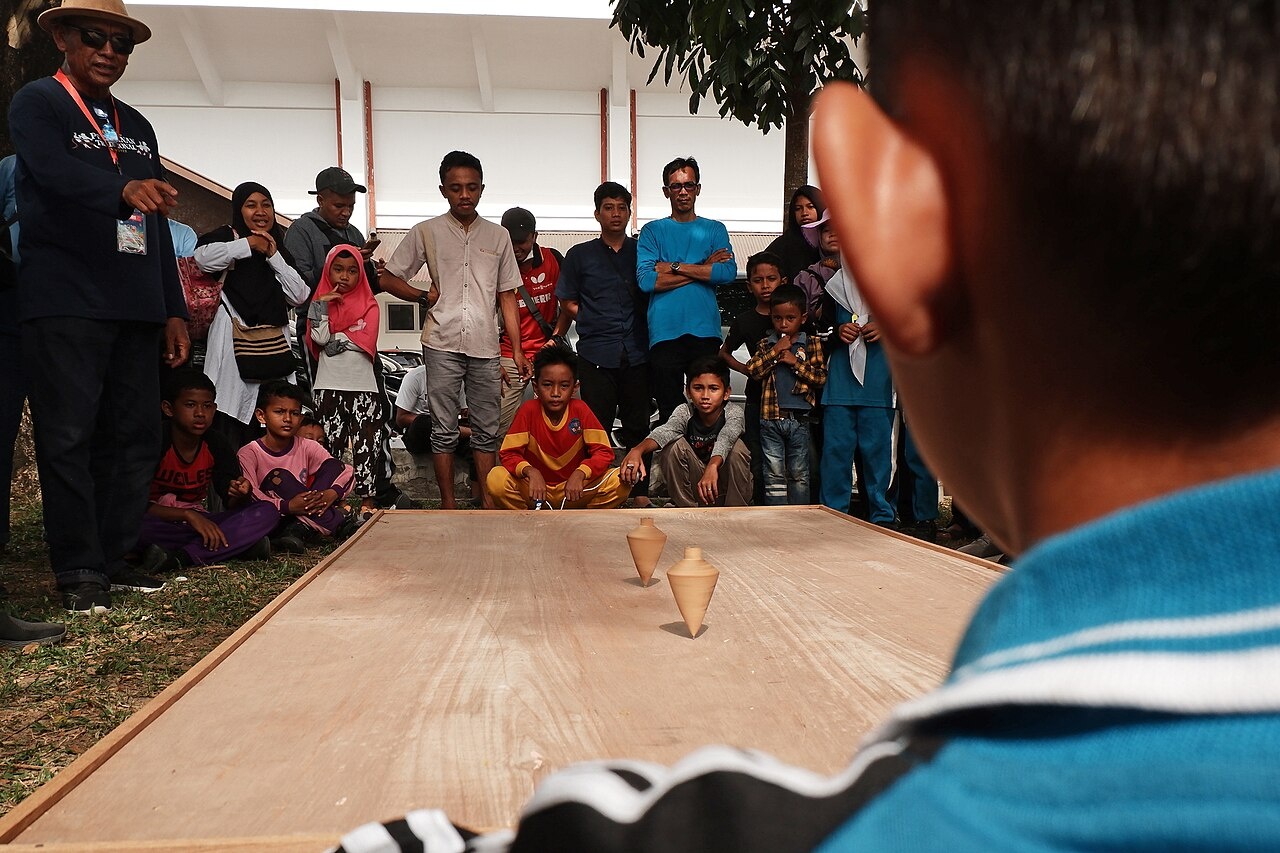
Acehnese life revolves the nuclear family and religion. Religious education is compulsory from age seven. This entails first instruction in reciting the Qur'an at a village meunasah then goes on to further education at a pesantren. In 2005, North Sulawesi's level of literacy stood at 96 percent, high by Indonesian national standards.
Communal rituals play a central role in Acehnese life. Kenduri are held to mark important events, seek blessings, and strengthen social bonds; they typically include Quran recitations and shared meals. Peusijuek (also known as tepung tawar) is a traditional blessing ritual using rice, water, and leaves, performed for weddings, new ventures, reconciliation, or recovery from misfortune. Older customary prohibitions, known as haba ureung tuha—such as taboos against cutting nails at night or pregnant women eating certain foods—continue to influence behavior, though adherence varies.
Village life is reinforced through collective labor and mutual assistance. Residents cooperate to build mosques and communal structures, repair roads and irrigation channels, and help one another build houses and establish rice fields. Hospitality is formalized; guests are traditionally offered betel nut before drinks are served.
RELATED ARTICLES:
ACEH: GEOGRAPHY, POPULATION, GOVERMENT, RESOURCES factsanddetails.com
ACEH HISTORY: TRADE, ISLAM, KINGDOMS, ESCAPING COLONIALISM factsanddetails.com
ACEH INSURGENCY: GRIEVANCES, GAM, FIGHTING, PEACE factsanddetails.com
ACEHNESE: RELIGION, LANGUAGE, POPULATION, ORIGINS factsanddetails.com
ACEHNESE SOCIETY: FAMILY, MARRIAGE, WOMEN factsanddetails.com
ACEHNESE CULTURE: CLOTHES, FOLKLORE, WEAPONS, DANCES factsanddetails.com
ACEH TRAVEL: BANDA ACEH, BEACHES, HIGHLANDS, SIGHTS factsanddetails.com
DECEMBER 2004 TSUNAMI IN INDONESIA: DAMAGE, VICTIMS AND SURVIVOR STORIES factsanddetails.com
RELIEF AND REBUILDING AFTER THE 2004 TSUNAMI IN INDONESIA factsanddetails.com
SHARIA IN ACEH factsanddetails.com
Acehnese Customs and Etiquette
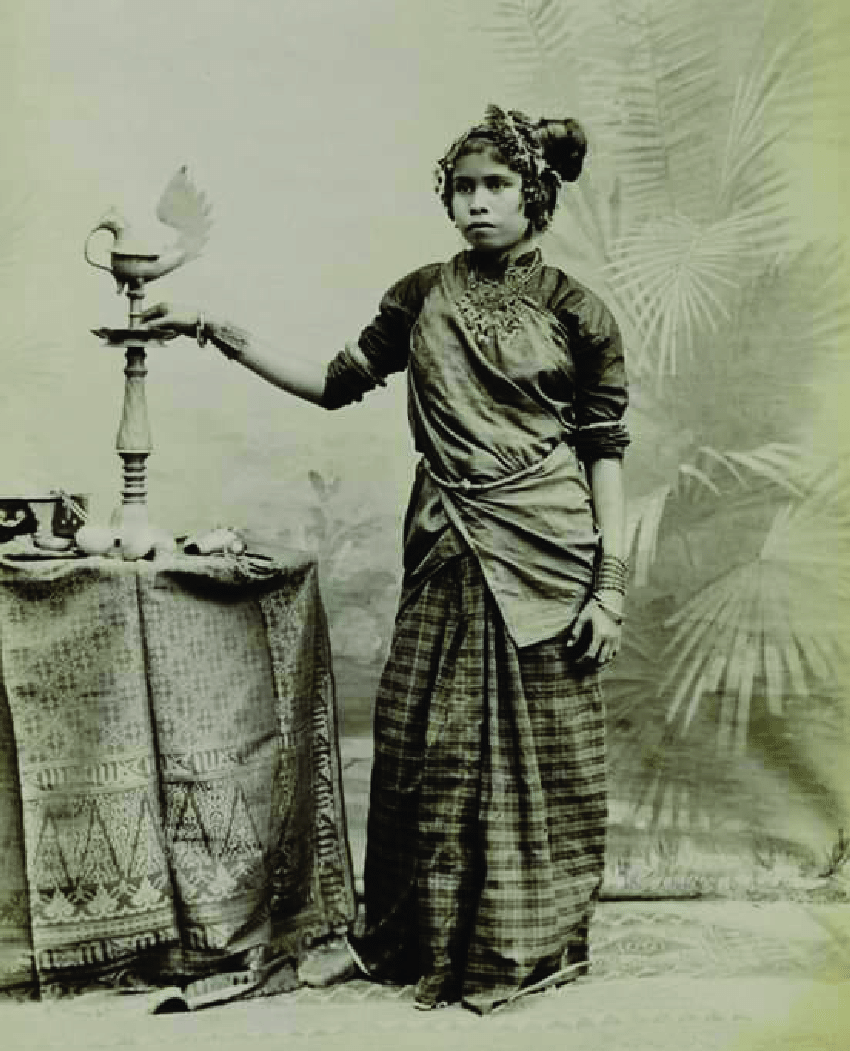
Acehnese customs strongly emphasize Islamic values, respect for elders, personal modesty—especially for women—and communal harmony. These principles are expressed in everyday etiquette as well as in ritual practices such as peusijuek (blessing ceremonies) and kenduri (communal feasts). Social behavior in Aceh is shaped both by long-standing custom (adat) and by the province’s strict enforcement of Islamic law (sharia). [Source: A. J. Abalahin,“Worldmark Encyclopedia of Cultures and Daily Life,” Cengage Learning, 2009; Google AI]
Polite conduct is essential. Greetings are expected at all times and are offered with a warm smile and a slight bow. When greeting elders or people of higher status, Acehnese commonly perform salim, gently touching the back of the elder’s hand to the forehead or nose as a sign of respect. Speech should be soft and courteous, particularly toward elders and religious figures. Touching the head of another person—especially an elder—is considered a serious insult.
The use of the right hand is obligatory for eating, giving, and receiving, as the left hand is regarded as unclean. Shoes are removed before entering homes and certain buildings, and care is taken not to point the soles of the feet toward people or sacred objects. Pointing is done with the right thumb rather than the fingers. Names, particularly those of elders, are treated with respect and are not casually used.
Modesty in dress and behavior is strongly enforced. Women are expected to dress conservatively, covering shoulders and knees, and public displays of affection between men and women are discouraged. Hand-holding between people of the same gender, however, is a common sign of friendship. Religious police actively monitor public behavior, reinforcing conservative norms.
Social interaction between unrelated men and women has historically been restricted. Traditionally, a man would not enter a house if the husband was absent, nor even the yard without signaling his presence—often by coughing—so women could withdraw. Although these practices have softened, particularly as boys and girls attend school together, Aceh continues to maintain stricter controls on gender interaction and censorship of sexually explicit material than other parts of Indonesia.
Acehnese Villages and Houses
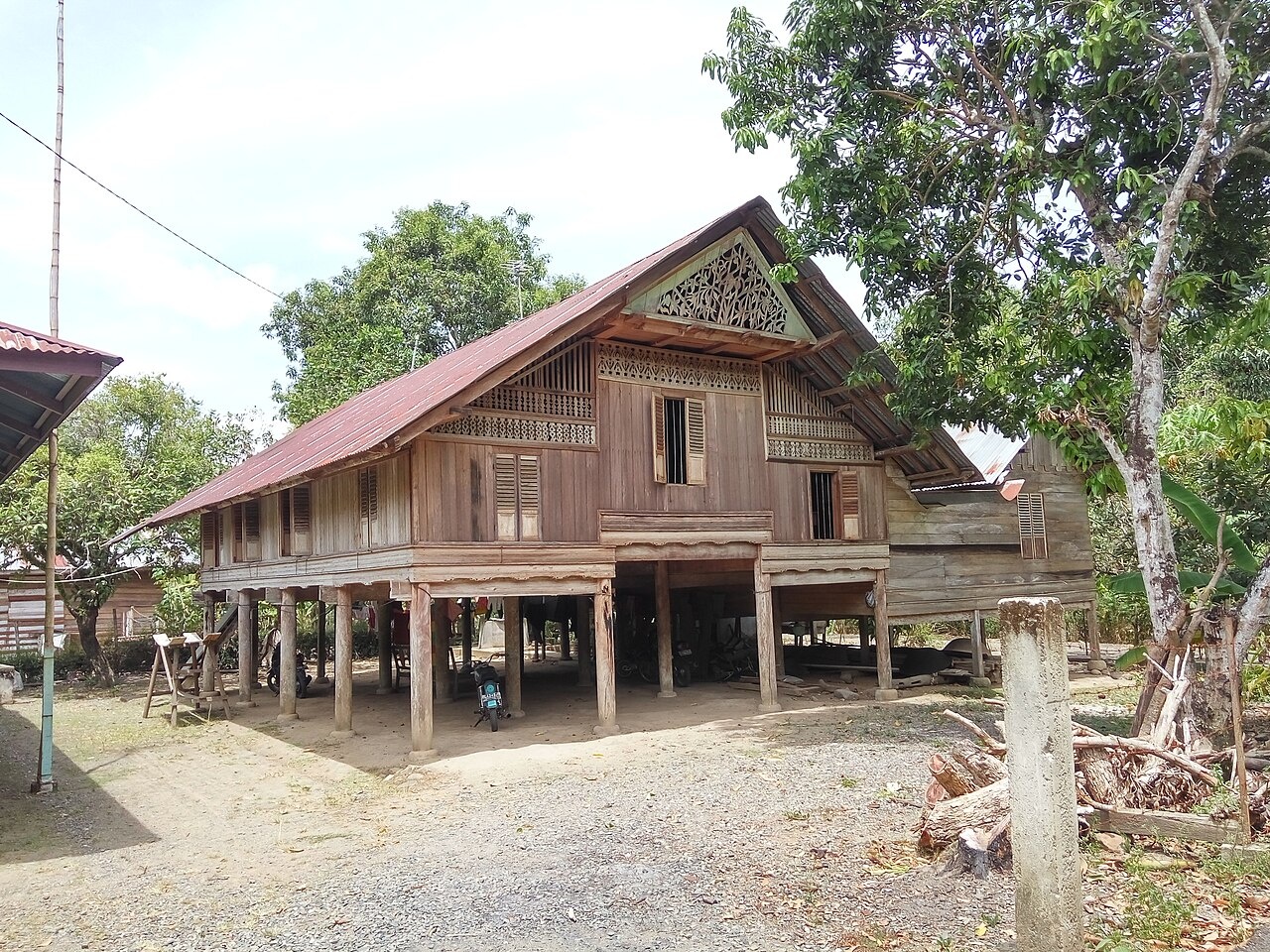
The Acehnese live primarily in villages, often referred to as meunasah villages because they are typically built around one or more meunasah (prayer houses). These villages are usually surrounded by rice fields. Houses are surrounded by gardens where coconut, citrus, and banana trees are commonly grown. Houses have traditionally been hidden among the trees for shade and coolness. Harvested rice is stored inside the house in a krong pade or berandang. [Source: A. J. Abalahin,“Worldmark Encyclopedia of Cultures and Daily Life,” Cengage Learning, 2009]
A village (gampong) generally consists of about 50 to 100 houses. Homes belonging to related families tend to cluster together or line up closely, often separated by no more than a fence. Every village has at least one meunasah, an open-sided structure raised on stilts. The meunasah functions as a prayer hall and school, and also serves as a sleeping place for unmarried young men and visiting guests, as well as a venue for public meetings and ceremonial events.
Acehnese houses typically face the sea or southward and are raised on 20 to 24 posts, each about 30 centimeters (12 inches) in diameter and 2.5 to 3 meters (8–10 feet) high. Depending on a family’s wealth, these posts are made of wood or bamboo. Floors are usually constructed from wooden planks, though bamboo is sometimes used. The roof is double-sloped, rising 2 to 6 meters (6.5–20 feet) high, and is traditionally thatched with plaited sago palm leaves, which can last up to twenty years.
Older houses were built without using any nails, Parts of the the house were held together with rattan bindings, cords or pegs, which wre made too small for their holes and kept in place by large wedges. A typical Acehnese house stands on 16, 20 or 24 sturdy pillars,pillars and is composed of five divisions (rueung). The pillars and floor are designed to make sure living spaces are well above the wet ground in the rainy season and provide space for air circulation and for people to move about comfortably.
The front room (seuramoe keue) serves as an open veranda where children sleep and guests stay during weddings, funerals, and other communal events. The middle section (tungai) contains a central corridor, with the romoh inong on the left—used as sleeping quarters for the women of the household—and the anjong on the right, reserved for the parents. The kitchen is located in the back room (seuramoe likot) or in a separate structure known as a tiphik. In poorer households, married daughters often live in small annexes attached to the main house.
Acehnese Food and Drinks
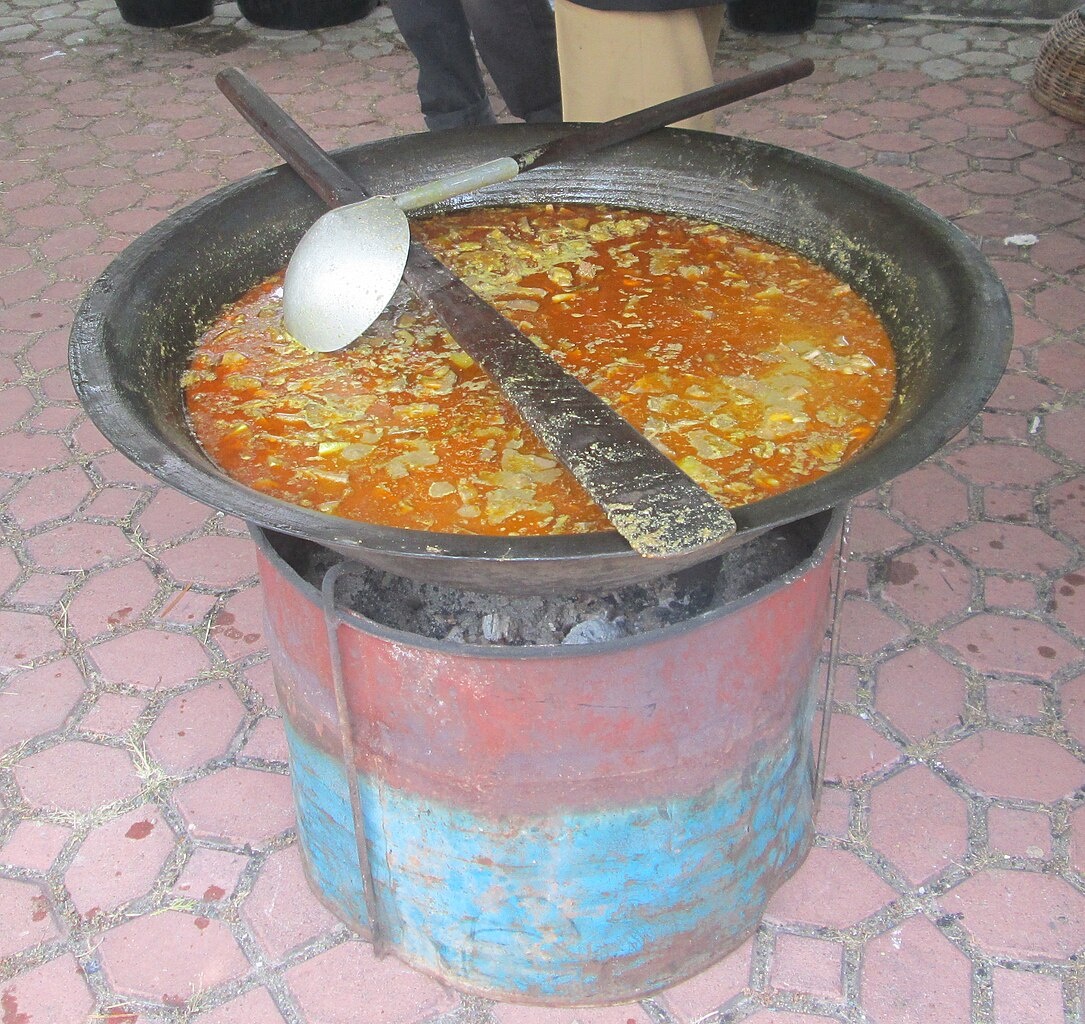
The Acehnese eat with their right hand and commonly buy rice wrapped in banana leaves as a portable snack. Daily meals center on rice and fish. Supplementary foods include cassava, sweet potato, maize, and jeneng, a wild tuber. Jeneng is mixed with grated coconut or granulated sugar and eaten with coffee for breakfast. Sticky rice is prepared in several traditional forms: bu leukat keurabee, mixed with grated coconut and salt; bu leumak, cooked with coconut milk; bu leukat kuneng, steamed with coconut milk and turmeric; and bu leukat meukuah, cooked in a coconut-milk sauce and sometimes combined with banana or durian. Acehnese also consume kanji (rice or sticky-rice congee), often cooked with coconut milk and occasionally mixed with mung beans. [Source: A. J. Abalahin,“Worldmark Encyclopedia of Cultures and Daily Life,” Cengage Learning, 2009]
Foods prepared for special occasions include timphan, rice flour filled with grated coconut and sugar and boiled in banana leaves; pulut panggang, sticky rice mixed with coconut milk and grilled; and gulee plei, a vegetable dish made from maninjau fruit, green chilies, banana blossoms, young maninjau leaves, tamarind leaves, string beans, and small shrimp, eaten with rice. A distinctive food associated with Ramadan is ibu peudah, a rice gruel made with up to forty-four varieties of edible leaves and sprinkled with grated or finely chopped coconut.
In Aceh, families with sufficient means celebrate Eid al-Adha by purchasing a water buffalo and distributing the meat to as many as one hundred poorer households. Traditional Eid foods include rice, salted duck eggs, chicken eggs with red chili, curry, cassava leaves, potatoes cooked in soy sauce, and spicy fish dishes. In some areas, the buffalo is slaughtered at the foot of a sacred mountain near Lamno. Nearby lies the grave of Ptue Meureuhom, a cleric believed to have introduced Islam to Aceh about five centuries ago. Pilgrims climb ninety-nine stone steps to reach the white tomb, where they wash with holy water and seek blessings from the saint.
Because Islam forbids alcohol consumption, those who drink do so discreetly. Common non-alcoholic beverages include sweet palm sap, sugarcane juice, and coconut water. A more unusual drink is air madu, a “honey” secreted by the uno, a type of spider; specialists (dukun) collect this substance.
Aceh Coffee reflects Banda Aceh’s reputation as the “Land of a Thousand Coffee Shops,” where cafés can be found on nearly every street. Two popular styles dominate: sanger, a lightly sweetened coffee mixed with milk, and strong black coffee served without sugar or milk. Coffee preparation itself is a highlight, as the brew is traditionally filtered through a cloth held high above the cup—a method dating back to the Aceh Sultanate. Coffee is often accompanied by local snacks such as timpan. [Source: Arsita Laksmi wordpress blog, August 4, 2013]
Popular Acehnese Dishes
Mie Aceh is Banda Aceh’s most iconic dish, consisting of spicy noodles cooked with curry paste and seafood such as crab or shrimp, served either fried or in soup form. Influenced by Indian and Arab spices, its bold, aromatic flavor has made it famous throughout Indonesia. Martabak Aceh, a savory meat-filled pancake with strong Middle Eastern and South Asian influences, is often enjoyed alongside it. Both dishes are widely available across the city, with the long-established Mie Razali—founded in 1947—being one of the most famous places to try them.[Source: Arsita Laksmi wordpress blog, August 4, 2013]
Ayam Tangkap is a fragrant fried chicken dish known for its intense herbal aroma. The chicken is marinated in spices and coconut water, then fried together with curry leaves (daun kari), pandan leaves, green chilies, and sliced shallots. The crispy herbs are served generously on top, making this dish both flavorful and visually distinctive.
Acehnese Curry and Gulai showcase the region’s rich spice traditions through dishes such as Kari Bebek (duck curry), Gulai Kambing or Sie Kameng (spicy mutton soup), and Gulai Ikan Kayu (tuna curry). These are often paired with bold condiments like Sambal Pliek U, made from fermented coconut. One well-known place to sample a wide range of these dishes is Masam Keueng Restaurant on Jalan Soekarno Hatta in Banda Aceh.
Sate Matang is a beef satay specialty named after the Matang region near Sigli, where it originated. Served with steamed rice, this dish offers a milder, less spicy alternative to many Acehnese foods while remaining richly seasoned. Popular stalls can be found in areas such as Rex Peunayong, a lively food hub in central Banda Aceh.
Rujak Aceh is a refreshing fruit salad made from chopped tropical fruits tossed in a dressing of palm sugar and peanuts. It is often enjoyed alongside Boh Timun, a sweet iced dessert made from shredded cucumber. Both provide a cooling contrast after Aceh’s famously spicy dishes and are popular choices to end a meal.
Aceh’s Cannabis Curry
In Aceh, particularly in the remote hill regions of northern Sumatra, cannabis (marijuana, ganja) grows naturally and has been farmed with little cultivation. The fertile highland soil allows the plant to grow easily after sowing, without fertilizer or intensive care. Despite repeated police eradication efforts, including the burning of large fields, cannabis has continued to reappear, partly because seeds disperse easily and regrow within months. [Source: Nurdin Hasan, Aceh Globe, February 10, 2012; Petty Elliott]
Although cannabis is illegal in Indonesia and carries severe penalties, its use has historically persisted in parts of Aceh, especially in culinary traditions. In the past, cannabis—specifically its seeds—was secretly used as a flavoring in certain Acehnese dishes, most notably gulai kambing (goat curry). Vendors and cooks emphasize that only the seeds were lightly fried and added for aroma and tenderness, not the potent leaves, which were typically sold elsewhere.
This practice was an “open secret” in Banda Aceh: while curry sellers publicly denied using cannabis, some privately admitted adding small amounts for taste. The ingredient was sourced through informal networks linking the city to nearby mountain areas beyond close police surveillance. Even so, cannabis was never universally used in home cooking, especially during ritual meals prepared for Ramadan and major religious celebrations.
Over time, intensified law enforcement and changing attitudes have largely ended the culinary use of cannabis in Aceh. What remains central to Acehnese cuisine is its rich, spice-heavy character, shaped by centuries of trade with South Asia and the Middle East. Acehnese curries continue to rely on complex blends of chilies, ginger, lemongrass, curry leaves, pandan leaves, fermented coconut (pliek u), and spices such as cumin, cardamom, fennel, cinnamon, and star anise—without cannabis.
Cannabis Coffee — Popular But Risky Drink in Banda Aceh
Coffee mixed with cannabis is a popular drink in Banda Aceh, the capital of Aceh. AFP reported: Agus slowly stirs a wooden paddle through a wok filled with coffee beans and cannabis, carefully roasting the mixture while staying alert to the risk of police raids in Indonesia’s Aceh province. His illicit blend is popular with local customers and buyers from elsewhere in Southeast Asia, who pay around one million rupiah (about $75) per kilogram. [Source: Haeril Halim, AFP, February 5, 2020]
The trade is dangerous in Aceh, a region governed by strict Islamic law where public alcohol consumption or displays of affection can result in public caning. Agus—who uses a pseudonym—operates within a hidden economy that thrives despite Aceh’s reputation for moral rigidity. Official estimates suggest the province remains Indonesia’s largest cannabis producer, with cultivation areas far exceeding those of other regions.
Despite the risks, Agus says he fears arrest less than ruining his recipe. His signature blend is precise—70 percent coffee, 30 percent cannabis. Any more, he says, and the coffee’s flavor is lost. A former white-collar professional for two decades, Agus left his career for the more profitable underground trade to support his family, insisting his brew produces a mild, controlled effect compared to smoking cannabis or consuming dodol ganja, a potent local sweet.
Image Sources: Wikimedia Commons
Text Sources: “Encyclopedia of World Cultures Volume 5: East/Southeast Asia:” edited by Paul Hockings, 1993; A. J. Abalahin,“Worldmark Encyclopedia of Cultures and Daily Life,” Cengage Learning, 2009; National Geographic, Live Science, Metropolitan Museum of Art, Natural History magazine, Australian Museum, New York Times, Washington Post, Los Angeles Times, Smithsonian magazine, Encyclopedia.com, Times of London, Library of Congress, The Conversation, The New Yorker, Time, BBC, CNN, Reuters, Associated Press, AFP, Lonely Planet Guides, Google AI, Wikipedia, The Guardian and various websites, books and other publications.
Last updated December 2025