
ACEH SEPARATISM
Aceh, a predominantly Muslim province in northwest Sumatra with a population of about 5.5 million, experienced an intermittent insurgency against the Indonesian state for more than fifty years. Resistance to Jakarta began as early as 1953, only four years after Indonesia achieved independence. Although President Sukarno promised Aceh special autonomy in 1959, this pledge was never fully honored, fueling long-term resentment.
Acehnese resistance is rooted in a strong historical sense of independence. The people of Aceh consider themselves fighters with a legitimate claim to self-rule, having maintained an independent sultanate from roughly the ninth century until the late nineteenth century. They fought Dutch colonial rule beginning in the 1870s after the conquest of the Aceh Sultanate, resisted Japanese occupation during World War II—whom they accused of attempting to redirect religious loyalty from Mecca to Tokyo—and played a major role in Indonesia’s struggle against the Dutch between 1945 and 1949.
The Acehnese demand for autonomy, expressed in support for the 1950s Darul Islam rebellion, was partially met by the central government’s acceptance of a “special-region” status for the province in 1959, allowing a higher-than-usual official Indonesian respect for Islamic law and custom. This special-region status, together with growing prosperity, brought Aceh into the Indonesian mainstream.
Acehnese maintained a broad range of grievances against the central government of Indonesia that included a desire to keep a greater percentage of the revenue from the rich natural resources in the province, resentment over brutal tactics by police and military forces, and a desire for more native Acehnese to be employed in the lucrative natural resources sector.
RELATED ARTICLES:
ACEH: GEOGRAPHY, POPULATION, GOVERMENT, RESOURCES factsanddetails.com
ACEH HISTORY: TRADE, ISLAM, KINGDOMS, ESCAPING COLONIALISM factsanddetails.com
ACEHNESE: RELIGION, LANGUAGE, POPULATION, ORIGINS factsanddetails.com
ACEHNESE SOCIETY: FAMILY, MARRIAGE, WOMEN factsanddetails.com
ACEHNESE LIFE: VILLAGES, CUSTOMS, FOOD, CANNABIS factsanddetails.com
ACEHNESE CULTURE: CLOTHES, FOLKLORE, WEAPONS, DANCES factsanddetails.com
ACEH TRAVEL: BANDA ACEH, BEACHES, HIGHLANDS, SIGHTS factsanddetails.com
DECEMBER 2004 TSUNAMI IN INDONESIA: DAMAGE, VICTIMS AND SURVIVOR STORIES factsanddetails.com
RELIEF AND REBUILDING AFTER THE 2004 TSUNAMI IN INDONESIA factsanddetails.com
SHARIA IN ACEH factsanddetails.com
Aceh Insurgency

Modern separatism coalesced around the Free Aceh Movement (Gerakan Aceh Merdeka, GAM), which emerged in response to the policies of Suharto’s New Order regime (1966–1998). Despite Aceh’s designation as a “Special Region,” Jakarta tightly controlled the province and exploited its rich natural resources—including natural gas, petroleum, gold, silver, and copper—while the rural population saw few benefits. These grievances sparked GAM’s armed rebellion in the late 1970s. By 1979, the initial uprising was crushed; mass arrests followed, and GAM’s founder, Hasan di Tiro, along with other leaders, fled into exile in Sweden.
The rebellion re-emerged more forcefully in the late 1980s. In 1989, Aceh was declared a Military Operations Area (Daerah Operasi Militer, DOM), effectively placing the province under martial law. Jakarta doubled troop deployments to roughly 12,000 soldiers, and by early 1992 GAM had been largely suppressed. The military campaign, however, was marked by widespread human rights abuses against civilians. Between 1989 and 1998, an estimated 9,000 to 12,000 people were killed, and thousands more were displaced within Aceh or forced to flee to neighboring provinces.
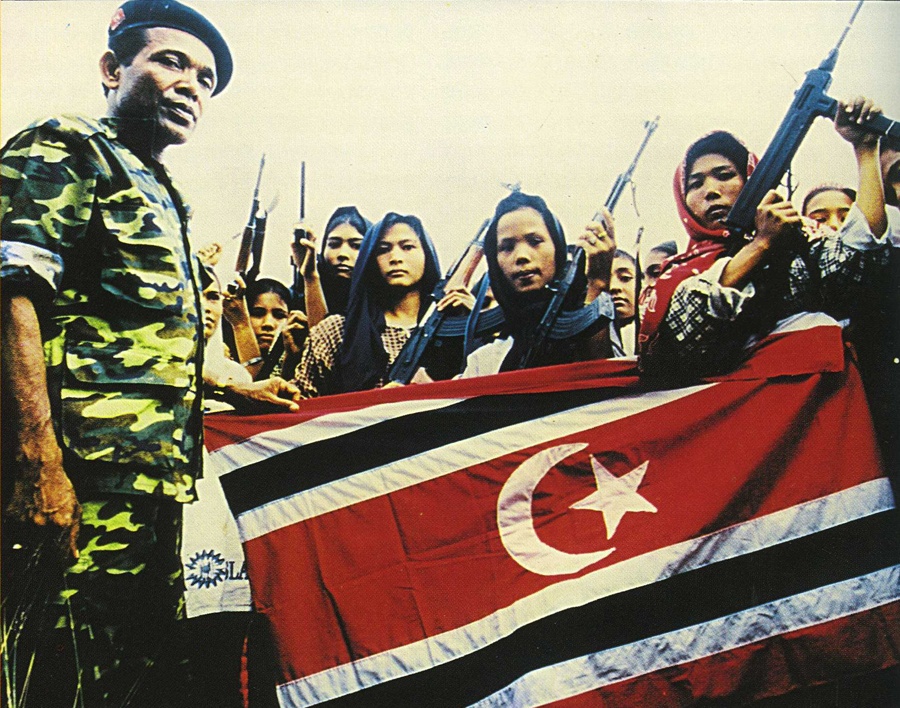
The Aceh separatist movement adopted its own flag but was never fully unified. It functioned as a loose coalition of Muslim clerics, students, businessmen, academics, and non-governmental activists rather than a tightly organized insurgency. The movement lacked a single charismatic leader and received little international support. Nevertheless, the human cost of the conflict was severe. Bombings, ambushes, reprisals, and counterattacks occurred regularly, and total deaths over the decades are estimated at between 10,000 and 15,000, most of them civilians—many of whom were caught in violence between the Indonesian military and a rebel movement they did not actively support. The conflict came to be known as a “forgotten war” because it attracted little sustained international attention.
Following the fall of Suharto in 1998, Acehnese mobilization intensified as demands for autonomy resurfaced. The post–New Order period was marked by repeated shifts in Jakarta’s policy, alternating between concessions of greater autonomy and renewed military offensives against GAM insurgents, prolonging instability well into the late twentieth century. A peace deal was finally hammered out of Aceh was devastated by the December 2004 tsunami.
Aceh’s Issues with the Indonesian Government

Excessive political centralization, persistent human rights abuses, and the unequal exploitation of Aceh’s natural resources contributed directly to the formation of Gerakan Aceh Merdeka (GAM, the Free Aceh Movement), whose stated goal was independence for Aceh.
The Indonesian government devoted substantial military and financial resources to suppressing the conflict. Jakarta sought to protect its strategic economic interests in Aceh—particularly its vast oil and natural gas reserves—and to prevent the province from breaking away. Officials also feared that Acehnese independence could trigger a wider process of fragmentation, or “Balkanization,” potentially threatening the unity of Indonesia in a manner similar to the collapse of Yugoslavia.
Jeffrey Winters, an Indonesia specialist at Northwestern University, told the Los Angeles Times that “Indonesia needs Aceh more than Aceh needs Indonesia,” arguing that Aceh had the potential to become a viable independent state with a higher GDP per capita and faster growth than much of the rest of the country.
Within Indonesia, efforts to assert control over Aceh were widely supported by the public and helped fuel nationalist sentiment. The government alternated between coercion and compromise, employing both military force and economic incentives. While repeated military campaigns failed to decisively defeat the insurgency, Jakarta also offered revenue-sharing arrangements tied to oil and gas production.
Many Acehnese, however, believed they were being economically exploited and politically disrespected. According to a Western diplomat quoted by Time, “The Acehnese don’t really want independence; they feel they have been terribly wronged by the military and are defensively fighting for their rights.” Official figures from 1999 indicated that roughly 10 percent of Indonesia’s national budget—about $4 billion annually—was derived from Aceh’s resources, while less than 1 percent of government subsidies and development funds flowed back to the province.
Most profits from oil and gas production went to Jakarta or foreign energy companies, with little benefit reaching local communities. Skilled and managerial positions were largely filled by non-Acehnese, while Acehnese workers were often confined to unskilled jobs such as drivers or laborers. Employees of oil and gas companies typically lived in enclosed compounds and had limited interaction with the surrounding population, reinforcing perceptions of exclusion and inequality.
Anger toward Jakarta was often expressed in stark terms. One Acehnese activist told the Los Angeles Times, “Indonesia has treated us like dogs. They do whatever they want here. There is no accountability.” Some Acehnese also blamed the central government for environmental degradation and social tensions caused by the transmigration program, under which non-Acehnese settlers were relocated to Aceh. In several cases, Islamic militants attacked transmigrants, killing at least 200 people.
Free Aceh Movement (GAM) — the Aceh Separatist Guerrillas

The Free Aceh Movement (GAM, See Aceh Insurgency Above), was the primary insurgent group in Aceh. Founded in 1975, it had several thousand members and had been fighting since 1976, making it one of Southeast Asia’s longest-running conflicts. GAM was traditionally supported, or at least well liked, by many ordinary Acehnese, although it often resorted to terror, extorted “war taxes” from civilians, burned uncooperative villages, and forced refugees into mosques.
GAM’s political and military wings were distinct. A succession of GAM military commanders had given allegiance to the GAM’s political leader, Hasan di Tiro, a longtime refugee in Sweden. However, years of separation and the resentment caused by the relative safety of political leaders in Europe while GAM personnel in Aceh faced daily danger, led to a split that persists to this day.
GAM was involved in two major uprisings against the Indonesian government, in 1976—when revenues from the Arun oil and gas field began to materialize—and again in 1989, when Suharto declared martial law. It used uncompromising methods to shut down gambling halls, drinking, and prostitution, and held secretive tribunals to impose strict Islamic law. The group forced women to wear white jihad headscarves and shaved the heads of those who resisted. Some fighters later referred to themselves as “Taliban.” GAM was believed to have been funded through extortion of Acehnese civilians and acts of piracy in the seas off Sumatra. Members spent much of their time training and reading the Quran.
As of 2003, GAM was believed to have had about 5,000 fighters. They were regarded as poorly armed and poorly trained. Many were believed to have been recruited in mosques where refugees had fled to escape the military. Some fighters were trained in Libya. Many had lost all members of their families in the fighting. GAM was armed mostly with M-16 and AK-47 rifles. New weapons were purchased in Thailand, smuggled into Malaysia, and then carried across the Malacca Strait by boat. In some strongholds, GAM exercised enough control to issue marriage licenses and property deeds and to collect taxes.
Aceh rebels were typically armed with AK-47s and M-16s. Their flag had a red background with a white star and crescent moon. Some dressed in green fatigues or brown military T-shirts. They traveled with rucksacks containing food and ammunition and often ate rice stored in banana leaves. They communicated using mobile phones powered by flashlight batteries.
Hasan Tiro — the Aceh Insurgency Leader
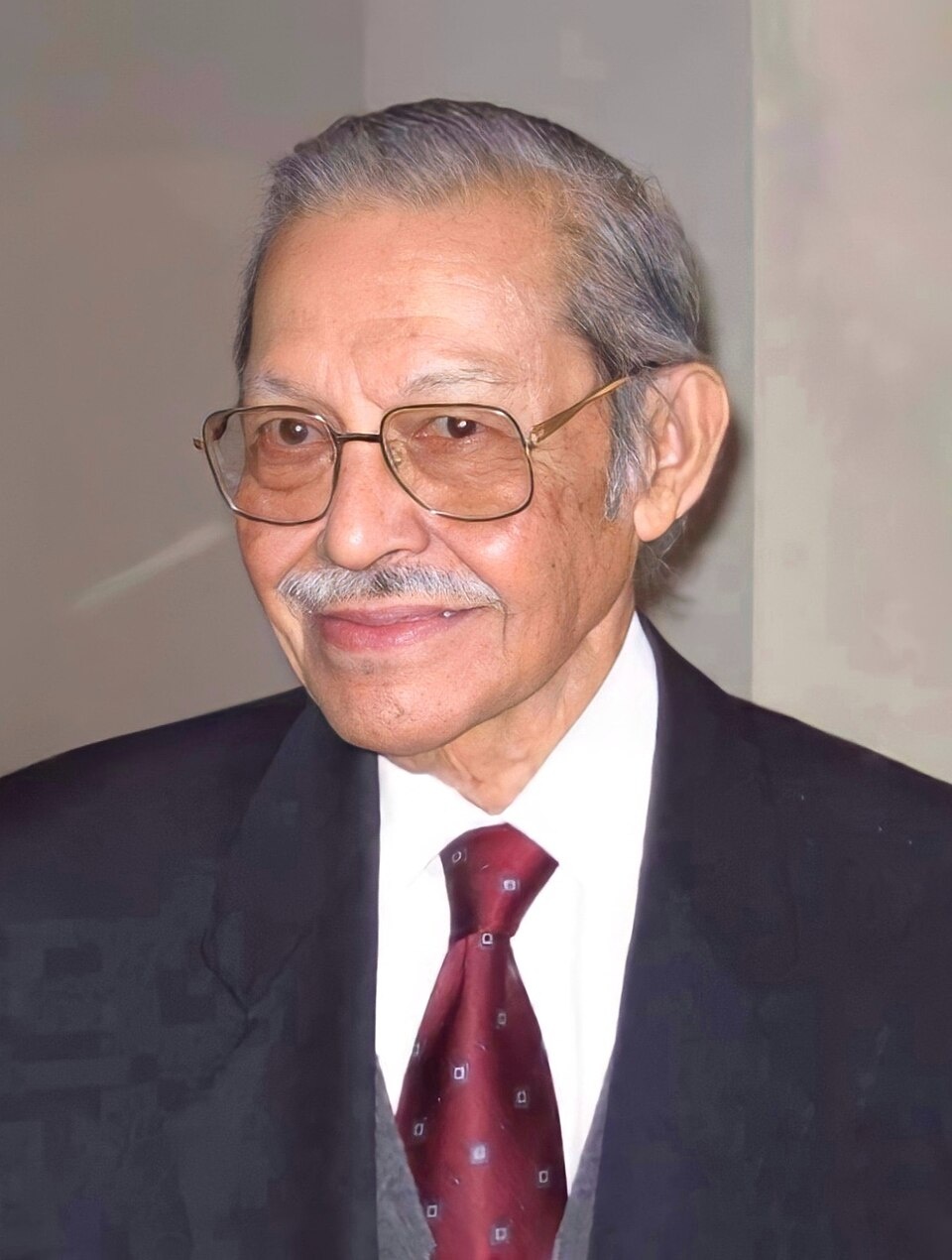
Hasan di Tiro (1925–2010) was the founder and symbolic leader of the Free Aceh Movement (GAM), which waged a separatist struggle against Indonesia from 1976 until a peace agreement in 2005. A descendant of prominent Acehnese religious leaders and royalty, he was educated in Indonesia and the United States, worked briefly as a diplomat and businessman, and returned to Aceh in the 1970s amid growing resentment over Jakarta’s control of the province’s resources. [Source: Iwan Dzulvan Amir, Jakarta Post, June 4 2010; Kathy Marks, The Independent, June 29, 2010]
Di Tiro declared Acehnese independence in 1976 and soon went into exile after being wounded in fighting. He settled in Sweden, where he lived for nearly three decades as a Swedish citizen, directing GAM from abroad and lobbying internationally. Although revered by supporters as the movement’s supreme leader, he was also criticized for being distant from conditions on the ground and for pursuing a vision rooted in Aceh’s precolonial past rather than a modern state.
Under his leadership, GAM fought one of the world’s longest-running insurgencies. Estimates of deaths range from about 15,000 to as many as 30,000. After years of failed negotiations, talks resumed following the devastating 2004 earthquake and tsunami. In August 2005, GAM and the Indonesian government signed a peace agreement granting Aceh broad autonomy rather than independence. GAM was dissolved, former rebels entered politics, and Aceh held peaceful elections.
Di Tiro returned to Aceh in 2008 to a large public celebration after more than 30 years in exile. Frail after multiple strokes, he lived quietly in Banda Aceh. The Indonesian government restored his citizenship on June 2, 2010; he died the following day at age 84. His death was widely seen as marking the end of an era of armed separatism in Aceh, which since the peace accord has moved—unevenly but decisively—toward political participation and post-conflict recovery.
Indonesian Military in Aceh
As of May 2003, there were 45,000 Indonesian soldiers and police in Aceh. Some guarded the Exxon-Mobile natural gas facility. Others conducted raids throughout the countryside, forcing thousands of Acehnese to seek refuge in mosques along the coast. One Acehnese activist told the Los Angeles Times, “You have no idea how uncivilized this army’s behavior is. It’s like a soldier’s prestige is based on having done something bad in Aceh.”
Indonesian security forces burned villages, hung prisoners by their thumbs, shot off the hands of teenagers, surrounded mosques, dragged out men they believed were rebels and killed them, searched houses for young women and raped them, and told young men to run before shooting them in the back of the head. Human rights investigators who examined a house used by military torturers found dead bodies, severed limbs, and an execution stake pitted with bullet holes and drenched in blood. Victims of extrajudicial killings often simply disappeared and later turned up in rivers or fields bearing signs of torture.
One man told Time magazine that he was seized by the military while walking with his water buffalo on suspicion of helping GAM. His teeth were knocked out, he was tortured with electric shocks, and he was forced into slave labor picking coconuts and cultivating marijuana. A 70-year-old farmer told Time that he was arrested by the military and accused of carrying a gun. Three times, he said, he was stripped, tortured with electric shocks, and buried in the ground with only his nose above the surface.
In some cases, the violence was carried out by paramilitary groups believed to be working for the Indonesian government. One Indonesian man who worked for a Danish-sponsored humanitarian organization told the Los Angeles Times that he witnessed a death squad seize three of his coworkers, strip them to their underwear, take them to an abandoned house, and execute them. The aid worker managed to untie himself and escape by running into the jungle.
The military was charged with committing murder, rape, and other crimes. The mother of an Acehnese man killed by Indonesian troops told the New York Times, “The Indonesian army shoots people easily. They are supposed to ask whether people are rebels or not.” One Acehnese man who was arrested on suspicion of being a rebel told the Los Angeles Times that he was beaten with pieces of wood and subjected to electric shocks. While in custody, his weight dropped from 135 pounds to 85 pounds. During his imprisonment, his business collapsed: he lost three fishing boats and 400 acres of shrimp farms. President Megawati apologized for atrocities committed by Indonesian troops. GAM was also accused of committing abuses and blamed them on rogue guerrillas involved in extortion and illegal arms sales who sought to keep the conflict going.
Military Activity in Aceh in the Suharto Era
Discontent under Suhart gave rise to GAM, which launched an armed separatist rebellion demanding greater control over local resources and the protection of Acehnese identity. GAM began guerrilla warfare in Aceh in the mid-1970s. The government responded with harsh military measures. Attacks on public facilities and transportation, reprisal operations by both sides, and a lack of skill in combating insurgency on the part of the military and the police contributed to a high level of noncombatant casualties and insecurity throughout the province.
Thought to have been crushed in the mid-1970s, GAM, with Libyan support, renewed its hit-and-run warfare in the late 1980s, hoping to build on economic and social grievances. The military reacted with crushing force but never was able to defeat the separatists fully. [Source: Library of Congress]
In 1989, Aceh was placed under martial law, ushering in a period marked by widespread human rights abuses. From 1988 to 1998, Aceh was declared a military operations area, and much of what went on there during that period was kept secret. Human rights investigators asserted that during that time, 1,300 Acehnese—most of them civilians—were killed, 2,000 others disappeared, and 3,500 were tortured.
For ordinary Acehnese, the fighting meant dodging bullets while picking fruit and vegetables in their fields, being extorted by both rebels and government militias, and living in constant fear. In some villages, whenever there were rumors that soldiers were nearby, residents fled into the jungle and stayed there for days, afraid to return home.
Fighting in Aceh in the Late 1990s and Early 2000s
After Suharto resigned in May 1998, decades of pent-up aggression were released. Armed men emerged from the mountains, looted and razed houses, and forced hundreds of villagers to sleep in the local mosque. The military retaliated, setting off a tit-for-tat spiral of violence.
In August 1998, the Indonesian military declared an end to military rule in Aceh, pulled out combat troops, apologized for atrocities committed there, and promised to investigate human rights abuses. However, the effort collapsed when seven off-duty soldiers, on their way home for the Ramadan holiday, were pulled off a bus and tortured, murdered, and mutilated—presumably by GAM guerrillas.
Within days of the soldiers’ murder, troops returned to the region and began conducting house-to-house searches, intimidating people suspected of having ties to GAM. In the town of Beutong Ateuh, women and children were forced to watch the execution of 56 suspected GAM supporters. In 2000, following a landmark human rights trial, 16 Indonesian soldiers admitted that they had been following orders when they dragged 26 student activists into a field in Aceh Province and executed them.
In January 1999, 17 people were killed after violence erupted when Indonesian troops broke into homes searching for Acehnese separatists. In May 1999, a policeman and 41 villagers were killed, and more than 100 people were wounded, when troops opened fire on a crowd of several thousand peaceful protesters. Villagers said police began firing on them; many of the dead were shot in the back. Soldiers said they fired in self-defense. More than 500 people, mainly civilians, were killed in 1999.
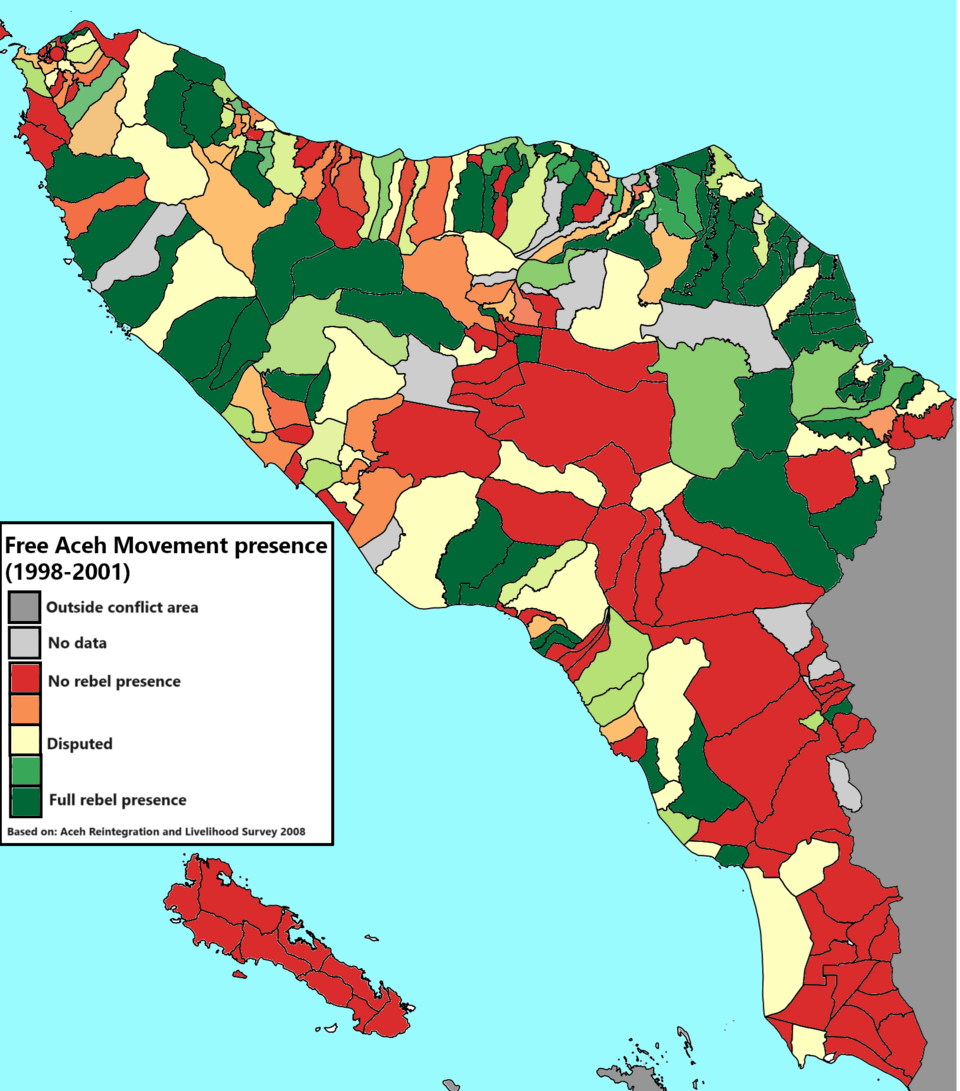
By 2000 the GAM had made extensive advances in the countryside and was providing government services in several areas of the province. More than 2,000 people were killed in Aceh in 2001 and 2002 in connection with the fighting. According to an Aceh human rights group, 841 people were killed in 2000, including 676 civilians, 124 Indonesian police and army personnel, and 41 GAM members. The same group reported that 393 people were killed in 1999, including 278 civilians, 78 Indonesian police and army personnel, and 41 GAM members.
Most of the fighting took place in the countryside. In a typical exchange, guerrillas attacked a military post. Soldiers fought back, chased the guerrillas into the jungle, then killed villagers at point-blank range whom they accused of supplying food to the rebels, dumping their bodies in a river. Alternatively, guerrillas entered a town, attacked a police post, raided a market, and retreated into the jungle. Hours later, Indonesian troops arrived, accused townspeople of supporting the rebels, looted homes, shot unarmed civilians, and burned buildings. There were also numerous bombings and the burning of schools and other buildings. Most bombings were small-scale attacks using homemade explosives.
See “Aceh Under Martial Law: Inside the Secret War” by Human Rights Watch
Movement Toward Peace in Aceh
After Suharto’s resignation, efforts were made to address abuses committed by the Indonesian military in Aceh. Many atrocities from the Suharto era were exposed, including mass graves and torture centers. In May 2000, 24 soldiers and one civilian were convicted of murdering dozens of villagers in Aceh. Human rights activists criticized the outcome, citing light sentences of 8½ to 10 years. The soldiers claimed they acted in self-defense after being attacked by students with machetes.
President Habibie’s offer in 1999 to revive the railroad from Medan in Sumatera Utara Province to Aceh’s capital, Banda Aceh, and other economic-development projects in exchange for Acehnese loyalty to Jakarta was seen as a continuation of the patronizing, centralistic politics of the New Order. In June 2000, a ceasefire between GAM rebels and the Indonesian military was declared. Jakarta proposed concessions, including granting Aceh up to 75 percent of revenue from its natural resources, building a new railroad, establishing a free trade zone, and creating a tribunal to investigate military abuses.
East Timor’s independence referendum in 1999 raised Acehnese hopes for a similar vote. President Abdurrahman Wahid initially suggested that independence was possible and promised a referendum. In November 1999, more than one million people—about a quarter of Aceh’s population—demonstrated in support of independence. After the protests turned hostile, Wahid withdrew the referendum promise, stating that secession would not be tolerated. Acehnese leaders themselves were divided over what form an independent state should take.
Peace talks involving the Indonesian government, GAM, and international mediators were held in Geneva, Stockholm, and Tokyo. In December 2002, both sides signed a Cessation of Hostilities Agreement (COHA) in Geneva. The deal promised greater autonomy, 70 percent of oil and gas revenues, elections in 2004, and a phased rebel disarmament in exchange for troop withdrawals. Independence, however, remained unresolved.
The agreement quickly unraveled amid renewed violence and mutual accusations. The military accused GAM of rearming, while refusing to withdraw from frontline positions. In May 2003, President Megawati suspended the peace process, declared martial law, and launched a major military offensive after GAM rejected a deadline to disarm and refused regional autonomy. Rebels continued kidnappings and infrastructure sabotage. Appeals by Acehnese civic leaders to continue negotiations were ignored.
Major Indonesian Military Offensive in Aceh in 2003
In May 2003, the Indonesian government arrested GAM negotiators and charged them with terrorism. A large-scale offensive followed, involving village evacuations, internment camps, and widespread “sweeping” operations. GAM, with an estimated 3,000 to 6,000 fighters, responded with ambushes and hit-and-run attacks.
The offensive was the largest since the East Timor invasion in 1975. By July 2004, an estimated 2,000 people had been killed, though figures were impossible to verify independently. Two German tourists were among the victims. Military operations included air strikes, naval bombardment, paratrooper deployments, and amphibious landings.
About 100,000 Acehnese were displaced into makeshift camps. Many later returned to find their homes looted or destroyed and their livestock stolen. By the mid-2000s, GAM had been significantly weakened, with many leaders captured and remaining fighters confined to mountain strongholds.
At its peak, the Indonesian government deployed about 55,000 security forces in Aceh, operating under martial law with broad powers to detain suspects without charge, censor the press, and enforce displays of loyalty such as flying Indonesian flags. Homes that failed to comply were often raided, and residents detained or killed. Bodies frequently appeared in rivers, fields, and along roadsides.
Security forces were widely accused of brutality, with some units described as acting like death squads. Villagers reported summary executions, beatings, and house-to-house raids, while the military often claimed those killed died in firefights. Activists were detained, international observers withdrew after threats, and shortages of food and fuel developed. Human rights groups accused the government of blocking humanitarian aid.
After the 2003 major offensive, violence continued almost daily, though independent verification was difficult because journalists were largely barred from conflict zones. Both sides exaggerated casualty figures, each blaming the other for civilian deaths. Regular clashes resulted in several deaths at a time, and by mid-2004 the government claimed thousands of rebels had been killed or captured.
The government made limited efforts to address abuses, prosecuting some soldiers for rape and brutality, but light sentences angered Acehnese residents. Martial law was lifted in May 2004, with President Megawati declaring that Aceh was largely under government control and the rebels nearly defeated. Despite these claims, fighting continued.
See “Aceh Under Martial Law: Inside the Secret War” by Human Rights Watch
Peace Deal in Aceh Achieved in 2005 After the 2004 Tsunami
The December 26, 2004, earthquake and tsunami, which killed more than 160,000 people in Aceh and displaced hundreds of thousands, created the conditions for ending the long-running Aceh insurgency. The scale of the disaster affected both government forces and GAM rebels and made continued conflict untenable, while also creating an urgent need to facilitate international humanitarian aid. [Source: Library of Congress]
Under mediation by former Finnish president Martti Ahtisaari, the Indonesian government and the Free Aceh Movement (GAM) resumed negotiations in Helsinki. On August 15, 2005, the two sides signed a peace agreement in which GAM abandoned its demand for independence in exchange for broad autonomy and political participation. GAM fighters were demobilized and disarmed by the end of 2005, while Indonesia withdrew substantial military and police forces. The European Union and ASEAN jointly monitored the process through the Aceh Monitoring Mission.
Aceh received expanded autonomy, including the right to retain most revenues from oil and gas, implement Islamic law, and allow the formation of local political parties. Former GAM members entered formal politics, winning the governorship and many district-level posts in peaceful elections in December 2006. By 2009, GAM had dissolved and splintered into several political parties, and Aceh’s government was functioning largely like other Indonesian provinces, though with a stronger emphasis on sharia.
The peace process, reinforced by international support and post-tsunami reconstruction, marked the end of Southeast Asia’s longest-running insurgency and ushered in a period of relative stability and recovery in Aceh.
Text Sources: “Encyclopedia of World Cultures Volume 5: East/Southeast Asia:” edited by Paul Hockings, 1993; A. J. Abalahin,“Worldmark Encyclopedia of Cultures and Daily Life,” Cengage Learning, 2009; National Geographic, Live Science, Metropolitan Museum of Art, Natural History magazine, Australian Museum, New York Times, Washington Post, Los Angeles Times, Smithsonian magazine, Encyclopedia.com, Times of London, Library of Congress, The Conversation, The New Yorker, Time, BBC, CNN, Reuters, Associated Press, AFP, Lonely Planet Guides, Google AI, Wikipedia, The Guardian and various websites, books and other publications.
Last updated December 2025