
MARTENS

Top row (left to right) 1) American marten (M. americana); 2) Pacific marten (M. caurina); 3) European pine marten (M. martes)
Middle row (left to right) 4) Yellow-throated marten (M. flavigula); 5) Nilgiri marten (M. gwatkinsii); 6) Beech marten (M. foina)
Bottom row (left to right): 7) Japanese marten (M. melampus); 8) sable (M. zibellina)
Martens are weasel-like mammals in the genus Martes within the subfamily Guloninae, in the family Mustelidae. Martens are agile animals adapted to living in the taiga, and inhabit boreal, coniferous and northern deciduous forests across the Northern Hemisphere. Various species of marten live in the northern latitudes of Europe, Russia, Asia and North America. Martens are omnivores (eat a variety of things, including plants and animals). Their diets including small mammals, fish, birds, fruit and seeds. Like many other mustelids martens tend to solitary only to meet during breeding season in the late spring or early summer.[Source: Lauren Dubberley, Animal Diversity Web (ADW) |=|]
Much about martens, including their lifespan, is unknown. They are difficult to observe in the wild and only a few species are kept commonly enough in captivity to generate significant data. European pine martens have been recorded as having an average lifespan of three to four years in the wild and 18 years in captivity. Japanese martens have an unknown lifespan in the wild, have lived up to 12 years in captivity. Martes is in the subfamily Guloninae which also contains 'Wolverines Gulo', the Fisher 'Pekania', and the 'Tayra Eira'. The fisher was was considered a member of the Martes genus until genetic data showed it was different enough to be placed it in its own genus. Martes species are in the same family, Mustelidae, as weasels and otters.
The Genus Martes contains a total seven species of martens, plus sables. All are are listed as species of Least Concern by the International Union for Conservation of Nature (IUCN) except for the Nilgiri marten (M. gwatkinsii) which is listed as vulnerable. Sable (M. zibellina) populations are increasing, populations of Japanese martens (M. melampus), Pine martens (M. martes), Beech martens (M. foina, also known as stone martens), Nilgiri martens are stable, and American martens (M. americana, also known as black martens) and Yellow-throated martens (M. flavigula) populations are in decline. Threats to conservation include the fur trade, hunting, and habitat loss. To conserve the American marten den boxes were placed in the forest to enhance the habitat and allow for proper population monitoring. The word "marten" comes from the Middle English word 'Mearth' or martryn, which in turn comes from the Anglo-French martrine and Old French martre (Latin martes). |=|
Some marten species, especially sables, are valued for their furs. Beech martens have a lower quality fur and are less valuable than sables and pine martens, Beech marten pelts make up 10-12 percent of the fur market. Beech martens and yellow-throated martens are tamable. Zoologist George Rolleston theorized that the "domestic cats" of the Ancient Greeks and Romans were in reality beech martens. Martens are not a threat to people but they can cause damage to crops, cars, and livestock. Beech martens have been known to bite through the cables and wires of cars for reason that are are not fully understood but typically peaks in the spring when young martens begin to explore. In April and November 2016, two beech martens shut down the Large Hadron Collider, the world's most powerful particle accelerator, by climbing on on powerful electrical transformers.
RELATED ARTICLES:
MUSTELIDS: CHARACTERISTICS, BEHAVIOR, REPRODUCTION, TYPES, SPECIES factsanddetails.com
MINKS: CHARACTERISTICS, BEHAVIOR, INVASIVE AND ENDANGERED SPECIES factsanddetails.com
MINK FUR: QUALITY, FARMS AND ANIMAL RIGHTS factsanddetails.com
SABLES: CHARACTERISTICS, FUR, BEHAVIOR, TRAPPING, REPRODUCTION factsanddetails.com
ERMINE (STOATS): CHARACTERISTICS, FUR, BEHAVIOR, ROYALTY, REPRODUCTION factsanddetails.com
FURS; RUSSIA, HISTORY, FARMS factsanddetails.com
WEASELS: CHARACTERISTICS, BEHAVIOR, SPECIES factsanddetails.com
WEASEL SPECIES OF ASIA AND EUROPE factsanddetails.com
LEAST WEASELS: CHARACTERISTICS, BEHAVIOR AND REPRODUCTION factsanddetails.com
POLECATS: CHARACTERISTICS, BEHAVIOR, SPECIES, REPRODUCTION factsanddetails.com
Marten Characteristics and Behavior
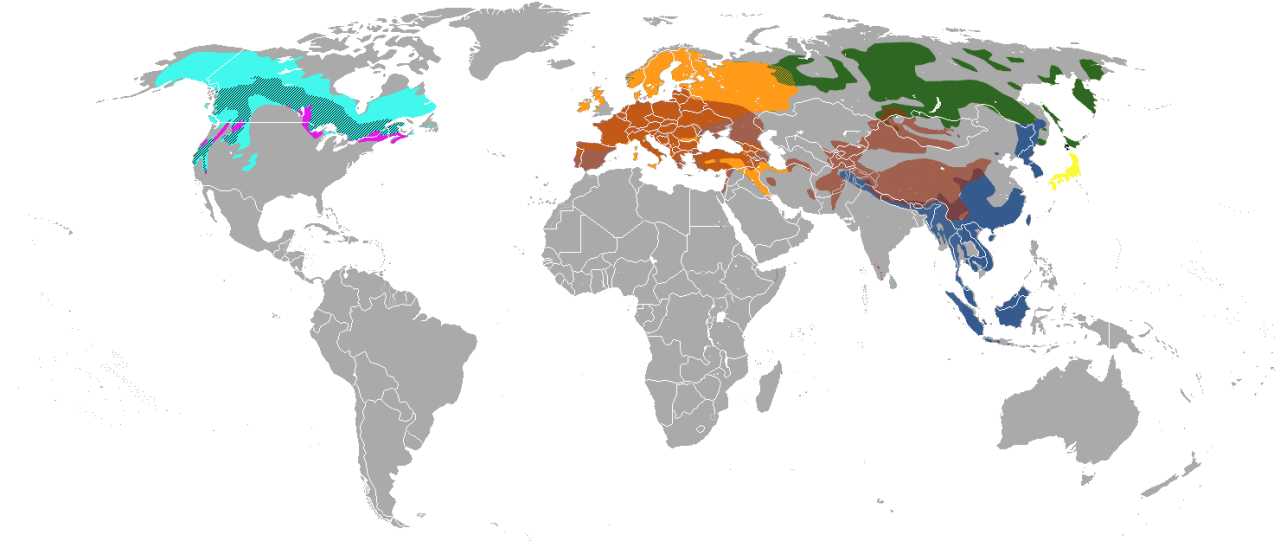
1) American marten (M. americana + caurina) (cyan & teal)
2) Yellow-throated marten (M. flavigula) (dark blue & sepia)
3) Beech marten (M. foina) (rust, brown & sepia)
4) Nilgiri marten (M. gwatkinsii)
5) European pine marten (M. martes) (orange, rust & grass-green
6) Japanese marten (M. melampus) (yellow)
7) sable (M. zibellina) (green & grass-green)
Martens have long, slender bodies, bushy tails, large paws with partially retractile claws and short heads. Their outer fur is long and glossy. Some martens live in trees and leap from branch to branch like squirrels. Some spend most of their time on the ground. Their fur varies from yellowish to dark brown, depending on the species. Their typically yellowish brown fur coat is valued by animal trappers,
Martens are arboreal (live in trees), scansorial (good at climbing), cursorial (with limbs adapted to running), terricolous (live on the ground), diurnal (active during the daytime), nocturnal (active at night), crepuscular (active at dawn and dusk), motile (move around as opposed to being stationary), sedentary (remain in the same area), and territorial (defend an area within the home range). The dental formula for martens are 3/3 (incisors), 1/1 (canine), 4/4 (premolars), and 1/2 (molars) producing a total of 38 teeth. [Source: Lauren Dubberley, Animal Diversity Web (ADW) |=|]
Martens are usually solitary animals, only coming together to mate. They engage in delayed implantation (a condition in which a fertilized egg reaches the uterus but delays its implantation in the uterine lining, sometimes for several months). Males may fight violently with other males for the right to breed with a female, with the largest and strongest male getting to mate with the most females. Courtship behavior can also include chasing and other "playful" behaviors as seen in sables.
Mustelids
Martens are mustelids (Mustelidae), a diverse family of carnivoran mammals, including weasels, badgers, otters, stoats, mink, sables, ermine, fishers, ferrets, polecats, martens, grisons, wolverines, hog badgers, honey badgers and ferret badgers. Mustelids, make up the largest family within Carnivora with about 66 to 70 species in eight or nine subfamilies and 22 genera. Skunks were considered a subfamily within Mustelidae, but recent molecular evidence has led their removal from the mustelid group. They are now recognized as a their own single family, Mephitidae. [Source: Wikipedia, Matt Wund, Animal Diversity Web (ADW) |=|]
Mustelids inhabit all continents except Australia and Antarctica, and do not live on Madagascar or oceanic islands. They are found in diverse terrestrial and aquatic habitats in temperate, tropical and polar environments — in tundra, taiga (boreal forest), conifer forests, temperate forests, deserts, dune areas, savanna, grasslands, steppe, chaparral forests, tropical and temperate rainforests, scrub forests, mountains, lakes, ponds, rivers, streams. coastal brackish water, wetlands such as marshes, swamps and bogs, suburban areas, farms, orchard and areas near rivers, estuaries and intertidal (littoral) zones.
Mustelids vary greatly in behavior. They are mainly carnivorous and exploit a wide diversity of both vertebrate and invertebrate prey, with different members specializing in certain kinds of prey. Most mustelids are adept hunters with some weasels able take prey much larger than themselves. Many species hunt in burrows and crevices; some species have evolved to become adept at climbing trees (such as martens) or swimming (such as otters and mink) in search of prey. Wolverines can crush bones as thick as the femur of a moose to get at the marrow, and have been seen attempting to drive bears away from their kills. Mustelids typically live between five and 20 years in the wild. |=|
See Separate Article: MUSTELIDS: CHARACTERISTICS, BEHAVIOR, REPRODUCTION, TYPES, SPECIES factsanddetails.com
Beech Martens
Beech martens (Martes foina) are also known as stone martens, house martens and white breasted martens. Superficially beech martens are similar to the European pine marten, but are smaller size and occupy different habitats. Pine marten tend to be a forest specialists while beech martens are more generalist and adaptable, occurring in various and open and forest habitat environments. Beech martens are immune to bee and wasp stings, a defense that allows take to honey from nests without harm. The average lifespan of beech martens in the wild is estimated to be three years. The maximum life expectancy in the wild is 10 years. In captivity, they have lived to be 18 years old.
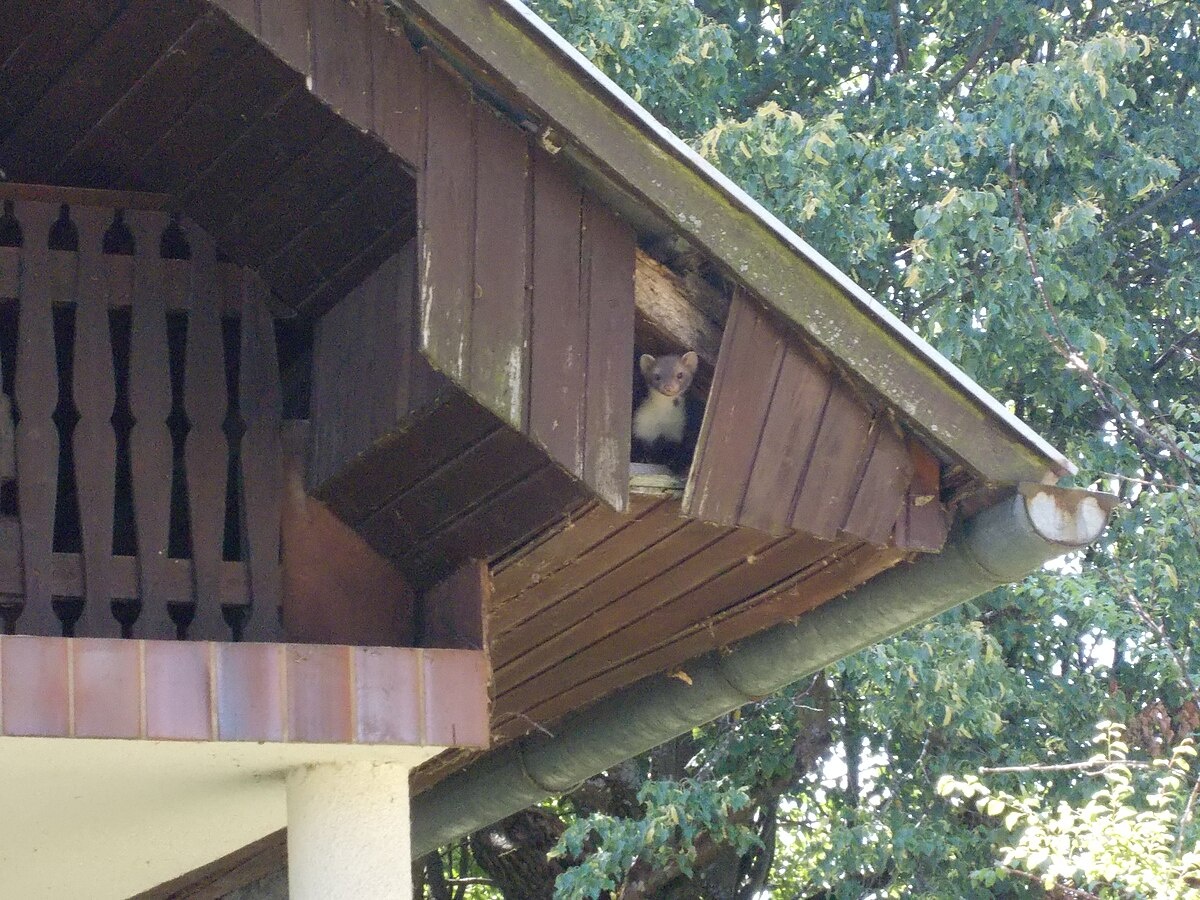
Beech martens live in much of Europe and Central Asia and are found as far north as Denmark, as far west as Spain, as far south as Italy, Crete, Rhodes, and Corfu, and as far east as Mongolia and the Himalayas. A feral population originating from pets has established itself in Wisconsin in the U.S. Beech martens prefer open deciduous forest and rock outcroppings in mountainous habitats. They can be found at elevations up to 4,000 meters (13,123 feet) during summer months. Beech martens often do well in and around human settlements and made dens in buildings. Natural den sites include abandoned burrows, hollow trees, and rocky crevices.
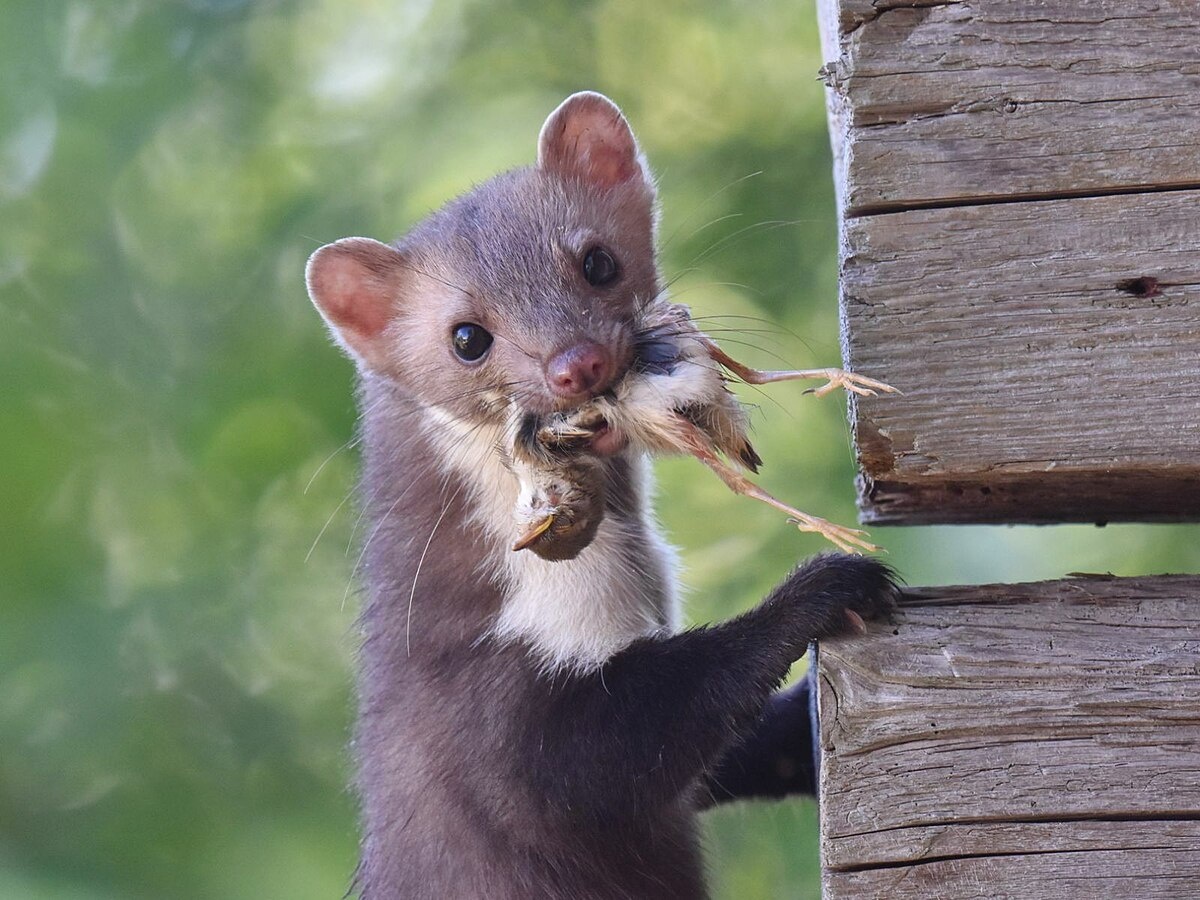
Beech martens are not endangered. They are designated as a species of least concern on the International Union for Conservation of Nature (IUCN) Red List and have no special status on according to the Convention on International Trade in Endangered Species (CITES). Beech martens help farmers by controlling rodent populations to some degree around farms. Pelts of these martens have had some value but not as much as those of European pine martens. Beech martens are kept as pets. Beech martens can be a pest in human-occupied area. They den in attics, barns, and automobile engine compartments, damaging hoses and wires. Beech martens sometimes raid chicken coops and rabbit hutches. A subspecies of beech martens that once occupied the island of Ibiza in the Balearic Islands of Spain was hunted to extinction in the 1960s.
Beech Marten Characteristics and Diet
Beech martens are about the size of domestic cats but have a more slender body. They range in weight from 1.1 to 2.3 kilograms (2.4 to 5 pounds) and have a head and body length ranging from 40 to 54 centimeters (15.75 to 21.3 inches). Beech martens have longer tails than pine martens, from 22 to 30 centimeters (8.6 to 11.8 inches) in length. Sexual Dimorphism (differences between males and females) is not present: Both sexes are roughly equal in size and look similar. [Source: Kimberlee Carter, Animal Diversity Web (ADW) |=|]
Beech martens have relatively long limbs and a bushy tail. Their coat is coarser than that of European pine martens. Beech martens range in color from dark brown to pale grayish brown. A white or buffy streak can be seen just below the chin running down the neck to the chest. In some southern and eastern regions this white streak is absent. Young have grey fur on their back. Beech martens have little to no fur on the soles of the feet.
Beech martens are opportunistic omnivores (eat a variety of things, including plants and animals), although animal prey is preferred. Animal foods include small mammals, birds (especially nestlings), amphibians, eggs, carrion, insects, non-insect arthropods such as spiders. Among the plant foods they eat are fruit. They store and cache food. |=|
The diet of beech martens varies with season and prey availability. Bird eggs are eaten by making a small incision that allows the yolk to be sucked out, leaving a hollow shell. During the summer months berries, such as blackberries, raspberries, and elder berries are consumed along with other fruits. In some regions, vegetable matter is a major part of the summer diet. When food is scarce they may feed on carrion. They have been known to raid chicken coops and rabbit hutches and cache excess food until it is needed.
Beech Marten Behavior
Beech martens are scansorial (good at climbing), terricolous (live on the ground), nocturnal (active at night), crepuscular (active at dawn and dusk), motile (move around as opposed to being stationary), sedentary (remain in the same area) and territorial (defend an area within the home range). Their home range territory ranges from 12 to 211 hectares. Size varies with season, with larger ranges in summer than winter. Males have significantly larger ranges than females. [Source: Kimberlee Carter, Animal Diversity Web (ADW) |=|]
Beech martens are primarily solitary animals, with the exception of mating interactions between males and females and mothers and young. During the mating season they are more frequently seen during the day. The movement style of these animals varies with their speed. If the animal is strolling, the gait is meandering with the front feet parallel and the hind feet on a slight angle from the front. When the animal is running, the hind feet land in the same spot as the front feet. When on the prowl, beech martens surprise their prey by pouncing on them. They are excellent climbers and use this ability to raid the nests of birds. Known predators of beech martens include red foxes and Eurasian eagle-owls. They are well camouflaged and very quiet and thus hard to detect. There are agile in the trees and can take refuge both in trees and burrows to escape threats. They can fight back fierce if attacked or threatened.
Beech martens sense and communicate with vision, touch, sound and chemicals usually detected by smelling. They have excellent senses of sight and smell, both of which are useful in darkness and locating food, and communicate primarily by using olfactory cues. Territorial boundaries and reproductive readiness are communicated with scent markings. During the mating season they make distinctive cries.
Beech Marten Mating, Reproduction and Offspring
Beech martens are polygynandrous (promiscuous), with both males and females having multiple partners. They employ delayed implantation (a condition in which a fertilized egg reaches the uterus but delays its implantation in the uterine lining, sometimes for several months) and engage in seasonal breeding. Beech martens breed once a year, usually from June to August. The average gestation period is 30 days, with delayed implantation it is from 230 to 275 days.The number of offspring ranges from one to five, with the average number of offspring being two to three. [Source: Kimberlee Carter, Animal Diversity Web (ADW) |=|]
Beech martens are usually solitary animals, except during the mating season. Male territories overlap those of females and males attempt to mate with females within their territory. During the month of July male testes reach their maximum size. Cries of mating beech martens can be heard throughout the mating season and mainly at night. Smell plays an important role in locating and selecting prospective mates. When first approached by a male, females respond aggressively. Males calmly vocalize their intent with subtle cooing. The male may grab a layer of fat on the back of the female’s neck with his mouth to position himself during copulation, which may last up to an hour. After copulation, females groom themselves. |=|
While mating occurs in midsummer, but implantation of embryo does not take place until early in the following spring. The blastocyst begins to develop in February and young are born in March. Young are altricial. This means that young are born relatively underdeveloped. They are born blind, deaf and hairless. Parental care is provided exclusively bu females, who nurse and protect their offspring in the den for a period of time. Weaning of the young occurs mid May, about two months after birth and immediately before the mating season begins. There is an extended period of juvenile learning. After weaning young learn hunting techniques from their mother. At the end of the summer they are independent. At 15 to 27 months young reach sexual maturity, with some females becoming pregnant in the year following their birth.
European Pine Martens

European pine martens (Martes martes) are also known as pine martens, and less commonly as baum martens and sweet martens. They are designated as a species of least concern on the International Union for Conservation of Nature (IUCN) Red List and have no special status on according to the Convention on International Trade in Endangered Species (CITES). European pine martens avoids human settlements, and has never been known as a pest but they have been extensively hunted and trapped for beautiful and warm winter coat fur. European pine martens have been successfully raised on fur farms but never on a large commercial scale. Their average lifespan in captivity is 17 years. Their average lifespan in the wild is 10 years. [Source: Lisa Schwanz, Animal Diversity Web (ADW) |=|]
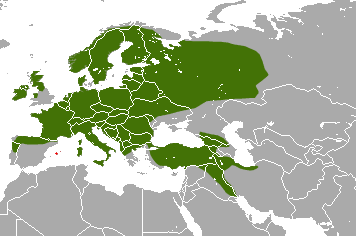
European pine martens are fairly widespread in much of Europe, Asia Minor, the Caucasus, and also found in parts of Iran, Iraq, and Syria. Their range extends as far east as western Siberia, as far west as Britain and Ireland, as far north as the Arctic Circle and as far south as the Balearic Islands of Spain, Corsica, Sardinia, Elba, Sicily and Iraq.
European pine martens prefer forest habitats, including deciduous, mixed, and coniferous forest. Old-growth forest is often preferred over secondary forest. They are considered to be habitat specialists. Having a closed treetop as cover from predation is thought to be an important habitat consideration for them. In some places — such as the island of Minorca — they are less fussy and found outside of forests, in shrubby and even open areas. This thought to be because of a lack of predators. In Scotland, where they are also an absence of predators, pine martens are found in many habitat types — young forest plantations, coarse grassland, heather and grass moorland, and border zones. Stone dykes are used as runways to get from area to another
In Croatia, European pine marten pelts were so highly valued that they were used as a form of payment. The banovac, a coin struck and used between 1235 and 1384, included the image of a marten. This is one reason why the Croatian word for marten, kuna, is the name of the Croatian currency. A running marten is shown on the coat of arms of Croatia.[Source: Lauren Dubberley, Animal Diversity Web (ADW) |=|]
European Pine Marten Characteristics and Diet
European pine martens are about size and proportions of a large domestic cat. They range in weight from 0.5 to 1.8 kilograms (1.1 to 3.8 pounds). Their head and body length ranges from 45 to 58 centimeters (17.7 to 22.8 inches) and their tail is 16 to 28 centimeters (6 to 11 inches) long. There is significant size variation found geographically. Their average basal metabolic rate is four watts. Sexual Dimorphism (differences between males and females) is present: Males weigh more than females by 12 to 30 percent. [Source: Lisa Schwanz, Animal Diversity Web (ADW) |=|]|
Pine martens are adept tree climbers, with many adaptations that make this possible, including bone and muscle structure for powerful forelimbs, long tail that aids in balancing, and well-developed claws. Their tail is long and bushy and their ears are relatively large and triangular. Scent-marking is done with abdominal and anal scent glands. An enlarged temporalis muscle attached to the jaw and a flange on the mandibular fossa prevented dislocation of the lower jaw. This combined a well-developed shearing and crushing cheekteeth allows martens to capture, restraint and process prey.
Pine marten fur is short and coarse in the summer but is thick and silky and a rich brown color in the winter, which is when they have traditionally been trapped for their fur. The pads on the soles are completely covered with fur in the winter. Juveniles acquire their adult fur in their first winter, and a complete molt occurs once a year, in the spring. The winter fur grows in September. The coloration includes an irregular, creamy-orange throat patch, a grayish tint on the belly, and darkening on the paws.
Pine martens are omnivores (eat a variety of things, including plants and animals) and favor animal food, with small mammals such as voles and squirrels, making up a good portion of their diet throughout the year, with proportions changing according to season and locality. They can also eat a fair amount a lot of young birds, insects, carrion, frogs, reptiles, and snails. Martens are skillful arboreal hunters, able to race on thin, swinging branches, leaping from tree to tree in pursuit of squirrels. Foraging also occurs extensively on the forest floor. The diet of pine martens that forage along lochs in Scotland includes crabs, starfish and barnacles.
Populations can rise and fall in accordance with bust and boom cycles of their rodent prey, such as voles. Pine martens gorge when food is plentiful but have difficulty getting reproduction cycle to be in sync with the booms. Sometimes their reproductive upticks are a full year behind the rodent boom. In the fall, in places like Scotland and the island of Minorca, when fruits and berries are abundant, these foods can make up 30 percent of the martens’ diet. In other places such as Poland, fruits are never eaten. Food is stored in the summer and autumn to compensate for low winter resources.
European Pine Marten Behavior
European pine martens are mostly active at night and at dusk. Hollow trees are the preferred nesting sites, and individuals have several nests within their territory. Squirrel nests, bird nests that have been left behind, and rock crevices are also used as dens. In the winter often rest underground to escape the cold. European pine martens are usually solitary, except when they're young and together in the nest. Male and females only stay together for a short time. Field studies indicate that males may protect mated females through territory defense if the male’s range encompasses that of the female. [Source: Lisa Schwanz, Animal Diversity Web (ADW) |=|]
Home range size estimates vary widely depending on the study. Male ranges are larger than female ranges and may overlap with those of several females. Some sources say the average size of a male’s territory is 23 square kilometers while that of females is 6.5 square kilometers. Others say it is 2.2 square kilometers for males and 1.5 square kilometers for females. In the nest, young communicate to their mother by twittering. As a defense, European pine martens place their head between their hind legs and arches their back when threatened.
Scent-marking is done using abdominal and anal scent glands throughout the territory. Social behavior intensifies in late winter with by increased scent marking frequency, intersexual tolerance, intrasexual aggression, and hormonal levels. It was initially thought that this was related to mating but mating does not occur until summer and males have not yet undergone spermatogenesis. The term "false heat" has been applied to this behavioral riddle. It has been theorized it could be a means of dispersing undispersed young from the previous summer before the new litter is born.
European Pine Marten Mating, Reproduction and Offspring
European pine martens are polygynandrous (promiscuous), with both males and females having multiple partners. They employ delayed implantation (a condition in which a fertilized egg reaches the uterus but delays its implantation in the uterine lining, sometimes for several months) and engage in seasonal breeding. European pine martens breed once a year, usually in July and to August. The average gestation period is 30 to 35 days, with delayed implantation it around seven months. Implantation occurs in late February and March. The timing of implantation occurs in response spring increases in amount of daylight. Birth takes place in late March through April. Litter sizes usually range from two to five, with average number of young being three. Adult females only have four functional mammae. [Source: Lisa Schwanz, Animal Diversity Web(ADW) |=|]
Adult male pine martens have a distinct seasonal testicular cycle. Lisa Schwanz wrote in Animal Diversity Web: Males complete testicular development a full month before estrus, and begin regression about the time females enter estrus. The first visible sign of estrus in females is an enlarged vulva. Most matings occur within a 30- to 45-day period, during which females may exhibit one to four periods of sexual receptivity. These periods last for 1-4 days and have an interval of 6-17 days. Copulation is prolonged, lasting 30-50 minutes, and may occur on the ground or in trees. In captivity, multiple copulations with one or more males can occur during each period of receptivity. A "false heat" occurs in February and March, corresponding to implantation and the beginnings of pregnancy. The increased social activity and intrasexual aggression may facilitate late dispersal of yearlings . |=|
At birth, young of European pine martens weigh about 30 grams. They are blind, deaf and toothless, and have thick, short fur. The eyes open at 34-38 days. Young martens begin consuming solid food at 36-45 days, and weaning occurs about six weeks after parturition. At 7-8 weeks, young emerge from the den and may begin dispersing at 12-16 weeks, during the breeding season. Some young may overwinter in the natal territory and disperse in the following spring. |In the wild, male and female European pine martens may mate in their first summer, at 14 months of age. The first mating season, however, may typically be deferred until the second or third year.
Japanese Martens
Japanese martens (Martes melampus) are found on the islands of Honshu, Shikoku, and Kyushu in Japan. They are most closely related to sables (M. zibellina), with which it is sympatric on Hokkaido. Genetic studies show that Japanese martens separated from sables about 1.8 million years ago. The Japanese marten's presence on Hokkaido and Sado islands is due to introductions.
There are two confirmed subspecies of Japanese marten: 1) Martes melampus melampus (M. m. melampus), which lives on several Japanese islands; and 2) Martes melampus tsuensis (M. m. tsuensis), which is endemic to Tsushima Island.M. m. melampus is found on the islands of Honshu, Shikoku, and Kyushu in Japan. They were introduced from Honshu to Sado and Hokkaido Islands in Japan before 1949 for fur production. They inhabit southwestern Hokkaido, specifically the low altitude areas of the Oshima Peninsula and Ishikari. M. m. tsuensis is sparsely distributed on the Tsushima Islands of Japan. Japanese martens have been recorded in South Korea, into North Koream but no locality details prove a wild origin and no native population has been confirmed. These are sometimes referred to as Japanese martens coreensis.
Japanese martens are found along valleys, primarily in broad-leaved forests, conifer plantations and open fields up to 1807 meters (5928.48 feet). The climate of the places they live are similar to that the northern U.S. and Europe. They use dens in trees and ground burrows, often made by other animals. Japanese martens are (or were) trapped for fur from in December and January on Honshu. On the International Union for Conservation of Nature (IUCN) Red List they are listed as a species of Least Concern. In CITES (Convention on International Trade in Endangered Species of Wild) they have no special status.[Source: Bill Barthen, Animal Diversity Web (ADW) /=]
See SMALL MAMMALS IN JAPAN: SABLES, CUTE STOATS, MARTENS, SHREW MOLES factsanddetails.com
Yellow-Throated Martens
Yellow-throated martens (Martes flavigula) are also known as kharza. They live in forested regions throughout Southern and Eastern Asia. Their range extends throughout the Himalayas, as far west as Pakistan and Afghanistan, into Southeast Asia, as far south as Sumatra, Borneo and Java in Indonesia, and as far north as the Korean Peninsula and the Chinese-Russian border. They occupy a variety of habitats, preferring mixed forests composed of spruce and broad-leaved trees and coniferous taiga forests in the northern part of their range. In southern part of their range, in Northern India, Pakistan, and Nepal, they inhabit lowland swamps and marshes as well as treeless mountains. They live at elevations from sea level to 3000 meters (0.00 to 9842.52 feet). Little is known about the lifespan of yellow-throated martens in the wild. One individual lived 16 years in captivity. [Source: Marcus Shak, Animal Diversity Web (ADW) /=]
Yellow-throated martens are omnivores (eat a variety of things, including plants and animals). Animal foods include birds, small mammals (squirrels, hares, mouse-like rodents, etc.), amphibians, reptiles, fish, eggs. insects and mollusks. Among the plant foods they eat are seeds, grains, nuts and fruit. Unlike other martens, yellow-throated martens do not eat carrion. Their diet varies depending on location and season. In the northern part of their range, they prey upon musk deer, which they hunt in groups by surrounding the prey and attack it from different directions. They often chase prey onto frozen lakes and rivers where they are easier to kill. Because they rely on musk deer as a prey source, the population of yellow-throated martens tends to rise and fall with musk deer populations. In warmer and lower-elevation areas yellow-throated martens more frequently consume lizards, rodents and fruits. When both are available in abundance they favor fruit over rodents. This preference for fruit has not been observed in any other marten. /=\
Yellow-throated martens are not endangered. They are considered a species of least concern by the International Union for Conservation of Nature (IUCN) due to their wide distribution and stable populations throughout Asia. They are protected in Myanmar, Malaysia, and China. One subspecies, yellow-throated martens chrysospila (Formosan yellow-throated marten) is considered endangered by the US Fish & Wildlife Service. Yellow-throated martens in India are also listed on Appendix III of CITES. Unlike other mustelids, the fur of yellow-throated martens is not valuable enough to justify the trouble of hunting and trapping them. They have no natural predators, and they generally compete with other predators for food. In some regions, yellow-throated martens prey upon sables, a valuable fur-bearing animals but yellow-throated martens population levels are not high enough to have a negative impact on the fur industry. /=\
See Yellow-Throated Martens Under SMALL MAMMALS IN SOUTHEAST ASIA: WEASELS, MARTENS, ALCOHOLIC SHREWS factsanddetails.com
Nilgiri Martens
Nilgiri martens (Martes gwatkinsii) are the largest Old World martens. They are found only in the western Ghats mountain range of southern India primarily in the moist tropical rainforests and mountains but also have been sighted in coffee and cardamom plantations, swamps, grasslands, deciduous forests, and montane-evergreen forests at elevations from 300 to 1200 meters (984.2 to 3937 feet). Their lifespan is unknown, but a similar species, the yellow-throated martens, lives on average 14 years in captivity.[Source: Amanda Webb, Animal Diversity Web (ADW) /=]
Martens are omnivorous (eat a variety of things, including plants and animals) but Nilgiri martens are largely carnivores (mainly eat meat or animal parts) and insectivorous (eat mainly insects) and partly frugivorous (fruit eating). They are regarded as good hunters and frequently kill and eat small mammals and birds. There have even been reports of Nilgiri martens hunting much larger than themselves: mouse deer, monitor lizards, crows, Indian giant squirrels. They have also been known to consume nectar and honey and are said to be particularly fond of cicadas.
Nilgiri martens are listed as Vulnerable on the International Union for Conservation of Nature (IUCN) Red List and placed under Appendix III in the CITES (Convention on International Trade in Endangered Species of Wild) Appendices because it occurs is less than 20,000 square kilometers, its distribution is severely fragmented and its forest habitat, partly the six discontinuous national parks, is pressured by human settlements. There are reports of hunting of Nilgiri martens but is not so common simply because there are not that many of them. Its fur is not highly valued either. They may be prey upon by large predators in the Western Ghats, which include leopards, sloth bears, dholes, and tigers.
See SMALL MAMMALS IN INDIA AND SOUTH ASIA: HEDGEHOGS, WEASELS, MARTENS factsanddetails.com
Sables
Sables (Martes zibellina) are a species of marten that primarily inhabit the forests of Russia, from the Ural Mountains eastward throughout Siberia, and are also found in northern Mongolia, eastern Kazakhstan, northern China, North Korea and Hokkaido, Japan. The word "sable" originates from Slavic languages and entered Western European languages through the medieval fur trade. [Source: Wikipedia]
Siberian sable martens are the source of expensive and sumptuous sable fur. They are found almost exclusively in Siberia. Other kinds of sables and martens include the American marten, Chinese sable, American sable, baum marten, Japanese marten and stone marten. Sables are members of the mustelid (or weasel) family. Sable fur ranges from light to dark brown and is softer and silkier than that of American martens.
Sables don't breed well in captivity although some are raised on farms and ranches but farm-raised sable is regarded as low quality. They are generally hunted or trapped. and their pelts often sell for more that $1000 a piece. The most valuable fabric in the Renaissance was Russian sable. Worth more than Persian silk, Indian calico, French-worked damask, it was sold mostly from warehouses in Arkhangelsk, northern Russia. Czar crowns were trimmed with sable.
See Separate Article: SABLES: CHARACTERISTICS, FUR, BEHAVIOR, TRAPPING, REPRODUCTION factsanddetails.com

Some marten species and their relatives: 7) Tayra (Eira barbara), 8) Wolverine (Gulo gulo), 9) American Marten (Martes americana), 10) Yellow-throated Marten (Mantes flavigula), 11) Stone Marten (Martes foina), 12) Nilgiri Marten (Martes gwatkinsu), 13) European Pine Marten (Martes martes), 14) Japanese Marten (Martes melampus), 15) Fisher (Martes pennant), 16) Sable (Martes zibellina)
Image Sources: Wikimedia Commons
Text Sources: Animal Diversity Web animaldiversity.org ; National Geographic, Live Science, Natural History magazine, CNTO (China National Tourism Administration) David Attenborough books, New York Times, Washington Post, Los Angeles Times, Smithsonian magazine, Discover magazine, The New Yorker, Time, BBC, CNN, Reuters, Associated Press, AFP, Lonely Planet Guides, Wikipedia, The Guardian, Top Secret Animal Attack Files website and various books and other publications.
Last updated June 2025