
RED DEER
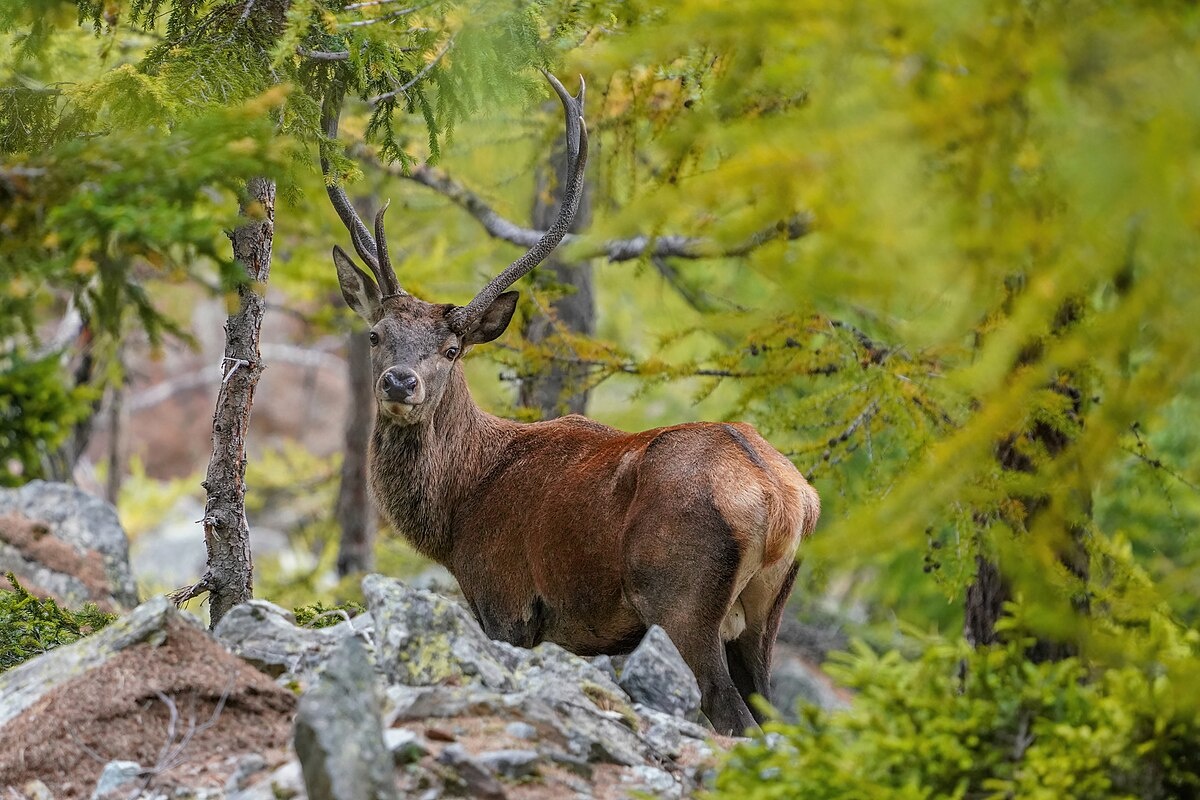
Red deer (Cervus elaphus) are the fourth-largest deer species after moose, elk, and sambar deer. There are very similar to elk (Cervus canadensis)but are different — although closely related — species. They can interbreed and produce fertile offspring but they are considered distinct species due to genetic evidence. Elk are native to North America, while red deer are found in Europe, Asia, and parts of North America.
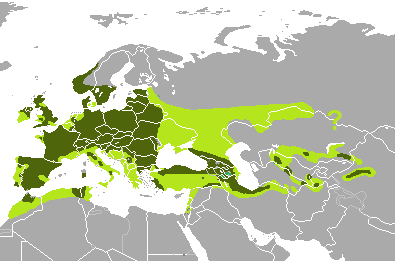
Red deer were once found throughout much of Eurasia and into northern Africa. Their traditional range extended from 65 degrees N in Norway to 33 degrees N in Africa. Extensive hunting and habitat destruction have reduced their populations to a portion of their former range. They are are now confined mostly to protected areas and less populated regions in most of Europe, the Caucasus Mountains area, Turkey, Iran, and parts of western Asia. They also inhabit the Atlas Mountains of Northern Africa; making them the only deer species in Africa. Red deer have been introduced to Ireland, Australia, New Zealand, the United States, Canada, Chile. Argentina, Uruguay and Peru. [Source: Wikipedia, Rachel Lesley Senseman, Animal Diversity Web (ADW) |=|]
Male red deer are called stags or harts; females are called does or hinds. Red deer live in temperate areas and colder areas in northern Europe and Russia with a climate similar to that of the northern U.S. and Canada, in taiga, forest and mountains and sometimes in savannas, grasslands, suburbs, agricultural areas and areas near rivers and streams. They prefer open woodlands and avoid dense unbroken forests and are often found in coniferous swamps, clear cut forested areas, aspen-hardwood forests, and coniferous-hardwood forests. They are found through a wide range of elevations, typically from sea level to 3000 meters (9843 feet), although they can also occur at higher elevations.
Red deer also important sources of prey during parts some large predators such as brown bears and wolves. Calves may fall victim to lynx or foxes. Healthy adults are rarely preyed on. Red deer protect themselves from predators through their herding behavior and large size. They may also use their antlers (males) and sharp hooves to protect themselves. For protection against wolves, animals like deer and elk group together, seeking safety in numbers. |=|
RELATED ARTICLES:
ELK: CHARACTERISTICS, BEHAVIOR AND REPRODUCTION factsanddetails.com
DEER (CERVIDS): CHARACTERISTICS, ANTLERS, HISTORY, ECOSYSTEM ROLE, HUMANS factsanddetails.com ;
DEER (CERVID) BEHAVIOR, FEEDING AND REPRODUCTION factsanddetails.com
ROE DEER: SPECIES, CHARACTERISTICS, BEHAVIOR AND REPRODUCTION factsanddetails.com
SIKA DEER: CHARACTERISTICS, BEHAVIOR, SUBSPECIES factsanddetails.com
MUSK DEER: CHARACTERISTICS, BEHAVIOR, PERFUME, MEDICINE, FARMS factsanddetails.com ;
DEER ATTACKS factsanddetails.com
REINDEER AND CARIBOU: CHARACTERISTICS, FEEDING, CONSERVATION factsanddetails.com
REINDEER AND CARIBOU BEHAVIOR: MIGRATIONS, REPRODUCTION, PREDATORS factsanddetails.com
REINDEER AND PEOPLE factsanddetails.com
MOOSE (ELK): CHARACTERISTICS, SIZE, HABITAT, SUBSPECIES factsanddetails.com
MOOSE (ELK) BEHAVIOR: FEEDING, REPRODUCTION, PREDATORS, DRUNKENESS factsanddetails.com
MOOSE (ELK) AND HUMANS: ATTACKS, RAMPAGES, CAR CRASH TESTS factsanddetails.com
Red Deer Characteristics
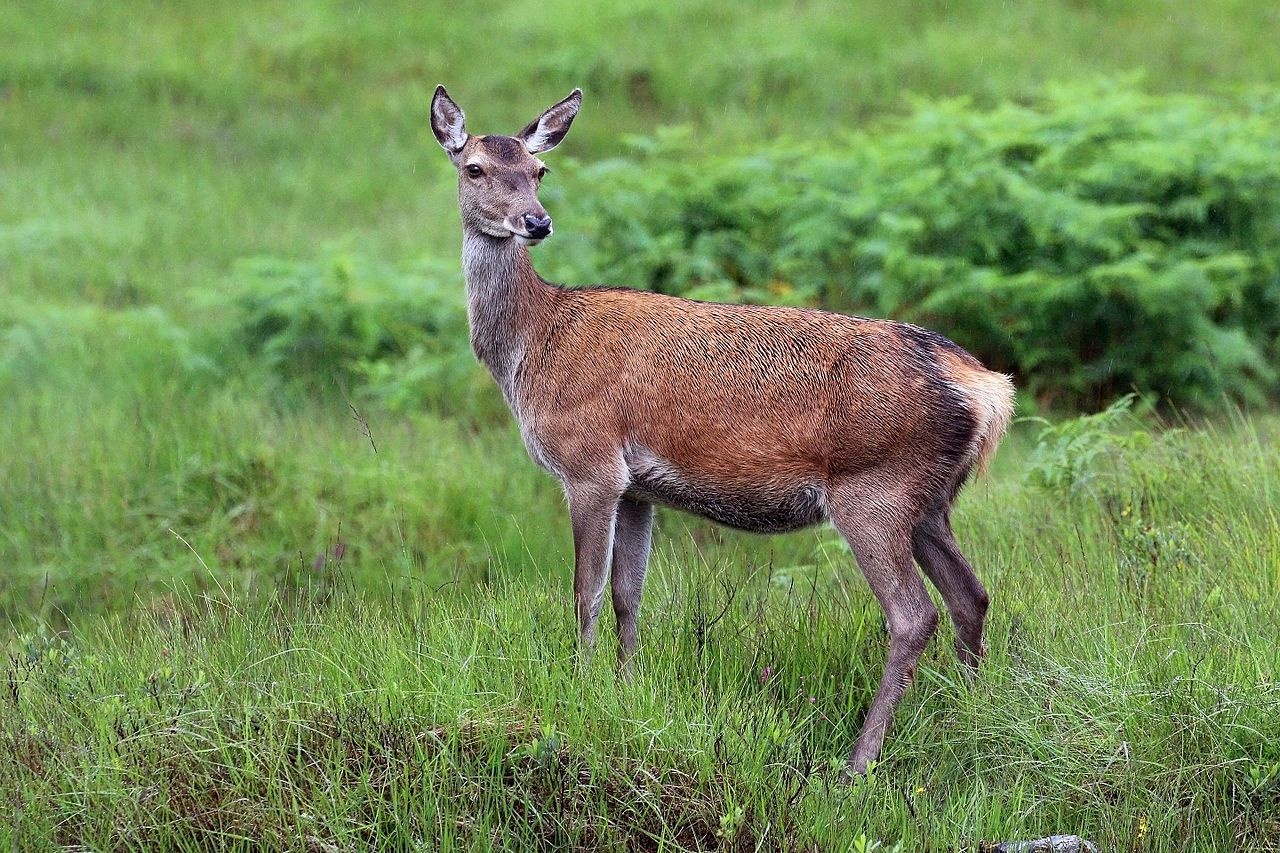
Red deer have thick bodies, short tails and long slender legs. They range in weight from 120 to 240 kilograms (260 to 530 pounds). They stand .95 to 1.3 meters (3.1 to 4.25 feet) at the shoulder and have a head and body length of 1.6 to 2.5 meters (5.25 to 8.2 feet). The tail is 12 to 19 centimeters (4.5 to 7.5 inches) long. Their average basal metabolic rate is 112.43 watts. [Source: Wikipedia, Rachel Lesley Senseman, Animal Diversity Web (ADW) |=|]
Sexual Dimorphism (differences between males and females) is present: Males are larger than females. Ornamentation is different. Only males have antlers. Most males are 10 percent longer than females and may weigh twice as much. Males typically have a head and body length of 1.75 to 2.5 meters (5.7 to 8.2 feet) and weigh 160 to 240 kilograms (350 to 530 pounds); females have a head and body length of 1.6 to 2.1 meters (5.25 to to 6.9 feet) and often weigh 120 to 170 kilograms (260 to 370 pounds)
Red deer range in color from dark brown in winter to tan in summer and have a characteristic buff colored rump. The head, neck, belly, and legs are darker than both the back and sides. Red deer generally have a long head with large ears and widely branching antlers as long as 1.1 to 1.5 meters (3.5 to 5 feet) from tip to tip. A dark shaggy mane hangs from the neck to the chest.
The lifespan red deer is difficult to assess as most populations are affected by hunting but they can live beyond 20 years. Their average lifespan in captivity is 24.7 years.
Red Deer Antlers and Seasonal Changes
David Attenborough wrote: “During the winter, a red deer stag is without any encumbering headgear as he searches the meager vegetation for food. This is no time to be carrying unnecessary strength-sapping weight. But as spring comes and sunmer follows, so the stags become better fed and have energy to spare. A pair of bumps appears on their forehead. These grow rapidly upwards, nourished by blood vessels in the skin that covers them. The pillars begin to branch. The older and bigger the individual, the more branches his antlers will develop. Swift though growth is, it nonetheless takes four to five months before antlers are fully developed. [Source: “Life of Mammals” by David Attenborough]
Then the skin that covers them begins to split and shrivel until it hangs in tatters from the new white bone of the antlers, often staining them red with blood. The newly crowned mares then clean their antlers by knocking them agamid trees or thrashing them on the ground, preparing them for display and, if necessary, battle.
The contests between male deer are just as ritualized as those between antelopes and the size of antlers is just as influential in the eyes of both males and females. But then, after the jousts of autumn, their function is over for the year. They weaken around their base and drop off. In American species, this happens in early winter, but in Europe deer may well keep their antlers throughout the winter and beyond, so that within a few weeks of shedding them in spring, they start growing them again.
Red Deer Food, Drunkeness and Eating Behavior
Red deer are herbivores (eat plants or plants parts) and are also recognized as folivores (eat leaves). Among the plant foods they eat are leaves, roots, tubers, wood, bark, stems, bryophytes (mosses) and lichens. They also eat fungus. Red deer are browsers feeding mainly on grasses, sedges, and forbs in summer and woody growth (cedar, wintergreen, eastern hemlock, sumac, jack pine, red maple, staghorn, and basswood) in the winter months. Favorites of the red deer include dandelions, aster, hawkweed, violets, clover, and the occasional mushroom. Red deer are important in shaping the plant communities in which they live through their browsing. [Source: Rachel Lesley Senseman, Animal Diversity Web (ADW) |=|]
Red deer are ruminants. Ruminants chew a cud and have unique stomachs with four sections. They do no digest food as we do, with enzymes in the stomach breaking down the food into proteins, carbohydrates and fats that are absorbed in the intestines. Instead plant compounds are broken down into usable compounds by fermentation, mostly with bacteria transmitted from mother to young.
The cub-chewing process begins when an animal half chews its food (mostly grass) just enough to swallow it. The food goes into the first stomach called the rumen, where the food is softened with special liquids and the cellulose in the plant material is broken down by bacteria and protozoa. After several hours, the half-digested plant material is separated into lumps by a muscular pouch alongside the rumen. Each lump, or cud, is regurgitated. When the food is swallowed for the second time it by passes through the first two chambers and arrives at the third chamber, the "true" stomach, where it is digested.
As the chewed food moves through this chamber microbes multiply and produce fatty acids that provide energy and use nitrogen in the food to synthesize protein that eventually becomes amino acids. Vitamins, amino acids and nutrients created through chemical recombination then move in the intestine and pass through linings in the gut into the bloodstream.
Red deer get drunk. After an red deer in Sweden got drunk in fermented berries and attacked a woman, a Norwegian said: “Some red deers get very calm, but others very aggressive...just like humans.”
Earthweek reported in November 2006:“a drunken red deer in western Sweden has been terrifying children at a school where the animal gets high on a daily dose of fermented apples. The Dagen Nyheter newspaper reports the animal has become addicted to alcohol it gets from the rotting fruit of a tree on the school ground. Once the red deer becomes sufficiently buzzed, the newspaper says it lies down for a snooze in defensive position in front of the tree, waking up and charging anyone who comes near.” So far police have been unable to chase the creature away. [Source: Earthweek, December 2006]
Red Deer Behavior
Red deer are cursorial (with limbs adapted to running), terricolous (live on the ground), crepuscular (active at dawn and dusk), motile (move around as opposed to being stationary), migratory (make seasonal movements between regions, such as between breeding and wintering grounds), territorial (defend an area within the home range) and social (associates with others of its species; forms social groups). Red deer have a home range of about 1,554 square kilometers (600 square miles). [Source: Rachel Lesley Senseman, Animal Diversity Web (ADW) |=|]
Red deer are social animals; They travel in herds and migrate from highland feeding areas in the summer to valleys and woodlands in the winter. Summer herds can have as many as 400 individuals. Females form matriarchal herds led by a dominant female. Males associate in smaller bands that are separate from females except during the during fall season.
As the fall mating season approaches, bulls form harems, which they defend with their large size and aggressive nature. In spring, the sexes separate; females leave to give birth, while bulls form their own separate summer herds. After birth, cows and their calves form nursery groups until calves are ready to join the herd. Bulls are only territorial during the mating season and are otherwise not aggressive toward other red deer. |=|
Red deer browse in the early morning and late evening. They are inactive during the day and the middle of the night, when they spend most of their time chewing their cud. They sense and communicate with vision, touch, sound and chemicals usually detected by smelling. Red deer have keen senses of smell, hearing, and vision. Red deer are known as the noisiest of all cervids. Newborns bleat and squeal, females bark, grunt and squeal, and males are known for their characteristic low pitched bellow or roar, known as bugling. Bugling is used to attract mates and advertise territories during the fall rutting season and can be heard for long distances. |=|
Red Deer Mating, Fighting and Reproduction
Red deer are polygynous (males have more than one female as a mate at one time) and engage in seasonal breeding. Breeding occurs each year when nutrition is adequate, usually in late September or early October. The gestation period ranges from eight to 8.7 months. The number of offspring is usually one or two, sometimes three. [Source: Rachel Lesley Senseman, Animal Diversity Web (ADW) |=|]
Shortly before the fall rut (mating season), male red deer lose the velvet on their antlers and begin to compete for access to females. Dominant males are able to maintain larger harems of females and restrict access to them. Harems are usually made up of one bull and six females with their yearling calves and are seasonal. They defend a kind of "moving territory" around the harem. Males advertise their status, claim their harems and territory and attract females through bugling — loud, bellowing roars — sometimes 3,000 a day. Their defensive calls also attract uncommited females who interpret the call as invitations to join the herd and bringng them into heat.
During the rutting season, males challenge one another with "bugle calls" that begin with a high-pitched trumpet noise and descend down the scale to a loud roar. The contests are part display and part physical confrontation. The males roar and bellow, thrash their antlers against bushes and trees and walk parallel to one another, as they size each other up. When they face off they begin about six meters (20 feet) apart and charge and crash antlers together. They often lock antlers and push and shove and twist their heads. Bellowing with rage they continue battling unto one bull backs off. The winner claims the female herd. The loser is generally not seriously hurt but fights between dominant males and intruders can be intense and result in injury, exhaustion, or death.
Red Deer Offspring and Parenting
Female red deer usually give birth in May to one or two, very rarely three, spotted calves. Young are precocial. This means they are relatively well-developed when born. Females nurse and protect their young through their first year of life. Male red deer are not involved in the care of their young. Pre-weaning provisioning and protecting are done by females. Pre-independence protection is provided by females.
At birth, calves weigh around 15 to 16 kilograms and have creamy spots on their back and sides. Their hooves are soft. Just after birth, a cow and her calf will live alone for several weeks. Female red deer protect their calves by hiding them in a secluded area during their first few weeks of life. At 16 days the calf is able to join the herd.
All red deer calves are born spotted, as is common with many deer species, and lose their spots by the end of summer. However, as in many species of Old World deer, some adults do retain a few spots on the backs of their summer coats. The average weaning age is two months. On average females and males reach sexual or reproductive maturity at 16 months although young males do not usually mate until they are a few year old and can compete with more mature males.
Red Deer, Humans and Conservation
Red deer are not endangered. They are designated as a species of least concern on the International Union for Conservation of Nature (IUCN) Red List and have no special status on according to the Convention on International Trade in Endangered Species (CITES). [Source: Rachel Lesley Senseman, Animal Diversity Web (ADW) |=|]
Red deer have traditionally been valued as a food source and for their fur, teeth, hides, and antlers. Today red deer are they are mainly valued for ecotourism, hunting, and their antlers which are are widely used in Japanese and Korean medicine. Red deer are regarded as pests by many farmers. Overbrowsing can damage fruit and nut trees and agricultural crops. Red deer also may spread diseases to livestock, such as bovine tuberculosis and meningeal worms. |=|
Red deer have no special conservation status, but excessive hunting and habitat modification have lead to declines in their distribution and populations in some places. Recently, conservation measures by private groups and governments have led to large increases in red deer populations. Red deer are generally subject to limited, legal sport hunting and are farmed for meat and antlers.
Red Deer in New Zealand
Red deer in New Zealand were once considered the worst of all the introduced animals because they breed quickly and are big animals that adapt to almost any environment and can destroy a lot of vegetation. [Source: T.H. Clutton-Brock, National Geographic, October 1986]
To control the deer, they were hunted by helicopter, with teams often bagging 120 animals a day. The strategy worked. Between 1968 and 1978, the red deer population was reduced by 70 percent. Now they are raised on farms for venison, most of which is purchased by Germany, and antlers, which are consumed as medicine in Asian places such as South Korea and Hong Kong.
In 1997, more than US$45 millions worth of deer velvet (the name for deer antlers) from New Zealand deer farm was sold to Asia, most of it to South Korea, where red deer antlers are prized for their fuzzy, velvety texture. To "harvest" the antlers, the deer are tranquilized and the antlers are sawed off with a meat saw and then frozen. To "process" them, they are cooked for two days in a stainless steel vat which has a special vent so a technician can monitor their progress by smell.
"Good antlers smell like peanuts," one technician told National Geographic. The price of the finished product is US$350 a kilogram. In Korea slices of the antlers are mixed with herbs to make a thick broth which is taken to cure a host of ailments. Scientists are currently studying the antlers to see if they if they might in fact contain healing substances. Sometimes wild deer are caught for breeding stock. This is done with a special high-powered rifle that shoots a net which entangles the deer.
Image Sources: Wikimedia Commons
Text Sources: Animal Diversity Web animaldiversity.org ; National Geographic, Live Science, Natural History magazine, CNTO (China National Tourism Administration) David Attenborough books, New York Times, Washington Post, Los Angeles Times, Smithsonian magazine, Discover magazine, The New Yorker, Time, BBC, CNN, Reuters, Associated Press, AFP, Lonely Planet Guides, Wikipedia, The Guardian, Top Secret Animal Attack Files website and various books and other publications.
Last updated May 2025