
CHILD PROSTITUTION IN THE PHILIPPINES
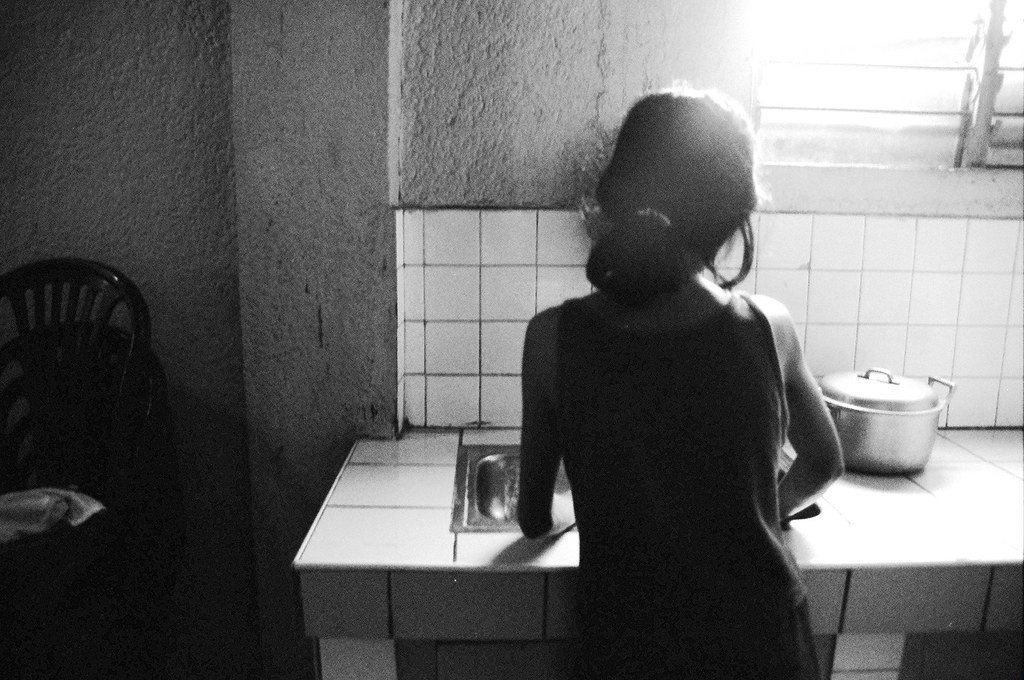
Child prostitution is a problem in the Philippines. By some estimates over 100,000 children work as prostitutes in the Philippines. Many local men who use child prostitutes are under the assumption that their young age will make them less likely to be carrying the AIDS virus but the truth is in some cases they are more likely to have it, because their soft tissue is more likely to bleed and thus pick up sexually transmitted diseases. One member of a group of children aged 9 to 14 told the Japan Times, “Three of them are still virgins, but if you pay them, they will perform oral sex or help you out with their hands.”
While much attention has been focused on pedophiles who come from the United States, Germany, Australia and Japan to Thailand and the Philippines to have sex with children, including young boys, most of the clients for child prostitutes are not foreigners. A policeman dressed in a bee costume at a children's birthday party arrested the father of the boy having the party for rape.
Few children enter the prostitution trade on their own free will. Some are runaways or victims of abuse. Other are sold by their parents, who are enticed by gifts such as electric fans or a television. Some are street children who do it to survive. They are often freelancers who have no regular place to live and operate on the streets rather than at a brothel or bar.
The Reverend Shay Cullen, a Irish Catholic priest in Olongapo, who has devoted his life to helping victims of child prostitution, told the New York Times, "These children, 95 percent of them are poor. They live in slummy areas. They've been abused in the home—you only find that out later, though—abused by a neighbor. They run away from home with a friend. They're on the street, looking for a job. And a pimp recruiter finds them."
One policeman whose beat is the red light district in Cebu told the Japan Times, “The girls who work the brothels are not locals. They come from other provinces...The girls are usually lured into the trade believing that they can find a decent job in the city.” The policeman said that new arrivals are repeatedly raped until their resistance to performing sex with strangers is broken down. When they realize it is difficult for them to escape the convince themselves that what they are doing is only a job.
RELATED ARTICLES:
PROSTITUTION IN THE PHILIPPINES factsanddetails.com
SEX CRIMES IN THE PHILIPPINES factsanddetails.com
SEX IN THE PHILIPPINES: HISTORY, INFLUENCES, STORIES factsanddetails.com
BIRTH CONTROL IN THE PHILIPPINES: CONTRACEPTIVES, CATHOLICS, REPRODUCTIVE HEALTH LAW factsanddetails.com
MARRIAGE IN THE PHILIPPINES factsanddetails.com
COURTSHIP, DATING AND LOVE IN THE PHILIPPINES factsanddetails.com
DIVORCE IN THE PHILIPPINES: BAN, LAWS, ANNULMENTS, IMPACTS factsanddetails.com
SEXUAL PRACTICES IN THE PHILIPPINES: AFFAIRS, ADOLESCENCE, ORAL SEX factsanddetails.com
LGBTQ, HOMOSEXUALITY AND TRANSGENDER IN THE PHILIPPINES factsanddetails.com
SEX EDUCATION, PORNOGRAPHY, COUNSELING AND SEX RESEARCH IN THE PHILIPPINES factsanddetails.com
APPEARANCE IN THE PHILIPPINES: BEAUTY, HYGIENE, TATTOOS factsanddetails.com
Stories of Child Prostitutes
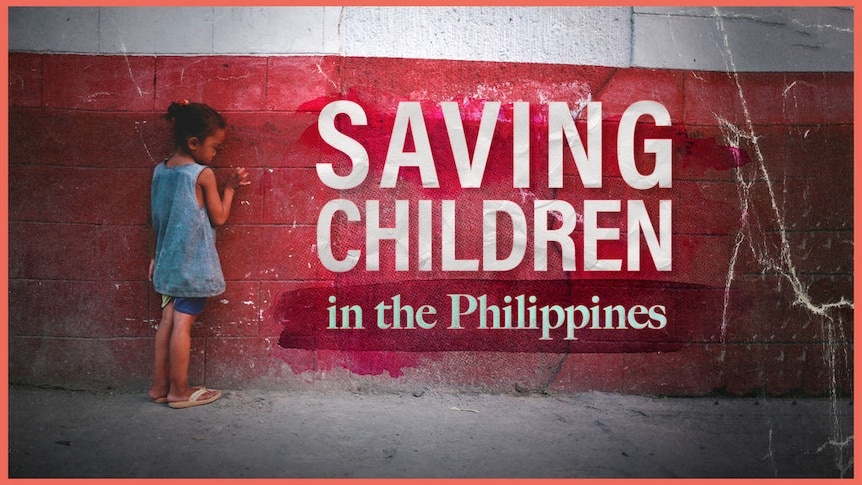
Many of the child prostitutes have horrible stories to tell. Some were raped by their fathers and beaten by their mothers. Other gave birth to children of men who raped them. One young girl, who had been sent to work for a puppet maker who raped her, told Newsweek she ran away and lived on the streets when she was 14. "When I got hungry, I started to take customers.” At the age of 16 she entered a Manila shelter that gave her counseling and got her back in school.
One girl who became a prostitute told the New York Times, " When I was 11 years old my stepfather raped me. My mother did not believe me." She ran way from home. "I met a girl from Germany. She took me to Germany for two months. Actually it was trafficking in children. I was sexually abused there. Then I came back here. I told myself nobody loved me, nobody cared for me. So I became a prostitute in Manila." With the help of a local foundation she was placed in a Roman Catholic high school.
A 16-year-old who lived on the streets of Manila told the Japan Times, “Sometimes I did it for 500 pesos (about $10). Sometimes for 1,000 pesos...We do it in the car, in the park, in the toilet...Anywhere the customer wants...When I feel terrible I take “shabu” [amphetamines] or glue, or whatever I can get my hands on.” A young boy told the Japan Times, “I sold myself to men for a year trying to make ends meet for my family. It was easy money, and nobody in may family had a job.”
Combating Child Prostitution
Dr. Jose Florante J. Leyson wrote in the Encyclopedia of Sexuality: Reacting to the increase in cases of child sexual abuse reported in the media, law enforcement agencies and the courts have started taking this situation seriously. Sexual exploitation of minors is more frequent in the cities, in the form of child prostitution, child pornography, and sex tourism. The clients and supporters of child prostitutes and those who produce, sell, or transmit pornography involving minors risk heavy fines and imprisonment. Crimes of sex tourism are difficult to prosecute because they originate or transpire outside the geographic borders and legal jurisdiction of the Philippines. There is, however, an organization, Hand Extending Love to the Philippines (H.E.L.P.), based in Phoenix, Arizona, USA, whose primary mission is to help sexually abused Filipino children, provide counseling for pedophiliacs, and prevent teenage pregnancy. [Source: Jose Florante J. Leyson, M.D., Encyclopedia of Sexuality, 2001 |~|]
A 1992 law outlawed child prostitution, child trafficking and obscene publications and shows with children. It also prohibited minors from being in hotel room with an unrelated adult and required the government to create a program to protect children against commercial sexual exploitation.
A 44-year-old Briton convicted for the second time of abusing two underage boys was sentenced to 17 years in a Filipino jail. A Dutch man, who was arrested in Manila in January 1996 for having sex with 9-year-old and 14-year-old Filipina girls, and video taped them with a German friend, was charged in the Netherlands for having sex with children and given a prison sentence of two years.
A variety of social organizations and church groups have been set up for former sex workers, particularly children. They provide counseling to help the children get over the trauma they experienced and develop marketable skills so they can make a living doing something else. But Despite government programs to try to eradicate child prostitution, it continues to thrive. There been reports of pedophilia in Pagsanjan town.
Child Porn Operation Raided in Philippine School
In February 2014, government agents raided an Internet child porn operation based in a Philippine school and arrested its president and eight other people. Teresa Cerojano of Associated Press wrote: “The suspects used a room at the Mountaintop Christian Academy to post online images and video of children and adults for foreign consumption, said Ronald Aguto, cybercrime investigation head in the National Bureau of Investigation. Authorities were still investigating, but Aguto said it didn't appear that children at the school were being abused and that the operators were uploading pre-recorded images and video stored.[Source: Teresa Cerojano,, Associated Press, February 19, 2014 ==]
“The school had 2000 elementary and high school students, Aguto added. Its licence was revoked in 2006 for unknown reasons but it had remained open. Puring Martinez, the arrested president and owner of the private school, told GMA television network she rented out the room to the Internet site operators to augment the income of the school because fees paid by students were not enough to cover costs. She said she was aware that the Internet links sold can only be opened by a foreigner who will use his card and that the links lead to "naughty" materials. ==
“Martinez' son, Tom, said the school had only 260 preschool, elementary and high school pupils, and that their permit to operate was valid. It was not clear why there was a discrepancy with the NBI information. He said the Internet operation was owned by an American from Tennessee, who rented two rooms for 40,000 pesos ($900) in a bungalow separate from the classrooms but within the school compound. All of the suspects arrested are Filipino, and the American's whereabouts were not clear. ==
“Gilbert Sosa, director of the national police's Anti-Cybercrime Group said last month the Philippines was one of the top 10 sources of child pornography in the world, and that police have been cooperating with other countries to crack down on it. Two other Internet porn operations in Quezon city were raided. At least 22 people were arrested in those two raids and more than two dozen computers seized. ==
"It was like a computer lab inside the school," Aguto said in a telephone interview. "Even during daytime, when the pupils were there, they were using it for this kind of offense." He said the site operators worked day and night, chatting online with clients and pretending to be women or girls depending on what the client wanted. They would then upload pictures and pre-recorded video of a nude girl or woman they claim to be.” ==
In January 2014, “Britain's National Crime Agency said child abuse investigators in Britain, the US and Australia had dismantled an organised crime group that streamed footage of child sexual abuse. The ring abused impoverished children as young as six, the agency said. Authorities made 29 arrests, including 11 people in the Philippines who had facilitated the crime. Some were members of the children's families.” ==
Globalization and Child Exploitation in the Philippines
The Philippine Daily Inquirer reported: “Online child pornography in the Philippines is a perverse twist on globalization: consumption patterns in the developed world (say, in the United Kingdom or Australia) drive demand for live online “shows,” recorded video or still photographs featuring the sexual abuse of children. To supply the demand, a virtual cottage industry of cybersex “studios” now do business in Angeles, Cebu, Cagayan de Oro and Metro Manila, among other fleshpots. Often, the Philippine National Police says, it's the parents of the children themselves who serve as the middlemen in the supply chain. [Source: Philippine Daily Inquirer/Asia News Network, January 21, 2014 \=]
“We feel ourage reading about parents pimping their own children, or learning that as many as 100,000 Filipino children may have been sexually exploited for online child pornography in the last several years. “Fathers and mothers would bring their children here to show, and would get paid by the owner of the house,” a police officer in Cebu said. Fr. Shay Cullen, who has spent a lifetime fighting sexual exploitation in Olongapo City, told the BBC the same thing: “There's a huge growing demand and there's a growing supply.” \=\
“The shape of that illicit and immoral market became more visible when the United Kingdom's so-called Operation Endeavor, an international inquiry involving some 12 countries, led to the arrest of 17 Britons in various parts of the world, and the rescue of 15 children between six and 15 years old in Angeles City. A parallel effort by the Australian Federal Police led to the arrest of three Australians. “Extreme poverty, the increasing availability of high-speed Internet and the existence of a vast and comparatively wealthy overseas customer base [have] led to organized crime groups exploiting children for financial gain,” the United Kingdom's National Crime Agency reported. \=\
Online Child Pornography a ‘Cottage Industry’ in the Philippines
In January 2014, the chief of the Philippine National Police’s (PNP) Anti-Cybercrime Group (ACG) said online child pornography has become a “cottage industry” that flourishes in more than 30 provinces in the country, “It’s a serious problem that we have to stop,” Sr. Supt. Gilbert Sosa, ACG director, told a press briefing. [Source: Anthony Vargas, Manila Times, January 17, 2014 /]
Anthony Vargas wrote in the Manila Times, “Police in the Philippines, Britain and Australia reported busting a pedophile ring, which streamed live sexual abuse of Filipino children over the Internet. The joint effort, named Operation Endeavor, covered a dozen nations and led to the arrest of 29 people, including 11 in the Philippines. “It has become a cottage industry,” Sosa said of child pornography over the Internet. /
“He said the Philippines is among the top 10 countries identified by a Virtual Global Task Force as producers of online child pornography. The task force is composed of Americans, British and Australian law enforcers. Sosa said the Philippines provides child-pornography materials such as videos and photographs which are shown to customers in the US and Europe. He showed a real-time map of the Philippines dotted with small green pins representing the sources of online pornographic materials. “One pin represents one location and it will show you how much traffic is coming from that location,” Sosa said. One location transmitted more than 31 pornographic materials, while another had 57, he said. The heaviest concentrations of pins were in Metro Manila, Cebu and Cagayan de Oro City. “The PNP-ACG has investigated the existence of child pornography in 18 provinces of Luzon, six in the Visayas and seven in Mindanao,” Sosa said. /
“Online child pornography proliferates especially in rural areas where poverty is prevalent. “This is due to economic reasons . . . there are cases that it was the child’s parents who will facilitate it and the age ranges from 10 to 14,” Sosa said. The parents earn as much as P1,000 per session, he added. The sex-web ring charges its subscribers as much as $100 a month. Sosa said the victims can be as young as 12. On October 29, 2012 authorities rescued 11 minors, mostly boys and arrested 11 suspects in Angeles City, he said. /
The US, Britain and Australia provided information to Philippine police on the source of the pornographic materials, Sosa said. More than 100 non-government organizations are helping the police track down the providers of online pornography materials, Sosa said. He said they found out that a child were not aware they were being victimized and abused by their own parents. “The shooting, the video, photo-session and transmittal are very fast and they [child] don’t have any inkling they were already being abused . . . the payment is usually received by the parents,” Sosa said. /
“Some of the cybersex dens they raided in the past months were located in depressed areas. “Houses in slum areas that have Internet connections, these are the tell-tale signs,” he said. Suspects arrested in previous operations against cybersex dens included foreigners married to Filipinas, Sosa said. The crackdown on online child pornography is hamstrung by the Supreme Court’s temporary restraining order on the implementation of the Anti-Cybercrime Prevention Act of 2012 (RA 10175), he said.“Telecommunication companies also have a big part in the campaign . . . but with the TRO, there’s no legal basis for them to comply when it’s needed,” Sosa said. Under the RA 10175, telecommunication companies must preserve their log of Internet transmissions for at least six months, which Sosa said is vital in tracking the source of pornographic materials. /
Pedophile Cases Involving the Philippines
Several international cases have highlighted the exploitation of Filipino children by foreign offenders, often facilitated through online platforms and travel.
In 2022, British national Mark Page was sentenced to 12 years in prison after being found guilty of arranging sexual abuse of Filipino children. He used online profiles and video calls to contact minors and attempted to pay for sexual acts, with a judge describing his actions as extremely depraved. [Source: Bryan Ke, NextShark, March 16, 202])
Another British man, Graeme Wilson, received a three-year sentence for paying to watch livestreamed abuse of Filipino children aged 13 to 16. Investigators found he actively directed the abuse through online platforms and payments. [Source: Rebecca Moon, NextShark, July 9, 2022]
In the United States, Robert Ruben Ornelas, a former teacher, was sentenced to 190 years in prison in 2017. He had traveled repeatedly to the Philippines, abused young girls—some as young as eight—and recorded the crimes. [Source: Robert Ornelas, Los Angeles Times, February 26, 2017]
Image Sources: Wikimedia Commons
Text Sources: “Encyclopedia of World Cultures Volume 5: East/Southeast Asia:” edited by Paul Hockings, 1993; “Culture Shock!: Philippines” by Alfredo Roces and Grace Roces, Marshall Cavendish International, 2010; Metropolitan Museum of Art; National Geographic, Live Science, Philippines Department of Tourism, New York Times, Washington Post, Los Angeles Times, Smithsonian magazine, Encyclopedia.com, Library of Congress, The Conversation, The New Yorker, Time, BBC, CNN, Reuters, Associated Press, AFP, Lonely Planet Guides, Google AI, Wikipedia, The Guardian and various websites, books and other publications.
Last updated March 2026