
AGTA
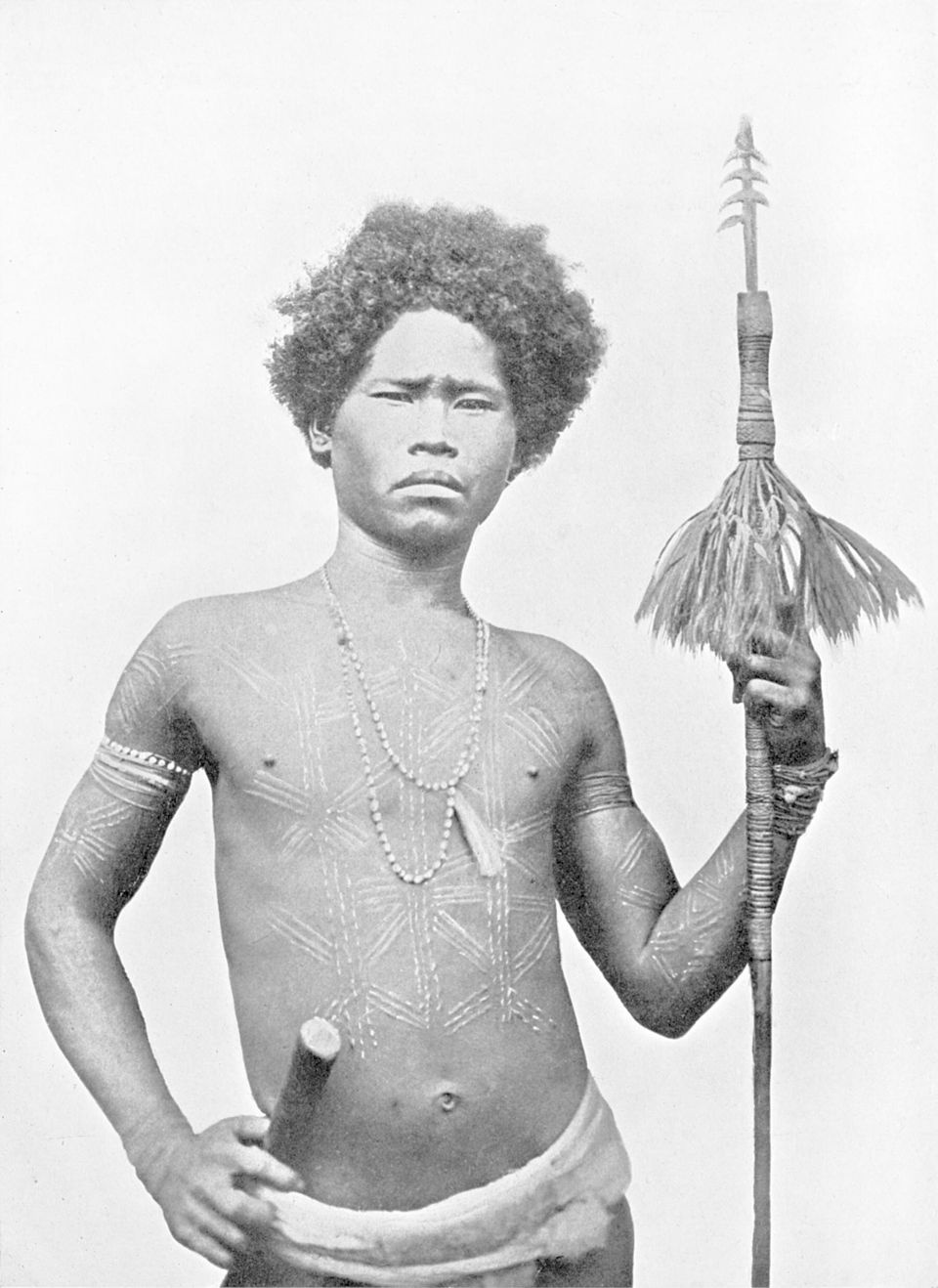
The Agta are a group of Negritos that live in a widely scattered areas of eastern Luzon. Also known as the Alta, Arta, Baluga, Dumagat, Negritos, and Pugut, they have traditionally been hunters and gatherers and live along the eastern coast of Luzon in Cagayan, Isabela, Aurora, Quirino, Quezon, Camarines Norte, and Camarines Sur provinces, between 14° and 19° N and 121° and 123° E. [Source: Thomas N. Headland, “Encyclopedia of World Cultures Volume 5: East/Southeast Asia:” edited by Paul Hockings, 1993]
They areas were they live were once 90 percent covered by dipterocarp tropical lowland forest. These areas have now largely been deforested. By the 1980s, only about 40 percent of the area was covered by primary forest, while another 20 percent was covered by secondary forest. The remaining area was grassland (13 percent), brushland (11 percent), or farmland (16 percent). The recent acceleration of deforestation is the result of commercial logging and an influx of colonist farmers from other areas of Luzon. The area is classified as a true rainforest with an average annual rainfall ranging from 361.8 centimeters in the deforested flatlands to 712.5 centimeters in the mountainous forests. The mean annual temperature is 26°C, and the mean relative humidity is 87%. There is no pronounced dry season. ~
The number of Agta gas dropped while the numbers of non-Agta in the area have risen sharply. In 1900, the 700-square-kilometer Casiguran area of northern Aurora Province was home to about 1,000 Casiguran Agta and 2,067 non-Agta farmers. By 1984, the Agta population had dropped sharply to just 609, while the non-Agta population had grown to about 35,000. The Agta have traditionally had a high fertility rate. Women have traditionally given birth to six or more children. Agta population declines have been attributed mostly to disease, with tuberculosis being the No. 1 killer, followed by pneumonia and gastrointestinal illnesses and leprosy. They also suffer from malnutrition, malaria, intestinal parasites, alcoholism and unsanitary living conditions. They have had a high homicide rate: in the 1980s 21 percent of all adult males died from murder. This is one of the highest rates of any group ever recorded. Suicide is rare. About 12 percent of women die from complications related to childbirth.
In the 1990s the Agta were divided into eight ethnolinguistic groups, numbering in total about 7,000 people. According to the Christian group Joshua Project there were 2,000 Dupaninan Agta, an unknown number of Alabat Island Agta, 1,400 Katubung Agta and 3,700 Mt. Iriga Agta in the early 2020s.
The Agta speak eight distinct languages. They are Austronesian languages like those of their neighbors but they are regarded as separate and distinct languages that are unintelligible to non-Agta.
RELATED ARTICLES:
NEGRITOS OF THE PHILIPPINES: HISTORY, GROUPS, CULTURE factsanddetails.com
AETA PEOPLE OF THE PHILIPPINES: RELIGION, LIFE, HUNTING, HEALTH factsanddetails.com
TASADAY OF THE PHILIPPINES: STONE-AGE TRIBE, A HOAX, OR SOMEWHERE BETWEEN factsanddetails.com
SEMANG (NEGRITOS) AND ORANG ASLI OF MALAYSIA factsanddetails.com
See Sakai Under MINORITIES AND HILL TRIBES IN THAILAND factsanddetails.com
VEDDAS: THEIR HISTORY, LIFESTYLE factsanddetails.com
TRIBES OF THE ANDAMAN AND NICOBAR ISLANDS factsanddetails.com
LIFE AND CULTURE OF THE ANDAMAN AND NICOBAR ISLAND TRIBES factsanddetails.com
ETHNIC GROUPS AND MINORITIES IN THE PHILIPPINES factsanddetails.com
MAIN ETHNIC GROUPS OF LUZON: TAGALOGS, ILOCANO AND BICOL factsanddetails.com
IGOROT — CORDILLERA PEOPLE OF NORTHERN LUZON — GROUPS AND HISTORY factsanddetails.com
IGOROT GROUPS — KANKANAEY, ISNEG, IBALOI — AND THEIR LIFE, CUSTOMS AND CULTURE factsanddetails.com
Agta Groups and Religion
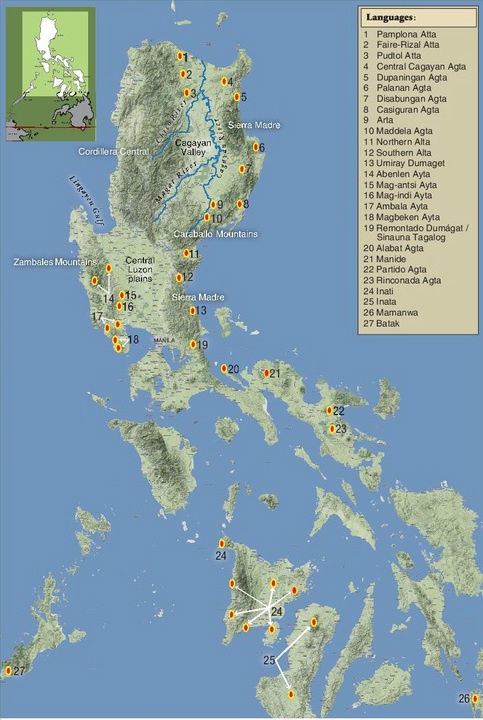
Agta Groups:
Alabat Agta (also Alabat Island Agta) – Quezon
Agta Cimarron – Camarines Sur
Manide (also Abiyan Agta or Camarines Norte Agta) – Camarines Norte, Quezon
Rinconada Agta (also Iriga Agta) – Camarines Sur
Tabangnon (also Partido Agta, Katabangan, Katubung, or Isarog Agta) – Sorsogon, Quezon, Camarines Sur
Dupaninan Agta – north-eastern Philippines, in the eastern part of Cagayan Province, and the north-eastern part of Isabella province
Most Agta practice traditional animist religions; some are Catholics, with some have become Protestants in recent decades. According to Joshua Project 70 percent of Mt. Iriga Agta and 5 to 10 percent of Dupaninan Agta, Katubung Agta and Alabat Island Agta are Christians, with 2 to 5 percent being Protestant Evangelicals,
The Agta believe in one high god and a multitude of supernatural spirit beings that inhabit their natural surroundings. These various beings live in trees, underground, on rocky headlands, or in caves, depending on their class. [Source: Thomas N. Headland, “Encyclopedia of World Cultures Volume 5: East/Southeast Asia:” edited by Paul Hockings, 1993; Encyclopedia of Religion, Thomson Gale, 2005]
Agta religion is not systematized or given great importance. The Agta believe in spirits that are divided into two main groups” “hayup” (creatures) and “belet” (ghosts). The former are associated with things like trees, caves and headlands. The latter are mostly associated with the wandering, restless souls of some dead. Ghosts, particularly of recently deceased loved ones, are often blamed for disease and misfortune. Ghosts are always malevolent. There are several varieties of Hayup creatures. Though nonhuman, they are bipedal and may appear in human form. Most hayup beings are evil, some are neutral, and a few can be called upon for help in curing disease.
The Agta do not worship the spirits believed to inhabit their environment; instead, they fear them and seek to avoid offending them. The Agta do not practice animal sacrifices but sometimes leave small offerings such as rice, honey or betel when they take something from the forest. The Agta fear death but not have a developed concept of the afterlife.
Agta Shaman
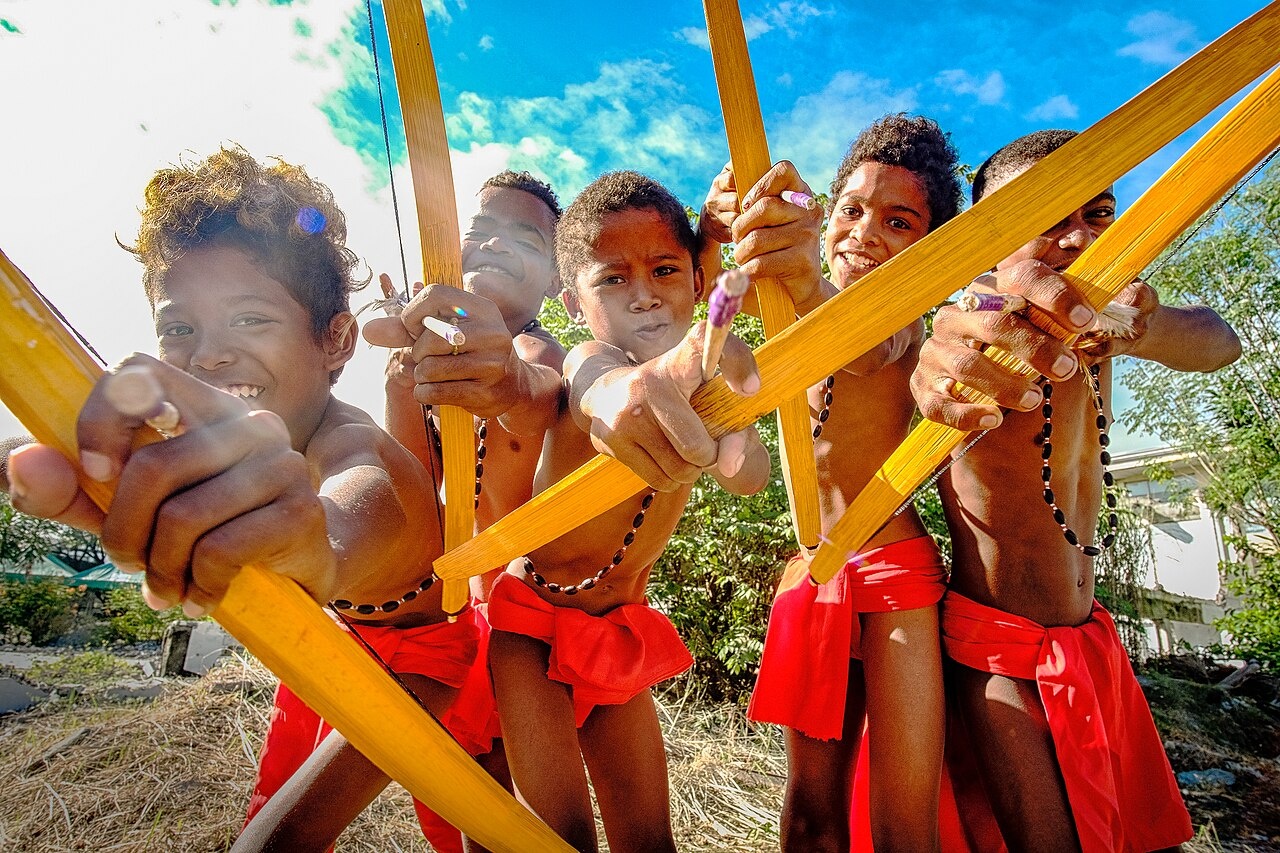
Agta shaman are involved primarily in healing and as far as is known do not practice black magic. They generally use herbs and prayers in treatments but occasionally go into trances to communicate with spirits or deceased family members as part of the healing process. A study of one Agta group found that eight percent of the adults qualified as shaman. Of these one out of five was a woman. [Source: Thomas N. Headland, “Encyclopedia of World Cultures Volume 5: East/Southeast Asia:” edited by Paul Hockings, 1993]
In Aurora Province, about eight percent of Agta adults serve as shamans, and roughly two of every ten shamans are women. Agta shamans, known as bunogen, practice only what is considered white magic. They are defined by their relationship with a familiar spirit, called bunog, which helps them diagnose and treat illness. Healing is the shaman’s primary role, and the Agta do not engage in black magic or sorcery, although they are aware that such practices exist in other Filipino societies. Treatment usually involves herbal remedies and simple prayers addressed to the shaman’s spirit companion. In more serious cases, shamans conduct séances, entering a trance while chanting prayers until they are possessed by their familiar spirits. These chants are not spoken in everyday Agta language but in a special, non-ordinary form of speech. [Source: Encyclopedia of Religion, Thomson Gale, 2005]
Agta religious practices are informal and carried out when necessary, usually on an individual rather than communal basis. Most rituals are closely connected to preventing or curing illness. The Agta show little concern for abstract religious ideas such as the afterlife, creation of the world, immortality, or the distant future, and they do not actively seek religious experiences. Instead, their religious behavior is largely driven by an ongoing fear of sickness and death. While religion is not absent from Agta life, it plays a more limited role compared to its importance in many other animistic societies.
Agta Society, Kinship and Culture
As is true with other hunter gatherers, Agta political organization is weak. There are no chiefs. Social organization revolves around the nuclear family and women and men participate equally in decision-making. Social control is also weak and individuals tend to do what they want as long as it doesn’t disrupt camp life. Conflicts are usually resolved by people moving away. [Source: Thomas N. Headland, “Encyclopedia of World Cultures Volume 5: East/Southeast Asia:” edited by Paul Hockings, 1993]
Agta have no concept of leadership and have traditionally regarded land as a free good. Kinship and personal relations are important to the Agta. Clans and lineages are not. Social organization is set up almost exclusively on kinship. The Agta language has 15 kinship terms of reference, six of which also function as terms of address, along with seven additional terms used only for address.Descent is traced bilaterally through both the mother’s and father’s sides.
Women weave many kinds of baskets and mats. Men produce many kinds of arrows. Traditional body adornment has included teeth filing and deliberate scaring of the back and sometimes the chest. The Agta produce music with singing in a three-tone scale, strumming hunting bows and using simple stringed instruments, a bamboo Jew’s harp. They have no custom of dancing.
Agta Families and Marriages
Agta marriages are monogamous and are generally outside the family but within an immediate group. Marriages to non-Agta and members of different Agta ethnolingusitic groups is rare. Couples may live with either the husband’s or the wife’s family. Marriages between close blood relatives or between affinal relatives are very rare. In northern Aurora in 1984, 17 percent of Casiguran Agta adults were married to partners from other Agta ethnolinguistic groups, while 11 percent were married to non-Agta farmers. Postmarital residence is bilocal, allowing couples to live with either the husband’s or the wife’s parents. [Source: Thomas N. Headland, “Encyclopedia of World Cultures Volume 5: East/Southeast Asia:” edited by Paul Hockings, 1993]
In the 1980s, the average Agta household consisted of 4.3 individuals, with most households (79 percent) made up of nuclear families. Smaller numbers included augmented nuclear households with an additional relative (17 percent), and only a few composite households in which two related couples share a single hearth (4 percent).
Among the Agta, newborns are warmly welcomed by the whole community. Babies are passed around, cuddled, and shown affection by many people. Children grow up receiving constant physical affection, including close contact and nurturing touch, which are seen as normal expressions of care within their culture. [Source: “Growing Up Sexually, Volume” I by D. F. Janssen, World Reference Atlas, 2004]
Divorce among the Agta is relatively uncommon, with only about 18 percent of adults having experienced it. Most divorces occur early in marriage or during an informal trial period. Separation is rare once a couple has dependent children. Household residence patterns reflect flexibility, with some couples living near the husband’s family, others near the wife’s, and a smaller number establishing independent households.
Agta Life
Many Agta still live in the forest in scattered camp groups. In the 1980s, about 60 percent of Agta clans were in the forest. The remainder were on coastal beaches, open brush land and coconut groves. Few camps are set up under tall tress because the Agta fear trees falling on them. They are usually set up camps comprised of three to seven kin related families in dry river beds or small gardens. Families rarely join camps made up of unrelated kin. The camps are moved often, generally between every two to five weeks. Studies show that camps move roughly every 18 to 29 days. [Source: Thomas N. Headland, “Encyclopedia of World Cultures Volume 5: East/Southeast Asia:” edited by Paul Hockings, 1993]
Agta used to wear a bark cloth strip which passes between the legs, and is attached to a string around the waist. Agta generally seek shelter in lean-tos or small huts with a thatch roof and no walls and sleep on the ground or on bamboo or palm wood floor about a meter off the ground and covered by thatched roofs. Side walls are usually absent. These houses are very small, averaging just 3.9 square meters of floor space, or about 1.2 square meters per person.
There is little division of labor among the sexes. Both sexes work in the gardens, collect forest products and take care of household duties. Women often accompany men on their hunting trips. The only activities that are exclusively female are weaving baskets and mats and washing clothes. The only activities that are exclusively male are spearfishing and climbing high trees to collect honey.
Agta Food, Work, Hunting and Pythons
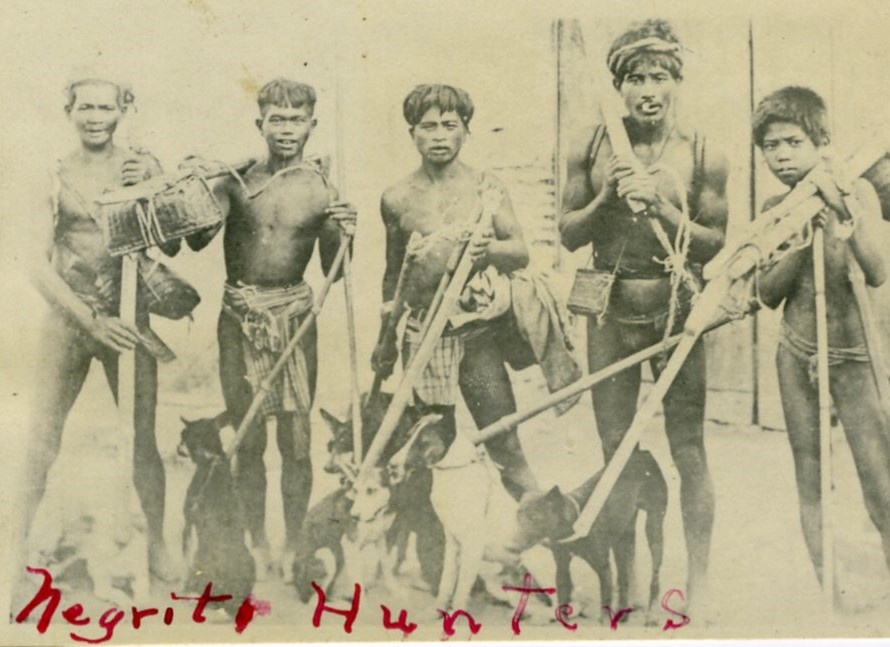
Until the 1960s, Agta men spent much of their time hunting animals such as wild, pigs, monkeys and deer with bow and arrows or borrowed homemade shotguns and Agta groups traded meat from wild animal for starchy foods. As the amounts of game and forest declined, many Agta men became laborers and farm workers. Agta farms and gardens tend to be small and don’t produce enough food to feed their owners. Their primary economic activity is collecting forest products, namely rattan, which they trade for food as they used to do with wild meat. [Source: Thomas N. Headland, “Encyclopedia of World Cultures Volume 5: East/Southeast Asia:” edited by Paul Hockings, 1993]
Although often characterized as foragers, the Agta are familiar with agriculture. Since prehistoric times they have worked seasonally in the fields of non-Agta farmers, and historical records show that they cultivated small swidden plots when first observed by Spaniards in the eighteenth century. As of the 1990s, roughly a quarter of Agta families cleared very small slash-and-burn fields each year, averaging only one-seventh of a hectare. Even in good years, these plots yield enough rice—their primary staple—to feed the community for just about fifteen days. Overall, field cultivation occupied only 6 percent of the daily activity time of adults in the 1990s. At that time rattan was the primary product for trade accounting for 25 percent of men’s and 17 percent of women’s daily activity time. In addition, both men and women regularly work for wages on nearby farms.
In the Philippines, the Agta tribe eat reticulated python for food but have also been prey for the snakes. Between 1934 and 1974, six fatal attacks on humans by reticulated pythons were reported. Amongst the Agta populations, 26 percent of adult males have reportedly survived predation attempts by reticulated pythons. In generally, human fatalities are rare but occur. In 1982 a 21-month-old child was found dead in his crib after a pet reticulated python escaped from the place it was kept and bit the child.
Image Sources: Wikimedia Commons
Text Sources: “Encyclopedia of World Cultures Volume 5: East/Southeast Asia:” edited by Paul Hockings, 1993; National Geographic, Live Science, Philippines Department of Tourism, Metropolitan Museum of Art, Natural History magazine, New York Times, Washington Post, Los Angeles Times, Smithsonian magazine, Encyclopedia.com, Times of London, Library of Congress, The Conversation, The New Yorker, Time, BBC, CNN, Reuters, Associated Press, AFP, Lonely Planet Guides, Google AI, Wikipedia, The Guardian and various websites, books and other publications.
Last updated February 2026