
FILIPINO WEDDING DAY FESTIVITIES
The wedding is set on a day when the moon is waxing. Barrio elders say that marriages held when the moon is waning meet with no luck and prosperity, a belief that seems to be widespread among other Visayan peoples. The wedding day is a time of great rejoicing. Its celebration is not an individual concern but affects the whole barrio. Even before the banns are proclaimed in the parish church, the highlights of conversation are focused on it. Excitement and anticipation pervade the atmosphere. The kinsmen of the groom pool all their resources to prepare for the momentous event - to provide the bridal gown, decorate the church and the bride’s house, attend to the many guests that come, make ready for the marriage feast, and arrange all other pertinent details. [Source: kasal.com ^]
The last days that a maiden spends with her family are trying. Her parents, clinging to the last fragile hope of keeping their girl, try to discourage her by stressing the hardships of the married state, the defects of her husband-to-be, the unavoidable in-law problems, etc. Some fathers put on an air of indifference or pretend to be sick. Mothers become too strict and fault-finding, or hysterically give away to tears. The bride shuns company and attendance at public affairs to avoid comments and staring glances. ^
Often in the rural Philippine, usually without sleep for most, the bride and groom start preparing for the wedding at four in the morning. Sometimes, to ensure prosperity, the bride and groom will insert a coin inside a sock. The wedding retinue partakes of a small breakfast before proceeding to the church. A jeepney is the wedding vehicle, replete with the bouquet of flowers on the front bumper. The bride seats in front, the family and bridesmaids in the back. [Source: Salmagundi, stuartxchange.com ]
The actual ceremony is a generic one. In the sacramental details, the rural wedding differs little from the middle class and burgis. For pomp and pageantry, the coffers of the rich and middle class afford bourgeoisie options: a carpeted walk to the altar, flower decorations on the both sides of the middle aisle, or special cushioned seats up front for the godparents. In the other details, the rural wedding is also replete with flower girls, ring bearers, bridesmaids, and the essential godparents. An effort is made to get godparents of some social status – a local politician would establish a connection and possible future benefit. And the more the better, often three to four pairs of godparents, with the possible goal of the accumulated largesse equivalent – if not more– to that spent for the wedding.
RELATED ARTICLES:
WEDDINGS IN THE PHILIPPINES factsanddetails.com
WEDDING CEREMONY IN THE PHILIPPINES factsanddetails.com
WEDDING CUSTOMS OF DIFFERENT ETHNIC GROUPS AND REGIONS IN THE PHILIPPINES factsanddetails.com
FILIPINO CHINESE WEDDINGS factsanddetails.com
MARRIAGE IN THE PHILIPPINES factsanddetails.com
COURTSHIP, DATING AND LOVE IN THE PHILIPPINES factsanddetails.com
DIVORCE IN THE PHILIPPINES: BAN, LAWS, ANNULMENTS, IMPACTS factsanddetails.com
CATHOLIC MARRIAGE, WEDDINGS, DIVORCE AND ANNULMENT europe.factsanddetails.com
Filipino Wedding Receptions
After the religious rites, the bride and groom leave the church and stand at the entrance of the banquet hall to greet the guests as they arrive. There is a table on one side where guests place their gifts. One congratulates the groom, but it is not proper to congratulate the bride—she receives your well wishes. Filipinas are demure, and the man is considered to have won the fair lady's heart. [Source: “Culture Shock!: Philippines” by Alfredo Roces and Grace Roces, Marshall Cavendish International, 2010]
The main reception has traditionally been held at the bride’s house or a restaurant, with a smaller party held later at the groom’s parent’s house. Today is often a banquet hall near the church. The reception is either breakfast or dinner. For the wealthy, it is usually dinner. After the meal, the bride and groom cut the cake and feed each other a spoonful. Then, all the unmarried female guests pull a ribbon from the cake. At the end of each ribbon is a charm with a piece of paper containing a saying similar to those found in fortune cookies. The bride and groom then pull the cord of a bell hanging from the ceiling, releasing two doves. This is the final ritual. Then, the couple and the bridal party go to a photography studio for pictures.
In rural Cebu, the newlyweds start the festivities by sharing food from the same plate. The godmother and godfather present gifts and the couple are the last to leave the celebration. Food served at the banquet includes rice, pork, beef, goat’s meat dishes, tuba, mallorca and alcoholic drinks made from sugar cane juice.
In some places the bride’s mother gives the newlyweds candles as they approach the bride’s house, and then the couple is showered with rice and money as doves are released from cages to signify peace and lasting love between the bride and groom. When the newlyweds retire to their room for their wedding night they find an envelop of money from the bridegroom’s parents on their bed.
Filipino Wedding Entertainment
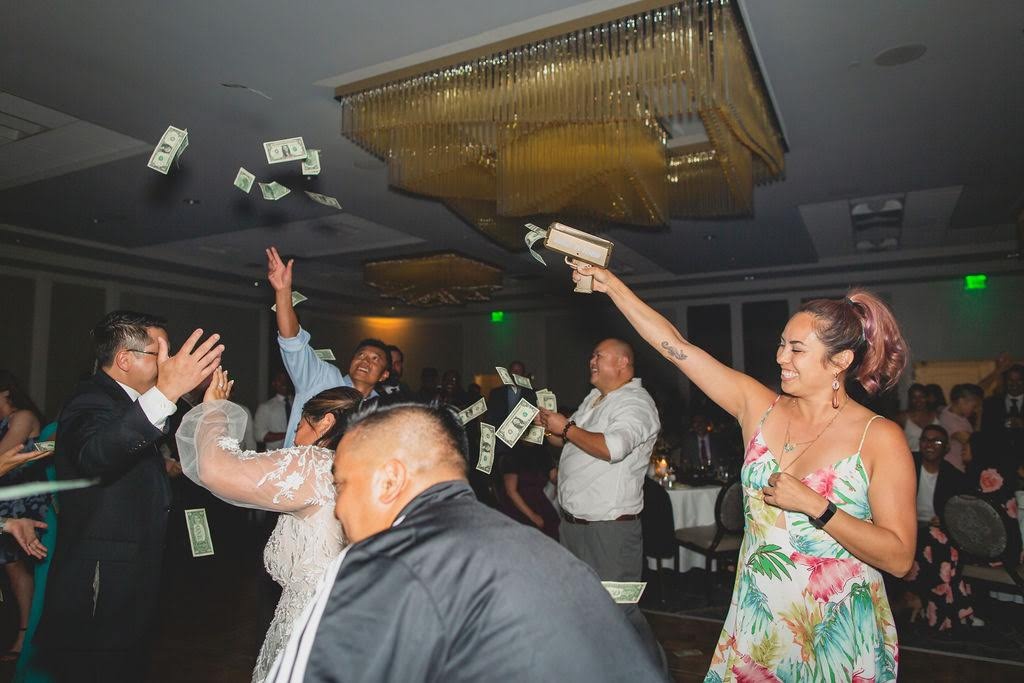
Filipino wedding entertainment typically centers on lively, family-oriented interaction that encourages guests to participate in the celebration. One of the most recognizable traditions is the money dance, known as sabitan or sayawan. During this dance, guests pin or attach money to the bride and groom while they dance together until they are covered with cash. The gesture symbolizes wishes for prosperity and also offers practical financial support as the couple begins their married life. In other places money is collected on plate and showered over the couple while they stand on a mat, which is rolled up afterward to collect the money.
Traditional cultural dances are often included in the festivities. Performances such as the Tinikling bamboo dance, Itik-Itik, or Pantomina showcase Filipino heritage and add a festive cultural element to the reception. Music also plays a central role in the celebration. Many weddings feature live bands, recorded music, or karaoke, with guests, family members, or members of the wedding party sometimes performing songs for the couple. In Cebu there is singing and dancing with the Spanish “kurats” and the “balitaw” being the most popular dances.
Interactive games are another popular feature of Filipino wedding receptions. These activities are designed to entertain guests and keep the atmosphere light and joyful. One well-known example is the garter game, in which the groom removes the bride’s garter in a playful manner. Other games may involve guests competing in humorous challenges, such as “last man or woman standing” contests. There is often a competition between the groom’s family and the bride’s family as to who can collect the most money with the bride collecting money from the groom’s family and the groom collecting money from the bride’s family.
Urban Filipino Wedding Reception
Gladys Pinky D. Tolete wrote: The buffet is ideal for small receptions (100-150 persons). It is a spread of different kinds of food with each course having 5-7 choices, which usually include cold items, salad, soup, breads and rolls, a carving station, hot items and dessert. Individual stations/kiosks may also serve a particular kind of food like pasta and salad. Buffet is typical for the festive type of reception. There are misconceptions about the buffet as being magulo [disorganized], though there are ways to make them organized. Ninety percent of Bayview's receptions have been buffets because the couples have their guests' satisfaction in mind and simply because Filipinos love to eat! [Source: Gladys Pinky D. Tolete, January 2013, kasal.com ^]
2) Sit-down. The sit-down style is ideal for larger receptions, from 250 persons and above. This is a plated menu with 3 to 5 courses. It usually starts with an appetizer or salad, soup, the main course and dessert. To some hotels, the sit-down style is for the "formal reception," which also means no kids allowed. ^
Cocktails are usually done when there is a lull between the Mass and the reception time. Cocktails are served while the guests are waiting for the couple at the reception. It is usually a prologue to the sit-down dinner. Cocktails consist of drinks and pica-pica or finger food. It is ideal for more casual receptions with 80-100 guests, or for ceremonies in time slots which are too late for lunch or too early for dinner. ^
The inevitable question – how much will all the sumptuous food cost? A typical Filipino wedding has 150-200 guests. To make budgeting easier, couples should consider what type of food they want to serve and if they want a buffet or sit-down menu. They should also consider the likes and dislikes of their guests. It does not necessarily follow that if the couple likes a certain menu, all the guests would like them as well. They should also think of guests who have other preferences like a vegetarian menu. Hotels, restaurants and caterers have different packages of varying rates and menus. There will always be a package suited to your budget and tastes. ^
Wedding Banquet in the Philippines
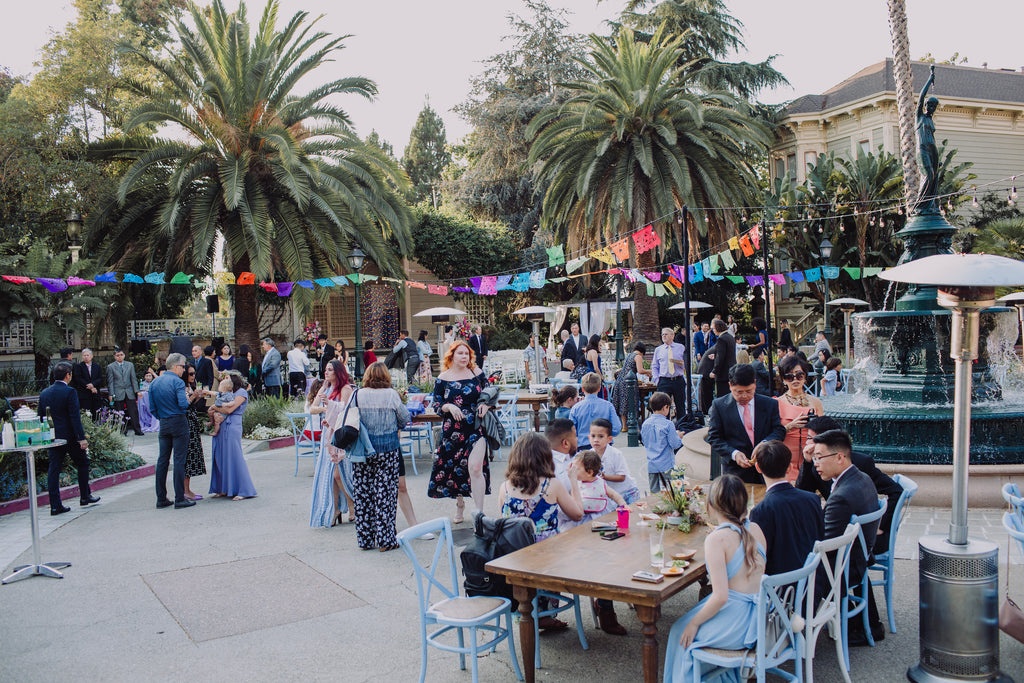
After the wedding ceremony, a banquet is usually held at a restaurant, social club, or reception hall. The bride and groom sit at the head table with their parents and members of the wedding entourage, while honored guests are seated nearby. In some celebrations, a decorative white paper cage is suspended near the head table. When the couple pulls long white ribbons attached to it, doves or pigeons are released, fluttering around the hall before being caught, adding a festive and lively moment to the reception. [Source: “Culture Shock!: Philippines” by Alfredo Roces and Grace Roces, Marshall Cavendish International, 2010]
One highlight of the reception is the cutting of the wedding cake. The bride and groom assist each other in slicing the cake, which may be homemade by a talented relative or provided by a catering service. Sometimes the couple feeds each other small bites of cake. Unmarried female guests may approach the head table to pick small charms or trinkets attached to ribbons in the cake, each symbolically predicting their future marital fortunes, much like messages in fortune cookies.
Guests are often given small boxes of cake bearing the couple’s initials as souvenirs of the celebration. Taking food home from a feast is a common Filipino custom. During the reception there may also be toasts or short speeches. After the wedding, the bride traditionally sends written thank-you notes acknowledging the gifts received once the couple has settled into married life.
At many Filipino wedding receptions, a table is placed near the entrance where guests can leave their gifts for the newlyweds. Common wedding gifts include household items such as silverware, crystal, vases, wine glasses, and other useful pieces for the couple’s new home. Guests may send their gifts ahead of time to the home of either the bride or the groom, depending on who extended the invitation. [Source: “Culture Shock!: Philippines” by Alfredo Roces and Grace Roces, Marshall Cavendish International, 2010]
Some couples also create a bridal registry at a particular store, where they select items they would like to receive as gifts. This system helps ensure that guests choose presents that match the couple’s preferences and prevents duplication. It also allows sets of items, such as dinnerware, to coordinate in style and design.
Wedding guests are typically invited to attend both the church ceremony and the reception, although some may skip the ceremony and go directly to the banquet. As with most Filipino social events, guests are expected to dress in their finest clothing. After the banquet, guests usually take time to say farewell to the couple and offer their final congratulations and good wishes. In rural areas, wedding customs may vary by region. In some traditional barrio celebrations, guests pin peso bills onto the clothing of the bride and groom, symbolizing practical financial support as the couple begins their married life.
Rural Filipino Wedding Party
After the church ceremony in rural areas of the Philippines, the party proceeds back to the bilik. On arrival, the newlyweds feed each other a spoonful or piece of sweet pastry, the traditional gesture to ensure a "sweet" relationship. The bride and groom and the rest of the wedding party, godparents, friends and relatives partake of a feast at the banquet table. After this, the "sabog" or presentation of gifts start. The newlyweds proceed to a small table and sit across each other, with 2 secretaries on either side. The announcer starts calling the guests, starting with the godparents. As the gifts are given, the secretaries loudly announce "what" and "how much." The announcer, in "good fun" chastises the gift-giver if the amount is deemed too little, and urges loudly, to add to their gift. Sometimes, the announcement is made with a lot of fanfare and "oohs and aahs" when a gift is unusually generous: a large amount of money, a cow or carabao, sometimes, a carabao and cart, complete with deeds of sale.The gift-givers do not leave empty handed; usually, the godparents s are given a cellophane-wrapped basket of native delicacies and snacks–leche flan, embotido, suman and kalamay; the rest, usually just suman and kalamay. [Source: Salmagundi, stuartxchange.com ]
After all the gift-givers have been called up, the bridge and groom goes around with a bottle of local brandy, seeking out those who have not yet given gifts, offering them a jiggerful of alcohol, which is quaffed down and returned with a 20 or 100 peso bill. When the commerce of the celebration is finally completed, the groom's party starts loading up the gear to bring back. The newlyweds present themselves to bride's parents and elders for a final blessing. Invariably, there are tearful goodbyes and the essential homilies of patience, understanding, love.
Finally, the caravan of vehicles heads back to the groom's place – with the newlyweds, and the sleepless and exhausted gang of kin and friends still faced with the chore of cleaning up a jeepney-load of dirty and greasy kitchenware. And that eventually accomplished, there is always a little life and energy left for feasting on leftovers and rounds of libation while recounting the stories of the past few days.
The rural tradition of "balot sa kumot" is still performed in some provinces. On arrival at the groom's parents' place, the newlyweds sit in the middle of a large white bedsheet or "kumot," the corners are tied over the couple who are kept bundled and clumped inside the sheet for four to five minutes, swaying about as the sheet is pulled from either side. Sometimes, water is sprinkled on the outside, perhaps hoping for the love to grow.
Filipino Wedding Foods and Long Tables
On the food at a Manila hotel wedding, Gladys Pinky D. Tolete wrote: “The typical reception menu consists of appetizers, main dishes, dessert and drinks. Hotels, restaurants and caterers have ready-made menus to make your life easier. However, if you are having your reception at home, just remember that those are the major "food groups" and you may serve food according to you and your guests' preferences. The Banquet Sales Manager of Bayview Park Hotel Manila says that in their experience, Filipinos still prefer Filipino dishes. However, she says that some choose international cuisine to impress their guests because "balikbayans prefer pure Filipino dishes, and a buffet at that!".[Source:Gladys Pinky D. Tolete, January 2013, kasal.com ^]
Couples usually get two main courses, one fish and one meat or chicken to keep their guests fully satisfied. Aside from the food, take note that couples also give special attention to floral arrangements. Brides are quite particular with how the color motif is interpreted in the decorations and the amount of flowers in the venue. Another trend is that more couples now prefer the buffet-style reception. Lauriats are for Chinese weddings which usually have 300-1,000 guests. This is a 10-course meal wherein the food is served on a lazy susan. The waiter usually portions the food to each guest before leaving the food on the table for the guests to help themselves later on. ^
A traditional Filipino wedding feast can be quite elaborate. One feast celebrated at the turn of the 20th century involved these foods: First was served cold vermicelli soup. The soup was followed by meats of unlimited quantity–stewed goat, chicken minced with garlic, boiled ham, stuffed capon, roast pork and several kinds of fish. There were no salads, but plenty of relishes, including red peppers, olives, green mango pickles and crystallized fruits. For dessert, there were meringues, baked custard flan, coconut macaroons and sweetened seeds of the nipa plant. [Source: Shu Shu Costa, weddingsatwork.com]
Wedding banquets were always clarion calls for gathering kith and kin. No table was ever long enough to seat all. Hence the conjoined table boards to make one long table. The term Long Table" has come to denote a nuptial feast. Where were the "long tables" spread in Grandmother's time? Home was the traditional venue. Those cavernous elegant mga bahay na bato (stone houses) could contain the largest of social gatherings. There were armies of servants to attend the guests. To this day, in town and barrio, there's a leafy trellis beside the bahay kubo shading the open-air long table. In the city, however, receptions at hotels and restaurants in time became fashionable. From twilight of the reign of Spain to morning of American Empire days en grande receptions were invariably at La Palma de Mallorca, a famous Spanish hostelry in Intramurous until well into the Twenties. [Source: kasal.com ^]
Image Sources: Wikimedia Commons
Text Sources: “Encyclopedia of World Cultures Volume 5: East/Southeast Asia:” edited by Paul Hockings, 1993; “Culture Shock!: Philippines” by Alfredo Roces and Grace Roces, Marshall Cavendish International, 2010; National Geographic, Live Science, Philippines Department of Tourism, New York Times, Washington Post, Los Angeles Times, Smithsonian magazine, Encyclopedia.com, Library of Congress, The Conversation, The New Yorker, Time, BBC, CNN, Reuters, Associated Press, AFP, Lonely Planet Guides, Google AI, Wikipedia, The Guardian and various websites, books and other publications.
Last updated March 2026