
NAMES IN THE PHILIPPINES
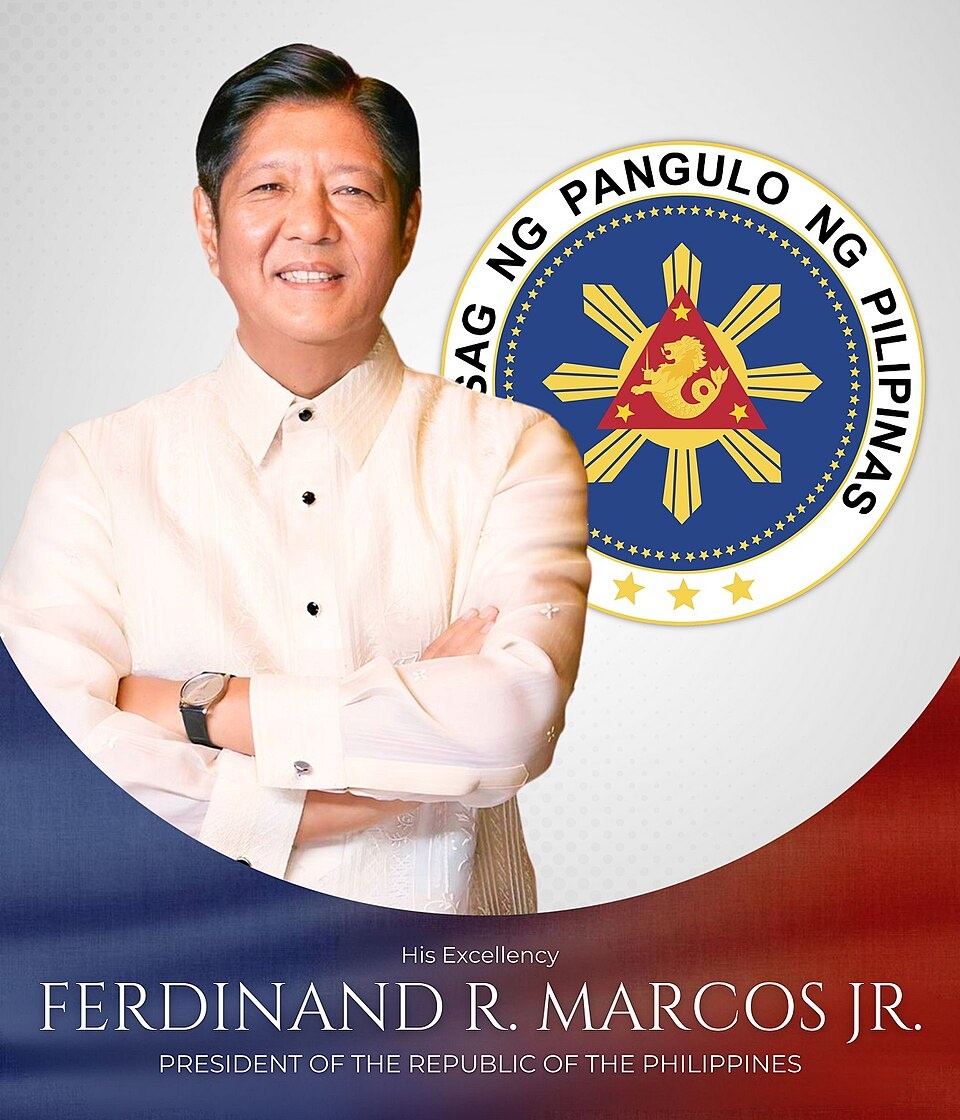
Many Filipinos have Spanish sounding names. Many have American-style or local language nicknames. In many cases surnames are kept by women after marriage. Some such as former president Gloria Macapagal-Arroyo have Spanish-style hyphenated names with their maiden name (Macapagal) and family name of their husband (Arroyo). Others such as Imelda Marcos take the surname of their husband. She was born Imelda Remedios Visitación Trinidad Romuáldez.
For a long time the naming customs in the Philippines were dominated by Spanish names, as the result of 400 years of colonial rule of Spain over the Philippines. In the last decades however English names have become more and more popular and widespread, reflecting the ever-growing influence of English and the U.S. in the Philippines. There are very few truly Philippine native names in use nowadays.
Matthew Sutherland wrote: ‘How wonderful to come from a country where imagination and exoticism rule the world of names. Where else in the world could the head of the Church really be called Cardinal Sin? Where else in the world could Angel, Gigi and Mandy be grown-up men? Where else could you go through adult life unembarrassed and unassailed with a name like Mosquito, or Pepper, or Honey Boy?’
RELATED ARTICLES:
LANGUAGES IN THE PHILIPPINES: FILIPINO, TAGALOG, SPANISH factsanddetails.com
ENGLISH IN THE PHILIPPINES: TAGLISH, MISUNDERSTANDINGS, FILIPINO VERSUS AMERICAN factsanddetails.com
ENGLISH EDUCATION IN THE PHILIPPINES: STUDYING THERE. FOREIGNERS, CHEAP ENGLISH SCHOOLS factsanddetails.com
For Information in the Language of Different Ethnic Group See the Ethnic Groups and Minorities listed Under the MINORITIES factsanddetails.com
ETHNIC GROUPS AND MINORITIES IN THE PHILIPPINES factsanddetails.com
MAIN ETHNIC GROUPS OF LUZON: TAGALOGS, ILOCANO AND BICOL factsanddetails.com
ETHNIC GROUPS OF THE CENTRAL PHILIPPINES ISLANDS: VISAYANS, CEBUANO, WARAY factsanddetails.com
PEOPLE OF THE PHILIPPINES: FILIPINOS, IDENTITY, CHARACTERISTICS factsanddetails.com
AUSTRONESIAN PEOPLE OF THE PACIFIC, INDONESIA, MALAYSIA, TAIWAN AND THE PHILIPPINES: ORIGIN, HISTORY, EXPANSION factsanddetails.com
MALAYS AND MALAY-RELATED PEOPLE: HISTORY, DEFINITIONS, ORIGINS, LIFE, CULTURE factsanddetails.com
Naming Practices in the Philippines
Most Filipinos bear Spanish-sounding first names such as Ramon or Leonora, along with surnames like Gonzales or Romualdez. However, these names were widely adopted only in 1849, following a decree issued by Spanish Governor-General Narciso Clavería. Before this reform, many Christian Filipinos used religious-based surnames. As a result, names such as Cruz, de la Cruz, Santos, and de los Santos became extremely common, creating confusion similar to having no surnames at all. Consequently, the widespread presence of Iberian surnames in the Philippines does not necessarily indicate Spanish ancestry. See Spanish Names Below. [Source:“Culture Shock!: Philippines” by Alfredo Roces and Grace Roces, Marshall Cavendish International, 2010]
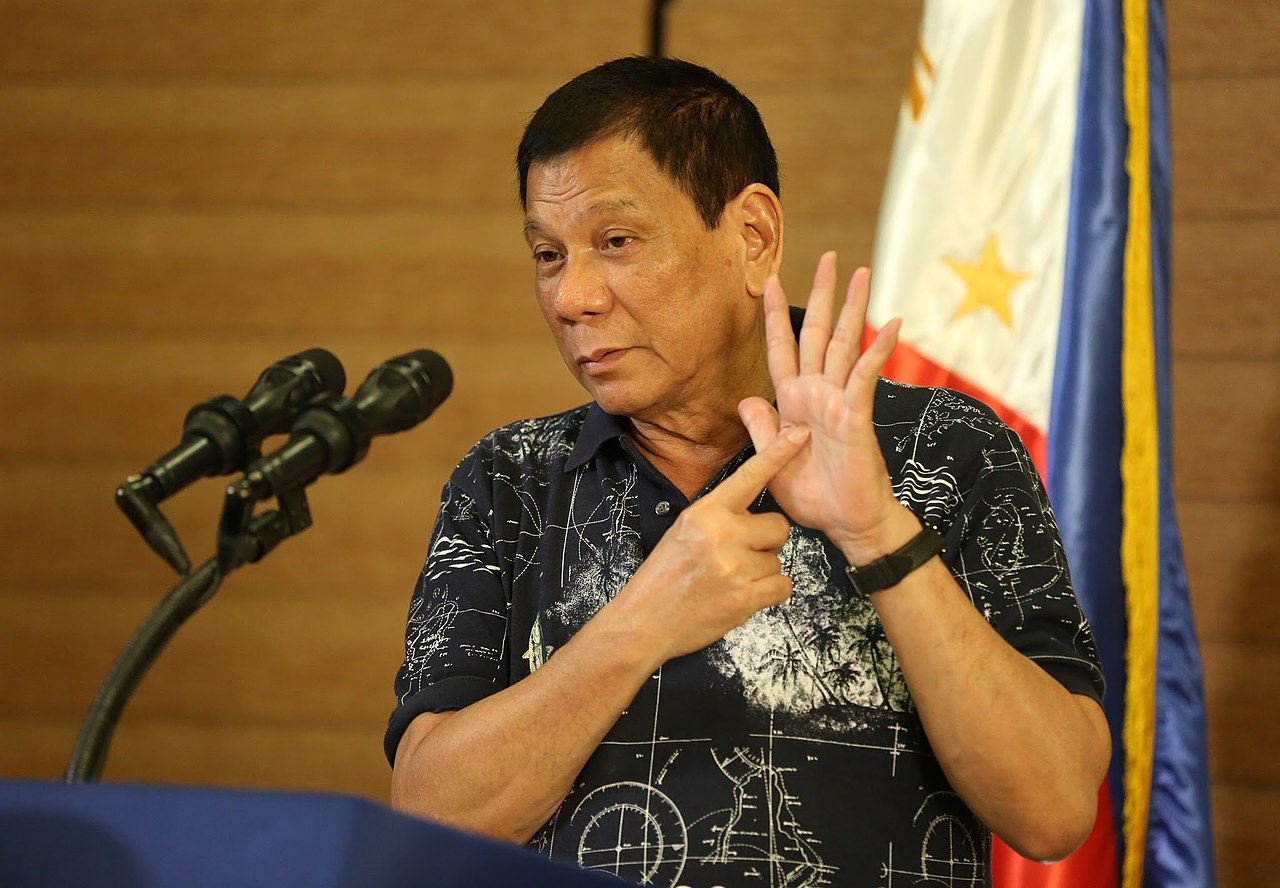
People from certain areas of the Philippines often have last names that begin with the same letters. This is because when the Spanish gave out last names they divided up a catalogue of names and gave out different pages often with names from one latter to different areas. Under the 1849 decree, surnames were distributed systematically through alphabetical registers assigned to different towns. In regions such as Bicol, surnames beginning with “A” were often allocated to residents of the provincial capital, while those beginning with “B” and “C” were assigned to people in coastal or neighboring towns. Residents selected their surnames from designated lists for their locality, and in some cases, the first letter of a surname can still offer clues about a family’s geographic origin. See Spanish Names Below.
According to humanbreeds.com: Most of the family names in Philippines come from Spanish origins since Spain colonized Philippines for almost 500 years; yet, that is not the interesting part. The interesting part is having names such as Girly, Honey, Boy, Uno, Junior, Blue, Princess, Queeny, Sweet, Lovely, Sweet-Rose, Virgie, Baby… Basically, if you wanna understand what kind of names some Filipinos have, you just need to imagine some lazy parents who call their child the first thing that comes to their mind. Just right after a born is baby, I would imagine the parents having a conversation as such: Mother: so what should we call our daughter? Father: I donno… anything, like I can care less.. Mother: you know she looks so girly.. Father: ok, what the hell, let us call her girly...Or...Doctor, looks at the mother: What would you like to call your son? Mother: Where is my ****ing husband? I bet he is screwing my slutty neighbor again. Doctor: I have other patients waiting for me, What do you wanna call your son? Mother, rolls her eyes, looks out the window, sees a blue sky: Just call him Blue. [Source: humanbreeds.com, February 7, 2014]
Titles in the Philippines
Generally, Filipinos are title-conscious. Note for example the use of titles before the names of professionals such as Dr. (doctor), Atty. (attorney, lawyer), Engr. (engineer), Arch. (architect), Prof. (professor). They also tend to say "sir" or "ma’am" to show their respect, not just to their superiors but to older people as well, until told otherwise. Colleagues are often addressed by the first name. [Source: Canadian Center for Intercultural Learning]
Alfredo Roces and Grace Roces wrote: The use of language also reflects the Filipino desire to keep a low profile while simultaneously seeking to please whoever he is talking to by placing the person addressed in the best light possible. Titles are often used in this manner. It is common to hear a person, say Mr Cruz, addressed as ‘attorney Cruz’, ‘engineer Cruz’, ‘assistant secretary Cruz’, ‘architect Cruz’ and so on. A wife is often referred to as ‘commander’, half in jest and half in recognition of her powerful role. [Source: “Culture Shock!: Philippines” by Alfredo Roces and Grace Roces, Marshall Cavendish International, 2010]
Needless to say, public officials are addressed by their office title, such as ‘Mr Secretary’, ‘Director Cruz’, ‘Monsignor Cruz’, ‘Vice Mayor Cruz’ and so on. Even the wives of such officials are commonly addressed as ‘Mrs Secretary’ or ‘Mrs Mayor’! It is not unusual for a mere soldier or policeman to be referred to as ‘captain’, and a captain to be addressed as ‘major’ in the desire to give the person addressed greater importance. The practice of upgrading and using professional titles is even applied to waiters and cab-drivers who are at times addressed as ‘boss’ or ‘manager’, clearly carrying the desire to reach out to far-away horizons.
The examples provided, while common, should not be considered a rule for foreigners, as it is sufficient and proper to address persons by their correct titles and positions. What is important for non-Filipinos is to understand the Filipino inclination to recognise every person’s need for self-esteem. Great care is exercised in language to preserve this self-esteem in public.
The lowliest beggar is given this public consideration in language. A filthy, ragged and persistently annoying beggar may hang on to you, nudge you with dirty fingers and pester you endlessly; one is never justified to exclaim: “Beat it, you bum!” or to say brusquely “Get out of here.” The Filipino standard reply to beggars is “Patawarin po”, literally “Forgive me, sir.” It is the person who asks forgiveness for not being able to offer the beggar something, not the rude beggar; and he is addressed with ‘po’.
To show rudeness to a beggar or to someone of lower status will lose you points among those watching. After all, he is just a beggar but you are supposed to be above rude behaviour. A person of high status who is obliging and gentle to someone of lower status (employer to employee, housewife to servant, elder to younger) is highly esteemed. Inversely, rudeness to underlings is considered arrogance for which you get poor marks. Courtesy in language assures the maintenance of overt harmony and a concern for every individual’s sense of importance, no matter how lowly his position.
Spanish Names in the Philippines
In 1849, the Spanish Governor of the Philippines sent out an order that all families were to choose a new last name from a list of Spanish last names/ The Spanish wanted to create a more organized system of keeping track of people. Before the 1849 initiative many Filipinos lacked standardized family surnames, making it difficult to distinguish lineages. The decree aimed to organize the population for clearer identification, simplify legal and civil records, regulate taxation, and manage personal services and military conscription. The consequence today is that there are many Spanish last names still in use, such as Garcia, Cruz, Reyes, Mora, Vasquez, Valdez, Flores, Ramos, Perez, Villanueva, Ortiz, Estrada. However, there were some Filipinos who did not want to change their native last names, and so today there are still some native names remaining. Examples of native Filipino last names include Macaraeg, Matapang, Masipag, Dimaguiba, Guinto, Magsaysay, Makapagal, Batungbakal. [Source: by Rebecca, Philippines Baguio Mission, 2009-2011, the missionary website, preparetoserve.com \=/]
For the first several hundred years of Spanish rule, most Filipino surnames were either indigenous (e.g., Macapagal) or the names of Saints or other Catholic symbols (San Jose, de la Cruz, de los Reyes, etc.). Frequently, members of the same family did not have the same "surname" which drove Spanish officials crazy since they were trying to keep the tax rolls straight. So in 1849, under Governor General Narciso Claveria, they issued a huge "Alphabetical Catalogue of Surnames" (Catalogo Alfabetico de Apellidos — republished by the National Archives in 1973), which is just page after page of names, some Spanish, some Filipino, compiled by friars and bureaucrats from various sources. In theory, every Filipino was supposed to pick a name from this approved list, and all members of the same family were supposed to have the same surname and stick to it. [Source: Maria G, Yahoo Answers, 2006 ^^]
In practice, implementation was very uneven. In some provinces, e.g. Albay, the governor apparently tore out pages from the Catalogue and sent them to individual towns. Hence, almost everyone in the town had names beginning with the same letter ("B" in Tiwi, "R" in Oas, etc.) In other provinces, it was much more random. A lot of people kept old surnames (including "de los Santos" and the like) even though the decree supposedly forbade this. However, most Filipinos have family names which date back only to 1849 and to the "Catalogue" issued by Claveria. ^^
Chinese Names in the Philippines
Most of the Filipino-Chinese surnames date from the 19th century and later when most Chinese immigrants came to the Philippines. Names ending with "-go" or "-co" or "-son" often reflect contractions of generic terms or honorifics. For more details on the Claveria decree, read the introduction to the 1973 edition of the Catalogo Alfabetico de Apellidos. See Edgar Wickberg, “The Chinese in Philippine Life, 1850-1898" for the origin of Filipino-Chinese surnames. [Source: Maria G, Yahoo Answers, 2006]
Chinese Filipinos whose ancestors arrived in the Philippines after 1898 typically have single-syllable surnames, while those whose families settled during the Spanish colonial period often bear multisyllabic surnames. The longer names—such as Gokongwei, Ongpin, Pempengco, Yuchengco, Teehankee, and Yaptinchay—were originally full Chinese names transliterated into Spanish spelling and later adopted as family surnames. The use of “-son” as a surname element may be linked to the Chinese surname Sun, which appears in the classical text Hundred Family Surnames. This suggests that some Chinese Filipino surnames evolved from traditional naming patterns adapted into Spanish orthography during the colonial era. [Source: Wikipedia]
Common single-syllable surnames include Tan, Lim, Chua, Uy, and Ong. These are generally based on Hokkien pronunciations of Chinese family names and became widespread among later Chinese immigrants and their descendants. Some multisyllabic surnames are Spanish-style transliterations of Hokkien terms that include the suffix “-son”, meaning “grandson.” Examples include Tuazon (eldest grandson), Dizon (second grandson), Samson or Sanson (third grandson), Sison (fourth grandson), Gozon or Gozum (fifth grandson), Lacson (sixth grandson), Tecson or Tiongson (seventh grandson), Sioson (eighth grandson), and Hizon (ninth grandson). These names reflect an old naming convention that combined a generational number with the Hokkien word for grandson.
The late Philippines president Corazon Aquino provides an interesting example of how Chinese and mestizos adapted their names in the Philippines. She was born Maria Corazon Sumulong Conjuangco. Her maiden name indicates Chinese mestizo ancestry. Her parents were Jose Chichioco Cojuangco and Demetria "Metring" Sumulong, and the family were of mixed Chinese, Filipino, and Spanish descent. Many of her descendants came from China. The family surname is a Spanish version of the Chinese name "Koo Kuan Goo." The Cojuangcos were one of richest clans in the Philippines. her Chinese great-grandfather's name could have been romanized to Ko Hwan-ko, but, following the normal practice of assimilationist Catholic Chinese-Filipinos, all the Chinese names were collapsed into one, and a Spanish first name was taken.
Filipino Nicknames
Nicknames are very common in the Philippines as they are elsewhere in Southeast Asia. Many of them seem funny or odd to American. In 1985, when Marcos was still in power, Steve Lohr wrote in the New York Times, “Pepsi, Sarsi, Coca, Peaches and Cherry Pie. It may sound like the recipe for a stomachache, but those are the names of Filipino celebrities. Pepsi Paloma, Sarsi Emanuel and Coca Nicolas are known, understandably, as the ''soft-drink beauties,'' and they star in some of the steamier local films. Peaches, or Peachie, Sacasas is a former beauty queen turned actress, and Cherry Pie Villongco is a former top fashion model. [Source: Steve Lohr, New York Times, February 5, 1985 ^]
“Unusual names and nicknames here are not confined to those with commercial motivations. Joker Rroyo is no comedian. He is a lawyer who defends political detainees. The President's son, Ferdinand E. Marcos Jr., who is the Governor of Ilocos Norte province, is known to everyone here as Bong Bong. One of the most senior members of the Supreme Court, Claudio Teehankee, is called Ding Dong. Grandmothers sometimes answer to the name Baby, while a couple of captains of industry would be offended if they were not addressed as Boy. ^
“The distinctive monikers sometimes unintentionally extend to surnames. Probably the most widely known example outside of the country is Jaime Cardinal Sin, the Archbishop of Manila. He is fond of jesting that given his name, the Roman Catholic Church displayed remarkable tolerance in allowing him to rise to its top Philippines post. ^
“It is the prevalence, diversity and outright zaniness of the nicknames here that rank them as a distinguishing national characteristic. Nearly everyone has a nickname in the Philippines. And the way they are used and offered, especially by the powerful, can be of considerable importance. Being able to hail a prominent politician or corporate magnate by that person's nickname is a clear sign that you are somebody with influence. ^
“There are only about a dozen people who call President Ferdinand E. Marcos by his nickname, Andy, to his face, says Eleuterio (Adrian) Cristobal, a presidential spokesman and speechwriter. The honored list includes the First Lady, Imelda, and a few other close family members; a handful of lifelong friends, and a couple of trusted associates, such as Roberto Benedicto, who controls much of the sugar industry, thanks to a presidential decree. ^
“The most common explanation for the Filipino penchant for nicknames is that the the country is a mix of three nickname-loving cultures: Spanish, American and Filipino. Others say there has been a trend in recent years toward more extreme - some say ridiculous - nicknames like Blinks and Booby. But Alejandro (Anding) Roces, a former Secretary of Education, says that odd names are nothing new. He cites a volume by Father Pedro Chirino, a 16th-century Jesuit social historian, who wrote that in the Philippines naming a child was a mother's prerogative and subject to her whim. ^
“Surprisingly few Filipinos can explain how they were tagged with unusual nicknames. ''I never questioned why I was called Boo, because I just always was,'' said Pedro Chanco 3d, an official in the Ministry of Energy. Some are baby names that stuck, while others seem to be merely fashionable nicknames given to people much like proper names.
Playful Filipino Names
In 2011, Kate McGeown of the BBC wrote: “Bizarre and often unflattering names are as quintessentially Filipino as the country's Catholic faith, friendly smiles, jeepneys, and love of karaoke. On my first day in Manila, I walked down to the local cafe and was served by a smiling young girl who wore a name badge entitled BumBum. I did a double-take, then smiled back, deciding it was probably a joke. Since then I've met a Bambi, three Bogies, several Girlies, a Peanut, a Barbie and a middle-aged man called Babe. [Source: Kate McGeown, BBC News, March 27, 2011 /]
“These names are found in all sectors of society. Sometimes they are nicknames, sometimes genuine first names - but they are always what people are referred to on a day-to-day basis. Even the president is not spared. His real name is Benigno Aquino, but almost everyone here calls him Noynoy. Two of his sisters are called Pinky and Ballsy. No-one seems to see the need to ask why. Why would you call your children after the days of the week or your favourite desserts? /
“Neither does anyone question the integrity of Joker Arroyo, one of the country's most respected senators. That is his real first name. Apparently he got it because of his father's fondness for playing cards. Joker's brother is called Jack. And it seems perfectly natural to Filipinos that the boxer Manny Paquiao should express his love for the British royal family by naming his daughter Queen Elizabeth.
“The main thing Spain gave to the Philippines was Catholicism, and with it, tens of thousands of newly-christened Marias and Joses. With the Americans came names like Butch, Buffy and Junior - and the propensity to shorten everything if at all possible. Perhaps it is the combination of these two influences which has led to names like Jejomar - short for Jesus Joseph Mary. The current vice president is called Jejomar Binay.
“Even the large Chinese community here has not escaped this national name game. Their surnames are often a form of Anglicised Chinese, but sometimes the Philippine penchant for fun shines through. I have heard of a Van Go, a John F Kenneth Dee and an Ivan Ho. But there are some names that just defy explanation. Why would you call your children after the days of the week or your favourite desserts? To many Filipinos, a better question to ask is: "Why wouldn't you?" When I'm introduced to a Dinky or a Dunce, or read about people called Bing and Bong, it seems almost normal. In fact, if anything, I rather like the fact that Filipinos are self-assured enough to use these names, no matter how odd they sound or how senior the person's public role.
Why Do Filipinos Have Such Odd Names
In 2011, Kate McGeown of the BBC wrote: “So why do Filipinos have such odd, even risque, names? This is not a translation issue, as most people speak English well, or well enough to know that BumBum, for example, is not exactly on the rest of the Anglophile world's list of popular baby names. I rather tentatively brought the subject up at a dinner party full of lawyers, academics and business people. Many of them were surprised - they had simply never thought of these names as having any kind of negative connotation. [Source: Kate McGeown, BBC News, March 27, 2011 /]
“But once we started discussing it, they did agree that, to outsiders at least, it all might sound a bit strange. Soon a heated debate began. Perhaps it was because of the propensity of Filipinos to have large, tight-knit families, some of them said. A man called Babe or Honey Boy, for instance, is probably the youngest member of that generation in the family. It suited him when he was two years old - now he is a slightly overweight businessman in his 50s, why change it?
“But nicknames are not always given when people are young. The former president Joseph Estrada is more commonly known as Erap - a name he acquired in his 20s. When spelt backwards, Erap becomes Pare, which means mate or buddy in the national language Tagalog. Other guests thought that nicknames came about because of a need for individuality. People here often have the same Christian name as their parents. Former Congressman Ace Barbers, who, like Joker Arroyo, obviously had a card-player in the family, has the Christian name Robert, but so do his father and all his brothers. He clearly has not found it a problem as he named his four sons Robert too. Nicknames must be essential in their house.
“The conversation soon turned to the fact that the Philippines is a melting pot of different cultures, and perhaps that is what led to these strange names. The president himself is a good example. His full Christian name is Benigno Simeon Cojuangco, names which are Spanish, Hebrew and Chinese respectively. His nickname Noynoy is the only part that is truly Filipino.
Image Sources: Wikimedia Commons
Text Sources: “Encyclopedia of World Cultures Volume 5: East/Southeast Asia:” edited by Paul Hockings, 1993; “Culture Shock!: Philippines” by Alfredo Roces and Grace Roces, Marshall Cavendish International, 2010; National Geographic, Live Science, Philippines Department of Tourism, New York Times, Washington Post, Los Angeles Times, Smithsonian magazine, Encyclopedia.com, Library of Congress, The Conversation, The New Yorker, Time, BBC, CNN, Reuters, Associated Press, AFP, Lonely Planet Guides, Google AI, Wikipedia, The Guardian and various websites, books and other publications.
Last updated March 2026