
ACTIVITIES IN BALI
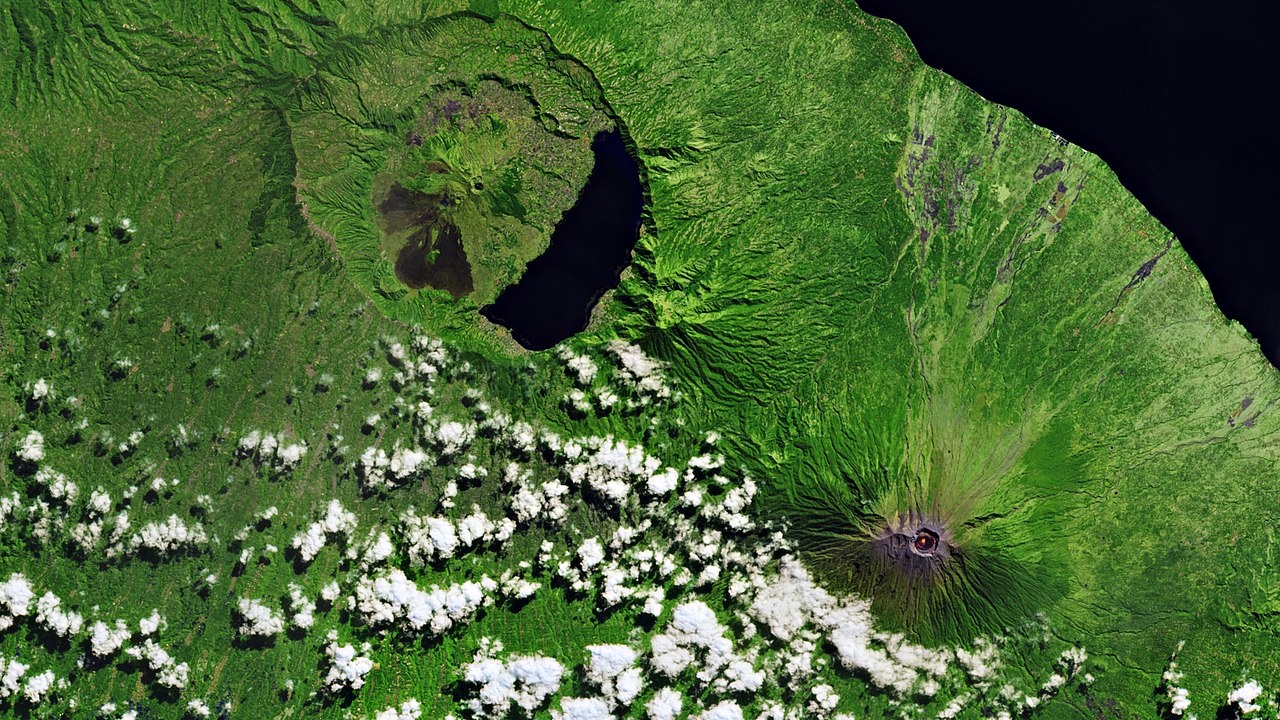
Activities that can enjoyed in Bali include sailing, surfing, walking, fishing, whitewater rafting, take a trip on anourigger canoes and trek to the top of Mount Agung, Mountains bikes can be rented on many places. Mountain bike tours are also offered. Better yet bring your own bike as I did and had a great time.The Umalas Equestrian Resort offers horse-back riding tours and lessons for about $30 an hour. There also many golf courses.
Bali offers exciting white water rafting down the spectacular Ayung River by Ubud. Here you can also go bungy-jumping from a cliff down to almost touch the river. Ubud and its surrounding countryside is great for cycling. Elizabeth Gilbert wrote in her bestselling novel “Eat, Pray, Love” that there are also good cycling paths at Uluwatu in the south.
Trekkers and mountain climbers head to Gunung Agung. Begin your ascent from behind the temple or through the village of Sebudi. However, make sure to ask permission first from the temple authorities, as Balinese religion prescribes that no one may stand higher than the sacred temple especially when ceremonies are being held. The tough climb takes 6 to 8 hours. You are advised to start out early in the morning, and be led by an experienced guide.
RELATED ARTICLES:
DENPASAR AND KUTA factsanddetails.com
SANUR AND THE MAIN RESORT AREAS OF BALI factsanddetails.com
UBUD: SIGHTS, MONKEYS, FOOD factsanddetails.com
EAST BALI: MT. AGUNG AND BESALIK TEMPLE factsanddetails.com
NORTH BALI: MT BATUR AND SUBAK WATER TEMPLES factsanddetails.com
WEST BALI AND ITS NATIONAL PARK factsanddetails.com
BEACHES AND DIVING IN NORTH AND WEST BALI factsanddetails.com
BALI: GEOGRAPHY, LIFESTYLE, REPUTATION, GETTING THERE factsanddetails.com
HISTORY OF BALI: ORIGIN, KINGDOMS, MASS ROYAL SUICIDES factsanddetails.com
MODERN HISTORY OF BALI: VOLCANIC ERUPTIONS, TERRORISM, RECOVERY factsanddetails.com
TOURISM IN BALI: CELEBRITIES, RESILIENCE AND ITS RISE FROM A 1930s SOCIALITE ARTIST COLONY factsanddetails.com
NEGATIVE SIDE OF TOURISM IN BALI: OVERDEVELOPMENT, BAD BEHAVIOR DONALD TRUMP factsanddetails.com
Entertainment and Cultural Performances in Bali
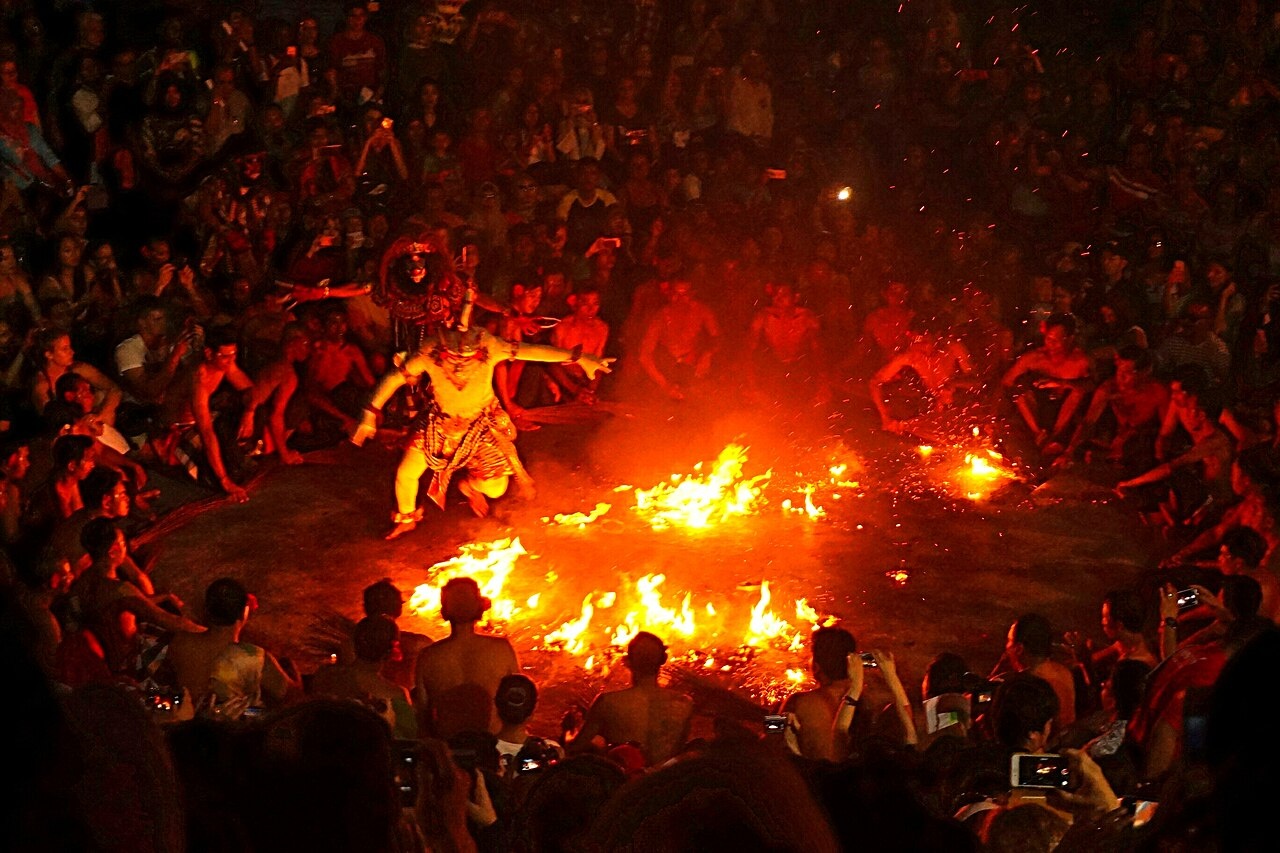
Taman Werdhi Budaya (in the eastern suburbs of Denpasar), or Bali Art’s Center, is Bali’s foremost cultural centre. It comprises a large exhibition space, art museum, concert hall and amphitheatre and an adjoining school for the performing arts. There are permanent displays of Balinese art covering all styles made famous in nearby Ubud, woodcarvings and traditional costumes. Visitors can experience dance and music performances in two open-air amphitheaters with modern lighting. Dances are also regularly staged for the public, including works integrating modern Balinese choreography. The unique Kecak performance staged every night at 6.30 pm to 7.30 pm.
In Bali, dance and dramas are an inseparable part of daily temple devotion and celebrations, and many are held sacred. Each village has a different date of festivities, and a visitor may therefore, accidentally watch dance performances that are not staged for tourists. However, Bali villages do offer cultural performances catering to tourists. The Barong dance is staged mornings in the village of Batubulan. This is the eternal story of the fight between good and evil.
The Kecak dance is staged most dramatically in the open air by Pura Tanah Lot with as backdrop, the sun slowly lowering in the sea over the horizon beyond this beautiful temple. The Kecak dance tells the story of Ramayana wherein prince Rama’s wife, Sita, is abducted by the ogre Rahwana. In the forest Rama sees a golden deer and he chases it, but not before drawing a circle around Sita, warning her not to step out of it to stay safe. Rahwana lures Sita out of the circle and she is abducte To save her, prince Rama is helped by the white monkey god Hanoman. For its rhythm and music the kecak dance relies entirely on the human chorus of a hundred men representing Hanoman’s monkey army sitting around in a circle forming the dance arena. As the sun goes down and darkness sets in, the arena is dramatically lit by flickering bamboo torches.
The village of Peliatan is famed for its graceful Legong Keraton — the palace court dance - and superb flowing gamelan orchestral music. Other fascinating dances are the Baris — the dance of the warriors, and the Mask Dance — this is a one man performance expressing different dramatic characters and human emotions. Gamalan performances on Bali are held during major festivals set according to the 210-day calendar and the full moon. Tourist shows are also frequently held in Ubud, Peliatan and Bona.
Beaches and Waterports at Bali
Bali’s white sand and black sand are a major draw, There are a variety of water sports available, such as banana boats, parasailing or jet skiing, swimming or plain sunbathing. Cruises to the surrounding islands can be arranged as well as submarine dives to watch the tropical underwater life from within safe compartments.
Most well known among Bali’s beaches is Kuta beach, a nice but touristy with dramatic sunsets and pushy hawkers. The surf can be a little rough for people who are not strong swimmers. Further back from the beach are hotels, restaurants, shops and cafes.
Jimbaran is a little quieter. It is a popular spot to eat fresh barbecued seafood in the evenings, while watching from a distance the lights of planes landing and taking off from Bali’s Ngurah Rai airport. Located here are some of Bali’s best hotels like the Four Seasons and the Bali Intercontinental hotel. Jimbaran is also renowned for the Barong trance dance.
Further west of Kuta are Legian and Seminyak. On the other side of the peninsula is the more sedate Sanur Beach, which is also dotted with hotels and restaurants, or visit Nusa Dua, where more private beaches front super de-luxe hotels.
Diving in Bali
The best diving is on the east and northeast coast. According to one National Geographic photographer, the diving off the northeast coast of Bali is some of the best in the world because the volcanic sand “gives Bali’s colorful creatures a perfect backdrop. Divers sees titan triggerfish, clownfish, stingrays, moray eels, and cuttlefish. Lovina is a favorite snorkeling spot. There is a range of options to suit beginners. However, many sports others should only be attempted by advanced divers.
Because the dive sites are scattered around many companies offer diving safaris in which travelers are driven around to different jumping off points for dive sites. Menjangen Island off Bali’s northwest coast is regarded as one of Bali’s finest diving sites. One of the main features here is a huge eel garden and large number if enormous bumphead parrotfush, The channel between Nusa Lembongan and Nusa penida is another good spot. . Mola Molas are seen here between September and November
The coast town of Tulamben is the jumping off point for the wreck of the Liberty, a ship that was torpedoed by the Japanese in 1942 and towed here and abandoned after its cargo was unloaded. The 300-foot ship sits in water between five and 30 meters deep. It is encrusted in coral and crinoids and is full of groupers, sweetlips, surgeonfish, unicornfish and schools of jacks and barracuda,
At Nusa Penida, there are strong currents as this strait separates Bali from Lombok. At Nusa Penida’s south western coast are the Manta Point and the Malibu point where divers can swim with Travally, big rays and even sharks. At Blue Corner find Moia Moia fish. At Bali‘s most eastern end is Padang Bay and Cemeluk, better known as Amed Beach for great dives, where you can find cardinal fish, black snappers and damsel fish. While along Bali’s north-western coast in the Bali Barat National Park, the best dive spots are at Menjangan with its reef flat, anchor wreck, eel garden and caves to explore. Nearby and still in the Bali Barat Park is Pemutaran island.
Surfing in Bali
A good start for surfers is Kuta beach. But the best waves in Bali are at Uluwatu, at the southern tip of Bali, which is the site for international competitions. Here are the long, and perfectly formed hollow-barreled reef-breaks at three unique lefts, while at Nusa Dua and Sanur three complementary rights can be found. The time to surf is during April through September when winds are predominantly east-southeast. .
Surfers also love the waves at Nusa Lembongan near Nusa Penida, sister islands due south east of Bali facing the Indian Ocean. These islands are a 45 minutes boat trip from Nusa Dua or from Sanur. Here the waves are known as Playground Surf Break, Shipwreck Surf Break, Ceningan Reef Surf Break to Lacerating Surf Break.
Meditation, Health, Spas and Wellness
Bali has become a major center for wellness and spa tourism. Many resorts and hotels have their own masseuse services and yoga and meditation classes. Almost all the top-end hotels have class spa facilities where guests enjoy luxurious treatment and pampering. Special health resorts offer deep-tissue massage, medicinal baths, herbal teas, and colonics. Some temples have mediation classes.
Spas in Bali offer aromatherapy massages, herbal wraps and scrubs with essential oils, foot reflexology, detoxification, from highly respected traditional treatments once only enjoyed by princesses in the ancient courts, to modern technology methods. Two spa resorts in Bali offer thalassotherapy, based on the restorative powers of the sea rich in miner and oligo elements that are massaged in and absorbed into the bloodstream to restore the balance in the body.
A number of spas are set amidst breathtaking views of green hillsides and winding rivers or jut out to sea where the lapping of the waves of the Indian Ocean provides peace and rest. Each spa has its own unique feature. Most incorporate salon treatment for facials, cream bath, manicures and pedicures, everything to make you feel refreshed and come out feeling completely different person.
A weekend at Bagus Jati provides the opportunity to enjoy delicious, healthy food, lots of activities and pampering in a tropical forest. Here the Indonesian herbal treatment or “Jamu” restores the body, mind and spirit, cleansing the body from all toxins. Regular Yoga exercises complete the course.
The Ritz-Carlton Bali, Thalassa & Spa is one of several luxurious spas on Bali. It features beautiful views of the Indian Ocean and lush tropical gardens. The luxurious decor of the private spa villas, suites and rooms, the soft music and fragrant oils pamper the spirit, senses and the body. An unforgettable total spa experience is created as Asian beauty and health treatments are harmoniously combined with European products and modern technology. The spa features the world's largest Aquatonic pool that possesses the healing qualities of mineral-rich seawater, advanced hydro-therapies and aquatic exercise programs. In the Thalasso therapy, marine elements such as seawater, seaweed and other sea-based minerals, that incorporate both curative and preventive properties, are used.
Image Sources: Wikimedia Commons, Indonesia Tourism website
Text Sources: Indonesia Tourism website (indonesia.travel), Indonesia government websites, UNESCO, Wikipedia, Lonely Planet guides, New York Times, Washington Post, Los Angeles Times, National Geographic, The New Yorker, Bloomberg, Reuters, Associated Press, AFP, Japan News, Yomiuri Shimbun and various books and other publications.
Last updated in January 2026