
CHINESE IN INDONESIA
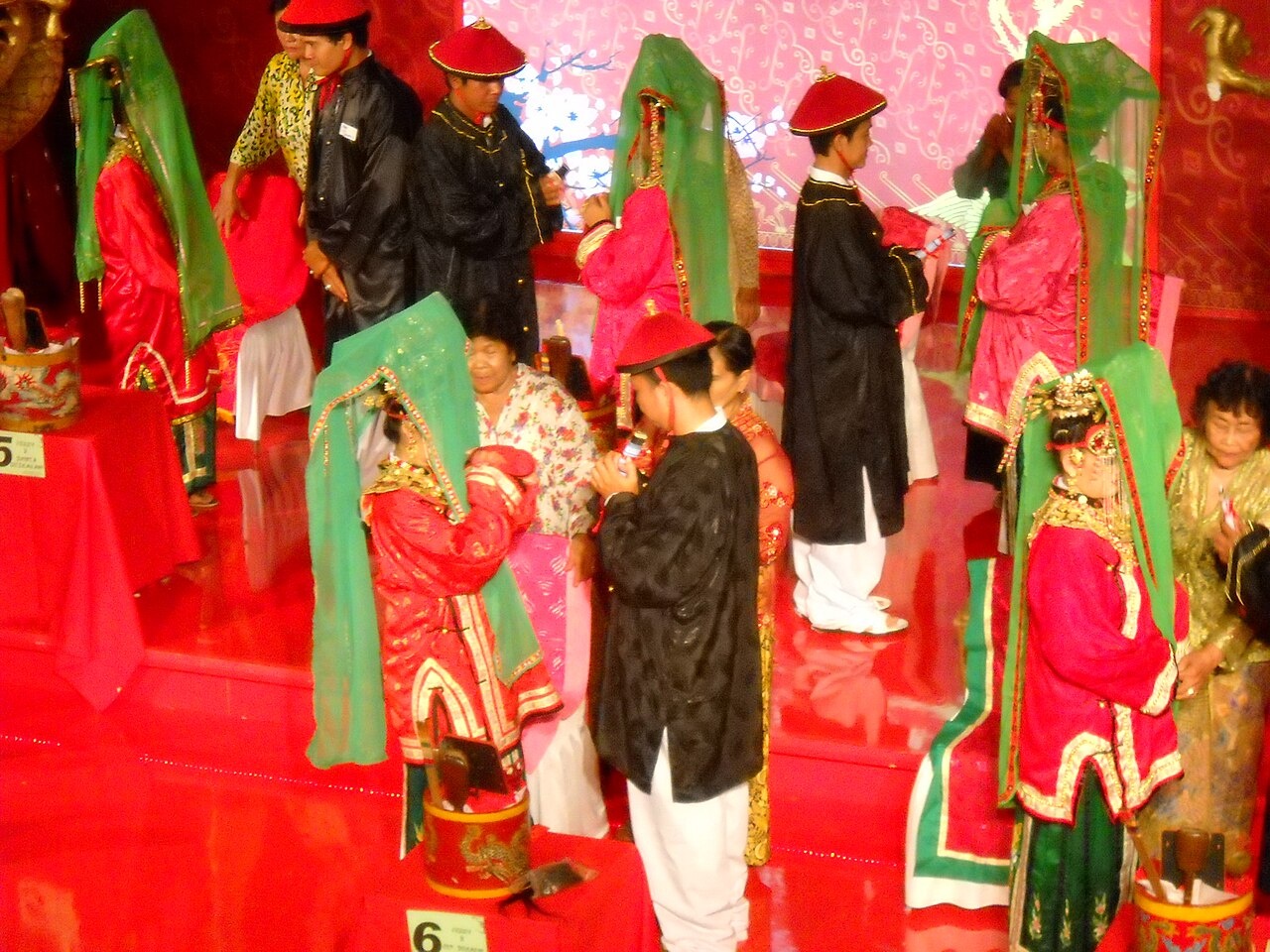
Chinese roots in Indonesia that go back centuries. Even so they often been regarded as alien intruders by this overwhelming pribumi majority. Like their counterparts in Malaysia, Singapore, Thailand and Vietnam, many are descendants of people from the southern Chinese province of Fujian who migrated to Southeast Asia at around the turn of the 20th century. Many Chinese are Christians. A smaller number are Buddhists, Taoists and Confucians. Although ethnic Chinese make up a small proportion of the population—roughly five to seven million people—they are often said to control a large share of the country’s wealth but it is unclear how true this is. A few prominently wealthy Chinese Indonesia contributes to the myth that the entire community is rich.
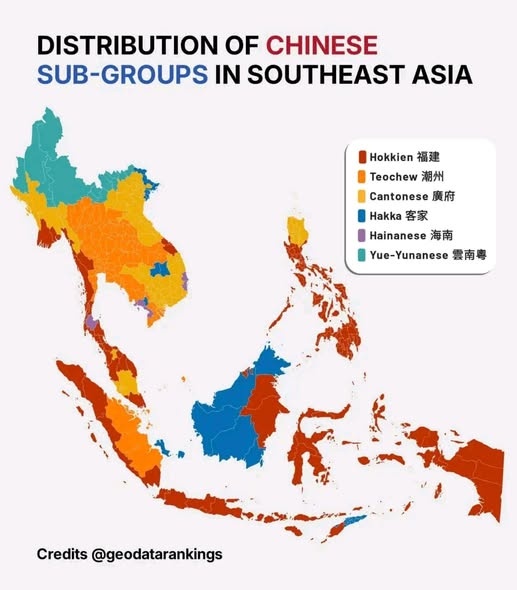
Assimilation for Chinese has been particularly difficult in Malaysia and Indonesia where Islamic practices discourage marriages involving Muslims and non-Muslims. For local people marrying a non-Muslim is also seen as rejection of Muslim-based nationalist pride. Many Chinese have Indonesian names. Hokkein, the Southern Min dialect of Fujian, is the primary dialect of many Overseas Chinese communities in Malaysia, Singapore Indonesia, and the Philippines. Since Chinese have traditionally been prohibited from speaking Chinese they have tended to study English. Peranakan Indonesian—a fusion of Indonesian, Javanese and Hokkein—is spoken in Indonesia.
Chinese influence in the visual arts can be seen along the entire north coast of Java from the batik patterns of Cirebon and Pekalongan, to the finely carved furniture and doors of Kudus in Central Java, as also in the intricate gold embroidered wedding costumes of West Sumatra. The Chinese minority of Java has also developed its own shadow puppets, combining Javanese and Chinese features. Chinese in Malaysia, Singapore and Indonesia have the custom eating any time they feel like it.
RELATED ARTICLES:
DISCRIMINATION AGAINST CHINESE IN INDONESIA factsanddetails.com
VIOLENCE TOWARDS CHINESE IN INDONESIA factsanddetails.com
FALL OF SUKARNO, RISE OF SUHARTO AND THE MYSTERIOUS COUP OF 1965 factsanddetails.com
CHINESE IN SOUTHEAST ASIA factsanddetails.com
CHRISTIANS IN INDONESIA factsanddetails.com
CHRISTIANS AND MUSLIMS IN INDONESIA; HISTORY, RELATIONS, VIOLENCE factsanddetails.com
RELIGION IN INDONESIA factsanddetails.com
RELIGIOUS DISCRIMINATION IN INDONESIA factsanddetails.com
ISLAM IN INDONESIA: CHARACTERISTICS, TYPES, MUSLIM ORGANIZATIONS factsanddetails.com
ETHNIC GROUPS IN INDONESIA: HISTORY, DIVERSITY AND JEWS factsanddetails.com
INDONESIAN GOVERNMENT AND ETHNIC GROUPS: ISSUES, POLICIES, factsanddetails.com
Chinese Weddings in Indonesia
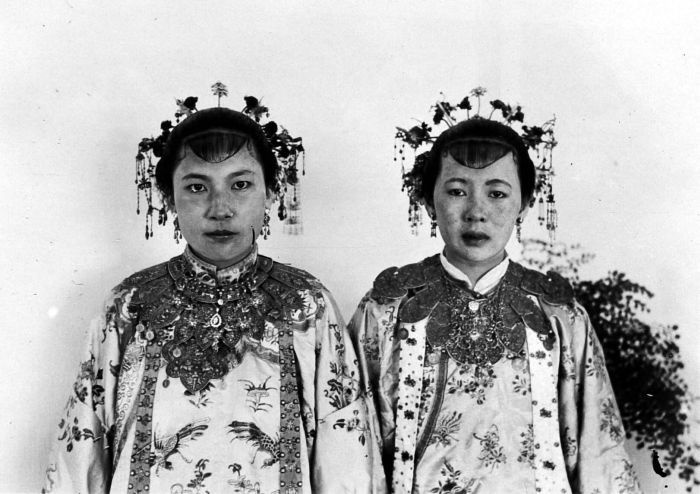
Among the Chinese community in Java, wedding traditions blend Chinese customs with modern Western influences. After a marriage agreement is reached and a date is set, the groom’s family visits the bride’s home about a week before the wedding, bringing gifts arranged in red baskets or boxes. The groom does not attend this visit. The baskets, carried by male relatives, typically contain items such as fruit, clothing, and jewelry for the bride. After presentation, the gifts are sorted, and about half are returned, along with the baskets. A few days later, the bride’s family makes a similar visit to the groom’s home, also bringing gifts in red baskets. Again, some of the items are returned after being sorted. The bride’s personal belongings are included in these gifts, and their acceptance symbolizes the groom’s family welcoming her into their household and preparing for her move after the wedding.[Source: George P. Monger, “Marriage Customs of the World From Henna to Honeymoons”, 2004]
The gifts taken by the family of the groom to the house of the bride are often arranged in red baskets or red boxes or other red containers. According to expat.or.id: Red symbolizes happiness and prosperity for the Chinese. Each basket should be carried by a member of the immediate family of the groom. The contents of the basket determines who should carry each basket. The baskets from the groom should all be carried by males. They contain various items, such as fruit in one basket, clothes in another, gold jewelry for the bride in another. Some are gifts from the groom and others are gifts from the family of the groom. Another basket contains 'uang susu' (milk money). Depending on the wealth of the family the gifts will be more or less generous. The bride. s family then accepts the baskets and takes them off to another room. Then ... this is the good part ... they sort through the gifts. Normally half of the gifts are placed back in the baskets and returned to the family of the groom. The basket is then returned to the person that brought it and everybody goes home. [Source: expat.or.id /~/]
“Three days before the wedding, the bride's family returns the favor and brings red baskets to the groom's house. These baskets are carried by females of the bride. s immediate family. The baskets normally contain clothes for the groom, shoes and fruit. Basically, things that he would use everyday. Some of the baskets contain makeup and personal things for the bride, such as nightgowns. This symbolizes that the groom's family is accepting her into their house. On her wedding day when she moves in, all of her personal belongings will already be in the groom's house. Again the gifts are sorted through and about half are returned. /~/
“Different ethnic Chinese groups will have variations on these proceedings, some more strictly adhered to than others. For example, Hokian, Cantonese or Kai have slight variations on these customs. For some, the groom's family will be invited into the new couple's bedroom after the bride's gifts have been received into the house and they will be invited to have a 'closet inspection'. It is expected that the bride has placed her things neatly in the closets indicating that she will be a good housekeeper.” /~/
Chinese Weddings Day and Ceremony in Indonesia
According to expat.or.id: ““On the surface, ethnic Chinese weddings may seem more similar to western weddings, due to the Chinese Indonesian wedding –– bridal party adaptation of western wedding dress and the wedding cake. But that may be the extent of the similarities...On the morning of the wedding day, the groom is symbolically dressed by his parents (helping him put his jacket on and his flower on his lapel). Then the groom and his parents go to the house of the bride, where they serve tea to both sets of parents while kneeling down in front of them. This symbolizes paying their respects as well as asking permission of their parents. [Source: expat.or.id /~/]
After this, the couple travels—often in a decorated car—to the wedding ceremony, which may take place in a church and is usually attended by close family members. The church service is not really considered that important and only immediate family normally attend. The more important event to attend is the reception. [Source: George P. Monger, “Marriage Customs of the World From Henna to Honeymoons”, 2004 ^]
“After the church service, the newlyweds proceed to a professional photo studio and have their picture taken in 20 different poses so they have something to show their children 20 years later. After the photo session, the newlyweds go on to the reception that is usually a standing only event. The reception is run by an MC, usually someone who is hired to do the job and has perhaps met the couple once on a previous occasion to ask them some very informal questions so as he can pretend to know them. The reception begins with a speech of welcome from the MC. /~/
Chinese Weddings Reception in Indonesia
The wedding reception that follows the Indonesian Chinese wedding ceremony allows extended family and friends to celebrate and offer congratulations. It may or may not include a formal meal, though more elaborate weddings can feature multi-course banquets. A master of ceremonies leads the event, beginning with a welcome speech, followed by the cutting of a large, multi-layered wedding cake. The layers symbolize the challenges and successes the couple will experience in life.The bride and groom cut the cake together, often starting from the bottom layer, and feed each other as well as their parents and grandparents. Sometimes a toast is made in their honor. Music is played throughout the celebration, and the couple, along with their parents, stand on a stage to greet guests individually. [Source: George P. Monger, “Marriage Customs of the World From Henna to Honeymoons”, 2004 ^]
According to expat.or.id: The wedding cake is usually a monstrous size. Normally it is Indonesian wedding cakelapis Surabaya (a layer cake) as the layers symbolize a ladder that you can climb up to success. It is also for this reason that some couples will cut the cake from the bottom layer and work their way upwards rather than starting at the top and working their way to the bottom! The cutting of the cake is usually the only event at the reception. The bride and groom cut the cake together and then feed the cake to each other with entwined arms, trying not to destroy the bride's elaborate makeup in the process. Then a piece of the cake would also be cut for each of the parents and grandparents and they too would be fed by the bride and groom holding the cake together. [Source: expat.or.id /~/]
“After the cake cutting, and sometimes a toast, the guests are invited to shake hands with the newlyweds and their parents on the stage. In all weddings there is some musical entertainment as the attendees line up to shake hands. This could be as simple as a man with a keyboard up to the Jakarta Symphony or Twilite Orchestra. You would also shake hands again when you are going to leave. /~/
“At more elaborate ethnic Chinese weddings, there could be a sit-down wedding reception. If this is the case, expect an elaborate 9 to 10 course meal. It could feature Chinese cuisine only, or be mixed with western dishes as well. There could be a female singer or two, usually from Taiwan. Occasionally, friends or family members will get up from the audience to sing for the wedding couple. The head tables will usually get a bottle of cognac or whiskey. At the weddings of the very wealthy, beer, wine or champagne maybe served to the guests. Most of the ethnic Chinese customs that a decade ago would have been compulsory are being ignored by the younger generation today. Most of the customs that are carried out are done so to satisfy parents.” /~/
Indonesian Chinese Homes
Jill Forshee wrote in “Culture and Customs of Indonesia”: Indonesian Chinese homes often differ from those of indigenous Indonesians. Those called “shop-houses,” accent the merchant class status of Chinese in Southeast Asia, especially in Indonesia. As noted by Jacques Dumarcay, in The House of Southeast Asia: “In Southeast Asia, the Chinese house is essentially urban and its plan is thus dependent on the layout of the town.” [Source: “Culture and Customs of Indonesia” by Jill Forshee, Greenwood Press, 2006]
“ Since cities are crowded, so is housing and commercial spaces, which Chinese often combine. Many live above or behind their businesses in long, narrow structures resembling urban shops in the West. Often family members wander in and out of the commercial and living spaces, and many will sit in front of their shops in the evenings to socialize with neighbors or enjoy cool air. When not too limited by space, Chinese homes include an open-air central outdoor courtyard surrounded on four sides by rooms. These dwellings provide a pleasant sense of natural space and often caged songbirds, flowering plants, vegetable gardens, or even fruit trees enliven these family enclosures.
“Households might shelter several family generations and contain considerable “1floor space. Because these are walled environments, people live in relative privacy from the outside. Chinese Indonesians also occupy homes like those of others, such as Dutch colonial houses and the common, modern types already described. In urban areas, many wealthy Chinese live in newer, expensive homes in upscale sections of town. Their homes can be lavish, surrounded by high concrete walls embedded with broken glass at the top to keep robbers at bay. Similar walls provide protection for most urban residences of the middle- or upper-classes, along with foreigners living in Indonesia.”
Potehi: Chinese Puppetry in Indonesia
Potehi puppetry, a kind of Chinese puppetry performed in Indonesia, is said to have originated on the Chinese mainland during the Shang Dynasty about 3,000 years ago, The word potehi comes from the words poo (kain/cloth), tay (kantung/pocket), and hie (wayang/puppet). The puppets, about 30 centimeters tall, have a similar shape to the unyil (children’s cartoon) puppets made from cloth. Each doll has an individual face. [Source: Lutfi Retno Wahyudyanti, Jakarta Post, March 20, 2009 |~|]
According to Jakarta Post: “There are darkly colored dolls with angry faces and brightly colored dolls with happy faces, which wear colorful dresses decorated with beautiful embroidery. The puppeteer manipulates the dolls from below using both his hands, yet can play two characters at the same time. He may have an assistant for more characters.” |~|
“Potehi has increasingly rare as few people are interested in maintaining the tradition. Puppeteers in Solo and Surabaya are ethnic Javanese, leaving only one puppeteer of Chinese descent, who lives in Semarang. If the Potehi puppets become extinct. It is mainly because of a 1967 presidential decree, which forced ethnic Chinese to integrate, costing them their Chinese identity. Under this law, Chinese New Year celebrations and various Chinese arts were prohibited. |~|
Chinese Puppetry Hangs on in Indonesia
Lutfi Retno Wahyudyanti wrote in the Jakarta Post: “In the middle of busy Semawis Market in Semarang, dozens of people stood staring, apparently transfixed by a red box, from which issued the sounds of traditional Chinese music. Before long, a golden puppet appeared, decorated with the picture of a dragon – the king. The Potehi puppet show had begun. Inside the box, 75-year-old Teguh Chandra and his assistant performed their show, accompanied by three musicians playing a range of traditional instruments. [Source: Lutfi Retno Wahyudyanti, Jakarta Post, March 20, 2009 |~|]
Teguh Chandra “got the chance to return to the stage after former president Abdurrahman Wahid revoked the 1967 presidential decree. Teguh’s first shows were performed in 1999 in the Ismail Marzuki Park at the invitation of Gadjah Mada University and the Kencana Solo University. The stage shows, although legal again, have lost their prestige and popularity and, as each show runs for three or more days, are finding it difficult to compete with television programs and modern entertainment. Furthermore, the long prohibition means interest in becoming a puppeteer has disappeared, and Teguh has never had a student. |~|
“Well before the performances were prohibited, who wanted to learn how to be a puppeteer?” asks Teguh, now the only person of Chinese descent running Chinese Potehi puppets shows. “Even now, among those who are on the stage, only a few want to continue because it is difficult to rely on this as a source of income.” |~|
Life of Chinese Puppeteer in Indonesia
Lutfi Retno Wahyudyanti wrote in the Jakarta Post: “Thio Tiong Gie, better known as Teguh Chandra, was born in January 1933 in Demak, where he taught himself his Potehi puppeteering skills. “A long time ago my father had a fabric shop in Demak,” he says. “We went bankrupt because the shop was robbed in 1942. My father even went to prison.” After that, the family Teguh is one of five children – moved to Kaligawe.“At that time we earned an income from selling snacks. My father bought newspapers to wrap the snacks.” In one newspaper was a pakem [a traditional puppet story] about the Potehi puppets.” [Source: Lutfi Retno Wahyudyanti, Jakarta Post, March 20, 2009 |~|]
“Teguh liked the story and memorized it. Some years later, he met a friend of his father who was recruiting puppeteers who could perform with the Potehi puppets. Because Teguh wanted a job he claimed that he had the necessary skills. He was the right person for the job, he said, because he liked history and was a good performer. He had a week to learn how to run a Potehi puppet show, before he was asked to go on stage in Cianjur. “This stage event was a big success,” Teguh recalls. “The audiences liked me and I was asked to perform again.” |~|
Teguh then started to seriously learn how to become a Potehi puppeteer. He had success in various places, especially along the north coast of Java, although he had only one play. Those who came to watch his Potehi puppet shows were from both the ethnic Chinese community and the indigenous Indonesian community. Eventually, word of his success reached the ears of a famous Potehi puppeteer called Tan Ang Ang. “I got a letter from him. He asked me to go to Blitar. There I was given 10 books of pakem for Potehi puppets. After that I started to perform various pakem.” |~|
“During this time, Teguh Chandra, a Confucian, also became a teacher of religion, being active as an itinerant preacher. He also ran services for those wanting a prayer ceremony or help with prayers for funerals. And so Thio Tiong Gie (as he then was) could no longer stage his Potehi puppet plays. He kept his dolls, some of which are hundreds of years old, in a big case, cleaning them occasionally to keep them in good condition. He also had to change his name to something more Indonesian and, following the Internal Affairs Minister’s Decree in 1978 allowing only five official religions, was forced to register himself as a Buddhist. Forced out of his job, the man now known as Teguh headed to Tegal, recalling from his stage shows that there were many welders working there. He tried to make doors and window bars and started a welding workshop.” |~|
Chinese and Business In Indonesia
In Indonesia the Chinese are regarded as hardworking and enterprising. One housewife from eastern Java told the New York Times, "They work harder. In a Chinese family you see the mother working, the kids working, everyone working. Sometimes we feel jealous. We think, why are we Javanese below the Chinese?"
Overseas Chinese controlled much of the commerce in Thailand, Malaysia, the Philippines, Cambodia and Indonesia in the 19th and 20th century and were involved in businesses throughout the Asian-Pacific region in the same period. But while most ethnic Chinese are considered to be members of the wealthy merchant class, many are actually small-business men, shopkeepers or traders.
Under the Dutch, the Chinese were prominent merchants. Under Suharto, Chinese tycoons became extremely wealthy while ordinary Chinese prospered as small businessmen but were regarded with suspicion by many Indonesians. Today Chinese own shops, restaurants, hotels, banks, industries. Only a small percentage are very wealthy. Most are small business owners.
During the Asian financial crisis many Chinese lost their jobs and ways of making a living. After the crisis in 1998, many Chinese businessmen in Java left the island and opened up new businesses off of Java, being careful however not compete with local businesses. In Bali for example they opened up 24-hour mini marts, Internet cafes and small craft factories—businesses that hadn't even existed before.
See Family-Style Businesses Under CHINESE IN SOUTHEAST ASIA factsanddetails.com
Wealthy Chinese in Indonesia
By one estimate, the Chinese make up 4 percent of the population but control about 70 percent of Indonesia's wealth. Under Suharto, 27 of Indonesian's 35 largest private businesses were run by Chinese tycoons. The only ones that weren’t were run by Suharto's children, often in conjunction with Chinese businessmen. The Chinese have traditionally relied on political connections to prosper. They have also been a magnet for foreign investment, much of it from non-Indonesian Chinese in places like Taiwan and Singapore.
The success of the Chinese is widely envied and resented in Indonesia. Many Chinese have amassed their vast fortunes by exploiting Indonesian workers and laborers on plantations and in factories. One laborer in east Java told the New York Times, "We're being monopolized by the Chinese. The Chinese should be kicked out! Then we would be freed of them forever."
The Chinese have traditionally kept a low profile so as not to arouse to much resentment over their wealth. Most rich Chinese don't like to flaunt their wealth out of fear of upsetting the Muslim majority. Even so many live in spacious houses and have Indonesian chauffeurs and servants.
Ethnic Chinese tycoons were hit hard by the Asian financial crisis. Many remained technically bankrupt for a long time afterwards.
See Rich
Image Sources: Wikimedia Commons
Text Sources: “Encyclopedia of World Cultures Volume 5: East / Southeast Asia:” edited by Paul Hockings, 1993; National Geographic; New York Times, Washington Post, Los Angeles Times, Lonely Planet Guides, Library of Congress, Smithsonian magazine, The New Yorker, Time, Reuters, AP, AFP, Wikipedia, BBC, CNN, and various books and other publications.
Last Updated April 2026