
MOUSE-LIKE HAMSTERS
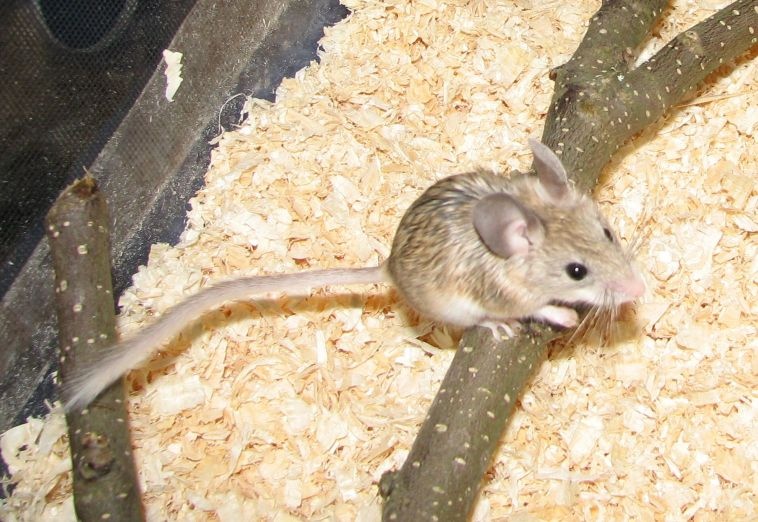
Mouse-like hamsters are also called brush-tailed mice. They are a group of small rodents found in Syria, Azerbaijan, Iran, Turkmenistan, Afghanistan, and Pakistan that generally live in rocky outcrops and semi-mountainous areas in desert regions. They are not true hamsters, but rather are an early split from the rest of the mouse-like rodents. They were once thought to be hamsters based on the shape of their molars, but they lack the cheek pouches, flank glands and short tails of the true hamsters. [Source: Wikipedia]
Mouse-like hamsters have been recognized as granivores (eat seeds and grain), herbivores (eat plants or plants parts), and omnivores (eat a variety of things, including plants and animals). Seeds make up the majority of their diet, but flowers and leaves are eaten as well. They occasionally eat insects and sometimes carrion. There are no reports of predation on mouse-like hamsters. However, they are most likely eaten by predators that consume other rodents, such as owls, snakes, and small carnivorous mammals like foxes and weasels. . Mouse-like hamsters are extremely agile and adept at escaping would-be predators. When threatened, they dart into the nearest rock crevice for shelter. If caught in the open, they are capable of running very fast and jumping over 30 centimeters into the air to evade pursuers.
On the International Union for Conservation of Nature (IUCN) Red List, most mouse-like hamsters are listed as Not Evaluated. Hotson's mouse-like hamster is listed as endangered by the IUCN. Three other species are listed as lower risk: Afghan mouse-like hamster, Tsolov's mouse-like hamster and Urar mouse-like hamster. Sightings of mouse-like hamsters in the wild are rare, and much about the animals and their numbers are not known. In Europe, a species of mouse-like hamster is available as a pet. They are labelled Calomyscus bailwardi mystax or Calomyscus bailwardi. They are generally only available from dedicated breeders, not pet shops. They have also been used for research in Russian laboratories.
RELATED ARTICLES:
HAMSTERS: TAXONOMY, CHARACTERISTICS, BEHAVIOR factsanddetails.com
HAMSTER SPECIES IN EURASIA: EUROPEANS, ROBOROVSKIS, CAMPBELL'S DWARVES factsanddetails.com
GOLDEN (SYRIAN) HAMSTERS: CHARACTERISTICS, BEHAVIOR, DISCOVERY, DOMESTICATION africame.factsanddetails.com
GERBILS: CHARACTERISTICS, BEHAVIOR AND REPRODUCTION factsanddetails.com
GERBIL SPECIES IN ASIA: MONGOLIAN, GREAT, INDIAN factsanddetails.com
GERBILS OF THE MIDDLE EAST AND NORTH AFRICA africame.factsanddetails.com
JIRDS: CHARACTERISTICS, BEHAVIOR, SPECIES AND REPRODUCTION africame.factsanddetails.com
JERBOAS OF CENTRAL ASIA: CHARACTERISTICS, BEHAVIOR, SPECIES factsanddetails.com
JERBOAS OF THE MIDEAST AND NORTH AFRICA: CHARACTERISTICS, BEHAVIOR, SPECIES africame.factsanddetails.com
EGYPTIAN JERBOAS: GREATER, LESSER, CHARACTERISTICS, BEHAVIOR africame.factsanddetails.com
PYGMY JERBOAS (WORLD'S SMALLEST RODENTS): CHARACTERISTICS, BEHAVIOR, SPECIES factsanddetails.com
Mouse-Like Hamster Taxonomy and Suspecies
Mouse-like hamsters were once grouped with the New World deer mice (Peromyscus) due to their appearance, though they are now grouped with the Old World hamsters. The single morphological feature that distinguishes Calomyscus from Peromyscus is that the genus Calomyscus has four-rooted molar teeth. [Source: Tracie Goodness, Animal Diversity Web (ADW) /=]
The closest relatives of mouse-like hamsters may be the extinct Cricetodontidae. Because of their seemingly early break from the rest of the mouse-like rodents, mouse-like hamsters have been placed in a family of their own, Calomyscidae, and have been referred to as living fossils. The earliest known calomyscid fossils are from Late Pleistocene Period (129,000 to 11,700 years ago) deposits on the Isle of Rhodes in the Aegean Sea.[Source: Allison Poor, Animal Diversity Web (ADW) /=]
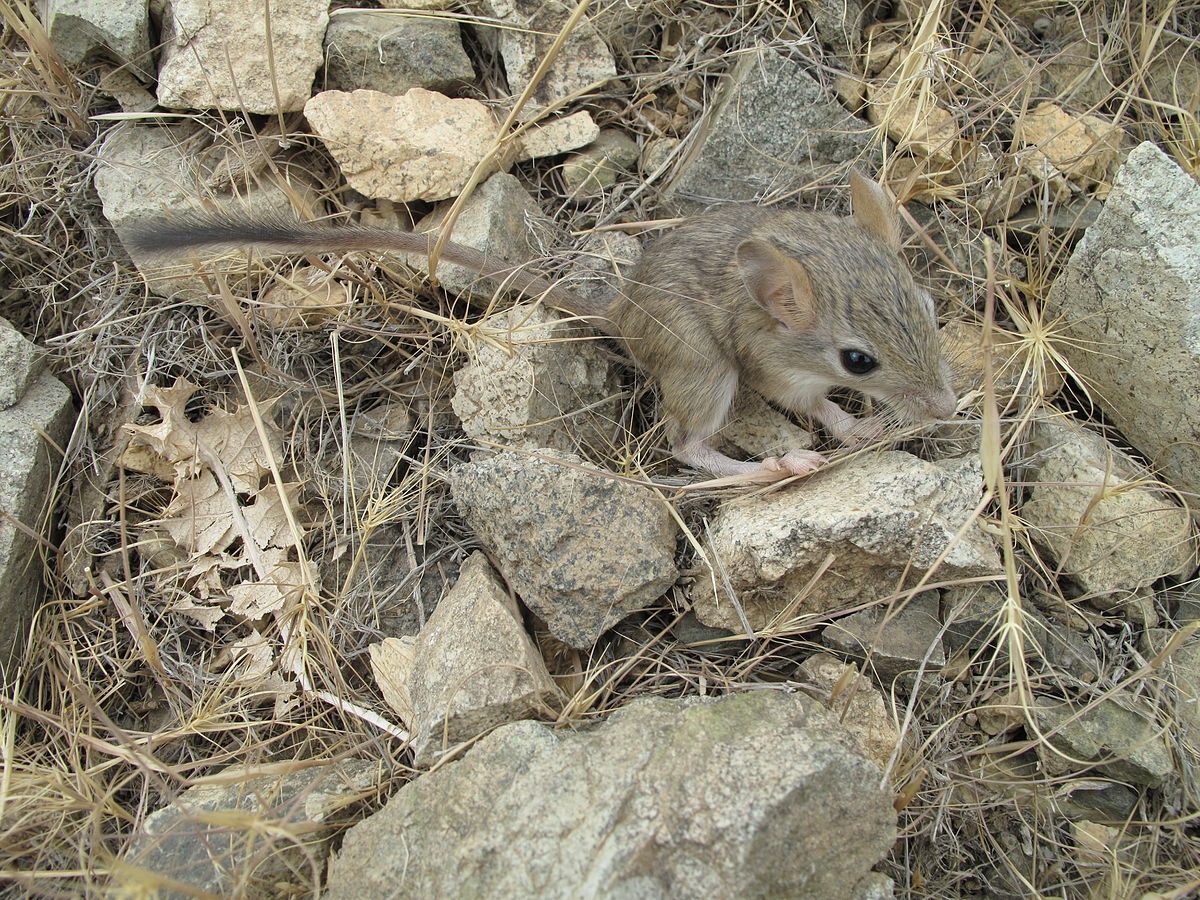
All members of the genus were once considered part of the same species Zagros Mountains mouse-like hamster (Calomyscus bailwardi), but they are now considered separate species due to major differences in chromosome number, skull measurements, and other features. Mouse-like hamsters species
1) Zagros Mountains mouse-like hamster, (C. bailwardi)
2) Baluchi mouse-like hamster, (C. baluchi)
3) Behzad's mouse-like hamster, (C. behzad)i
4) Goodwin's mouse-like hamster, (C. elburzensis)
5) Zykov's mouse-like hamster, (C. e. zykovi)
6) Noble mouse-like hamster, (C. grandis)
7) Hotson's mouse-like hamster, (C. hotsoni)
8) Kerman mouse-like hamster, (C. kermanensis)
9) Afghan mouse-like hamster (C. mystax) are also known as Great Balkhan mouse-like hamster,
10) Tsolov's mouse-like hamster, (C. tsolovi)
11) Urar mouse-like hamster, (C. urartensis
)
Mouse-Like Hamster Characteristics and Behavior
Mouse-like hamsters are small and look like mouses — hence their common name. The length of the head and body ranges from 6.1 to 9.8 centimeters (2.4 to 3.8 inches), with a 7.2-to-10.2= centimeters (2.8-to-4-inch) tail. They weigh between 15 to 30 grams (0,5 to 1 ounces). Sexual Dimorphism (differences between males and females) is not present:. The ears of Mouse-like hamsters are large and prominent. The fur is fine and soft. Their backside is pinkish, sandy or gray-brown and the paws and undersides are white. The top of the tail is dark and the underside is white. It is covered in thick fur and has a tuft at the tip. There are six mammae. Unlike hamsters in the subfamily Cricetinae, mouse-like hamsters lack cheek pouches and sebaceous flank glands. [Source: Allison Poor, Animal Diversity Web (ADW) /=]
Mouse-like hamsters are terricolous (live on the ground), diurnal (active during the daytime), nocturnal (active at night), motile (move around as opposed to being stationary), sedentary (remain in the same area) and solitary. They communicate with sound and sense using vision, touch, sound and chemicals usually detected with smell. Like many other muroid rodents like mice and voles, mouse-like hamsters probably have keen senses of smell and touch. Their large, prominant ears indicate that they have a good sense of hearing as well. They are usually silent, but they do sometimes emit high-pitched chirps that may function in communication.
According to Animal Diversity Web: Mouse-like hamsters are active year round. In summer they are strictly nocturnal but they are active at any time of the day or night in the fall and winter. They are good climbers, but never forage far from a rock crevice where they can seek shelter quickly. Mouse-like hamsters are not highly social; however, they sometimes nest in the same rock crevices or huddle together for warmth. In captivity, individuals can coexist peacefully in the same cage. Captive individuals are reported to be inquisitive and eager to investigate any disturbance that takes place near their enclosure.
Mouse-like hamsters have a long breeding season that begins in March and may last through December. In captivity, breeding may take place year round. The gestation period is about 21 days. Normally females have two litters per year, with three to seven young per litter. Young are altricial, meaning that they are born relatively underdeveloped and are unable to feed or care for themselves. Parental care appears to be provided by females. Females build nests of grasses and other soft materials in which to give birth. The eyes of young open about 13 days after birth. Around the same time, young grow their first coat of soft gray fur. Females nurse their offspring for about 17 days, and the young leave their mother four to 13 days later. Juveniles become sexually mature at four months of age, but do not reach full adult size and color for another two to four months. /=\
Zagros Mountains Mouse-Like Hamster
Zagros Mountains mouse-like hamsters (Calomyscus bailwardi) were the first species of mouse-like hamster to be described. Found throughout much of southern Iran, particularly in the Zagros mountains, they are also known as Iranian mouse-like hamsters, though there are several species of mouse-like hamster found in different parts of Iran. Zagros Mountains mouse-like hamsters are the largest species of mouse-like hamster. They are dark grey on top and white underneath. Zagros Mountains mouse-like hamsters feed on herbs and grass seed. They have relatively long lifespans. They typically live for around four years. A captive one lived nine years, three months, and 18 days. [Source: Tracie Goodness, Animal Diversity Web (ADW) /=]
Zagros Mountains mouse-like hamsters reside in habitats ranging from barren rocky hillsides to wetter regions. They favor mountain steppe regions between 400 and 3,500 meters (1,312 to 11,483 feet), and are typically absent from low valleys. They are commonly found in forests under evergreens as well as on barren hills. They make their homes in spaces between rocks as well as crevices between stone walls and embankments in small fields and terraced cultivation. In these crevices nests made of woven grass, wool, and other various soft materials have been found.
On the International Union for Conservation of Nature (IUCN) Red List Zagros Mountains mouse-like hamsters are listed as a species of Least Concern. During a study of three populations of these animals considerable differences were noticed between the populations. Further study and analysis resulted in the identification of some of the species named above and further study after that found even more.
Zagros Mountain mouse-like hamsters are small in size, lack defenses and are not very good burrowers, which makes them very susceptible to predation. Their most common predators are pallid scops owls, marbled polecats, stone martens, levantine vipers and rat snakes. Zagros Mountains mouse-like hamsters were found living in the burrows of Persian jirds (Meriones persicus).
Zagros Mountains Mouse-Like Hamster Characteristics and Diet
Zagros Mountains mouse-like hamsters range in weight from 15 to 30 grams (0.53 to 1.06 ounces), with an average weight of 20.4 grams (0.72 ounces), and are 13.3 to 20 centimeters (5.24 to 7.87 inches) long. Their tail is longer than their head and body length. Sexual Dimorphism (differences between males and females) is not present: Both sexes are roughly equal in size and look similar. [Source: Tracie Goodness, Animal Diversity Web (ADW) /=]
According to Animal Diversity Web: Zagros Mountains mouse-like hamsters have a jaw in which the angular process on the mandible is in line with the rest of the jaw. This sciurognathous jaw is characteristic of the family Muridae. The zygomatic plate is broad and tilted upward. The infraorbital (below the eye sockets) foramen is relatively large and is in the shape of a V, wider dorsally than ventrally. The large size of the infraorbital (below the eye sockets) foramen allows a slip of the masseter muscle to pass through it. The auditory bullae are large and the pterygoid extends to the bullae. The dental formula is 1/1 0/0 0/0 3/3 = 16. The upper incisors have a smooth anterior surface and are covered in yellowish-brown enamel. All of the cheek teeth lack closed ridges of dentine and show only traces of cusps. /=\
Females have six mammae. Their bodies measure 6.1 to 9.8 centimeters and their tails are 72 to 102 centimeters long. The vibrissae (whiskers) are up to 2.1 centimeters long. The ears are very round and 1.7 to 2 centimeters long and are devoid of hair and are pinkish-grey to slate gray in color. Their fur is very soft, fine, plumbeous at the base, and long, and ranges from a light pink-brown to a gray-brown color on the upper part of the body, and their underside, hands, and feet are white. The dividing line between the back and the belly is very well defined. There is no white patch behind the ear or eye, as in some other members of the Muridae. The muzzle is sharp and pointed. The hind leg is elongated in comparison to the forelimb. The hindfeet have five digits each, and the forefeet each have five digits with a vestigial clawless thumb. The claws are delicate and small.
Zagros Mountains mouse-like hamsters are herbivores (primarily eat plants or plants parts) and recognized as granivores (eats seeds and grain). Among the plant foods they eat are seeds, leaves, grasses, grains, nuts and flowers. Like many other murid rodoents they bring back food to their homes, though they cannot carry large quantities due to their lack of cheek pouches. They hide caches of food under stones in their burrow. These caches are often utilized during the winter months when the climate is harsh. /=\
Zagros Mountains Mouse-Like Hamster Behavior and Reproduction
Zagros Mountains mouse-like hamsters are terricolous (live on the ground), diurnal (active during the daytime), nocturnal (active at night), crepuscular (active at dawn and dusk), motile (move around as opposed to being stationary) and solitary. They are nocturnal (active at night), during the summer, though they become active by day as well during the autumn and winter, extending the hours of activity into the dusk and dawn hours. As far as it is currently known, Zagros Mountains mouse-like hamsters do not hibernate, and they remain active throughout the entire year. Zagros Mountains mouse-like hamsters are mostly solitary but they can sometimes be found sharing shelters in the wild and huddling together in captivity. They are very agile and are able to jump amongst the tumbled boulders that typically constitute their home. They are also very good climbers. They are nervous in disposition, and timid. /=\ [Source: Tracie Goodness, Animal Diversity Web (ADW) /=]
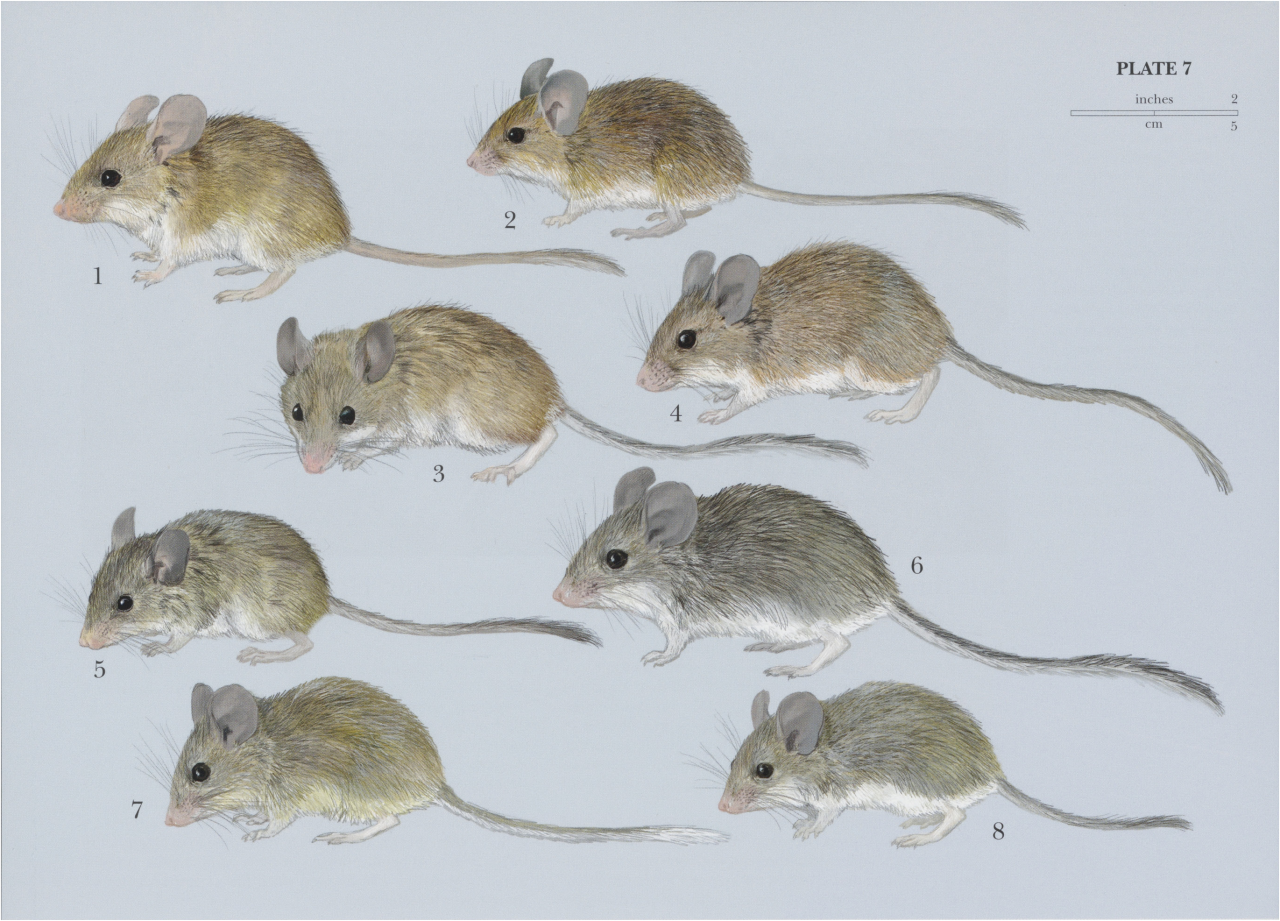
Mouselike hamster species: 1) Zagros Mountains Brush-tailed Mouse (Calomyscus bailwardi), 2) Hotson’s Brush-tailed Mouse (Calomyscus hotsoni), 3) Pakistan Brush-tailed Mouse (Calomyscus baluchi), 4) Great Balkhan Brush-tailed Mouse (Calomyscus mystax), 5) Goodwin's Brush-tailed Mouse (Calomyscus elburzensis), 6) Noble Brush-tailed Mouse (Calomyscus grands), 7) Urar Brush-tailed Mouse (Calomyscus urartensis), 8) Syrian Brush-tailed Mouse (Calomyscus tsolovi)
Zagros Mountains mouse-like hamsters engage in seasonal breeding. The breeding season is from late spring to mid-summer, typically from late March to early June though the breeding period can vary regionally, depending on food availability.. Females produce two litters per year. The gestation period ranges from three to five weeks. The number of offspring ranges from one to 5, with the average number of offspring being 2.8, with the average number of offspring being 3.3. The highest recorded number of births to a single female was recorded in captivity as 15 litters in 2.25 years, with a total of 41 young produced. In the wild, the typical female is sexually and reproductively active until the 3rd year of life. In one instance, cannibalism was observed. A captive female ate her young.
Young are altricial, meaning that they are born relatively underdeveloped and are unable to feed or care for themselves. They are hairless and helpless until they open their eyes for the first time around day 13. Around this same time, gray fur can be seen. Parental care is provided by females. The age in which they are weaned ranges from four (low) weeks and the age in which they become independent ranging from four to eight months. Young achieve a doubling in weight by the 8th day and growth typically finishes around the 4th month of life when they reach an eight- to ninefold body weight in comparison to the birthweight, though growth can continue for up to eight months. The post-independence period is characterized by the association of offspring with their parents. On average females reach sexual or reproductive maturity at four months and males do so at five months. Young do not have the same coloring or size as adults until they are four to eight months old. This is a relatively long period of growth and development for members of the family Muridae.
Image Sources: Wikimedia Commons
Text Sources: Animal Diversity Web animaldiversity.org ; National Geographic, Live Science, Natural History magazine, CNTO (China National Tourism Administration) David Attenborough books, New York Times, Washington Post, Los Angeles Times, Smithsonian magazine, Discover magazine, The New Yorker, Time, BBC, CNN, Reuters, Associated Press, AFP, Lonely Planet Guides, Wikipedia, The Guardian, Top Secret Animal Attack Files website and various books and other publications.
Last updated May 2025