
HAMSTERS
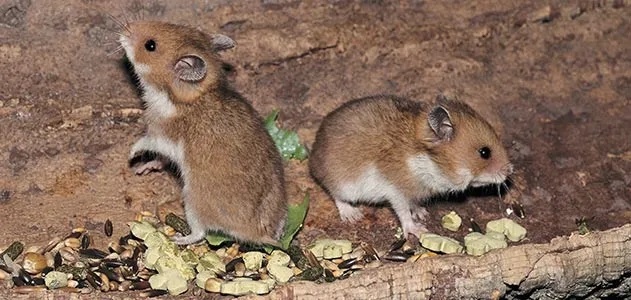
Hamsters are rodents. Golden or Syrian hamsters (Mesocricetus auratus) are the ones most most commonly kepts as a pet but three other species of dwarf hamster — Campbell's dwarf hamster (Phodopus campbelli), the winter white dwarf hamster (Phodopus sungorus) and the Roborovski hamster (Phodopus roborovskii) — are also kept as as pets as are Chinese hamster (Cricetulus griseus), but much less commonly. [Source: Allison Poor, Animal Diversity Web (ADW) /=]
Hamsters first appeared in the fossil record in the Middle Miocene Period (16 million to 11.6 million years ago) in Europe. The earliest fossils of living genera are from the Late Miocene Period (11.6 million to 5.3 million years ago). The record lifespan for a wild hamster is ten years but this is very unusual. Most wild and captive hamsters live two to four years. Common causes of mortality in the wild are predation, harsh winters, disease, and, in agricultural areas, crushing by heavy machinery.
In the wild, hamsters are found in central and eastern Europe, Asia Minor, parts of Central Asia, Syria, Iran, Mongolia, Siberia, northern China, and Korea. Hamsters are most common in dry, open habitats and live deserts, plains, sand dunes, steppes, shrublands, rocky foothills, river valleys, agricultural fields, gardens, and orchards at elevations up to 3,600 meters (11,810 feet).
Hamsters are different from gerbils and jerboa although they look kind of similar. All three are small rodents, but they have distinct physical and behavioral differences. Gerbils are generally more slender and athletic, with long, furry tails, while hamsters are rounder and have shorter, stubby tails. Gerbils are also more social and enjoy being in pairs or small groups, whereas hamsters are typically solitary animals. Gerbils and jerboas are both desert-dwelling rodents, but they belong to different families and have distinct characteristics. Gerbils are part of the Muridae (mouse) family and are known for their shorter legs and burrowing habits. Jerboas are in the family Dipodidae and are characterized by their long hind legs, hopping locomotion, and longer tails. [Source: Google AI]
On the International Union for Conservation of Nature (IUCN) Red List most hamster species are listed as Not Evaluated. The IUCN currently lists one species as endangered (the popular pet, golden or Syrian hamsters, Mesocricetus auratus), one as vulnerable (Romanian hamsters, Mesocricetus newtoni), and one as lower risk (gray dwarf hamsters, Cricetulus migratorius). Although hamsters breed readily and are abundant in captivity, wild populations of some species have restricted ranges and are vulnerable to habitat destruction. /=\
RELATED ARTICLES:
HAMSTER SPECIES IN EURASIA: EUROPEANS, ROBOROVSKIS, CAMPBELL'S DWARVES factsanddetails.com
GOLDEN (SYRIAN) HAMSTERS: CHARACTERISTICS, BEHAVIOR, DISCOVERY, DOMESTICATION africame.factsanddetails.com
MOUSE-LIKE HAMSTERS: CHARACTERISTICS, SPECIES, BEHAVIOR, AND REPRODUCTION factsanddetails.com
GERBILS: CHARACTERISTICS, BEHAVIOR AND REPRODUCTION factsanddetails.com
GERBIL SPECIES IN ASIA: MONGOLIAN, GREAT, INDIAN factsanddetails.com
GERBILS OF THE MIDDLE EAST AND NORTH AFRICA africame.factsanddetails.com
JIRDS: CHARACTERISTICS, BEHAVIOR, SPECIES AND REPRODUCTION africame.factsanddetails.com
JERBOAS OF CENTRAL ASIA: CHARACTERISTICS, BEHAVIOR, SPECIES factsanddetails.com
JERBOAS OF THE MIDEAST AND NORTH AFRICA: CHARACTERISTICS, BEHAVIOR, SPECIES africame.factsanddetails.com
EGYPTIAN JERBOAS: GREATER, LESSER, CHARACTERISTICS, BEHAVIOR africame.factsanddetails.com
PYGMY JERBOAS (WORLD'S SMALLEST RODENTS): CHARACTERISTICS, BEHAVIOR, SPECIES factsanddetails.com
Hamster Taxonomy and Clades

Hamsters are muroid rodents, which include mice, rats, voles, hamsters, lemmings, gerbils and their relatives. There are a total of 860 species or muroid rodents. Taxonomists generally disagree on appropriate placement of the hamster subfamily (Cricetinae) within the muroid superfamily (Muroidea). Some place it in a family Cricetidae that also includes voles, lemmings, and New World rats and mice; others group all these into a large family called Muridae. [Source: Wikipedia]
The hamster the subfamily Cricetinae contains 19 species in seven genera (Cricetulus, Mesocricetus, Phodopus, Allocricetulus, Cansumys, Cricetus, and Tscherskia). The evolutionary history of history is recorded by 15 extinct fossil genera and extends back 11.2 million to 16.4 million years to the Middle Miocene Epoch in Europe and North Africa. In Asia it extends 6 million to 11 million years. Four of the seven living genera include extinct species. One extinct hamster of Cricetus, for example, lived in North Africa during the Middle Miocene, but the only extant member of that genus is the European or common hamster of Eurasia.
Neumann et al. (2006) conducted a molecular phylogenetic analysis of 12 of the above 19 hamster species using DNA sequence from three genes: 12S rRNA, cytochrome b, and von Willebrand factor. They uncovered the following relationships:
1) Phodopus group (dwarf hamsters) was found to represent the earliest split among hamsters. Their analysis included the species: Campbell's dwarf hamster (P. campbelli) and
Roborovski dwarf hamster (P. roborovskii). The results of another study suggest that Kam dwarf hamsters (Urocricetus kamensis) and related Ladakh dwarf hamster (U. alticola) belong to either this Phodopus group or hold a similar basal position.
2) Mesocricetus group also forms a clade. Their analysis included all four species, with golden or Syrian hamsters (M. auratus) and Ciscaucasian hamsters (M. raddei) forming one subclade and Turkish hamsters (M. brandti) and Romanian hamsters (M. newtoni) another.
3) Remaining genera of hamsters formed a third major clade. Two of the three sampled species within Cricetulus represent the earliest split. This clade contains Chinese striped hamsters (C. barabensis) and presumably related Sokolov's dwarf hamsters (C. sokolovi) and long-tailed dwarf hamsters (C. longicaudatus).
4) The remaining clade contains members of Allocricetulus, Tscherskia, Cricetus, and C. migratorius (grey dwarf hamster, Armenian hamster, migratory grey hamster; grey hamster; migratory hamster). Allocricetulus and Cricetus were sister taxa. Cricetulus migratorius was their next closest relative, and Tscherskia was basal.
Hamster Characteristics
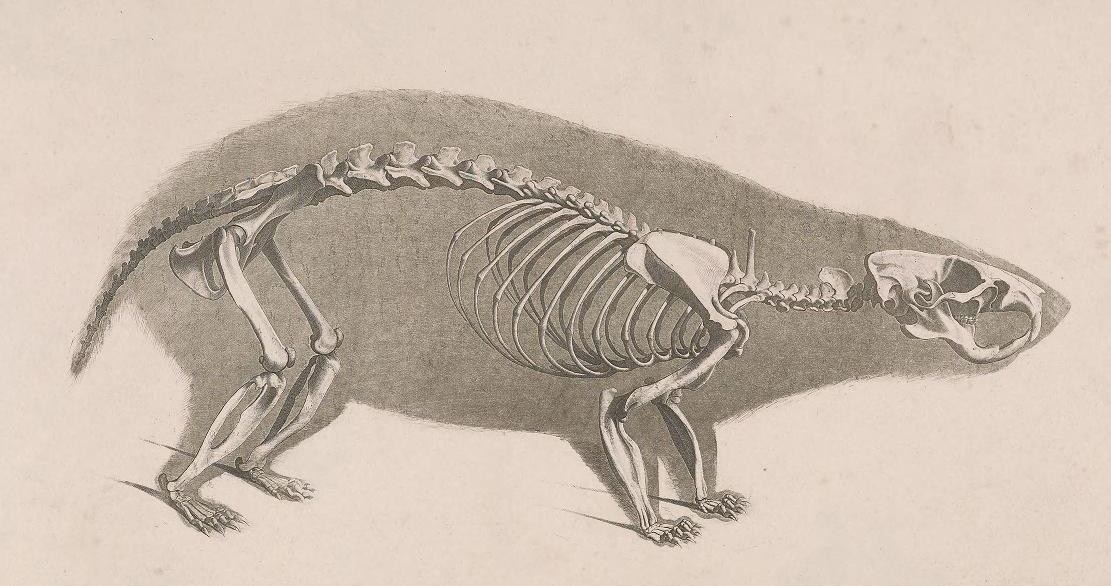
Hamsters are small to large rodents with compact bodies, small, furry ears; short, stocky legs; wide feet; short stubby tails; large cheek pouches; and sebaceous flank glands. Body lengths range from 5 to 34 centimeters (two to 13.4 inches), with tail lengths ranging from seven to 10.6 centimeters (2.7 to 4.2 inches). Sexual Dimorphism (differences between males and females) is present: Sexes look alike Females of some hamster species are larger than males. [Source: Allison Poor, Animal Diversity Web (ADW) /=]
Hamsters have thick, silky fur, which can be long or short. In terms of coloration, they are usually gray, pinkish buff, light brown, or reddish brown on their back side and white, gray, or black on the undersides. Their flanks are often white. Some have a middorsal stripe. Species of genus Phodopus are the smallest, with bodies 5.5 to 10.5 centimeters (2.2 to 4.1 inches) long; the largest is the European hamster (Cricetus cricetus), measuring up to 34 centimeters (13 inches) long, not including a short six-centimeter (2.4-inch) tail. [Source: Wikipedia]
Allison Poor wrote in Animal Diversity Web: Hamsters have two-chambered stomachs, and most lack a gall bladder. Their large intestines and ceca are moderately complex. Hamsters have a diploid chromosome number between 20 and 44. The dental formula of hamsters is 1/1, 0/0, 0/0, 3/3 = 16. The incisors are orthodont and ungrooved, and the molars are rooted and cuspidate. The upper molars have deep labial re-entrant angles, and most hamsters have molars with opposite cusps. The dentary has a pronounced sigmoid notch and coronoid process. The rostrum (hard, beak-like structures projecting out from the head or mouth) is long, wide, and robust. The area between the orbits is hourglass shaped, and the zygomatic plate usually lacks a spine or notch. The incisive foramena are usually short. The sphenopalatine vacuities are moderately large. There is a postglenoid foramen, and most have a sphenofrontal foramen and squamosoalisphenoid groove. The bony palate is wide and smooth, and there is usually a single pair of posterior palatine foramina. A strut of the alisphenoid bone separates the masticatory foramen and accessory foramen ovale. Cricentines have vertebral columns with 13 thoracic vertebrae and six lumbar vertebrae. /=\
Hamster Food, Eating Behavior and Predators
Hamsters are primarily granivorous (eat seeds and grain), but they also consume leaves, shoots, roots, and fruit. In addition, some species are omnivorous and eat insects and even vertebrates such as frogs. When they forage, hamsters cram food into their large cheek pouches and take it back to store in their burrows. Hamster burrows have been found with as much as 90 kilograms of stored food. [Source: Allison Poor, Animal Diversity Web (ADW) /=]

European hamsters (Cricetus cricetus) also called common hamster or black-bellied field hamster
Campbell's dwarf hamsters (Phodopus campbelli)
Desert Hamster (Phodopus roborovskii) or Roborovski hamster or Roborovski hamster
Djungarian hamster (P. sungorus) also called winter-white Russian dwarf hamster
Ciscaucasian hamster (M. raddei)
Romanian hamster (M. newtoni)
Turkish hamster (M. brandti) also called Brandt's hamster; Azerbaijani hamster
Syrian hamster (Mesocricetus auratus) also called golden hamster
Animals that prey on hamsters include diurnal raptors, snakes, and carnivorous mammals. Among the species that are known to have eaten hamsters are common buzzards, red kites, black kites, lesser spotted eagles, red foxes, domestic dogs, ermine, and Eurasian badgers. Predators such as common kestrels, grey herons, carrion crows, and rooks prey on juvenile hamsters. /=\
Hamsters defend themselves by being vigilant and making quick dashes to their burrows. Their grayish or brownish fur color blends in well to their arid habitats, serving as camouflage. Hamsters can be aggressive and do not hesitate to defend themselves from predators with their large incisors. Females sometimes protect their young from predators by carrying them in their cheek pouches.
Hamster Behavior
Hamsters are generally solitary and cursorial (with limbs adapted to running), terricolous (live on the ground), fossorial (engaged in a burrowing life-style or behavior, and good at digging or burrowing), diurnal (active during the daytime), nocturnal (active at night), crepuscular (active at dawn and dusk), motile (move around as opposed to being stationary), sedentary (remain in the same area), have daily torpor (a period of reduced activity, sometimes accompanied by a reduction in the metabolic rate, especially among animals with highmetabolic rates), territorial (defend an area within the home range), and have dominance hierarchies (ranking systems or pecking orders among members of a long-term social group, where dominance status affects access to resources or mates). [Source: Allison Poor, Animal Diversity Web (ADW) /=]
Hamsters are usually active at night or active at dawn and dusk, though some species are active both night and day. Some species are highly aggressive toward members of their own species and strict dominance hierarchies help mitigate fighting. Often, females are the dominant animals. Hamsters are not true hibernators, but they do experience long bouts of torpor, lasting several weeks at a time, during the winter. Some hamsters can swim quite well by filling their cheek pouches with air, giving themselves buoyancy.
Hamsters dig burrows with multiple entrances and many connected tunnels, often with separate chambers for a nest, latrine, and food storage. Tunnels may be 50 centimeters deep, and even deeper — up to two meters below the ground — during the winter. The size of a hamster's burrow often depends on the age of the animal.
Hamsters sense using vision, touch, sound and chemicals usually detected with smell and communicate with chemicals usually detected by smelling. They leave scent marks produced by special glands and placed so others can smell and taste them. Hamsters seem to rely most on vision when searching for live prey, but hearing and smelling are also important. Males scent-mark their territories with their large sebaceous flank glands. The size of these glands is correlated with an individual's status in the dominance hierarchy: the larger the glands, the more dominant the animal. /=\
Hamster Reproduction and Offspring
Hamsters are polygynandrous (promiscuous), with both males and females having multiple partners. They engage in seasonal breeding and generally mate and raise their litters from February to November. Females bear between two and four litters per year. Gestation is short, lasting 15 to 22 days, and litter sizes average five to seven but can be as small as one and as large as 13. [Source: Allison Poor, Animal Diversity Web (ADW) /=]
Siberian dwarf hamsters of Central Asia have short lifespans and only a short time to reproduce and produce offspring. Like all mammals females can not release an egg while producing milk. To speed up the reproduction process a female gives off strong-smelling vaginal secretions the night before she gives birth. The secretions can attract males up to a quarter mile away. After giving birth the female has a three hour window of opportunity to get pregnant before she begins producing milk. In that time she emerges from her burrow mates quickly with a male attracted by her secretion. During the next 18 days she suckles her young while her new brood are developing inside her. On the eve of their birth she repeats the mating and suckling process again and gives birth again. Following this pattern she may give birth four times in her short life.
During the breeding season, male hamsters have been observed entering any burrows they find, looking for females. During mating, a copulatory plug forms and seals the female's reproductive tract, preventing subsequent males from successfully fertilizing the female's eggs. A female hamster often drives a male out of her territory soon after mating. /=\
Young are altricial. This means that young are born relatively underdeveloped and are unable to feed or care for themselves or move independently for a period of time after birth. During the pre-weaning stages most of the provisioning and protecting are done by females. Prior to a study published in 2000, it was widely held that female hamsters were primarily responsible for care of the young. However, recent evidence suggests that male hamsters may assist in the delivery process by consuming both amniotic fluid, placenta and fetal membranes. Females of some species jam their offspring into their cheek pouches when danger threatens and move elsewhere. Young hamsters nurse for about three weeks, and are sexually mature at six to eight weeks. /=\
How Hamsters Became Pets
Hamsters became popular pets after World War II, primarily due to the domestication of the Syrian hamster (Mesocricetus auratus). The process involved scientific research, breeding programs, and later, commercial pet trade. It all began in 1930, when a biologist named Israel Aharoni (1882–1946) captured some wild Syrian hamsters in Syria and bred them in Jerusalem for research. Aharoni worked in the Ottoman Empire and British Palestine and is widely known as the "first Hebrew zoologist." He collected a litter of Syrian hamsters on an expedition to Aleppo, Syria. The hamsters were bred as laboratory animals in Jerusalem, but some escaped through a hole in the floor. The majority of domestic golden hamsters are said to be descended from this one litter.
Ben Crair wrote in Smithsonian magazine: “Most people think of a hamster as something between a pet and a plaything. It lives and breathes like any other animal, but it’s also cheap, low maintenance and easily replaceable like a toy. No one expects an escaped pet hamster to survive long, which is why it surprises many people to learn that hamsters have been living in the fields of Europe for millennia. The common hamster, as the wild species is known, is about the size and shape of a sweet potato, with calico fur, beady dark eyes and half-moon ears. It originated on the steppes of central Asia and spread westward at the end of the last ice age, settling in the same soft soils that humans were beginning to cultivate. Hamsters ate the crops around their burrows and sometimes destroyed swaths of farmland during population explosions, when as many as 2,000 crowded into a single hectare. Farmers killed hamsters to protect their crops and sell their fur, which was fashionable throughout Eastern Europe. (About a hundred hamsters are killed to make every hamster-fur coat.) In 1966, trappers in Saxony-Anhalt in East Germany killed more than a million hamsters in a single season. [Source: Ben Crair, Smithsonian magazine, March 2018]
Descendants of Aharoni's hamsters were sent to laboratories and institutions around the world, including the Zoological Society of London, starting in the 1930s and 1940s. Not long afterwards hamsters were introduced as pets to the general public. In the late 1940s, Albert Marsh established a commercial hamster breeding business, "Gulf Hamstery," further promoting hamsters as pets and laboratory animals. Hamsters, including the dwarf hamster species, gained further popularity with the rise of pet shops.
Image Sources: Wikimedia Commons
Text Sources: Animal Diversity Web animaldiversity.org ; National Geographic, Live Science, Natural History magazine, CNTO (China National Tourism Administration) David Attenborough books, New York Times, Washington Post, Los Angeles Times, Smithsonian magazine, Discover magazine, The New Yorker, Time, BBC, CNN, Reuters, Associated Press, AFP, Lonely Planet Guides, Wikipedia, The Guardian, Top Secret Animal Attack Files website and various books and other publications.
Last updated April 2025