
MONGOLIAN GERBILS
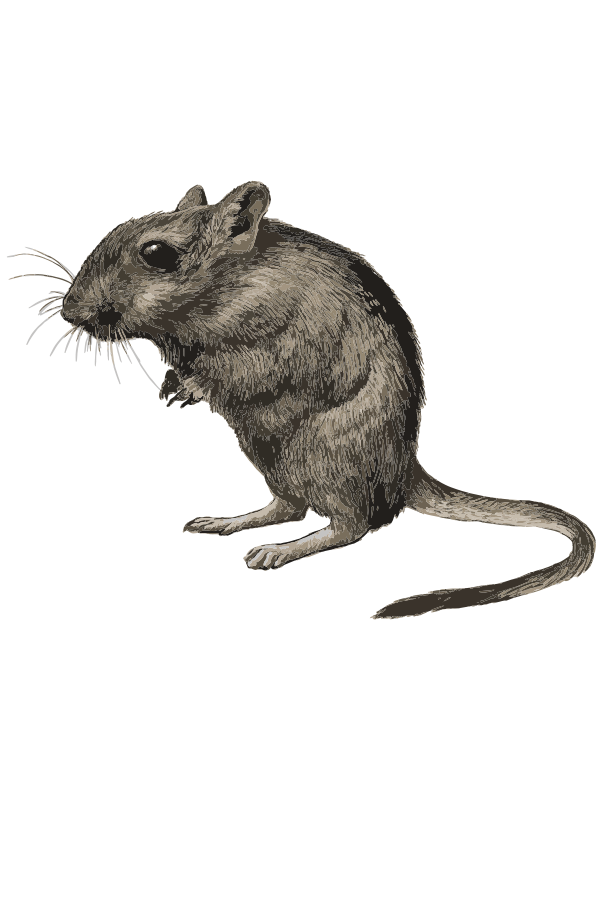
Mongolian gerbils (Meriones unguiculatus) are also known as Mongolian jird. Rodents in the subfamily Gerbillinae, they are gerbils most often kept as pets. They weigh 60 to 130 grams (2 to 4.5 ounce) and have a body length of 11 to 13.5 centimeters (4.25 to 5.25 inches). They have been used in science and researchs since second half of the 19th century, and starting becoming pets in the English-speaking world in the mid 1950s when they were brought to the United States. The first documented pet Mongolian gerbil in the United Kingdom was in 1961. The use of gerbils in scientific research is now frowned upon. favor. On the International Union for Conservation of Nature (IUCN) Red List, they are listed as a species of Least Concern. In CITES (Convention on International Trade in Endangered Species of Wild) they have no special status.[Source: Wikipedia]
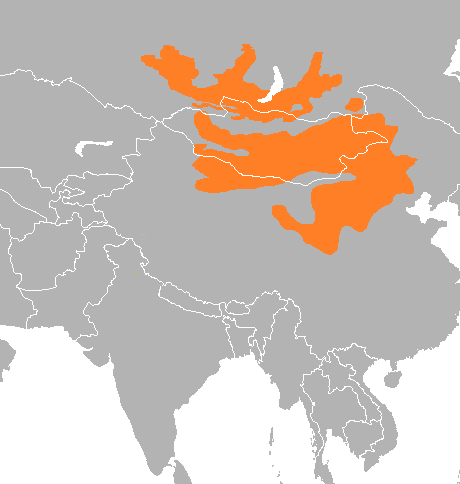
Mongolian gerbils occur naturally in the highlands of Mongolia, southern Siberia and Inner Mongolia, Xinjiang and Heilongjiang in western and northern China. They live in clay or sandy deserts, grasslands, scrub, arid steppes, and mountain valleys. The climate where they live can be quite harsh with extreme temperatures that can vary from -40̊C in the winter to 50̊C in the summer. Temperature can also vary quite a bit on a daily basis with hot afternoons and cold nights. These areas are also characterized by low annual precipitation (less than 23 centimeters a year) and a long winter (October to April). [Source: Jack Chen, Animal Diversity Web (ADW) /=]
Mongolian gerbils feed mainly on mugwort (Artemisia sieversiana and A. commutata). Saltwort (Salsola collina), bristle grass (Setaria viridis), and lyme grass (Leymus chinensis) are also eaten. Captive mongolian gerbils eat a wide variety of foods, including grains, grasses, and some fruits and vegetables. Gerbils conserve both water and fat extremely well. They conserve water by producing a highly concentrated urine and dry feces. /=\
RELATED ARTICLES:
GERBILS: CHARACTERISTICS, BEHAVIOR AND REPRODUCTION factsanddetails.com
GERBILS OF THE MIDDLE EAST AND NORTH AFRICA africame.factsanddetails.com
JIRDS: CHARACTERISTICS, BEHAVIOR, SPECIES AND REPRODUCTION africame.factsanddetails.com
HAMSTERS: TAXONOMY, CHARACTERISTICS, BEHAVIOR factsanddetails.com
HAMSTER SPECIES IN EURASIA: EUROPEANS, ROBOROVSKIS, CAMPBELL'S DWARVES factsanddetails.com
GOLDEN (SYRIAN) HAMSTERS: CHARACTERISTICS, BEHAVIOR, DISCOVERY, DOMESTICATION africame.factsanddetails.com
MOUSE-LIKE HAMSTERS: CHARACTERISTICS, SPECIES, BEHAVIOR, AND REPRODUCTION factsanddetails.com
JERBOAS OF CENTRAL ASIA: CHARACTERISTICS, BEHAVIOR, SPECIES factsanddetails.com
JERBOAS OF THE MIDEAST AND NORTH AFRICA: CHARACTERISTICS, BEHAVIOR, SPECIES africame.factsanddetails.com
EGYPTIAN JERBOAS: GREATER, LESSER, CHARACTERISTICS, BEHAVIOR africame.factsanddetails.com
PYGMY JERBOAS (WORLD'S SMALLEST RODENTS): CHARACTERISTICS, BEHAVIOR, SPECIES factsanddetails.com
Mongolian Gerbil Characteristics and Behavior
Mongolian gerbils have a body length 11 to 13.5 centimeters (4.25 to 5.25 inches), with a 9.5 to 120 centimeters (3.75 to 4.75 inch) tail, and weigh 60 to 130 grams (2 to 4.5 ounce), with their average weight being 96 grams (3.38 ounces). Their average basal metabolic rate is 0.546 watts. Their average lifespan in captivity is two years. In the wild it is often around three to four months. Adult males larger than females, with males averaging 60 grams and females averaging 50 to 55 grams in weight Mongolian gerbils have thin hair, with grey roots, a yellow shaft, and a black tip. Back fur is white and their unfurred claws reveal their pinkish white skin. [Source: Jack Chen, Animal Diversity Web (ADW) /=]
In the wild, Mongolian gerbils live in family groups in small burrows dug into soft soil. They tend to build burrows near plants to take advantage of the support of the plant's roots The burrows are characterized by one nest and one to two storerooms. The burrows extend 45 to 60 centimeters underground and average four centimeters in diameter. Gerbils take sandbaths to maintain fur health, especially to remove excess oil. Oils in the fur help to absorb sunlight and regulate body temperature. Foot stomping is used to warn other gerbils of danger.
Gerbils spend much of their time foraging and are inactive during the hottest and coldest parts of the day and the year to conserve energy — behavior that can even be observed in domesticated gerbils. Each family group of gerbils seems to be led by an alpha male that is larger than the others in the group. Family and territory size — anywhere from 325 to 1550 square meters — seems to be dependent on alpha male size. There are two to three times more females than males in any family but family size rarely exceeds 20 animals. /=\
Wild Mongolian gerbils breed between February and October, producing up to three litters during that time. The estrus cycle lasts four to six days and a post-partum estrus can occur. Mating behavior is characterized by the male chasing a female while stomping his feet. Females allow mating after a period of courtship . Gestation lasts between 19 and 30 days. Litter size varies between one and 12, with an averages of four to seven. Newborn young weigh about 2.5 grams each and weaning occurs at 20-30 days. On average females reach sexual or reproductive maturity at 43 days. Breeding can continue until 20 months of age, On average males reach sexual or reproductive maturity at 36 days. /=\
Great Gerbils
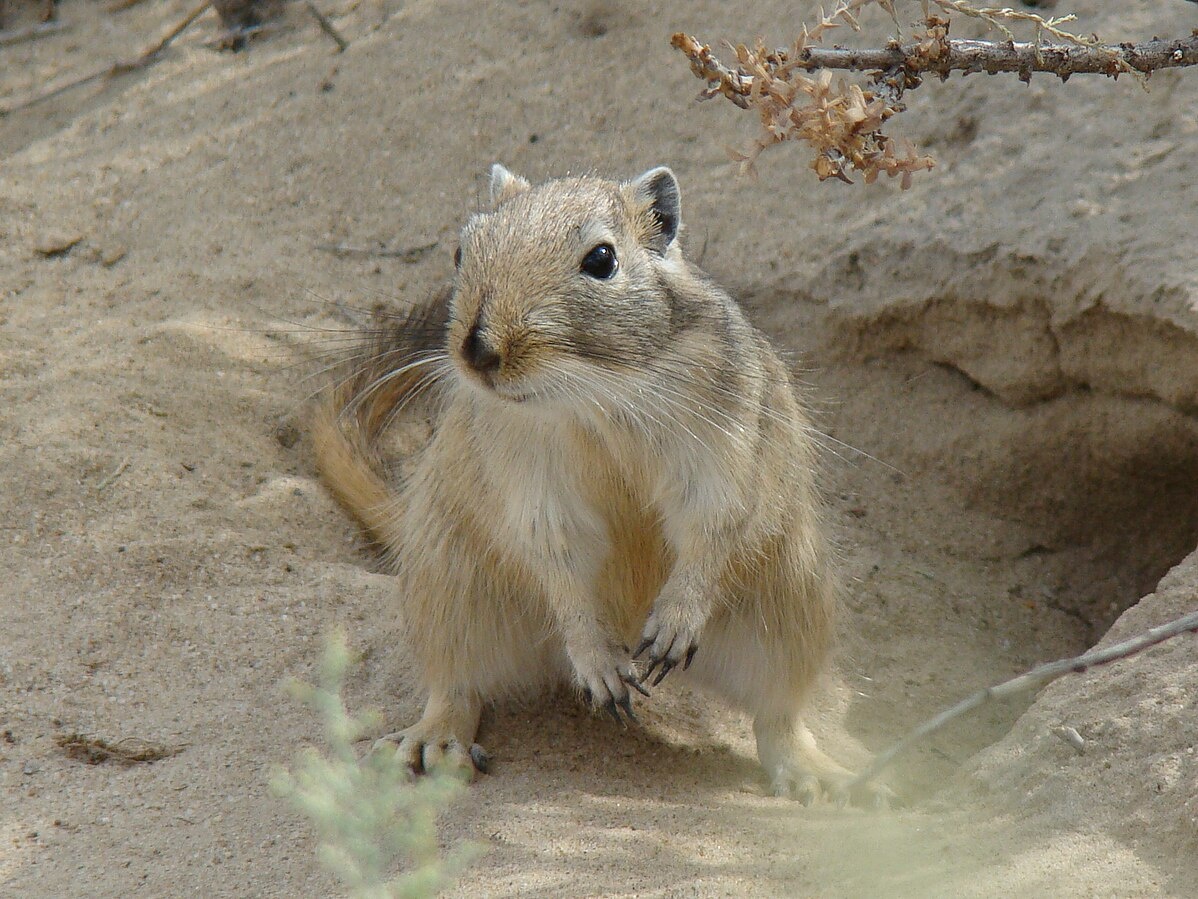
Great gerbils (Rhombomys opimus) are the largest gerbils,with a head and body length of 15 to 20 centimeters (six to eight inches). They have large front claws used for burrowing and distinctive skulls with two grooves in each incisor. Great gerbils are found in arid habitats, predominantly in sandy or clay deserts in Turkmenistan, Kazakhstan, Mongolia, China, Pakistan, Afghanistan, and Iran.
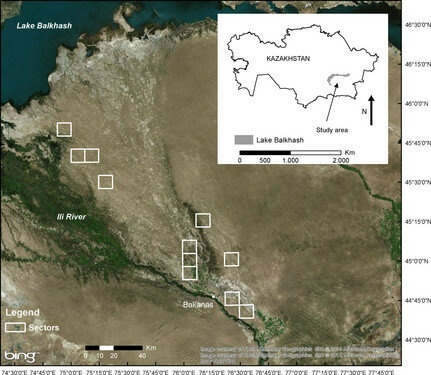
Great gerbils inhabit the deserts of Central Asia from the Caspian Sea in the west to Southern Mongolia and North-Central China in the east, the Arabian Sea to the south and areas of Southwestern Russia to the north. They are most abundant in sand and clay deserts, usually in foothill and mountain areas and prefer subsandy soil where they construct elaborate multichambered burrows. These burrows are found from 1.5 to 2.5 meters (5 to 8.3 feet) below the surface. These gerbils sometimes inhabit agricultural areas and dammage crops as they hoard grains and vegetation for the winter.[Source: Mathew Nannizzi, Animal Diversity Web (ADW) /=]
On the International Union for Conservation of Nature (IUCN) Red List great gerbils are listed as a species of Least Concern. In CITES (Convention on International Trade in Endangered Species of Wild) they have no special status. They have been trapped for its skins in some places. But they are numerous enough to be considered pests throughout their entire range. Not only do they eat crops, they can also damage irrigation cannals, and embankments of roads and railways with their burrowing and can carry disease like the plague and the skin disease Leishmaniasis./=\
Great gerbils are preyed upon by a number of animals such as foxes, wildcats, weasels, vultures, cobras. feral dogs and wolves and are an important source of food for birds of prey such as owls kites and hawks. Anti-predator adaptations include sandy-grey-colored coats that blend in with the desert . They have a large middle ear, allowing them to hear low-frequency sounds made by the wings of owls and raptors. Their relatively large eyes give them an open field of vision. Even they are mostly diurnal, they do much of their foraging during low light hours to avoid predators. The tuft of hair at the end of their tail is believed to serve as a predator decoy, with the predator striking the tuft, which breaks off from the tail, allowing the gerbil to make an escape. /=\
Great Gerbil Characteristics, Diet and Water
Great gerbils have an average weight is 285 grams (10.04 ounces) with a total length of 21to 33 centimeters (8.3 to 13 inches), including a tail that reaches lengths of six centimeters (2.4 inches). Their body is stocky and their claws are long and sharp, helping them dig burrows. The coat on their upper body is yellowish-orange, or dark grayish-yellow, often matching color of the sandy deserts they inhabit. Great gerbils often spend the winter under snowpack and their thick, dense, soft fur helps them stay warm. Females live long than males to female. The males maximum lifespan is two to three years and the female lives three to four years. [Source:Mathew Nannizzi, Animal Diversity Web (ADW) /=]
Great gerbils are primarily herbivores (eat plants or plants parts) and are also recognized as folivores (eat leaves), frugivores (eat fruits), granivores (eat seeds and grain) and,coprophages (eat feces). Great gerbils feeds on a variety of plants, seeds, fruits, stems, roots, bulbs, and shrubs and they store and caches food, especially in areas where the winter snow pack may cover the burrow entrance for weeks. Food is stored in compartments inside the burrow.
Mathew Nannizzi wrote in Animal Diversity Web: Living in desert habitats, this gerbil must rely on metabolic water found in plants. Seeds permeated with dew are collected at night and brought back to the burrow. Relatively high humidity inside the burrow produces improved water content in the seeds. Also, when food is abundant these gerbils are known to store leaves in a pile on the surface next to the entrance. Piles have been measured as high as three feet tall and ten feet long.
Great Gerbil Behavior and Reproduction
Great gerbils are terricolous (live on the ground), fossorial (engaged in a burrowing life-style or behavior, and good at digging or burrowing), diurnal (active mainly during the daytime), motile (move around as opposed to being stationary) and colonial (live together in groups or in close proximity to each other). These gerbils sense and communicate using vision, touch, sound and chemicals usually detected with smell (See Predators above). As they are social, make noises and huddle close together it seems likely they employ tactile communication and use vocalizations and visual cues to communicate. [Source: Mathew Nannizzi, Animal Diversity Web (ADW) /=]
Great gerbils are gregarious and often live in burrows close to other gerbils. They create networks of burrowing tunnels that often join together, creating large colonies composed of many subgroups — believed to be made up of offspring of male-female pairs within the colony. Great gerbils do not hibernate but they reduce their activity significantly during the winter months. At this time large groups huddle together to keep warm, especially when temperatures drop to critically low levels, and are are to maintain stable underground temperatures of 20̊ to 25̊ C in their burrows.
Great gerbils engage in seasonal breeding, between April and September during the rainy season. Females are polyestrous and can produce two or three litters per year depending on the conditions and availability of food. The gestation period ranges from 23 to 32 days and the number of offspring ranges from one to 14, with the average number being to four to sevem or five. Young are altricial, meaning they are born relatively underdeveloped and are unable to feed or care for themselves or move independently for a period of time after birth. Parental care is provided by females. Females reach sexual or reproductive maturity at three to four months, while males do so around three and a half month.
Indian Gerbils
Indian gerbils (Tatera indica) are also known as antelope rats. Found in western and southern Asia, from Syria in the west to Bangladesh in the east, they are the only species in the genus Tatera. Members of the genus Gerbilliscus have, historically, been placed in Tatera. A captive Indian gerbils lived for seven years. In the wild, however, most of these gerbils don’t survive their first year of life and adults probably live only a few years. [Source: Wikipedia]
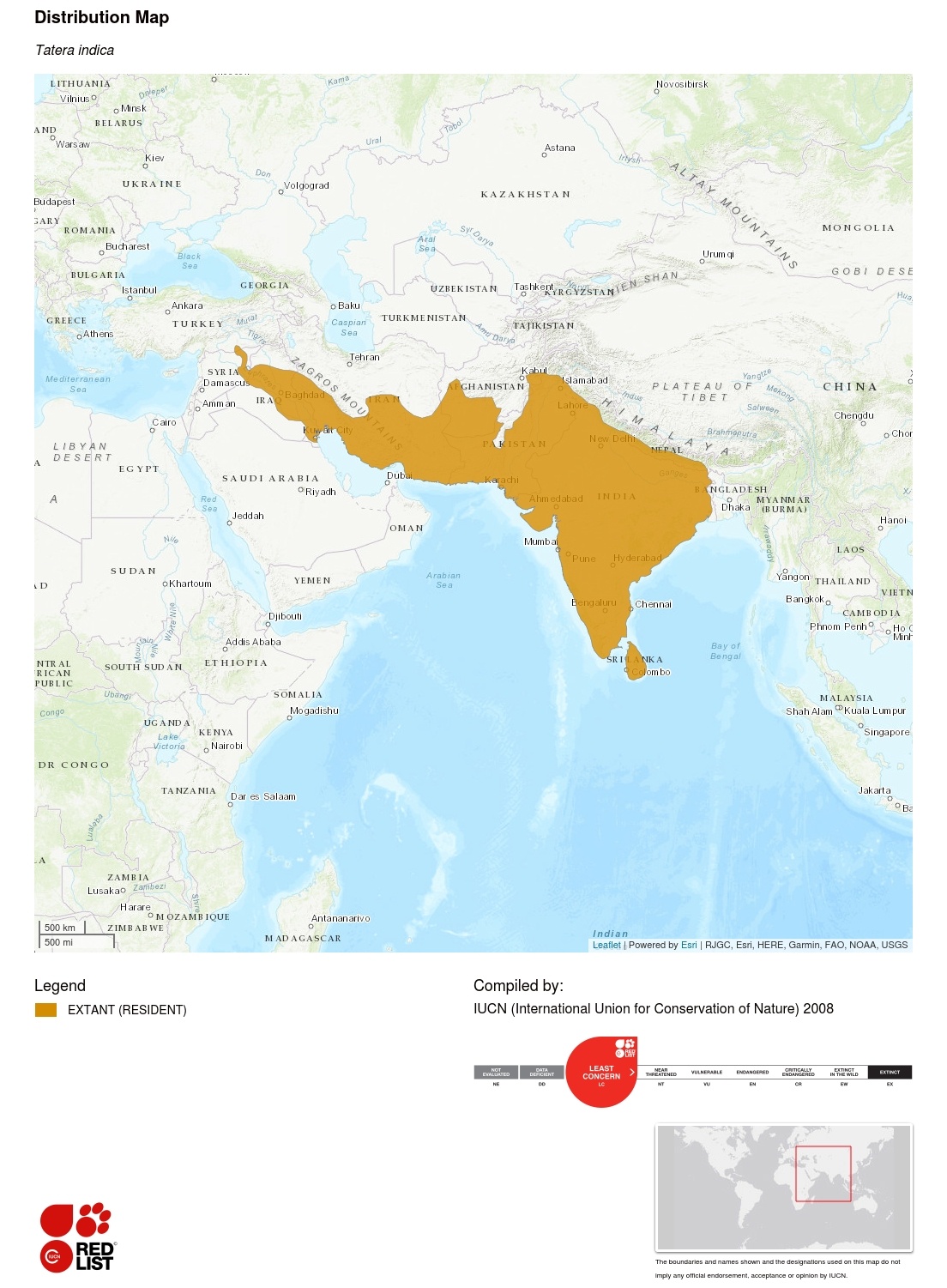
The range of Indian gerbils includes Sri Lanka, Pakistan, Iran, Afghanistan and Nepal. They inhabit sandy plains and grasslands that allow extensive burrowing. Their burrowns can be quite extensive with chambers for resting, food storage, and sleeping. The depth of burrows depends on soil composition and season. These gerbils are generally not found in areas with very low rainfall or cold temperatures. They occupy almost any kind of habitat if there is enough suitable food and are found frequently in or near agricultural fields.[Source: Stephanie Mott, Animal Diversity Web (ADW) /=]
Indian gerbils are possibly the most common gerbil species. On the International Union for Conservation of Nature (IUCN) Red List they are listed as a species of Least Concern. In CITES (Convention on International Trade in Endangered Species of Wild) they have no special status. Indian gerbils are hunted for food in southern India. They consume large quantities of insects which are potential agricultural pests but also raid areas where grain is stored and eat seeds, sprouts, mature plants, ears of corn, and saplings in orchards and are thus regarded as crop pests themselves. They also carry disease-carrying fleas and pass them on to domestic rodents, which may be partly responsible for the transmitting the bubonic plague and other diseases.
Indian Gerbil Characteristics, Diet and Predators
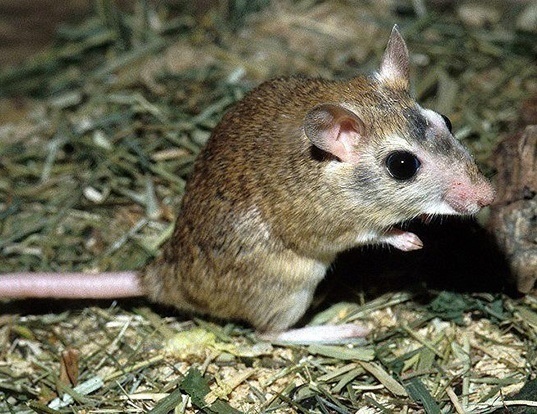
Indian gerbils are one of the larger gerbil species. They range in weight from 100 to 227 grams (3.5 to 8 ounces) and have a head and body length that ranges from 15 to 17 centimeters (5.9 to 6.7 inches). Their average basal metabolic rate is 0.422 watts. Sexual Dimorphism (differences between males and females) is not present: Both sexes are roughly equal in size and look similar. [Source: Stephanie Mott, Animal Diversity Web (ADW) /=]
The thick fur of Indian gerbils ranges from reddish brown to fawn. Hair on the tail hair is sparse ecept for a small tuft of black hair at the tip. The tail is approximately one half the body length of the animal and has a light brown band on each side. The soles of the feet are hairless and pigmented, as in other members of the genus Tatera, while the ears are also naked and elongated.
Indian gerbils are primarily omnivores (eat a variety of things, including plants and animals). Among the plant foods they eat are grasses, leaves, roots, tubers, seeds, grains, nuts and fruit. Animal foods include grubs, insects, small mammals, non-insect arthropods and nestling ground birds. They store grain in their burrows for consumption in the dry season and winter and often eat roots and fruits of plants when the stores have been consumed. During the wet season insect availability increases and the proportion of insects and other arthropods in their diet rises to as high as 40 percent. Indian gerbils sometimes kill and eat smaller rodents and other mammals and are known to cannibalize their young in both captivity and the wild.
Indian gerbils are primarily preyed on by birds of prey, especially owls, but also hawks and falcons. Golden jackals, snakes, monitor lizards, foxes, and domestic and wild cats also eat them. The main ways these gerbils escape predation is by being active at night, escaping to their burrows, and being vigilante and having heightened senses that allow them to detect predators. They are also very fast and can leap as much as meter into the air when surprised. /=\
Indian Gerbil Behavior and Reproduction
Indian gerbils are fossorial (engaged in a burrowing life-style or behavior, and good at digging or burrowing), nocturnal (active at night), motile (move around as opposed to being stationary), sedentary (remain in the same area), and social (associates with others of its species; forms social groups). They sense and communicate with vision, touch, sound and chemicals usually detected by smelling. Being primarily it is assumed that they have good night vision as their large eyes indicate and perceive their environment largely through auditory and chemical signals and vibrations picked up with their vibrissae (whiskers). [Source: Stephanie Mott, Animal Diversity Web (ADW) /=]
Indian gerbils do not move far from their burrows. They live in loose communities with each burrow occupied by a single gerbil, except when young are present. Home ranges of individuals overlap extensively. The burrows are usually 'Y'-shaped with two surface openings. Burrow depth varies from approximately 35 centimeters in winter to 45 to 50 centimeters in the summer. Summer ones are deeper to escape the high summer temperatures. Indian gerbils like to play and wrestle, chase, and box with one another.
Indian gerbils engage in year-round breeding and can breed multiple times throughout the year, with peaks in February, July, August, and November. Populations of these gerbils reach their peak in the monsoon season (March through September) and are at their lowest in January. Male and female Indian gerbils live apart. Exactly how they come together in the wild to mate is not well understood. It is not yet known whether mating occurs above the ground or below it in the in burrows. The duration of the estrous cycle has been found to be 4.5 days in the laboratory. Females attain sexual maturity a little earlier than males.
The gestation period for Indian gerbils ranges from 21 to 30 days. The number of offspring ranges from four to 10, with the average number being 5.4. Young are altricial, meaning that they are born relatively underdeveloped and are unable to feed or care for themselves or move independently for a period of time after birth. Young open their eyes at 14 days old. Parental care is provided by females and the age in which young become independent may be as low as 21 days. Females and males reach sexual or reproductive maturity as early as 10 weeks.
This video is of Indian desert gerbils, or Indian desert jird, which are different than Indian gerbils
Image Sources: Wikimedia Commons
Text Sources: Animal Diversity Web animaldiversity.org ; National Geographic, Live Science, Natural History magazine, CNTO (China National Tourism Administration) David Attenborough books, New York Times, Washington Post, Los Angeles Times, Smithsonian magazine, Discover magazine, The New Yorker, Time, BBC, CNN, Reuters, Associated Press, AFP, Lonely Planet Guides, Wikipedia, The Guardian, Top Secret Animal Attack Files website and various books and other publications.
Last updated April 2025