
PHILIPPINES IN THE 1950s AND 60s
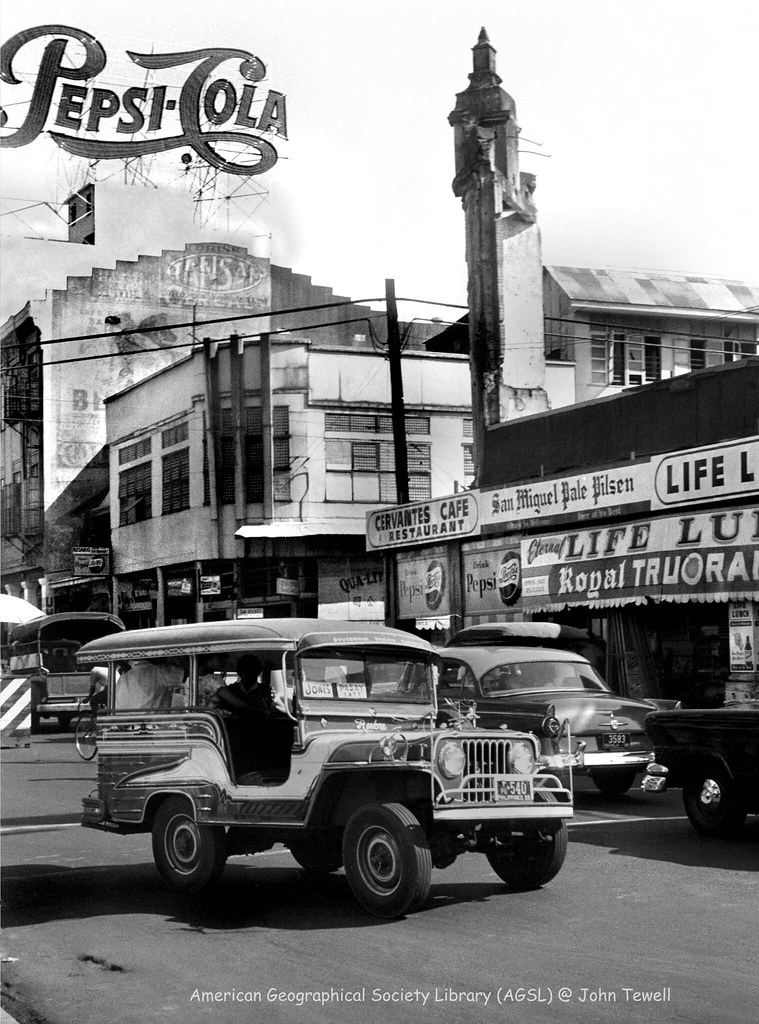
The U.S.-assisted postwar reconstruction shaped the early years of Philippine independence. Recovery efforts were disrupted by the communist-led Huk Rebellion (1945–1953), but the insurgency was eventually suppressed under President Ramon Magsaysay, who was elected in 1953. His administration was cut short when he died in a plane crash in 1957. He was succeeded by Carlos P. Garcia, who later won election in his own right in 1958. [Source: Countries of the World and Their Leaders Yearbook 2009, Gale, 2008; Columbia Encyclopedia, 6th ed., Columbia University Press; “Culture Shock!: Philippines” by Alfredo Roces and Grace Roces, Marshall Cavendish International, 2010]
The administrations of Garcia (1957–1961) and Diosdado Macapagal (1961–1965) sought to strengthen ties with neighboring Asian countries, pursue domestic reforms, and diversify the Philippine economy. Both leaders aimed to reduce dependence on traditional economic patterns and broaden the country’s regional engagement.
In foreign policy, the Philippines maintained a firm anti-communist stance and joined the Southeast Asia Treaty Organization in 1954. Relations with the United States, however, were strained over American military bases in the country. Although full Philippine sovereignty over the bases was formally recognized in 1956, tensions continued, leading to the dismantling of some installations in 1959 and a reduction of the original 99-year lease. The United States also rejected Philippine financial claims and proposals to revise trade arrangements.
Growing dissatisfaction with Garcia—centered on allegations of corruption and anti-American rhetoric—led to a political realignment in 1959. The Liberal and Progressive parties united behind Vice President Macapagal, who defeated Garcia in the 1961 election. Macapagal’s presidency focused on curbing inflation, building regional alliances, and asserting the Philippines’ claim over North Borneo (later Sabah), arguing that it had been leased—not ceded—to the British North Borneo Company in 1878.
Despite democratic institutions modeled after the United States, the postwar republic was marked by public cynicism and frustration. Political competition often revolved around kinship networks, patronage, and utang na loob (debt of gratitude) rather than clear ideological differences. While elections were free, leadership and voting patterns were heavily influenced by personal loyalties. Meanwhile, mass media became an outlet for public grievances, and various social groups—including youth, workers, and women—began expressing dissent through increasingly visible street politics.
RELATED ARTICLES:
INDEPENDENCE FOR THE PHILIPPINES AFTER WORLD WAR II factsanddetails.com
PHILIPPINES ROAD TO INDEPENDENCE UNDER THE UNITED STATES factsanddetails.com
SPANISH-AMERICAN WAR (1898) factsanddetails.com
U.S. TAKES OVER THE PHILIPPINES factsanddetails.com
THE PHILIPPINES: THE UNITED STATES’ FIRST COLONY factsanddetails.com
JAPAN TAKES THE PHILIPPINES: ATTACK, FIGHTING, MACARTHUR, CORREGIDOR factsanddetails.com
JAPANESE OCCUPATION OF THE PHILIPPINES: BATAAN DEATH MARCH, PUPPET STATE, RESISTANCE factsanddetails.com
DEFEAT OF JAPAN IN THE PHILIPPINES factsanddetails.com
FERDINAND MARCOS: HIS LIFE, LIES, EDUCATION, WAR RECORD, POLITICAL RISE factsanddetails.com
Philippines Economy After Independence
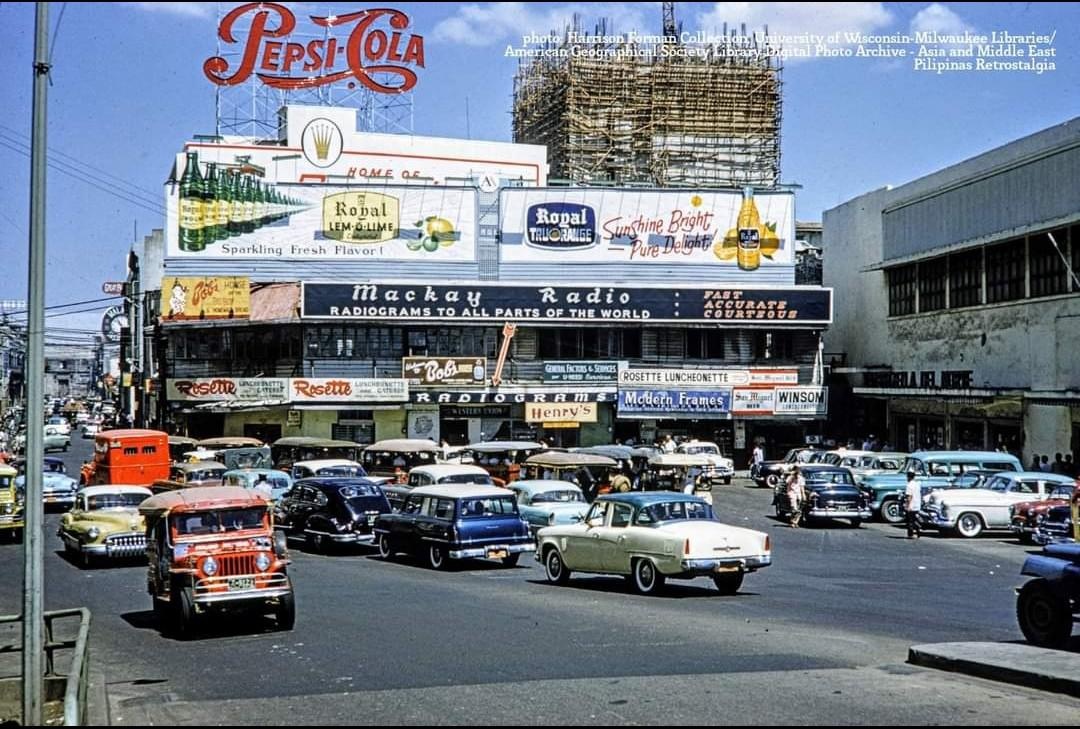
After World War II, the Philippines rebuilt its economy by restoring prewar patterns of trade. The country resumed importing manufactured goods from the United States while exporting primary products to the protected American market, which in the early 1950s accounted for about 70 percent of total Philippine trade. However, political independence in 1946 and the gradual removal of preferential U.S. tariffs signaled the beginning of a slow economic reorientation toward Asia. By the early 1960s, Japan’s share of Philippine trade had grown to roughly 20 percent as the American share fell to around 50 percent. Within another decade, Japan’s role expanded further, eventually becoming the Philippines’ main source of imports and a leading market for its timber and mineral exports. [Source: Norman G. Owen, History of World Trade Since 1450, Thomson Gale, 2006]
At the same time, the Philippines began to lag behind other East Asian economies. In the 1950s, it had successfully pursued import-substitution industrialization (ISI), and as late as 1960 its per capita income exceeded that of both Taiwan and South Korea. Yet rapid population growth, declining global commodity prices, heavy dependence on imported oil, and structural weaknesses in ISI—such as a small domestic market and inefficient industries—undermined economic momentum. Corruption and excessive foreign borrowing during the martial law period under Ferdinand Marcos deepened the crisis, leading to overwhelming debt and economic depression. Even after his overthrow in 1986, recovery proved slow and incomplete.
Although the Philippines continued exporting agricultural goods like fruit, sugar, and coconut products, as well as timber and mineral ores, global trade increasingly favored light industrial and high-technology products such as computer chips. Slower than many neighbors to adjust, the country found itself competing mainly in labor-intensive industries like garments and electronic components, often produced in special export processing zones.
Without the advantages of a privileged colonial market, ultra-cheap labor, or highly efficient infrastructure, the Philippines struggled to remain competitive. Unlike some of its regional counterparts, it was unable to transition quickly into higher-value manufacturing sectors that dominated global trade in the late twentieth century.
Ultimately, the country relied heavily on labor migration to sustain its economy. Millions of Filipinos sought work abroad—as construction workers in the Middle East, domestic helpers in Hong Kong, and nurses in North America—sending home remittances that became the single largest source of foreign exchange and helped prevent economic collapse.
Hukbalahap (Huks) and Communists
After World War II, a group of Filipino insurgents who fought against the Japanese and were known as the “Hukbalahap”, or the People’s Anti-Japanese Army, launched an offensive against the Philippines government. The Huks as they were called had conducted an effective guerilla campaign against the Japanese and proved to be a formidable fighting force in their struggle against the Philippine government. They were originally formed to resist the Japanese occupation, but later opposed American-backed policies such as the Bell Trade Act. Accused of communist ties, the Huks were expelled from Congress and retreated to the mountains of Central Luzon, launching a prolonged insurgency against the Philippine government. MacArthur had jailed Taruc and Casto Alejandrino, both Huk leaders, in 1945 and ordered United States forces to disarm and disband Huk guerrillas. Many guerrillas, however, concealed their weapons or fled into the mountains.
The Huks were closely identified with the emerging Pambansang Kaisahan ng mga Magbubukid (PKM — National Peasant Union), which was strongest in the provinces of Pampanga, Bulacan, Nueva Ecija, and Tarlac and had as many as 500,000 members. As part of the left-wing Democratic Alliance, which also included urban left-wing groups and labor unions, the PKM supported Osmeña and the Nacionalistas against Roxas in the 1946 election campaign. They did so not only because Roxas had been a collaborator but also because Osmeña had promised a new law giving tenants 60 percent of the harvest, rather than the 50 percent or less that had been customary. [Source: Library of Congress *]
Six Democratic Alliance candidates won congressional seats, including Taruc, who had been released from jail along with other leaders, but their exclusion from the legislature on charges of using terrorist methods during the campaign provoked great unrest in the districts that had elected them. Continued landlord- and police-instigated violence against peasant activities, including the murder of PKM leader Juan Feleo in August 1946, provoked the Huk veterans to dig up their weapons and incite a rebellion in the Central Luzon provinces. The name of the HUK movement was changed from the People's Anti-Japanese Army to the People's Liberation Army (Hukbong Mapagpalaya ng Bayan). *
In 1948 the communist PKP decided to support the rebellion, overcoming its reluctance to rely on peasant movements. Although it lacked a peasant following, the PKP declared that it would lead the Huks on all levels and in 1950 described them as the "military arm" of the revolutionary movement to overthrow the government. From its inception, the government considered the Huk movement to have been communist instigated, an extension onto the Luzon Plain of the international revolutionary strategy of the Cominform in Moscow. Yet the rebellion's main impetus was peasant grievances, not Leninist designs. The principal factors were continuous tenant-landlord conflicts, in which the government actively took the part of the latter, dislocations caused by the war, and perhaps an insurrectionist tradition going back several centuries. *
According to historian Benedict Kerkvliet, "the PKP did not inspire or control the peasant movement . . . . What appears closer to the truth is that the PKP, as an organization, moved back and forth between alliance and nonalliance with the peasant movement in Central Luzon." Most farmers had little interest in or knowledge of socialism. Most wanted better conditions not redistribution of land or collectivization. The landlord-tenant relationship itself was not challenged, just its more exploitive and impersonal character in the contemporary period. *
Huk Rebellion
At the end of World War II, most rural areas, particularly in Central Luzon, were tinderboxes on the point of incineration. The Japanese occupation had only postponed the farmers' push for better conditions. Tensions grew as landlords who had fled to urban areas during the fighting returned to the villages in late 1945, demanded back rent, and employed military police and their own armed contingents to enforce these demands. Food and other goods were in short supply. The war had sharpened animosities between the elite, who in large numbers had supported the Japanese, and those tenants who had been part of the guerrilla resistance. Having had weapons and combat experience and having lost friends and relatives to the Japanese and the wartime Philippine Constabulary, guerrilla veterans and those close to them were not as willing to be intimidated by landlords as they had been before 1942. [Source: Library of Congress *]
After participating in the elections after the war, the Hukbalahap insurgency began fighting against the Filipino government in the late 1940s. The Huk rebellion was a grassroots movement that sprung up after wealthy landlords tried to collect back rents from tenant farmers after the war. Following Roxas's death from a heart attack in April 1948, his successor, Elpidio Quirino, opened negotiations with Huk leader Taruc, but nothing was accomplished.
Huk fortunes reached their peak between 1949 and 1951. Violence associated with the November 1949 presidential election, in which Quirino was reelected on the Liberal Party ticket, led many farmers to support the Huks, and after that date there were between 11,000 and 15,000 armed Huks. Although the core of the rebellion remained in Central Luzon, Huk regional committees also were established in the provinces of Southern Tagalog, in northern Luzon, in the Visayan Islands, and in Mindanao. Antigovernment activities spread to areas outside the movement's heartland. *
The Huks nearly took over the Philippine government. But beginning in 1951, however, the momentum began to slow. This was in part the result of poor training and the atrocities perpetrated by individual Huks. Their mistreatment of Negrito peoples made it almost impossible for them to use the mountain areas where these tribespeople lived, and the assassination of Aurora Quezon, President Quezon's widow, and of her family by Huks outraged the nation. Many Huks degenerated into murderers and bank robbers. Moreover, in the words of one guerrilla veteran, the movement was suffering from "battle fatigue." Lacking a hinterland, such as that which the Democratic Republic of Vietnam (North Vietnam) provided for Viet Cong guerrillas or the liberated areas established by the Chinese Communists before 1949, the Huks were constantly on the run. Also the Huks were mainly active in Central Luzon, which permitted the government to concentrate its forces. Other decisive factors were the better quality of United States-trained Philippine armed forces and the more conciliatory policy adopted by the Quirino government toward the peasants. *
Defeating the Huks
President Manuel Roxas initially moved against the Huks but died in 1948, leaving Elpidio Quirino to handle the growing rebellion. Roxas's policy toward the Huks alternated between gestures of negotiation and harsh suppression. His administration established an Agrarian Commission and passed a law giving tenants 70 percent of the harvest, although this was extremely difficult to enforce in the countryside. The Huks in turn demanded reinstatement of the Democratic Alliance members of Congress; disbandment of the military police, which in the 1945-48 period had been the equivalent of the old Philippine Constabulary; and a general amnesty. They also refused to give up their arms. In March 1948, Roxas declared the Huks an illegal and subversive organization and stepped up counterinsurgency activities. *
Concerned about instability and communist influence, the United States turned to the Central Intelligence Agency for assistance in suppressing the insurgency. The CIA assigned Edward Geary Lansdale, an advertising executive turned intelligence operative, to lead psychological warfare operations in the Philippines. Believing in the power of local superstition, Lansdale’s team exploited fear of the aswang by spreading rumors that the creature haunted Huk-controlled areas. In one notorious operation, they murdered a Huk patrol member, drained his blood, and left the body behind to simulate an aswang attack, successfully terrifying nearby fighters into abandoning their position. [Source: Carl Samson, NextShark, June 2, 2023]
Although the full extent of these operations remains unclear, the psychological tactics proved effective. The Huk movement gradually weakened, and its leader, Luis Taruc, surrendered in 1954. Lansdale later became known for pioneering unconventional Cold War strategies and was eventually reassigned to Vietnam, where he continued covert operations aimed at countering communist influence in Southeast Asia.
The Huks were defeated in 1953 by Filipino forces lead by the CIA and Lansdale. Landsdale also ran C.I.A. activities in Vietnam. The C.I.A. was effective in its operation in the Philippines. The same strategies used against the Huks were later put to use in Vietnam with disastrous results. The Hukbalahap leader, Luis Taruc, surrendered in 1954. He found religion in prison and was later pardoned. The Huks were later reborn as the New People’s Army. See New People’s Army.
Ramon Magsaysay Government
Ramon Magsaysay was a popular, populist strongman president. Elected president in 1957 and a member of the Nacionalista Party, he introduced widespread rural reforms that benefitted tenant farmers in the Christian north but exacerbating hostilities with the Muslim south and eventually minimized under pressure from the landlords. The United States played the role of banker for his government in return for his help for fighting Communism, something the United States was concerned about in the Cold War era. Under Magsaysay remaining Huk leaders were captured or killed, and by 1954 the movement had waned. Magsaysay was killed in place crash in 1957.
Magsaysay, a member of Congress from Zambales Province and veteran of a non-Huk guerrilla unit during the war, became secretary of defense in 1950. He initiated a campaign to defeat the insurgents militarily and at the same time win popular support for the government. With United States aid and advisers he was able to improve the quality of the armed forces, whose campaign against the Huks had been largely ineffective and heavy-handed. In 1950 the constabulary was made part of the armed forces (it had previously been under the secretary of the interior) with its own separate command. All armed forces units were placed under strict discipline, and their behavior in the villages was visibly more restrained. Peasants felt grateful to Magsaysay for ending the forced evacuations and harsh pacification tactics that some claimed had been worse than those of the Japanese occupation. [Source: Library of Congress *]
Nominated as Nacionalista Party presidential candidate in April 1953, Magsaysay won almost two-thirds of the vote over his opponent, Quirino, in November. Often compared to United States president Andrew Jackson, Magsaysay styled himself as a man of the people. He invited thousands of peasants and laborers to tour the Malacañang Palace — the presidential residence in Manila — and encouraged farmers to send him telegrams, free of charge, with their complaints. In the countryside a number of small-scale but highly visible projects had been started, including the building of bridges, roads, irrigation canals, and artesian "liberty wells"; the establishment of special courts for landlord-tenant disputes; agricultural extension services; and credit for farmers. The Economic Development Corps project settled some 950 families on land that the government had purchased on Mindanao. In the ensuing years, this program, in various forms, promoted the settlement of poor people from the Christian north in traditionally Muslim areas. Although it relieved population pressures in the north, it also exacerbated centuries-old MuslimChristian hostilities. The capture and killing of Huk leaders, the dissolution of Huk regional committees, and finally the surrender of Taruc in May 1954 marked the waning of the Huk threat. *
Magsaysay's vice president, Carlos P. Garcia, succeeded to the presidency after Magsaysay's death in an airplane crash in March 1957 and was shortly thereafter elected to the office in his own right . Garcia emphasized the nationalist themes of "Filipino First" and attainment of "respectable independence." Further discussions with the United States on the question of the military bases took place in 1959. Early agreement was reached on United States relinquishment of large land areas initially reserved for bases but no longer required for their operation. As a result, the United States turned over to Philippine administration the town of Olongapo on Subic Bay, north of Manila, which previously had been under the jurisdiction of the United States Navy. *
Diosdado Macapagal Government
Diosdado Macapagal, the father President Gloria Macapagal Arroyo, was president of the Philippines in the early 1960s. The son of a poor laundrywoman, he was regarded as honest and pragmatic but also cold and calculating. Macapagal was elected president in 1961 as the Liberal Party candidate. Subsequent negotiations with the United States over base rights led to considerable anti-American feelings and demonstrations. Macapagal sought closer relations with his Southeast Asian neighbors and convened a summit with the leaders of Indonesia and Malaysia in the hope of developing a spirit of consensus, which did not emerge. The population of the Philippines in 1960 was around 27 million, about a forth of what it is now.
The 1957 election had resulted, for the first time, in a vice president of a party different from that of the president. The new vice president, Diosdado Macapagal, ran as the candidate of the Liberal Party, which followers of Magsaysay had joined after unsuccessful efforts to form an effective third party. By the time of the 1961 presidential election, the revived Liberal Party had built enough of a following to win the presidency for Macapagal. In this election, the returns from each polling place were reported by observers (who had been placed there by newspapers) as soon as the votes were counted. This system, known as Operation Quick Count, was designed to prevent fraud. *
The issue of jurisdiction over United States service personnel in the Philippines, which had not been fully settled after the 1959 discussions, continued to be a problem in relations between the two countries. A series of incidents in the 1960-65 period, chiefly associated with Clark Air Base, aroused considerable anti-American feelings and demonstrations. Negotiations took place and resulted in an August 1965 agreement to adopt provisions similar to the status of forces agreement of the North Atlantic Treaty Organization regarding criminal jurisdiction. In the next four years, agreements were reached on several other matters relating to the bases, including a 1966 amendment to the 1947 agreement, which moved the expiration date of the fixed term for United States use of the military facilities up to 1991. *
Philippine foreign policy under Macapagal sought closer relations with neighboring Asian peoples. In July 1963, he convened a summit meeting in Manila consisting of the Philippines, Indonesia, and Malaysia. An organization called MAPHILINDO was proposed; much heralded in the local press as a realization of Rizal's dream of bringing together the Malay peoples, MAPHILINDO was described as a regional association that would approach issues of common concern in the spirit of consensus. MAPHILINDO was quickly shelved, however, in the face of the continuing confrontation between Indonesia and newly established Malaysia and the Philippines' own claim to Sabah, the territory in northeastern Borneo that had become a Malaysian state in 1963. *
Image Sources: Wikimedia Commons
Text Sources: Library of Congress, Philippines Department of Tourism, Philippines government websites, Encyclopedia.com, New York Times, Washington Post, Los Angeles Times, Wikipedia, “Encyclopedia of World Cultures Volume 5: East/Southeast Asia:” edited by Paul Hockings, 1993, UNESCO, National Commission for Culture and the Arts (NCCA) the official government agency for culture in the Philippines), Lonely Planet Guides, The Guardian, National Geographic, Smithsonian magazine, The New Yorker, Time, The Conversation, BBC, CNN, Reuters, Associated Press, AFP, Google AI, and various websites, books and other publications.
Last updated February 2026