
EARLY SELF-GOVERNMENT FOR FILIPINOS
The question of Philippine independence remained a burning issue in the political life of both the United States and the islands themselves. The debate grew more complex as economic ties between the two countries steadily deepened. Although American investment in Philippine industries was relatively modest, trade with the United States expanded dramatically. Over time, the Philippine economy became heavily dependent on access to the American market. Free trade between the two was established through legislation in 1909 and further broadened in 1913.
The U.S. administration of the Philippines was declared to be temporary from the beginning. Its goal was to develop institutions that would permit and encourage the eventual establishment of a free and democratic government. Therefore, U.S. officials focused on creating practical support for a democratic government, such as public education, infrastructure, and a sound legal system. A civil service was formed and gradually taken over by Filipinos, who had gained effective control by the end of World War I. The Catholic Church was disestablished, and much of its land was purchased and redistributed. [Source: Countries of the World and Their Leaders Yearbook 2009, Gale, 2008]
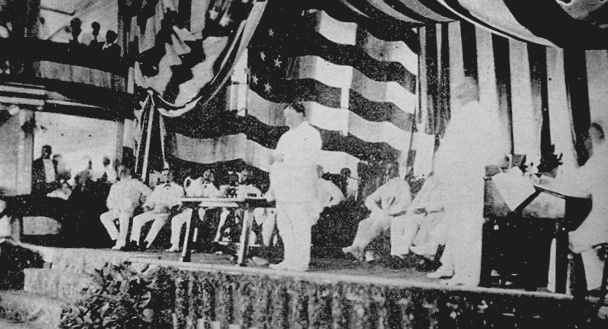
In August 1907, the United States established the popularly-elected Philippine Assembly, providing Filipinos with a greater role in governance. When the Democratic Party assumed power in 1913, it moved to facilitate a gradual and orderly transition toward self-government. During the presidency of Woodrow Wilson, Filipinos gained a majority of seats on the Philippine Commission, and further autonomy was granted under Governor-General Francis Burton Harrison, who served from 1913 to 1921. [Source: Dictionary of American History, Gale Group Inc., 2003]
The term of Governor General Francis Burton Harrison (1913-21) was one of particularly harmonious collaboration between Americans and Filipinos. Harrison's attitudes (he is described as having regarded himself as a "constitutional monarch" presiding over a "government of Filipinos") reflected the relatively liberal stance of Woodrow Wilson's Democratic Party administration. In 1913 Wilson had appointed five Filipinos to the Philippine Commission of the legislature, giving it a Filipino majority for the first time. Harrison undertook rapid "Filipinization" of the civil service, much to the anger and distress of Americans in the islands, including superannuated officials. In 1913 there had been 2,623 American and 6,363 Filipino officials; in 1921 there were 13,240 Filipino and 614 American administrators. Critics accused Harrison of transforming a "colonial government of Americans aided by Filipinos" into a "government of Filipinos aided by Americans" and of being the "plaything and catspaw of the leaders of the Nacionalista Party." [Source: Library of Congress *]
Elections were held for the two houses in 1916, and the Nacionalista Party made an almost clean sweep. All but one elected seat in the Senate and eighty-three out of ninety elected seats in the House were won by their candidates, leaving the National Progressive Party (the former Federalista Party) a powerless opposition. Quezon was chosen president of the Senate, and Osmeña continued as speaker of the House. *
RELATED ARTICLES:
INDEPENDENCE FOR THE PHILIPPINES AFTER WORLD WAR II factsanddetails.com
SPANISH-AMERICAN WAR (1898) AND ITS IMPACT ON THE PHILIPPINES AND THE NORTHERN PACIFIC factsanddetails.com
U.S. TAKES OVER THE PHILIPPINES factsanddetails.com
THE PHILIPPINES: THE UNITED STATES’ FIRST COLONY factsanddetails.com
JAPAN TAKES THE PHILIPPINES: ATTACK, FIGHTING, MACARTHUR, CORREGIDOR factsanddetails.com
JAPANESE OCCUPATION OF THE PHILIPPINES: BATAAN DEATH MARCH, PUPPET STATE, RESISTANCE factsanddetails.com
BATTLE OF LEYTE: LAND AND SEA FIGHTING, MACARTHUR, BATTLESHIPS factsanddetails.com
BATTLE OF MANILA IN WORLD WAR II factsanddetails.com
DEFEAT OF JAPAN IN THE PHILIPPINES factsanddetails.com
Jones Act
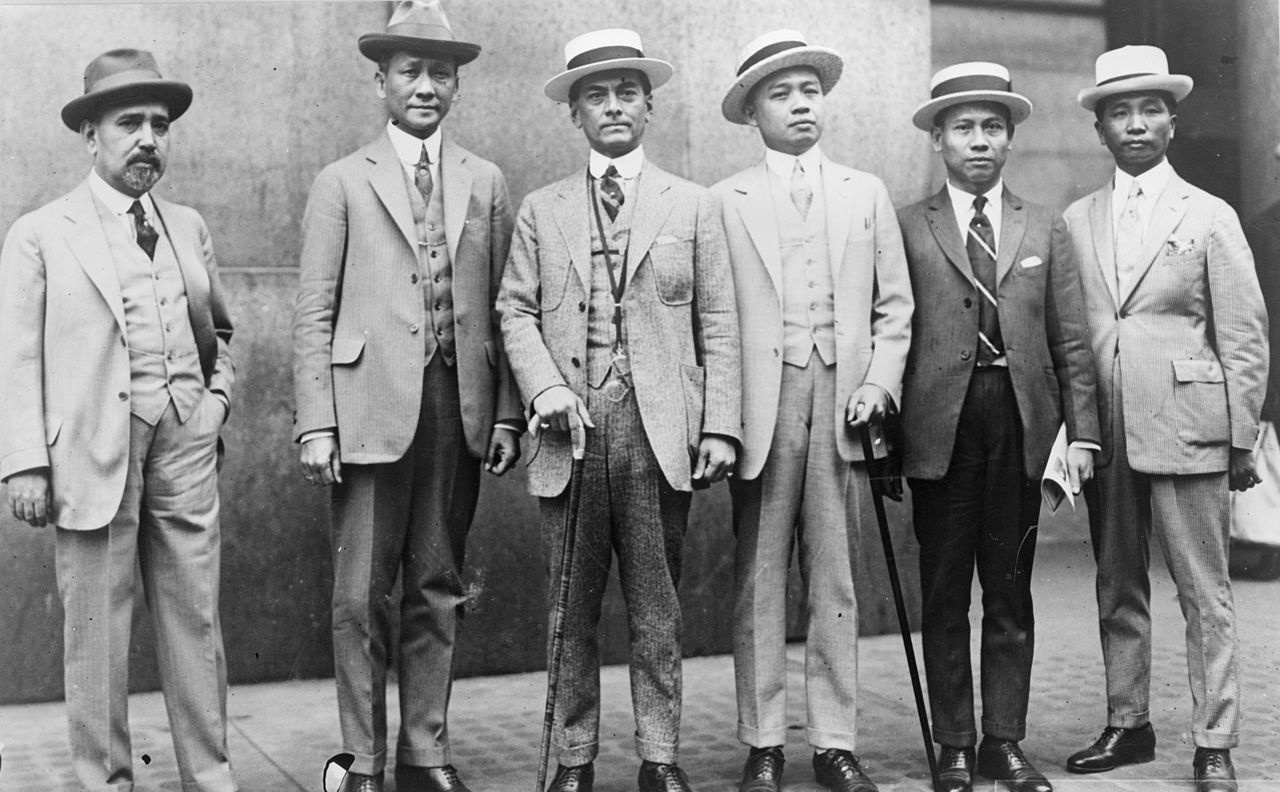
In 1916, the U.S. Congress passed the Jones Act, which created a popularly elected upper house and granted it authority to confirm appointments made by the governor-general. The act also offered the islands their first formal promise of eventual independence, though it did not establish a specific timetable for achieving it. [Source: Columbia Encyclopedia, 6th ed., Columbia University Press]
The Jones Act, passed by the United States Congress, was the second organic law, replacing the 1902 law. Its preamble stated the intent to grant Philippine independence as soon as a stable government was established. The Philippine Senate replaced the Philippine Commission as the upper house of the legislature. Unlike the commission, all but two of the Senate's twenty-four members (and all but nine of the ninety representatives in the lower house, now renamed the House of Representatives) were popularly elected. The two senators and nine representatives were appointed by the governor general to represent the non-Christian peoples. The legislature's actions were subject to the veto of the governor general, and it could not pass laws affecting the rights of United States citizens. The Jones Act brought the legislative branch under Filipino control. The executive still was firmly under the control of an appointed governor general, and most Supreme Court justices, who were appointed by the United States president, still were Americans in 1916. [Source: Library of Congress *]
The Jones Act allowed for the creation of an elected senate and house of representatives, replacing the earlier commission and assembly. Later, the Tydings–McDuffie Act set in motion a ten-year transition period leading to full Philippine independence. As president, Theodore Roosevelt described the Philippines as America’s “Achilles heel” in Asia and the Pacific, acknowledging that the islands could attract the ambitions of rival powers such as Japan. Through the Lansing–Ishii Agreement of 1917, the Wilson administration obtained assurances from Japan that it had no designs on the islands. The promise of independence embodied in the Tydings–McDuffie Act can also be interpreted as a recognition of the United States’ strategic vulnerability in maintaining control over the archipelago. [Source: Dictionary of American History, Gale Group Inc., 2003]
The Jones Act remained the basic legislation for the administration of the Philippines until the United States Congress passed new legislation in 1934 which became effective in 1935, establishing the Commonwealth of the Philippines. Provisions of the Jones Act were differently interpreted, however, by the governors general. Harrison rarely challenged the legislature by his use of the veto power. His successor, General Leonard Wood (1921-27), was convinced that United States withdrawal from the islands would be as disastrous for the Filipinos as it would be for the interests of the United States in the western Pacific. He aroused the intense opposition of the Nacionalistas by his use of the veto power 126 times in his six years in office. The Nacionalista Party created a political deadlock when ranking Filipino officials resigned in 1923 leaving their positions vacant until Wood's term ended with his death in 1927. His successors, however, reversed Wood's policies and reestablished effective working relations with Filipino politicians. *
Collaborative Philippine-American Leadership
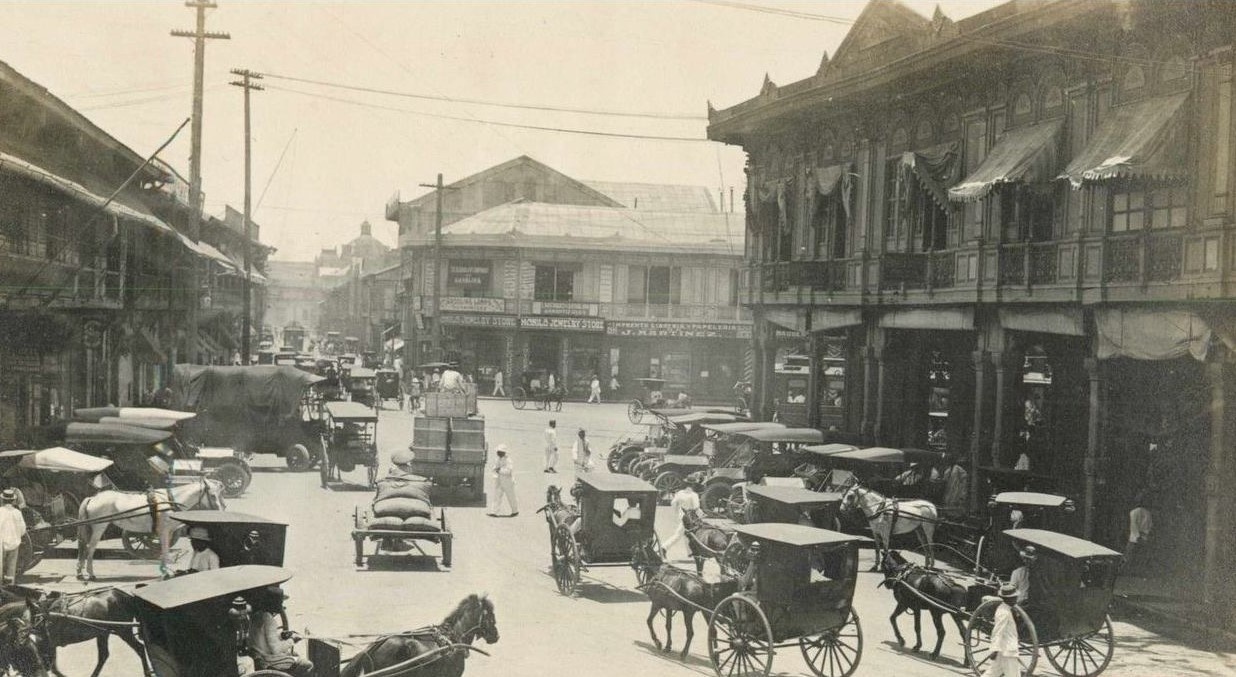
The most important step in establishing a new political system was the successful coaptation of the Filipino elite — called the "policy of attraction." Wealthy and conservative ilustrados, the self-described "oligarchy of intelligence," had been from the outset reluctant revolutionaries, suspicious of the Katipunan and willing to negotiate with either Spain or the United States. Trinidad H. Pardo de Tavera, a descendant of Spanish nobility, and Benito Legarda, a rich landowner and capitalist, had quit Aguinaldo's government in 1898 as a result of disagreements with Mabini. Subsequently, they worked closely with the Schurman and Taft commissions, advocating acceptance of United States rule. [Source: Library of Congress *]
In December 1900, de Tavera and Legarda established the Federalista Party, advocating statehood for the islands. In the following year they were appointed the first Filipino members of the Philippine Commission of the legislature. In such an advantageous position, they were able to bring influence to bear to achieve the appointment of Federalistas to provincial governorships, the Supreme Court, and top positions in the civil service. Although the party boasted a membership of 200,000 by May 1901, its proposal to make the islands a state of the United States had limited appeal, both in the islands and in the United States, and the party was widely regarded as being opportunistic. In 1905 the party revised its program over the objections of its leaders, calling for "ultimate independence" and changing its name to the National Progressive Party (Partido Nacional Progresista). *
The policy of attraction ensured the success of what colonial administrators called the political education of the Filipinos. It was, however, also the cause of its greatest failure. Early leader such Osmeña and Quezon, (see below) were not genuinely interested in social reform, and serious problems involving land ownership, tenancy, and the highly unequal distribution of wealth were largely ignored.
Much of the system's success depended on the linkage of modern political institutions with traditional social structures and practices. Most significantly, it involved the integration of local-level elite groups into the new political system. Philippine parties have been described by political scientist Carl Landé as organized "upward" rather than "downward." That is, national followings were put together by party leaders who worked in conjunction with local elite groups — in many cases the descendants of the principalía of Spanish times — who controlled constituencies tied to them in patron-client relationships. The issue of independence, and the conditions and timing under which it would be granted, generated considerable passion in the national political arena. According to Landé, however, the decisive factors in terms of popular support were more often local and particularistic issues rather than national or ideological concerns. Filipino political associations depended on intricate networks of personalistic ties, directed upward to Manila and the national legislature. *
Rise of Nacionalista Party in the Philippines
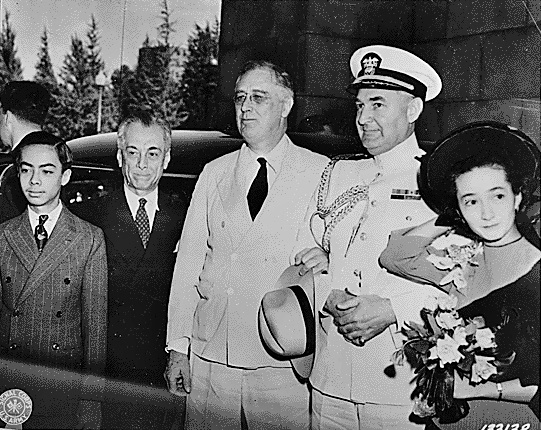
The Nacionalista Party, established in 1907, dominated the Philippine political process until after World War II. It was led by a new generation of politicians, although they were not ilustrados and were by no means radical. One of the leaders, Manuel Quezon, came from a family of moderate wealth. An officer in Aguinaldo's army, he studied law, passed his bar examination in 1903, and entered provincial politics, becoming governor of Tayabas in 1906 before being elected to the Philippine Assembly the following year. His success at an early age was attributable to consummate political skills and the support of influential Americans. His Nacionalista Party associate and sometime rival was Sergio Osmeña, the college-educated son of a shopkeeper, who had worked as a journalist. The former journalist's thoroughness and command of detail made him a perfect complement to Quezon. Like Quezon, Osmeña had served as a provincial governor (in his home province of Cebu) before being elected in 1907 to the assembly and, at age twenty-nine, selected as its first speaker. *
Although the Nacionalista Party's platform at its founding called for "immediate independence," American observers believed that Osmeña and Quezon used this appeal only to get votes. In fact, their policy toward the Americans was highly accommodating. In 1907 an understanding was reached with an American official that the two leaders would block any attempt by the Philippine Assembly to demand independence. Osmeña and Quezon, who were the dominant political figures in the islands up to World War II, were genuinely committed to independence. The failure of Aguinaldo's revolutionary movement, however, had taught them the pragmatism of adopting a conciliatory policy. *
The appearance of the Nacionalista Party in 1907 marked the emergence of the party system, although the party was without an effective rival from 1916 for most of the period until the emergence of the Liberal Party in 1946. The growing power of the Nacionalista Party, particularly in the period after 1916 when it gained almost complete control of a bicameral Filipino legislature, barred the effective inclusion of nonelite interests in the political system. Not only revolution but also moderate reform of the social and economic systems were precluded. Discussions of policy alternatives became less salient to the political process than the dynamics of personalism and the ethic of give and take. *
Movement Towards Philippine Independence in the 1920s and 1930s
When Republicans returned to power in 1921, efforts to expand Filipino participation in government were curtailed. Governor-General Leonard Wood imposed a more semimilitary style of administration, reducing Filipino influence. However, the onset of the Great Depression and Japan’s growing aggression in Asia during the early 1930s shifted American opinion toward granting the Philippines independence. [Source: Worldmark Encyclopedia of Nations, Thomson Gale, 2007; Columbia Encyclopedia, 6th ed., Columbia University Press]
Congress responded to rising nationalist demands by passing measures that increased Philippine autonomy. The Hare–Hawes–Cutting Act (1932) proposed independence after ten years of supervised self-government, but it was rejected by the Philippine legislature under the leadership of Manuel L. Quezon, largely because it allowed continued U.S. control of naval bases. It was replaced by the Tydings–McDuffie Act, which removed the base provisions and promised full independence after a transitional commonwealth period.
The constellation of political forces in the United States that assisted in the resolution of the independence question formed an odd community of interests with the Filipino nationalists. Principal among these were the agricultural interests. American sugar beet, tobacco, and dairy farmers feared the competition of low-tariff insular products, and the hardships suffered in a deepening depression in the early 1930s led them to seek protection through a severance of the colonial relationship. In this they had the support of Cuban sugar interests, who feared the loss of markets to Philippine sugarcane. United States labor unions, particularly on the West Coast, wanted to exclude Filipino labor. A number of American observers saw the Philippines as a potential flash point with an expansive Japan and argued for a withdrawal across the Pacific to Hawaii. [Source: Library of Congress *]
In the climate generated by these considerations, Osmeña and Manuel Roxas, a rising star in the Nacionalista Party and Osmeña's successor as speaker of the House, successfully campaigned for passage of the Hare-Hawes-Cutting Independence Bill, which Congress approved over President Herbert Hoover's veto in January 1933.
Tydings-McDuffie Act
Quezon opposed the legislation, however, on the grounds that clauses relating to trade and excluding Filipino immigrants were too stringent and that the guarantees of United States bases on Philippine soil and powers granted a United States high commissioner compromised independence. After the bill was defeated in the Philippine legislature, Quezon himself went to Washington and negotiated the passage of a revised independence act, the Tydings-McDuffie Act, in March 1934. *
The Tydings-McDuffie Act provided for a ten-year transition period to independence, during which the Commonwealth of the Philippines would be established. The commonwealth would have its own constitution and would be self-governing, although foreign policy would be the responsibility of the United States. Laws passed by the legislature affecting immigration, foreign trade, and the currency system had to be approved by the United States president. *
If the Tydings-McDuffie Act marked a new stage in Filipino-American partnership, it remained a highly unequal one. Although only fifty Filipino immigrants were allowed into the United States annually under the arrangement, American entry and residence in the islands were unrestricted. Trade provisions of the act allowed for five years' free entry of Philippine goods during the transition period and five years of gradually steepening tariff duties thereafter, reaching 100 percent in 1946, whereas United States goods could enter the islands unrestricted and duty free during the full ten years. Quezon had managed to obtain more favorable terms on bases; the United States would retain only a naval reservation and fueling stations. The United States would, moreover, negotiate with foreign governments for the neutralization of the islands. *
Philippine Commonwealth Government
In March 1935, U.S. President Franklin Roosevelt made the Philippines a self-governing commonwealth under the terms of the Tydings-McDuffie Act. Manuel Quezon was elected president of the new government, which was designed to prepare the country for independence after a 10-year transition period. World War II intervened, however. [Source: Countries of the World and Their Leaders Yearbook 2009, Gale, 2008]
In 1934, under the Tydings-McDuffie Act, a commonwealth government with a constitution was established in the Philippines after U.S. farmers, hit hard by the depression, pushed for Philippine independence to stop the archipelago's favored-trade policies. The constitution was ratified on May 14, 1935. The commonwealth government was supposed to last for ten years, after which the Philippines would become an independent country. The date of independence was set at July 4. 1946. To strengthen defenses against possible aggression, Douglas MacArthur was appointed military adviser in 1935 and later became field marshal of the Commonwealth army.
The new constitution establishing the Commonwealth of the Philippines. It was framed by a constitutional convention that assembled in July 1934. Overwhelmingly approved by plebiscite in May 1935, this document established the political institutions for the intended ten-year commonwealth period that began in 1935. After July 1946 the constitution would become the consitution of the independent Republic of the Philippines. The first commonwealth election to the new Congress was held in September 1935. Quezon and Osmeña, reconciled after their disagreements over the independence act, ran on a Coalition Party ticket and were elected president and vice president, respectively. [Source: Library of Congress *]
Manuel Quezon
Manuel Quezon (1878-1944) was the first Filipino president. The son of a Luzon schoolteacher, he made a name for himself as an activist and fiery orator and fought against both Spain and the United States. He once said, 'It is better to go to hell without America than to go to heaven with her!' He emerged as an independence leader and served as presidnt of the Philippines Senate form 1916 to 1935, when he became president of the Philippines commonwealth.
Quezon came from a family of moderate wealth. An officer in Aguinaldo's army, he studied law, passed his bar examination in 1903, and entered provincial politics, becoming governor of Tayabas in 1906 before being elected to the Philippine Assembly the following year. His success at an early age was attributable to consummate political skills and the support of influential Americans.
Quezon was in office when Japan invaded Luzon in December 1941. He escaped from the Philippines and established a government in exile in the United States. When Quezon died on August 1, 1944 he was succeeded as commonwealth president by Sergio Osmena. Osmeña accompanied MacArthur's Allied forces when they landed on the island of Leyte on October 20, 1944.
Image Sources: Wikimedia Commons
Text Sources: Library of Congress, Philippines Department of Tourism, Philippines government websites, Encyclopedia.com, New York Times, Washington Post, Los Angeles Times, Wikipedia, “Encyclopedia of World Cultures Volume 5: East/Southeast Asia:” edited by Paul Hockings, 1993, UNESCO, National Commission for Culture and the Arts (NCCA) the official government agency for culture in the Philippines), Lonely Planet Guides, The Guardian, National Geographic, Smithsonian magazine, The New Yorker, Time, The Conversation, BBC, CNN, Reuters, Associated Press, AFP, Google AI, and various websites, books and other publications.
Last updated February 2026