
PEOPLE IN INDONESIA BEGINNING 10,000 YEARS AGO
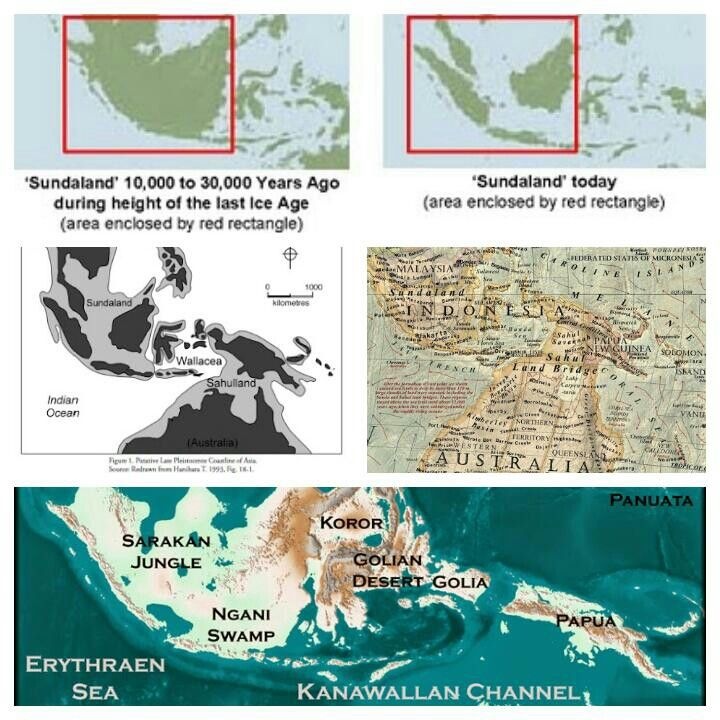
About 10,000 years ago, the last ice age began to recede and seas rose, eventually creating from the Sunda Shelf the archipelago of Indonesia we know today. The next six or seven millennia saw the development of cultural and social characteristics that have been of lasting significance down to the present. Examples include the use throughout the archipelago of languages belonging to the same family (Austronesian); the spread of rice agriculture and sedentary life, and of ceramic and (later) metal technologies; the expansion of long-distance seaborne travel and trade; and the persistence of diverse but interacting societies with widely varying levels of technological and cultural complexity. [Source: Library of Congress *]
There is no entirely secure understanding of how and why these changes took place. The most widely held view, based heavily on historical linguistics, argues that about 6,500 years ago peoples whom scholars identify linguistically and culturally as “Austronesians” dispersed out of present-day southern China and Taiwan. In a fairly rapid process, they spread throughout the archipelago from the Philippines (which they reached by 3,000 BC) to Indonesia (2,000– 500 BC), and then farther west as far as Madagascar and farther east throughout the Pacific Ocean. Prehistory expert Peter Bellwood has characterized this dispersal as “one of the most astonishing bouts of colonization ... in early human history.” *
Recent genetic and paleoecological research has raised a number of challenges to this model, however, among them counterindicative DNA configurations in archipelagic and Pacific populations of both humans and pigs, and indications of forest clearing in Sumatra as early as 5,000 years ago. These challenges suggest a more “entangled” and complicated process of change in which old and new populations, as well as their traditions and technologies, interacted in many different ways over a long period of time. *
Evidence regarding social transformations during this period is at best indirect (and for Java and Sumatra, virtually absent), but causative models from European and continental Asian prehistory seem rarely to apply to the archipelago. Neither knowledge of agriculture nor contact with outsiders always resulted in technological revolution, for example, or rapid alteration in patterns of settlement. Political and economic changes occurred unevenly, and societies—in all likelihood small, animist chieftainships—underwent no fundamental transformation. Thus the archipelago came to be marked by a pattern of broad linguistic and cultural affinities but, at the same time, intricate diversity. Virtually all of Indonesia’s subsequent history has been played out against the background of this remarkable human web.
RELATED ARTICLES:
JAVA MAN AND HOMO ERECTUS IN INDONESIA factsanddetails.com
HOMO FLORESIENSIS: HOBBITS OF INDONESIA factsanddetails.com
ORIGINS AND ANCESTORS OF HOMO FLORESIENSIS (HOBBITS) factsanddetails.com
EARLY MODERN HUMANS IN INDONESIA factsanddetails.com
EARLY HUMANS IN SULAWESI, INDONESIA AND THEIR 45,000-YEAR-OLD CAVE ART factsanddetails.com
EARLY HUMANS IN BORNEO: NIAH CAVES 40,000-YEAR-OLD ROCK ART factsanddetails.com
EAST TIMOR — HOME OF THE WORLD’S FIRST DEEP SEA FISHERMEN factsanddetails.com
OLDEST CULTURES IN INDONESIA AND PEOPLE THERE BEGINNING 10,000 YEARS AGO factsanddetails.com
Negritos and Malays
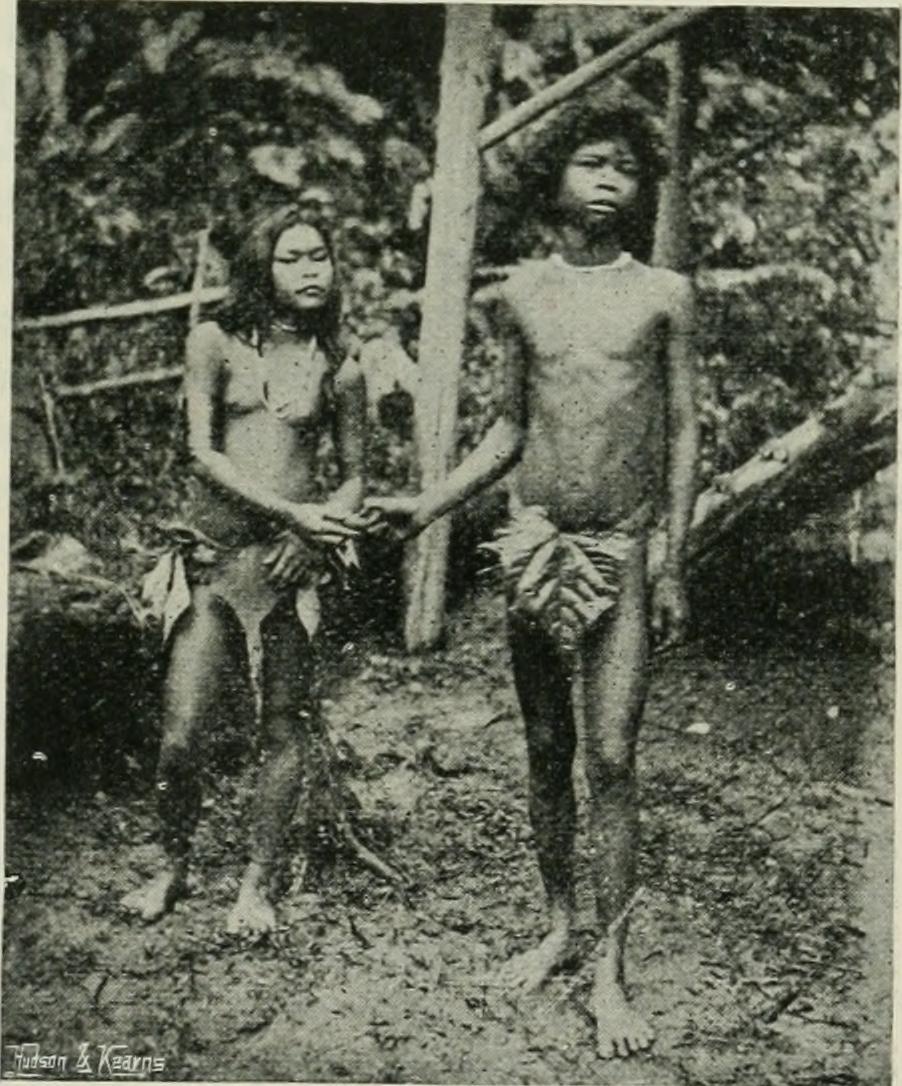
Indonesians today are, like Malaysians and Filipinos, of Malay origin and are the descendants of migrants that arrived around 4000 B.C. Before them some Indonesian islands were inhabited by pygmy-like Negritos that resemble people still found today in the jungles of Luzon, the Philippines and in peninsular Malaysia. The ones in Indonesia were exterminated some scientists say by tribes resembling Australian Aboriginals.
Only the Semang Negritos of peninsular Malaysia and the Negrito Pygmies of the mountains of Luzon and some islands of the Philippines are survivors of the original hunter-gatherers that inhabited Southeast Asia and the Pacific before the Chinese and Malays arrived in the area. But even these Negritos adopted the Chinese language. The ancestors of the hunter-gatherers lives on in New Guinea and the Solomon Islands and other Pacific islands.
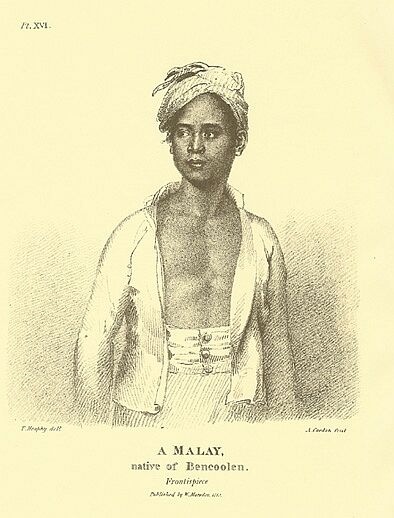
The current inhabitants of Indonesia or mostly Malay people, who also inhabit Malaysia and the Philippines They began migrating to Indonesia between 4,000 and 2,500 years ago and spread through the archipelago. They were a seafaring people that also made it as far west as Madagascar.
Early Indigenous People of Southern Southeast Asia
The indigenous groups of peninsular Malaysia can be divided into three ethnicities, the Negritos, the Senois, and the proto-Malays. The first inhabitants of the Malay Peninsula were most probably Negritos— Mesolithic hunters were probably the ancestors of the Semang, an ethnic Negrito group who have a long history in the Malay Peninsula. Because peninsular Malaysia is so close to Sumatra it is not unlikely that they migrated to Sumatra and perhaps elsewhere in Indonesia. [Source: Wikipedia]
The Proto Malays have a more diverse origin, and were settled in Malaysia by 1000BC. Although they show some connections with other inhabitants in Maritime Southeast Asia, some also have an ancestry in Indochina around the time of the Last Glacial Maximum, about 20,000 years ago. Anthropologists support the notion that the Proto-Malays originated from what is today Yunnan, China. This was followed by an early-Holocene dispersal through the Malay Peninsula into the Malay Archipelago. Around 300 BC, they were pushed inland by the Deutero-Malays, an Iron Age or Bronze Age people descended partly from the Chams of Cambodia and Vietnam. The first group in the peninsula to use metal tools, the Deutero-Malays were the direct ancestors of today's Malaysian Malays, and brought with them advanced farming techniques. The Malays remained politically fragmented throughout the Malay archipelago, although a common culture and social structure was shared.
Anthropologists traced a group of newcomers Proto Malay seafarers who migrated from Yunnan to Malaysia. Negrito and other Aborigines were forced by late comers into the hills. In this period, people learned to dress, to cook, to hunt with advanced stone weapons. Communication techniques also improved.
Archaeological finds from the Lenggong valley in Perak. Dating to 10,000-5,000 years ago- Neolithic (New Stone Age), show that people were making stone tools and using jewellery. In the Bronze Age, 2,500 years ago, more people arrived, including new tribes and seafarers. The Malay Peninsula became the crossroads in maritime trades of the ancient age. Seafarers who came to Malaysia's shores included Indians, Egyptians, peoples of the Middle East, Javanese and Chinese. Ptolemy named the Malay Peninsula the Golden Chersonese.
Senoi
The Senoi are a group of slash-and-burn farmers that live in the rain-forested mountains and foothills of the Main mountains range which bisects the Malaya peninsula, primarily in northeast Pahang and southeast Perak. There are about 20,000 of them. Their language is classified as members of the Aslian Branch of the Austroasiatic group of languages. Most also speak some Malay and there are many Malay loan words in Senoi languages. Many have never traveled further than a few kilometers from the place they were born. [Source: “Encyclopedia of World Cultures, East and Southeast Asia” edited by Paul Hockings (G.K. Hall & Company, 1993)]
The Senoi are believed to have arrived o the Malaya Peninsula about 8000 to 6000 B.C., perhaps mixing with the Semang people’s who were already there. The Malays arrived millennia later. At first they traded peacefully and mixed with the Senoi but as they grew powerful they carved Malaysia into small states. The Senoi became dependants and second class citizens. When the Malays converted to Islam they labeled the Senoi as pagans and enslaved them, murdered adults and kidnaped children under the age of nine. The slave practice didn’t end until the 1930s. The policy of the Malaysian has been to “civilize” the Senoi by converting them to Islam and making them ordinary people.
The Senoi appear to be a composite group, with approximately half of the maternal DNA lineages tracing back to the ancestors of the Semang and about half to later ancestral migrations from Indochina. Scholars suggest they are descendants of early Austroasiatic-speaking agriculturalists, who brought both their language and their technology to the southern part of the peninsula approximately 4,000 years ago. They united and coalesced with the indigenous population.
See Separate Article: SENOI factsanddetails.com
Semang (Negritos)
The Semang are a Negrito group of hunter-gatherers and shifting cultivators that live in the lowland rain forests in northern Malaysia and southern Thailand. There are only about 2,000 of them and they are divided into eight groups whose numbers range from about 100 to 850. Most Semang languages are in the Mon-Khmer group or the Aslian Branch of the Austroasiatic group of languages. Most also speak some Malay and there are many Malay loan words in Semang languages. [Source: “Encyclopedia of World Cultures, East and Southeast Asia” edited by Paul Hockings (G.K. Hall & Company, 1993)]
Other Negritos groups include the Andaman Islanders, the Veddoid Negritos of Sri Lanka and the Negritos of the Philippines and the Indian Ocean islands. The resemble other dark skinned, frizzy-haired people from Africa, Melanesia and Australia. The handful of undeveloped cultures that reportedly have never waged war includes the Andaman Islanders of India, the Yahgan of Patagonia, the Semai of Malaysia and the Tasaday of the Philippines.
Negritos are of an unknown origin. Some anthologist believe they are descendants of wandering people that "formed an ancient human bridge between Africa and Australia.” Genetic evidence indicates they much more similar to the people around them than had been previously thought. This suggests that Negritos and Asians had the same ancestors but that Negritos developed feature similar to Africans independently or that Asians were much darker and developed lighter skin and Asian features, or both.
The Semang are probably descendants of the Hoabinhian rain forest foragers who inhabited the Malay Peninsula from 10,000 to 3,000 year ago. After the arrival of agriculture about 4,000 years, some became agriculturalists but enough remained hunter gatherers that they survived as such until recent times.
In the early days the Semang may have interacted and traded with the Malay settlers after the first Malays arrived but relations soured when the Malays began taking Semang as slaves. After that many Semang retired into the forests. The Semang and other similar groups became known as the Orang Asli in peninsular Malaysia. Even though they were considered "isolated" they traded rattan, wild rubbers, camphor and oils for goods from China
See Separate Article: SEMANG (NEGRITOS)AND ORANG ASLI OF MALAYSIA factsanddetails.com
Austronesian-Speaking People
Austronesian languages are a large language family spoken by around 400 million people today across Southeast Asia and the Indo-Pacific, including Taiwan, Malaysia, Indonesia, the Philippines Madagascar, and Oceania. Key languages include Malay, Javanese, and Sundanese in Indonesia, and Tagalog, Cebuano, and Ilocano in the Philippines.
Austronesian-speaking peoples originated in southern China but developed as a distinct group in Taiwan. Beginning 4,000–5,000 years ago, they launched a major seafaring expansion, island-hopping through the Philippines into the central Indonesian archipelago. From there they spread west into Borneo, Java, and Sumatra—where they encountered Austroasiatic migrants—and east into regions inhabited by earlier Australoid populations.
Over time, Austronesian groups became dominant across Indonesia. They largely replaced Australoid populations (now found mainly in the east) and influenced Austroasiatic-speaking groups to the point that western Indonesia eventually became entirely Austronesian-speaking, despite some populations retaining notable Austroasiatic genetic markers. Genetic studies show strong Austronesian ancestry throughout central and eastern Indonesia. By around 2000 BCE, Austronesians had expanded across Maritime Southeast Asia, into Oceania, and eventually as far as Madagascar. Today, they form the majority of Indonesia’s, Malaysia’s and the Philippines’s population.
See Separate Article: AUSTRONESIAN PEOPLE OF THE PACIFIC, INDONESIA, MALAYSIA, TAIWAN AND THE PHILIPPINES: ORIGIN, HISTORY, EXPANSION factsanddetails.com
Proto-Malay Models
Also known as Melayu asli (aboriginal Malays) or Melayu purba (ancient Malays), the Proto-Malays are of Austronesian origin and thought to have migrated to the Malay archipelago in a long series of migrations between 2500 and 1500 BC. The Encyclopedia of Malaysia: Early History, has pointed out a total of three theories of the origin of Malays: 1) The Yunnan Theory , or Mekong river migration (published in 1889) : The theory of Proto-Malays originating from Yunnan is supported by R.H Geldern, J.H.C Kern, J.R Foster, J.R Logen, Slamet Muljana and Asmah Haji Omar. Other evidences that support this theory include: stone tools found in Malay Archipelago are analogous to Central Asian tools, similarity of Malay customs and Assam customs. [Source: Wikipedia +]
2) New Guinea theory (published in 1965): The proto-Malays are believed to be seafarers knowledgeable in oceanography and possessing agricultural skills. They moved around from island to island in great distances between modern day New Zealand and Madagascar, and they served as navigation guides, crew and labour to Indian, Arab, Persian and Chinese traders for nearly 2000 years. Over the years they settled at various places and adopted various cultures and religions. +
3) Taiwan theory (published in 1997): The migration of a certain group of Southern Chinese occurred 6,000 years ago, some moved to Taiwan (today's Taiwanese aborigines are their descendents), then to the Philippines and later to Borneo (roughly 4,500 years ago) (today's Dayak and other groups). These ancient people also split with some heading to Sulawesi and others progressing into Java, and Sumatra, all of which now speaks languages that belongs to the Austronesian Language family. The final migration was to the Malay Peninsula roughly 3,000 years ago. A sub-group from Borneo moved to Champa in modern-day Central and South Vietnam roughly 4,500 years ago. There are also traces of the Dong Son and Hoabinhian migration from Vietnam and Cambodia. All these groups share DNA and linguistic origins traceable to the island that is today Taiwan, and the ancestors of these ancient people are traceable to southern China. +
Chinese Roots of Ancient Indonesians
The ancestors of modern Laotians, Thais and possibly Burmese, Cambodians, Filipinos and Indonesians originated from southern China. The Austronesian family of languages of which all Philippine and Polynesian languages belong most likely originated in China.
Pottery and stone tools of southern Chinese origin dating back to 4000 B.C. had been found in Taiwan. The same artifacts has been found in archeological site sin the Philippines dating back to 3000 B.C. Southern Chinese culture, agriculture and domesticated animals (pigs, chickens and dogs) then spread through the islands of Indonesia reaching the islands north of New Guinea and spread eastward across the uninhabited islands of the Pacific, reaching easter Island (10,000 miles from China) around 500 A.D.
As people of Chinese origin moved across Asia they displaced and mixed with the local people, mostly hunter-gatherers whose tools and weapons were no match against those of the outsiders. Inventions such as the animal harness and iron-making gave the ancient Chinese a technological advantage over its Stone Age neighbors.
It is likely that many of the indigenous people died from diseases introduced by the people from China just as the original inhabitants of America were killed off by European diseases.
Image Sources: Wikimedia Commons
Text Sources: New York Times, Washington Post, Los Angeles Times, Times of London, Lonely Planet Guides, Library of Congress, Ministry of Tourism, Republic of Indonesia, Compton’s Encyclopedia, The Guardian, National Geographic, Smithsonian magazine, The New Yorker, Time, Newsweek, Reuters, AP, AFP, Wall Street Journal, The Atlantic Monthly, The Economist, Foreign Policy, Wikipedia, BBC, CNN, and various books, websites and other publications.
Last updated December 2025