
FOREIGN RESIDENTS IN THE PHILIPPINES
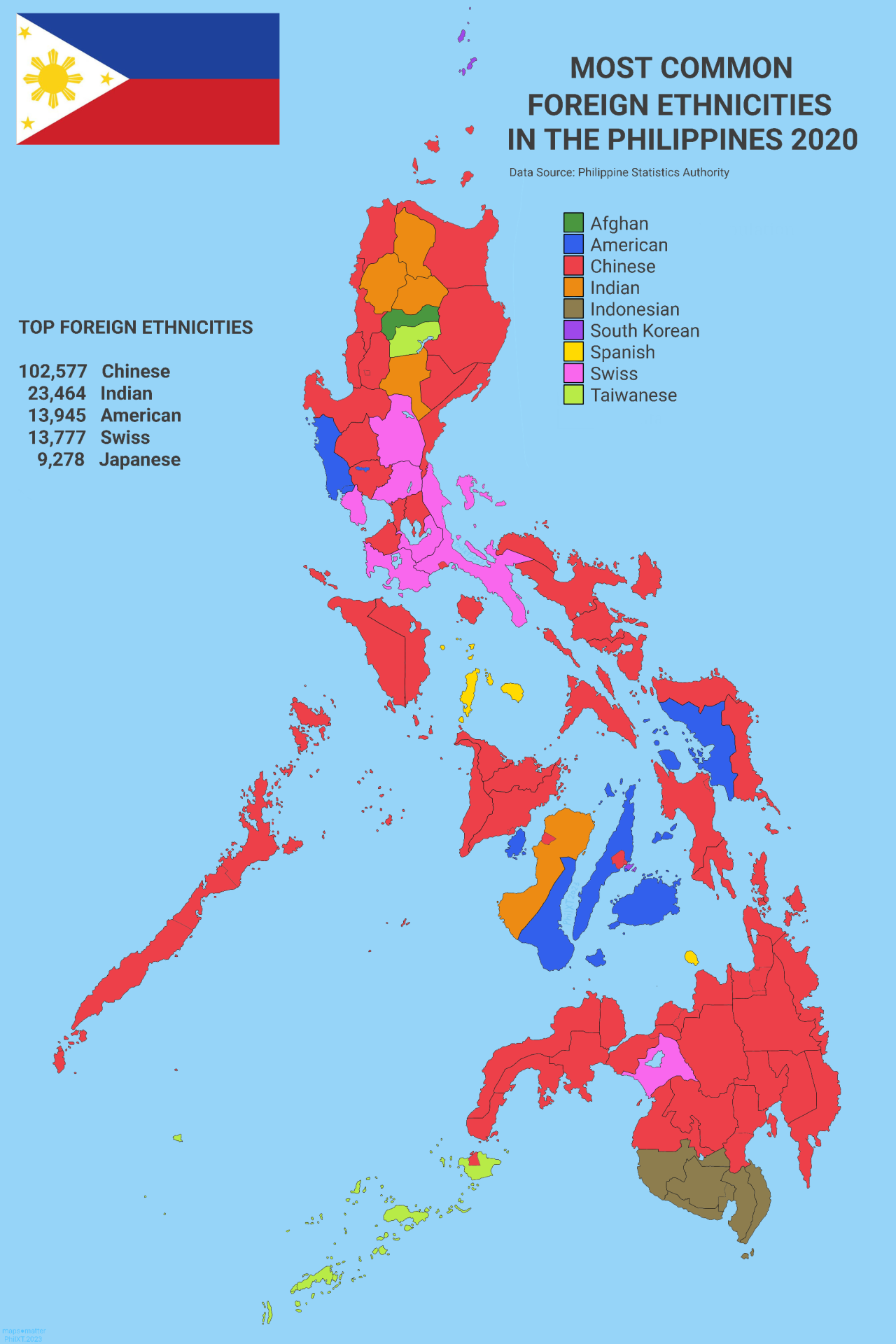
Foreign residents in the Philippines numbered over 133,000 as of early 2026, forming a diverse expatriate community drawn by work opportunities, retirement, and business. Many settle in major urban centers such as Manila and Makati, where international companies, embassies, and modern amenities are concentrated. The country offers a relatively accessible entry system, including visa-free travel for many nationalities and a range of long-term visa options for employment, investment, or retirement.
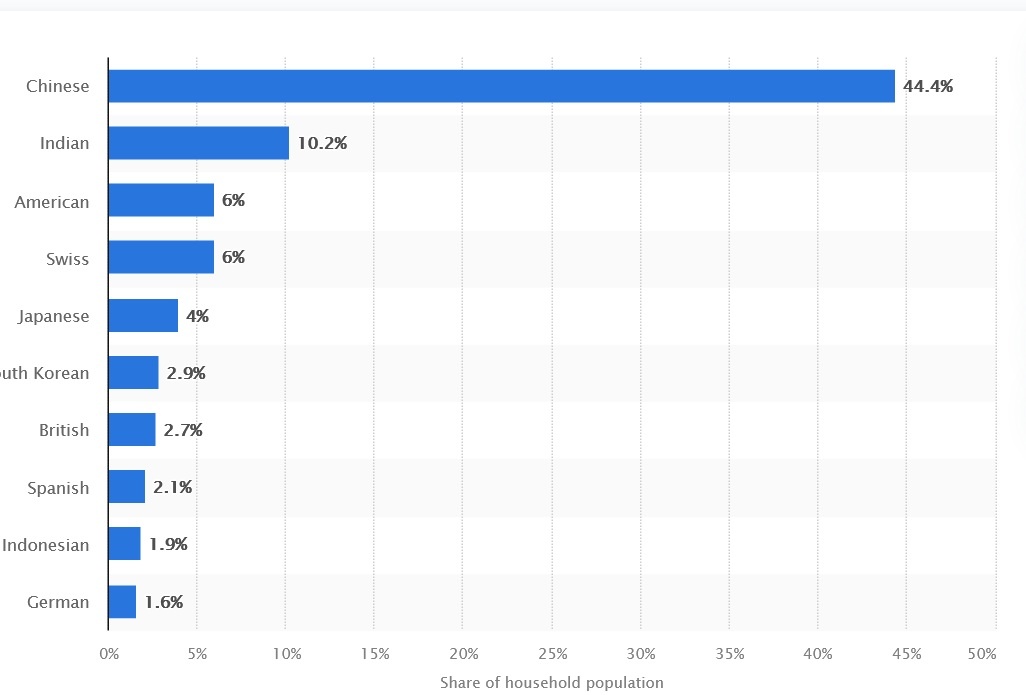
The largest foreign national groups of residents in the Philippines (according to 2020 Census) are:
1) China (22,494)
2) India (18,959)
3) United States (6,306)
4) South Korea (4,372)
5) Japan (4,397)
[Source: Expat Life in the Philippines
The above numbers reflect those who are officially registered and have the proper parer work. There are tens of thousands more foreigners that don’t have these things and do things like periodically leave the country so they can return and stay in the Philippines with tourist visas or other kinds of visas.
Visitors from more than 150 countries are typically granted 30 days of visa-free entry, with extensions available. Special arrangements allow shorter stays for certain regions, while programs such as the Balikbayan scheme grant former Filipino citizens and their families up to one year of visa-free stay. Long-term residency options include work visas, investor visas, and the Special Resident Retiree’s Visa (SRRV). In certain cases, such as regional crises, authorities have also provided temporary relief measures like free visa extensions.
Living in the Philippines is often more affordable than in many Western countries, although costs can rise in major cities. Expats benefit from a lifestyle that combines urban convenience with access to beaches and natural attractions, though adjusting to local infrastructure and systems can be necessary. Foreign residents must also comply with regulations, including annual reporting to immigration authorities, securing proper work permits, and applying for appropriate visas such as the 13(a) visa for those married to Filipino citizens.
RELATED ARTICLES:
FILIPINA WIVES, NON-FILIPINO MEN AND MAIL-ORDER BRIDES factsanddetails.com
FILIPINO AMERICANS: HISTORY, LIFESTYLE, FAMOUS ONES factsanddetails.com
ETHNIC GROUPS AND MINORITIES IN THE PHILIPPINES factsanddetails.com
MAIN ETHNIC GROUPS OF LUZON: TAGALOGS, ILOCANO AND BICOL factsanddetails.com
ETHNIC GROUPS OF THE CENTRAL PHILIPPINES ISLANDS: VISAYANS, CEBUANO, WARAY factsanddetails.com
CHINESE IN THE PHILIPPINES factsanddetails.com
Mixed People in The Philippines
Since the Spanish colonization of The Philippines, several communities of migrant heritage have become part of the population. These include Chinese Filipinos and Spanish Filipinos, both of whom intermarried with lowland Austronesian-speaking groups, giving rise to populations commonly referred to as Filipino mestizos. Together, these communities make up a significant share of the population and have played an especially prominent role in the country’s bourgeoisie and economic life. [Source: Wikipedia
These groups were also central to the formation of the Philippine nation, contributing to the rise of Filipino nationalism through the Ilustrado intelligentsia and playing important roles in the Philippine Revolution. In addition, the Philippines is home to other communities of migrant or mixed descent, including American Filipinos, Indian Filipinos, and Japanese Filipinos, who likewise form part of the country’s diverse social and cultural fabric.
Foreigners in the Philippines in Years Past
In the 1980s, jet planes full of Japanese men arrived in Thailand and the Philippines on pre-paid sex tours that included airfare, accommodations, transfers, and a local woman waiting for them in their rooms. Many Japanese-Filipino children produced by marriages and liaisons between Japanese men and Filipinas later worked in Japan as “entertainers,” a euphemism for prostitutes. A Manila-based women’s organization estimated that there might have been as many as 65,000 Japanese-Filipino children abandoned by their fathers in the Philippines.
In the late 1990s, there were tens of thousands than 100,000 Americans who had retired in the Philippines. Many were retired servicemen who had spent time in the archipelago during their military service, and in some towns they made up the majority of customers in certain red-light districts.
Koreans were the largest expatriate community in the Philippines in the early 2010s. According to the Ministry of Foreign Affairs, about 88,000 Koreans were living in the country in 2012, and the Philippine Department of Tourism reported that more than 1.16 million Koreans entered the country in 2013.
Is It Possible to Retire In The Philippines With $200,000 Of Savings?
Retiring abroad has become increasingly popular as people seek a better climate, lower living costs, affordable healthcare, and new cultural experiences. The Philippines stands out as a top destination, offering more than 7,000 islands, a tropical environment, and a large expat community. Retirees are drawn to its beaches, scenic landscapes, and friendly locals, along with practical benefits such as discounts for seniors and duty-free importation of household goods. [Source: Jean Folger, Invtesopedia, March 18, 2015]
One of the country’s biggest advantages is its genuinely low cost of living. According to International Living’s Global Retirement Index, the Philippines ranked among the top countries for affordability, with many expats able to live comfortably on about $800 to $1,200 per month. At this rate, $200,000 in savings could last roughly 14 to 21 years, depending on spending levels, although this estimate assumes stable expenses and no additional financial obligations.
Retirement becomes even more feasible when additional income sources are considered. For example, the average U.S. Social Security benefit (about $1,328 per month in 2015) could cover most living expenses in the Philippines, including housing, food, and basic healthcare. This supplemental income can significantly extend savings and provide extra financial security for travel or emergencies.
Housing is also relatively affordable, with rental costs varying by location. A one-bedroom apartment in a city center averages around $229 per month, while prices drop outside urban areas. Although foreigners cannot own land, they are allowed to purchase condominiums under Philippine law, making long-term housing more accessible. However, retirees are advised to manage spending carefully by living like locals rather than maintaining a tourist lifestyle, which can quickly increase expenses.
Ultimately, while $200,000 may not guarantee financial security for an entire retirement, living in the Philippines can stretch savings further and improve overall quality of life. Prospective retirees should visit multiple times, research locations, and seek professional advice on taxes and legal matters. It is also important to stay informed about safety concerns in certain regions and take precautions, such as enrolling in government travel programs for updates and emergency assistance.
Views by Filipinos of Foreigners in the Philippines
Filipinos generally hold a very positive, hospitable, and warm attitude toward foreigners, often treating visitors with great respect and kindness. While Filipinos are generally welcoming, they may also view foreigners as culturally distinct and sometimes treat them with favored status, particularly if they appear wealthy.
According to “Culture Shock!: Philippines”: Traditional Filipino hospitality welcomes foreigners. But having said that, strangers are also viewed as fair game. Strangers do not have any kinship ties so rules of reciprocity, obligations to support, etc., do not apply. For example, prices of goods are higher for tourists than prices for locals; and even among locals, regular customers (suki) get preferential treatment. Foreigners are perceived as wealthy, and therefore a source of lucre. It is helpful to establish personal links and have go-betweens with whom you will be identified with a kin group. [Source: “Culture Shock!: Philippines” by Alfredo Roces and Grace Roces, Marshall Cavendish International, 2010]
Yotiganow posted on Quora.com in 2025: The strange thing I have noticed is that I am only asked for money in urban areas. I just assumed that it has to do with immediate need. A person in the city may need to buy food to survive, as there is limited local production, whereas the people in the countryside could grow or find their own food if needed, so asking or begging for money is less valuable.
ogag79 avatar posted: Hate to say this and some people may consider this cynical, but some of those are asking money from you because they can and not because they need to. We're generally hospitable and we won't be right in your face, but as you have rightfully called it, there's some nuance in how the locals interact with you, especially when we switch languages. I realize I'm trying to paint ourselves with a broad brush, which I am guilty of. But don't get dissuaded by it. You just need to be cognizant of this so you can put your guard up when the need arises.
Old White Guys with Younger Filipinas in the Philippines
Older Western men with younger Filipina wives is a common, often normalized,, and sometimes criticized, social dynamic in the Philippines. These relationships are often driven by mutual benefits, including companionship for the men and better economic opportunities for the women and their families. Such couples are common, particularly in urban areas like Metro Manila. The tradition partly has its roots in the history of US military bases in the Philippines.
White men often seek Filipina wives due to their reputation for being family-oriented and attractive. Filipina women may be drawn to foreign men due to perceived positive traits, such as not being "drunken deadbeats," and the potential for a better life. While some view these relationships with suspicion, suggesting they are transactional "business partnerships" or scams, others defend them, stating that many are loving marriages where the families approve.
How do Pinoy feel about old white men who marry younger Filipinas? Kem Ornopia, a female civil engineer, STEM teacher and entrepreneur, posted on Quora.com in the 2020: I am a Filipino. Honestly, I feel pity to both of them. I know, age doesn’t matter when it comes to love but I bet they are both into mutual parasitism. The younger woman is clearly after what the old man has (money and greener pastures) while the old man is after some reciprocation either be it anything sexual, care, companionship or to prove to themselves,to their families and friends that they are still marketable. It just sucks for me. I think the woman doesn’t really love the man. By the way, I have no objection nor I discriminate interracial relationship because I, myself, has a white foreigner bf and we are of same age.
Ray Hart, an M.A in Southeast Asian Studies & Filipino Ethnicity and People at the University of California, Riversid, posted on Quora.com in 2020: There are three basic responses with not any of my business being the overwhelming majority of response. There is a reason for this being the overwhelming response, if you make trouble for the couple, you threaten the family’s income or potential income and such things could cause you to end up getting ice picked. I have seen this happen. A cop recently decided to shakedown a foreigner, when it turned out his girlfriend was 16 and not 20. He walked away from the family and took his P100,000 he was spending on them a month with him. The cop was ambushed at is home two nights later and pretty much everyone knows who did it and why.
The other two responses are jealousy and can we make money off of this. The cop discovered a relationship and decided he could make money off of this and it didn’t work out so well for him, but it isn’t uncommon for them to try even there is nothing illegal going on. Plenty of families try and play this game. I have a friend who is having issues with the ladies father. She is 20 and they have been together since she was 18. They were set to get married and the father’s brother decided to tell his younger brother to demand a bribe.
See Separate Article: FILIPINA WIVES, NON-FILIPINO MEN AND MAIL-ORDER BRIDES factsanddetails.com
Asian Retirees in the Philippines
Japanese retiree Noriko Iwamoto, a 62-year-old widow and former veterinarian from Nagoya, chose to relocate to the Philippines in search of affordability, opportunity, and a better quality of life—factors increasingly driving older North Asians abroad. Now running a small tea shop in Manila, she explained her decision candidly: “I was looking forward to living somewhere outside Japan,” adding, “There are no jobs in Japan, but I still want to work.” Her move reflects broader economic realities in Japan, including prolonged deflation, a rigid labor market, and limited post-retirement employment options. [Source: Neil Jerome Morales, Reuters, February 18, 2016]
The Philippines has actively positioned itself as a retirement destination for foreigners—particularly from Japan, China, South Korea, and Taiwan—by offering relatively low living costs, warm weather, and accessible visa programs. Through the Philippine Retirement Authority (PRA), the country allows foreigners as young as 35 to qualify for retirement residency, with lower financial requirements than competitors such as Thailand and Malaysia, where applicants must typically be at least 50 and demonstrate higher income or savings thresholds. These policies are designed to attract retirees seeking to stretch their pensions and escape low interest rates in their home countries.
Although still modest in scale, the trend reflects deeper demographic and economic pressures. Japan alone has about 34.6 million people aged 65 or older, and its high public debt and aging population have strained retirement systems. As a result, more retirees are looking abroad for cheaper healthcare and living expenses, as well as opportunities to remain economically active.
As of the data cited, about 42,511 foreigners were enrolled in the Philippines’ retirement program—small relative to the country’s nearly 100 million population. Economist Euben Paracuelles of Nomura noted that while the sector has potential, it would need to be integrated with broader reforms in tourism and foreign investment to significantly impact the economy. Still, the PRA has set ambitious goals, aiming to more than double foreign retirees to 100,000. “Right now, it’s the ambulatory and fun-loving retirees that we are targeting,” said PRA General Manager Valentino Cabansag, highlighting a focus on relatively young and active retirees. Indeed, about one-third of foreign retirees in recent years have been in the 40–49 age group.
Healthcare is expected to be one of the main beneficiaries of this “gray market” expansion. Augusto Palisoc, CEO of Metro Pacific Hospital Holdings, said the company is upgrading facilities and considering foreign-language training for staff to cater to international retirees. “It will mean a larger market for all the hospitals and healthcare providers,” he said. The demand could also help absorb a surplus of Filipino nurses, according to Christian Raymond Leyco of the Association of Private Duty Nurse Practitioners. Caregivers in the Philippines earn about 500 to 1,000 pesos ($10–$21) for a 12-hour shift, significantly lower than Japan’s roughly $20 per hour, underscoring the cost advantage for retirees.
The property sector is also adapting to this influx. Major developers such as Ayala Land, Megaworld, Robinsons Land, and Century Properties are marketing homes to foreign retirees. Ayala Land has even opened a showroom in Tokyo and introduced Japanese-style features, including soaking tubs, in developments in Cebu. At Robinsons Land’s AmiSa Private Residences—an Australian Gold Coast-inspired project—retirees account for about 20 percent of foreign buyers. “The assumption is people retiring want a less active lifestyle, somewhere near the beach they can relax,” said Robinsons Land President Frederick Go.
Dennis Rodman Meets His Father in the Philippines After 42 Years of Separation
Former NBA basketball Dennis Rodman's father, Philander Rodman Jr. , lives in the Philippines. In the early 2000s he lived with two wives and 15 of his 27 children and said he was shooting for 30 children. In 2012, Dennis Rodman had unexpectedly reunited in Manila with his estranged father, whom he had not seen for more than four decades. Philander had left Rodman’s mother nearly 50 years earlier and that the meeting occurred only because a touring team Rodman played for happened to be in the Philippines. [Source: Kelly Dwyer, Ball Don't Lie, Yahoo Sports, July 19, 2012]
According to the Associated Press, Philander Rodman Jr., who acknowledged fathering “29 children by 16 mothers,” said he was “happy and surprised” that his son agreed to meet him. Living in the Philippines for nearly 50 years, Philander said he wanted to explain that he had not intentionally abandoned his family, though the encounter was brief and limited to greetings and handshakes.
Dennis Rodman had previously expressed deep emotional distance from his father in his 1996 memoir Bad As I Want To Be. He wrote: “I never really knew my father… My father isn’t part of my life… Some man brought me into this world. That doesn’t mean I have a father; I don’t.” Rodman emphasized that he was raised by his mother and sisters and lacked a male role model until college.
Dwyer also highlighted that the AP mentioned Philander Rodman was running a restaurant in the Philippines called “Rodman’s Rainbow Obamaburger,” a detail Dwyer treated with heavy sarcasm. After the meeting, Rodman told the Associated Press, “I’ve been trying to meet him for years. And then last night, boom, I met him. I was really, really happy and very surprised.” He added, “It’s the beginning of something new.”
Image Sources: Wikimedia Commons
Text Sources: “Encyclopedia of World Cultures Volume 5: East/Southeast Asia:” edited by Paul Hockings, 1993; “Culture Shock!: Philippines” by Alfredo Roces and Grace Roces, Marshall Cavendish International, 2010; Metropolitan Museum of Art; National Geographic, Live Science, Philippines Department of Tourism, New York Times, Washington Post, Los Angeles Times, Smithsonian magazine, Encyclopedia.com, Library of Congress, The Conversation, The New Yorker, Time, BBC, CNN, Reuters, Associated Press, AFP, Lonely Planet Guides, Google AI, Wikipedia, The Guardian and various websites, books and other publications.
Last updated March 2026