
FIESTAS IN THE PHILIPPINES
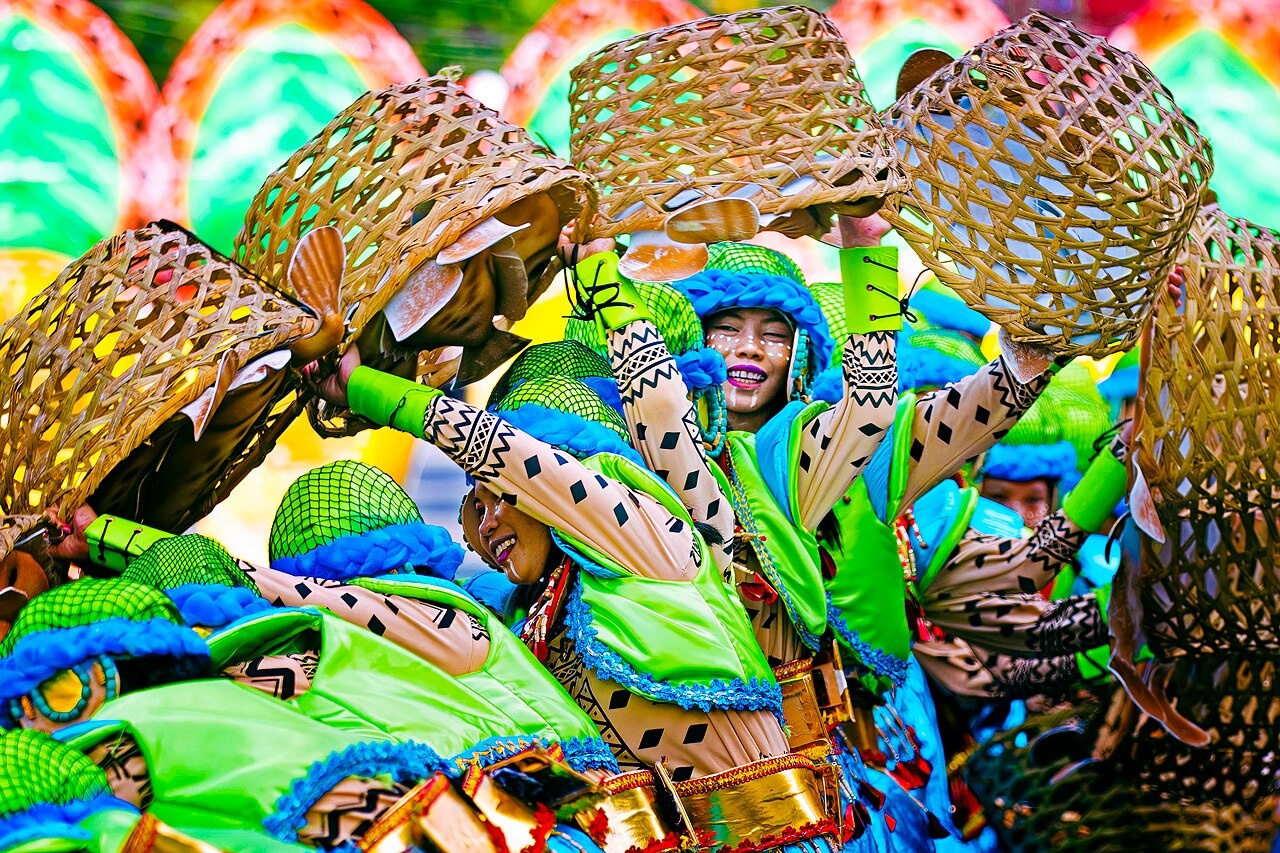
Perhaps the single event most conducive to Filipino community solidarity each year is the fiesta. Celebrated on the special day of the patron saint of a town or barangay, the fiesta is a time for general feasting. Houses are opened to guests, and food is served in abundance. The fiesta always includes a Mass, but its purpose is unabashedly social. The biggest events include a parade, dance, basketball tournament, cockfights, and other contests, and perhaps a carnival, in addition to much visiting and feasting. Many festivals are linked to the Catholic Church and some combine traditions and beliefs that predate Christianity—many of them animist in nature— with ritual associated with the church.
Anne C. Kwaantes wrote in Christian Classics Etheral Library: “Everyone here agrees — Filipinos love fiestas. The word "fiesta" will bring a smile to the face of almost any Filipino. After all, a fiesta is a special time with friends, a time for fellowship, food, and lots of activities. Each year brings numerous fiestas. Sometimes people are busy for weeks preparing for them. It is surprising, how even those facing many problems in their day-to-day life set them aside and participate in the festivities. [Source: Anne C. Kwaantes, Fourum, Winter 2000, Christian Classics Etheral Library, pages 6, 7]
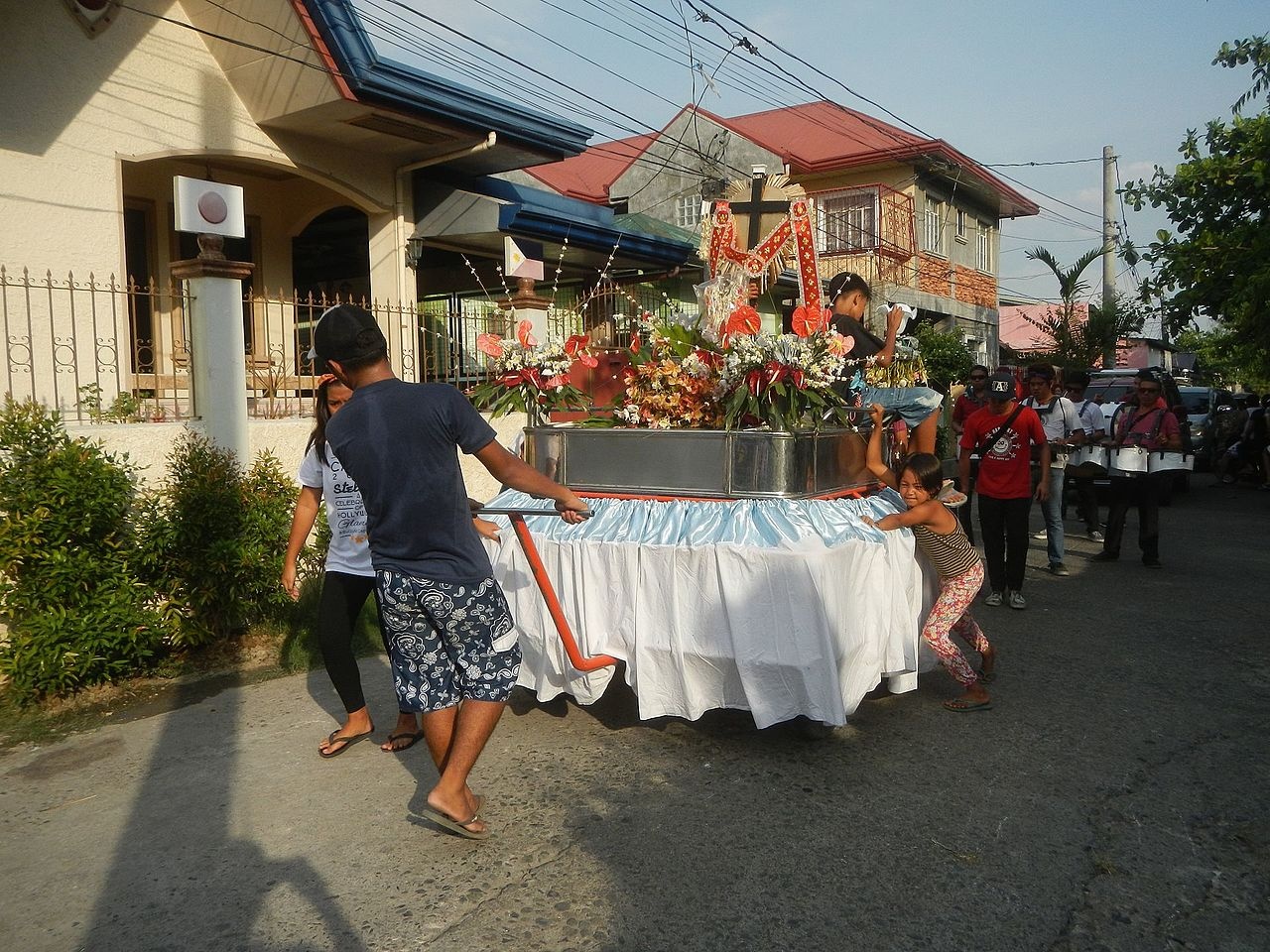
Every Catholic town in the Philippines celebrates an annual barangay, or 'barrio', fiesta in honor of their patron Catholic saint. During this period, there are large processions and parades throughout the town, with the saints, the mayordomo or sponsor of the fiesta, and school children marching through the settlement to band music or music played on a videocassette. In addition, each family visits other neighbors and relatives to share home-cooked, special 'feast' foods during the fiesta. In many coastal or riverine communities, fishers celebrate by carrying the image of the patron saint on boats in a fluvial procession to bless the waters and fish. The sacred days of the Roman Catholic calendar also affect traditional livelihoods. For example, Good Friday, the day Jesus Christ was crucified, even today is considered a 'taboo' day for fishermen. It is an omen of terrible fates, and fishers fear for their lives if they go out fishing on that day. In the past, every Friday was deemed to be a risky day to go fishing, but these beliefs have been modified over time.
Several town fiestas in the Philippines have gained nationwide fame, including the Ati Atihan Festival, the Pahiyas Festival, the fluvial festival of Bocaue, the Christmas Eve lantern celebration known as the Giant Lantern Festival, the Carabao Festival, and the annual procession of the Feast of the Black Nazarene, among many others. [Source: “Culture Shock!: Philippines” by Alfredo Roces and Grace Roces, Marshall Cavendish International, 2010]
Fiestas are open to everyone and can take place even within city neighborhoods. Usually centered on the parish church, a fiesta may involve an entire town, a single district—such as in Quiapo—or even just one barrio. Celebrations typically last about three days. During this time, the whole community joins in the festivities; at the Ati Atihan Festival, for instance, thousands of residents—from local officials to ordinary townspeople—fill the streets in lively processions honoring the Santo Niño. Homes prepare abundant food for guests, while various forms of public entertainment and activities add to the festive atmosphere.
RELATED ARTICLES:
HOLIDAYS IN THE PHILIPPINES: NEW YEAR'S, ALL SAINTS DAY, MAY AND MANILA AREA FIESTAS factsanddetails.com
CHRISTMAS SEASON IN THE PHILIPPINES: PRE-DAWN MASSES, PAROLS, EVENTS factsanddetails.com
FAMOUS FESTIVALS IN THE PHILIPPINES: BLACK NAZARENE, ATI ATIHANS, MASSKARA factsanddetails.com
HOLY WEEK AND LENT IN THE PHILIPPINES: VOWS, TABOOS, BLOODY PROCESSIONS, GETTING NAILED TO A CROSS factsanddetails.com
RELIGION IN THE PHILIPPINES factsanddetails.com
CATHOLICISM IN THE PHILIPPINES: LIFE. INFLUENCE, SAINTS, POPE VISITS factsanddetails.com
CATHOLIC PRACTICES IN THE PHILIPPINES: PRAYER LADIES, SANTOS, BAPTISMS factsanddetails.com
For articles on the Catholic Church in general see CATHOLICS factsanddetails.com
For Information in the Festivals of Different Ethnic Group See the Ethnic Groups and Minorities listed Under the MINORITIES factsanddetails.com
FUNERALS IN THE PHILIPPINES factsanddetails.com
History of Festivals in the Philippines
Long before the arrival of Christianity, however, many of these celebrations may have originated as ancient rituals connected with prayers for rain, abundant harvests, or plentiful catches from rivers and seas. Among the Tagbanwa, for example, three-day festivities traditionally take place when a forest area is cleared in preparation for planting. [Early Catholic missionaries later adapted these indigenous practices by incorporating Catholic meanings and ceremonies into them. Some modern fiesta traditions—such as the playful dousing of water—may also reflect older Southeast Asian customs similar to the Songkran celebrated in Chiang Mai. [Source: Anne C. Kwaantes, Fourum, Winter 2000, Christian Classics Etheral Library, pages 6, 7; “Culture Shock!: Philippines” by Alfredo Roces and Grace Roces, Marshall Cavendish International, 2010]
The fiesta tradition in the Philippines had its roots in Spanish religious customs. According to American historian John Leddy Phelan, the Spaniards instituted fiestas in Philippine towns to draw people, who lived in scattered kin group clusters at the time, into one central area. This created a forum for Christianizing the populace. Supporting this viewpoint is the colorful and elaborate pageantry associated with the fiesta, which takes various forms.
In Spain, a strongly Roman Catholic country, special days were set aside to honor saints through processions and celebrations. When Spanish missionaries arrived in the Philippines in the mid-1500s, they used fiestas as a practical way to spread Christianity and gather scattered communities around churches in newly established towns. Through colorful processions, religious dramas, and communal celebrations, missionaries hoped to attract local people and encourage them to adopt the Roman Catholic faith. Over time, many towns were named after saints and came to celebrate annual festivals in honor of their patron saints, as well as major events in the lives of Jesus and Mary.
Religious observances throughout the year also reflected this tradition. Christmas celebrations included the series of predawn masses known as Misa de Aguinaldo, culminating in the midnight Misa de Gallo, after which families gathered for festive meals and reunions. Even more elaborate were the observances during Holy Week, when Filipinos attended special masses, reenacted the Passion of Christ, and performed acts of penance such as carrying crosses or self-flagellation. Some towns also held dramatic public rituals on Good Friday, while Easter morning featured reenactments of the meeting between the risen Christ and the Virgin Mary.
Town fiestas themselves combined religious ceremonies with lively social gatherings. They typically included a mass, a procession, and extended feasting, music, and entertainment. Some communities developed distinctive traditions, such as the river procession honoring Our Lady of Peñafrancia in Naga City or the fertility dances of the Obando Fertility Rites in Obando. Many scholars believed that these festivals blended Spanish Catholic traditions with older indigenous rituals that existed before Spanish colonization. Over the centuries of Spanish rule from 1565 to 1898, these mixed practices gradually evolved, and most fiestas eventually came to be recognized as distinctly Filipino expressions of Roman Catholic devotion and community celebration.
Protestant Church and Fiestas in the Philippines
Anne C. Kwaantes wrote in Christian Classics Etheral Library: “One hundred years ago the first Protestant missionaries came to the Philippines. What impact did Protestantism have on the fiesta! How have Protestants responded to it? Some Filipino Protestants insist that the fiesta has become merely a social event. Relatives and townspeople meet and enjoy a holiday together. The original honoring of the saints has been largely forgotten. Some evangelical Christians, however, want nothing to do with the town fiesta. They make other plans for the day and stay far away from the festivities. Still other Protestants try to use the fiestas to keep Christian traditions alive, as did the early Roman Catholic Spaniards. The majority of evangelical Christians do not want to be part of the town fiesta as most Filipinos celebrate it. There are, however, creative ways of giving a biblical significance to the day. Some Christian families prepare food, invite guests to their homes, and use the occasion to visit together and to give thanks to God. One of the participating families often prepares leaflets with meditations and prayers of thanksgiving. [Source: Anne C. Kwaantes, Fourum, Winter 2000, Christian Classics Etheral Library, pages 6, 7 ***]
“The United Church of Christ, one of the largest Protestant denominations in the Philippines, holds Reformation lectures during the month of October. In this way the church reminds its members of the meaning of the Protestant Reformation. The Christian Reformed Church in the Philippines (CRCP), a sister denomination of the Christian Reformed Church in North America, celebrates Reformation Day annually in several denominational centers. People gather for worship, singing and drama. Reminiscent of the fiesta, eating together is part of the celebration. Some CRCP congregations also observe predawn services during the nine days before Christmas. Again, worship, fellowship and breakfast together strengthen the Christian character of the event. ***
“In time, will the original purpose of the fiesta be forgotten if new meaning is poured into these days of celebration? Should Protestant Christians celebrate something other than what the townspeople celebrate in a fiesta or should they set aside such festivities altogether because they do more harm than good? One cannot help but note that young people in North America often party enthusiastically in churches on Halloween. Reformed families in America also enjoy decorating a Christmas tree, even though Christmas trees originally were mid-winter symbols of fertility in Europe. In the missionary context another question inevitably arises: What approach should missionaries take when confronted with practices such as the fiesta? Should the cross-cultural missionary make decisions about such matters, or should new Christians themselves decide them for their own people? These questions remain for your contemplation. ***
What Philippines Fiestas Are Like
Hospitality is the defining spirit of every fiesta, and visitors—including foreigners—are warmly welcomed without the need to worry about strict rules of etiquette. Since most fiestas have religious origins, however, respect for sacred traditions is expected. The parish church and the image of the patron saint are central symbols of the celebration. Visitors are expected to behave respectfully inside the church and during religious activities, especially when the saint’s image is carried through the streets in a solemn procession. [Source: “Culture Shock!: Philippines” by Alfredo Roces and Grace Roces, Marshall Cavendish International, 2010]
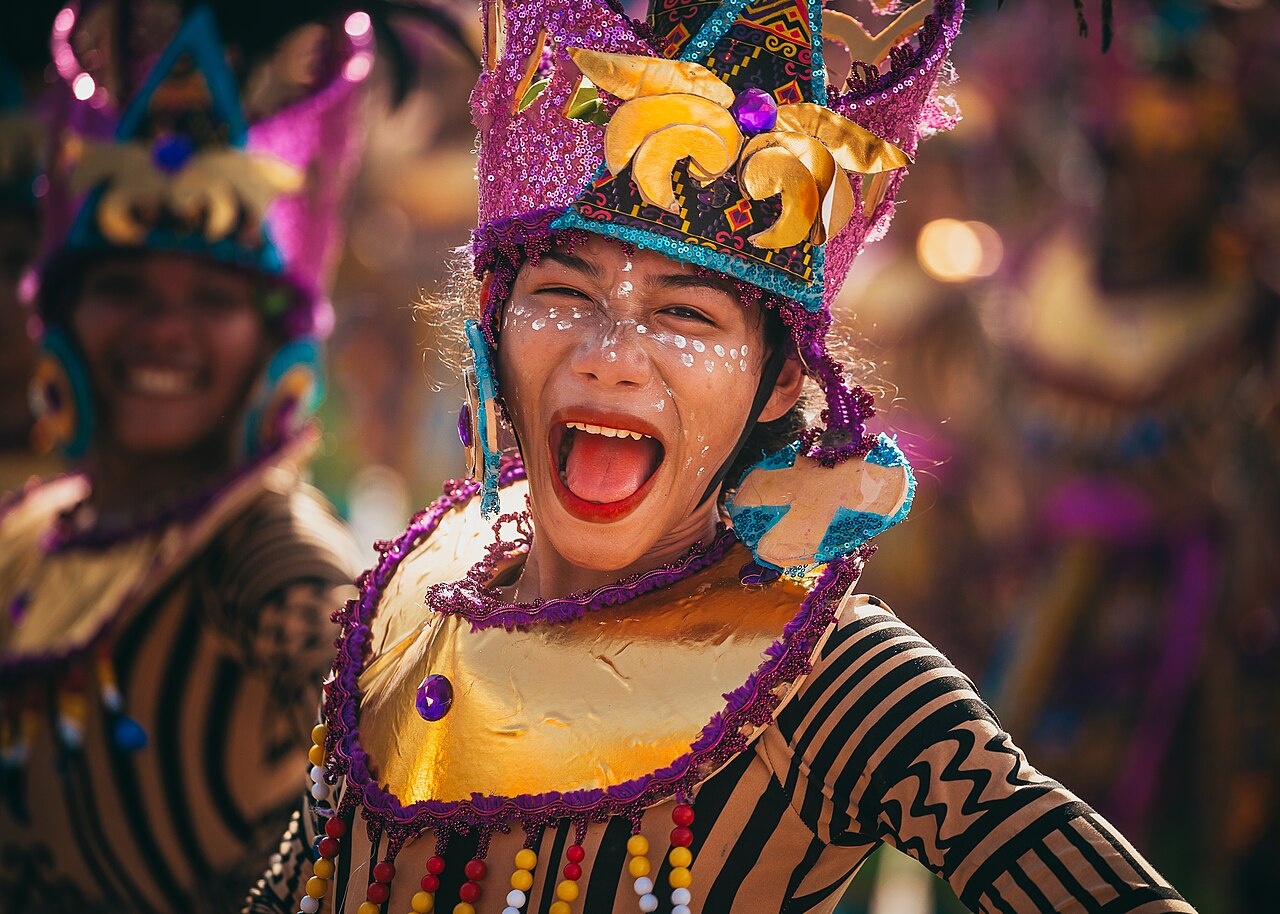
A fiesta also serves as a grand homecoming for people who have moved away for study or work. Many return to their hometowns for the celebration, often bringing friends along to experience the festivities. Families spend weeks preparing food, and the pig that has been carefully fattened throughout the year is finally roasted to become Lechon, the centerpiece of the feast. Just as turkey is associated with Thanksgiving in the United States or ham with Christmas in Europe, lechon symbolizes abundance and celebration during Filipino fiestas. In earlier times, some delicacies were prepared only for such occasions, including Pastillas, traditionally made from carabao’s milk and wrapped in delicately cut Japanese paper with intricate designs and festive messages. Particularly associated with the fiesta of San Miguel, these sweets were proudly served to guests. Such traditions highlight how food, hospitality, and community pride come together to make the fiesta one of the most meaningful social events in Filipino life.
During a town fiesta, many aspects of Filipino life come together in a vibrant display of community activity. Temporary businesses spring up everywhere as traveling vendors, entertainers, hairdressers, traditional healers, and other itinerant workers move from one celebration to another. The lively atmosphere also attracts less welcome figures such as pickpockets and beggars. Politicians, recognizing the large gatherings of people, often take advantage of the occasion to meet voters and promote themselves. Families reunite, and prominent citizens are publicly honored. The celebration also symbolizes renewal: houses are repaired and freshly cleaned, streets and plazas are decorated, and religious images are repainted or newly dressed. The town becomes lively with music, parades, and colorful attractions such as the gigantes, large paper-and-cloth figures supported by bamboo frames that tower above the crowd. Special foods are prepared, local delicacies are enjoyed, and social events—such as beauty pageants, dances, and gatherings—bring together friends, relatives, and neighbors.
Although fiestas may appear spontaneous, they require extensive planning and resources. Local leaders and organizations carefully organize the activities months in advance, assigning responsibilities and raising funds through ticket sales, contests, and community contributions. Wealthier residents often play key roles in supporting the event, especially the honored hermano mayor, who traditionally sponsors major aspects of the celebration, from church decorations to meals for visitors. In this way, the fiesta reinforces community bonds, renews kinship ties, and strengthens social relationships through acts of generosity, reciprocity, and shared participation. Ultimately, the fiesta reminds Filipinos of their heritage, their relationships with family and neighbors, and their sense of belonging to the community.
Town Fiestas in the Philippines
Preparations for a town fiesta begin several days in advance and gradually build excitement throughout the community. One of the most important preparations is the Novena, which is held during the nine days leading up to the feast day of the town’s patron saint. During this period, families clean and decorate their homes in anticipation of visiting relatives and guests. Houses are repainted, curtains replaced, and floors and windows carefully scrubbed until they shine. Meanwhile, the streets are transformed with bamboo arches and brightly colored paper buntings. The town plaza becomes the center of activity—freshly cleaned and decorated—often hosting a dance on the night of the fiesta. Amusement booths, food stalls, and vendors selling toys and trinkets fill the area with lively sounds and color, while rides such as carousels and Ferris wheels, along with small sideshows, are set up near the church. [Source: “Culture Shock!: Philippines” by Alfredo Roces and Grace Roces, Marshall Cavendish International, 2010]
In towns located along rivers or the coast, the highlight of the fiesta is often a fluvial procession, in which the image of the patron saint is carried across the water. The image is typically placed inside a bamboo structure known as a pagoda, mounted on a decorated barge and accompanied by other boats filled with devotees. In the town of Angono, for example, the waterborne procession is followed by a lively land procession through the main streets, where participants and spectators cheerfully splash one another with water. In inland communities, the procession usually begins at the parish church and winds through the principal streets before returning to the church. Devotees walk alongside the saint’s image—mounted on a wheeled platform known as a carroza—while holding candles and offering prayers.
Different towns add distinctive local customs to these processions. In Sariaya, children eagerly scramble for cookies and sweets tied to bamboo poles along the route as soon as the saint’s image passes by. In Pakil, men and women perform a lively dance known as the turrumba as they march in procession. In agricultural communities where San Isidro Labrador is honored, the procession may feature elaborately decorated bullcarts. In Pulilan, the celebration becomes even more spectacular as hundreds of carabaos adorned with flowers parade through the streets, reflecting the deep connection between farming life and religious devotion.
Wealthier families often organize an elegant town ball, where participants arrive dressed in their finest attire. Traditionally, the event opens with the rigodon, a formal dance performed by the most distinguished members of the community. While the privileged guests dance inside the venue, less affluent townspeople often gather outside to watch, highlighting the social contrasts that sometimes exist within the community. Tickets to the ball are typically sold to help finance the event itself, support other fiesta activities, or raise funds for local civic projects.
Religious Festivals in the Philippines
Higantes Festival (Angono, Rizal) features giant papier-mache effigies. Using an art form brought from Mexico by Spanish priests, people from Angono created a larger than life caricatures of their Spanish landlords. The townspeople made the best enjoyment out of a bad situation when the Spanish owners prohibited all celebrations because they were concerned about the costs. This joyous festival is in honor to their patron saint of fisherman - San Clemente. The festival is a procession of giant artworks or the "Higantes" and the "pahadores" or the devotees dressed in colorful, local costumes or fishermen's clothes, wooden shoes and carrying boat paddles, fishnets and traps. ^^
One of the most beautiful and moving religious celebrations are the Missa de Gallo (cock-crow masses) each dawn on the nine days leading up to Christmas. The Feast of our Lady of the Immaculate Conception in December in the old fishing town of Malabon features a water festival is held from Malabon River to Manila Bay. During the Feast of St. John the Baptist June 24 merrymakers douse (baptise) unsuspecting passers-by in Metro Manila’s San Juan district.
The Penefrancia celebration on the Naga River in Naga City (third Sunday of September) is an important religious water procession for the people of Bicol. he Santo Nino procession (in honour of the baby Jesus) in Cebu features church parades and processions in honour of Mary during the month of May.
Other unique Philippine cultural events and activities include the cultural spectacle Santacruzan—a Maytime procession of beautiful Philippine maidens staged as a re-enactment of St. Helen’s quest for the Holy Cross. In May many small communities hold a Santa Cruzan procession commemorating St. Helena’s search for the Holy Cross. An awesome display of Filipino religiosity in the frenzied Black Nazarene procession during the Quiapo fiesta every January in Manila. The Holy Week rituals in San Fernando, Pampanga are proof of the Filipino’s and Philippine culture’s deep Catholic roots. Giant Christmas lanterns, dawn masses and noche buena feasts mark the Filipinos’ celebration of Christmas.
Patron Saint Festivals in the Philippines
Every Christian village has a patron saint. On the saint's anniversary day villagers prepare a lavish feast. At dawn and dusk they parade the statue of the saint around the village while chanting the rosary and singing religious hymns. Pahiyas in Lucban, Quezon. May 15, the annual harvest festival and feast of San Isidro Labrador. Witness the colourful display of kiping and other thanksgiving offerings hung in the houses that line the street where the procession of the image of the patron saint will pass.
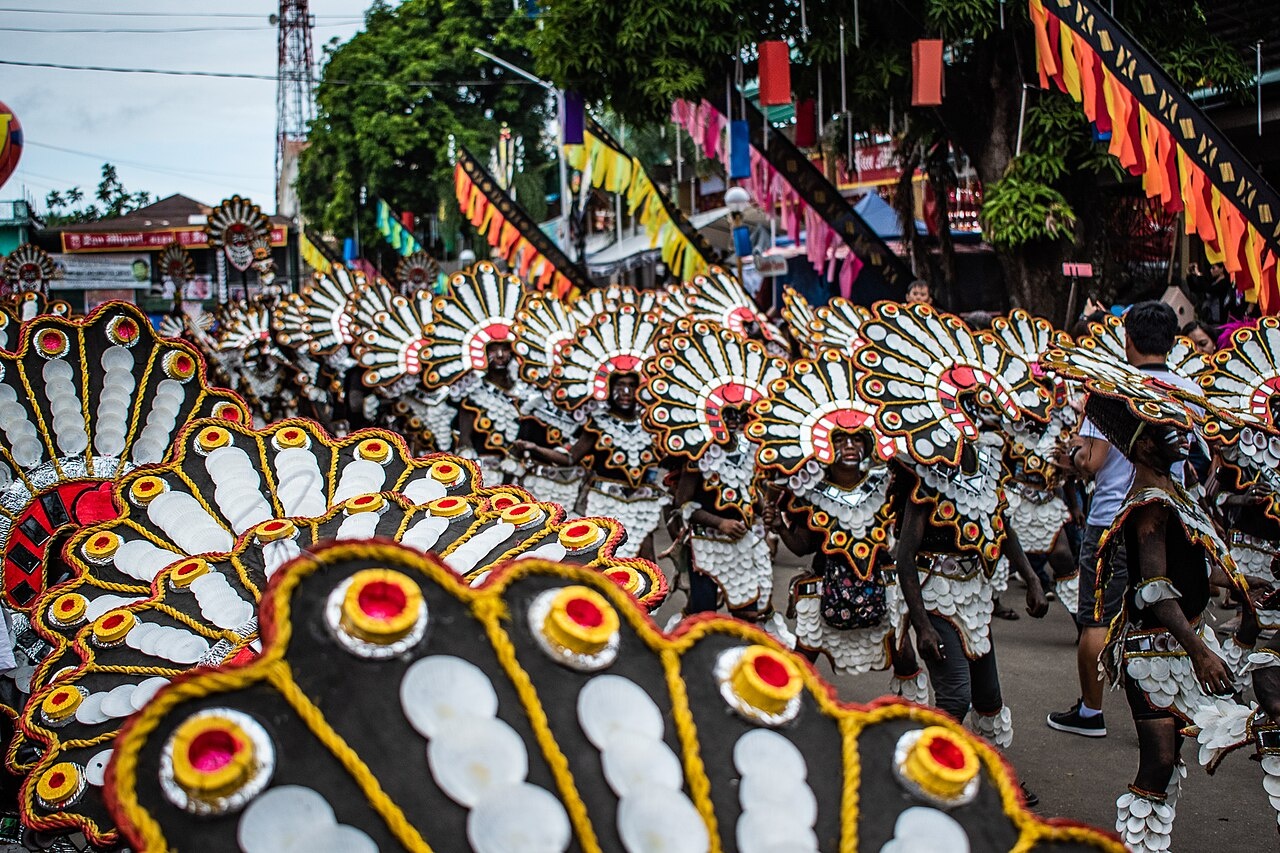
Ati-atihan in Kalibo, Aklan, January, is regarded as the best and biggest festival in the Philippines (See Below). It commemorates the feast of the Santo Nino with a week-long street party. Groups of dancers dressed as the aboriginal Atis, representing different communities from the city participate in the festive weeklong street party that highlights during the feast of the patron saint; The Feast of Our Lady of Candelaria is A major religious event in the Visayas, especially in Jaro, Iloilo. It is celebrated on February 2.
The Feast of Nuestra Señora del Pilar in October honors Zamboanga City’s patron saint. The Feast of San Isidro Labrador, which honors the patron saint of farmers, is celebrated on May 15 in many parts of the Quezon Province and other farming communities in the Philippines. In the towns of Lucban and Sariaya, houses are decorated with colorful displays of agricultural produce known as pahiyas to honor the saint and to pray for rain and a plentiful harvest.
In other towns such as Pulilan in Bulacan, Angono in Rizal Province, and San Isidro in Nueva Ecija, the celebration is also known as the “Day of the Carabao.” Farmers decorate their carabao—their most important farm helper—with flowers and ornaments, lead them in festive processions, and sometimes hold carabao races as part of the celebration.
Why Fiestas are Important to Filipinos
According to philippinesinsider.com: “The whole year round Philippine fiestas of all kinds mark the Filipino calendar. Not only popular saints but also the most obscure ones are given a place for celebration. Why has this practice been imbedded in the Filipino culture? To appease the gods—this was a key factor in ancient worship in the Philippines. Mystical religious beliefs before the Spaniards came centered on worshipping gods believed to control certain aspects of life—livelihood, family, health, wealth, and others. To make life better, the belief said, regular ritual offerings to these gods had to be done. The gods seemed quickly angered by the smallest mistakes and vented wrath on livelihood and nature. The practice was somehow carried over into modern times so that one reason still used for Philippine fiestas is to stave off calamities and ill luck, aside from thanksgiving for good harvest, and ask lots of wishes.[Source: philippinesinsider.com +]
“A pledge. Philippine fiestas are like capital poured into investments. They have to be celebrated grandly to ensure good life ahead. The bigger money poured out for a Philippine fiesta the surer the return of investment (ROI). So, for a higher ROI a devotee should spend more to celebrate a fiesta. Smaller investments result to smaller yields. If one wishes for more harvests from fields or the sea, or more luck in business or employment, or physical healing, or more rain, then one ought to dole out more quality meals in a fiesta celebration. If one’s really financially hard-up, then the alternative is to have active parts in the celebration—dance in the streets, help carry or pull a mounted statue, help in the fiesta preparations, or plain behave well throughout the celebration. And here’s the key to all these: the devotee has to pledge or promise to keep this going each annual Philippine fiesta.” +
“Finally, Philippine fiestas have been “balik-bayan” incentives, or come-ons for expatriates, to visit or come back for good to the municipalities or cities celebrating them. Since pre-Hispanic times, Filipinos have been known to live in other countries. Later, they ventured to farther places like the US and Europe. Philippine fiestas lure them back to reminisce old times and be also celebrated in the community as overseas “heroes.” Philippine fiestas are as many as there are sitios (districts) and barangays and cities and provinces in the Philippines. And they’re here to stay to keep Filipinos reaching out to the future as they stake out in the present while reminiscing the past.” +
Philippine Fiesta Entertainment and Games
Traditional entertainment once played an important role during fiestas. A popular form of theater called Moro-moro, also known as comedia, dramatized legendary tales of kings and princesses and depicted conflicts between Christians and Moors—stories inspired by events from Spanish history. These plays, performed in verse and accompanied by music, were once common highlights of fiestas. Today, however, they are rarely staged except in small towns that maintain strong traditions. In many places, they have been replaced by variety shows featuring amateur singers, local performers, or visiting cinema and television personalities who entertain the crowd. [Source: “Culture Shock!: Philippines” by Alfredo Roces and Grace Roces, Marshall Cavendish International, 2010]
On fiesta games: Philippinesinsider reports: “Philippinefiestas are a lot of fun. In general these fiestas include native sports which are referred today as games. Let’s take a look at them. The most popular Philippine fiesta game is “Palasebo” or the lard hobby. Allegedly, this used to be an athletic training technique which later evolved into a native community pastime. A tall bamboo standing in the middle of an open space is lavished with lard or oil from top to bottom. A small flag is placed on top. The idea is to have one contestant climb the pole without any climbing implement, and half naked. Moreover, contestants of this Philippine fiesta game must have their bodies poured with oil to further toughen up the climb. At times they have all contestants simultaneously climb the pole. The lone survivor to take the flag down is champion of this Philippine fiesta game. [Source: philippinesinsider.com +]
“Hitting the hanging earthen pot, or “Palayok” is another favorite Philippine fiesta game. This can well pass for a Zen meditation technique but for the noisy crowd around. A small earthen pot is hanged through a net in the middle of a wide open space. The contestant of this Philippine fiesta game is blindfolded and given a small wooden bat. The idea is to find the way to the pot and hit it solid to break it. The net secures the broken pieces from flying away and hitting someone. At times this Philippine fiesta game varies a bit and the hanging pot is made to dangle for a more challenging hit.
Breaking lose several pigs in a secured perimeter is another Philippine fiesta game. The ground is kept muddy and the male contestants are topless. The idea is to go after the pigs and at least catch one and bring it to the judges. This Philippine fiesta game is a lot of mess but everybody enjoys it. +
“Another is “Pabitin” or hanging dole outs. This Philippine fiesta game uses a mat of bamboo sticks forming a flat lift. It is suspended in the air. Lots of goodies and toys hang from it, practically covering it. Children stand below waiting for it to be randomly lowered and raised. As the flat lift is lowered the kids jump to grab what they can from the goodies. Then it is raised again for another round. +
Festival Foods in the Philippines
For most Filipino Catholics, everyday eating habits are not governed by strict religious dietary rules. However, food plays a central role in religious and social celebrations. During important occasions such as town fiestas honoring patron saints or the blessing of a new home, a lavish meal is almost always prepared. The centerpiece of these celebrations is often Lechon, a whole suckling pig slowly roasted over charcoal until its skin becomes crisp and golden brown. The crunchy skin, especially when served with a layer of rich fat underneath, is considered the most prized portion. In many communities, the prestige of the host and the importance of the event are informally judged by the size and quantity of lechon served to guests. [Source: Kathleen M. Nadeau, Worldmark Encyclopedia of Religious Practices, Thomson Gale, 2006]
No part of the pig goes to waste in traditional Filipino cooking. The blood drained during the preparation of the pig is commonly used to make Dinuguan, a savory stew in which pork and offal are simmered in a thick sauce of blood, vinegar, garlic, and spices. Alongside these dishes, festive meals usually feature a variety of beloved specialties. One of the most common is Pancit, a noodle dish stir-fried with small shrimp, finely chopped vegetables, and sometimes slices of meat. Desserts are equally abundant, often including sticky rice delicacies such as Biko, which is cooked in sweet coconut milk and traditionally wrapped or served in fragrant banana leaves. ‘Takeaway’ is the custom of sending guests home with extra food from the feast.
Drinks and snacks also form part of the social atmosphere that surrounds these gatherings. Men frequently gather to share glasses of Tuba or locally distilled spirits, as well as bottles of beer, while chatting with neighbors and relatives. These drinks are sometimes accompanied by Balut, a fertilized duck egg containing a partially developed embryo, which is boiled and eaten warm with salt or vinegar. Together, the rich dishes, sweet desserts, and communal drinking highlight the Filipino emphasis on hospitality, abundance, and shared celebration during religious and family festivities.
Despedida Parties
Despedida parties (going away parties) are big events in the Philippines. In 2007 ScarletRaven wrote on Yahoo Answers: “We usually throw despedida parties for newly resigned comrades (at work), friends leaving for another country or anybody leaving to go anywhere real far for good. When my friends and I throw despedida parties for someone, we usually reserve big function rooms and arrange for buffet catering. Of course, we have to have the prerequisite Magic Sing and a significant gift for the one who's leaving. The gift usually depends on the character and interests of the person leaving.” [Source: Yahoo Answers \^/]
Jumpin' in the Dark wrote: “A despedida party is held for someone who will be away for a long time, like an emigrant. There are no hard and fast rules, just have your mutual friends and other loved ones and have some food and drinks handy. Some people either give gifts either individually or as a group that the honoree could take along as a remembrance. Despedida is a "farewell" or "good journey" kind of a party. The celebrant usually goes away for a long period of time. Its like a last time to spend with a friend/family while he/she is still near your place. A "despedida" (or a "going-away" party or a "saying goodbye" party) should be celebrated with food, drinking, music and dancing. And if you care to, gifts are also appropriate and would be much appreciated by the honoree.” \^/
Another Filipino posted: “Despedida is a party for someone who will be away for a long time. it's like a good luck party! It's a going away party for just about any reason. For example, if someone quit his job, his officemates may throw a party for him. Same thing if someone is leaving the country. How do you throw one? Just a normal party. Foods, drinks, hugs. Ithink they throw despedida party to someone who's going overseas and will stay there for a very long time. I think a good drinking session in front of a videoke is a good way of celebrating one.” \^/
Image Sources: Wikimedia Commons
Text Sources: “Encyclopedia of World Cultures Volume 5: East/Southeast Asia:” edited by Paul Hockings, 1993; “Culture Shock!: Philippines” by Alfredo Roces and Grace Roces, Marshall Cavendish International, 2010; National Geographic, Live Science, Philippines Department of Tourism, New York Times, Washington Post, Los Angeles Times, Smithsonian magazine, Encyclopedia.com, Library of Congress, The Conversation, The New Yorker, Time, BBC, CNN, Reuters, Associated Press, AFP, Lonely Planet Guides, Google AI, Wikipedia, The Guardian and various websites, books and other publications.
Last updated March 2026