
CHRISTMAS IN THE PHILIPPINES
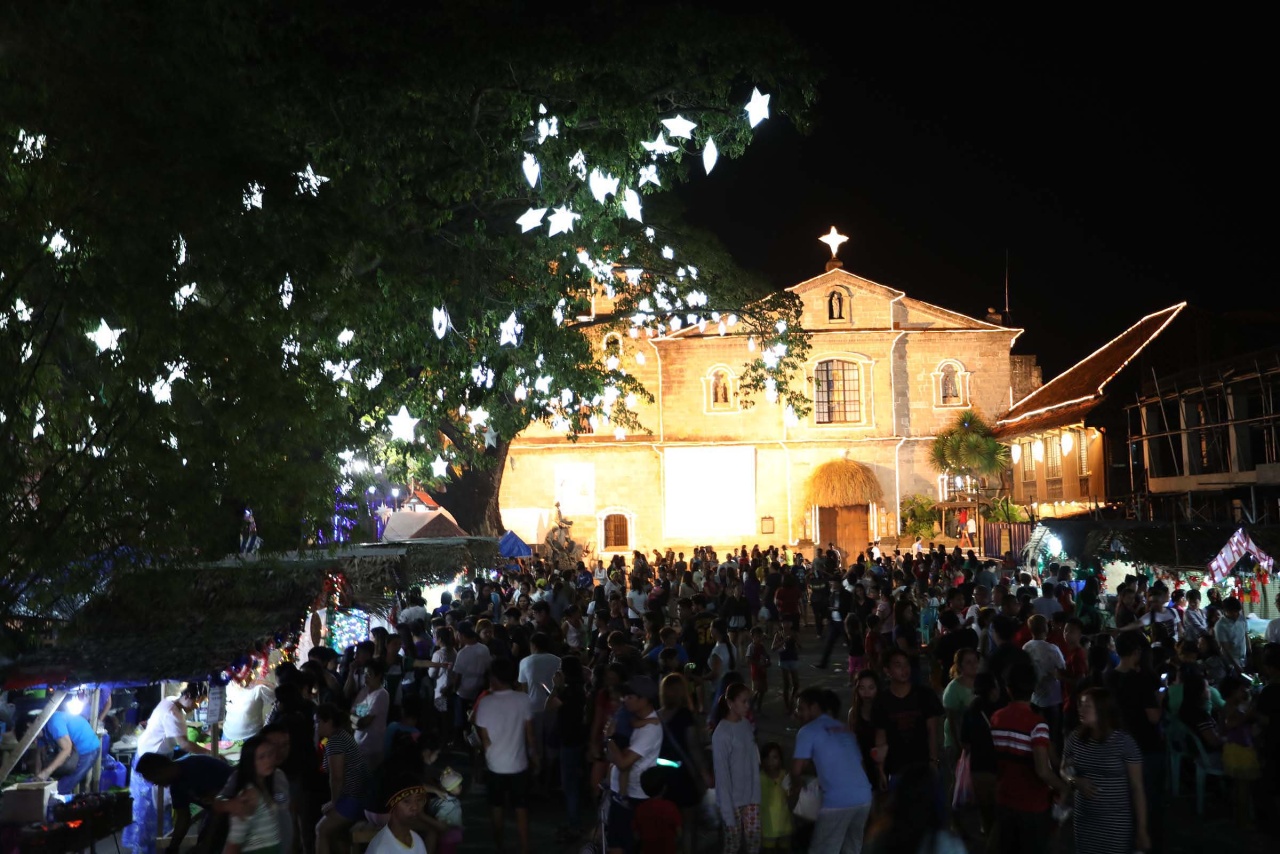
Christmas is celebrated in a manner that blends Catholic, Chinese, Philippine, and American customs. For nine days, people attend misas de gallo (early morning Christmas Mass). They hang elaborate lanterns (originally patterned after the Chinese lanterns) and other decorations in their homes and join with friends in caroling. On Christmas Eve, everyone attends midnight Mass, the climax of the misas de gallo and the year's high point of church attendance. After the service, it is traditional to return home for a grand family meal. The remaining days of the Christmas season are spent visiting kin, especially on New Year's Day and Epiphany, January 6. The Christmas season is a time of visiting and receiving guests. It is also a time for reunion with all types of kin — blood, affinal, and ceremonial. Children especially are urged to visit godparents. *
It is said that Filipinos celebrate the world’s longest religious holiday—their Christmas season. The Philippine Christmas season begins on September 1st, as chillier winds and Christmas carols start filling the air, and ends on the first week of January, during the Feast of the Three Kings. Paskuhan Village in the province of Pampanga is Asia’s only Christmas theme park and the third of its kind in the world. The great Christmas lanterns of San Fernando, Pampanga can reach as big as 40 feet in diameter, using as many as 16,000 glowing bulbs.
Christmas customs in the Philippines are a mixture of western and native Filipino traditions. People in the Philippines have Santa Claus, Christmas trees, Christmas cards and Christmas carols from western countries! They also have their own Christmas traditions such as the 'parol' which is a bamboo pole or frame with a lighted star lantern on it. It's traditionally made from bamboo strips and colored Japanese paper or cellophane paper and represents the star that guided the Wise Men. It is the most popular Christmas decoration in the Philippines. [Source: whychristmas.com]
The Philippines has eight major languages, here's how to say Merry Christmas in some of them! In Tagalog, Happy/Merry Christmas is 'Maligayang Pasko'; in Ilonggo it's 'Malipayon nga Pascua'; in Sugbuhanon or Cebuano it's 'Maayong Pasko'; in Bicolano they say 'Maugmang Pasko' and in Pangalatok or Pangasinense they say 'Maabig ya pasko' or 'Magayagan inkianac'. Happy/Merry Christmas in lots more languages. [Ibid]
Christmas in the Philippines is known as Pasko. The Tagalog word Pasko derives from the Spanish word Pascua. Although the word Pascua means Easter, Pascua de Navidad refers to Christmas. [Source: tagaloglang.com]
RELATED ARTICLES:
HOLIDAYS IN THE PHILIPPINES: NEW YEAR'S, ALL SAINTS DAY, MAY AND MANILA AREA FIESTAS factsanddetails.com
FIESTAS IN THE PHILIPPINES: HISTORY, PURPOSE AND WHAT THEY ARE LIKE factsanddetails.com
FAMOUS FESTIVALS IN THE PHILIPPINES: BLACK NAZARENE, ATI ATIHANS, MASSKARA factsanddetails.com
HOLY WEEK AND LENT IN THE PHILIPPINES: VOWS, TABOOS, BLOODY PROCESSIONS, GETTING NAILED TO A CROSS factsanddetails.com
RELIGION IN THE PHILIPPINES factsanddetails.com
CATHOLICISM IN THE PHILIPPINES: LIFE. INFLUENCE, SAINTS, POPE VISITS factsanddetails.com
CATHOLIC PRACTICES IN THE PHILIPPINES: PRAYER LADIES, SANTOS, BAPTISMS factsanddetails.com
For articles on the Catholic Church in general see CATHOLICS factsanddetails.com
For Information in the Festivals of Different Ethnic Group See the Ethnic Groups and Minorities listed Under the MINORITIES factsanddetails.com
FUNERALS IN THE PHILIPPINES factsanddetails.com
Long Philippines Christmas Season
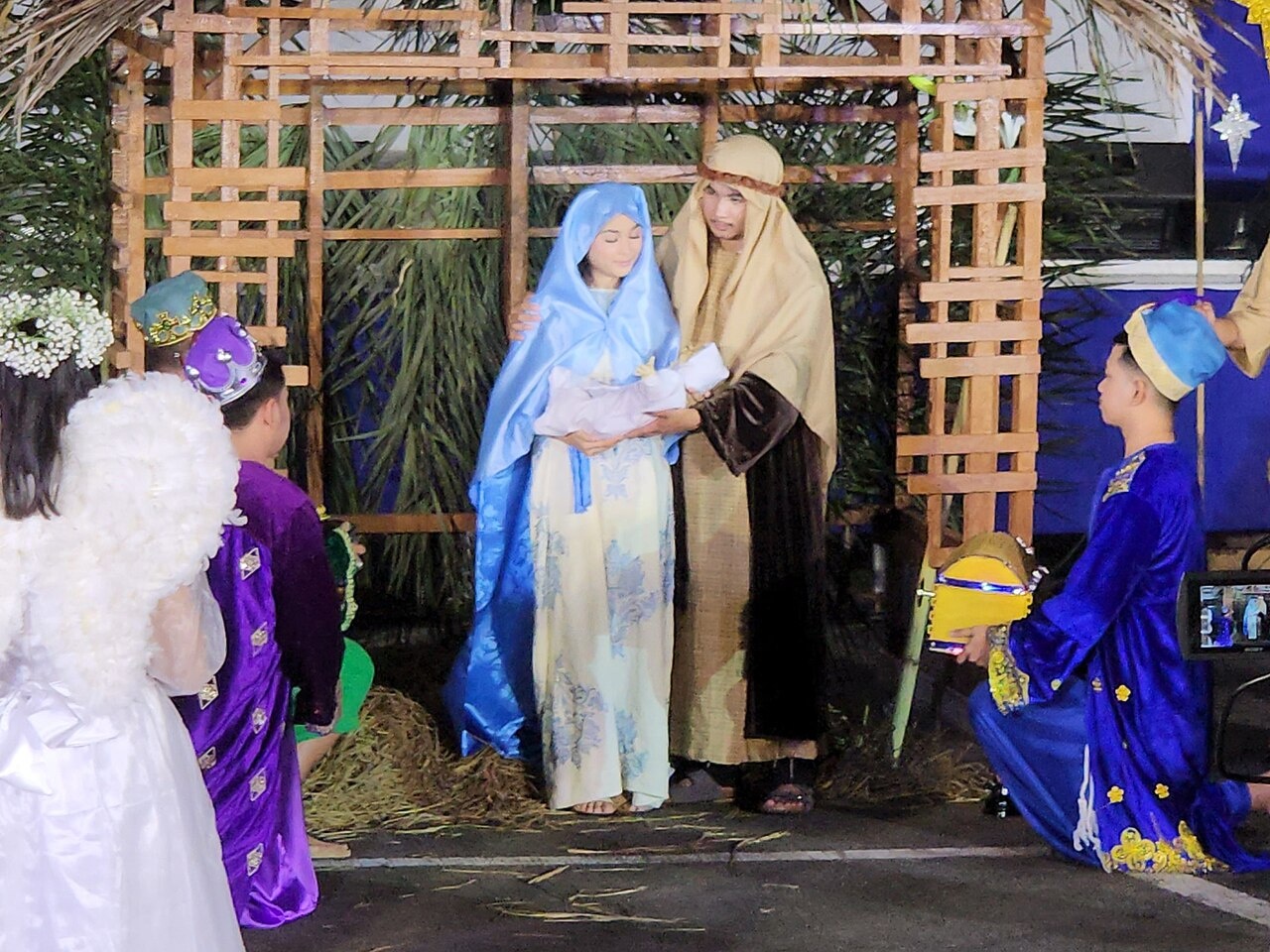
The Christmas season is very long in the Philippines. Beginning in September radio stations begin playing Christmas carols, kids start making their wish lists and stores starting selling Christmas decorations. Beginning in early November commercial streets and neighborhoods start putting up their Christmas lights, displaying nativity scenes known as “belen” and hanging traditional colorful lanterns known as “parol”. December is actually one of the 'cooler' months of the year in the Philippines. The Philippines only has two real seasons, wet (June to October) and dry (April and May). December is one of the months in between the wet and dry seasons.
The four months that end with the syllable –ber are considered Christmas months, which is why stores and households start playing carols on the first day of September! The formal Christmas celebrations start on 16th December when many people go the the first of nine pre-dawn or early morning masses. The last mass is on Christmas day. The Christmas celebrations continue to the Feast of the Epiphany or Three Kings (Tatlong Hari) which falls around January 6, or the First Sunday in January. Epiphany marks the end of the Christmas season. Children are given gifts and told they come from the Three Wise Men. Stars-shaped lanterns are hung in windows.
Jonathan Kaiman wrote in the Los Angeles Times: Christmas in the Philippines is a long, spirited and, to many, exhausting affair. About 90 percent of Filipinos are Christian, and they take the holiday seriously. Stores start playing Christmas music as early as September and don’t stop until early January. Christmas trees spring up in malls and public parks. Carolers go door to door singing “Jingle Bells,” “Silent Night” and “Ang Pasko Ay Sumapit”, a lively Tagalog tune celebrating Jesus’ birth. The holiday delicacy is lechon, whole suckling pig.[Source: Jonathan Kaiman, Los Angeles Times,. December 24, 2016]
The Christmas season begins in earnest on December 1, with the hanging of lanterns called parols. Barbara Crossette wrote in the New York Times: Christmas time “is a season of religious processions and family gatherings, of gift-giving and paying homage to the Holy Child. But there are also Christmas trees with flashing lights, Santa Clauses and American Christmas songs drifting from the sound systems of shopping malls. Filipinos have a flair for decorative folk art, and a lot of it is on display at Christmas. [Source: Barbara Crossette, New York Times, December 21, 1986]
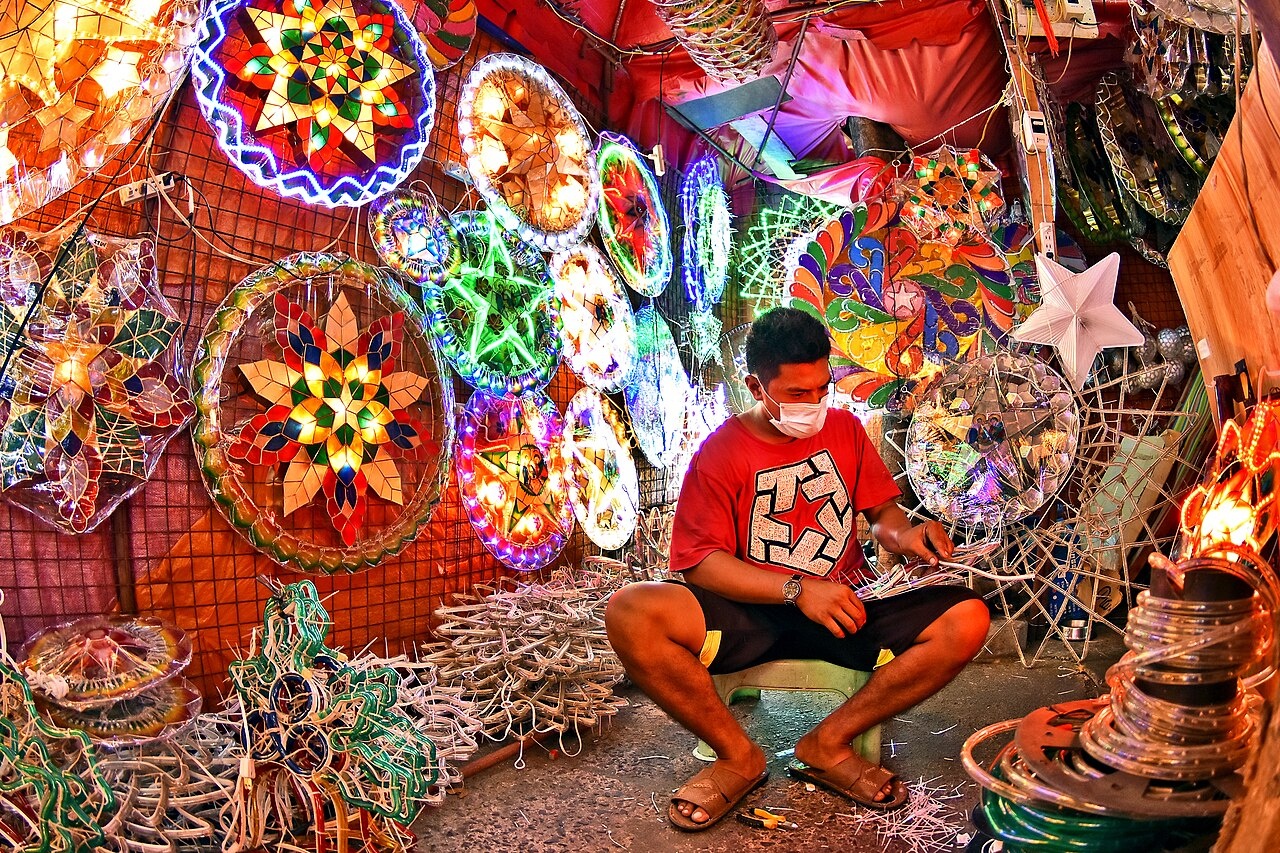
Along Roxas Boulevard in Manila, poor people construct perfectly shaped stick Christmas trees of twigs and branches coated in white lacquer to display tiny decorations of paper, straw and plaster. In 1986 a favorite Christmas angel wore a robe of bright yellow, President Corazon C. Aquino's campaign color. A few miles south of metropolitan Manila, in the town of Las Pinas, famous for an organ made of bamboo, craftsmen working in bamboo and wicker fashion the brightly decorated parols. These reusable lantern shapes — stars, lamps or sunbursts, trimmed generously in tissue paper, tinfoil, ribbon, and now and then religious scenes behind cellophane — decorate streets, houses, sometimes whole barrios.
Christmas Season Events
Simbang Gabi, also known as Misa de Gallo, consists of nine early dawn masses (novena) celebrated from December 16th to December 25th. However, Christmas carols can be heard on the radio and in department stores as early as November. The nine masses are part of the cherished religious tradition. Simbang Gabi literally means “Night Worship.” Filipinos go to church at four o’clock in the morning and afterward have breakfast together. A traditional drink during this season is a warm ginger tea called salabat and a traditional treat is a flat but thick yellow rice cake called bibingka.
Anne C. Kwaantes wrote in Christian Classics Etheral Library: “The last nine mornings before Christmas throngs crowd the churches for predawn masses, the misa de aguinaldo (mass of the gift). The climax comes at midnight, December 24, when at the misa de gallo (mass of the rooster) Christ's birth is celebrated. Following that, people visit their parental homes for an elaborate dinner. Here grandchildren receive money from grandparents. The next morning, December 25, is quiet. The people sleep. [Source: Anne C. Kwaantes, Fourum, Winter 2000, Christian Classics Etheral Library, pages 6, 7]
Christmas on December 25 is a public holiday. The day is marked by presents and feasting. Everyone is included in the gift-giving, including hired help, the postman, local policemen, firefighters, and garbage collectors. Little children are also remembered.
Feast of the Holy Innocents on December 28th is a day to play harmless pranks on innocent people. If a friend asks to borrow a small amount of money, don't give in.
Feast of the Three Kings, also known as the Feast of the Epiphany, is on the nearest Sunday from January 6. It marks the end of the Christmas season. Children receive gifts from the Three Wise Men from Bethlehem. Other important festivals during this period include the vibrant Ati-Atihan Festival, Dinagyang Festival, and the fiesta of Saint Clement, all of which continue the season of celebration across the country.
Simbang Gabi Pre-Dawn Christmas Masses
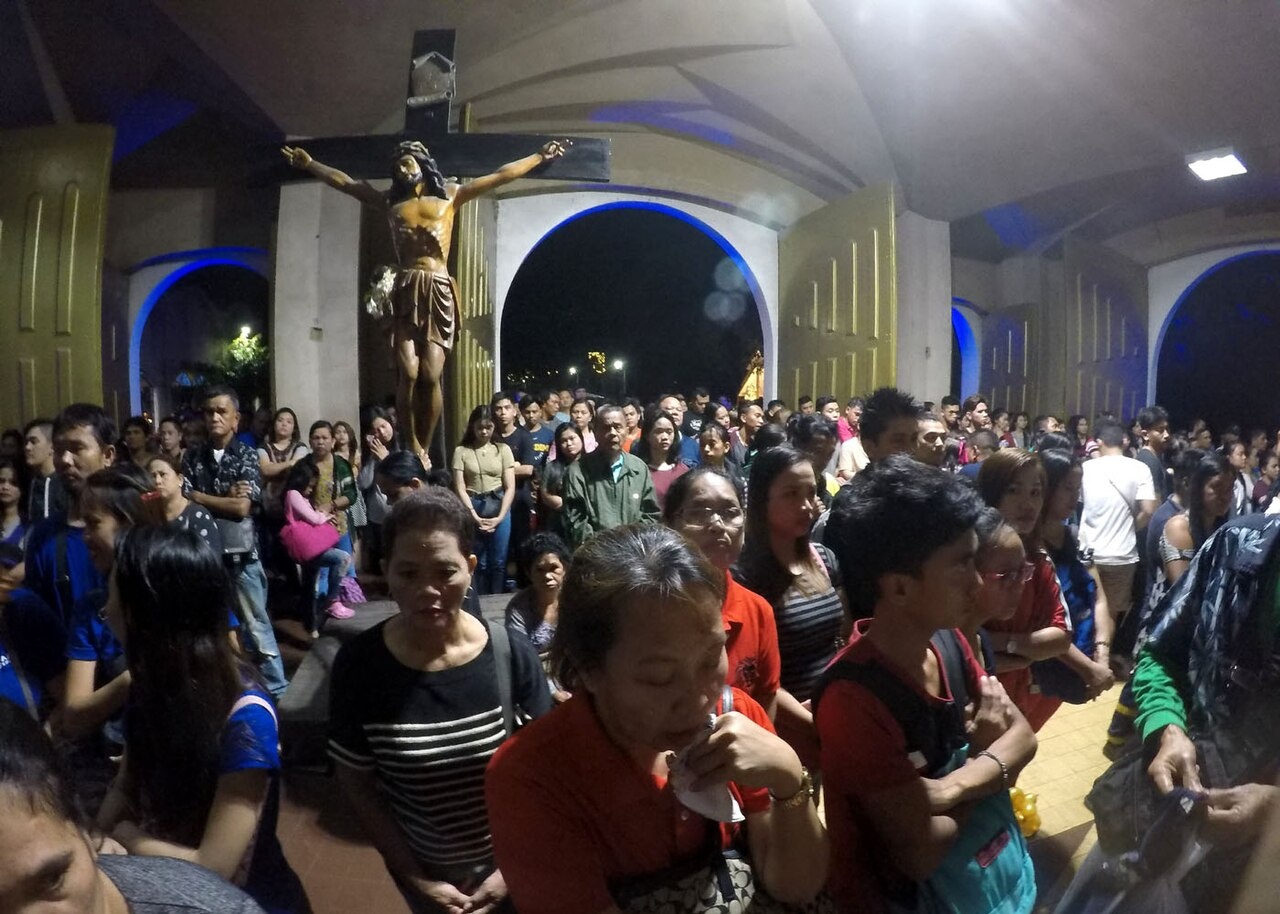
Jonathan Kaiman wrote in the Los Angeles Times: At 4:50 a.m., the stragglers dashed through Manila’s darkened streets, hoping for a spot in the pews. But they were too late. Hundreds of worshipers had already packed the Santo Niño de Paz Community Greenbelt Chapel, a low, white dome in a sprawling outdoor shopping complex, for Friday’s Simbang Gabi Christmas Mass. At least 100 more crowded on the pavement outside, singing “Glory to God” beneath a crisp crescent moon.[Source: Jonathan Kaiman, Los Angeles Times,. December 24, 2016]
Nothing captures the Philippines’ Christmas obsession like Simbang Gabi, nine consecutive days of early-morning Mass ending December 24. Some services start as early as 3 a.m. Portuguese and Spanish missionaries brought Christianity to the Philippines in the 16th century, and in those days most converts were farmers. The holiday fell during harvest season, so Mass began early, allowing them to tend their crops at daybreak. The tradition stuck.
At the Greenbelt Chapel — tucked among a Starbucks, a Banana Republic and an Urban Athletics outlet — Friday morning Mass began at 5 a.m. A white-robed priest spoke slowly and softly, drifting freely between English and Tagalog. He did not mention the drug war. “Good morning, sisters and brothers. How are you — surviving or growing? There’s a big difference,” he said. “I ask you that question because many times we just let the days pass by without realizing how much the Lord is blessing us every night.”
He went on to deliver a sermon about loving one’s parents, the lessons of John the Baptist, and the “graciousness of God.” Aivee Remo, a 27-year-old banker, said this was her third year of attending every Simbang Gabi Mass. “With all the Christmas festivities, it tends to make you tired,” she said. “Because you have parties, Masses, gifts — it all adds up.” “It dies down eventually,” said her husband, Don, 43, a technology worker. “Usually it stops once you've seen all your friends and relatives, in the first few weeks of January.” By 6 a.m., when the choir sang “Let's Have a Christmas Celebration,” the moon was invisible, and as the sky brightened to turquoise, the crowd quietly dispersed.
Christmas Eve in the Philippines
Christmas Eve is very important in the Philippines. Many people stay awake all night into Christmas day! During Christmas Eve evening, Christians go to church to hear the last 'simbang gabi' or the Christmas Eve mass. This is followed by a midnight feast, called Noche Buena. The Noche Buena is a big, open house, celebration with family, friends and neighbors dropping in to wish everyone a Merry Christmas! Most households would have several dishes laid out and would normally include: lechon (roasted pig), ham, fruit salad, rice cakes (bibingka and puto bumbong are traditional Christmas foods) and other sweets, steamed rice, and many different types of drinks. [Source: whychristmas.com]
The Panunuluyan Ritual is celebrated on December 24 in Valencia, Bulacan. This quasi-religious pageant reenacts the search of Joseph and Mary for a room in Bethlehem. A couple representing Mary and Joseph goes from house to house singing and asking for lodging. Each household responds in poetic form, politely refusing them until the couple finally reaches the town plaza where a belen, or Nativity scene, is displayed. At midnight, while songs celebrating the birth of the Jesus Christ are sung, the couple lifts the figure of the infant Jesus from the manger and carries it into the church to mark the start of Christmas Mass. [Source: “Culture Shock!: Philippines” by Alfredo Roces and Grace Roces, Marshall Cavendish International, 2010]
San Fernando, Pampanga is where the spectacular Giant Lantern Festival is held on Christmas Eve. The lantern, known locally as the parol, is the iconic symbol of a Filipino Christmas, representing the Star of Bethlehem and the spirit of guidance and hospitality. While many Filipino children craft simple lanterns from bamboo and colored paper to hang in their homes, the lanterns in San Fernando are extraordinary creations—often more than ten feet in diameter and mounted on trucks. Layers of translucent colored paper form intricate patterns, illuminated by hundreds of electric lights that flash and move in synchronized sequences powered by generators and controlled through complex wiring systems. Each lantern is accompanied by music, with the lights dancing to the rhythm of the band [Source: “Culture Shock!: Philippines” by Alfredo Roces and Grace Roces, Marshall Cavendish International, 2010]
Residents from different barrios of San Fernando proudly construct their own giant lanterns and gather in the town plaza on Christmas Eve for a competition to determine the most beautiful display. Smaller lantern replicas are carried by supporters from each community, while thousands of spectators crowd the plaza to watch the dazzling event. The lanterns require great expense and effort, making the contest a matter of honor for each barrio. Christmas festivities in the Philippines also coincide with the harvest season, which makes celebrations especially abundant.
Filipino Christmas Traditions
Many Filipino yuletide traditions have their roots from the Spanish colonial era. The Misa de Gallo, for example, is a pre-dawn mass celebrated during the nine days preceding Christmas. On Christmas Eve, the final Christmas mass is celebrated with much ceremony, color and lights. The midnight mass on Christmas Eve with its rituals dates back to the period when mass was still said in Latin. At the Misa de Gallo mass the story behind the birth of Christ is read from the Bible. [Source: wtcmanila.com ]
It is customary for Filipino families to sit down to a feast on Christmas Eve after the Christmas Eve mass. Called the Noche Buena, the feast is in part a thanksgiving for the blessings of the year past, as well as a prayerful feast for a prosperous year to come. Traditionally on every table are the jamon (ham) and queso de bola (cheese). Every Filipino looks forward to Noche Buena. Christmas morning is the time for visiting relatives. Filipinos wear new if not their best clothes. Children do mano, which is kissing or bringing to their forehead the hand of an elderly person. This is when they receive their pamasko, certainly aguinaldo from godfathers and godmothers. Christmas lunch and Christmas dinner are with family. [Source: tagaloglang.com /+/]
On Christmas Eve (Bisperas ng Pasko), a few Filipino towns commemorate Joseph and Mary’s search for a place to stay with a reenactment called panunuluyan, a tradition very similar to the Mexican posadas. During the Panunuluyan pageant on Christmas Eve, a couple is chosen to reenact Joseph and Mary's search for shelter. Mass is held hourly on Christmas Day so that everyone can attend. Religious services include pastore, or play, based on myth of the birth of the Christ Child. The pastore closes with a star from the upper part of the church sliding down a wire and coming to rest over the church's Nativity scene. Christmas celebrations may have evolved from old tribal custom Serenading cumbancheros, or strolling ministrels, end their performances by singing Maligayang Pasko to the tune of "Happy Birthday".
The monito-monita, roughly translated to mean secret friend, traces its roots to the Western folklore of Saint Nick, or Santa Claus, or Kris Kringle. In offices and schools, the tradition of giving gifts to friends has become a tradition. Many families have a Christmas tree, which may be green, white or aluminum.
Christmas Season Etiquette and Customs in the Philippines
Christmas in the Philippines is not only a religious celebration but also a time to express gratitude and strengthen social ties. During the season, people show appreciation to those who help them in everyday life, such as household helpers, drivers, gardeners, rubbish collectors, laundry workers, and security guards. Small gifts, food, or monetary tokens are often given as a gesture of thanks for their service throughout the year. This practice reflects the Filipino value of utang na loob, a cultural concept that emphasizes gratitude and the acknowledgment of personal debts or favors received from others. [Source: “Culture Shock!: Philippines” by Alfredo Roces and Grace Roces, Marshall Cavendish International, 2010]
Food is considered one of the most appreciated presents, particularly when it is a special homemade dish or a local delicacy. Many professionals, such as doctors, also receive gifts from grateful patients as a way of expressing appreciation. Among young people in Manila, a popular Christmas activity is the exchange of gifts through games such as Chris Kindle or Mama Kindle, where participants secretly give presents to one another over a set period, usually in schools or workplaces.
Family traditions also play a central role in the celebration. Children often visit their parents and grandparents on Christmas Day so the entire family can spend the occasion together. Godchildren also traditionally visit their godparents to receive gifts, continuing the Filipino custom of maintaining strong ties with ninongs and ninangs (godfathers and godmothers), though the practice is less strictly followed today. Community festivities sometimes include traditional games such as palo sebo, where participants attempt to climb a tall, grease-covered pole to reach a prize placed at the top, adding a lively and playful spirit to the holiday celebrations.
Christmas Parol Lanterns
Another tradition is the hanging of lanterns in front of the house. Traditional parols are usually made with colored paper and bamboo sticks, usually fitted with lighting devices or lightbulbs to bring out colors during the evening. San Fernando in Pampanga, a province northwest of Manila, is famous for making lanterns that produce a kaleidoscope of colors through an ingenious lighting system that relies on bulbs switching on and off in a programmed sequence. [Source: wtcmanila.com ]
Parol lanterns can be circular in shape and look sort of like shields or are star-shaped representations of the star of Bethlehem The circular ones often have a five-pointed star, snowman or angel in the middle and are comprised of bamboo or plastic frames decorated with bamboo and shell ornaments and illuminated with colored lights They are hung outside houses, displayed in offices and placed in gardens and are regarded as the Filipino alternative to Christmas trees.
The word “parol” is a Tagalong adaption of the Spanish word for lantern. Parol lanterns were introduced from Spain via Mexico and were originally used to light the path of worshipers attending early morning mass during the Christmas season. Parols sell from as little as 15 cents to as much as $200. San Fernando, a town about 70 kilometers from Manila, is regarded as the main parol making center on the Philippines.
According to tagaloglang.com: “If Mexico has piñatas, the Philippines has its parol. Of course, a parol is not something to hit with a stick. It is a Christmas lantern, most commonly in the shape of a five-pointed star. The bamboo or rattan frame is covered with rice paper, tissue or cellophane. Almost every family either builds or buys one to hang by the window or door. Shopping malls construct giant versions of parol. Traditionally, a candle was placed inside for light to shine through; for safety reasons, people now use bulbs or even a flashlight. Families, schools and other places also display a creche or nativity scene called belen. Christmas trees made of plastic are decorated with lights, tinsel and balls. [Source: tagaloglang.com]
Christmas Gift-Giving and Foods
Christmas morning sees children setting out to visit their godparents. It is customary for Filipino children to kiss the hands (mano) of their godparents on Christmas Day. Godparents, in turn, have gifts (aguinaldo) waiting for the children. Older children are equally fond of giving and receiving gifts. The Filipino's penchant for taking Western practices and imbibing them into their own can be seen in their gift-giving practices. [Source: wtcmanila.com]
The Tagalog word for gift is regalo, but Filipinos have a special word for "Christmas gift" — pamasko. The Filipino version of Secret Santa is called Monito Monita or Kris Kringle. Students in their classes and office workers all hold gift exchanges during the Christmas season. Children receive fresh bills of money called aginaldo, usually when they visit their godparents and elderly relatives on Christmas morning. [Source: tagaloglang.com]
Epiphany on the first Sunday of January marks the end of the Christmas season. Children are given gifts and told they come from the Three Wise Men. Stars-shaped lanterns are hung in windows.
Bibingka is a favorite Christmas food. CNN reported: “For many Filipinos, Christmas is marked by the scent of bibingkas cooking at dawn. These rice cakes are made by soaking the rice overnight, grinding it with a mortar stone and mixing in coconut milk and sugar. Laborious. The batter is poured into clay pots with banana leaves, with coals on top and below. It's garnished with salted eggs, kesong puti (white cheese made from Carabao’s milk) and slathered with butter, sugar and grated coconut. Best eaten hot from weekend markets. The best one is from Aling Linda at the Sidcor Sunday Market at Centris Mall, Edsa,Quezon City. For the rest of the week, try Via Mare or Ferino’s Bibingka with branches all over Metro Manila. [Source: Maida Pineda, Candice Lopez-Quimpo, CNN March 6, 2012 ]
Christmas Economic Activity in the Philippines
It is perhaps the tradition of generosity and celebration that has led most economic analysts to expect the economy to perk up during the Christmas season. For companies operating in the Philippines, not giving a Christmas bonus by late November or early December is equivalent to a major corporate faux pas, and is a definite no-no if one wants to cultivate loyalty and goodwill among employees. [Source: wtcmanila.com ]
Spurred by increased spending by a population that is relatively cash-rich during late November through December, stores normally experience brisk business during the season. It is no wonder then, that malls pour substantial amounts of money toward making their stores more attractive and "Christmas-y" during the season.
In recent years, this tradition of gift-giving has given rise to an entire cottage industry which transforms shopping centers out of usually empty hallways and vacant lots. Called the tiangge, these are actually flea markets that sprout during the Christmas season. The more famous ones are in the Greenhills shopping center in San Juan and in Divisoria in Central Manila. In these flea markets, one will find inexpensive gift items that can be haggled down to bargain prices. It is not uncommon for shoppers to buy in bulk in these flea markets. These have become so popular that even some five-star hotels have ventured into holding tiangges in their function halls.
Fifteen Unique Filipino Christmas Traditions
Isagani Casimiro wrote in the Manila Bulletin, “It is true. There is “Joy to the World” within the context of Philippine Christmas tableau starting on the first “ber” month, on Christmas Day itself and its conclusion on the Feast of the Magi. Ours is the longest celebration of the Messiah’s birth on Earth. It is always filled with colors, lights, songs, dances, foods and drinks for the occasion. And these: joy, kindness, forgiveness and giving.gift. [Source: Isagani Casimiro, Manila Bulletin December, 15, 2013]
1) Government and private company employees get their bonuses plus add-ons like a basket of Noche Buena goodies, red wines and a bric-a-brac of souvenir items. 2) Ceasefire is upheld and observed between warring groups in some regions of the country even for a while before and after Christmas. 3) Individuals, families or clans with relational, business or political gaps make hugs-and-kisses and forgive-and-forget the past. 4) Neighbours and even strangers greet Merry Christmas sincerely with a smile. 5) Private organizations, companies and individuals who opt to remain anonymous or incognito come to orphanages, infirmaries, prisons, government hospitals and slum areas to bring joy and gifts of food, toys, candies, Bibles, clothes, clutches, wheelchairs and medicines by the truckloads.
6) People do volunteerism like babysitting so a friend can do her shopping, fixing the faucet or doing repair on the roof of a neighbour’s house and the like. 7) Children are immensely happy because they are in their best clothes and shoes on this day. They pay respect by kissing the hands of their godparents, grandparents, uncles and aunts and thank them for the traditional gifts of money and toys. 8) Churches, schools, government and corporate buildings, highways, avenues, streets, bridges, homes, gardens, trees and electrical posts are brightly embellished with all kinds of Christmas lanterns, Christmas lights and other decorations and ornaments. 9) Seniors, too, are happy because their loved ones from faraway places visit them with gifts. 10) Christmas carolling and Christmas carols on the radio stimulate the air.
11) Bibingkang galapong and puto bumbong that abound in many places in provinces and cities on the occasion of the coming of Christmas add to the yuletide festive ambience. 12) There is street dancing on Christmas Eve in many places in the city. 13) Churches are filled to the rafters on the Eve of Christmas and the whole day of the 25th December. 14) Families gather for the Noche Buena meal on Christmas Eve which is always the occasion to open their Christmas gifts. 15) Our climate is super fine which is a plus factor for children to make their rounds of Christmas visitation to their godparents and relatives.
Image Sources: Wikimedia Commons
Text Sources: “Encyclopedia of World Cultures Volume 5: East/Southeast Asia:” edited by Paul Hockings, 1993; “Culture Shock!: Philippines” by Alfredo Roces and Grace Roces, Marshall Cavendish International, 2010; National Geographic, Live Science, Philippines Department of Tourism, New York Times, Washington Post, Los Angeles Times, Smithsonian magazine, Encyclopedia.com, Library of Congress, The Conversation, The New Yorker, Time, BBC, CNN, Reuters, Associated Press, AFP, Lonely Planet Guides, Google AI, Wikipedia, The Guardian and various websites, books and other publications.
Last updated March 2026