
ASSASSINATION OF BENIGNO S. AQUINO
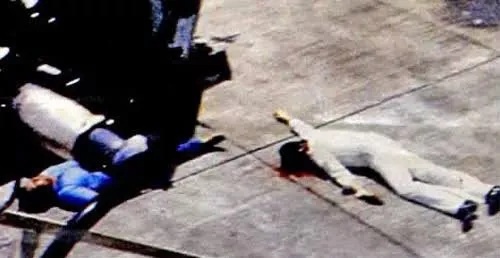
Despite the obvious danger to his personal safety, Benigno S. Aquino returned to the Philippines from exile in the U.S.. He was shot in the head and killed on August 21, 1983, in full view of television cameras, as he was escorted off an airplane at Manila International Airport by soldiers of the Aviation Security Command. Rolando Galman, the alleged assassin, was also immediately gunned down by personnel of the Aviation Security Command. Upon investigation, however, another passenger named Rebecca Quijano testified that she saw a man, who was wearing a military uniform right behind Ninoy, shoot him at the back of his head. A post-mortem analysis confirmed that Ninoy was indeed shot from the back, at close range. Speculations of a conspiracy by the Marcos government instantaneously spread. After investigations, 25 military men were arrested including then Armed Forces Chief of Staff Gen. Fabian Ver. After a seemingly unending trial process, only 16 were sentenced to reclusion perpetua on September 28, 1990.
"You have to be ready with your cameras to capture some fast action." Aquino, said to reporters on his return from exile in the United States. Immediately after descending the ramp of the plane that had just arrived in Manila, he was shot in the back of the head. Kallie Szczepanski wrote in Asian History, about.com: “A disturbing video shot at the time shows Filipino army personnel boarding a plane and ordering opposition leader Benigno Aquino, Jr. to disembark. He smiles, but his eyes look wary. Aquino walks out onto the tarmac of the Manila International Airport, while uniformed men prevent his companions from following. Suddenly the sound of a shot rings through the plane. Aquino's traveling companions begin to wail; three more shots sound. The western cameraman filming the event captures the image of two bodies lying on the ground, shot to the head. Soldiers hustle one of the bodies onto a luggage cart. Then, the soldiers come at the cameraman. Ninoy Aquino was dead at the age of 50. Beside him, Rolando Galman also lay dead. Ferdinand Marcos's regime would blame Galman for killing Aquino - but few historians or citizens of the Philippines give any credence to that claim. [Source: Kallie Szczepanski, Asian History, about.com]
The government's claim that he was the victim of a lone communist gunman, Rolando Galman (who was conveniently killed by Aviation Security Command troops after the alleged act), was unconvincing. A commission appointed by Marcos and headed by jurist Corazon Agrava concluded in their findings announced in late October 1984, that the assassination was the result of a military conspiracy. Marcos's credibility, both domestically and overseas, was mortally wounded when the Sandiganbayan, a high court charged with prosecuting government officials for crimes, ignored the Agrava findings, upheld the government's story, and acquitted Ver and twenty-four other military officers and one civilian in December 1985. Ultimate responsibility for the act still had not been clearly determined. A special court convicted 16 soldiers, including a general, of killing both Aquino and Galman. However, most observers believe that Imelda Marcos and Fabian Ver wanted Aquino assassinated. Imelda's remarks, both before and after the assassination, and the fact that Ver had become her close confidant, cast suspicion on them. * The airport where Aquino was assassinated has been renamed Ninoy Aquino International Airport. [Source: Library of Congress]
RELATED ARTICLES:
NINOY AQUINO: HIS LIFE, POLITICAL CAREER, EXILE AND THE ANTI- MARCOS OPPOSITION factsanddetails.com
CORAZON (CORY) AQUINO: HER LIFE, CHARACTER, FAMILY, NINOY AND MARCOS factsanddetails.com
CORAZON AQUINO AS PRESIDENT factsanddetails.com
FERDINAND MARCOS: HIS LIFE, LIES, EDUCATION, WAR RECORD, POLITICAL RISE factsanddetails.com
FERDINAND MARCOS AS PRESIDENT: EARLY PROMISE, RESISTANCE, WASTE factsanddetails.com
MARTIAL LAW YEARS UNDER FERDINAND MARCOS factsanddetails.com
INDEPENDENCE FOR THE PHILIPPINES AFTER WORLD WAR II factsanddetails.com
PHILIPPINES IN THE 1950s AND 60s: HUK REBELLION, MAGSAYSAY, GARCIA AND MACAPAGAL factsanddetails.com
MARCOS’S PLUNDER AND WEALTH factsanddetails.com
PEOPLE POWER AND THE FALL OF MARCOS factsanddetails.com
MARCOS AFTER HIS DEATH: HIS EMBALMED BODY AND EFFORT TO GIVE HIM A HERO’S BURIAL factsanddetails.com
Trials and Investigations Into the Murder of Ninoy Aquino
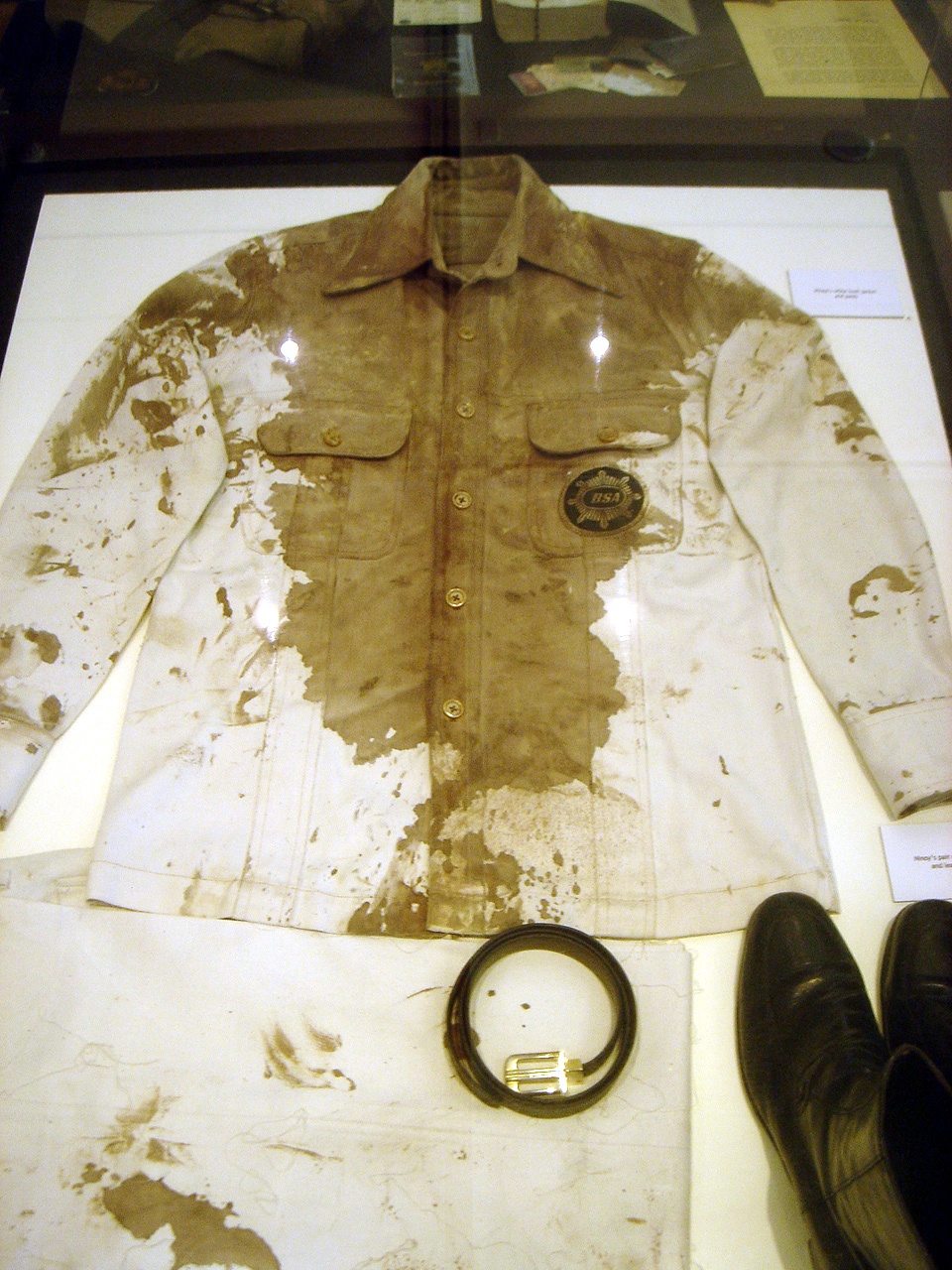
Eric Pace wrote in the New York Times, “Many Filipinos came to believe that Mr. Marcos, a shrewd political tactician, had no hand in the killing of Mr. Aquino but that he was involved in cover-up measures. A civilian investigative panel issued a report in October 1984 naming Gen. Fabian C. Ver, the armed forces Chief of Staff and a close friend of Mr. Marcos, and two dozen others, mostly soldiers, as ''indictable for the premeditated killing'' of Mr. Aquino and of Rolando Galman, who was earlier said to have been the lone assassin killed by airport guards. An indictment was handed up in February 1985. [Source: Eric Pace, New York Times, September 29, 1989]
In 1987, a special court convicted General Luther Custodio and fifteen other officers and enlisted members of the Aviation Security Command of murdering Aquino and Galman and sentenced them to 40 years in prison. The trial failed to establish the mastermind, but speculation has long focused on Marcos. The men were acquitted in their first trial under Marcos. The court ruled Aquino was slain by a supposed communist hitman, Rolando Galman, who then was killed by security guards. After Marcos was ousted, the Supreme Court nullified the acquittals and ordered a new trial. In March 2009, ten of the former soldiers were released after they were granted clemency by President Gloria Macapagal Arroyo. The general and two others died in prison and three were earlier pardoned. [Source: Oliver Teves, AP, March 5, 2009]
Marcos had created a succession of fact-finding bodies, patterned after the Warren Commission that investigated the assassination in 1963 of President John F. Kennedy, to probe deeper into the Aquino murder. 1) The first that lasted only for a few hearings was the Fernando Commission headed by Chief Justice Enrique Fernando, a respected jurist and constitutionalist. It was disbanded in the midst of public outcry and undeserved accusations that Justice Fernando was a Marcos man. 2) The second was the Tolentino Commission headed by Senator Arturo Tolentino, a respected lawmaker and known for his independent mind. This commission, however, did not even last for one day as Senator Tolentino immediately turned down Marcos’s offer to head the commission. 3) The third was the Presidential Fact-Finding Board or the Agrava Commission composed of four members and headed by retired Court of Appeals Justice Corazon Juliano-Agrava. [Source: Cecilio T. Arillo, Manila Times, August 18, 2013 ***]
Cecilio T. Arillo wrote in the Manila Times, “After months of continuous hearings, the Agrava Commission agreed that Rolando Galman was just a fall guy and not the killer of Aquino as claimed by government investigators. Curiously, the Agrava Commission subsequently came out with two different versions as to who were the mastermind or the highest ranking officers involved in the murder. One report submitted by Chairperson Agrava herself pointed only to Brig. Gen. Luther Custodio, the Aviation Security Command chief, as the highest officer involved in the murder. The other, submitted by the four members, pointed to Chief of Staff Gen. Fabian Ver as the highest officer involved. ***
Former Vice President Salvador Laurel, in his critical summation of the Aquino regime, said that the Agrava finding was incomplete because it deliberately stopped short of identifying the prime mover—the person who masterminded the evil plot—and did not dig deep enough to expose the cover-up of the murder. “No one would ever believe that the military escorts, including General Custodio and even General Ver, would decide on their own to liquidate Senator Aquino. Someone they could not refuse, someone who had the strongest motive, must have given the order to kill,” Laurel said, adding that “by limiting the responsibility to Custodio or Ver, the Agrava Commission implied that Mr. Marcos was no longer in command.” ***
“Neither would anyone believe that Marcos was stupid to order the killing of Aquino at the tarmac when he could have easily affirmed the death sentence for rebellion imposed earlier on Aquino by Military Commission No. 2 and thus legalize the killing thereafter,” said a military officer who commented on Laurel’s statement. Finally, only the 16 soldiers were tried and convicted by the Sandiganbayan, thus drawing endless speculations that neither the Marcos Administration nor the Aquino Regime really wanted to solve the riddle once and for all.” ***
Key Witness to the Murder of Benigno S. Aquino
A fact-finding board found out that Aquino was shot on the service stairway of the China Airlines plane, not on the tarmac, and this could have been perpetuated by the escorts that got Aquino from the plane when they exited through the service stairway. Janice Castro wrote in Time, “Moments after Opposition Leader Benigno ("Ninoy") Aquino Jr. was assassinated at the Manila airport on August 21, 1983, a Philippine camera crew captured the anguished face of a young woman. To the reporter who questioned her, she replied, "They have killed Aquino. Why are you not crying yet?" In June 2001, Rebecca Quijano, 32, now known as "the crying lady," became the first civilian eyewitness of the shooting to testify in the Manila courtroom where the armed forces Chief of Staff, General Fabian Ver, 24 other soldiers and one civilian are being tried for Aquino's murder. The 26 are also accused of the murder of Rolando Galman, who was identified by the military as a Communist agent and Aquino's killer. [Source: Janice Castro, Time, June 24, 2001 ^^]
“Quijano was a passenger on the China Airlines flight that carried Aquino home after three years of exile in the U.S. She told the court that she was looking through a window of the plane when she saw a soldier wearing a nameplate identifying him as a military policeman about three-quarters of the way down an exit stairway, "pointing a gun at the back of the head of Aquino, and at the same time, a shot was fired." ^^
“Her testimony, which was dismissed by the defense as not worth cross- examining, was in sharp contrast to the eyewitness accounts given to an investigating commission, the Agrava board, by the soldiers who escorted Aquino from the plane. They insisted that Galman, a small-time gangster, suddenly appeared and fired the fatal shots as Aquino walked across the tarmac. Galman, in turn, was then shot by security officers. Chief Prosecutor Manuel Herrera, who escorted the terrified Quijano into the Sandiganbayan, the court where the trial was in its eleventh week, did not ask her to name the assassin. But Herrera speculated that he could be Metrocom Constable Rogelio Moreno, who walked down the airplane stairway behind Aquino. ^^
“Quijano's account is the strongest evidence offered yet by the prosecution. Four other witnesses' appearances were canceled after they recanted the testimony they had made before the Agrava board, whose reports to President Ferdinand Marcos led to the trial. One witness, an airline employee, said at first that he had seen someone pointing a gun at the back of Aquino's head on the plane ramp; later he swore that before the shooting, a gun had been pointed at him and he had fainted. Even Galman's stepdaughter recanted after having told the Agrava board that her mother disappeared, following a summons from General Ver, three months after the shooting. The Galman family lawyer charged that representatives of the defendants had offered bribes to the stepdaughter. Said Andres Narvasa, the Agrava board's general counsel: "They (the witnesses) have become convinced it would be unhealthy for them to speak out." ^^
“That explanation was supported by Quijano, who said that she had been threatened before the trial. She said that as she spoke to reporters in the ) airport moments after the shooting, Colonel Vicente Tigas, one of the defendants, forcibly pulled her away and whispered, "Don't talk or you'll get in trouble." Quijano had offered several times to testify before the Agrava board. Each time, however, she failed to appear for an interview. Last December, when she was arrested and charged with five counts of minor fraud, she was publicly identified as the missing witness in the Aquino case. But she returned to hiding after her release from government custody and the dismissal of all but one of the charges. ^^
“What finally brought her forward, she told TIME last week, was the belief that going public might be her safest alternative. Said Quijano: "I have no way out. I could not lead a normal life." She endured a chilling moment during her testimony when there was a brief power failure. As the courtroom was suddenly plunged into darkness, Quijano clutched Prosecutor Herrera's arm tightly and pleaded, "Please don't leave me here." Minutes later, the trial resumed.” ^^
Marcos and an Aquino Relative Behind the Aquino Assassination?
“The masterminds were the fascist dictator Marcos and a very close relative of Cory Aquino,” Jose Maria Sison, founder of the 45-year-old Communist Party of the Philippines and its military arm, the New People’s Army (CPP-NPA), told Wilson Flores, a columnist of the Philippine Star. “General Fabian Ver [then the chief of staff] could not have coordinated the assassination plot, involving subordinate generals and colonels and several armed services, without the approval of Marcos,” said Sison, during an exclusive interview in the Netherlands where Sison has been living in exile since 1989. [Source: Barbara Mae Dacanay, Gulf News, August 20, 2012]
“The cousin of Cory Aquino — who hated Ninoy Aquino and who was [then] one of the top cronies of Marcos — was the patron and boss of General [Romeo] Gatan,” recalled Sison, adding that Gatan was “responsible for getting [Rolando] Galman as a prop in the David Copperfield-type illusionist theatrics of the assassination plot.” At the time, the Marcos administration blamed Galman, who was identified as a member of the CPP-NPA, as the killer of Aquino.
Later, two fact-finding boards showed that Galman was a fall guy because he was taken by government officials from his home in northern suburban Bulacan on August 19, 1983, and kept incommunicado in a hotel near the airport until the Aquino assassination. One of the private citizens who got Galman from his home was associated with Eduardo Cojuangco, then an estranged cousin of Aquino, who was allied with Marcos.
Why Hasn’t the Aquino Family Called for a Tough Inquiry Into the Murder of Ninoy Aquino?
Cecilio T. Arillo wrote in the Manila Times, “Strangely, in her time, Mrs. Aquino, who wielded tremendous investigative and prosecutory powers during her six years and four months in office, failed to put in jail or even identify the mastermind or masterminds despite convincing leads that the 16 soldiers, convicted in the murder of her husband, could or “would not have acted on their own without a motive or without someone or some people masterminding or directing the killing.” Neither is her son, Benigno Aquino 3rd, now the President, is showing interest to solve the murder of his own father. [Source: Cecilio T. Arillo, Manila Times, August 18, 2013 ***]
“What happened was that some people, instead of helping unmask the masterminds, merely turned the Aquino assassination into a propaganda hyperbole to endlessly destroy the Marcos Regime and promote their own political and economic interests. Asked why then President Aquino did not pursue the probe and prosecute the masterminds, Raul Gonzalez, the uncompromising investigator and prosecutor of the Aquino assassination who was suspended by the Supreme Court for his courageous move to investigate some of its members for corruption, said: “That’s the 64 dollar question Mrs. Aquino [should have] or must have answered to the Filipino people.” “Maybe, just maybe,” added Gonzalez, “she avoided a situation where her own family might have been dragged into the killing.” ***
“Just before his Supreme Court suspension, Gonzalez had been working on positive information that bitter partisan politics in Central Luzon, particularly in the province of Tarlac, in the 1960s and the 1970s may have had something to do with the murder of her husband. Gonzalez had in his custody a vital witness, a former mistress of a Constabulary general, who, he said, was privy to the assassination plot of Senator Aquino. Gonzalez revealed to this writer in a series of interviews for his bestselling book, Greed & Betrayal, that the woman was present in several meetings when the masterminds plotted the Aquino murder. ***
Earlier, Gonzalez had traced to a shallow grave near a military camp in Tarlac the decomposing and bullet-riddled bodies of the Oliva sisters, two of the witnesses who last saw Rolando Galman, the fall guy, who was killed with Aquino at the airport.
Impact of Ninoy Aquino's Assassination
For the Marcoses, Aquino became a more formidable opponent dead than alive. His funeral drew millions of mourners in the largest demonstration in Philippine history. Aquino became a martyr who focused popular indignation against a corrupt regime. The inevitable outcome — Marcos's overthrow — could be delayed but not prevented. [Source: Library of Congress *]
The Aquino assassination shocked the whole nation and triggered the 1986 People Power military-led civilian uprising that catapulted Aquino’s wife, Corazon Aquino, to the presidency. As a martyr, Aquino became the focus of popular indignation against the corrupt Marcos regime, a more formidable opponent in death than in life. The opposition, initially consisted primarily of the Catholic hierarchy, the business elite, and a faction of the armed forces. It grew into the People's Power movement with millions of rural, working class, middle class, and professional supporters, when Aquino's widow, Corazon "Cory" Aquino, returned to the Philippines to take over, first symbolically and then substantively, as leader of the opposition. *
Before the open-casket funeral of Benigno Aquino Jr., his mother, Aurora Aquino, insisted that no makeup be applied to conceal the bullet wound on his face. She wanted mourners to see clearly, in her words, “what they did to my son.” An estimated two million people joined the 12-hour funeral procession before Aquino was laid to rest at Manila Memorial Park. During the service, a leader of the Liberal Party called him “the greatest president we never had,” and many observers drew comparisons between Aquino and Jose Rizal, the executed hero of the anti-Spanish revolution. [Source: Kallie Szczepanski, Asian History, about.com ]
Aquino’s assassination dealt a severe blow to business confidence at a time when the Philippine economy was already weakened by years of cronyism and unfavorable global conditions under Ferdinand Marcos. Business leaders—particularly those excluded from regime-backed monopolies—feared economic collapse if the status quo persisted. Their concerns were echoed by foreign creditors and institutions such as the International Monetary Fund. Inflation and unemployment surged, and after stagnating in 1983, the country’s GNP contracted sharply in 1984 and 1985. Both domestic and foreign investment declined steeply, while capital flight reportedly reached as much as $2 million per day in the panic following Aquino’s death. Manila’s Makati financial district, home to banks, brokerage firms, luxury hotels, and affluent neighborhoods, became a vocal center of opposition to the Marcos regime.
Galvanized by the massive public outpouring of support after her husband’s death, Corazon Aquino emerged from relative political reserve to lead the anti-Marcos movement. In 1985, Marcos called snap presidential elections in an attempt to reaffirm his authority. Aquino challenged him in the February 7, 1986 vote, but Marcos was declared the winner in what was widely seen as a fraudulent outcome. Aquino responded by urging peaceful mass protests, and millions of Filipinos rallied in what became known as the “People Power Revolution.” That same month, Marcos was forced into exile. On February 25, 1986, Corazon Aquino was sworn in as the 11th president of the Philippines and its first woman to hold the office.
The Aquino legacy extended beyond her six-year presidency, during which democratic institutions were restored. In June 2010, her son, Benigno Aquino III—popularly known as Noynoy—was elected president. Once marked by controversy during earlier eras, the Aquino family name came to symbolize democratic reform and constitutional governance in modern Philippine politics.
Image Sources: Wikimedia Commons
Text Sources: Library of Congress, Philippines Department of Tourism, Philippines government websites, Encyclopedia.com, New York Times, Washington Post, Los Angeles Times, Wikipedia, “Encyclopedia of World Cultures Volume 5: East/Southeast Asia:” edited by Paul Hockings, 1993, UNESCO, National Commission for Culture and the Arts (NCCA) the official government agency for culture in the Philippines), Lonely Planet Guides, The Guardian, National Geographic, Smithsonian magazine, The New Yorker, Time, The Conversation, BBC, CNN, Reuters, Associated Press, AFP, Google AI, and various websites, books and other publications.
Last updated February 2026