
EARLY HUMANS IN BORNEO
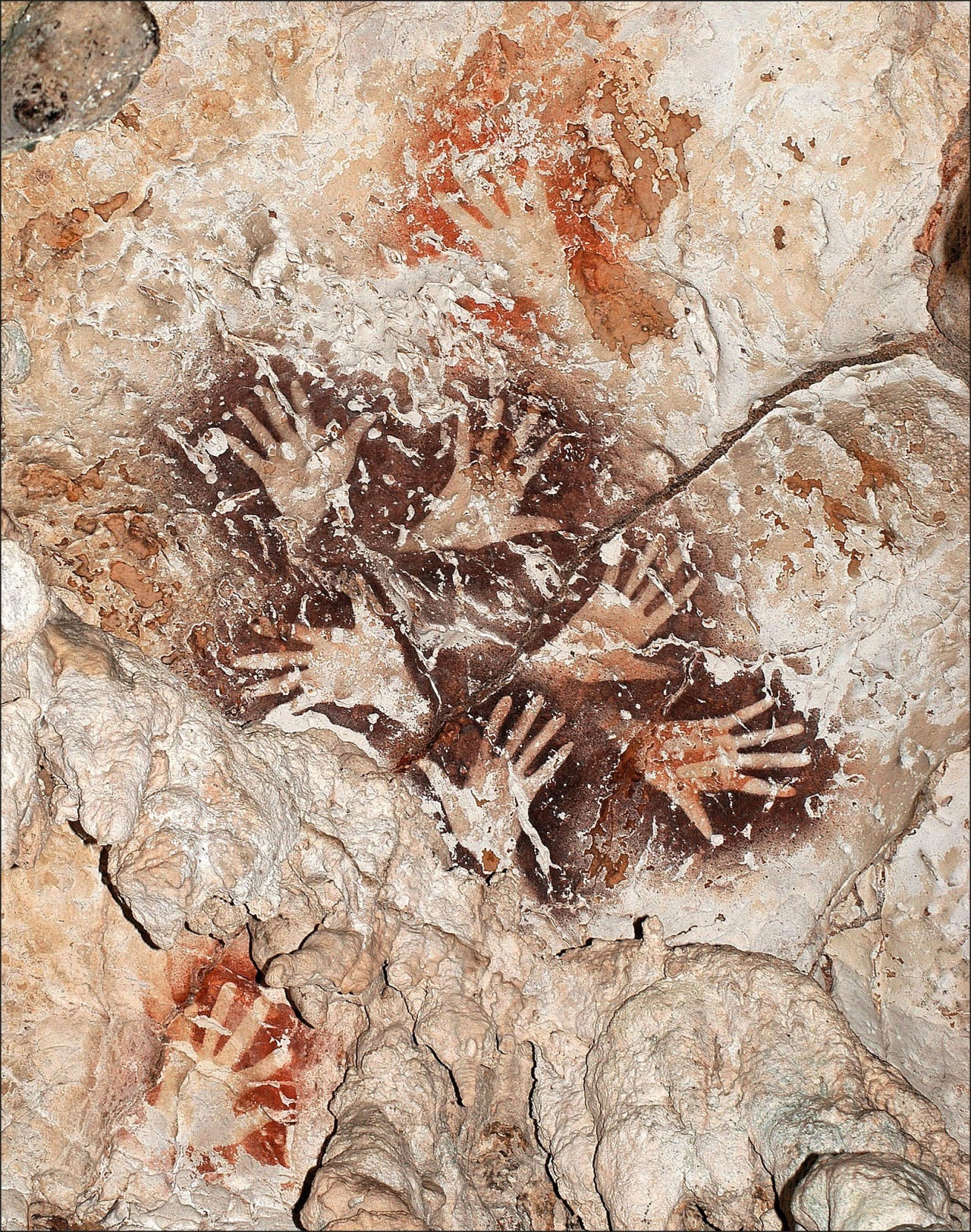
The population history of Borneo reflects multiple waves of migration. Archaeological evidence shows that caves in northern Borneo were used by Stone Age hunter gatherers at least 50,000 years ago, when lower sea levels created land connections to mainland Southeast Asia. Later, Indigenous farming groups now collectively known as the Dayak are thought to have arrived by sea from Taiwan between four thousand and six thousand years ago, bringing rice agriculture with them.
Niah Caves in Sarawak is an important prehistoric site where human remains dating to at least 40,000 years ago have been found. Archeologists have claimed a much earlier date for stone tools found in the Mansuli valley, near Lahad Datu in Sabah, but precise dating analysis has not yet been published.
In 2018, scientists announced that modern humans or hominins had established themselves in Borneo — at Niah Caves — by 65,000 years ago, a figure that far exceeded the previous estimate of 35,000 to 40,000 years ago. This new timeline was determined after five pieces of microlithic tools dated to 65,000 years ago and a human skull dated to 55,000 years old were discovered in Trader Cave, part of the Niah Caves complex, during excavation work. The discovery makes Trader Cave the oldest archaeological site in Borneo and the oldest archaeological site with human remains in Malaysia. The cave also has provided the earliest reliably date arrival time for modern human – in Southeast Asia. [Source: Sam Chua, Borneo Post, October 22, 2018]
In 2018, Borneo was added to a growing list of places with some very old cave art sites. National Geographic reported: Countless caves perch atop the steep-sided mountains of East Kalimantan in Indonesian Borneo. Draped in stone sheets and spindles, these natural limestone cathedrals showcase geology at its best. But tucked within the outcrops is something even more spectacular: a vast and ancient gallery of cave art. Hundreds of hands wave in outline from the ceilings, fingers outstretched inside bursts of red-orange paint. Now, updated analysis of the cave walls suggests that these images stand among the earliest traces of human creativity, dating back between 52,000 and 40,000 years ago. That makes the cave art tens of thousands of years older than previously thought. [Source: Maya Wei-haas, National Geographic, November 7, 2018]
RELATED ARTICLES:
EARLY HUMANS IN BORNEO: NIAH CAVES 40,000-YEAR-OLD ROCK ART factsanddetails.com
LATER BORNEO HISTORY: COLONIALISM, BRITAIN, DUTCH, MALAYSIA, INDONESIA factsanddetails.com
JAMES BROOKE AND MAKING NORTHERN BORNEO PART OF THE BRITISH EMPIRE factsanddetails.com
FIGHTING WITH BORNEO PIRATES factsanddetails.com
HEADHUNTING IN BORNEO factsanddetails.com
VIOLENCE AGAINST THE MADURESE IN BORNEO factsanddetails.com
BORNEO: GEOGRAPHY, DEMOGRAPHY, STATES, TRAVEL factsanddetails.com
BORNEO BIODIVERSITY: RAINFORESTS, NEW, RARE SPECIES, THREATS factsanddetails.com
TRIBAL PEOPLE OF BORNEO: LONGHOUSES, SAGO, ART factsanddetails.com
BORNEO ETHNIC GROUPS AND INDIGENOUS PEOPLES factsanddetails.com
DAYAKS: HISTORY, LANGUAGE, RELIGION factsanddetails.com
235,000 Year Old Stone Tools in Sabah, Borneo
Stone tools discovered at an open-air site in the Mansuli Valley near Lahad Datu in eastern Sabah have been dated to approximately 235,000 years ago, making them the oldest known evidence of hominin habitation in Borneo. [Source: Malaysian government, Google AI]
Located about 30 kilometers from Lahad Datu township, the site was discovered by chance in 2003, when an archaeological team from the Sabah Museum Department and Universiti Sains Malaysia’s Global Archaeological Research Centre encountered stone tools on the ground while traveling to the nearby Gua Samang Buat cave site. Subsequent excavations uncovered more than 1,000 stone artifacts, including flakes, pebbles, and chunk tools, many of which indicate the presence of a Paleolithic stone-tool workshop. Most of the tools were made from locally available chert, a fine-grained, silica-rich sedimentary rock.
Optically stimulated luminescence (OSL) dating was used to establish the site’s age, placing the earliest and deepest layers at around 235,000 years old. Evidence suggests repeated, continuous, or intermittent human occupation of the Mansuli Valley from approximately 235,000 to 11,000 years ago.
Neolithic Pottery and Trade 3,600 Years Ago Between Borneo and the South Pacific
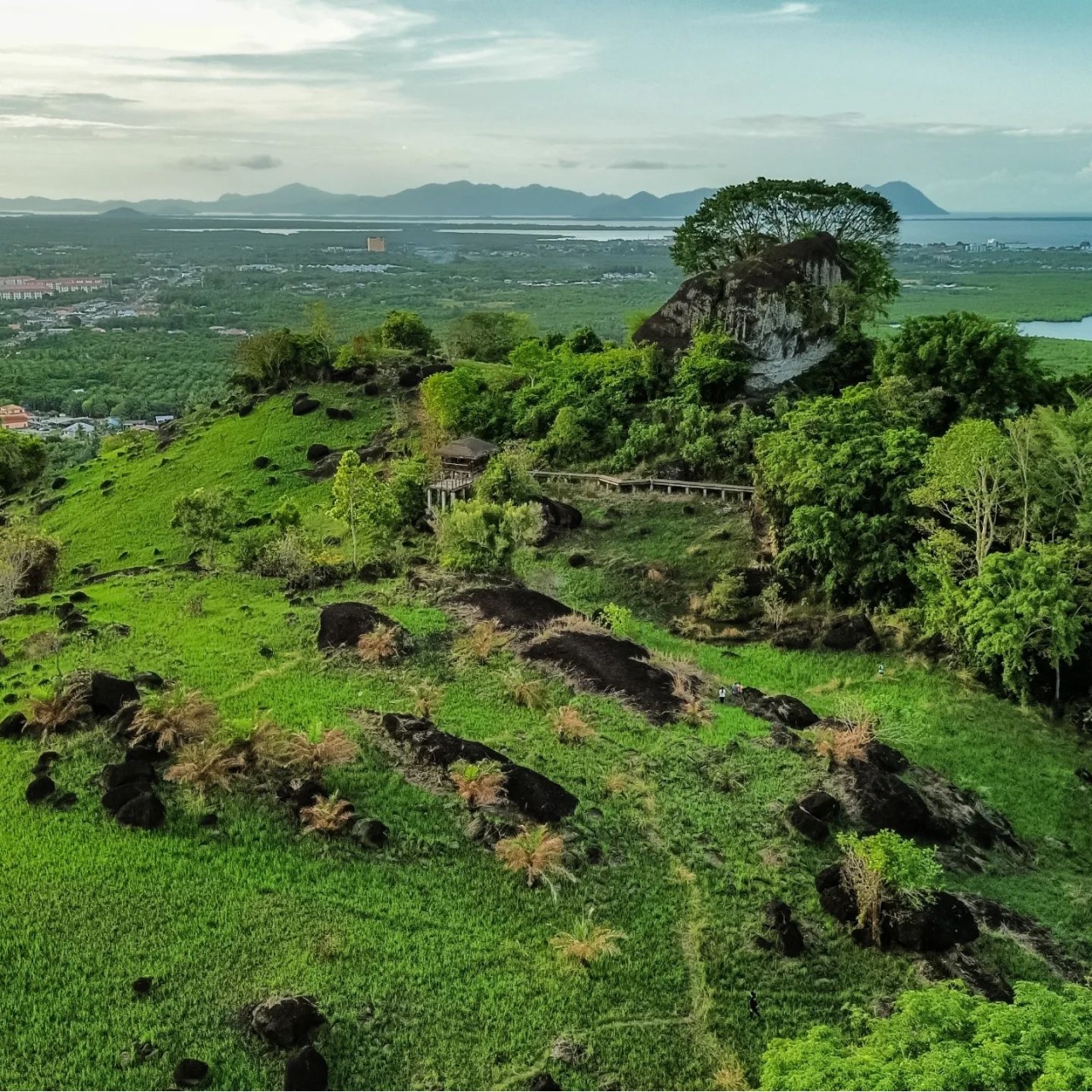
Bukit Tengkorak ("Skull Hill") Archaeological Site is located at Jalan Tampi-Tampi, about 10 kilometers south of Semporna town in Sabah. Situated on a hill about 183 meters (600 feet) above sea level, it is a volcanic rock-shelter site and a part of volcano mouth that is two kilometers in diameter. Bukit Tengkorak Archaeological Site is the largest known pottery making factory in Southeast Asia during the Neolithic period. The hill slopes are littered with numerous pottery shards with various patterns dating 3,000 years ago. An ethno-archaeological study shows that pottery making is still practised by the Bajau of Semporna today.
Long-distance obsidian trade existed in ancient times between Borneo and Pacific islands. According to Robert H. Tykot and Stephen Chia: Long-distance trade in obsidian from sources in the southwest Pacific has been well-documented for the Lapita culture complex, beginning about 1600 B.C. Analyses of obsidian artifacts from recent excavations at Bukit Tengkorak in southeastern Sabah (Borneo, Malaysia) indicate the use of obsidian from multiple sources in Melanesia as early as the 5th millennium BC. The archaeological presence of obsidian, up to more than 3500 km from its source, is the surviving evidence of what was almost certainly the longest Neolithic trade route in the world. In addition, these results indicate that long-distance trade networks existed in Indonesia at least 2500 years prior to the Lapita culture, and strengthen hypotheses of its origins in southeast Asia. [Source: Robert H. Tykot and Stephen Chia, https://doi.org/10.1557/PROC-462-175 Published online: 26 February 2011
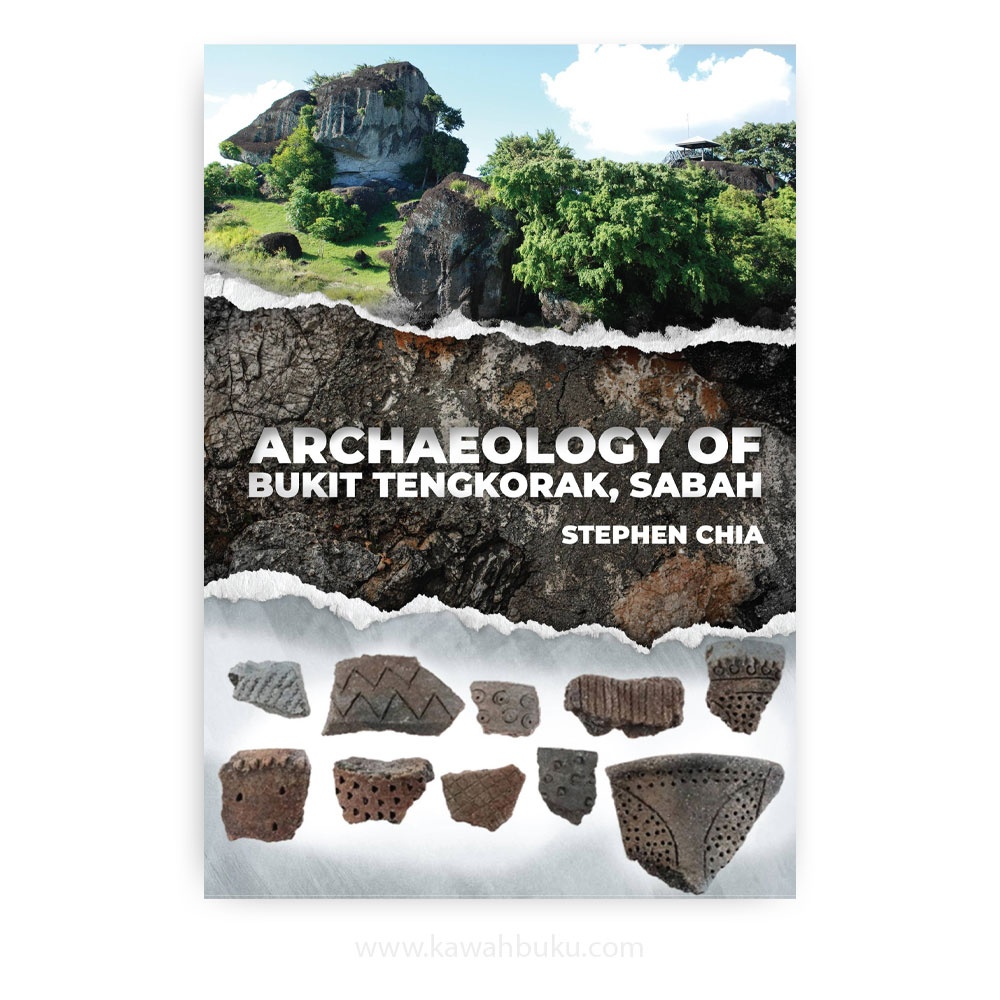
Science News reported: Excavations at Bukit Tengkorak, uncovered about 200 fragments of obsidian—highly valued in prehistory for making cutting tools—embedded in soil layers dating to around 4000 BCE. Because no natural obsidian sources exist near the site, researchers sought to identify where the material originated. [Source: Science News, December 4, 1996]
Chemical analysis of the obsidian fragments revealed distinct elemental signatures. Most of the samples matched known obsidian sources located roughly 3,500 kilometers away, near the island of New Britain and the Admiralty Islands, while a smaller number originated from sources closer to the Philippines. These results indicate the existence of an extensive maritime exchange network linking distant islands across the southwest Pacific.
Previously, scholars believed that large-scale sea trading in the region began around 1600 BCE with the emergence of the Lapita culture, renowned for its seafaring and long-distance trade. The Bukit Tengkorak evidence suggests instead that organized maritime exchange was already underway more than two millennia earlier, pointing to a far deeper and more complex history of Pacific navigation and trade.
Arrival of Austronesian People in Borneo
By 3000 B.C., Austronesian peoples possibly from the Philippines had arrived in Borneo. Austronesian people are a vast, diverse group originating from Taiwan, known for their ancestors' remarkable seafaring migration across Southeast Asia, Oceania, and Madagascar, speaking related languages (like Malay, Tagalog, Hawaiian) and sharing common cultural traits like advanced navigation, agriculture (rice, taro), and traditions like ancestor veneration and stilt houses. They form one of the largest language families and most widespread peoples in the world.
Archaeological and physical anthropological evidence, together with historical and comparative studies, suggest that the first Austronesia groups migrated into northern Borneo in successive waves around 4,000 to 5,000 years ago, and possibly earlier. These early migrants introduced a Neolithic, food-producing way of life centered on swidden cultivation, supplemented by hunting and foraging. [Source: Thomas Rhys Williams, “Encyclopedia of World Cultures Volume 5: East/Southeast Asia:” edited by Paul Hockings, 1993^^]
Beginning in the sixth century A.D., iron metallurgy provided the people in Borneo with tools to clear the dense interior forests for rice and taro cultivation. These crops were more nutritious than their former staple, sago palm starch. [Source: A. J. Abalahin, “Worldmark Encyclopedia of Cultures and Daily Life,” Cengage Learning, 2009]
Etuu Markers and Archaeology in Borneo’s Interior
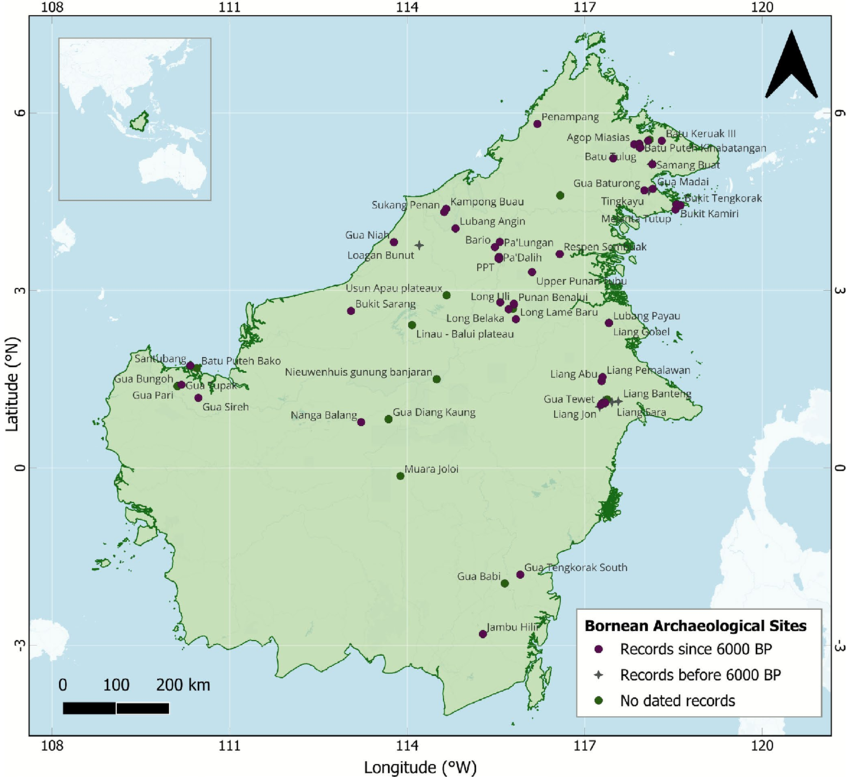
The mountainous interior of Borneo has remained largely unexplored by archaeologists until recent decades. Very little excavation or even systematic survey had been carried out in these highland regions. New research in the Kelabit forests, however, has begun to transform understanding of human history in interior Borneo by filling in long missing pieces of the archaeological record. Since 2007, Lindsay Lloyd Smith of the Institute for East Asian Studies at Sogang University in Seoul has coordinated archaeological fieldwork in the Kelabit highlands as part of a long term, multidisciplinary research initiative known as the Cultured Rainforest Project. Led by archaeologist Graeme Barker of the University of Cambridge., the project brings together researchers from universities and institutes in the United Kingdom, South Korea, and Malaysia. The work integrates archaeology, anthropology, and paleoecology to investigate how people have interacted with the rainforest environment in the interior highlands of Borneo over time. The project has also provided tribal groups like the Kelabit communities with their first formal exposure to their own deep history, which is not included in the Malaysian school curriculum. This engagement comes at a critical moment. Over the past decade, interior Borneo has undergone rapid transformation driven by commercial logging and associated social change. [Source: Karen Coates, Archaeology magazine, March-April 2014]
The Kelabit highlands in the Borneo interior contain numerous visible traces of the past, most notably landscape markers known as etuu. These markers express the belief that establishing rights over land requires it to be physically and symbolically marked. Etuu take many forms, including megaliths, carved stones, stone jars, stone mounds, and cultivated rice fields. One of the most prominent forms is the perupun, a large stone mound that can reach thirty meters in width and three meters in height. These structures, found throughout the central highlands, are considered spiritually significant by the Kelabit people. Archaeological evidence suggests that such features reflect a widespread cultural tradition dating to approximately two thousand years ago, during the Early Metal Age, and demonstrate long term, multi generational use of the landscape. Etuu are also understood as material expressions of a person’s ability to channel lalud, a force believed to govern nature, life, and spiritual power. Lalud is closely connected to the spirit world, and the presence of etuu signifies strong relationships with ancestors and spirits. High social status, according to Kelabit belief, is demonstrated by one’s capacity to manage and express this power visibly through the landscape.[Source: Karen Coates, Archaeology magazine, March-April 2014]
Beyond etuu, the forest contains hundreds of former settlements in various states of preservation. Some remain as standing wooden structures, while others are identifiable only by fruit trees and palms planted by past inhabitants. Certain sites date to the nineteenth century and are still remembered by name, while others show evidence of occupation four centuries ago, with no surviving oral memory of their builders. Archaeologists have also identified large open air settlements featuring stone walls and iron artifacts dating from one thousand to more than two thousand years ago. These appear to represent the earliest known Metal Age habitation sites in Borneo, offering rare insight into everyday domestic life rather than burial practices alone. Many questions remain unanswered, including whether these sites were permanent villages or seasonal gathering places, how iron technology was introduced, and who carried it into the highlands.
The discoveries raise broader questions about the identity of Borneo’s early interior inhabitants, their subsistence strategies, their diets, and their relationships with coastal societies during periods of intense regional trade linking Borneo with China, India, and Southeast Asia. It remains unclear whether these populations were Indigenous highlanders, migrants who arrived with new technologies, descendants of earlier farming communities, or a blend of local development and regional movement. These uncertainties have inspired a new phase of research known as the Early Borneo Project, which focuses on connections between the highlands and the coast.
Early Civilizations in the Borneo Interior
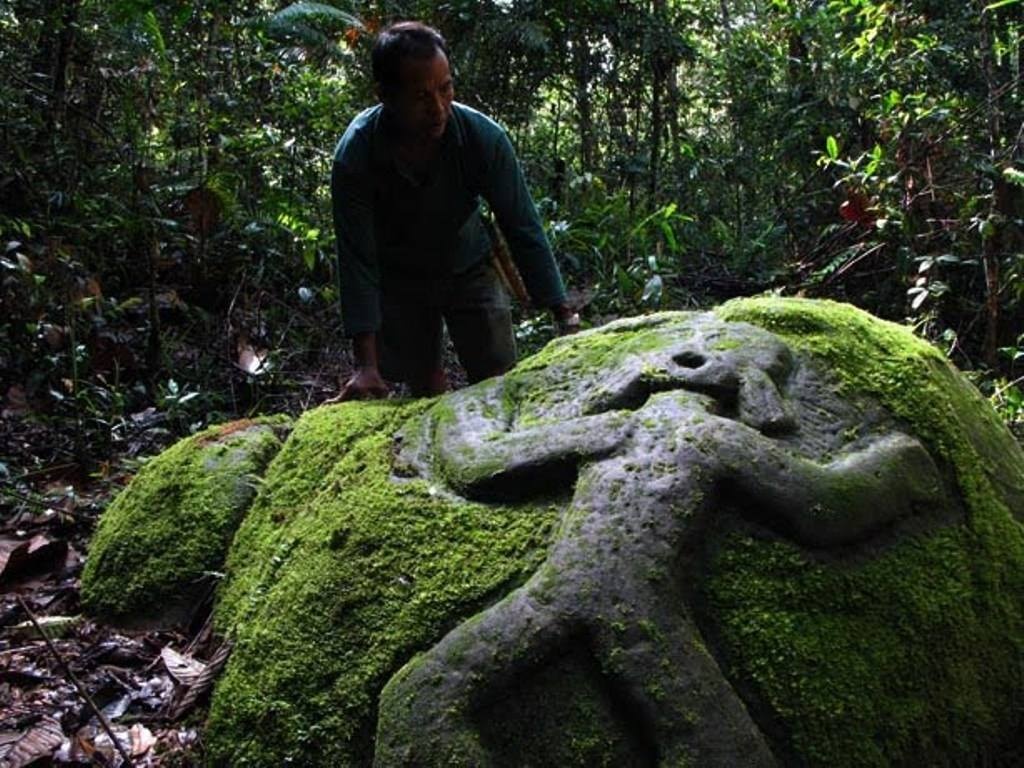
Near Kelabit villages, stone mounds are said in local tradition to mark places where ancestors without heirs buried their possessions. Nearby, fragments of ceramic jars lie in what were once cemeteries, while the surrounding rainforest preserves layers of human activity spanning thousands of years. These include abandoned longhouses with fruit trees planted by former residents, stone burial jars dating back several centuries, ancient rice and sago fields that sustained communities more than 2,000 years ago, and evidence of large scale forest burning that may indicate arboriculture as early as six thousand years ago. Despite these findings, archaeologists are often unable to identify precisely who created many of these sites. [Source: Karen Coates, Archaeology magazine, March-April 2014]
One such site, Long Diit, was a settlement between one thousand and two thousand four hundred years ago and later became a cemetery, likely beginning several centuries ago. These cemeteries, known as menatoh, are found throughout the highlands and are understood as villages of the dead, where the deceased continue life in a parallel spiritual realm. At Long Diit, stone slabs and moss covered burial jars stand beneath old growth forest. Some jars remain intact, while others are broken or fallen. According to local memory, the site was used for burial before the conversion to Christianity. Stories passed down by elders, including recollections of ancestral skulls once placed beneath certain trees, are essential to interpreting these landscapes and often provide the foundation for archaeological investigation.
An important category of material evidence consists of large glazed stoneware jars, likely first produced in China between the seventh and tenth centuries. These jars became valuable trade goods in Borneo and are known in the Kelabit highlands as dragon jars because of the motifs decorating them. They were used to store rice or wine, kept as heirlooms, or employed in burial practices before Christianization. Ownership of such jars was once limited to wealthy families, and some elders still preserve them today. Many younger generations, however, know little about their origins or significance, reflecting a broader erosion of cultural knowledge.
Elders recall that dragon jars were once associated with spiritual presence, and stories persist of voices emanating from them in the past. Whether understood literally or symbolically, such accounts illustrate the deep spiritual importance these objects once held. Today, only fragments remain in many places, underscoring the urgency of recording this heritage before it disappears entirely.
Early Contacts with China and India in Borneo
From about the seventh century B.C., Indian traders and travelers sailing between South and East Asia made periodic stops along the western and northern coasts of Borneo to obtain supplies or shelter from storms in the South China Sea. Among them were craftsmen as well as Brahman and Buddhist teachers and priests. During the period of the Western Han Empire, from 202 B.C. to A.D. 9, Chinese merchants and religious pilgrims traveling to and from India also engaged with the coastal populations of northern and western Borneo in search of local products. ^^
Some of the earliest physical evidence of Indian religious and cultural influence in Southeast Asia comes from Borneo. Stone pillars bearing inscriptions in the Pallava script, discovered in Kutai along the Mahakam River in what is now East Kalimantan, date to the second half of the fourth century and attest to early Hindu presence in the region.
Early Trade with Borneo
Since the early centuries A.D., the people of Borneo have supplemented their subsistence agriculture by procuring forest products. These include gold, diamonds, gutta-percha, illipe nuts (a source of a valued oil), aloeswood (an aromatic resin), camphor, bezoar stones (the hardened gallbladders of certain monkeys), and other ingredients for Chinese herbal medicines. Traditionally, the people in the interior of Borneo traded these products with coastal brokers in exchange for goods such as Javanese gongs, Chinese porcelain, and silk. The most powerful brokers were the sultans, such as the ruler of Banjarmasin, who controlled the river mouths and all traffic between the Borneo interior and the outside world. Despite the claims of the sultans of Banjarmasin to suzerainty over the peoples living upriver in Central Kalimantan, the latter remained de facto independent, living in small, semipermanent settlements scattered over a vast area. [Source: A. J. Abalahin, “Worldmark Encyclopedia of Cultures and Daily Life,” Cengage Learning, 2009]
According to ancient Chinese sources dating to A.D. 977, as well as Indian and Japanese manuscripts, the western coastal cities of Borneo had already developed into active trading ports by the first millennium of the Common Era. Chinese records describe a wide range of valuable commodities originating from Borneo, including gold, camphor, tortoise shells, hornbill ivory, rhinoceros horn, crane crests, beeswax, lakawood, edible bird’s nests, and various spices.
In Indian sources, Borneo was known as Suvarnabhumi, meaning the Land of Gold, and also as Karpuradvipa, or Camphor Island, while Javanese sources referred to it as Puradvipa, the Diamond Island. Archaeological discoveries in the Sarawak River delta indicate that this area functioned as a major center of trade between India and China from the sixth century until approximately 1300.
Trade between China and India, with ships calling at Bornean ports, expanded at several points up to about A.D. 1430 and led to the establishment of trading settlements, including one founded in 1375 at the mouth of the Kinabatangan River in eastern northern Borneo by the Chinese trader Wang Sen-ping. Over many centuries, these interactions introduced a range of Chinese cultural elements to Bornean societies, including techniques and tools for irrigated rice cultivation that relied on water buffalo for field preparation. [Source: Thomas Rhys Williams, “Encyclopedia of World Cultures Volume 5: East/Southeast Asia:” edited by Paul Hockings, 1993]
Borneo and Early Empires of Indonesia and Southeast Asia
Between the 9th and 13th centuries, the Malay Buddhist kingdom of Srivijaya, centered in what is now Palembang in Sumatra, dominated the southern and southwestern coasts of Borneo and maintained contact with communities along the western and northern shores.
By the fourteenth century, Borneo had become a vassal of the Majapahit Empire, based in present day Indonesia, before later shifting its allegiance to the Ming dynasty of China. From the early fourteenth century, the Hindu kingdom of Majapahit, based in Java, exerted political influence over many of the same coastal regions.
During the pre Islamic period, the polity known as Sulu, then called Lupah Sūg, extended from Palawan and the Sulu Archipelago in the Philippines to Sabah and eastern and northern Kalimantan in Borneo. The Sulu state later emerged as a reaction against Majapahit influence, which had briefly occupied parts of its territory.
Islamic cultural influences followed in the fifteenth century, as the Muslim-ruled state of Malacca extended its dominance across much of maritime Southeast Asia. Limited European influence began to reach western and northern Borneo after the Portuguese conquest of Malacca in 1511, as European traders sought spices and other local products.
Islam in Borneo and the Sultanates of Brunei and Sulu
Islam reached Borneo around the tenth century, introduced by Muslim traders who were active in regional maritime networks. Over time, these traders facilitated the conversion of many Indigenous communities living along the coasts, where external contact was most intense. The spread of Islam reshaped political authority and trade relations in the region, particularly in the northern and western coastal areas of the island.
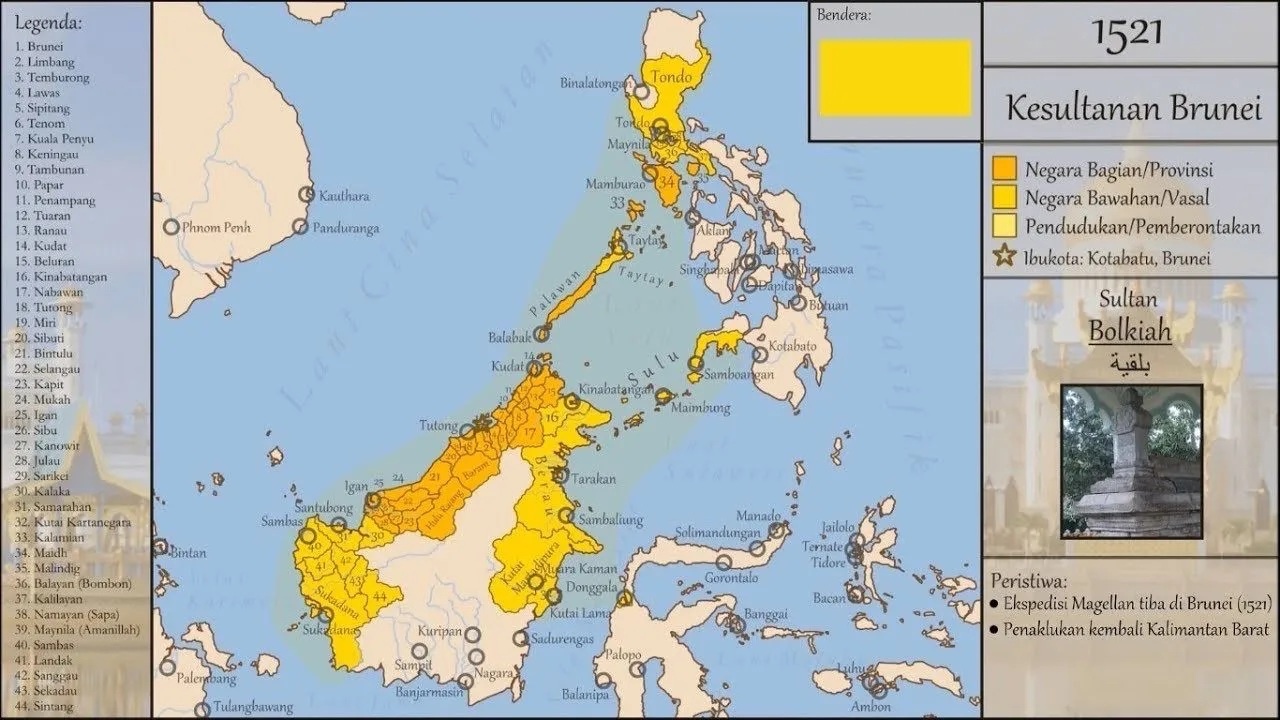
Following the death of the Majapahit emperor in the mid fourteenth century, the Sultanate of Brunei declared its independence. Under the Bolkiah dynasty, from the fifteenth to the seventeenth centuries, Brunei entered a golden age during which it controlled nearly the entire coastline of Borneo, a dominance so influential that the island itself came to bear its name, as well as several islands in the southwestern Philippines.
In the mid fifteenth century, Shari‘ful Hashem Syed Abu Bakr, an Arab born in Johor, arrived in Sulu from Malacca and in 1457 founded the Sultanate of Sulu, proclaiming himself its first sultan. After gaining independence from Bruneian control in 1578, the Sultanate of Sulu expanded its maritime domain to include parts of northern Borneo. Both the Sultanate of Brunei and the Sultanate of Sulu maintained long standing trading relationships with China, facilitated by the regular arrival of Chinese junks at their ports. Beyond the reach of these coastal thalassocratic states, however, the interior of Borneo largely remained outside the control of centralized kingdoms and continued to be governed by local Indigenous societies.
Image Sources: Wikimedia Commons
Text Sources: Indonesia Tourism websites, Indonesia government websites, Malaysia Tourism websites, Malaysia government websites,UNESCO, “Encyclopedia of World Cultures Volume 5: East/Southeast Asia:” edited by Paul Hockings, 1993; National Geographic; New York Times, Washington Post, Los Angeles Times, Lonely Planet Guides, Library of Congress, Smithsonian magazine, The New Yorker, Time, Reuters, AP, AFP, Wikipedia, BBC, CNN, and various books and other publications.
Last Updated January 2026