
JAVANESE RELIGION
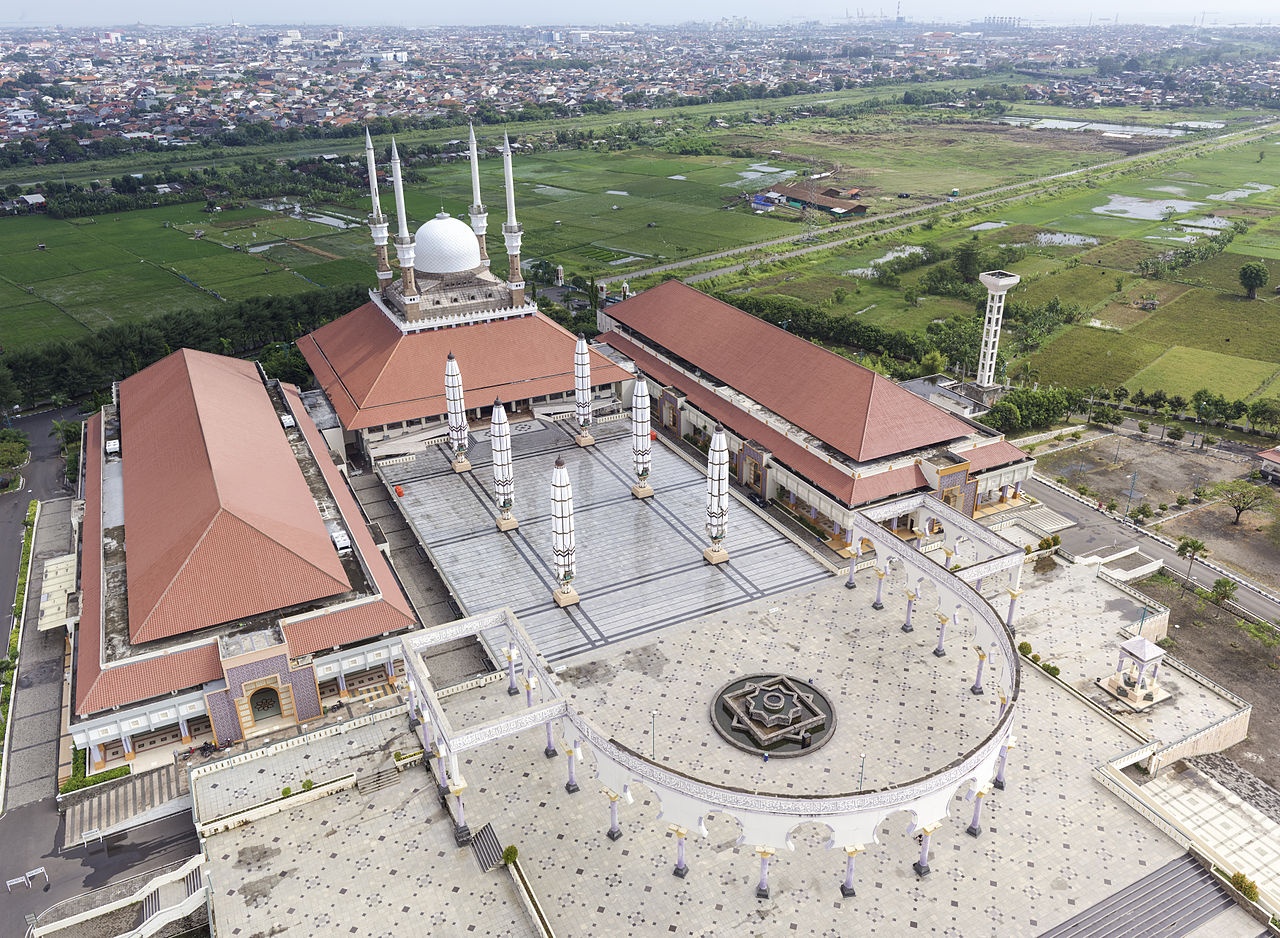
Nearly all Javanese identify as Muslims, but only a portion strictly follow the Five Pillars of Islam and the practices associated with orthodox Middle Eastern Islam. Those who do are known as santri and are often divided into two broad groups. “Conservative” santri maintain long-established Javanese forms of orthodox Islam, while “modernist” santri reject many local traditions and embrace a more scriptural Islam shaped by Western-style education. [Source: M. Marlene Martin, “Encyclopedia of World Cultures Volume 5: East / Southeast Asia:” edited by Paul Hockings, 1993; A. J. Abalahin, “Worldmark Encyclopedia of Cultures and Daily Life,” Cengage Learning, 2009]
For many Javanese, religion is highly syncretic. Islam is layered onto older Hindu-Buddhist and indigenous spiritual traditions. This produces a deep cultural divide between the santri, who adhere closely to Islamic doctrine, and the abangan, who practice a more relaxed, ritual-based faith. This distinction has long carried social, class, and political significance in Javanese society.
About 12 percent of Java’s population—including Chinese Indonesians and migrants from other islands—follows religions other than Islam. Christianity is the largest minority faith, with Roman Catholics especially prominent. Catholic worship in Java has incorporated local culture, using gamelan music in the Mass and wayang shadow puppetry to teach biblical stories. Traditional Javanese gestures of respect, such as pressing the palms together at the forehead, are also used during key moments of the service.
A strong sense of fatalism runs through Javanese thought. Values such as acceptance (nerimo), patience (sabar), and emotional self-control (ikhlas) are seen as essential to achieving inner calm. Life on earth is often described as brief and transitory, like “stopping for a drink” (mampir ngombe). Mystical practices, including meditation and spiritual retreats, are common ways to gain inner power and have long attracted the Javanese aristocracy. Many mystical movements, known collectively as kebatinan (“inner spirituality”), deliberately distance themselves from formal Islam. Although they have large followings, they have repeatedly failed to gain official recognition from the state.
On the slopes of Mount Bromo in East Java lives the Tenggerese, an ancient Javanese subgroup. They practice a folk religion rooted in Majapahit-era Hinduism and centered on honoring Joko Seger, the guardian spirit of Bromo.
RELATED ARTICLES:
RELIGION IN INDONESIA factsanddetails.com
FOLK RELIGIONS IN INDONESIA factsanddetails.com
ISLAM IN INDONESIA: CHARACTERISTICS, TYPES, MUSLIM ORGANIZATIONS factsanddetails.com
HISTORY OF ISLAM IN INDONESIA: ARRIVAL, SPREAD, ACEH, MELAKA, DEMAK factsanddetails.com
MUSLIM PRACTICES IN INDONESIA: PRAYERS, RITUALS, MOSQUES, ISLAMIC CULTURE, THE HAJJ factsanddetails.com
WITCHCRAFT AND BLACK MAGIC IN INDONESIA factsanddetails.com
GHOSTS AND SUPERNATURAL BEINGS IN INDONESIA factsanddetails.com
MYSTICISM IN INDONESIA factsanddetails.com
SUPERSTITIONS IN INDONESIA factsanddetails.com
DUKUN: TRADITIONAL HEALERS factsanddetails.com
JAVANESE PEOPLE: HISTORY, DEMOGRAPHICS, LANGUAGE factsanddetails.com
JAVANESE CULTURE: MUSIC, SHADOW PUPPETRY, FOLKLORE, LITERATURE factsanddetails.com
JAVANESE SOCIETY: FAMILY, MARRIAGE, GENDER, CUSTOMS, CLASSES factsanddetails.com
JAVANESE LIFE: VILLAGES, HOUSES, FOOD, CLOTHES, WORK factsanddetails.com
CENTRAL JAVA factsanddetails.com
EAST JAVA factsanddetails.com
Javanese Muslims
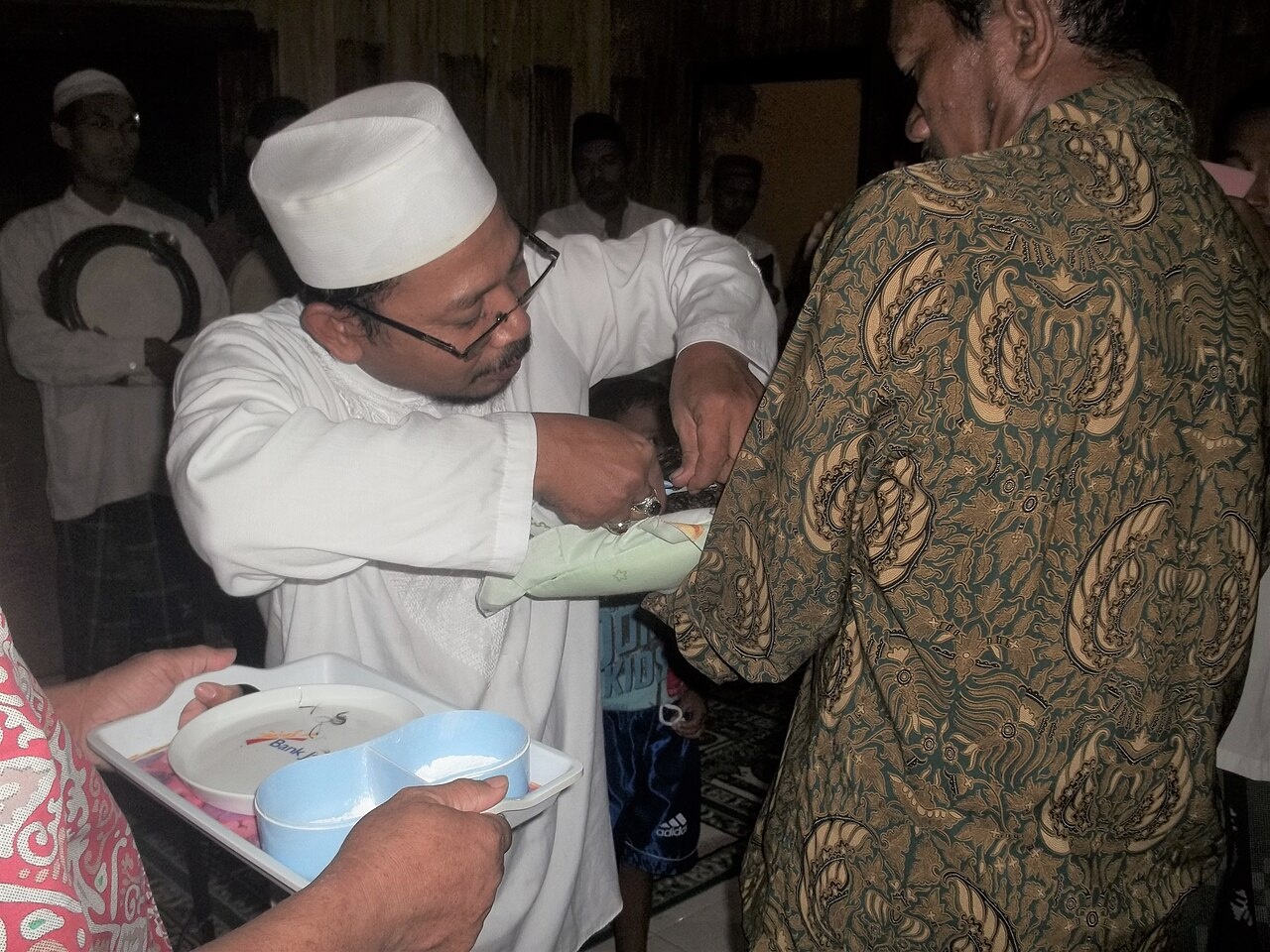
In Indonesia, santri refers specifically to Muslims who receive formal Islamic education in pesantren (Islamic boarding schools) or study closely with religious teachers. More broadly, the term describes Muslims who strictly observe Islamic teachings. Santri are found across all social classes but are especially prominent in commercial and trading communities. They carefully follow Islamic obligations: praying five times a day, attending Friday prayers at the mosque, fasting during Ramadan (puasa), avoiding pork, and striving to perform the pilgrimage to Mecca at least once. [Source: M. Marlene Martin, “Encyclopedia of World Cultures Volume 5: East / Southeast Asia:” edited by Paul Hockings, 1993; A. J. Abalahin, “Worldmark Encyclopedia of Cultures and Daily Life,” Cengage Learning, 2009]
Islamic religious life in Java includes several types of practitioners. Some groups are organized into sects structured around hierarchical teacher–disciple relationships, linking a guru or kiai (religious teacher) with murid (students). Individual kiai attract followers to their pondok or pesantren—boarding schools resembling monasteries—where they teach Islamic doctrine and law. Alongside orthodox Islam, practices of magic and sorcery are widespread. Numerous kinds of dukun operate in Javanese society, each specializing in particular rituals, such as those connected with agriculture or fertility, as well as divination and healing.
Most observers of Javanese religion agree that the core Javanese religious ritual is a brief feast known as the slametan. Neighbors, relatives, and coworkers may be invited to attend on the occasion of a birth, marriage, death, or change in status. The host typically gives a speech in high Javanese explaining the purpose of the event to the guests, after which some incense is burned, a prayer is recited in Arabic, and the special festive food is consumed, at least in part. Then, what is left is divided among the guests and taken home. Believers seek to protect themselves against harmful spirits by making offerings, enlisting the aid of a dukun (healer), or engaging in spiritual acts of self-control and right thinking. [Source: Library of Congress]
Diversity of Javanese Islam
There is great diversity among Javanese religious practices. Although most Javanese are Muslims, the wide variations in Islamic beliefs and practices are associated with complex factors such as regional history and social class. The most pious, and recognizably Muslim, varieties of Javanese religion are associated with the santri tradition, nurtured by traditional Muslim schools. Santri hold more tightly to the moralistic tone of Islam and express the fundamental universalism of its teachings. They may make a pilgrimage (hajj in Indonesian) to Mecca, teach their children the Quran, and work for the social, spiritual, and even political advancement of the ummah. In contrast to the santri tradition, varieties of kejawen (“Javanist”) religious practice variously incorporate pre-Islamic, animistic, and aesthetic forms of spirituality. [Source: Library of Congress *]
Within this “purist” stream of Islam, santri are commonly divided into two groups. Conservatives maintain forms of orthodox Islam that have been practiced in Java for centuries, while modernists reject many local traditions and emphasize a more scriptural interpretation of Islam, often supported by Western-style education. These two tendencies are institutionally represented by powerful mass organizations: Nahdlatul Ulama for the conservative tradition and Muhammadiyah for the modernist one. Both once functioned directly as political parties and remain highly influential in religious and social life. [Source: M. Marlene Martin, “Encyclopedia of World Cultures Volume 5: East / Southeast Asia:” edited by Paul Hockings, 1993; A. J. Abalahin, “Worldmark Encyclopedia of Cultures and Daily Life,” Cengage Learning, 2009]
By contrast, non-santri Javanese Muslims are commonly known as abangan or Islam kejawen. While they revere God (Gusti Allah) and the Prophet Muhammad (Kangjeng Nabi), they generally do not perform the five daily prayers, fast during Ramadan, or seek to undertake the pilgrimage to Mecca. Their religious life centers not on mosque worship but on slametan—communal ritual meals held to mark life-cycle events, village purification rites, harvest festivals, Islamic holidays, and special occasions such as moving into a new house or performing ruwatan rituals to protect a child from misfortune.
Although some observers have distinguished between elite and common varieties of kejawen practice, many now see the traditional aristocracy and peasantry losing their distinctiveness in this regard. Religiosity is expressed through fasts, trances, visits to graves, and performance genres such as wayang kulit (a form of shadow theater employing flat leather puppets), concerts by gamelans (Javanese orchestras featuring percussive instruments), dance, and other arts of the courtly tradition, which are widely appreciated by the Javanese community as a whole. *
Javanism (Kejawen)
Javanism—often referred to as Kejawen—is a traditional spiritual worldview of the Javanese people that blends elements of animism, Hindu-Buddhist heritage, and Islam into a holistic way of life. Rather than a formal religion with fixed doctrines, it emphasizes inner balance, harmony with nature, and alignment with unseen spiritual forces. [Source: Nicole Crowder, Washington Post, October 17, 2014]
At the heart of Javanism is the pursuit of equilibrium between the human, natural, and spiritual worlds. Rituals and ceremonies play a central role in maintaining this balance. Offerings such as gunungan—mountain-shaped arrangements of fruits, vegetables, and other goods—are carried in processions and presented to spirits as symbols of gratitude and requests for protection, prosperity, and harmony.
Many Javanese rituals are tied to specific places believed to hold spiritual power, such as volcanoes, rivers, and the sea. Ceremonies may include offerings cast into volcanic craters or the ocean, reflecting beliefs in powerful guardian spirits. One such figure is Nyai Roro Kidul, the revered spirit of the southern ocean, to whom offerings are made in coastal rituals.
Trance and possession are also significant aspects of Javanese ritual life. Traditional performances, such as jatilan dances, often involve participants entering altered states in which they are believed to be inhabited by spirits. These moments—sometimes marked by dramatic acts like imitating animals or consuming unusual substances—are seen as expressions of spiritual presence rather than mere spectacle.
Javanism also preserves rich mythological traditions, including origin stories of ancestral figures such as Princess Roro Anteng and Prince Joko Seger, whose легенды are linked to rituals at Mount Bromo. Offerings of food, livestock, and other items continue to be made in these الأماكن, reinforcing ties between past and present, humans and the divine.
Mystical Javanese Islam
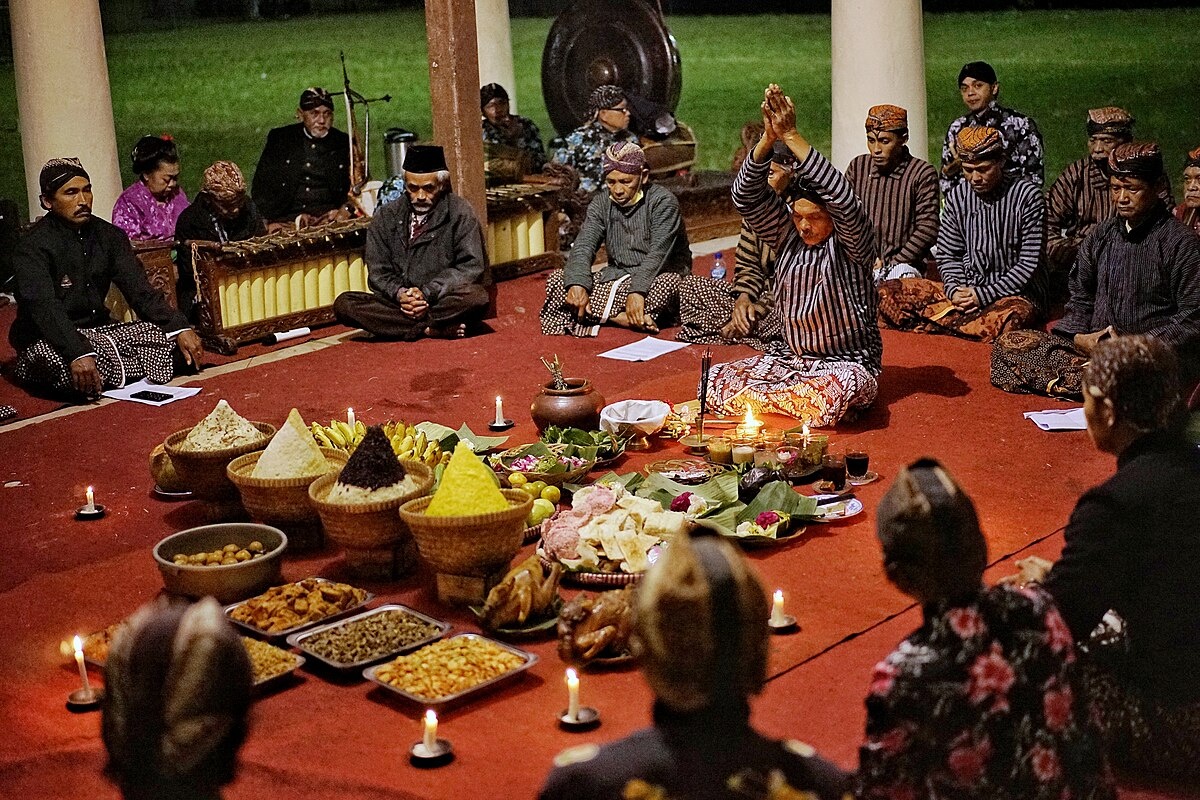
Peasant abangan generally understand the basic framework of Islam but do not observe it strictly. Their religious outlook is syncretic, combining indigenous beliefs with elements of Hindu-Buddhism and Islam. Alongside belief in Allah, abangan acknowledge Hindu deities and a wide array of spirits thought to inhabit the natural environment. They also believe in a form of mystical power possessed by dukun—specialists who may serve as healers, ritual experts, or sorcerers. [Source: M. Marlene Martin, “Encyclopedia of World Cultures Volume 5: East / Southeast Asia:” edited by Paul Hockings, 1993; A. J. Abalahin, “Worldmark Encyclopedia of Cultures and Daily Life,” Cengage Learning, 2009]
Offerings such as flowers, incense, coins, and rice cakes are commonly placed on bamboo trays or banana leaves for spirits at crossroads, beneath bridges, at large trees, and other spiritually charged locations. Abangan respect the spiritual potency (kesakten) believed to reside in heirloom objects such as gongs, kris daggers, and royal carriages. They also believe that paying homage at the tombs of rulers and other exceptional figures from the past can bring spiritual or material benefits. Many of these practices are not exclusive to abangan: conservative santri, for example, regularly make pilgrimages to the graves of Islamic saints, a practice criticized by modernists as idolatrous. Both abangan and santri commonly consult dukun of various kinds, including spirit mediums, masseurs, acupuncturists, herbalists, midwives, sorcerers, and numerologists.
The religious practices of priyayi abangan resemble those of peasant abangan but are generally more refined and philosophical. They emphasize an elaborate worldview centered on fate and mysticism. Asceticism and meditation are central practices, and religious life often takes shape within sects led by spiritual teachers (guru).
Javanese Spiritual Beings
Javanese belief recognizes a rich hierarchy of supernatural beings. Memedis are frightening spirits, including figures such as sundal bolong and the mischievous gendruwo. Gendruwo are said to appear as familiar relatives in order to abduct people and render them invisible; anyone who accepts food from a gendruwo is believed to remain invisible forever. Lelembut are spirits that possess humans, while tuyul are spirit familiars that can be acquired through fasting and meditation. Demit inhabit eerie or dangerous places, and danyang serve as guardian spirits of villages, palaces, and sacred sites. Above all stands Ratu Kidul, the Queen of the South Sea, believed to be the mystical consort of Java’s rulers. Her favored color is green, and young men are warned not to wear green along the southern Indian Ocean coast, lest they be drawn into her underwater realm. [Source: A. J. Abalahin, “Worldmark Encyclopedia of Cultures and Daily Life,” Cengage Learning, 2009]
Another revered group in Javanese tradition is the wali songo, the Nine Saints credited with bringing Islam to Java. Of diverse origins—Arab, Egyptian, Persian, Central Asian, and Chinese—they are remembered not only for their piety but also for their legendary powers, such as flying. They are also said to have spread Islam through Javanese cultural forms. Sunan Bonang, for example, used Javanese sung poetry and gamelan music to convey Islamic teachings. Their tombs along Java’s north coast remain major pilgrimage destinations, especially those of Sunan Giri in Gresik near Surabaya, Sunan Kudus in Kudus, and Sunan Gunung Jati in Cirebon. Another figure who attracts pilgrims is Zheng He, known locally as Sam Po Kong; both Muslim Javanese and non-Muslim Chinese visit his shrine and temple in Semarang.
Javanese Religious Ceremonies and Festivals
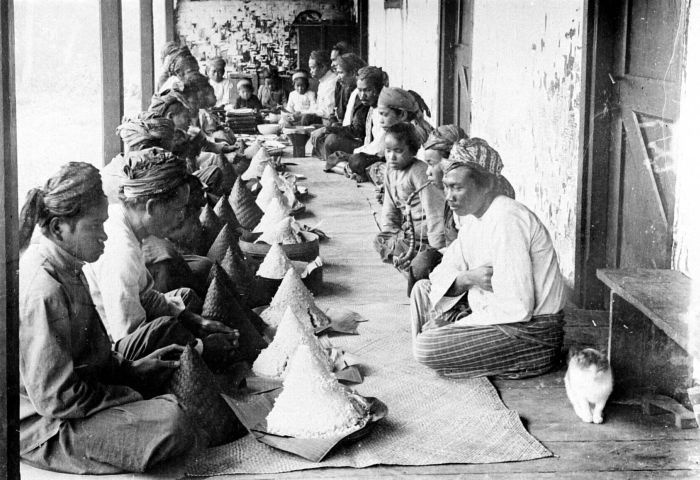
The slametan, a communal ritual meal, is central to abangan religious life and is sometimes also practiced by santri. Its aim is to create slamet—a state of calm, harmony, and spiritual balance. Held in a private home and typically attended by close neighbors, a slametan marks major life-cycle events, certain dates in the Muslim calendar, and occasions meant to safeguard the well-being of the wider community. [Source: M. Marlene Martin, “Encyclopedia of World Cultures Volume 5: East / Southeast Asia:” edited by Paul Hockings, 1993; A. J. Abalahin, “Worldmark Encyclopedia of Cultures and Daily Life,” Cengage Learning, 2009]
Javanese concepts of time blend the seven-day Islamic–Western week (Sabtu, Minggu, Senin, Selasa, Rebo, Kemis, Jum’at) with an indigenous five-day cycle (Legi, Paing, Pon, Wage, Kliwon). Each day is defined by its place in both systems—for example, Selasa Pon or Rebo Legi—a combination that recurs every 35 days. Important events such as birthdays, rituals, and performances are often scheduled according to these recurring pairings.
The first day of the Islamic year, beginning at sunset on 1 Sura, is considered especially rich in mystical significance. On this night, many people remain awake to watch processions like the kirab pusaka, in which royal heirlooms are paraded in Solo, or to meditate on mountains or along the coast. Standing all night in cold running water is believed by some to build spiritual power. The Prophet Muhammad’s birthday, observed on 12 Mulud, is celebrated in Yogyakarta and Solo with the week-long Sekaten fair. Ancient gamelan ensembles, played only for this occasion, accompany processions on the festival day featuring conical “mountains” of glutinous rice symbolizing male, female, and child.
Labuhan Ceremony on Java
Merapi is guarded by spiritual “guards” who give offerings to the mountain. Annually, on the anniversary of the Sultan’s coronation, offerings (labuhan) are brought from the kraton of Yogyakarta to Mt. Merapi, together with similar offerings carried to the Indian Ocean to the south, to appease the spirits of the mountain and the sea, in order to bring welfare to the inhabitants of Java. The annual labuhan ceremony begins with a turbaned priest reciting a Muslim prayer and presenting offerings of silk, curry, bananas, hair and toenail clipping from the Sultan of Yogyakarta to the goddess, which are carried in a procession and deposited in the sea by Muslims, who then take turns lighting incense at strange-shaped rock that is the focus of the cult.
The Economist reported: “In the name of God, the compassionate, the merciful,” the turbaned priest begins in the orthodox Muslim style. But that is as far as orthodoxy goes. As the annual labuhan ceremony unfolds, he blesses the various offerings the Sultan of Yogyakarta has prepared for Loro Kidul, the goddess of the surrounding seas: silk, curry, bananas, hair and toenail clippings. [Source: The Economist, May 29, 2003 |+|]
“The goddess, apparently, will be pleased with these items when they are carried in procession to the sea and thrown in, as will another local deity, who receives similar gifts tossed into a nearby volcano. The 200-odd participants, at any rate, seem happy with the proceedings: they bow their heads during the blessings, and take turns lighting incense at a curiously-shaped rock that is the focus of the cult. Later, some even charge into the foaming ocean to pluck a lucky banana from the waves. |+|
“This ritual has more to do with Java's Hindu and pagan past than with the professed religion of the vast majority of the island's inhabitants, Islam. Votive offerings, veneration of objects or idols and, above all, any hint of polytheism are anathema to most Muslims. Yet many Javanese happily describe themselves as Muslim, attend mosques and fast during Ramadan, while continuing to practice the folk religion of their forebears. The sultan himself, Hamengkubuwono X, a respected politician often mentioned as a possible president, takes pride in the preservation of local rituals while maintaining a reputation as a devout Muslim. This laxity about doctrine has given rise to the notion that Indonesian Islam in particular, and South-East Asian Islam in general, is more tolerant and less prone to extremism than that of the Middle East.” |+|
Javanese Funerals and Beliefs About Death
Funerals in Java usually take place within hours of a death and are attended by neighbors and close relatives who can arrive in time. A coffin is quickly constructed and a grave prepared, while a village official conducts the necessary rituals. A brief ceremony is held at the deceased’s home, followed by a procession to the cemetery for burial. Afterward, a slametan is held, with food typically supplied by neighbors. [Source: M. Marlene Martin, “Encyclopedia of World Cultures Volume 5: East / Southeast Asia:” edited by Paul Hockings, 1993 ~]
As in other areas of social life, Javanese funerals are characterized by emotional restraint. Graves are visited and cared for regularly, especially at the beginning and end of the fasting month. The Javanese believe that bonds with the dead continue, particularly the ties between parents and children. Families observe a series of slametan rituals at set intervals after a death, culminating in a final ceremony 1,000 days later. Beliefs about the afterlife vary: some follow orthodox Islamic ideas of judgment and eternal reward or punishment, while others believe that spirits or ghosts continue to influence the living, or even in reincarnation—a view strongly rejected by orthodox Muslims.
Ritual observances surround death. Javanese families hold slametan ceremonies for the deceased on the third, seventh, fortieth, hundredth, and thousandth days after death. On Selasa Kliwon and Jum’at Kliwon, offerings—typically flower petals placed in half-filled glasses of water—are made to the spirits of the dead. During Ramadan, families commonly visit graves to scatter flowers in remembrance of departed relatives.
Superstitions on Java
Superstitions are very much alive on Java. One widely shared idea concerns Tuesday, which many Javanese consider an inauspicious day. In some areas, public transportation sees noticeably fewer passengers, and a number of shop owners choose to close their businesses. This belief is often linked to the proverb “seloso – selo selone menungso” (Tuesday is the quietest point of human activity), suggesting a time better suited for reflection than for starting important endeavors. [Source: Yudhistira Agato, Jakarta Post, October 29, 2021]
Other superstitions center on dreams and omens. In the village of Siman in Lamongan, it is believed that dreaming of defecation signals the impending loss of something valuable. Although not everyone finds this to be true, the belief persists among families who pass it down through generations, illustrating how symbolic interpretations of dreams remain embedded in local culture.
Family life is also shaped by cautionary beliefs. Some Javanese hold that including a romantic partner in a family photograph before marriage can bring misfortune and even lead to the end of the relationship. Despite family approval or expectations of marriage, such relationships are thought to be “jinxed” once prematurely symbolized in a family portrait. As a result, some families avoid taking such photos altogether until a partner has officially become part of the family.
Another common practice involves leaving behind personal items in places one does not wish to return to. In regions such as Batang Regency, families may intentionally leave objects like towels or clothing in hospitals, hotels, or other locations associated with unpleasant experiences. The act is believed to symbolically sever ties with the place, ensuring that one will not have to return. This custom is often passed down through generations and reflects a broader worldview in which physical objects can carry spiritual or emotional significance.
Many of these beliefs are connected to Kejawen, a traditional system of spirituality that blends mysticism, metaphysics, and elements of older religious practices. Historically associated with royal courts such as the Cirebon Kraton, Kejawen continues to influence how many Javanese interpret signs, maintain harmony, and navigate uncertainty in daily life.
Image Sources: Wikimedia Commons
Text Sources: “Encyclopedia of World Cultures Volume 5: East/Southeast Asia:” edited by Paul Hockings, 1993; National Geographic, Live Science, Metropolitan Museum of Art, Natural History magazine, Australian Museum, New York Times, Washington Post, Los Angeles Times, Smithsonian magazine, Encyclopedia.com, Times of London, Library of Congress, The Conversation, The New Yorker, Time, BBC, CNN, Reuters, Associated Press, AFP, Lonely Planet Guides, Google AI, Wikipedia, The Guardian and various websites, books and other publications.
Last updated December 2025