
FUNERALS IN INDONESIA
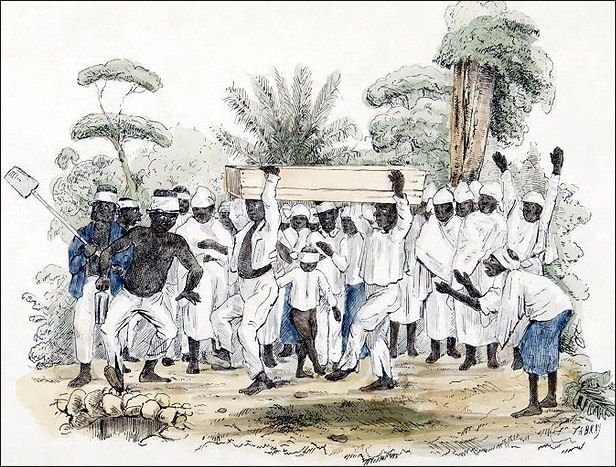
There is a wide range of customs for burials according to which island or religion of the people. For instance, in Java, funerals are held on Thursday night with only family in attendance. Often, the Javanese conduct secondary rites of passage for the dead soul. Christians and Muslims are buried in separate cemeteries and are conducted by their own religious figures. While burial is the most common form of ritual in Indonesia, Hindus in Bali usually perform cremation. [Source: Cultural Comparisons] Across Indonesia, it is widely believed that the dead continue to influence the living, making funeral rituals essential for ensuring the safe passage of the spirit to the afterlife. At the same time, cemeteries are often regarded as spiritually dangerous places, where ghosts or restless spirits may linger. On Java, the deceased are sometimes honored through modest family ceremonies held on Thursday evenings, reflecting an ongoing relationship between the living and their ancestors. [Source: Clark E. Cunningham, Countries and Their Cultures, Gale Group Inc., 2001]
Funeral practices are shaped by religious traditions. Among Muslims, burial typically takes place within twenty-four hours and is led by Islamic officiants, while Christian funerals are conducted by church leaders, with separate cemeteries maintained for each group. In many regions, additional rites may follow the burial to ensure the well-being of the soul and to protect the living from spiritual harm. Funerals, like weddings, are important social events that bring together relatives, neighbors, and friends, and they often reflect social status through their scale and elaborateness.
In clan-based societies, funerals also serve as key moments of social exchange. Gifts are shared between wife-giving and wife-taking families, and responsibilities are clearly defined. Typically, members of the wife-giving group oversee the funeral proceedings and lead the coffin to the grave, reinforcing social bonds and obligations.
Muslim Funerals in Indonesia
In accordance with Muslim customs, funerals and burials are held within 24 hours after a death. They are attended by neighbors and close relatives that can arrive in time. A coffin is built and a grave is quickly dug while an official performs the rituals. A simple ceremony is held at the home followed by a procession to the graveyard and a burial. Graves are visited regularly, especially at the beginning and end of Ramadan.
After a person dies, mourners recite passages of the Qurʾan. Burial normally occurs on the day of death, after funerary rituals, that include bathing and wrapping the body based on practices of Muhammad. The body is generally taken to a mosque, where the salat al-janazah, a funeral prayer led by a relative or an imam, is said after daily prayers Mourners form a procession, and the body is carried to a cemetery. The shahadah (declaration of faith) is recited by family and friends at the burial. The deceased is placed in the grave with his or her body on the right side and face turned toward Mecca. To reinforce humility and the mindfulness of death, each funeral participant contributes three handfuls of earth toward filling the grave. [Source: John L. Esposito “Worldmark Encyclopedia of Religious Practices”, 2000s, Encyclopedia.com]
There are a number of different beliefs about life after death including Islamic concepts of eternal retribution, beliefs in spirits and ghosts who continue to influence events and a belief in reincarnation, which orthodox Muslims condemn. One prevailing belief among Muslims is that by the time the corpse is ready to be washed the soul has returned to earth to observe the preparation for burial and the procession to the cemetery. Then just before the grave is to be filled in with dirt, the spirit returns to dwell in the body. In the grave the combined spirt and corpse are subjected to a serial of trials to test his faith by two demonic angels---Munkar and Nakir---recognized by the bluish faces, huge teeth and wild hair. If the deceased passes the trials his grave is transformed into a luxurious space, making the long wait to Judgement Day bearable. If he fails, the space is made cramped and uncomfortable. As times goes on for those who fail the weight of earth crushes down on the body and worms eat away at the flesh, causing terrible pain. [Source: Leor Halevi, New York Times, April 2007]
See Separate Articles: MUSLIM FUNERALS: BURIAL, PRAYERS, CUSTOMS, BODY PREPARATIONS africamefactsanddetails.com ; ISLAMIC VIEWS ON THE SOUL, DEATH AND JUDGEMENT factsanddetails.com
Funeral Customs in Indonesia
Funeral customs vary widely across the archipelago. Burial is most common, except in Bali, where cremation is the norm in accordance with Hindu tradition. Among the Toraja of Sulawesi, elaborate wooden effigies of the deceased are placed in niches carved into steep rock cliffs to watch over the tombs. In the past, the Batak created stone sarcophagi for prominent individuals. Although this practice declined after the spread of Christianity, some modern Batak communities have revived it, building large stone tombs in their ancestral villages to honor the dead and maintain connections to their heritage. [Source: Clark E. Cunningham, Countries and Their Cultures, Gale Group Inc., 2001]
Among Javanese, funerals involve several feast called selamatan (selamat in Bahasa means safe, wish, happy, good luck). The first selamatan is held on the day a member of a family dies. The next one is held on the third day, continues on the seventh day, fortieth day, the hundredth day, and the greatest one will be held on the thousandth day. The Javanese believe that on the thousandth day, the spirit of the dead person is already at the peace in the another world.

A slametan is held with food provided by neighbors. As is true with all Javanese interactions there are few expressions of emotions. Children hold a number of slametans at intervals after death with the last being 1,000 days after death. The Javanese believe that when a spouse dies, the departing soul takes half of the survivor' soul. They also believe that social bonds, especially between parents and children, continue after death.
The Torajan people in South Sulawesi (Celebes) believe that the spirit of a dead person enters puya, place for the dead. Dead people that go to puya must show his social status when he was alive. So the funeral ceremony for a person who had a high position in the community may look like a carnival. The dead person is accepted as dead when a complete funeral has been held. Before that, the corpse is considered to be a sick body, kept in a traditional house called 'Tongkonan.' He is dressed and offered food.
The Balinese of Trunyan put the dead body under a tree after a mourning ceremony. It's not buried or burned, not even covered. The amazing fact is, the body will rot, but DOES NOT smell. The place where the dead is put is near a village in Lake Kintamani, the largest lake in Bali Island.
Manggarai people of Flores, in the southeast part of Indonesia believe that the spirits of the dead, called poti, stay where they used to stay when they were alive, especially near the bed. After some time, the poti move to wells, big trees, or crossroads near the house. They watch their grandchildren, but don't disturb the living people. After five days, the poti will go to Mori Karaeng, the place for the dead. Manggarai people believe that everything in Mori Karaeng is opposite of that in the world of the living. People break dishes and glasses on the fifth day so that the poti will have the dishes and glasses in good condition at Mori Karaeng.
Coronavirus Safety Measures Clash with Indonesian Burial Traditions
In Jakarta and across the country, tensions emerged during the COVID-19 pandemic between public health measures and deeply rooted religious practices. One striking incident occurred on the island of Sulawesi, where a crowd of more than 150 people forcibly removed the body of a 49-year-old Islamic preacher, Muhammad Yunus, from a hospital. His followers refused to believe he had died from the coronavirus, noting that he had carefully followed health protocols such as wearing masks and washing his hands. When he died shortly after being admitted with breathing difficulties, they insisted on giving him what they considered a proper Islamic burial. The group stormed the hospital, threatened staff, and carried away his body within minutes of his death, with one participant later admitting their actions were religiously justified but legally wrong. [Source: Niniek Karmini and Victoria Milko, Associated Press, July 9, 2020]
As Indonesia’s COVID-19 death toll rose, such incidents became more frequent, highlighting a clash between government safety protocols and religious customs in the world’s largest Muslim-majority country. Islamic tradition generally requires burial within 24 hours, with the body washed by family members, wrapped in cloth, and buried facing Mecca. However, because coronavirus victims were considered potentially infectious, authorities restricted family involvement and required specially trained personnel to handle the bodies, disrupting long-established practices.
Workers tasked with handling the , such as corpse officer Sahrul Ridha, found their roles expanding. In addition to longer hours and increased workloads, they were responsible for performing religious rites typically carried out by families. Ridha emphasized that even in emergency conditions, it remained important to wash and shroud bodies according to Islamic principles, despite the added health risks.
At cemeteries in Jakarta, gravediggers labored from morning until night as ambulances delivered victims throughout the day. Families were required to keep their distance, often unable to perform final prayers or participate directly in burials. Some workers stepped in to recite prayers on behalf of grieving relatives, offering what comfort they could under the circumstances.
Experts pointed to deeper issues behind the resistance to health protocols. Sociologist Daisy Indira Yasmine of the University of Indonesia noted that many Indonesians saw the restrictions as violations of cultural and religious rights. A lack of clear communication and trust between the government and local communities further worsened the situation, particularly in rural areas where delays in testing results added to confusion and skepticism.
These tensions sometimes had serious consequences. In the city of Makassar, several men who had taken bodies of COVID-19 victims later tested positive for the virus, likely after exposure during handling. Similar incidents occurred elsewhere, including in East Java, where officials referred to an outbreak linked to such actions as a “corpse cluster.”
In response, Indonesian authorities began working more closely with community and religious leaders to encourage compliance with health measures. Officials stressed that controlling the spread of the virus required not only government action but also public cooperation and discipline, especially in reconciling religious traditions with the demands of a public health crisis.
Toraja Funerals
Nowhere in Indonesia is the honoring of the dead expressed with greater spectacle than among the Toraja of the highlands of South Sulawesi. Despite the fact that many Torjans are now Christians traditional practices—especially funeral rites—remain central to Torajan life. These ceremonies are famously elaborate, involving large gatherings, ritual dances, and the sacrifice of numerous water buffalo and pigs. Funerals serve not only to honor the deceased but also to reinforce family ties and publicly display social status. One observer described a funeral attended by some 30,000 guests, including high-ranking officials and foreign visitors; the number of animals sacrificed and guests present directly enhanced the prestige of the host family. [Source: Jill Forshee, “Culture and Customs of Indonesia”, Greenwood Press, 2006]
To outsiders, the scale and expense of these ceremonies may seem excessive, but for the Torajans they represent one of the most important obligations in social life. Torajan society is highly stratified, traditionally divided into nobles, commoners, and slaves. Social rank is inherited at birth and remains fixed regardless of individual achievement. In modern Indonesia—where democratic ideals prevail and slavery is outlawed—maintaining noble status has become even more symbolically important, giving elite families greater incentive to stage impressive rituals.
See Separate Article TORAJA FUNERALS factsanddetails.com
Cremations on Bali
On the island of Bali, cremation is the norm, reflecting the island’s Hindu traditions. These ceremonies are often elaborate and can be as grand as a family’s resources allow. In some cases, they involve towering funeral structures; for example, a cremation in Ubud featured a tower reaching 60 feet high. Decorated with bright cloth, gold ornaments, and paper, such towers may carry a sarcophagus shaped like a sacred animal—often a bull—constructed from wood, paper, and fabric. [Source: Jill Forshee, “Culture and Customs of Indonesia”, Greenwood Press, 2006]
The procession to the cremation site is a dramatic and communal event. Groups of men carry the tower on their shoulders, deliberately weaving and changing direction along the route to confuse any lurking evil spirits. Crowds dressed in fine clothing join the procession, turning it into a vivid display of community and family status. At the cremation ground, the structure is set alight, and in a burst of flames and sparks, the body is consumed. Afterward, the ashes are ideally scattered in the sea, following final prayers chanted by a high priest known as a pedanda.
Despite the presence of death, these ceremonies are not somber occasions. They are often marked by laughter, conversation, food, and even a festive atmosphere, as the ritual is seen as a joyful release of the soul. Visitors are sometimes welcomed to observe or join the procession, provided they dress respectfully, including wearing a sash. To outsiders, the mood can seem puzzling—raising questions about why such an event appears celebratory. In reality, the cremation itself is only one stage in a much longer sequence of rituals that may take weeks or even months to prepare.
Underlying these practices is the belief that the human body is merely a temporary vessel for the soul. The true focus of the ceremony is the spirit, not the physical remains, which must be purified and released. Families may initially bury a body if they cannot yet afford a proper cremation, later exhuming it when they are ready to conduct a more elaborate and ritually correct ceremony. Sometimes, less wealthy families join together with others to share the costs of these important rites.
Offerings play a central role throughout the process. Temporary shrines are filled with colorful creations made from rice paste, shaped into figures of people, animals, and symbolic objects. Fruits, cakes, flowers, eggs, and meats such as pork and duck are also prepared. Dozens of women may spend weeks crafting these intricate offerings, which serve to honor ancestors and support the departing soul. They also appease malevolent spirits—known locally as bhutas and kalas—who, if neglected, are believed to disrupt the ceremony or bring misfortune to the living.
See Separate Article: FUNERALS AND DEATH IN BALI factsanddetails.com
Graves in Indonesia
The importance placed on ancestors and ceremonies honouring the dead in Indonesia is clearly evident in the landscape. Graves are central to village design and provide places to visit for spiritual strength. As part of a vast megalithic arch spread by Austronesian culture, regions of Indonesia such as Nias and Toba on Sumatra, Central Sulawesi, Sumba and Flores contain ancient, enormous grave markers. Some are simple, table-like structures with four stone legs (dolmens). Others are elaborately designed megaliths carved with various figures and designs. Some resemble Western-style graves. These burial structures reflect the layers of religious thought and diversity of the archipelago.
Muslim graves in Indonesia typically consist of stone or cement structures—more recently sometimes decorated with tiles—featuring a distinct head marker and an elongated section beneath which the body is buried. In appearance, they often resemble graves found in Europe or North America. The portion above the burial may be raised, occasionally forming a block-like structure, or it may lie flat and rectangular at ground level. Depending on the region, Muslim cemeteries can be located near mosques, on the outskirts of towns, or within village boundaries. Headstones vary widely in style, ranging from simple rounded pillars to inscribed slabs, and sometimes reflect earlier Hindu–Buddhist artistic influences. [Source: Jill Forshee, “Culture and Customs of Indonesia”, Greenwood Press, 2006]
Some graves take the form of enclosed tombs, which can range from modest single-person structures to large, building-like monuments. These tombs often commemorate individuals of particular importance and carry deep spiritual significance. On Java, tombs are seen as embodiments of ancestral authority and sources of spiritual power. People visit them with specific intentions—especially during times of personal difficulty—to seek guidance, blessing, or a connection with revered figures of the past.
The tombs of Islamic saints are especially prominent, often constructed as large mausoleums maintained by caretakers and governed by established rituals. Visitors may engage in practices such as prayer or meditation when seeking spiritual assistance. Over time, these sacred sites have drawn not only religious devotees but also political leaders. For example, Abdurrahman Wahid was known for visiting the tombs of respected spiritual figures. In 2001, he reportedly sought guidance at such a site before making a major political decision to dismiss part of his cabinet.
Megaliths of Southern Indonesia
The southern region of Indonesia, which includes the islands of Nias, Sumba and Timor, forms part of a chain of islands known as the 'Megalithic Arch'. The people of these islands create large stone grave markers (megaliths) to honour their dead and demonstrate the prestige of their living relatives. In some areas, the practice of chiselling stones weighing many tons from a quarry and then dragging them some distance to a burial site persists today. [Source: Jill Forshee, “Culture and Customs of Indonesia”, Greenwood Press, 2006]
Funeral rituals are especially central to Sumbanese culture. Villages typically feature central spaces filled with megalithic tombs of varying shapes and sizes, serving as lasting markers of lineage and prestige. The concept of Marapu also refers to ancestral spirits, and maintaining their favor is a constant concern. Ceremonies led by ritual specialists involve formal speech and the sacrifice of animals, reinforcing ties between the living and the dead.
In 1993, a massive 40-ton megalith was transported across the rugged terrain of West Sumba, covering a distance of about three miles. The effort required the coordinated labor of up to 3,000 people, who pulled the stone with ropes and rolled it over logs in a remarkable display of communal strength and cooperation. The undertaking lasted six weeks and was sponsored by a high-ranking family, with much of the funding coming from relatives working in Jakarta, more than 1,000 miles away. [Source: Jill Forshee, “Culture and Customs of Indonesia”, Greenwood Press, 2006]
Divination is another important aspect of life in Sumba, used to determine the success or timing of major undertakings. Methods range from symbolic drawings to the reading of animal entrails, particularly those of pigs and chickens. These practices underscore the seriousness with which Marapu beliefs are regarded.
RELATED ARTICLES:
SUMBANESE: LIFE, RELIGION, TRADITIONAL HOUSES factsanddetails.com
SUMBA: SIGHTS, TOURISM, VILLAGES factsanddetails.com
NIAS ISLANDERS: LIFE, CULTURE, SOCIETY factsanddetails.com
NIAS ISLAND: MEGALITHS, UNIQUE PEOPLE, SURFING factsanddetails.com
Image Sources: Wikimedia Commons
Text Sources: “Encyclopedia of World Cultures Volume 5: East/Southeast Asia:” edited by Paul Hockings, 1993; “Culture and Customs of Indonesia” by Jill Forshee, Greenwood Press, 2006; National Geographic, New York Times, Washington Post, Los Angeles Times, Smithsonian magazine, Encyclopedia.com, Library of Congress, Indonesia Tourism website (indonesia.travel), Indonesia government websites, Live Science, The Conversation, The New Yorker, Time, BBC, CNN, Reuters, Associated Press, AFP, Lonely Planet Guides, Google AI, Wikipedia, The Guardian and various websites, books and other publications.
Last updated April 2026