
SUMBA
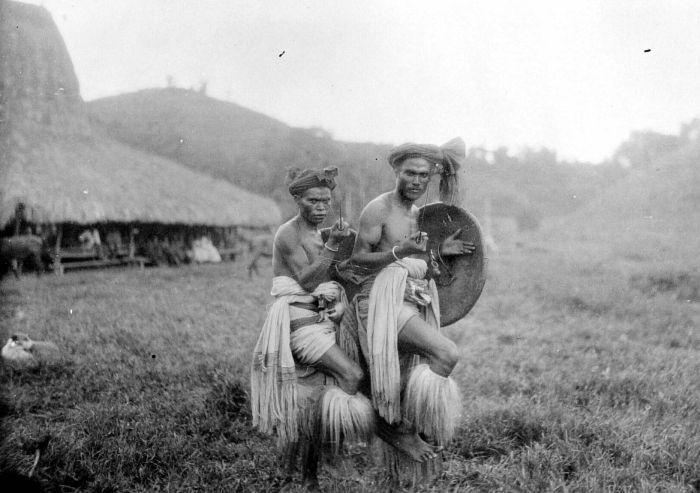
Sumba (south of Flores, reached by plane or biweekly ferry from Bali) is a very strange place and one of the most fascinating islands in Indonesia. Formerly known as Sandalwood Island, this 300-kilometer-long and 80-kilometer-wide island was once covered with pleasant-smelling sandalwood forest that were used to make incense for churches, mosques and temples in Asia and Europe. Almost all the sandalwood trees unfortunately are gone, much up in smoke, as Sandalwood is used in funeral pyres. The Dutch made a fortune not only trading sandalwood but also selling slaves and horse taken from the island.
Sumba is now famous for its horses and it superb style of ikat cloth. West Sumba is famous for its enormous megalithic tombs and traditional thatched and peaked huts raised on stilts. Timor is the principal island in the province in terms of population and it is here that the provincial capital of Kupang is located.
Located between the islands of Komodo and Sumbawa, Sumba has two distinct climates. The east of Sumba is dry and the mountainous landscape is dominated by grassland and small bushes. this region is conducive to raising horses, which the island is famous for. Here is Sumba’s highest peak, the Wangga Meti rising 1,225 meters above sea level. . The western side receives more rain, is more fertile and therefore has more inhabitants. It is dominated by flat fertile plains punctuated by valleys filled with jungles vegetation and rice terraces and hills with Sandalwood and cinnamon forests. The beaches are often outlined by cliffs.
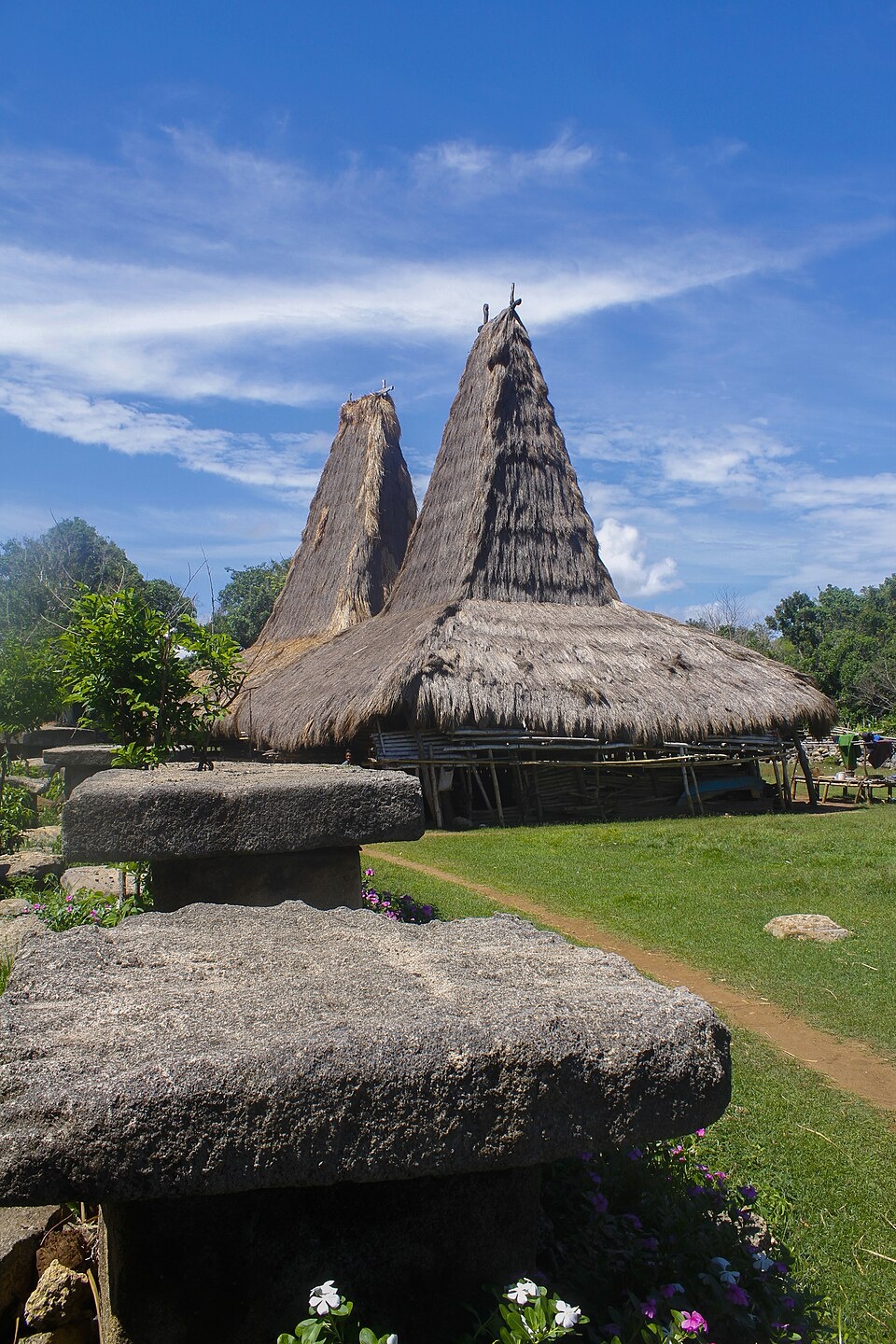
The capital of west Sumba is Waikabubak with its airport at Tambolaka, while the island’s largest town of Waingapu in East Sumba. In between are mostly villages where communities still adhere to the ancient belief of Marapu or ancestor worship of the megalithic era. Here you will find large, well carved megalithic tombs. Traditional clan houses are round with peaked thick thatched roofs resembling wide sunhats. West Sumba plants rice, while East Sumba is famous for its water buffaloes and ikat weaving. Sumba raises Indonesia’s best horses.
Sumba has a population of about half million people. Most of the residents are Christians or animists. Muslims are in the minority. The west side of the island, where two thirds of population still believe in spirits, is noted for its decorated stone tombs and houses which are adorned with buffalo horns from animals that were the victims of ritual sacrifice.
RELATED ARTICLES:
SUMBANESE: LIFE, RELIGION, TRADITIONAL HOUSES factsanddetails.com
SUMBA CULTURE: IKAT, CEREMONIAL CLOTHES, PASOLA HORSE FIGHTS factsanddetails.com
NUSA TENGGARA factsanddetails.com
PEOPLE OF NUSA TENGARRA (ISLANDS EAST OF BALI) factsanddetails.com
Sumbanese
The Sumbanese live on the island of Sumba. They are mostly a Malay people with some Melanesian blood and speak a language similar to that of the people on Flores. Although most are Christian traditional beliefs remain. The Sumbanese have unusual funeral customs and believe the first people of the world descended from heaven on a ladder and settled on the northern part of the island. [Source: Encyclopedia of World Cultures, East and Southeast Asia edited by Paul Hockings (G.K. Hall & Company, 1993) ~]
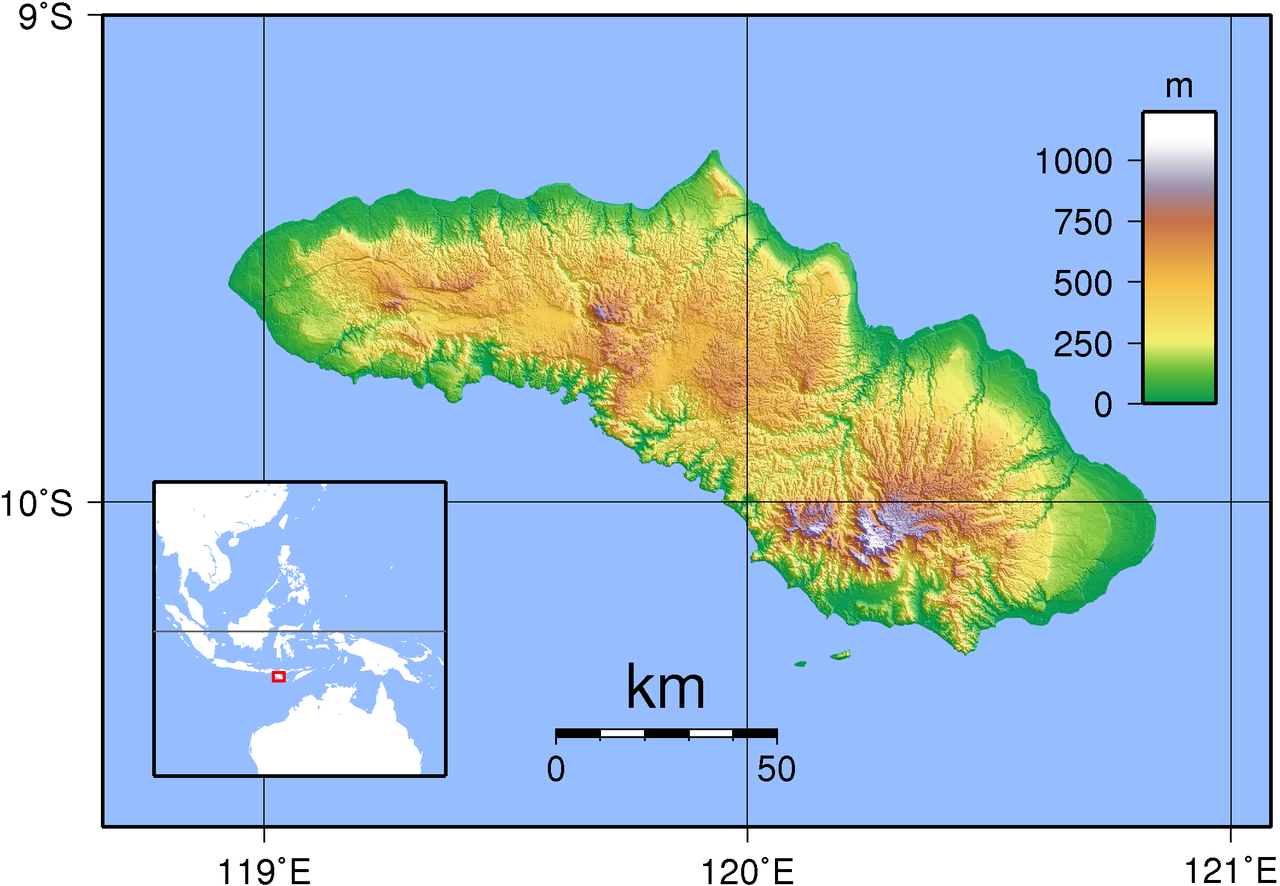
The Sumbanese have a caste system which divides people into royalty, commoners and slaves. Although the government has officially freed them, slaves still exists. They are not slaves as we think of them because they are not bought and sold. “Slavery” is best thought of as a station in life.Betel nut is widely chewed. It is given as a present and a welcoming gesture. Betel is a compulsory dish for visitors. You don't have to eat it but you have to be polite when rejecting it so as to respect local customs. In the old days betel nut was an important element of peace treaties. Chewing betel nut for the first time is regarded as a symbol of reaching adulthood. The stalk of the betel nut is said to represent the male sex organ; the nut, female ovaries. Lime is symbolic of sperm. The dead are sent off to the afterlife with a traditional betel nut bag. If someone offers you betel nut and you turn them down that is a great insult. ~
Traditional Sumbanese houses have high pointed roofs. Some villages are surrounded by stone walls, a reminder of when clan warfare was common on the island. The upper portion of the high thatched roofs are used to store sacred objects and house spirits. In a traditional village the houses are built facing one another around a central square with spiritual stones and stone slab tombs in the center of the square. In the old days the heads of slain enemies were hung from the “dead tree’ in the square and houses were built on hills for defensive purposes. ~
See Separate Article SUMBANESE factsanddetails.com
Tourism in Sumba
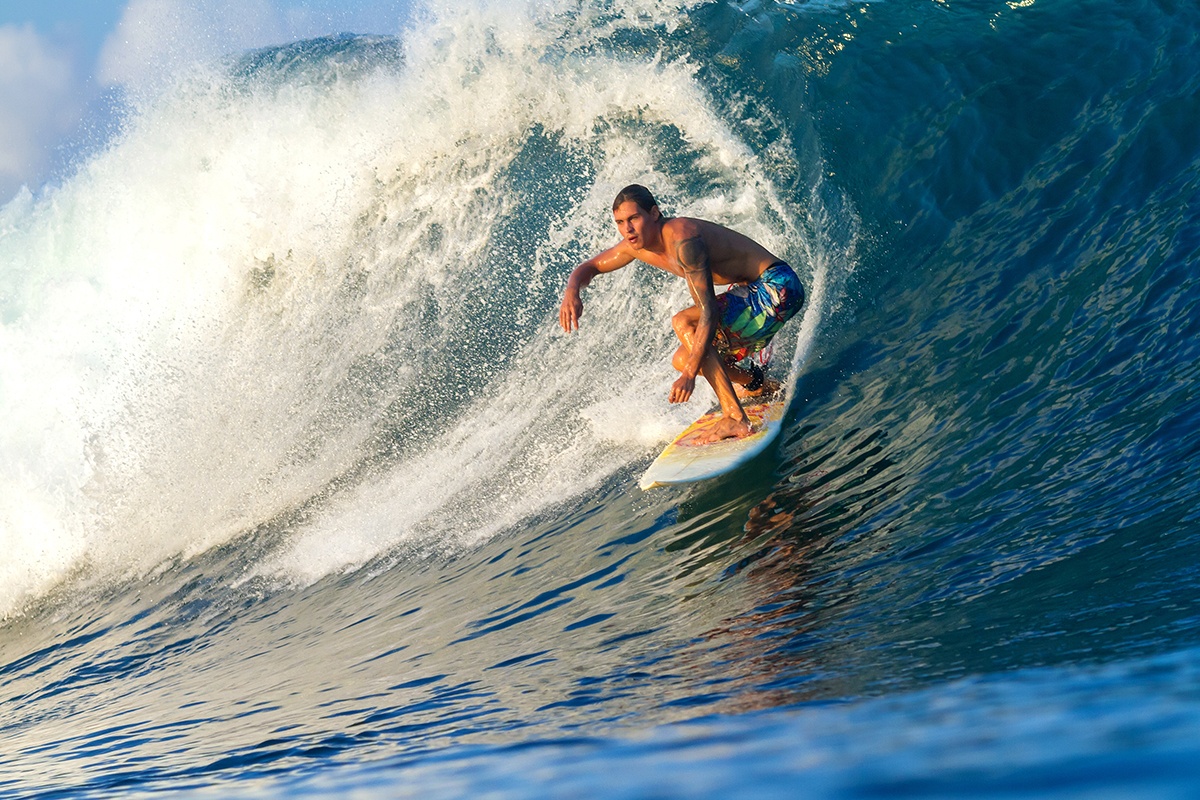
Many travelers to Sumba are surfers. Surfers like the big wave found on the southern coast of Sumba. Rua, Tarimban and Baing are recommended surfing spots on Sumba. The most interesting thing on the island however is an annual event called the "pasola" where hundreds of horsemen gather to fling spears at each other. See Festivals, See Minorities
Facing the wide Indian Ocean, Sumba is a surfer’s paradise. The large rolling Sumba barrels usually appear between May through October when waves can be either very high and strong or very flat as breaks are directly exposed to wide open ocean swells. This kind of powerful surf, however, though very challenging, should only be ventured by professionals. However, throughout the year, swells rise from on to two meters
Efforts to expand tourism on Sumba Island have included infrastructure development and improved transportation access, alongside efforts to preserve the ritual’s cultural integrity. While opinions differ on the impact of increased tourism, many Sumbanese leaders support careful development provided it respects local traditions and values. For visitors, the relative absence of mass tourism is often seen as part of Sumba’s appeal. [Source: Angela Dewanm AFP, April 2, 2014]
Although as yet little known on the tourist map, surprisingly the island of Sumba has a number luxurious, well frequented resorts. The Nihiwatu Resort, for example, describes itself as “the ultimate in privacy, exclusivity, views and romance”, and has been awarded Indonesia’s 2nd best hotel by Tripadvisor. Additionally there is the Sumba Nautil Resort both in the south west of Sumba, another favorite with surfers.
Accommodation: There are several hotels and inns you can find throughout the island of Sumba: West Sumba: 1) Hotel Manandang, Jl. Pemuda No.14 Waikabubak,, Tel. +62 387 22197; 2) Hotel Artha, Jl. Veteran Waikabubak, Tel. +62 387 21112; 3) Hotel Pelita, Jl. A. Yani No.2 Waikabubak, Phone:+62 387 21104; 4) Hotel Aloha, Jl. Sudirman No.26, +62 387 21245
East Sumba: 1) Hotel Merlin, Jl. Panjaitan No.25 Waingapu, Tel. +62 387 61300; 2) Hotel Sundlewood, Jl. Panjaitan No.23 Waingapu, Tel. +62 387 61887; 3) Hotel Elvin, Jl. A. Yani No 73 Waingapu, Tel. +62 387 62097; 4) Hotel Kaliuda, Jl. Lalamentik No.3 Waingapu, Tel. +62 387 61264; 5) Hotel Surabaya, Jl. El Tari No.2 Waingapu+62 387 61125; 6) Hotel Lima Saudara, Jl. Wanggameti No.2 Waingapu, +62 387 61083
Getting There: West Sumba airport is at Tambolaka, close to Waikabubak. Trans Nusa operates weekly flights to Sumba alternating between Tambolaka in the West and Waingapu in the East, so make sure where you will land. The Nihiwatu Resort charters weekly flights to Tambolaka. Merpati airlines has a regular flight to Waingapu airport. It provides flights from Kupang via Maumere and from Denpasar four times a week (Merpati Waingapu: 0387-61323). Merpati flies with the same frequency to Tambolaka in West Sumba, but from there, you have to take a four-hour drive to Waingapu. Although winding, the condition of the roads from Tambolaka to Waingapu are good. Meadows and savannas in East Sumba provide amazing scenery along the way. For sea transportation, motor boats from Ende and Aimere in Flores and from Kupang in Timor (ASDP-Waingapu: 0387-61533) are available. Pelni ships arrive in Waingapu twice a week.
East Sumba
Waingapu on the northern eastern coast of Sumba is the largest town and its seaport. Around two kilometers from Waingapu is the traditional village of Prailiu, and some 10 kilometers. away is the village of Kwangu, while 6 kilometers from the city is the village of Labanapu, all three are famous for their exquisite ikat weaving. Women of Sumba produce some exemplary hand woven cloth with motifs of stylized horses, animals and people, in dark blue, red and black, white and yellow natural dyes. Here visitors can watch the entire intricate and tedious process of ikat weaving. Look for the unique cloths with sewn in seashells. The best surf in the east is on Manggudu island, which has both left and long right waves.
The main thing that Waingapu has to offer are ikat shops. A number of traditional villages lie southeast of Waingapu. Among these that receive a fair number of visitors are Meleolo, 62 kilometers from Waingapu; Praiyawang; with an unimpressive line of stone-slab tombs, with one belongs to a former king to b a stone that fovers log and o’s meter thick. Umanara, Pau;. Mabili and Baing are
Waingapu has many hotels and home stays. Some commonly visited by vacationers are the Hotel Merlin (0387-61300), Hotel Sandlewood (0387-61887), and Hotel Elvin (0387-62097). Get Around You can find rental cars or cars hired with a driver at Waingapu airport. If you are a hotel guest, you can ask for a pick up service. Hotels generally provide rental cars or cars hired with a driver. In the city, there are motor taxis that can take you around. You can just stand by the street, and they will come to offer their services.
Sawu is an island famous for its beautiful ikat textiles.
Prailiu village
Prailiu (two kilometers from Waingapu) is one of the many traditional and exotic villages in Sumba. Traditional tall houses with sharp leaf roofs are still apparent here. They stand by zinc roof houses with different designs. The local government, assisted by the World Bank, is currently reconstructing local traditional houses in this village. In addition to traditional houses, Prailiu also has a number of original cemeteries. You can also find the famous traditional woven fabric and its weaving process here.
Although most of the local inhabitants are Christian, they still follow local traditions based on their original religion of Marapu. Tall houses and burial processes, for instance, are closely related with their traditional beliefs. Their traditional houses have three parts, representing local cosmology i.e. underground as the home of the dead, the middle part as the home for the living, and the roof as the home of the Gods.
Local inhabitants are familiar with tourists and researchers. You can see mothers weaving fabrics who can show you how to weave, spin, and make natural colored dies for yarn. Buying fabrics and various types of woven products are certainly what they expect from tourists. You can walk around the village while observing traditional houses and cemeteries full of carved materials and corpse preserving process.
Western Sumba
Western Sumba is the best place to witness Sumba culture. Here can be seen traditional villages, stone megalithic tombs even around West Sumba’s capital of Waikabubak, and watch rituals following the ancient belief of the islanders. The center of rituals Is the village of Tarung, a small remote hamlet west of Waikabubak, which the Sumbanese believe is their spiritual center. It is the high priest of Tarung who officiates at the yearly Wula Padu ceremony honoring the deified ancestors at the start of the Marapu New Year at the arrival of the rainy season. The Festival is held around October or November. Tarung is also the best place to see unusual Sumbanese houses. There are 33 thatched roof houses there. Within Waikabubak is a traditional kampung with traditional stone slab tombs and thatch houses.
Further west is one of the the areas of Indonesia least touched by the modern world. Women still go topless and have filed teeth. Men wear traditional turbans and sarongs. Kampung Pasunga, 22 kilometers from Waikabubak, boast one of the best collection of stone tombs. At the funeral for a group of five people 150 buffalo are sacrificed. In Kabonduk is the largest tomb. It weighs 70 tons and is said to have required 200 men to chisel it Within walking distance are more interesting villages. There are more interesting villages such as Pariolo and Kampung Sodan which are about 20 kilometers south of Waikabubak. Along the coast you can find some traditional houses in pleasant fishing villages. Many houses are decorated with buffalo horns and big jaws.
Once a year the exciting Pasola jousting festivals, the culmination of a series of fertility rituals are held on separate days at different locations on the island. Hundreds of warriors on horses charge into each other riding bareback, hurling spears. This festival, usually held between February and March, and is believed to bring fertility to the land.
The world has come to know West Sumba closer since the opening of the Nihiwatu Resort in the southwest of the island, some 1.5 hours from Waikabubak. This resort is known for its exceptional surf and beautifully inspiring surroundings. Surfing is best at the Kerewe, Marosi and Dasang beaches facing south where there are premier lefts and large double overhead surf.
Image Sources: Wikimedia Commons
Text Sources: Indonesia Tourism website ( indonesia.travel ), Indonesia government websites, UNESCO, Wikipedia, Lonely Planet guides, New York Times, Washington Post, Los Angeles Times, National Geographic, The New Yorker, Bloomberg, Reuters, Associated Press, AFP, Japan News, Yomiuri Shimbun, Compton's Encyclopedia and various books and other publications.
Last Updated January 2026