
STEPPE LEMMINGS
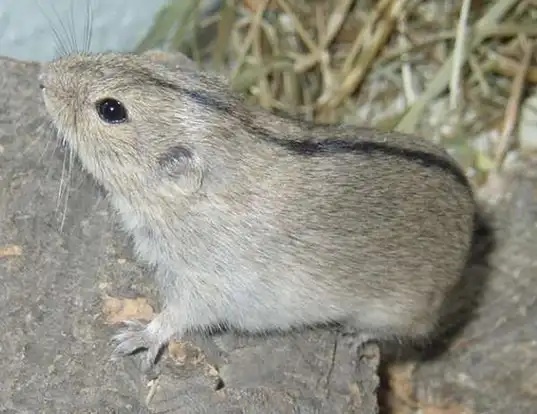
Steppe lemmings (Lagurus lagurus) are also known as steppe voles. Small rodents somewhat similar in appearance to the Norway lemming but perhaps more similar to voles than lemmings, they are more active at night than the day but are not entirely nocturnal. Their diet consists of shoots and leaves. They reside in steppes and semiarid environments in Russia, Ukraine, Kazakhstan, northwestern China, and western Mongolia. [Source: Wikipedia]
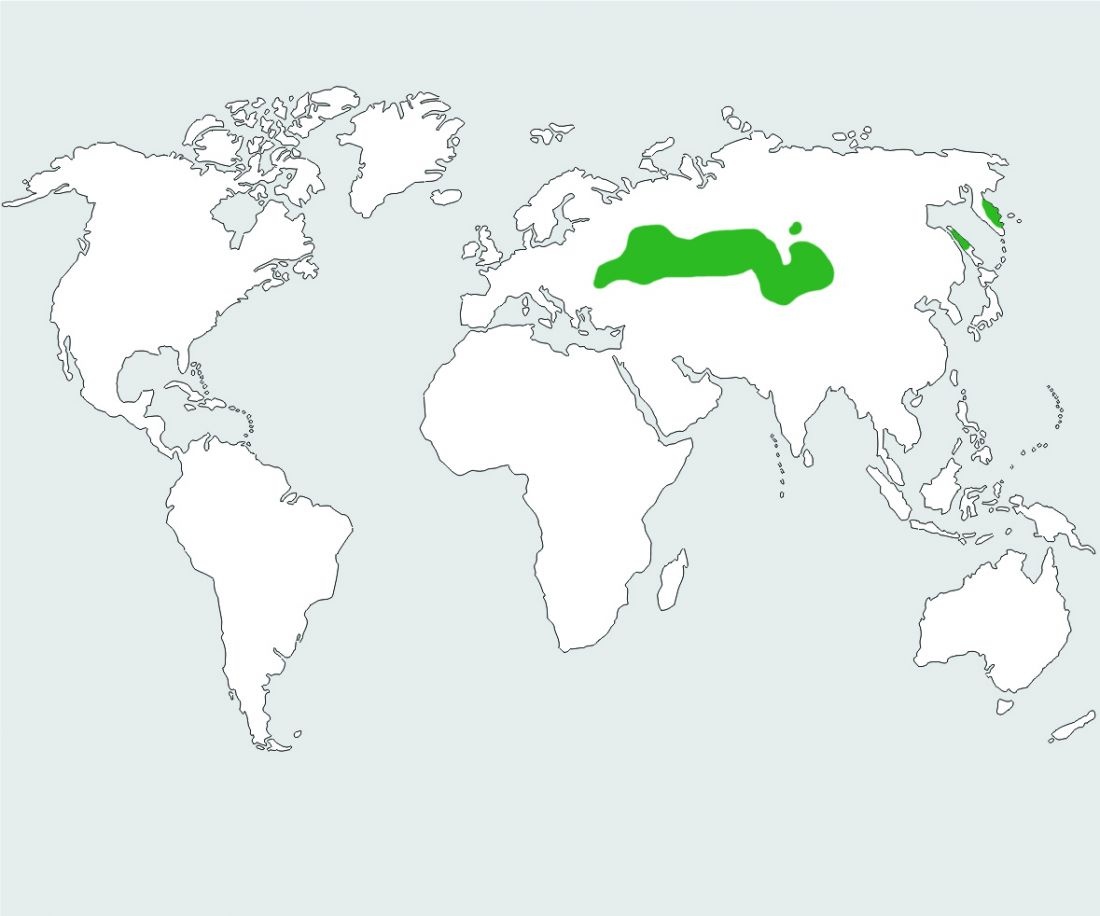
There are four subspecies of steppe lemming. 1) L. l. lagurus is found in Ukraine and central Kazakhstan. 2) The eastern subspecies, L.l. altorum, is found in southeastern Kazakhstan, northwest China, and Mongolia. 3) L. l. agressus, the northern subspecies, is found in the northern European portion of the former U.S.S.R. and in northern Kazakhstan. 4) The isolated subspecies L. l. abacanicus is found in the Minusinsk basin in Krasnoyarsk, Russia. [Source: Adam Rountrey, Animal Diversity Web (ADW) |=|]
Steppe lemmings not endangered. They are designated as a species of least concern on the International Union for Conservation of Nature (IUCN) Red List and have no special status on the Convention on International Trade in Endangered Species (CITES). Humans keep them as pets and utilize them for science. They have been used in research related to cancer and exposure to toxic chemicals. Steppe lemmings carry diseases such as tularemia (Francisella tularensis) and the plague (Yersinia pestis). Incidence of these diseases is known to increase during years of high vole populations. Also, steppe lemmings can eat crops and pastures used by livestock.
RELATED ARTICLES:
LEMMING BOOM-AND-BUST REPRODUCTION AND MYTHS ABOUT MASS SUICIDE factsanddetails.com
LEMMING SPECIES factsanddetails.com
NORWAY LEMMINGS: CHARACTERISTICS, BEHAVIOR AND REPRODUCTION factsanddetails.com
Steppe Lemming Habitat and Where They Are Found
Steppe lemmings is found on the steppes of Eurasia from the Dnieper River of Ukraine in the West to the Yenisey River northeast of Kazakhstan in the East. The range extends through Kazakhstan into northwest China and northern Mongolia reaching its southern limit at the Tien Shan Range. The northern limit of their range occurs at about 55ºN. Fossil remains dating to the Pleistocene Period (2.6 million to 11,700 years ago) have been found as war west as France and Britain. [Source: Adam Rountrey, Animal Diversity Web (ADW) |=|]
Steppe lemmings inhabits Eurasian steppes, feeding on grasses and herbs, and depending on the cover these plants provide to avoid predation. Steppe areas are regions with sufficient rainfall to support grasses, but too little moisture to support forest growth. Steppe lemmings are found in particular abundance in areas of mixed feather grass and sheep’s fescue, but also in growths of wormwood (Artemesia). When feather grass dominates the flora, lemmings tend to be found in places lacking vegetation, such as in rocky areas. In general they prefer loose soils that allow for easier burrowing. |=|
Steppe lemmings live at elevations up to 4000 meters (13,123.36 feet). When living near agricultural lands, they sometimes make themselves at home in fields and have been to make nests in storage buildings. Plowing however, damages their burrows so they must frequently make temporary moves away from the cultivated fields. This condition leads to relatively low populations in agricultural areas. |=|
Steppe Lemming Characteristics
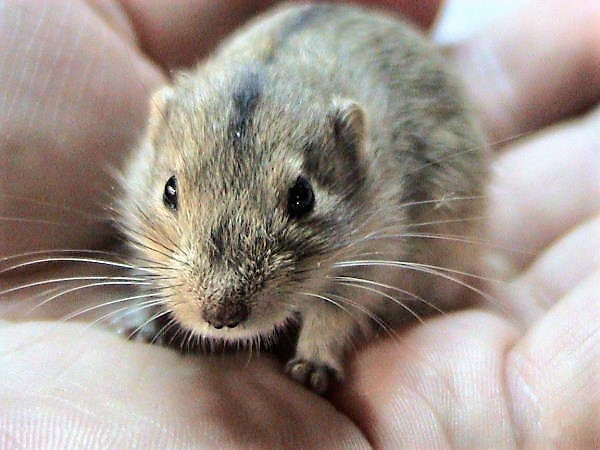
Steppe lemmings are very small. They range in weight from 22 to 34.8 grams (0.78 to 1.23 ounces) and have a head and body length ranging from 8 to 12 centimeters (3.15 to 4.7 inches). Their weights vary seasonally with those in winter being about a third lighter than those in the summer. Sexual Dimorphism (differences between males and females) is present: Females are larger than males and have eight teats. [Source: Adam Rountrey, Animal Diversity Web (ADW) |=|]
Members of genus Lagurus (steppe lemmings) can be distinguished from true lemmings (Lemmiscus) such as the Norway lemming by having a tail that is shorter than the hind foot, with lengths ranging from seven to 19 millimeters. The eyes are small, and the external parts of the ear are short and rounded. The back fur of steppe lemmings is gray to gray-brown with a central black stripe running longitudinally, while the belly fur is light in color. . The feet are almost completely covered in fur and have four pads.. |=|
Geographic variation includes trends of increasing body size and narrowing of the dorsal stripe from west to east. Individuals also tend to have paler fur to the east and south. 1) L. l. lagurus has a narrow dark brown spinal stripe; ventral fur gray to yellow; tail white; winter fur more yellow than summer fur. 2) L. l. agressus has a more prominent black spinal stripe; darkest fur; tail fur darker in color than L. steppe lemmings. 3) L. l. abacanicus has a larger skull than others; larger bullae; fur more gray than L. steppe lemmings; very short tail. L. l. altorum has the lightest fur color (pale yellow) and a dark spinal stripe/
Lemmings and voles have have lifespans are approximately 0.5 to 2.0 years. One source lists the maximum longevity for Steppe lemmings as 3.8 years. Most probably live no longer than one year.
Steppe Lemming Diet, Predators and Ecosystem Impacts
Steppe lemmings are herbivores (eat plants or plants parts). They feed mainly on above ground portions of plants and have a preference for Austrian wormwood (Artemisia austriaca), but also consume a variety of herbs, grasses, lichens, roots, tubers, and bulbs. The average daily food intake is 10.7 grams in the summer. At that time they eat only the best portions of plants. The remains are left out or cached away into the burrow to be eaten when food is more scarce. Steppe lemmings are able to process large amounts of coarse vegetation because they possess continuously growing molars and incisors. |=|
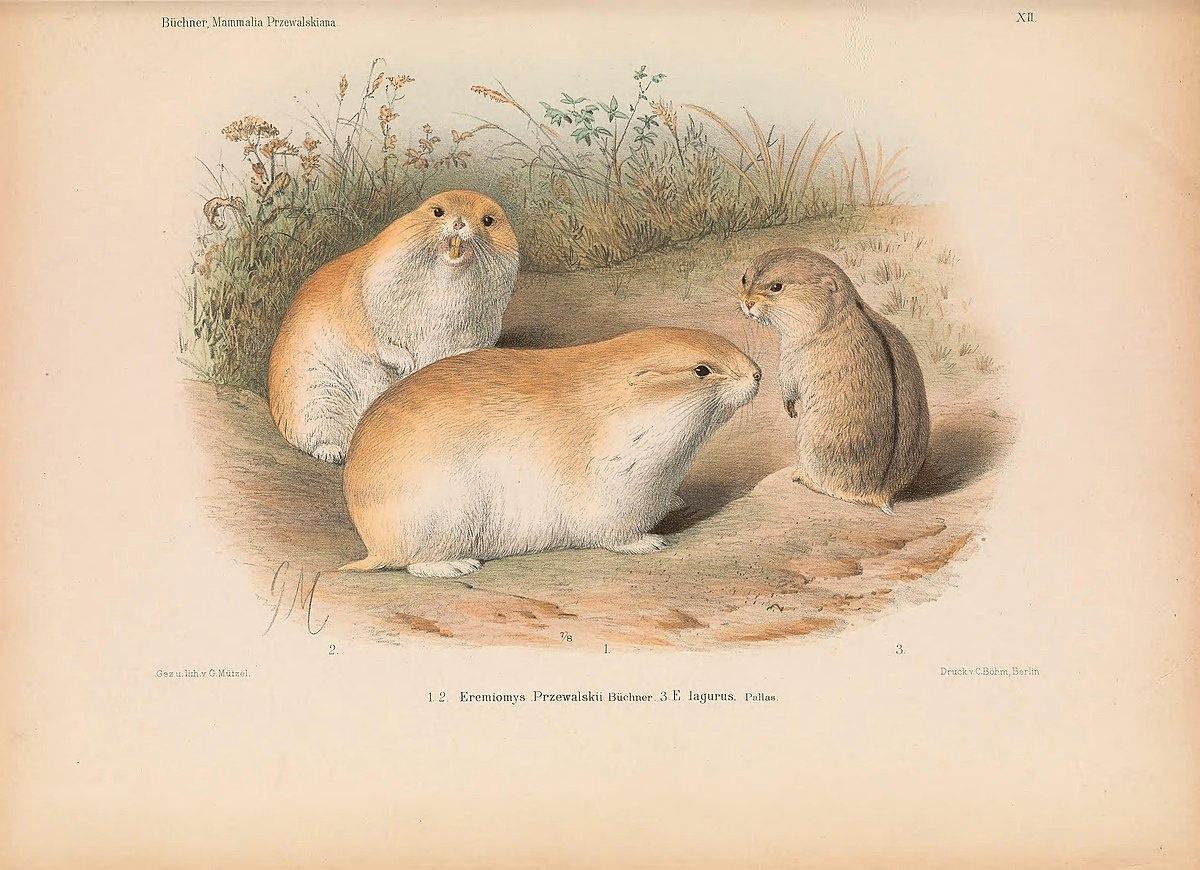
Steppe lemmings are prey for many predatory mammals and birds including weasels, ermines (stoats), steppe polecats, foxes, domestic cats, eagle owls, buzzards, harriers, and kestrels. Their fur coloration provides good camouflage. They avoid predation by lying flat on the substrate, staying under the cover of vegetation, fleeing to their burrows, or hiding in natural crevices or temporary burrows. [Source: Adam Rountrey, Animal Diversity Web (ADW) |=|]
Steppe lemmings are important to steppe ecosystems. They are a food source for many steppe predators and their presence in an area can limit the number of other voles. On the other hand the presence of steppe lemmings can also be destructive to the ecosystem. In some cases they reduce vegetation so that only the hardiest of plants such as wormwood remain. In extreme situations, when their populations boom and there are not enough predators to keep their numbers in check, Steppe lemmings can consume so much vegetation they can transform steppe into semi-desert.
Steppe Lemming Behavior
Steppe lemmings are terricolous (live on the ground), fossorial (engaged in a burrowing life-style or behavior, and good at digging or burrowing), crepuscular (active at dawn and dusk), nocturnal (active at night) but often remain active through the day, motile (move around as opposed to being stationary), migratory (make seasonal movements between regions, such as between breeding and wintering grounds), territorial (defend an area within the home range) and social (associates with others of its species; forms social groups). Females engage in competition for resource-rich territories; competition between males is focused on gaining access to females. |=|[Source: Adam Rountrey, Animal Diversity Web (ADW) |=|]
Steppe lemmings usually stays within six meters of theirits burrow. They tend to deplete the food supply around the burrow, then begin to maintain peripheral, temporary burrows that allow them to forage farther away. Adam Rountrey wrote in Animal Diversity Web: A study of the spatial distribution of Steppe lemmings revealed differences in distribution when population densities differed. In the spring, when population densities were low (6.1 individuals per hectare), Steppe lemmings lived in territorial, family groups consisting of about six individuals. Each family group occupied an average territory of 0.2 hectares, and was separated from other groups by 73.3 meters. In the autumn, when population densities were higher (34.0 individuals per hectare), no family groups could be distinguished.
Steppe lemmings are burrowers that dig two types of burrows, domicile burrows and temporary burrows. The domicile burrow commonly has two to three openings, but only one distinct main entrance surrounded by a mound of raised earth. The main passage heads down at an angle of 30 to 40 degrees to a depth of up to 90 centimeters. A spherical nest area, located in the main passage, varies in size from about eight to 12 centimeters in diameter. There are also numerous blind ended passages, used when the animal is threatened, that extend up from the main burrow to within several centimeters of the surface. Separate, shallower, temporary burrows located within three meters of the main burrow are also used in times of danger. |=|
Lemmings are famous for their mass migrations. Steppe lemmings, though they are not true lemmings, also participate in mass migrations. Smaller scale migrations often occur locally as populations move from one food source to another due to seasonal changes in availability. However, mass migrations can occur in years when population densities rise too high due to mild autumns that allow continued breeding, or due to a lack of predators.
Steppe lemmings sense using vision, touch, sound and chemicals usually detected with smell and communicate with sound and chemicals. Scent marking is used to delineate territory and establish dominance. Calls are used for various social interactions including warning others of danger and making threats. Female steppe lemmings are particularly vocal just prior to giving birth.
Steppe Lemming Mating, Reproduction and Offspring
Steppe lemmings are polygynandrous (promiscuous), with both males and females having multiple partners, and females have an estrus cycle, which is similar to the menstrual cycle of human females. The length of the estrus cycle is seven days, and implantation takes place six or seven days following fertilization. Steppe lemmings engage in seasonal breeding and year-round breeding. They can breed six times per year, mainly between April and September, but some mating may occur in winter. The average gestation period is 20 days. The number of offspring ranges from three to 7, with the average number of offspring being 4.5. [Source: Adam Rountrey, Animal Diversity Web (ADW) |=|]
Male and female steppe lemmings are only found living together in shared burrows before the birth of young. Following the birth, males move to another burrow and are not involved in raising the young. Some females go into estrus allowing immediately following birth. The combination of early sexual maturation, short gestation periods and ability to become sexually receptive following birth, explains why steppe lemming can have such high reproductive rates. On average females reach sexual or reproductive maturity between 21 to 140 days; males do so at four to six weeks. The variability in sexual maturation age for females is due largely to delayed maturation in those females born in late autumn.
During a normal breeding season females produce about six litters each consisting of three to seven young. Litters tend to be largest in the spring. Young are altricial, meaning they are relatively underdeveloped at birth. At birth young weigh about one gram each. Parental care is provided by females in a nest area within the burrow. The nest is spherical in shape and lined with soft grasses and usually located at a depth of 25 to 30 centimeters below the surface. Female steppe lemmings are known for being very aggressive when protecting young. Weaning probably occurs after 12 to 14 days.
Image Sources: Wikimedia Commons
Text Sources: Animal Diversity Web animaldiversity.org ; National Geographic, Live Science, Natural History magazine, David Attenborough books, New York Times, Washington Post, Los Angeles Times, Smithsonian magazine, Discover magazine, The New Yorker, Time, BBC, CNN, Reuters, Associated Press, AFP, Lonely Planet Guides, Wikipedia, The Guardian, Top Secret Animal Attack Files website and various books and other publications.
Last updated June 2025