
MARMOTS
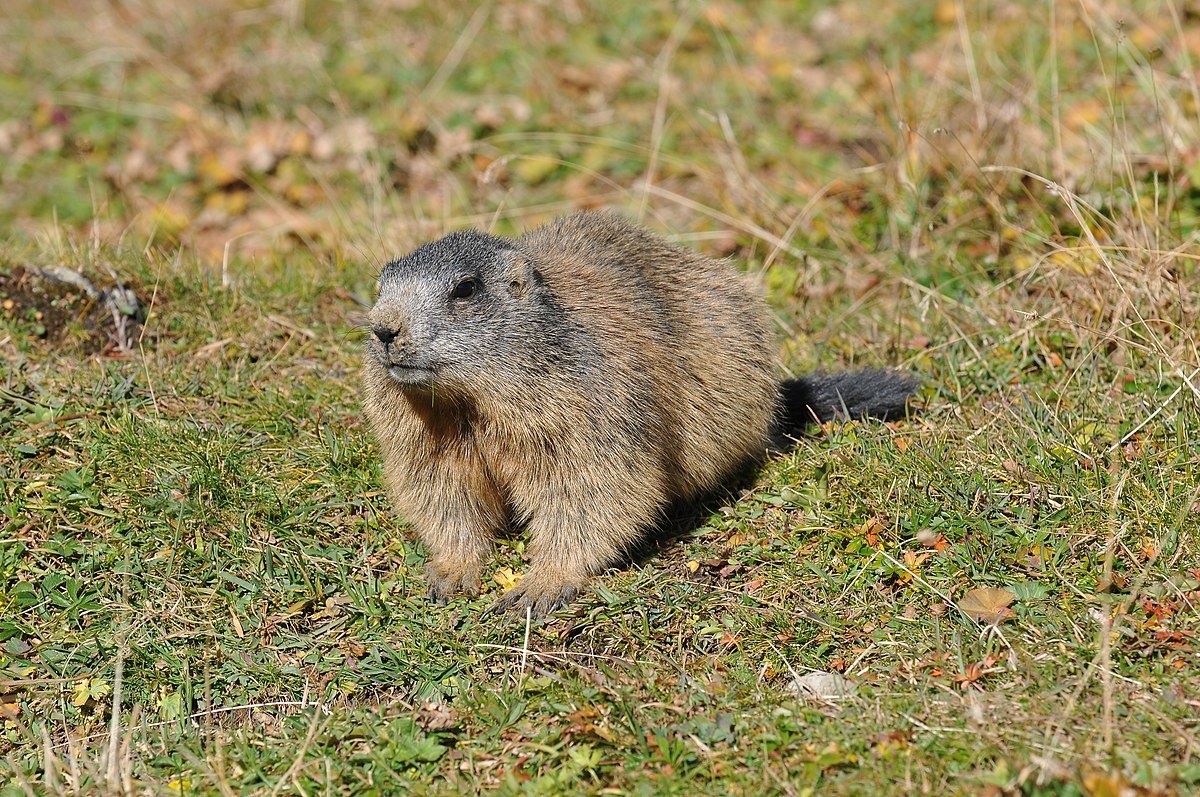
Marmots (genus Marmota) are giant ground squirrels found primarily in North America and Eurasia. Marmots are the heaviest members of the squirrel family. There are 14 species of them. Some marmot species live in mountainous areas, such as the Deosai Plateau in Pakistan and Ladakh in India and the Alps, Carpathians and Tatras in Europe. Other species prefer rough grassland and can be found widely across the Eurasian Steppe. Slightly smaller and more social prairie dogs are not classified in the genus Marmota; they are in the related genus Cynomys. [Source: Wikipedia]
Marmots are rodents that are about the size of small dogs.The origin of the term "marmot" is not known for sure. It may have arisen from the Gallo-Romance prefix marm-, meaning to mumble or murmur Another possibility is postclassical Latin, mus montanus, meaning "mountain mouse". According to marmotburrow blog: “All marmots live in the northern hemisphere. Marmots live in a variety of social systems ranging from the mostly solitary groundhog to those highly social species where offspring from several years live together with their parents and, in the case of alpine marmots, may help rear younger siblings. When alarmed by predators (raptors, carnivores, people) all marmots whistle or chirp. These species-specific vocalizations are referred to as alarm calls. [Source: marmotburrow.ucla.edu]
Marmots have been known since antiquity. The French ethnologist Michel Peissel believes the the story of the "Gold-digging ant" reported by the Ancient Greek historian Herodotus, who lived in the fifth century B.C., is rooted in the behavior of Himalayan marmots of the Deosai Plateau and the habit of tribes there such as the Brokpa to collect the gold dust excavated from their burrows. Some historians believe that Strabo's léōn mýrmīx and Agatharchides's myrmīkoléōn were most likely marmots. Some historians and paleogeneticists have postulated that the Yersinia pestis variant that caused the Black Death pandemic in Europe and Eurasia in the 14th century originated from a variant for carried by marmots in China.
RELATED ARTICLES:
MARMOTS IN CENTRAL ASIA: CHARACTERISTICS, BEHAVIOR, SPECIES, RANGE factsanddetails.com
MONGOLIAN MARMOTS: CHARACTERISTICS, BEHAVIOR, THE PLAGUE AND REPRODUCTION factsanddetails.com
HIMALAYAN MARMOTS: CHARACTERISTICS, BEHAVIOR AND REPRODUCTION factsanddetails.com
BLACK-CAPPED MARMOTS: CHARACTERISTICS, BEHAVIOR AND REPRODUCTION factsanddetails.com
Marmot Characteristics and Diet
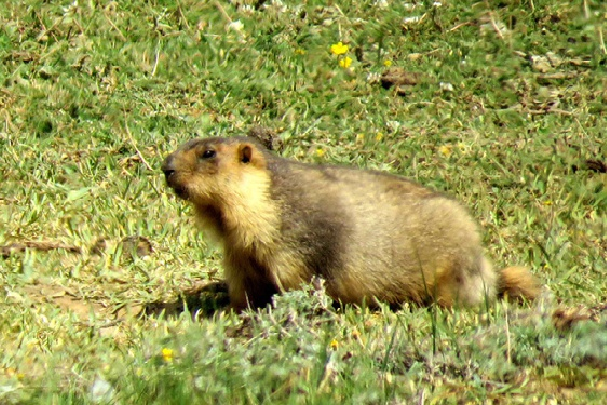
Marmots are large and heavy rodents that weigh three to seven kilograms (6.6 to 15.4 pounds), depending upon the species, are their bulky body and head are 30 to 60 centimeters (11.8 to 23.6 inches) in length and have a short, bushy tail between 10 to 25 centimeters long. Marmots are well suited for life in cold, where most of them live. They have small fur-covered ears, short, stocky legs, and long, thick fur that is slightly coarse. Otherwise, marmots have solid, box-shaped bodies, with the legs apart. Their hind legs are shorter than their forelegs. Their bodies are streamlined and flexible, ideal for pushing one’s way through narrow holes. They can change direction during sharp turns. They also have strong claws for digging. [Source: Encyclopedia Britannica]
Marmots may be brown or yellowish brown (usually frosted with buff white). Coloration roughly corresponds with their surroundings, with species living in more open habitat more likely to have a paler color, while those sometimes found in well-forested regions tend to be darker. Fur color depends on the season. Winter coats tend to be darker. During the spring and early part of the summer, marmot coats have been scorched by the sun and are generally lighter.
Marmots are the second largest rodents after beavers in the northern Northern Hemisphere. Capybaras and some porcupines, which are also rodents, are also bigger. The body shape and size of marmots reflect their fossorial (burrowing) and spending a lot of time underground. life. All four feet have five digits with sturdy, blunt claws. Pads on the digits are very well developed. These pads function to help rake up earth and compensate to some extent for the complete or partial reduction of the fifth digit. Other digits are long, flexible, and capable of holding thin plant stems. The skulls of marmots are distinguished from those of other sciurids (squirrels) by their large size, large postorbital processes around the eyes, and relatively small cranium. [Source: Benjamin DeWeerd, Animal Diversity Web (ADW) /=]
Marmots are primarily herbivores (eat plants or plants parts), and are also classified as folivores (eat leaves). They consume a variety of plant species — namely those found in their habitats. These include greens and many types of grasses, berries, lichens, mosses, roots, and flowers. Seasonal differences in forage behavior have been observed. During feeding, a marmot moves slowly, turning its head alternately from one side to the other. In addition to plant materials, most marmot species have been found to eat insects and their larvae, carrion, small rodents located while burrowing, and bird eggs. [Source: Benjamin DeWeerd, Lindsey Bylo, Animal Diversity Web (ADW) /=]
Marmots are prey for many carnivores. Adult can put up a good fight and many predators go after young marmots, especially during the first weeks after their emergence from their burrows. In some places, bears dig out marmot burrows. The main predators of Eurasian marmots are stray dogs and wolves. Marmots react to predator appearances by emitting alarm calls, and immediately running towards their burrows. When predators are far away they stop near an entrance to the burrow as the predator approaches closer, constantly keeping an eye on it.

Marmot Species
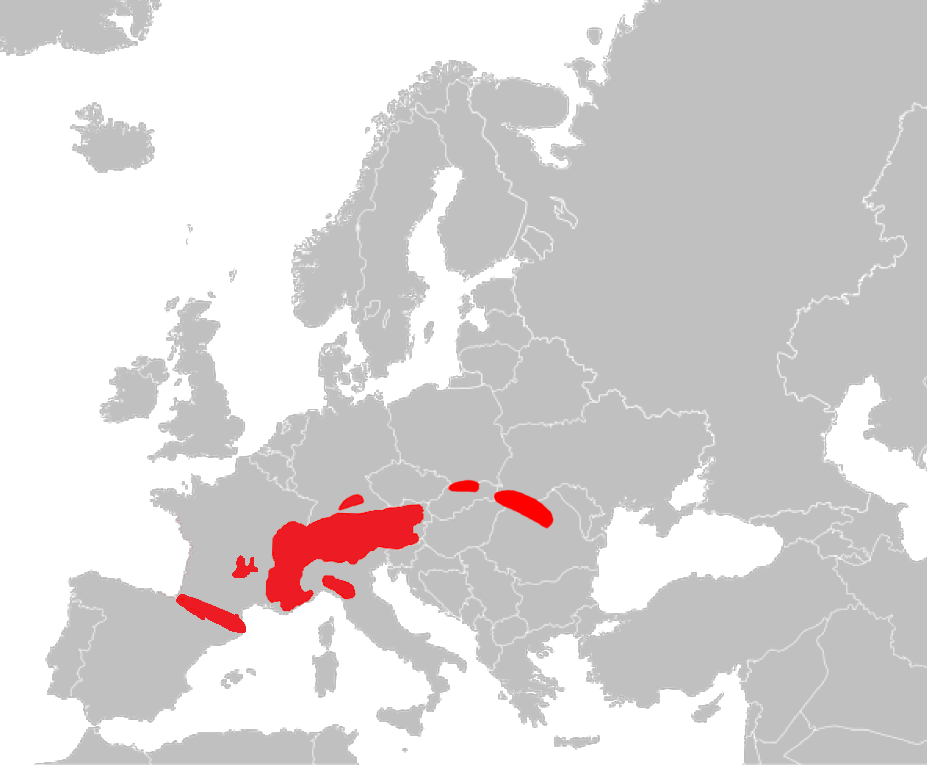
Marmot Species (See Map Above):
Alpine marmots (Marmota marmota) live in Europe only in the Alps, Carpathian Mountains, Tatra Mountains, northern Apennine Mountains, and reintroduced in the Pyrenees.
Menzbier's marmots (Marmota menzbieri) central Asia.
Tarbagan marmots (Marmota sibirica)a re also known as tarvaga and Mongolian marmots. They live in Siberia..
Gray marmots (Marmota baibacina) are also known as Altai marmots. They live in Siberia.
Bobak marmots (Marmota bobak) live in eastern Europe to central Asia.
Black-capped marmots (Marmota camtschatica) live in eastern Siberia.
Long-tailed marmots (Marmota caudata) are also known as red marmots and golden marmots. They live in central Asia.
Himalayan marmots (Marmota himalayana) live in or Tibetan snow pig live in the Himalayas.
Forest-steppe marmot live in (Marmota kastschenkoi) south Russia.
Alaska marmots (Marmota broweri) are also known as Brower's marmots and Brooks Range marmots. They live in Alaska.
Groundhogs (Marmota monax) are also known as woodchucks and whistle pigs. They live in Canada and eastern United States.
Hoary marmots (Marmota caligata) live in northwestern North America (Alaska, Yukon, British Columbia, Alberta, Washington, Montana).
Yellow-bellied marmots (Marmota flaviventris) live in southwestern Canada and western United States.
Olympic marmots (Marmota olympus) live in endemic to the Olympic Peninsula, Washington, United States.
Vancouver Island marmots (Marmota vancouverensis) live in endemic to Vancouver Island, British Columbia, Canada.
Marmot Behavior
Marmots typically live in burrows (often within rockpiles, particularly in the case of the yellow-bellied marmot), and hibernate there through the winter. When they move, from a distance it looks like they crawl on their bellies. Most marmots are highly social and use loud whistles to communicate with one another, especially when alarmed. All marmots have cheek and anal glands which they use to scent mark rocks and vegetation.
Marmots are the largest mammals that engage in true hibernation (the state that some animals enter during winter in which normal physiological processes are significantly reduced, thus lowering the animal’s energy requirements).. Larger "hibernators" such as bears do not have the same physiological characteristics as obligate hibernating animals such as assorted rodents and bats.
Marmots are true burrowers, who live in complex underground system of tunnels and dens. Even during the summer, they generally spend 16 to 20 hours a day in dens. These burrows have important ecosystem roles. They aerate soil and help water drainage. The earth removed when the burrows are dug encourages succession and considerably increases the variety of vegetation in their habitats. [Source: Benjamin DeWeerd, Animal Diversity Web (ADW) /=]
Marmots may not emerge from hibernation for six months or longer. Marmots carefully choose optimal sites for their burrows, generally in places where snow cover endures and prevents the soil from freezing deeply. The chamber in which marmots hibernate is called the hibernaculum. A special plug composed of earth, dung, and gravel is jammed in the entrance, which creates a microclimate in the hibernaculum, allowing warmer air to be trapped inside, that endures during the entire hibernation period. To produce a plug, many marmots use their front legs and the muzzle to make earth balls 0.5 to eight centimeters in diameter. These balls are jammed into the entrance of the winter burrow, and press in place with the marmot’s muzzle. /=\
Marmots exhibit a variety of social structures, from nearly solitary, as in the case of groundhogs, to extremely social, with overlapping generations inhabiting the same burrow system as is the case with hoary marmots. In general, the shorter the summer season, and the longer the period of hiberation, the more social the marmot species are /=\
See Separate Article: HIBERNATION: PROCESSES, DIFFERENT TYPES, ANIMALS factsanddetails.com
Marmot Mating and Reproduction
Mountain- dwelling marmots tend to be polygynous (males have more than one female as a mate at one time). There is often a period of courtship behavior, which may include mutual sniffing, locking teeth, or sparring. During copulation, which may occur several times per day, the male typically uses his teeth to hold the female by the skin of her neck or head. [Source: Benjamin DeWeerd, Animal Diversity Web (ADW) /=]
Copulation of some mountain-dwelling marmots may occur prior to emergence from the burrow in spring. This seems to be controlled by the length of the season, with shorter summers being associated with in-burrow breeding. In some species, such as the black-capped marmot, females may not emerge from the burrow until a few days before they give birth.
Marmot groups living northern latitudes were long thought to be monogamous due to a lack of resources and food. A 2006 study determined that this was not true among some species of marmots. The study suggested that smaller social groups of marmots tended to be monogamous while marmots in large social groups were more likely to be promiscuous. [Source: Lucas McGann, Animal Diversity Web (ADW) /=]
Alpine Marmots
Alpine marmots (Alpine marmots) are large ground-dwelling marmots, squirrels and rodents. They are found in relatively high numbers in mountainous areas of central and southern Europe at heights between 800 and 3,200 meters (2,600–10,500 feet) in the Alps, Carpathians, Tatras and Northern Apennines. In 1948 Alpine marmots were reintroduced with success in the Pyrenees, where the alpine marmot had disappeared at end of the Pleistocene Period, which lasted until 11,700 years ago. On the International Union for Conservation of Nature (IUCN) Red List Alpine marmots are classified as a species of “Least Concern”. [Source: Wikipedia]
Alpine marmots are herbivores (eat plants or plants parts), eating mostly leaves and blossoms. Because they don't spend much time chewing, Alpine marmots prefers softer stalks in order to ease digestion. Like many rodents, alpine marmots are able to eat plants that would poison other mammals. Alpine marmots generally live 400 to 500 meters (1,300 to 1,650 feet) above the forest line and prefer Alpine meados. They are adapted to cold climates and are able to live in places where there is little vegetation and can burrow in gravelly and frozen ground. Their average lifespan in captivity is 18 years. They may live up to 15 years in the wild. [Source: Johanna Landeryou, Animal Diversity Web (ADW) |=|]
Alpine marmots have plump and sturdy bodies. They stand at a height of 18 centimeters )7 inches) at the shoulder and weigh an average of 3.5 kilograms (7.7 pounds). Their weight varies greatly during the year. Before hibernation in autumn, the average weight of males is 4.54 kilograms and that of females is 4.35 kilograms. In the springtime, the average weight of males is three kilograms and females is 2.9 kilograms. The fur color of alpine marmots varies from a sandy blonde to reddish to dark gray. The thumb of alpine marmots has a nail, specialized for digging, while the other digits have claws. |=|
In Germany, alpine marmots are considered a delicacy. Residents of the Alps like to use their orange-yellow teeth to decorate belts. These marmots are widely hunted. In Austria and Switzerland alone, 6,000 alpine marmots are killed annually. "Mankei fat" or marmot fat has long been used as a remedy for arthritis pain. Alpine people attribute the ability of marmots to go through the long winter in their moist cold dens and never show signs of rheumatism to their fat. For around 100 years, people have rubbed marmot fat on themselves as a treatment for arthritis.
Alpine Marmot Behavior
Alpine marmots are gregarious and regarded as having a friendly dispositions. They lives in monogamous family groups, called colonies, with 15 to 20 individuals consisting of a parental breeding pair and many of their offspring. Young are play a lot and all ages engage in nose to nose greetings. They care for each other by grooming and protect one another with a social system in which one individual is always on "guard-duty" for the group. If potential trouble is spotted the "guard" warn the colony with a high-pitched whistle. Although alpine marmots are friendly within their families, they become hostile when a stranger enters their territory. Females can be particularly ferocious when guarding their territory. [Source: Johanna Landeryou, Animal Diversity Web (ADW) |=|]
Alpine marmots sense using touch and chemicals usually detected with smell. They marks their territory by smearing a secretion from their cheek glands onto rocks and trees. Anal glands emit a foul-smelling substance used during fights and defense. Alpine marmots make their homes in underground burrows, which are passed down from one generation to the next among family members. In these burrows, 2.5 to three meters (8-10 feet) of tunnels lead to a big room called a den, where the whole family hibernates during winter months.
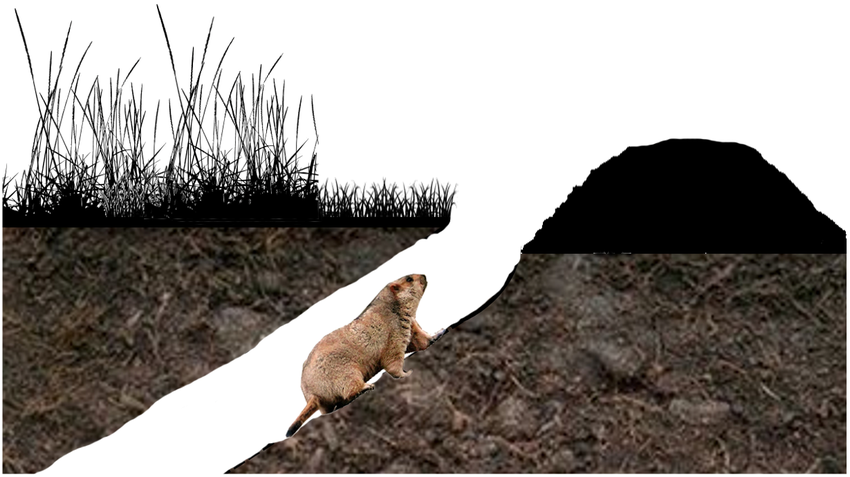
Alpine marmots enage in hibernation (the state that some animals enter during winter in which normal physiological processes are significantly reduced, thus lowering the animal’s energy requirements), They spend all spring and summer eatung, getting fattened up in preparation for winter. Around October, these animals enter their burrow and close the entrance with hay and grass. When hibernating their temperature drops from 36̊C (97̊F) to 5̊C (41̊F) and their breathing slows to two to three breathes per minute. Adult temperatures are warmer than their young, so parents and older offspring huddle close to young to keep them warm. About once every 10 days the den occupants wake up for a short while. This waking brings up their temperature and keeps them from freezing.
Alpine marmots mates within the first few days after emerging from hibernation in May. Reproducing is not necessarily annual and depends on the weight of the dominant female of a group — as she is the only female that reproduces — after hibernation. Gestation last approximately 33-34 days. Litters range from one to seven offspring, each of which weighs around 29 grams at birth. Young are altricial, meaning they are relatively underdeveloped and their eyes are close at birth. Hair begins to grow after five days and eyes open around the 23rd day. After birth, the young are hidden in burrows by their mother and do not exit until they are weaned (around 40 days old). Young become sexually mature around two years of age.
Alpine Marmots Prepare to Hibernate
On marmots that live in the European Alps, David Attenborough wrote: They “store food within their own bodies as fat, Their feeding season is a brief one. On the higher mountain slopes, the vegetation may only be free of snow for a mere five months of the year, so during this brief summer marmots feed intensively, gathering not only seeds that appear in the last weeks but flowers and leaves. [Source: “Life of Mammals” by David Attenborough]
“Marmots live in families of up to twenty individuals — a female and her mater, together with one or two young that were born at the beginning of summer, and sometimes one or two of the female’s sisters, each family has its own pasture and defends it by marking stones around the boundaries with a smear of a smelly oil from glands on their cheeks. If a neighbor recklessly ignores this signal and seems intent in trespass, one or two of the owning family will drive it away, gnashing their front teeth and calling loudly.
“By the end of the summer, the adults in the marmot family will have accumulated substantial reserves of fat and may be almost 50 percent heavier that they were at beginning of the season. Last year’s young have grown fast and are now fully adult. Shortly after mating, the dominant female in the group begins to behave in an odd manner, attacking her young in a seemingly very ill-tempered way. The young females become so stressed that even though they may have mated, they seldom become pregnant and if they have conceived they will abort. The advantage of the dominant female behaving in this manner will not become apparent for some weeks.
“As the first snows begin to fall, the fat marmots retire to their family hole. They block its entrance and retreat to a deep chamber and there they curl up in one large huddle. The snow lies thick on the slopes above and the marmots switch off most of their bodily processes and go into a deep sleep They hibernate. Their breathing slows to two or three breaths a minute. Their body temperature drops from 36 degrees C to a mere five. If they were to cool any further, they would die. They are fueled entirely by their fat reserves,
“But this year’s babies have virtually none, They have not had sufficient time to accumulate any. They are dependant on the adults to maintain that crucial five degrees above freezing and they snuggle up close to their mother to share her warmth. Now the reason why the dominant female inhibited breeding by her juniors becomes apparent. If there were more youngsters they would not enough warmth to sustain them for the six months that they will have to spend on this chilly dormitory
Image Sources: Wikimedia Commons
Text Sources: Animal Diversity Web animaldiversity.org ; National Geographic, Live Science, Natural History magazine, CNTO (China National Tourism Administration) David Attenborough books, New York Times, Washington Post, Los Angeles Times, Smithsonian magazine, Discover magazine, The New Yorker, Time, BBC, CNN, Reuters, Associated Press, AFP, Lonely Planet Guides, Wikipedia, The Guardian, Top Secret Animal Attack Files website and various books and other publications.
Last updated June 2025