
PANGOLIN SPECIES
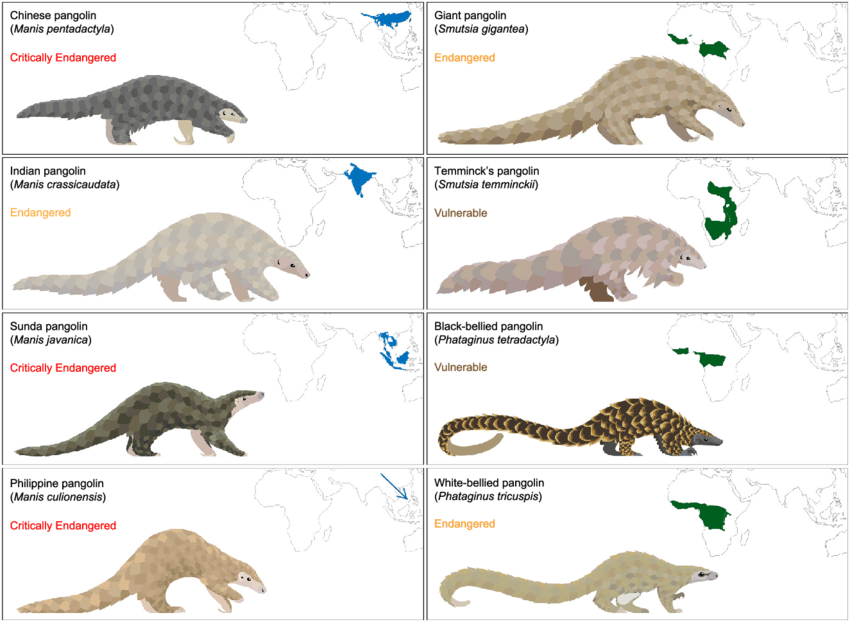
There are eight (maybe nine) species of pangolins dispersed but uncommon over southern China, Southeast Asia, Indonesia and Africa. They range in size from two kilogram tree-dwellers to the 30-kilogram African species. The most common species, the ground pangolin, reaches lengths of 110 centimeters with about half of that being tail. It spends its time entirely on the ground. In September 2023, nine species were reported.
The one extant family of pangolins — Manidae — has three genera: Manis, Phataginus, and Smutsia. Manis comprises four species found in Asia. Phataginus and Smutsia include two species each, all found in sub-Saharan Africa.
The four African species are: 1) White-bellied pangolin (Phataginus tricuspis), most common of the tree-dwelling pangolins, the main species poached in Africa and is usually found in tropical forests and dense woodlands. 2) African black-bellied pangolin (Phataginus tetradactyla), smallest of the eight pangolin species, the only one with black skin, and possesses 47 vertebrae in its tail, more than in the tail of any other mammal; 3) Giant Ground pangolin(Smutsia gigantea), the largest pangolin, weighing up to 34 kilograms (75 pounds) and possessing a sticky tongue nearly two feet in length; and 4) Temminck's Ground pangolin (Smutsia temminckii).
Temminck's ground pangolins are the only species that lives in southern Africa. The other three African species live in the forests of Central and West Africa. Temminck’s ground pangolin is the only species that regularly walks on hind legs, using its large tail as a counterbalance. This keeps its front claws sharp for digging. The giant ground has a head and body length of 50 to 60 centimeters long. The tail is 40 to 50 centimeters long.
The four Asian species are: 1) Indian pangolin (Manis crassicaudata); 2) Chinese pangolin (Manis pentadactyla; 3) Sunda pangolin (Manis javanica); 4) Philippine pangolin (Manis culionensis). Asian pangolins are restricted to the tropical and subtropical regions of southern Asia, specifically, India, Southern China, and Southeast Asia.
RELATED ARTICLES:
PANGOLINS: CHARACTERISTICS, BEHAVIOR, TAXONOMY, UNIQUENESS factsanddetails.com
ENDANGERED PANGOLINS: CHINESE MEDICINE, MEAT AND EFFORTS TO HELP THEM factsanddetails.com
PANGOLINS, POACHING AND THE ILLEGAL ANIMAL TRADE factsanddetails.com
Indian Pangolins
Indian pangolins (Manis crassicaudata) are largest Asian species. As with other pangolins, babies less than six months old ride on their mothers’ backs. They range across southern Asia from from the eastern Punjab and Sindh regions of Pakistan, through almost all of India and Bangladesh, and into northern Myanmar and the southern portion of the Yunnan province in China. They live as far south as Sri Lanka and as far north as the southern reaches of Nepal. [Source: Kevin Clausen, Animal Diversity Web (ADW) /=]
Indian pangolins are well adapted to a variety of habitats. tropical forests, open land, grasslands, close to villages, desert regions, mountains in the Salt Range of Pakistan, and subtropical thorn forests but prefer barren, hilly areas up to 763 meters (2,500 feet). They like to live in places with soft and semi-sandy soil— suitable for digging burrows. They tolerate this range of habitats so long as they have a proper supply of ants, termites, and freshwater nearby. /=\
On the International Union for Conservation of Nature (IUCN) Red List Indian pangolins are listed as Near Threatened. In CITES (Convention on International Trade in Endangered Species of Wild) they are in Appendix I, which lists species that are the most endangered among CITES-listed animals and plants. /=\
Indian pangolins curl into an armored ball to protect themselves from predators. Their limbs are tucked into their bodies only the scales of their bodies and tails are exposed. When in this position it is extremely hard for other animals to attack them, as their scales are very strong and most organisms cannot unravel them from their tucked position. If they are grabbed by the tail, they rotate in both directions to break free. They can also excrete a nasty odor from their anal glands to drive off predators. Sometimes they make a hissing noise when stressed or attacked. There aren’t many known predators of Indian pangolins due to this defense mechanism, although tigers and known to eat them. /=\
See Separate Article: INDIAN PANGOLINS: CHARACTERISTICS, BEHAVIOR AND REPRODUCTION factsanddetails.com
Chinese Pangolins
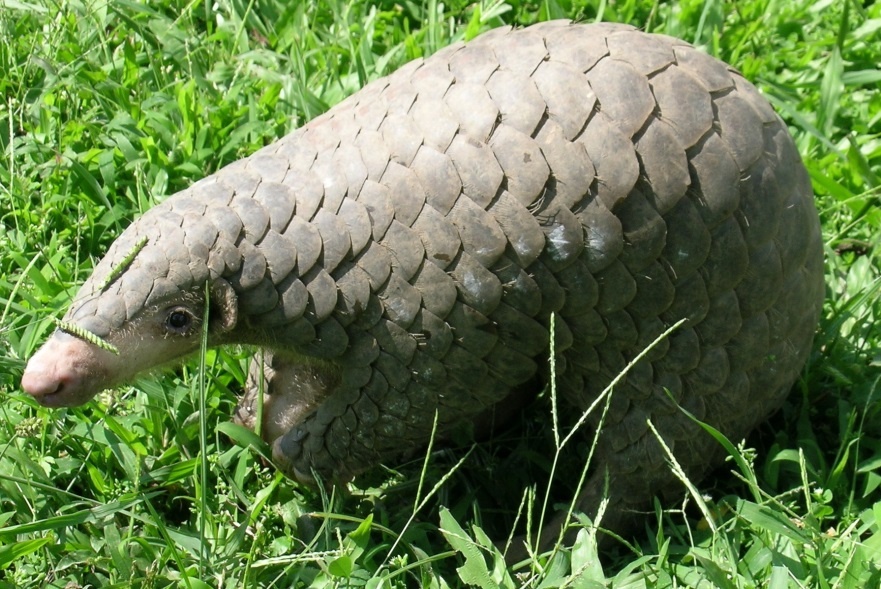
Chinese pangolins (Manis pentadactyla) are the only pangolins that hibernates in winter and were poached so heavily that by the mid-1990s that they came come close to extinction in China. These pangolins weigh two to seven kilograms. Its body and head is 54 to 80 centimeters long. The tail is 24 to 36 centimeters long. It pale, yellowish scales are up to five centimeters across. [Source: Shelby Walters, Animal Diversity Web (ADW) /=]
Chinese pangolins live in subtropical, deciduous and scrub forests.in Nepal, Assam, the eastern Himalayas, Myanmar and southern China. They have been reported in Ramechap, Pannauti, Soondarijal, Barabisse, and Baglung. In central Nepal they are found on rolling hills where there are numerous, large termite mounds. In China their preferred habitats are forests, bush lands, and grass slopes in hills and mountains.[Source: Shelley Raynor, Animal Diversity Web (ADW) /=]
Chinese pangolins are a burrowing species and very good at digging. Usually, their fore limbs dig and their hind limbs push the soft soil away. Since their bodies are covered with scales, they can dig without being bothered by biting ants. They have method for penetrating ant mounds which gives them their Chinese nickname — which translates to “means to penetrate the mountain”.
Chinese pangolins use their strong, clawed forefeet to dig burrows up to two and half meters (eight feet) deep. This can be done in three to five minutes. Once the pangolin is inside, it blocks the entrance. In some cases, they have been observed occupying the burrow of another animal. When feeding they dig up ant mounds with their sharp fore claws and lick up ants and termites with their thin and sticky tongue. They also eat bees and other insects.
Chinese pangolins are much less common than Sunda pangolins. On the International Union for Conservation of Nature (IUCN) Red List Chinese pangolins are listed as Endangered. In CITES (Convention on International Trade in Endangered Species of Wild) they are in Appendix II, which lists species not necessarily threatened with extinction now but that may become so unless trade is closely controlled. /
The Chinese pangolin are hunted for their scales which are used in Chinese medicine. They are considered a delicacy in places such as Vietnam and Hong Kong, where their meat is regarded as fresh and delicious, and thus are also hunted for their meat. Habitat destruction is also a major threat. Many Chinese pangolins live in protected forests but these protected areas they inhabit cannot be patrolled and poachers hunt at will with little chance of being caught. Land development threatens the areas that are not protected. /=\
Chinese Pangolin Characteristics and Diet
Chinese Pangolins have a head and body length of 40-60 centimeters, with an 18 to 30 centimeters tail. They weigh 15 to 30 kilograms, with an average weight of 23.5 kilograms. Their average basal metabolic rate is 3.727 watts. Sexual Dimorphism (differences between males and females) is present: is present in this species. [Source: Shelley Raynor, Animal Diversity Web (ADW) /=]
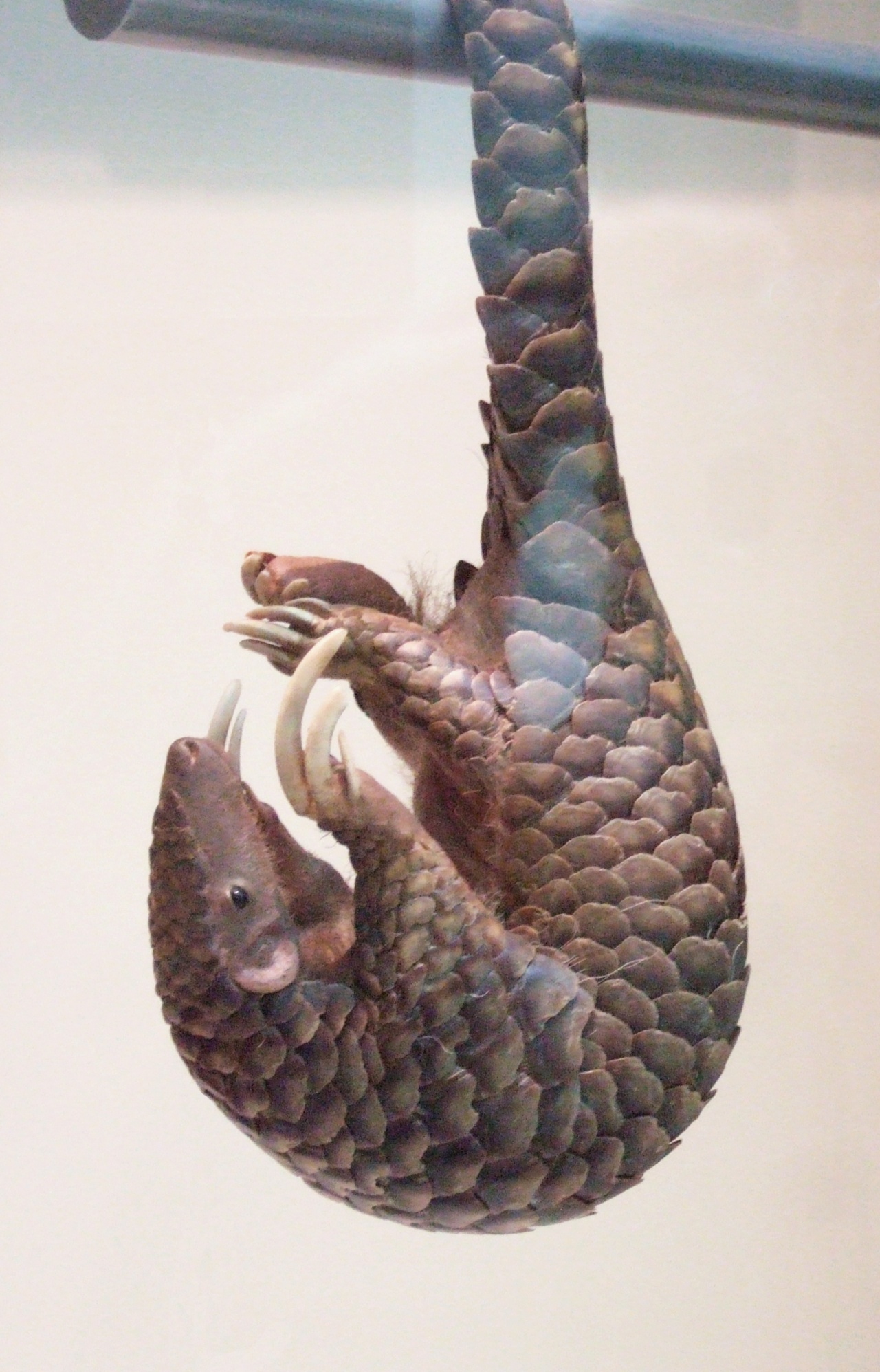
Chinese pangolins have a very round bodies with about 18 rows of overlapping scales. The scales are accompanied by hairs. They have a small pointed head and a narrow mouth. The nose is fleshy with nostrils at the end. This bronze colored animal has a The forefeet and hind feet are equipped with sharp claws. /=\
Chinese pangolins feed on insects, namely ants and termites. They use their claws to open up termite and ant mounds. Then they draw the prey into their mouths with their 25 centimeters long, sticky tongues after the digging process described above. Their teeth are not pronounced. They have sands and stones in their stomach which helps them digest their food.
Chinese Pangolin Behavior and Reproduction
Chinese pangolins are nocturnal (active at night), animals, but they are extremely shy and slow moving creatures. They are not aggressive. They defend themselves by curling up into a ball, and they are also protected from predators by the hard scales that cover their bodies. [Source: Shelley Raynor, Animal Diversity Web (ADW) /=]
Chinese pangolins are usually solitary. They rests in their den during the daytime and seek food during the night. Chinese pangolin can not only dig up the ground, they can also swim and climb trees. Chinese pangolins are predominantly terrestrial species. It has, however, been observed in the jungle canopy up to 20 feet above the ground.
Chinese pangolins sense using touch and chemicals usually detected with smell. Their senses of hearing and their visual ability are poor but they have very good sense of smell. When they are threatened Chinese pangolin curl up and hide their head beneath their abdomen. This defense method is quite effective in dealing with other animals.
Chinese pangolins mate in the spring and females give birth the next winter or spring. They produce one to three young pangolins each time. In Nepal, Chinese pangolins reproduce during April and May. A single young is born measuring about 45 centimeters and weighing about half a kilogram. The young come equipped with scales, although they are soft and flexible for the first two days of life.
Although they are able to walk at birth, young pangolins are carried on their mother's tail or back when she goes out to seek food. If the mother is threatend, she folds her offspring under her body with her tail. Male pangolins have been observed helping out with parental duties and share a burrow with the female and young. [Source: Shelley Raynor, Animal Diversity Web (ADW) /=]
Sunda Pangolins

Sunda pangolins (Manis javanica) dwell in trees and on the ground and are believed to be the most trafficked pangolin today. Also called Javanese pangolins, Malayan pangolins, Javan pangolins and Sunderland pangolins, they are found through southeastern Asia. They inhabit a variety of environment, including primary, secondary and scrub forests, grasslands, areas with thick bush and agricultural areas. They often observed in cultivated areas such as farms and plantations. They are primarily terrestrial creatures that inhabit burrows, either excavated with their huge claws or borrowed by other animals, but are also proficient climbers and spend some time in trees resting or searching for food. [Source: Kelley Breen, Animal Diversity Web (ADW) /=]
Sunda pangolins are hunted for their skins, scales, and meat. Their parts are used in traditional Chinese medicine. On the International Union for Conservation of Nature (IUCN) Red List they are listed as Endangered. In CITES (Convention on International Trade in Endangered Species of Wild) they are in Appendix II, which lists species not necessarily threatened with extinction now but that may become so unless trade is closely controlled. Sunda pangolins is listed by the IUCN as LR/nt, meaning that it is nearly threatened, and comes close to meeting the criteria necessary to be listed as vulnerable. /=\
Sunda pangolins’s armor of scales protects them from predators, sharp underbrush, and rocks. When threatened, these pangolin swish their tail about with the pointed scales erect. If that doesn't drive a pedator off they curl themselves up into a tight ball so its soft belly is protected within. If the pangolin is unravelled, its last resort is to squirt a foul-smelling liquid onto the potential predatory while devoiding its bowels at the same time. The main natural predators ate leopards and pythons.
Sunda Pangolin Characteristics
Sunda pangolin are 75 to 121 centimeters (29.5 to 47.6inches) long (including tail) with a tail length of 35 to 56 centimeters (14 to 22 inches) . They weigh up to 10 kilograms (22 pounds). Sexual Dimorphism (differences between males and females) is present: Males are larger than females. [Source: Kelley Breen, Animal Diversity Web (ADW) /=]
Kelley Breen wrote in Animal Diversity Web: Sunda pangolins are strikingly unique creatures, whose coat of movable and sharp-tipped scales are reminiscent of descriptions of a dragon's armor or "living pine cones" as they are nicknamed. They are covered from just above the nostrils to the tips of their tails by many rows of overlapping scales (17-19 rows on midsection and more than 20 rows along tail). The scales on the back and sides are olive-brown to yellowish and hard. These scales are derived from hairs. The underbelly and face are covered in whitish to pale-brown hair, and the skin is gray to bluish. /=\
The species has a small conical head with small eyes that are protected by thick eyelids. The external ear parts are greatly reduced. The nose is fleshy, and the mouth lacks teeth. They have extremly long, thin tongues, capable of extending about 25 centimeters, which covered with a sticky saliva. This helps them collect termites and ants. They have significant adaptations to account for their enormous tongue which passes through the chest cavity and anchors to the pelvis. These include lack of a clavicle, and and odd structure of their xiphisternum. They are pentadactylous; their forefeet are equipt with pads on the soles, large digging claws and are longer and stronger than their hindfeet. Sunda pangolins have prehensile tails and can close their nostril and ear openings. /=\
Sunda Pangolin Behavior
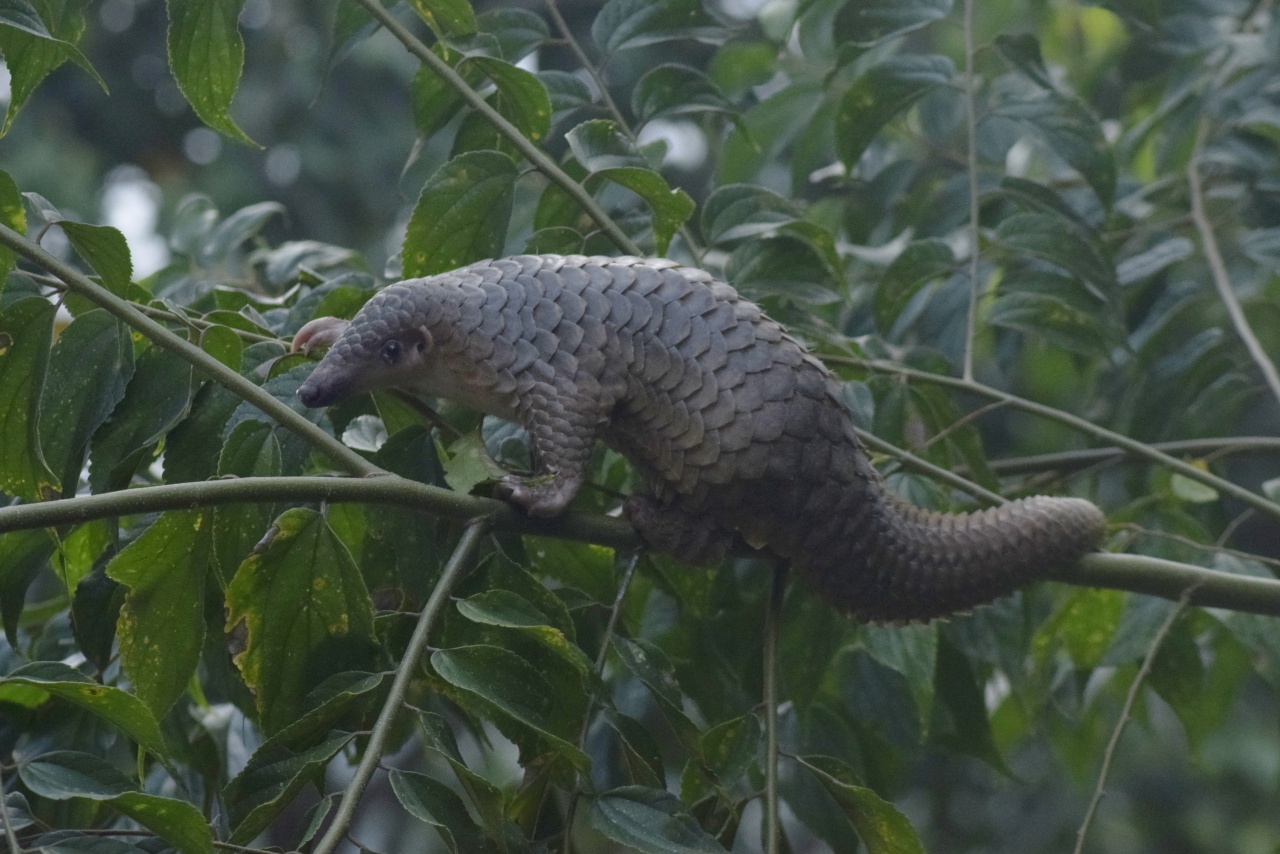
Sunda pangolins are arboreal (live mainly in trees), fossorial (engaged in a burrowing life-style or behavior, and good at digging or burrowing), nocturnal (active at night), motile (move around as opposed to being stationary) and sedentary (remain in the same area). [Source: Kelley Breen, Animal Diversity Web (ADW) /=]
Sunda pangolins are generally solitary but they are sometimes found in pairs. They are shy and move slowly on all four feet unless threatened. Under threat, a pangolin can move swiftly on hindfeet alone, with the aid of its prehensile tail. The tail is also used when climbing trees. They have been observed swimming. They are thought to travel an average of 0.7-1.8 km/day. They are strong diggers and will make burrows lined with vegetation for insulation near termite mounds and ant nests.
Sunda pangolins sense and communicate with vision, touch, sound and chemicals usually detected by smelling. They also leave scent marks produced by special glands and placed so others can smell and taste them. Not much is known about pangolin communication. They to make some vocalizations but it is suspected that they their main main form of communication is scent markings. As with all mammals, there is lsome visual and tactile communication, especially between mothers and offspring, potential mates, and potential rivals for mates.
Sunda Pangolin Mating, Reproduction and Offspring
Sunda pangolins are polygynous (males have more than one female as a mate at one time). They engage in seasonal breeding and probably breed annually. It is thought they to breed in the autumn, and give birth in winter burrow. The number of offspring is usually one and rarely two.
Not not much is known about Sunda pangolins reproduction. Sparring for potential mates has been reported. This coupled with sexual dimorphism supports the conclusion that males compete for females, and that some males probably don't get to mate.
The average gestation period is 130 dyas. Young are precocial. This means they are relatively well-developed when born. Newborn pangolins have soft scales, which harden after birth, and can weigh from 100 to 500 grams. Parental care seems to be done only by female. The average weaning age is three months. Females have one pair of mammae. Mother pangolins are extremly protective. When threatened, a mother will curl up into a tight ball with her young safely nestled within. At other times, the young rides upon the base of the mother's tail. Observations of females adopting other's young have been documented. On average males and females reach sexual or reproductive maturity at one year.
Philippine Pangolins
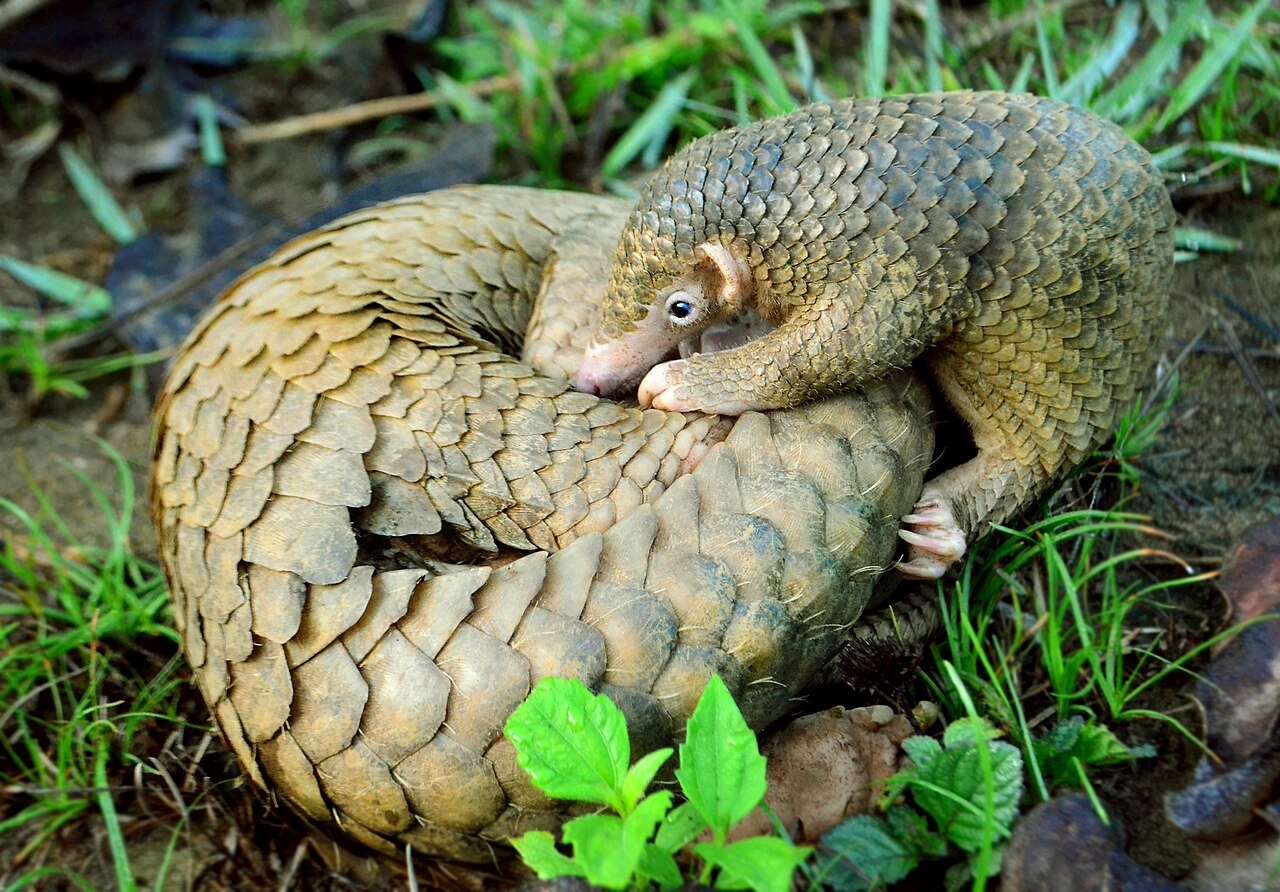
Philippine pangolins (Manis culionensis) are arboreal and endemic to Palawan and nearby Philippine islands. Hunters sometimes use dogs to track these pangolins. They were considered to be a subspecies of Manis javanicus until fairly recently. The taxonomic discussion of Philippine pangolin began in 1998 and its classification as a separate species became largely accepted as a result of a study by Gaubert et. al. in 2005. The species is little studied. Only nine specimens of Philippine pangolin, all of them from museum collections, were used by Gaubert in his definitive study. Because of their reclusive, nocturnal and arboreal behavior they are rarely observed in the wild.[Source: Andrew Helmsworth, Animal Diversity Web (ADW) /=]
Philippine pangolins are endemic to four Phillippine islands: Palawan, Busuanga, Culion, and Calauit. They have also been introduced to the island of Apulit. They are found in lowland forests, grasslands, agricultural areas. Habitat destruction has also forced them into more developed areas.
On the International Union for Conservation of Nature (IUCN) Red List Philippine pangolins are listed as Near Threatened. In CITES (Convention on International Trade in Endangered Species of Wild) they are in Appendix II, which lists species not necessarily threatened with extinction now but that may become so unless trade is closely controlled. /=\
Hunting and habitat destruction are the main threats to Philippine pangolins. Deforestation in the Philippine islands has led to a smaller range, especially in the lowland forests. Assessing the population size of Philippine pangolins is difficult because of animals’ nocturnal and solitary nature. Philippine pangolins, like many Asian pangolins, are hunted for their meat and scales The species is protected in the province of Palawan, and government agencies across Asia are enforcing restriction of the trade of pangolin and their scales.
Philippine Pangolin Characteristics
Philippine pangolin are 58 to 176 centimeters (23 to 69.2inches) long (including tail) with a tail length of 28 to 88 centimeters (11 to 34 inches). They weigh 1.8 to 2.4 kilograms (Four to 5.3 pounds). Sexual Dimorphism (differences between males and females) is not present: Both sexes are roughly equal in size and look similar. [Source: Andrew Helmsworth, Animal Diversity Web (ADW) /=]
Philippine pangolins are similar in appearance to Sunda pangolins, but they can be distinguished. Philippine pangolins have 19 to 21 lateral scale rows on their back, which are generally smaller in size than those of Sunda pangolins. The tail of Philippine pangolins is almost equal in length to the combined length of its head and body, whereas the tail of Sunda pangolins is generally two thirds to three fourths the length of its combined head and body length. The palatine bone of Philippine pangolins is relatively small and weak, and they have a shorter zygomatic process. The nuchal scale pattern is also different in these species; nuchal scales are centered along the neck of Philippine pangolins and are off to one side on Sunda pangolins./=\
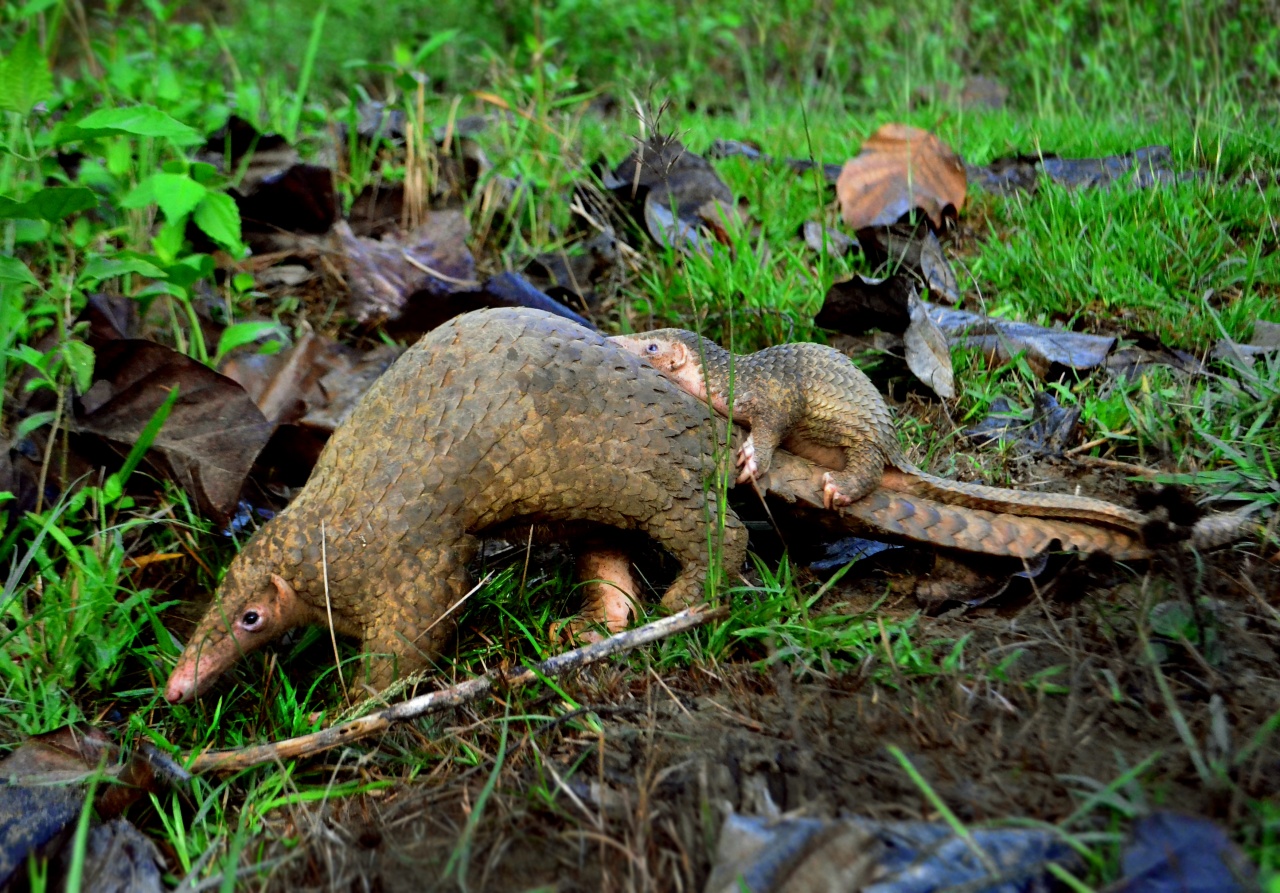
According to Animal Diversity Web: Philippine pangolins, like all pangolins, are arboreal and terrestrial quadrupeds. They have an elongated snout, a round body, and a long, prehensile tail. Their body is covered with pointed, overlapping scales that are dark in color and made of keratin. However, their nose, eyes, and underbelly are not armored in this way. They also possess large, sharp claws on their forelimbs and a long, thin tongue coated with adhesive saliva. Infant pangolins have scales that are soft and light in color that harden as they mature.
Philippine pangolins, like all pangolins are insectivorous (eat mainly insects) and their anatomy is specialized for this task: their large front claws help with breaking open termite mounds and anthills, and their extremely long tongues, which are not anchored to the hyoid bone, are coated with an adhesive saliva by glands in the abdomen, traits that are convergent with similar features in anteaters. Philippine pangolin lack teeth and the ability to chew.
Philippine Pangolin Behavior, Communication and Reproduction
Philippine pangolins are solitary, nocturnal (active at night) and arboreal (live mainly in trees), nocturnal (active at night). They spend most of their time in trees, though they are known to move around on the ground. They roam her and there to find food and, due to habitat destruction, are increasingly mobile. Because of their reclusive, solitary behavior, their activity patterns are largely unknown. When threatened, pangolins roll into a tight ball, in which they are protected by their hard scales. They can also emit a noxious chemical to repel predators.[Source: Andrew Helmsworth, Animal Diversity Web (ADW) /=]
Philippine pangolins sense using touch and chemicals usually detected with smell. They communicate with chemicals usually detected by smelling. They also employ pheromones (chemicals released into air or water that are detected by and responded to by other animals of the same species). Philippine pangolins use their sense of smell to locate termite mounds and other insect colonies on which they feed. Although the mechanisms of attracting mates are unknown, their highly developed olfactory glands likely contribute to the process.
Little is known regarding the mating behaviors of Philippine pangolins. It is thought they breed annually, with mating usually occurring in the spring. The number of offspring ranges from one to 3, with the average number being one. The average gestation period is 18 weeks. [Source: Andrew Helmsworth, Animal Diversity Web (ADW) /=]
Most pangolin species wean their young at around four months, and individuals are independent at around five months. Parental care is provided by females. Like most arboreal pangolins, they carry their offspring on their tail and can roll into a ball with its infant in the center if threatened. Philippine pangolins are altricial. This means that young are born relatively underdeveloped and are unable to feed or care for themselves or move independently for a period of time after birth.
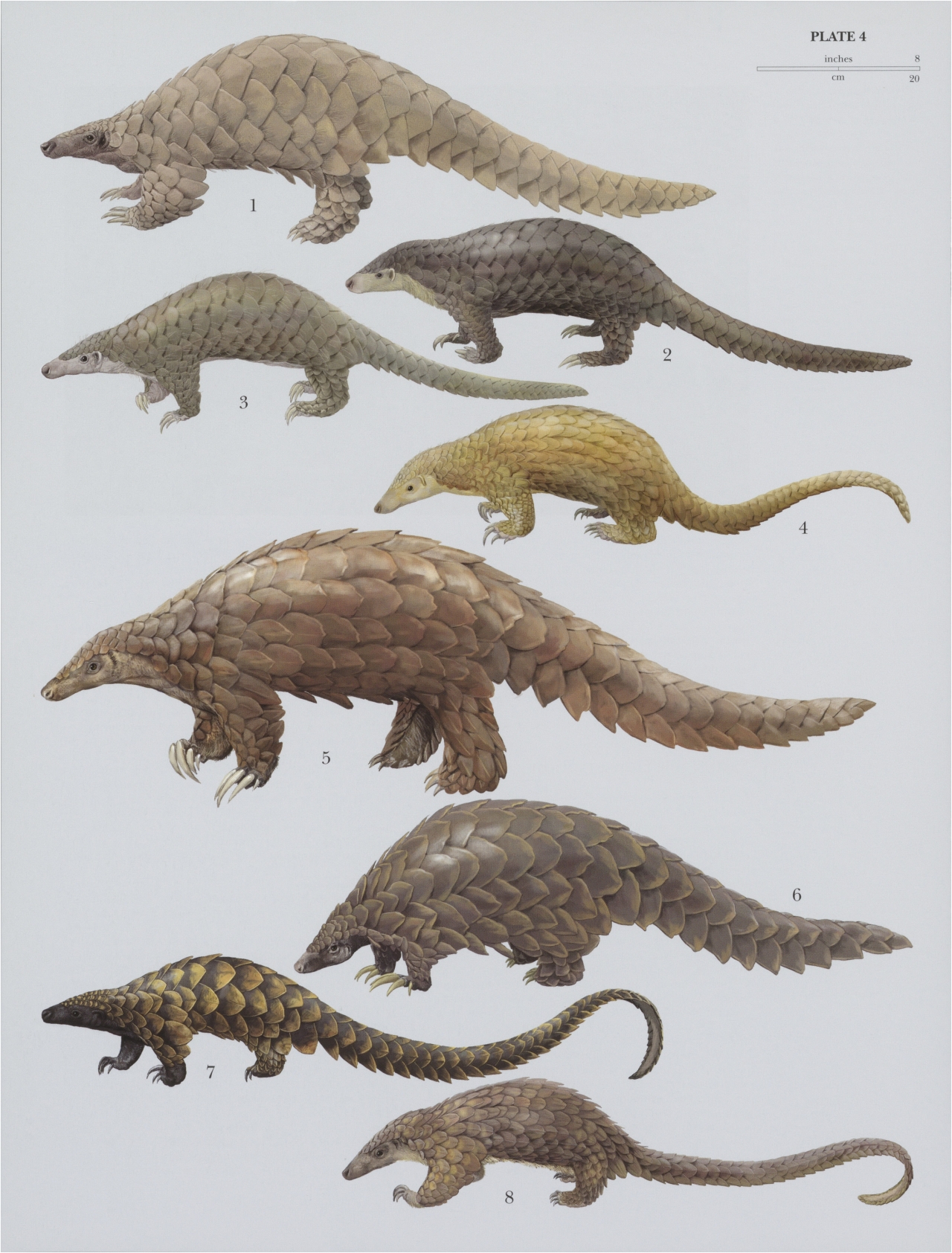
Pangolin species: 1) Indian pangolin; 2) Chinese pangolin; 3) Sunda pangolin; 4) Palawan pangolin; 5) Giant pangolin; 6) Ground pangolin; 7) Long-tailed pangolin; 8) Common African pangolin
Image Sources: Wikimedia Commons
Text Sources: Animal Diversity Web animaldiversity.org ; National Geographic, Live Science, Natural History magazine, David Attenborough books, New York Times, Washington Post, Los Angeles Times, Smithsonian magazine, Discover magazine, The New Yorker, Time, Reuters, Associated Press, AFP, Lonely Planet Guides, Wikipedia, The Guardian, Top Secret Animal Attack Files website and various books and other publications.
Last updated January 2025