
ENDANGERED PANGOLINS
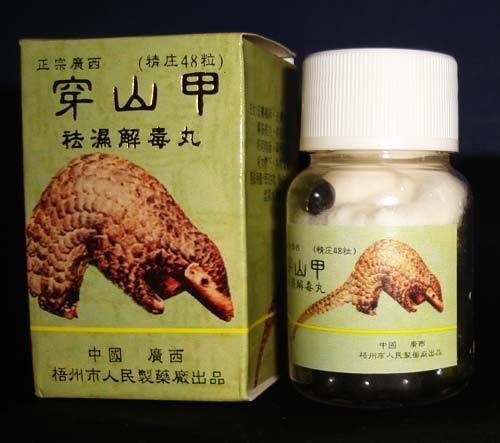
Some pangolin species are critically endangered due to poaching and habitat loss. The Pangolin Specialist Group estimates that over one million pangolins were poached between 2014 and 2024. Pangolin meat is a prized delicacy and pangolin scales are greatly sought after for traditional medicines. Their skins are used in making shoes and boots. Between 1980 and 1985, 175,000 pangolin hides were imported into the United States, The practice has since been discontinued.
Human activity, such as foot traffic, livestock grazing, and human settlements, also has a negative effect on the pangolins. This is why they mainly reside in protected forests. Jeremy Hance of mongabay.com wrote: “The illegal wildlife trade isn't the only threat to pangolins, they also face vast deforestation across Southeast Asia, which is imperiling all of the region's forest-dependent species. According to Conservation International, Southeast Asia's forests are the most imperiled in the world: only 5 percent of the region's original forests intact.
Just 7 percent of the forests of the Philippines, Malaysia, and Indonesia remain untouched. Logging, industrial plantations and agriculture, mining, and booming human populations have all taken their toll. Khatiwada notes that even in Nepal, where forest cover is still generally robust compared to Southeast Asia, the pangolins are losing habitat to a number of activities including booming human populations, roads, forest fires, mining, and cardamom plantations. [Source: Jeremy Hance, mongabay.com, February 11, 2013 -]
RELATED ARTICLES:
PANGOLINS: CHARACTERISTICS, BEHAVIOR, TAXONOMY, UNIQUENESS factsanddetails.com
PANGOLIN SPECIES IN ASIA factsanddetails.com
INDIAN PANGOLINS: CHARACTERISTICS, BEHAVIOR AND REPRODUCTION factsanddetails.com
PANGOLINS, POACHING AND THE ILLEGAL ANIMAL TRADE factsanddetails.com
WEIRD FOODS IN CHINA factsanddetails.com;
ANIMAL PARTS, ENDANGERED ANIMALS AND CHINESE MEDICINE factsanddetails.com;
TRADITIONAL CHINESE MEDICINE: PHILOSOPHY, SAFETY, STUDIES AND DOCTORS factsanddetails.com ;
WILD ANIMALS AND ENDANGERED SPECIES AS FOOD IN CHINA factsanddetails.com
Pangolins and Traditional Chinese Medicine
Pangolin have a wide variety of uses on traditional Chinese medicine (TCM) and southeast Asian folk medicines. Their scales are taken as aphrodisiacs, used as treatments for skin diseases, headaches and colds, and in some cases consumed as a cure cancer. Blood from their tongues are drunk as a tonic, Philippine pangolins are used as a reagent in traditional East Asian medicine and have been used to treat asthma.
Denis D. Gray of Associated Press wrote: “In China, many believe pangolin parts can cure an array of ailments and boost sexual prowess.. Pangolin scales are believed to cure rheumatism, reduce swellings, promote lactation for breast-feeding mothers and alleviate other medical problems. Even if it works, conservationists say, proven substitutes are available that wouldn't devastate a species.” [Source: Denis D. Gray, Associated Press, September 14, 2011]
David Quammen wrote in The New Yorker: By the 1990s, the pangolin populations in China and parts of Southeast Asia had been drastically depleted. At one point, some 150,000 pangolins in China went to the knife monthly, their meat eaten and their scales used in T.C.M. “Such was the magnitude of this exploitation,” the Oxford University-based pangolin expert Daniel Challender and three co-authors wrote, “that it apparently led to the commercial extinction of pangolins in China by the mid-nineteen-nineties.” Importing pangolins was more practical than hunting down the few indigenous ones that remained. [Source: David Quammen, The New Yorker, August 24, 2020]
Denis D. Gray of Associated Press wrote: From fields and forests to Chinese cooking pots and medicine vials, the industrial-scale trade is propelled along similar trafficking routes for tigers, turtles, bears, snakes and other mostly endangered species across Asia, all driven by a seemingly insatiable demand for often dubious medical remedies, tonics and aphrodisiacs. "We are watching a species just slip away," says Chris Shepard, who has tracked wildlife trafficking in Asia for two decades. He says a 100-fold increase is needed in efforts to save the pangolin. [Source: Denis D. Gray, Associated Press, September 14, 2011]
Pangolin Scales and Traditional Chinese Medicine

pangolin scales
Pangolins scales — unique in the world but made of keratin like fingernails and hair — are one main reasons for the animal’s demise. "The plight of the pangolin is similar to rhinos in that their most distinguishing physical characteristic is also driving them down a road to extinction," Rhishja Cota-Larson, founder and director of Project Pangolin, told Mongabey. "Pangolin scales are touted as a treatment for all sorts of things: To promote menstruation, promote lactation, to treat rheumatism and arthritis, to reduce swelling and discharge pus" but the "the medicinal efficacy of pangolin scales is unproven." Jeremy Hance of mongabay.com wrote:Now there are even claims that pangolin scales are effective against cancer. But this is a common story that appears to shows up whenever illegal traders want to increase demand and hence prices, trusting that the sick and the desperate will be willing to pay anything. [Source: Jeremy Hance, mongabay.com, February 11, 2013 -]
David Quammen wrote in The New Yorker: Between 1994 and 2000, almost nineteen tons of pangolin scales (from roughly 47,000 pangolins) were exported from Malaysia for use in traditional Chinese medicine (T.C.M.) in China and Hong Kong. Chinese tradition, as inscribed in old texts, holds that pangolin scales, ground to powder or burned to ash, can be useful against ant bites, midnight hysterias, evil spirits, malaria, hemorrhoids, and pinworm, and for stimulating lactation in women.[Source: David Quammen, The New Yorker, August 24, 2020]
Rachael Bale wrote in National Geographic: “Typically dried, ground into powder, and put into pills, pangolin scales are used in a range of traditional Chinese remedies, from treatments to help mothers with lactation to relief for arthritis and rheumatism. Scales can be found in medicine markets throughout Asia, including Vietnam, Thailand, Laos, and Myanmar. [Source: Rachael Bale, National Geographic, June 2019]
Western medicine so far has found no evidence that pangolin scales, which consist of keratin, the same material that makes up fingernails, hair, and rhino horn, have any physiological effects on humans. But traditional medicine texts hold that the scales can be effective at treating imbalances in the body, such as “blood stasis,” a condition that can bring on a stabbing or severe pain and may be associated with menstrual disorders, trouble with lactation, and arthritis.
Pangolin Meat
Jeremy Hance of mongabay.com wrote: “While demand is greatest for the scales, pangolin meat is also popular and believed to have general health benefits. Pangolin meat is considered a delicacy in parts of China and Vietnam, where among other things it is believed to nourish the kidneys. The meat from pangolin fetuses is particularly sought after. In East Asia, one can often order pangolin in restaurants. Shepherd says eating pangolin meat in China or Vietnam often "confers status" on the customer, much like wearing fur was once seen as higher-class in the west. "Eating illegal meat is a sign of being above the law, and of being able to afford such a meal." In 2013, a chef surnamed Wang told AFP that his restaurant sold pangolin for 2,000 yuan per half kilo, adding: "We usually braise them, cook it in a stew or make soup, but braising in soy sauce tastes best." [Source: Jeremy Hance, mongabay.com, February 11, 2013]
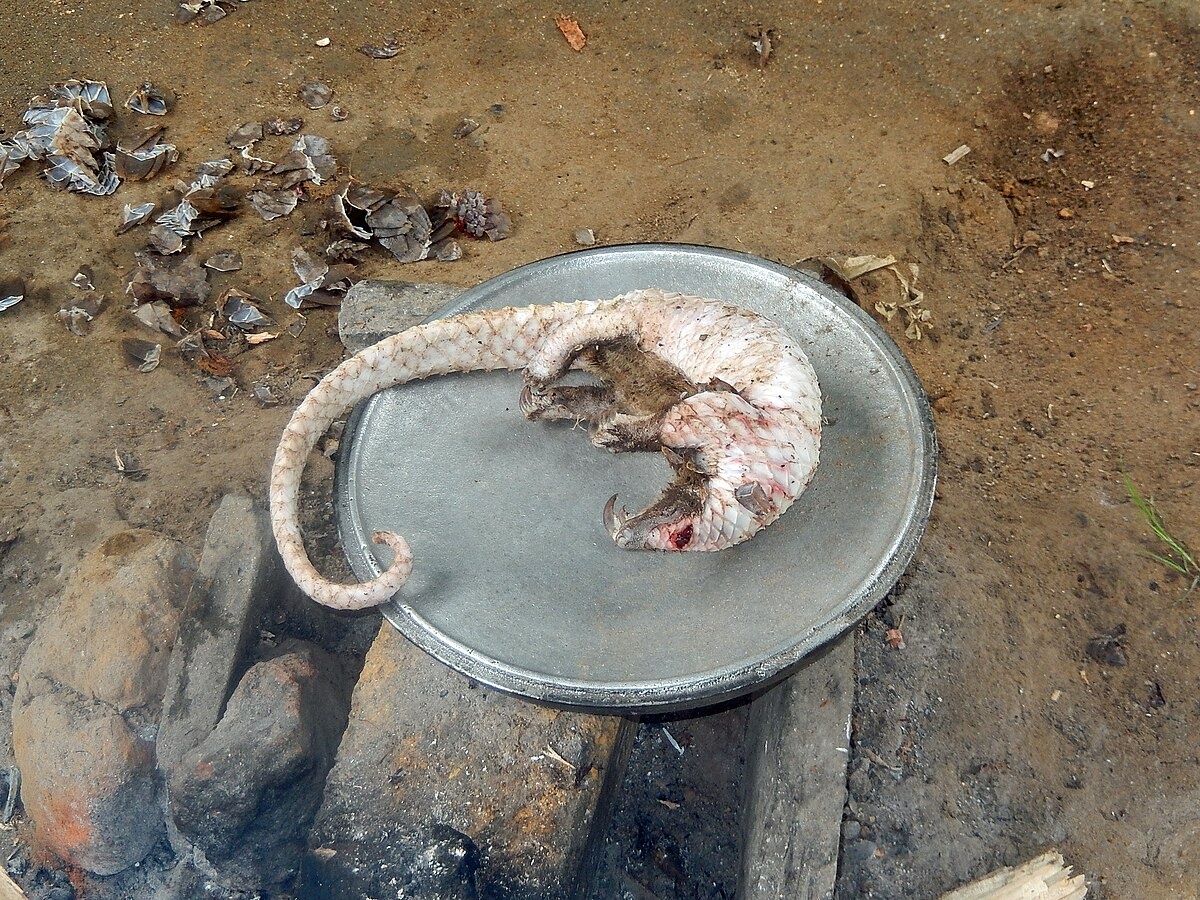
David Quammen wrote in The New Yorker: “Challender did some of his doctoral field work in Vietnam, conducting market surveys, gathering price data on pangolin scales, visiting restaurants where the meat was served. “If you go into a restaurant in Ho Chi Minh City,” he told me, “you’re going to be paying three hundred and fifty dollars a kilo for a pangolin.” It might be grilled, or boiled in a hot pot with ginger and spring onions. He recalled sitting in a restaurant, in 2012, watching three diners enjoy a seven-hundred-dollar pangolin meal. A server carried the animal, alive, into the restaurant in an old sack. It was balled up in its defense posture, showing only scales and claws. “They took out a large rolling pin and clubbed it unconscious,” Challender said. Then “they took some scissors and used the scissor blades to cut the throat.” The blood was drained out and mixed with alcohol for the diners, and the flesh was cooked. [Source: David Quammen, The New Yorker, August 24, 2020]
“There is a vogue in urban China for ye wei, or “wild tastes” — wildlife meat, supposedly imbued with healthful, invigorating properties. Some consumers cherish the notion that eating pangolin is a revered national tradition. But that notion has lately been challenged. Earlier this year, a Chinese journalist named Wufei Yu published an Op-Ed in the Times highlighting old texts that advise against consuming the flesh of certain wild animals, notably snakes, badgers, and pangolins. Yu found that in 652, during the Tang dynasty, an alchemist named Sun Simiao warned about “lurking ailments in our stomachs. Don’t eat the meat of pangolins, because it may trigger them and harm us.” A millennium later, in a compendium of medical and herbal lore now considered foundational to T.C.M., the physician Li Shizhen cautioned that eating pangolin could lead to diarrhea, fever, and convulsions. Pangolin scales could be useful for medicines, Li Shizhen allowed, but beware the meat. Zhou Jinfeng, a noted conservationist who heads the China Biodiversity Conservation and Green Development Foundation, in Beijing, added a caustic dismissal. “It’s not a matter of tradition,” he told me by Skype. “It’s a matter of money.”
Pangolin Market in China
China is the biggest consumer of pangolin scales. Treatments using them continue to be sanctioned by the Chinese government. More than 200 pharmaceutical companies produce some 60 types of traditional medicines that contain pangolin scales, according to a 2016 report by the China Biodiversity Conservation and Green Development Foundation. Every year Chinese provinces collectively issue approvals for companies to use an average 29 tons of the scales, which roughly represents 73,000 individual pangolins.[Source: Rachael Bale, National Geographic, June 2019]
The meat and scales of the pangolin fetch hundreds of dollars per kilogram in China. The IUCN says rising demand for pangolins and lax laws are wiping out pangolins. Pangolins are protected by the international wildlife trade treaty CITES, to which Beijing is a signatory. Rachael Bale wrote in National Geographic: China’s pangolins had become noticeably scarce by the mid-1990s, according to some reports, because of overhunting. As demand persisted, Chinese companies continued to make pangolin products, ostensibly by turning to two legal sources of scales: stockpiles amassed from pangolins hunted within China before their numbers crashed and imports brought into the country before the bans went into place.

pangolin liquor in Vietnam
“Pangolin trade records from CITES show that China imported a little more than 16 tons of scales during the 21-year period from 1994 to 2014 — not nearly enough to meet the demand from pharmaceutical companies. Furthermore, the provincial governments often don’t verify that businesses are getting scales from stockpiled, rather than recently — and illegally — caught pangolins, says Zhou Jinfeng, director of the China Biodiversity Conservation group in Beijing that has been investigating the pangolin trade. He says he’s skeptical that scale stockpiles in China are big enough to fill companies’ needs more than two decades after pangolins virtually disappeared in the country. “I don’t buy it,” he says. “After so many years, they still have that many in the stockpiles?”
“In 2017, for example, Chinese customs officials confiscated more than 13 tons of pangolin scales, from as many as 30,000 pangolins — one of the biggest seizures on record. Last year Hong Kong authorities seized 7.8 tons of scales in a single shipment on its way to China. In all, China accounted for almost 30 percent of scale seizures globally from 2010 to 2015, according to Traffic. Keeping in mind that seizures are believed, conservatively, to represent about a quarter of actual illegal trade, these numbers suggest that hundreds of thousands of pangolins are slaughtered each year
“Chinese companies are said to be working to breed pangolins on a large scale so they’ll have a steady supply. According to the China Biodiversity Conservation group, the government as of 2016 had issued 10 licenses to facilities to breed pangolins, ranging from rescue centers to investment companies. Another 20 pharmaceutical companies — along with businesses in Uganda, Laos, and Cambodia — launched a “breeding alliance” in 2014. The problem is that no one has figured out how to breed pangolins on a commercial scale. “There’s just no way — you cannot satiate demand through breeding,” says Paul Thomson, a conservation biologist and co-founder of the nonprofit Save Pangolins. “Pangolins stress so easily. And they don’t rebound quickly.”
Curbing Demand and Finding Alternatives for Pangolin Meat and Scales
Jeremy Hance of mongabay.com wrote: “Cracking down on pangolin poachers and dealers would help, but nothing would fix the problem in the long-term like cutting demand. If pangolin scales, meat, and even fetuses weren't in demand, all eight species would be relatively secure. Reducing demand isn't impossible. Demand for whale meat has fallen so far after a global ban and decades of campaigning that Japan practically has to give it away. The global fur trade across the northern Hemisphere has largely run out of steam, as well, as synthetic fabrics and anti-fur campaigning made good. Conservationists hope that same could happen in East Asia one day, but it means fighting a long war--with multiple strategies--not a single battle. [Source: Jeremy Hance, mongabay.com, February 11, 2013 -]
"Raising awareness amongst traditional medicine practitioners [...] is absolutely key to reducing the demand, and to ultimately pulling these species back from the verge of extinction. More research into alternatives to pangolin parts should be carried out in conjunction with widespread demand reduction campaigning," says Shepherd, who notes that there are already some alternatives to pangolin scale in the traditional Chinese medicine market. -
“In addition Shepherd says it's time for consumers to "face the music." "Awareness amongst the public needs to be greatly raised, especially amongst potential consumer groups. People need to become responsible consumers and refuse to buy pangolin parts and derivatives. Further to that, we need the public to become more actively involved in pangolin conservation," Shepherd says, who adds that concerned citizens can play an active role in saving pangolins. "Call on your government to take pangolin poaching and trade issues seriously. Refuse to spend money at restaurants or traditional medicine outlets that do sell pangolin parts and derivatives. Support pangolin conservation initiatives." -
Steve Given, the former associate dean of the American College of Traditional Chinese Medicine, in San Francisco, has identified at least 125 herbal, mineral, and animal alternatives in the Chinese medicine pharmacopoeia, depending on what a patient needs to treat. “There’s virtually no reason that anyone needs to use chuan shan jia clinically,” he said, referring to pangolin scales by a traditional name. [Source: Rachael Bale, National Geographic, June 2019]
“As long as millions of people turn to traditional medicine for relief — and that number is likely to increase because traditional Chinese medicine is set to become an official part of the World Health Organization’s medical compendium — educating health care providers and patients about alternatives will be an important way to protect pangolins from extinction, Given says.
Efforts to Help Threatened Pangolins
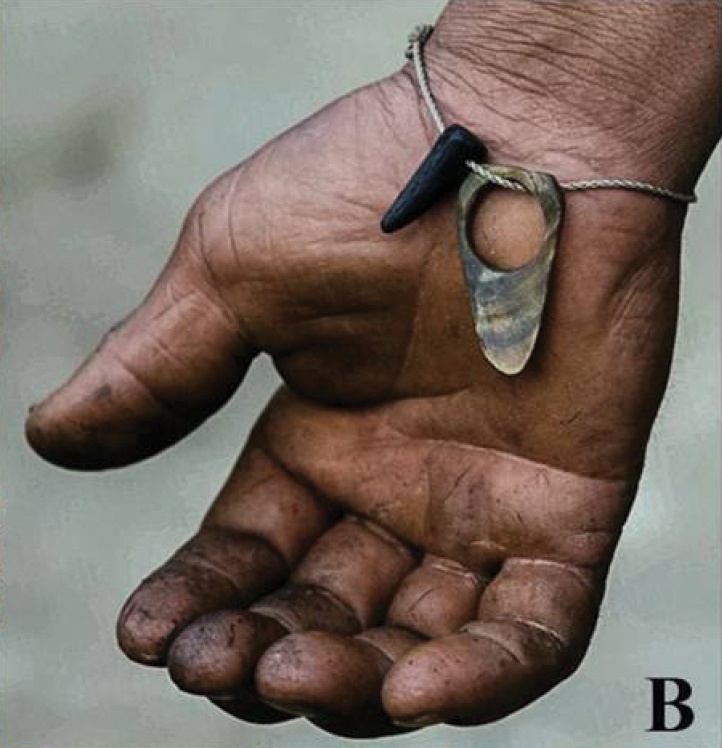
Pangolins are listed under Appendix II of the Convention on International Trade in Endangered Species of Wild Fauna and Flora, which includes “species not necessarily threatened with extinction,” but may become so without trade restrictions. Many states in Africa and Asia have laws prohibiting the capture and trade of pangolins, but the laws are not always enforced. [Source: Anne M. Simmons, Los Angeles Times, September 1, 2016]
The U.S. Fish and Wildlife Service also has launched the Mentor-Progress on Pangolins fellowship program. Based in Yaoundé, Cameroon, it is training a team of early-career Central African and Asian conservation practitioners to champion the conservation of pangolins in Central Africa. “You can pour as much money as you want into enforcement, but so long as the demand is still there and the consumer market is there and the price is so high, the criminal networks will always find a way to poach animals and get these stolen gems of nature to the black market,” said Allan, the wildlife specialist.
Jeremy Hance of mongabay.com wrote: “Renowned naturalist and and filmmaker, David Attenborough, selected the pangolin as one of ten species he would save from extinction on his BBC special Attenborough's Ark, noting that the pangolin "is one of the most endearing animals I've met." In 1956, Attenborough saved a pangolin from a stew pot in Bali, later releasing it into the forest. Meanwhile the Zoological Society of London's (ZSL) has added two pangolin species (out of eight) to their EDGE program of the world's most distinct and endangered mammals. Finally, and perhaps most importantly, the International Union for the Conservation of Nature (IUCN) has kick-started started a conservation and research group devoted solely to these enigmatic animals. [Source: Jeremy Hance, mongabay.com, February 11, 2013 -]
Challender says: "There is a need to identify natural habitats where they exist and provide positive incentives for their conservation [...] This is particularly challenging however, given the high price that pangolins can fetch in illicit trade, but may realistically be the only way pangolins can be conserved," he says. Such safe spots, with community participation, could ensure that pangolins hang-on while the other strategies—decreasing demand and enforcing the law—move forward. Setting up community initiatives, including incentives, to protect imperiled species is playing an increasingly important role in conservation efforts worldwide. If locals value the wildlife around them, it becomes much harder for poachers and traders to make inroads. -
Saving pangolins shouldn't be a hard-sell to the general public, because as Cota-Larson says, they have an "irresistible cute factor." In addition, if endangerment means anything, no mammal is found so frequently in the markets, restaurants, and shops that make up East Asia's notorious illegal wildlife trade. The good news is that basic laws are already in place: hunting or selling pangolins is illegal across East Asia, including the two hotspots: China and Vietnam. -
Captive Pangolins
Keeping pangolins alive in captivity let alone breeding them is a difficult task.. They’re sensitive animals and very picky eaters that consume only certain species of ants and termites. Their diet is very difficult to replicate in captive situations. Even in the 2010s most pangolins didn’t survive more than 200 days in captivity. The San Diego Zoo is the only accredited zoo facility in the United States with a pangolin exhibit, according to zoo officials.
Rachael Bale wrote in National Geographic: “In addition to their unique diet, they require special care because they’re prone to stomach ulcers and pneumonia, usually brought on by stress. Six zoos and a nonprofit in the United States imported 46 pangolins from Togo in 2016, aiming to study the animals under controlled conditions and establish a self-sustaining population. As of March 2019, 16 had died. [Source: Rachael Bale, National Geographic, June 2019]
In the early 2010s there were probably less than 100 Asian pangolins in captivity a range of institutions,. Khatiwada said that the longest surviving pangolin at that time at at the Central Zoo of Nepal, Kathmandu could be counted in months not years: nine months to be exact. "Because of 100 percent mortality in the captivity there are no more pangolins at the zoo at present," he said. Since 2011, the zoo's policy is now to re-release captive pangolins back into wild instead of attempting a captive population.
Erica Goode wrote in the New York Times: “The animals are easily stressed in captivity and do not do well with artificial food. But with the proper mash of ants and termites, they can thrive. Once they have recovered, the pangolins are slowly reintroduced to the wild in a soft release program that places them in an open enclosure in the forest with ready access to food. [Source: Erica Goode, New York Times, March 30, 2015]
Efforts to Breed Captive Pangolins and Dubious Efforts to Farm Them
Jeremy Hance of mongabay.com wrote: “In the few cases where keepers are able to keep pangolins alive and happy, breeding in captivity is next to impossible. "Only a few zoos, after investing great amounts of time, effort and financial resources, have ever managed to breed pangolins in captivity. As of 2013, less than 10 pangolins had been bred in captivity. Shepherd said:. "These animals are not suited to captivity, and definitely not suitable for commercial captive-breeding." [Source: Jeremy Hance, mongabay.com, February 11, 2013 -]
“This situation means that pangolins have not become "farmed" in Asia like bears and tigers, despite some claims to the contrary in Southeast Asia. "Upon investigation, all of these claims have been proven to be false," says Shepherd, adding, "some species (like chickens) do breed well in captivity at a commercial scale. Pangolins are not one of these." -
Rachael Bale wrote in National Geographic: “This hasn’t stopped Chinese businesspeople from trying. In 2013 a Chinese woman named Ma Jin Ru started a pangolin-breeding operation called Olsen East Africa International Investment Co. Ltd., in Kampala, Uganda, with a provisional permit from the Uganda Wildlife Authority and, later, with backing from a government-affiliated Chinese foundation. Not long after, a company called Asia-Africa Pangolin Breeding Research Centre was also registered and licensed in Kampala. [Source: Rachael Bale, National Geographic, June 2019]
“Both companies were raided, in 2016 and 2017 respectively, by Ugandan authorities who had grown suspicious that the facilities were serving as cover for the trafficking of pangolins caught from the wild. The license issued to Olsen East Africa, for example, permitted captive breeding, but investigators suspected the companies were capturing and trading pangolins illegally — without a permit.
“Another Asia-Africa Pangolin Breeding Research Centre was established, in Mozambique, in 2016 and later raised suspicions among Mozambican wildlife authorities for the same reasons. In China, investigators from Zhou’s nonprofit tried to visit several of the licensed facilities, all of which denied them access.
Rescued Pangolins
Save Vietnam Wildlife and the Carnivore and Pangolin Conservation Programme (CPCP) in Vietnam are spear-heading a project to determine how best to rehabilitate rescued pangolins and release them back into the wild. Jeremy Hance of mongabay.com wrote: Monitoring the behavior of rescued pangolins, the researchers are looking for natural behavior—such as adept tree-climbing and digging—to find suitable suspects to be released back into Cat Tien National Park. [Source: Jeremy Hance, mongabay.com, February 11, 2013 -]
Save Vietnam Wildlife (SVW) was rescuing the largest number of confiscated pangolins in the world (1,651 individuals as 2024). According to SVW: We cooperate with authorities to rescue wildlife that has been confiscated due to illegal trade, whilst also providing a hotline for people across the country to report incidents where wildlife is affected. Upon notification, we will dispatch our rapid response team, consisting of veterinarians and wildlife keepers. They work with the government confiscation authorities, providing practical training in best practices and giving emergency care to the rescued wildlife.
The rescued wildlife are then brought to our rescue center. They then go through a 30-day quarantine. If healthy and releasable, the animals are then released into safe protected areas. Unreleasable animals will be kept and cared for in our education center and used to inspire visitors to contribute to the conservation of the species. Our aim is that all rescued, rehabilitated and captive born carnivores and pangolins are released back to the wild, and that these releases support the conservation of wild populations.
As part of the pre-release preparation, animals undergo health checks and have their feeding habits, behavior, weight and body condition closely monitored. Before release, our field teams carry out surveys to evaluate the suitability of the release locations. Habitat conditions, evidence of wild populations and the hunting pressures are all considered to ensure the best chance of survival for the released animals. We continually monitor these releases and their impacts on wild populations, to ensure that these releases will help support the recovery of threatened wildlife species.
Around 60 percent of all rescued animals have been rehabilitated and released back to protected areas, with another 10 percent of animals being transferred to other rescue centers or unable to be released. Unfortunately, around 30 percent of animals have died within a few days due to various health issues, such as forced feeding to increase the weight, sickness from long transport during the trade, or wounds from hunting.
China Cracks Down on the Pangolin Trade After the Coronavirus Outbreak
In June 2020, a few months after the Covid-19 outbreak began, China began taking more action to reign in the pangolin parts trade. It granted top-level protected status to the animals and endorsed pangolin-rscue groups such the China Biodiversity Conservation and Green Development Fund, headed by said Zhou Jinfeng. In 2019, in the province of Zhejiang alone, authorities arrested 18 smugglers and confiscated 23.1 tons of pangolin scales sourced from an estimated 50,000 creatures, according to Chinese state media. [Source: Sam McNeil, Associated Press, June 12, 2020]
“The U.S.-based group Save Pangolins said China’s granting of top-level protected status earlier this month was “a massive win for pangolins” after years of weak enforcement of existing restrictions. Pangolin scales are an ingredient in traditional Chinese medicine and its meat is considered a delicacy by some.
According to Associated Press: “China’s increased protection forbids the raising of pangolins in captivity and the use of their scales in the nation’s mammoth traditional medicine industry. “Zhou said that efforts to halt the sale of pangolins in China were buoyed by a raise in global awareness of the wildlife animal trade linked to the outbreak of the coronavirus in the central Chinese city of Wuhan.
“The June five order from the National Forestry and Grassland Administration did not explicitly mention the outbreak as a reason for the measure, but the timing appears to indicate it could be part of China’s nationwide crackdown on the wildlife trade following the pandemic. Scientists say the coronavirus was most likely transmitted from bats to humans via an intermediary animal such as the pangolin. Trade in wildlife including bats and pangolins has been linked to so-called zoonotic diseases that leap from animals to humans, and China quickly cracked down on the industry in a series of measures long-promoted by environmental groups.
“Zhou said China's native pangolins have been all but wiped out. Over the past five years, Zhou and volunteers found only five where hundreds of thousands lived just three decades ago. Zhou said the new protections give groups like his the right to sue businesses and individuals selling pangolin scales. However, he wants to go a step further by releasing into the wild all captive pangolins in China and burning all confiscated pangolin scales, similar to how Kenya incinerated seized elephant tusks in a bid to end the illegal trade that continues to this day.
Image Sources: Wikimedia Commons
Text Sources: Animal Diversity Web animaldiversity.org ; National Geographic, Live Science, Natural History magazine, David Attenborough books, New York Times, Washington Post, Los Angeles Times, Smithsonian magazine, Discover magazine, The New Yorker, Time, Reuters, Associated Press, AFP, Lonely Planet Guides, CNN, BBC, Wikipedia, The Guardian, Top Secret Animal Attack Files website and various books and other publications.
Last updated January 2025