
WOLF ATTACKS IN INDIA
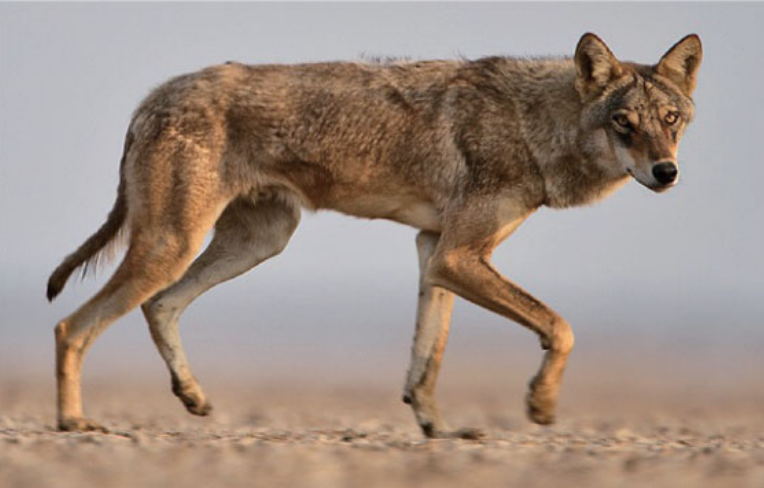
According to Associated Press the government of India reported more than 100 deaths attributable to wolves in one year during the 1980s. In 1878, British officials in Uttar Pradesh recorded 624 human killings by wolves. The British offered a 5-rupee bounty for each wolf killed. This led to the slaying of nearly 2,600 wolves, and brought an end to the wolf killings in nine months.
In India, there were four waves of wolf attack wave in four decades. In 1981-82, wolf attacks in Bihar claimed the lives of at least 13 children. Between 1993 and 1995, another 80 children were attacked, this time by what were believed to be five wolf packs in the region's Hazaribagh district. The deadliest episode occurred over eight months in 1996, when at least 76 children from more than 50 villages in Uttar Pradesh were attacked, resulting in 38 deaths. The killings stopped after authorities killed 11 wolves. The media described them as “man-eating” wolves. More children were killed in the summer of 2024. [Source: Soutik Biswas. BBC, September 5, 2024]
According to the report on wolf attacks by the Norwegian Institute for Nature Research: Wolf attacks in India. India has often been in the center of cases about wolf attacks on people, although solid data on verified cases remains hard to find. Predatory attacks in India were well documented in the 1980s and 1990s. Since then we have not been able to find concrete evidence of similar episodes although media reports from December 2018 and January 2019 describe a series of 4 predatory attacks (two of which were fatal) by wolves on children over the course of two months in a limited area in the Sambhal district of Uttar Pradesh state. Khan (2017) presents a medical case study of the treatment of a 12-year-old boy from the Indian Himalayas who suffered massive facial injuries resulting from an animal attack that was attributed to a non-rabid wolf.[Source: “Wolf Attacks on Humans: an Update for 2002–2020" by John D. C. Linnell, Ekaterina Kovtun and Ive Rouart, Norwegian Institute for Nature Research, 2021].
A survey was conducted of Forest Department records for the 2 years 2006–07 and 2007–08 concerning people injured or killed by wildlife. Responses were received from 622 divisions (of 804 contacted) from 25 (of 28) Indian states. The survey received reports of 608 deaths and 5832 injuries caused by wildlife where the species responsible was identified. Wolves were identified as being responsible for 12 deaths (1 in Uttar Pradesh, 7 in Madhya Pradesh, 3 in Maharashtra, 1 in Jharkhand) and 167 injuries. In contrast elephants killed 286 people, leopards killed 109, sloth bears killed 65 and tigers 41. Interestingly Nabi et al. (2009) used similar sources to survey human attacks by wildlife in the state of Jammu and Kashmir for a partly overlapping period (2005–2007). They found additional records of 2 people killed and 5 injured by wolves (leopards killed 16 people and black bears killed 2). [Source: “Wolf Attacks on Humans: an Update for 2002–2020" by John D. C. Linnell, Ekaterina Kovtun and Ive Rouart, Norwegian Institute for Nature Research, 2021].
Unfortunately, neither of these surveys could identify what proportion of cases were due to rabid wolves. Attacks by rabid wolves are commonly reported by the media in India, although scientific documentation remains rare, see Isloor et al. (2014) for an exception describing an attack where 3 people were bitten in a single attack in the state of Karnataka. Belsare & Vanak (2011) describe 5 attacks that led to 24 people being bitten by rabid wolves (of which 4 died) in the districts of Ahmednager and Solapur in Maharashtra state in the period 2005–2009. Indian media provide a detailed description of two episode in September 2010 in Chittoor district in Andhra Pradesh where rabid wolves bit 40 and 25 people respectively. To provide context, cats and dogs are responsible for 98 percent of India’s approximate 20.000 annual cases of human rabies.
RELATED ARTICLES:
WOLF ATTACKS ON HUMANS: WHERE, WHY, WHEN, HOW factsanddetails.com
WOLF ATTACKS ON HUMANS IN ASIA AND THE FORMER USSR factsanddetails.com
WOLVES AND HUMANS: STORIES, LIVESTOCK, REWILDING factsanddetails.com
WOLVES: CHARACTERISTICS, HISTORY, SPECIES, NUMBERS factsanddetails.com
CANIDS, CANINES AND CANIS: CHARACTERISTICS, BEHAVIOR AND REPRODUCTION factsanddetails.com
DOG AND WOLF HISTORY: ORIGIN, EVOLUTION, HYBRIDS AND RECORDS europe.factsanddetails.com
WOLF BEHAVIOR: PACKS, HIERARCHIES, MATING, PUPS factsanddetails.com;
GRAY WOLVES: CHARACTERISTICS, BEHAVIOR AND REPRODUCTION factsanddetails.com
WOLF FOOD: DIET, HUNTING: PREY, TACTICS, FEEDING HABITS factsanddetails.com;
DOGS: CHARACTERISTICS, BEHAVIOR AND INTELLIGENCE europe.factsanddetails.com
DOMESTICATION OF DOGS: THEORIES, EVIDENCE, WHY AND HOW europe.factsanddetails.com
WHEN AND WHERE DOGS WERE FIRST DOMESTICATED europe.factsanddetails.com
Wolves Taking Children on the India-Nepal Border in 2024
Soutik Biswas of the BBC wrote: Four-year-old Sandhya was sleeping outside her mud hut in India’s Uttar Pradesh state on the night of August 17, 2024 when a power cut plunged the village into darkness. "The wolves attacked within two minutes of the lights going out. By the time we realised what was happening, they had taken her away," recalls her mother, Sunita. Sandhya’s body was found lying next day in the sugarcane farms, some 500 metres from her home. Earlier in the month, in a neighbouring village, eight-year-old Utkarsh was sleeping under a mosquito net when his mother spotted a wolf creeping into their hut. "The animal lunged from the shadows. I screamed, 'Leave my son alone!' My neighbours rushed in, and the wolf fled," she recounts. [Source: Soutik Biswas. BBC, September 5, 2024]
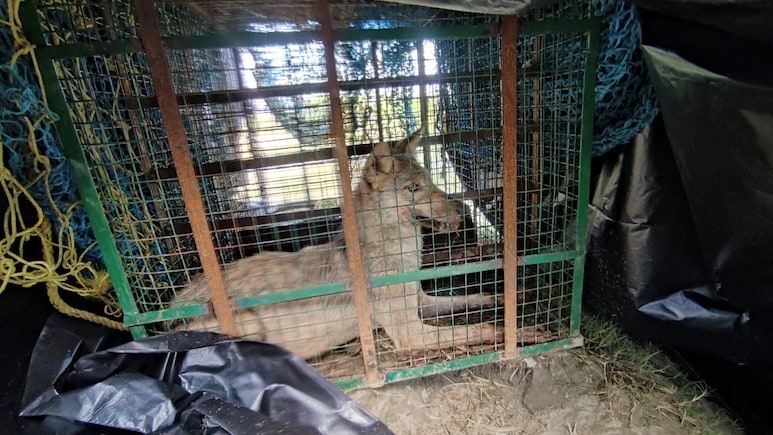
Starting in mid-April, 2024, a wave of wolf attacks has terrorised around 30 villages in Bahraich district, near the border with Nepal. Nine children and an adult have been carried off and killed by the wolves. The youngest victim was a one-year-old boy, and the oldest was a 45-year-old woman. At least 34 others have been injured. Fear and hysteria have gripped the affected villages. With many village homes lacking locks, children are being kept indoors, and men are patrolling the darkly lit streets at night. Authorities have deployed drones and cameras, set traps and used firecrackers to scare away the wolves. So far, three wolves have been captured and relocated to zoos.
Children were killed and partially consumed, showing bite marks on their throats and puncture wounds on various parts of their bodies. Most attacks occurred at night, with children sleeping outdoors in the heart of villages being taken away. Victims were frequently discovered in open areas, such as farms or meadows.The villages involved were crowded and had a large number of vulnerable children from poor farming families, which increased the risk.
It is unclear whether the ongoing attacks are by a lone wolf or a pack. Based on his 30 years of studying wolves, Mr Jhala believes that a single wolf — like in 1996 — is probably responsible for the recent killings. Villagers have reported seeing a group of five to six wolves in their fields during the day, while the mother of eight-year-old Utkarsh, who survived, saw a single wolf entering her home and attacking her son.
Wildlife experts like Mr Jhala advise that children in the affected villages should stay indoors, sleep between adults if housing is inadequate, and be accompanied by an adult to the toilet at night. Villagers should avoid letting children roam unsupervised in areas where wolves might be hiding and appoint night watchmen to patrol the streets.
Why Did the Wolf Attacks Occur on the India-Nepal Border in 2024
So why are wolves attacking humans in Bahraich?Soutik Biswas of the BBC wrote: Nestled between a river and forests, parts of Bahraich have long been a traditional wolf habitat. Located in the floodplain of the Ghaghara river, the district, home to 3.5 million people, is prone to seasonal flooding. Heavy rains and flooding during the monsoons have drastically altered the landscape. The swollen river has inundated the forests, potentially driving the wolves out in search of food and water. Indian wolves prey on black buck, chinkara (Indian gazelle) and hare. “Climate change is a gradual process but flooding can lead to habitat disruptions for the wolves, forcing them into human settlements in search of food,” says Amita Kanaujia of the Institute of Wildlife Sciences in Lucknow University.[Source: Soutik Biswas. BBC, September 5, 2024]
Why would children be a target of the wolves in search of food? During an investigation into killings of a large number of children in wolf attacks in Uttar Pradesh villages in 1996, wildlife experts found there was minimal supervision of children because most victims came from impoverished single-parent households, usually led by mothers. In these poor Indian villages, livestock is often better protected than children. When a hungry wolf, facing a depleted prey habitat and limited access to livestock, encounters such vulnerable children, they become more likely targets. "Nowhere else in the world have we witnessed surges of wolf attacks on children," Yadvendradev Jhala, a leading Indian scientist and conservationist, told me.
For centuries, humans and wolves in India co-existed peacefully, thanks to the traditional tolerance of pastoralist communities, say wildlife experts. This long-standing co-existence has allowed wolves to persist despite frequent conflicts, particularly over livestock. However, times have changed, and the recent surge in attacks has raised new concerns. “Until we determine the exact reasons behind these attacks, these precautions are crucial to keep people safe,” Mr Jhala says. Meanwhile, people in Bahraich remain on edge every night.
Wolf Attacks in India in 1996
In the 1996, there was a wave of attacks in Uttar Pradesh in northern India. John F. Burns wrote in the New York Times, “It has been more than a century since India faced the threat of man-eating wolves on anything like the scale now terrorizing this region of Uttar Pradesh state. Since the first killing five months ago, 33 children have been carried off and killed by wolves, according to police figures; 20 others have been seriously mauled along this stretch of the Ganges River basin, 350 miles from New Delhi. A hunt by thousands of villagers and police officers has killed only 10 wolves so far. [Source: John F. Burns, New York Times, September 1, 1996]
“With new attacks each week, hysteria is sweeping the area of the killings, a terrain of lush fields interlaced with rivers and ravines that reaches about 60 miles north to south and about 40 miles across. More than nine million people live in the region in some of the harshest poverty found anywhere in India. Ram Lakhan Singh, an animal conservationist, “met with other officials at Manjanpur, another village hit by a wolf killing, and pored over hand-drawn maps. Tracing his finger over dotted lines connecting red triangles, denoting wolf killings, and blue circles, denoting maulings by the wolves, Mr. Singh showed why he believed that a single wolf pack was responsible for the attacks.
''There has never been more than one attack on a single day, and the same village has never been attacked twice,'' he said. ''This cannot be coincidence.'' Mr. Singh said studies in India, some going back a century and more, showed that wolves could cover 40 to 50 miles in a day. ''So we seem to be dealing here with a single pack,'' he said. From villagers' accounts, most attacks have occurred between midnight and 4 A.M. Because of the stifling heat and cramped village homes, many women sleep outside on latticed cots called charpoys, infants beside them, making inviting targets for the wolves. In other cases, marks on dirt floors have shown how wolves have crept through doorways and carried off their prey.”
Wolf Kills Four-Year-Old in India in 1996
Reporting from Banbirpur, India, John F. Burns wrote in the New York Times, “When the man-eating wolf came to this tranquil village toward dusk on an evening in mid-August, it was every child's worst nightmare come true. The wolf pounced while Urmila Devi and three of her eight children were in a grassy clearing at the edge of the village, using the open ground for a toilet. The animal, about 100 pounds of coiled sinew and muscle, seized the smallest child, a 4-year-old boy named Anand Kumar, and carried him by the neck into the luxuriant stands of corn and elephant grass that stretch to a nearby riverbank. [Source: John F. Burns, New York Times, September 1, 1996 ]
“When a police search party found the boy three days later, half a mile away, all that remained was his head. From the claw and tooth marks, pathologists confirmed he had been killed by a wolf — probably one of a pack that conservationists believe has been roaming this area, driven to killing small children by hunger or by something else that has upset the natural instinct of wolves to avoid humans, like thrill-seeking villagers stealing cubs from a lair.
''It came across the grass on all four paws, like this,'' said Sita Devi, 10, the sister of the boy killed by a wolf in Banbirpur on Aug. 16, as she moved forward in a crouch from a cluster of villagers gathered by a well. She told her story with tears in her eyes, to anxious murmurs from the crowd. ''As it grabbed Anand, it rose onto two legs until it was tall as a man,'' she said. ''Then it threw him over its shoulder. It was wearing a black coat, and a helmet and goggles.'' The girl's grandfather Ram Lakhan Panday, who drove a truck in Calcutta for 50 years before retiring to his native village, said: ''As long as officials pressure us to say it was a wolf, we'll say it was a wolf. But we have seen this thing with our own eyes. It is not a wolf; it is a human being.''
Wolf Attack Hysteria in India in 1996
John F. Burns wrote in the New York Times, “A frenzy of rumors has put the blame for the killings not on wolves but on werewolves, the half-man, half-wolf creatures that have stalked their way through folklore for about as long as human societies have existed. Other rumors have put the blame for the killings on infiltrators from Pakistan, who are said to have dressed up as wolves. Pakistan is India's traditional enemy. [Source: John F. Burns, New York Times, September 1, 1996 ]
“Villagers have turned against strangers, and sometimes against one another, in lynchings that have killed at least 20 people and prompted the authorities to arrest 150 people. ''It's the worst wolf menace anywhere in the world in at least 100 years,'' said Ram Lakhan Singh, the animal conservationist chosen to lead an effort to kill wolves suspected of attacking humans. The hunt involves thousands of villagers and police officers armed with bamboo staves and 12-gauge shotguns. But nobody can be sure that any of the wolves shot so far were part of the pack that Mr. Singh and other experts believe is responsible for the deaths.
“Fear is pervasive. Men stay awake all night, keeping vigil with antique rifles and staves. Mothers keep children from the fields, and infants are kept inside all day. In the dark interiors of stark brick homes made clammy by the monsoons, fantastical stories are told, sweeping aside all attempts by officials to convince villagers that the killers have been wolves. Nearly half of India's 930 million people are illiterate, and the ratio is higher in villages like Banbirpur. Many men head off to Bombay, Delhi and Calcutta in search of menial jobs, but living in slums among others much like themselves, they learn little to allay the superstitions of village life. In the case of wolves, these are compounded by fairy tales told to children — Indian versions of ''Little Red Riding Hood'' — in which wolves, and werewolves, are represented as among the most cunning and dangerous of all creatures.”
“At the meeting in Manjanpur, Mr. Singh drafted plans to have hunters patrol hundreds of square miles along riverbanks in the area known to be the favored spot for wolves' lairs. In addition, a bounty of 10,000 rupees (about $285), more than many families earn in a year, will be offered for every dead wolf brought in by villagers. Some Indian conservationists worry that a similar campaign this time — especially if it is repeated elsewhere across India, where isolated incidents of wolves killing children have occurred — could lead to wolves becoming extinct. But Mr. Singh has no patience for this view. ''Crime and punishment applies to every living thing, humans and animals,'' he said. ''The wolves have to learn that they cannot live next to human beings and misbehave. If they do, they must be killed.'' Then he pronounced what sounded like a death sentence for the wolf in the wild.''Enough care has been taken for these animals,'' he said. ''We simply cannot have carnivores roaming around densely populated areas anymore. If India is going to save the wolf, it is going to have to be in sanctuaries.''
Reasons for the Wolf Attack in India
Yadvendradev Jhala, a leading Indian scientist and conservationist, Jhala and his colleague Dinesh Kumar Sharma conducted a meticulous investigation into the 1996 killings, examining body remains, wolf hair, village hutments, population density, livestock and autopsy reports. Soutik Biswas of the BBC wrote: children were killed and partially consumed, showing bite marks on their throats and puncture wounds on various parts of their bodies. Most attacks occurred at night, with children sleeping outdoors in the heart of villages being taken away. Victims were frequently discovered in open areas, such as farms or meadows. The 1996 wolf attacks took place in villages near riverbanks, surrounded by rice and sugarcane farms and swampy groves. The villages involved were crowded and had a large number of vulnerable children from poor farming families, which increased the risk. [Source: Soutik Biswas. BBC, September 5, 2024]
John F. Burns wrote in the New York Times, “Mr. Singh is convinced that the most likely cause for the attacks is hunger. For five years in the 1980's, Mr. Singh was director of India's troubled effort to save its diminishing stock of tigers, and that experience showed him how India's fast-growing population, competing with wild animals for land and resources, had driven some species, including tigers, to desperation in the struggle to survive. [Source: John F. Burns, New York Times, September 1, 1996 ]
“In the early 1970's, India expanded its animal sanctuaries to a total of more than 60,000 square miles, about 5 percent of the country's area, and adopted a far-reaching wildlife protection statute. Tigers were on the list, as were wolves. But while the number of tigers continued to plunge, with many poached to feed the market for tiger parts elsewhere in Asia, wolf populations soared. Mr. Singh, directing the effort here to hunt the wolves, believes the growing numbers have now outstripped the habitat available to support the wolves, at least in eastern Uttar Pradesh, causing some of the hungrier animals to become man-eaters.”
Image Sources: Wikimedia Commons
Text Sources: Animal Diversity Web animaldiversity.org ; National Geographic, Live Science, Natural History magazine, David Attenborough books, New York Times, Washington Post, Los Angeles Times, Smithsonian magazine, Discover magazine, The New Yorker, Time, BBC, CNN, Reuters, Associated Press, AFP, Lonely Planet Guides, Wikipedia, The Guardian, Top Secret Animal Attack Files website and various books and other publications.
Last updated May 2025