
WOLF ATTACKS IN ASIA
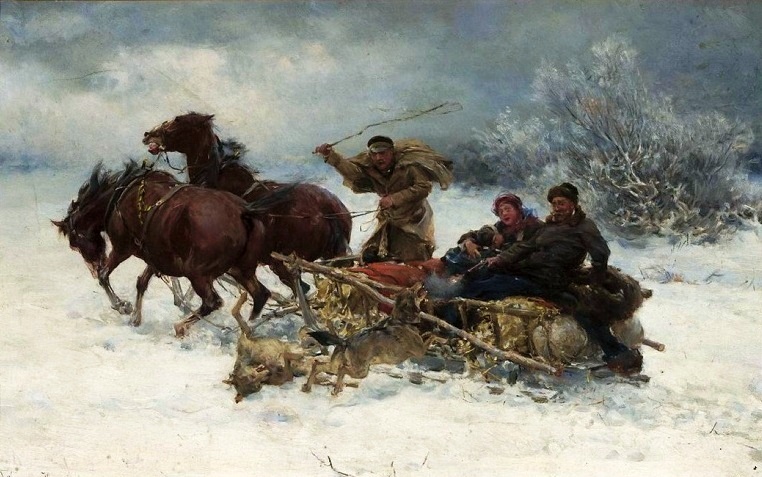
T. R. Mader, Research Director of the Abundant Wildlife Society of North America, wrote: “ Biologists tell us that the wolves of Asia and North America are one and the same species. Wolf attacks are common in many parts of Asia. The government of India reported more than 100 deaths attributable to wolves in one year during the eighties. (Associated Press, 1985) This author recalls a news report in 1990 in which Iran reported deaths from attacks by wolves. [Source: T. R. Mader, Research Director, Abundant Wildlife Society of North America, an independent research organization]
Rashid Jamsheed, a U.S. trained biologist, was the game director for Iran. He wrote a book entitled "Big Game Animals of Iran (Persia)." In it he made several references to wolf attacks on humans. Jamsheed says that for a millennia people have reported wolves attacking and killing humans. In winter, when starving wolves grow bold, they have been known to enter towns and kill people in daylight on the streets. Apparently, in Iran, there are many cases of wolves running off with small children. There is also a story of a mounted and armed policeman (gendarme) being followed by 3 wolves. In time he had to get off his horse to attend to nature’s call, leaving his rifle in the scabbard. A later reconstruction at the scene of the gnawed bones and wolf tracks indicated that the horse had bolted and left the man defenseless, whereupon he was killed and eaten.
A Russian Linguist, Will Graves, provided our organization with reports of wolves killing Russian people in many areas of that country. Reports indicate some of the wolves were diseased while others appeared healthy. Reports have also come from rural China. The official Zinhua News Agency reported that a peasant woman, Wu Jing, snatched her two daughters from the jaws of a wolf and wrestled with the animal until rescuers arrived. Wu slashed at the wolf with a sickle and it dropped one daughter, but grabbed her sister. It was then Wu wrestled with the animal until herdsmen came and drove the beast away. This incident occurred near Shenyang City, about 380 miles northeast of Beijing. (Chronicle Features, 1992)
The question arises: "Why so many attacks in Asia and so few in North America?" Two factors must be considered: 1) The Philosophy of Conservation - Our forefathers always believed that they had the right and obligation to protect their livelihoods. Considerable distance was necessary between man and wolf for the wolf to survive. 2) Firearms - Inexpensive, efficient weapons gave man the upper hand in the protection of his livelihood and for the taking of wolves. Milton P. Skinner in his book, “The Yellowstone Nature Book” (published 1924) wrote, "Most of the stories we hear of the ferocity of these animals... come from Europe. There, they are dangerous because they do not fear man, since they are seldom hunted except by the lords of the manor. In America, the wolves are the same kind, but they have found to their bitter cost that practically every man and boy carries a rifle..." Skinner was correct. The areas of Asia where wolf attacks occur on humans are the same areas where the people have no firearms or other effective means of predator control.
RELATED ARTICLES:
WOLF ATTACKS ON HUMANS: WHERE, WHY, WHEN, HOW factsanddetails.com
WOLF ATTACKS ON HUMANS IN INDIA factsanddetails.com
WOLVES AND HUMANS: STORIES, LIVESTOCK, REWILDING factsanddetails.com
WOLVES: CHARACTERISTICS, HISTORY, SPECIES, NUMBERS factsanddetails.com
CANIDS, CANINES AND CANIS: CHARACTERISTICS, BEHAVIOR AND REPRODUCTION factsanddetails.com
DOG AND WOLF HISTORY: ORIGIN, EVOLUTION, HYBRIDS AND RECORDS europe.factsanddetails.com
WOLF BEHAVIOR: PACKS, HIERARCHIES, MATING, PUPS factsanddetails.com;
GRAY WOLVES: CHARACTERISTICS, BEHAVIOR AND REPRODUCTION factsanddetails.com
WOLF FOOD: DIET, HUNTING: PREY, TACTICS, FEEDING HABITS factsanddetails.com;
DOGS: CHARACTERISTICS, BEHAVIOR AND INTELLIGENCE europe.factsanddetails.com
DOMESTICATION OF DOGS: THEORIES, EVIDENCE, WHY AND HOW europe.factsanddetails.com
WHEN AND WHERE DOGS WERE FIRST DOMESTICATED europe.factsanddetails.com
Wolf Attacks in India
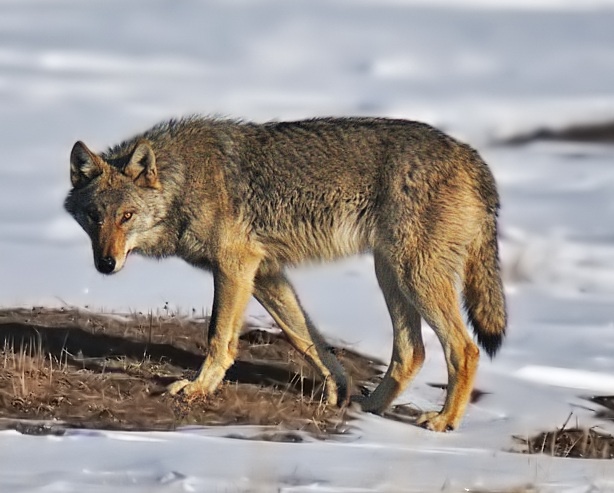
According to Associated Press the government of India reported more than 100 deaths attributable to wolves in one year during the 1980s. In 1878, British officials in Uttar Pradesh recorded 624 human killings by wolves. The British offered a 5-rupee bounty for each wolf killed. This led to the slaying of nearly 2,600 wolves, and brought an end to the wolf killings in nine months.
In India, there were four waves of wolf attack wave in four decades. In 1981-82, wolf attacks in Bihar claimed the lives of at least 13 children. Between 1993 and 1995, another 80 children were attacked, this time by what were believed to be five wolf packs in the region's Hazaribagh district. The deadliest episode occurred over eight months in 1996, when at least 76 children from more than 50 villages in Uttar Pradesh were attacked, resulting in 38 deaths. The killings stopped after authorities killed 11 wolves. The media described them as “man-eating” wolves. More children were killed in the summer of 2024. [Source: Soutik Biswas. BBC, September 5, 2024]
According to the report on wolf attacks by the Norwegian Institute for Nature Research: Wolf attacks in India. India has often been in the center of cases about wolf attacks on people, although solid data on verified cases remains hard to find. Predatory attacks in India were well documented in the 1980s and 1990s. Since then we have not been able to find concrete evidence of similar episodes although media reports from December 2018 and January 2019 describe a series of 4 predatory attacks (two of which were fatal) by wolves on children over the course of two months in a limited area in the Sambhal district of Uttar Pradesh state. Khan (2017) presents a medical case study of the treatment of a 12-year-old boy from the Indian Himalayas who suffered massive facial injuries resulting from an animal attack that was attributed to a non-rabid wolf.[Source: “Wolf Attacks on Humans: an Update for 2002–2020" by John D. C. Linnell, Ekaterina Kovtun and Ive Rouart, Norwegian Institute for Nature Research, 2021].
See Separate Article: WOLF ATTACKS ON HUMANS IN INDIA factsanddetails.com
Rabid Wolf Attacks in Russia and Ukraine
According to the report on wolf attacks by the Norwegian Institute for Nature Research: A media survey revealed 16 cases of attacks (38 victims) by rabid wolves in Russia, Ukraine, Belarus and Moldova in the period 2015–2018. These reports were particularly well documented, with detailed media accounts and official documents-press releases produced by health and agricultural authorities imposing rabies quarantine rulings on the districts. [Source: “Wolf Attacks on Humans: an Update for 2002–2020" by John D. C. Linnell, Ekaterina Kovtun and Ive Rouart, Norwegian Institute for Nature Research, 2021].
Rabies is common in Russia, including in wolves. Most wolves were also formally tested for rabies. In addition, Shkvyria et al. (2018) report an additional 14 attacks by wolves on 48 people during the period 2002–2015 in Ukraine. Rabies was confirmed in 8 of these cases and suspect in the others. All victims survived. In 2009, Russian media carried a story about a fatal predatory attack on a child who was playing in the forest. While the media reports appear consistent and credible, we were not able to verify the event with external sources as it fell outside the period of our most intensive follow-up.
Wolf Attack in Central Asia
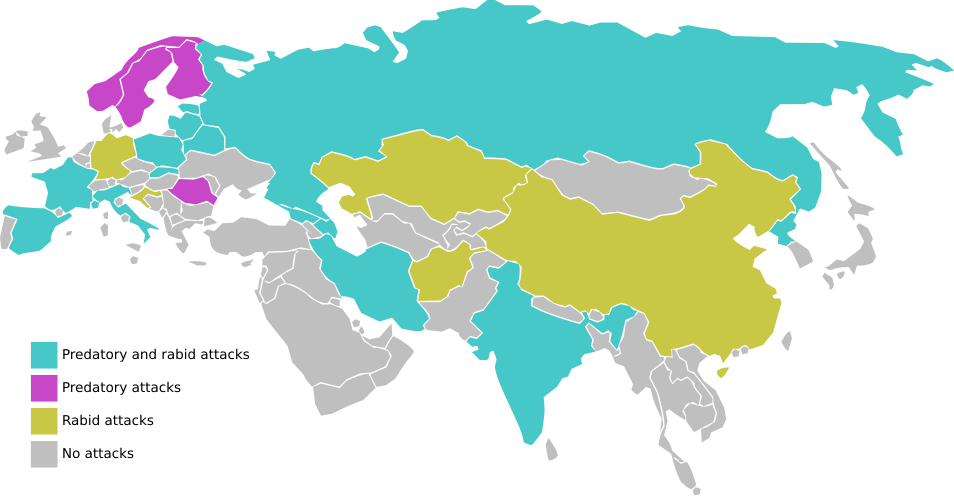
According to the report on wolf attacks by the Norwegian Institute for Nature Research: Our media survey identified multiple cases of attacks by rabid wolves across central Asia, including 1 attack each in Mongolia and Kazakhstan and four in Kyrgyzstan, with a total of 12 victims. One of the Kazakh cases was lethal where an adult male died of rabies despite having post-exposure treatment. Media also report predatory attacks in Kyrgyzstan and Tajikistan. The Kyrgyz case involved an 11-year-old boy attacked outside his house. He survived because his father came to the rescue and shot the wolf, which tested negative for rabies. The Tadjik case involved a child between 2 and 3-years-old who was grabbed in a field while playing with his older sister. He was carried several hundred meters. By the time rescuers found him he was already dead. [Source: “Wolf Attacks on Humans: an Update for 2002–2020" by John D. C. Linnell, Ekaterina Kovtun and Ive Rouart, Norwegian Institute for Nature Research, 2021].
In the winter of 2005, extreme cold in Central Asia forced wolves to in close contact with residents of Uzbekistan and Tajikistan, resulting in several attacks. Antoine Blua of Radio Free Europe wrote: “On the arid steppes of western Uzbekistan, some 20 villagers have been reported injured by wolves in five months. Two of them — in the Muinak district — died in early February as a result of their wounds. [Source: Antoine Blua, Radio Free Europe (RFE), March 15, 2005 ^^^]
“In a remote eastern Badakhshan Province of Tajikistan where livestock are essential for survival, no one has died from a wolf attack. But Roshtqala District resident Jonibek Qozibekov told RFE that villagers live in terror, with roaming wolves preying on farm animals."At night, the wolves own the village. First, they ate all the dogs. Now they have begun to eat sheep, cows [and other animals]. In the past two months, they have eaten 150 of them. Wolves dig through mud walls, break into sheds, and attack [animals]," Qozibekov said. "At night, the wolves own the village. First, they ate all the dogs. Now they have begun to eat sheep, cows [and other animals]." ^^^
“Residents from both regions have appealed to their central governments for help.” One option is a mass hunting campaigns similar to the one that authorities launched in southern Russia earlier in 2005. But Temur Idrisov, program director of the Tajik environmental group For the Earth, says he promotes a system of indemnities for the damage caused by wolves. "Communities and wildlife can live together in harmony. The main issue here is [to draw] the attention of the government to this [problem]. If some community loses cows or sheep, there can be a system to covers this damage. But of course it should be partly subsidized by the government and by international organizations or environmental NGOs," Idrisov said.
In February 2005, the PakTribune.com website reported that bitter weather in the high Afghan mountains drove wolves into populated areas. The official Bakhter News Agency reported that four villagers were killed and eaten by wolves, and a further 22 were bitten. [Source: Animal Attack Files, February 19, 2005]
Wolf Attacks in Armenia
In January 2007, ArmeniaNow reported: “A wild grey wolf attacked and injured Artur Sargsyan in the face outside his home in the village of Brnakot. The 30-year-old man was bitten as he went out to investigage his dog’s anxious barking on January 9th. After wounding Artur, the wolf attacked 55-year-old Armida Grigoryan, another resident of the village, and her son, who had responded to his mother’s screams. The wolf went on to savage two young men in the street, causing bodily injuries. [Source: Marianna Grigoryan and Sara Khojoyan, ArmeniaNow, January 17, 2007 =]
“Brnakot is a village in Syunik province located some 220 kilometers south of Yerevan; the villagers say they can’t recall a previous case of a wolf attacking people. “I am 50 years old but I can’t remember an incident like that. Wolves have attacked cattle, but never people,” Atom Arakelyan, the head of the Brnakot administration, told Armenianow. “We have never seen a beast like this one. Wolves are cautious, they rarely approach people or houses. He is either very wild or very hungry.” After attacking the villagers in Brnakot, the wolf moved on to other nearby settlements. Official records show that two people were injured in Uyts village in Syunik and taken to the military hospital in nearby Aghitu village at midnight the same day. =
“Police set up a hunting party comprising residents of Uyts and Brnakot to track down and kill the wolf. But by then, the wild animal had reached the town of Sisian and attacked Mher Poghosyan, aged 24, after entering a house. Poghosyan’s father managed to kill the beast with several blows to the head with the butt of his rifle. Mher Poghosyan received injuries to his hands and face from the wolf and joined its other victims at Aghitu military hospital. =
“No cases of wolf attacks have been registered in the republic for the last three or four years,” says Nikolai Grigoryan, advisor of the Armenian Rescue Service director. “We are still uncertain about what caused this particular incident.” The service said that two of the seven injured people were allowed home after medical treatment. The other five have been transported to Sisian central hospital and are now under the supervision of doctors. All of the victims of the wolf have been vaccinated against rabies. =
Wolf Attacks in Siberia
In 2013, the governor of Sakha Republic, Russia's largest region declared a state of emergency after a surge of wolf attacks. Roland Oliphant wrote in The Telegraph: “Yegor Borisov, head of the Sakha Republic, a vast and sparsely populated region of eastern Siberia, has called for an urgent cull of wolves after the predators swamped populated areas in a search for food. The local government has announced a three month "battle against wolves". Special task forces will be put together and the hunting season extended all year round in a bid to tackle what the local authorities have described as a "mass migration" of the creatures. The governor has even promised a six-figure cash prize for the hunters who bring back the most skins. [Source: Roland Oliphant, The Telegraph, January 6, 2013]
The sparsely populated Sakha Republic, also known as Yakutia, has seen several dramatic confrontations between humans and the animals in recent years. Last January a "super pack" of 400 wolves laid siege to the remote town of Verkhoyansk, forcing locals to mount patrols on snow mobiles until the government could send in extra help. Wolves usually hunt in small groups of just six or seven, and naturalists believe only a serious failure of the usual food supply could have brought such a large pack together to tackle larger prey. This year naturalists say a shortage of the wolves' traditional pretty – especially blue hares – has seen vast numbers of the hungry animals migrating from their mountainous hunting grounds to central parts of the republic.
While scientists agree a food shortage is at the root of the problem, it is not clear what has impacted the small mammal population. Some naturalists have pointed to cyclical fluctuations in the population of small mammals, but others have suggested unusually harsh winters could have played a role.
There are thought to be about 3,500 wolves in the Sakha Republic, which covers an area larger than Argentina. The local government says the territory can realistically support no more than 500. While no attacks on humans have been reported recently, the influx of predators into more populated regions has had a big impact on agriculture – especially the region's traditional reindeer herders. Wolves killed 313 horses and over 16,000 reindeer in 2012, according to the agriculture ministry.
Wolf Attack Near China-Mongolia Border
In August 2014, an attack in the dead of night by a pack of hungry wolves on a village in far west China left six villagers injured. Malcolm Moore wrote in The Telegraph, “Four or five wolves crept into Kalazhuole village in Altay, which lies at the foot of mountains that separate China from Mongolia, looking for sheep. They made enough noise to wake up several families in the village, who tried to chase them away. In the subsequent fighting, six villagers were bitten or clawed. [Source: Malcolm Moore, The Telegraph, August 13, 2014 ==]
"I was asleep in a water pump room," said one villager named Zhao Duobai. "At around 1am, I heard a scratching at the door. When I went outside, I saw the wolves pacing around. I took a small bucket and smashed one of their heads, but it rushed at me and attacked. I grabbed a wooden plate and hit it very hard around the head and it ran away. Later, I realised I was covered in blood." ==
“By the time a team of 30 hunters arrived at the scene to kill the wolves, the pack had vanished. The village lies near grasslands which are home to wolves, but it is rare to see an attack in the summer, when food is more plentiful. However, another nearby village was attacked in April. Yang Weikang, a biologist at the Chinese Academy of Sciences told the People's Daily website that the wolves have had their food supply and habitat threatened by increasing human encroachment, including intensive farming, road building and mining projects.” ==
“China used to have one of the world's largest wolf populations, spread across grasslands in Xinjiang and Inner Mongolia. But a campaign in the 1970s to conquer the grasslands saw wolves hunted to near extinction. That only led to an explosion in the numbers of rabbits, marmots and other pests.So since the 1990s, the Communist party has changed tack and tried to revive wolf packs, while also arming villagers with guns to protect themselves.The Chinese, or Eurasian, wolf – Canis Lupus Lupus – is thinner than its American cousin, with longer ears and a narrower head.” ==
Image Sources: Wikimedia Commons
Text Sources: Animal Diversity Web animaldiversity.org ; National Geographic, Live Science, Natural History magazine, David Attenborough books, New York Times, Washington Post, Los Angeles Times, Smithsonian magazine, Discover magazine, The New Yorker, Time, BBC, CNN, Reuters, Associated Press, AFP, Lonely Planet Guides, Wikipedia, The Guardian, Top Secret Animal Attack Files website and various books and other publications.
Last updated May 2025