
MINAHASANS
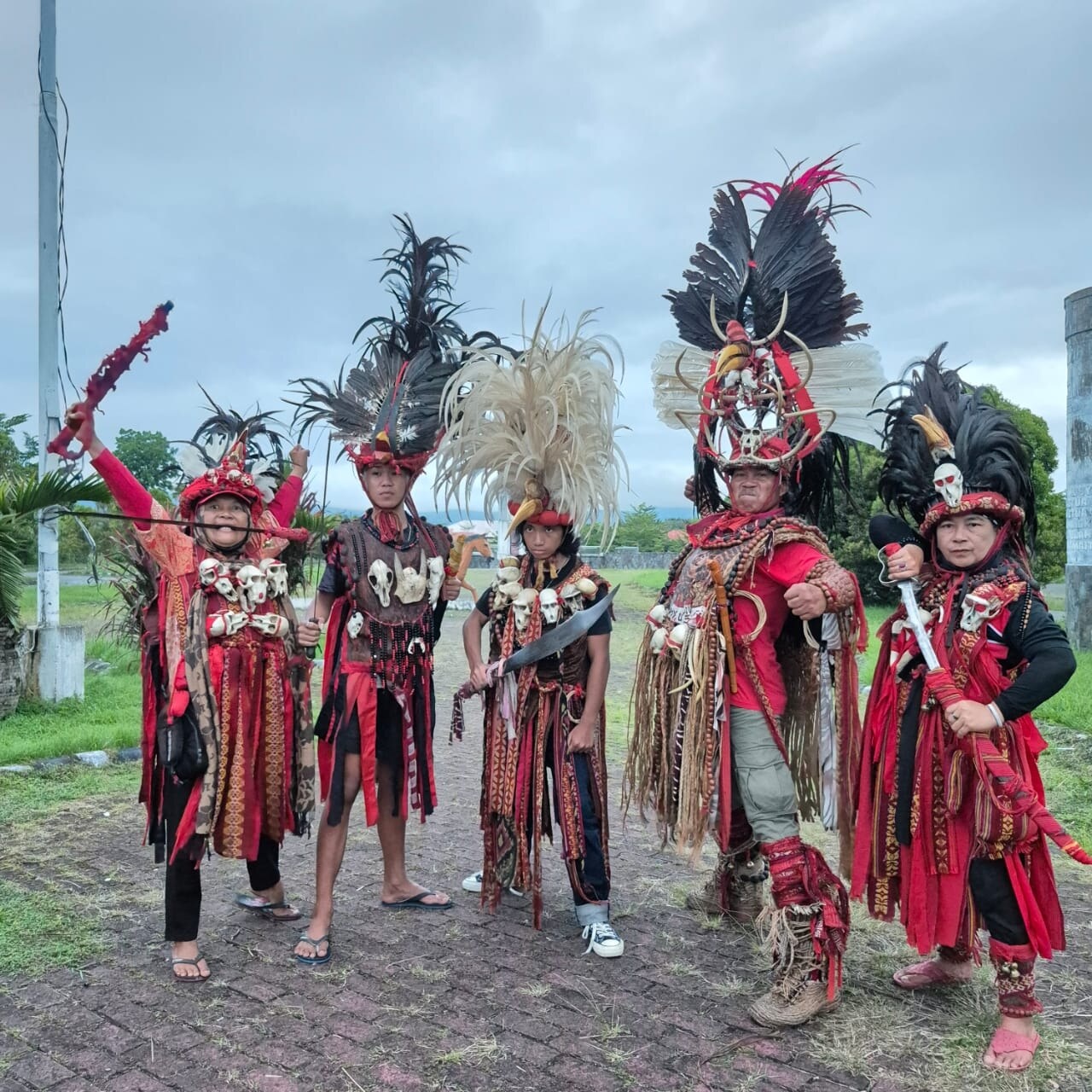
Minahasans live in a mountainous area in the extreme northeastern section of the northern peninsula on Sulawesi. Also known as the Minahassa, Menadonese, Minahasa, Minahasser, Minhasa, they are a confederation of groups that joined together to fight their neighbors, the Mongondow. The nine Minahasans groups recognized to day are: 1) Tonsea, 2) Tombulu ((Tombalu, Toumbulu), 3) Tontemboan, 4) Tondano (Toulour), 5) Tonsawang, 6) Ratahan (Toratán), 7) Ponosakan, 8) Sangir and 9) Banti. [Source:“Encyclopedia of World Cultures, East and Southeast Asia” edited by Paul Hockings (G.K. Hall & Company, 1993), Wikipedia]
The Minahasans (pronunced mee-nah-HAH-suns) raise wet and dry rice and others crops and are known as being good in business and seafaring and have a tradition of service on international shipping lines. They are regarded as being outward looking and possessing excellent language and navigation skills. In the past they had close contact with the Dutch. They are mostly Christians and their traditional culture has largely disappeared. The Minahasans are said to have descended from the marriage of a mother and son who were created by gods that rose from the sea.
Although the Minahasans did not form precolonial kingdoms like many other Indonesian peoples, they have enjoyed high levels of education and economic development since the Dutch period. The name Minahasa means “made one,” referring to an early confederation of tribes formed to resist the Mongondow. From this confederation emerged the nine recognized sub-ethnic groups. The people of the Minahasan region are also commonly known as Manadonese, after the main city, Manado. [Source: A. J. Abalahin, “Worldmark Encyclopedia of Cultures and Daily Life,” Cengage Learning, 2009]
The Minahasans number around 1.4 million, up from 1.2 million in the late 2000s. There is some difficulties and inconsistancies in way Minahasans are counted because there are many Minahasan groups and they intermarry with other groups According to Joshua Project the Tonsea Minahasan Population was 152,000, the Tombulu Menadonese population was 114,000 and the Tonsawang population was 38,000 in the early 2020s. According to the “Encyclopedia of World Cultures” the Minahasans (Minahasa, Minahasser, Minhasa, Tombalu, Tombula, Toumbulu) numbered around 40,000 in 1977.
RELATED ARTICLES:
ETHNIC GROUPS IN NORTHERN AND CENTRAL SULAWESI factsanddetails.com
CENTRAL SULAWESI: BADA VALLEY MEGALITHS, LAKE POSO, LORE LINDU NATIONAL PARK factsanddetails.com
NORTH SULAWESI factsanddetails.com
DIVING IN NORTH SULAWEST BUNAKEN ISLAND AND THE LEMBEH STRAIT factsanddetails.com
GORONTALO factsanddetails.com
SULAWESI factsanddetails.com
Where the Minahasans Live
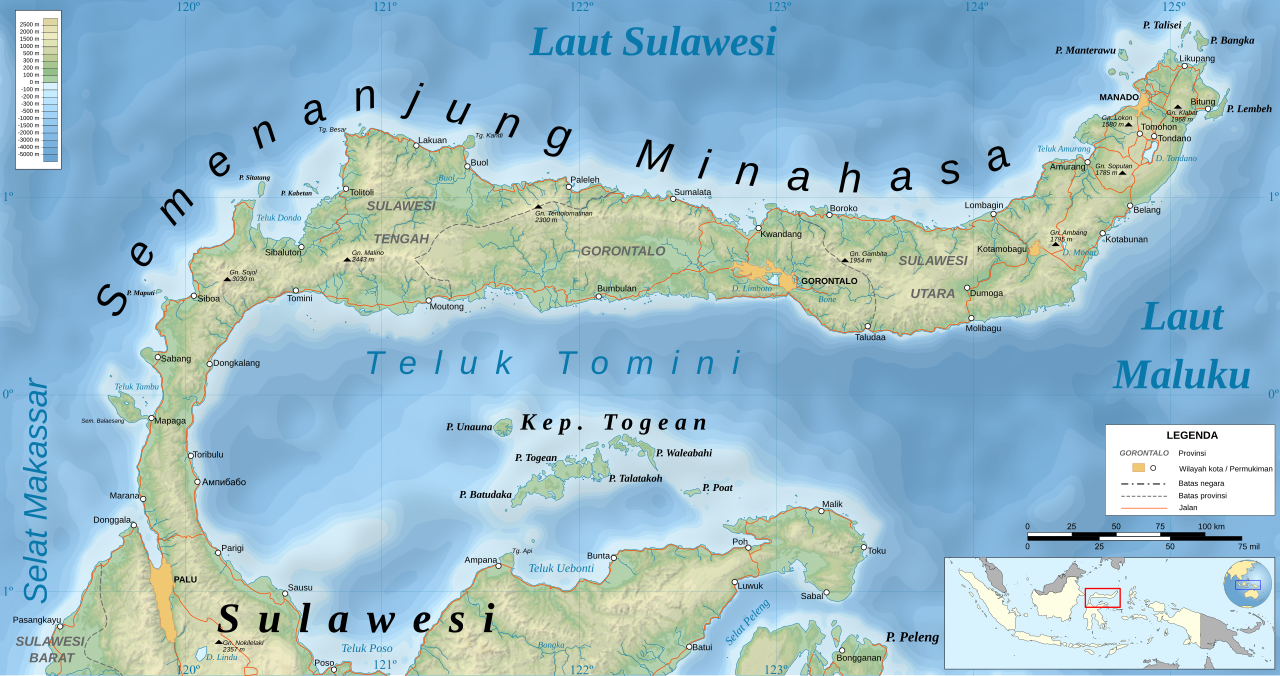
The area the Minahasa occupy the northernmost tip of Sulawesi’s peninsula more or less corresponds with largely to Minahasa regency within the province of North Sulawesi. Its landscape is predominantly mountainous, dominated by Mount Klabat (1,995 meters) and the active volcano Mount Soputan. Lake Tondano, a large upland lake, supports extensive wet-rice cultivation along its shores. [Source: A. J. Abalahin, “Worldmark Encyclopedia of Cultures and Daily Life,” Cengage Learning, 2009; Wikipedia]
According to the 2000 census, Minahasans comprised about 33 percent of North Sulawesi’s population, totaling more than 650,000 people; the provincial population reached approximately 2.85 million by 2008. With a density of about 750 people per square kilometer, Minahasa is far more densely populated than most of Indonesia’s Outer Islands, though still less so than Java. Significant numbers of Minahasans have migrated to Jakarta, other parts of Indonesia, and the Netherlands.
Historically, the Minahasa region lay within the sphere of influence of the Sultanate of Ternate, a relationship reflected in linguistic borrowings from Ternate. Today, the area known as Minahasa Raya includes the cities of Manado, Bitung, and Tomohon, as well as Minahasa, North Minahasa, South Minahasa, and Southeast Minahasa regencies, together accounting for nearly half of North Sulawesi’s administrative regions.
The Minahasan region, particularly Manado, has long attracted migrants and visitors. Minahasans are often stereotyped as physically distinctive due to historical mixing, though this does not reflect the diversity of the population as a whole. A small community of mixed European–indigenous descent, known as the Borgo, remains, and intermarriage with Chinese Indonesians has been common. As a result, anti-Chinese sentiment has traditionally been lower in Minahasa than in many other parts of Indonesia.
Minahasan History
North Sulawesi was one of the earliest regions affected by the southward spread of Austronesian peoples during the late third and second millennia B.C. The prevailing scholarly view is that Austronesians originated in Taiwan, then migrated through the northern and southern Philippines, Borneo, and Sulawesi. From there, they diverged into two broad streams: one moving westward toward Java, Sumatra, and the Malay Peninsula, and the other eastward into the islands of Oceania. [Source: A. J. Abalahin, “Worldmark Encyclopedia of Cultures and Daily Life,” Cengage Learning, 2009, Wikipedia]

According to the Minahasan origin myth, the ancestral mother, Lumimuut, was born from sea foam. Impregnated by the wind, she gave birth to a son, Toar. Seeking spouses, mother and son traveled in opposite directions and, after many years, encountered one another again without recognizing each other. They married and produced many children. Before her death, Lumimuut divided the Minahasa land among them at a sacred stone called Watu Pinawetengan, which exists today, and covered with carvings whose meanings remain unknown.
Early Minahasa history was marked by frequent warfare among clans and villages, including headhunting. The Muslim sultanate of Ternate exerted some influence in the region, but unlike the Gorontalo farther west, the Minahasans resisted Islamization. In the mid-sixteenth century, Portuguese explorers and Catholic missionaries arrived, followed by Spanish contact from the Philippines, which introduced new crops and horses.
In the seventeenth century, the Dutch East India Company expelled the Spanish and established Fort Amsterdam in 1673, around which Manado developed. Dutch control over the highlands was not consolidated until 1808–1809, when forced coffee cultivation began and widespread conversion to Christianity followed. While much indigenous culture declined, Minahasans benefited from colonial education and missionary activity, achieving the highest literacy rates in the colony by 1930 and filling many positions in the colonial bureaucracy and military.
Minahasa attitudes toward Indonesian independence after World War II were mixed, yet Minahasan organizations played an early role in the nationalist movement. During the revolution, a Minahasan leader, Sam Ratulangie, helped establish republican administration in Sulawesi. Today, Minahasa is well integrated into Indonesia, maintaining a distinct Christian identity without separatist ambitions. As part of North Sulawesi, it ranks among Indonesia’s highest regions in quality of life, with Manado emerging as a major center for tourism and regional economic growth.
Minahasan Languages
The Minahasan peninsula is home to nine indigenous languages, including Bantik, Ponosakan, Tombulu, Tonsawang, Tonsea, Tondano and Tontemboan as well as Malay (Manado dialect and Bahasa Indonesia. All of these languages belong to the Malayo-Polynesian branch of the Austronesian language family. Five languages—Tondano, Tombulu, Tonsea, Tontemboan, and Tonsawang—form the Minahasan microgroup, while Bantik and Ratahan are classified within the Sangiric microgroup. Ponosakan, now considered moribund, belongs to the Gorontalo–Mongondow microgroup. [Source: A. J. Abalahin, “Worldmark Encyclopedia of Cultures and Daily Life,” Cengage Learning, 2009; Wikipedia]
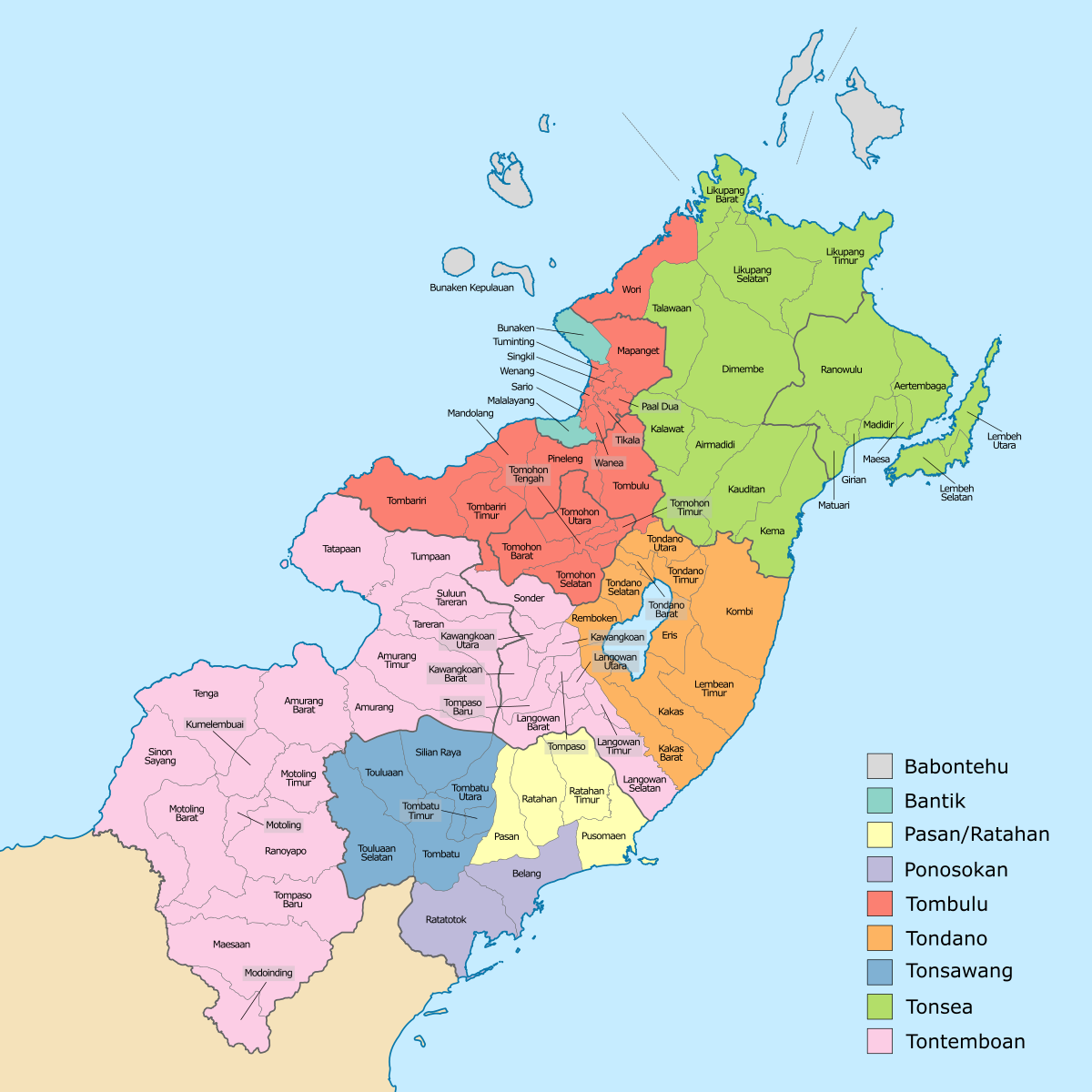
Manado Malay, also known as Minahasa Malay, functions as the principal language of wider communication. It incorporates numerous loanwords from Spanish, Portuguese, and Dutch, reflecting sustained contact with European powers beginning in the early sixteenth century. Although it shares features with other eastern Indonesian Malay varieties, Manado Malay is distinctive enough to be described variously as a creole or as a regional dialect of Malay.
Linguistically, the languages of Minahasa show closer affinities to the Austronesian languages of the Philippines than to those spoken farther south on Sulawesi. Despite the region’s relatively small size, at least seven distinct indigenous languages are associated with specific districts, underscoring its linguistic diversity.
In everyday life, indigenous languages are freely mixed with Manado Malay and, increasingly, with Bahasa Indonesia. This widespread use of the lingua franca has raised concerns that several Minahasan languages may face extinction within a few generations. In a practice unusual in Indonesia, Minahasans customarily use family surnames, with married women adding their maiden names after their husband’s surname.
Minahasan Religion
Over 90 percent of Minahasa are Christian and 93 percent of the population of Minahasa Regency is Christian, one of highest proportions of Christianity in Indonesia. The regency has the highest density of church buildings in Indonesia, with approximately one church for every 100 meters of road. According to Joshua Project 98 percent of Tonsea Minahasans, Tombulu Menadonese and Tonsawang are Christians. [Source: Joshua Project, Wikipedia]
This exceptionally high level of Christianity reflects the success of European missionary activity in northern Sulawesi. Most Minahasans belong to Protestant denominations, historically led by the Dutch Reformed Church, while a small minority are Catholic. Catholicism was first introduced in the sixteenth century by the Portuguese priest Father Diego Magalhaens. Protestantism followed with the arrival of the Dutch in the seventeenth century, though widespread conversion occurred mainly in the nineteenth century. [Source: A. J. Abalahin, “Worldmark Encyclopedia of Cultures and Daily Life,” Cengage Learning, 2009]
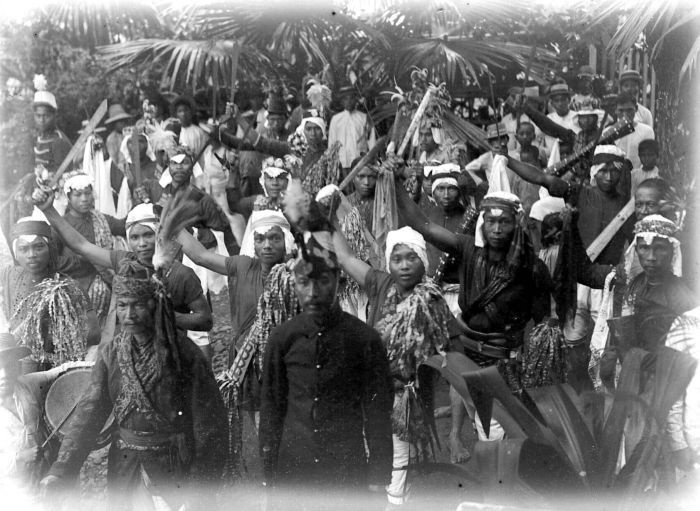
Alongside formal Christianity, belief in a rich supernatural world remains widespread. Minahasans recognize ancestral spirits (opu or dotu), the spirits of the dead (murku), which linger near human settlements, and various malevolent beings such as panunggu, lulu, puntianak, and pok-pok. The spirits of virtuous people are believed to be benevolent, while those of evildoers, suicides, or victims of sudden death are considered dangerous. Rituals of propitiation accompany major life events, periods of illness or danger, and the full moon. These ceremonies are conducted by mediums (tonaas or walian) and involve offerings such as eggs, betel nut, palm wine, cigarettes, and rice. Mediums are also credited with healing powers, divination through animal gall bladders, and specialized roles as midwives, thief-detectors, spell-casters, and even advisers on political matters.
Minahasan Society
Because the Minahasans never developed an indigenous kingdom, high status was not inherited but had to be earned through demonstrated excellence recognized by one’s peers, who were themselves quick to challenge any claim to prominence. In a context of frequent small-scale warfare, prestige depended on personal bravery in battle and the ability to mobilize followers. Success in agriculture was likewise interpreted as a sign of divine favor. Men seeking recognition staged large ceremonial feasts; completing a cycle of nine such feasts entitled a man to burial in a waruga, a stone sarcophagus carved with human figures and shaped like a house with a gabled roof. Although waruga are no longer constructed, people still place coconuts in front of them—said to substitute symbolically for human heads—while today they are increasingly replaced by conspicuous modern mausolea, sometimes shaped like boats or cars to reflect the deceased’s source of wealth. [Source: A. J. Abalahin, “Worldmark Encyclopedia of Cultures and Daily Life,” Cengage Learning, 2009]
Minahasan mythology distinguishes three broad status groups: the tonaas or walian, who were religious specialists; the makatelupitu, comprising leaders and warriors; and ordinary people. In contemporary society, respect continues to be accorded to walian and Christian ministers, but social status is also informally measured by government position, wealth, inheritance, and education. A common distinction is made between tou siga (“clever,” or educated people) and tou lengei (“still ignorant,” or uneducated people).
Traditionally, a village (kampung) is headed by a hukum tua and divided into subvillages led by kepala jaga, which are further subdivided into groups of houses overseen by a meweteng, responsible for distributing work obligations. Additional village officials include a clerk, land surveyor, irrigation supervisor, town crier, and police chief.
Minahasans also participate in mutual aid associations known as mapalus, which support members during funerals, weddings, other major ceremonies, and agricultural work. Similar organizations based on kinship or shared place of origin are especially important among Minahasans living in Jakarta and other parts of Indonesia. In highly competitive village-head elections, these networks are crucial sources of backing, as candidates are expected to host large feasts to secure popular support.
Development of Minahasan Society
Ancient Minahasan society combined strong competition with a marked sense of egalitarianism. Influential walian (religious shamans) were often women, and Minahasan culture shows little evidence of systematic discrimination against women. Community affairs were decided through broadly democratic processes, and because birth status carried relatively little weight, social advancement depended largely on individual achievement and the demonstration of personal virtues. [Source: Wikipedia]
Leadership and higher status were attained mainly through two avenues: the display of wealth and the demonstration of bravery. Wealth was showcased through elaborate ceremonial feasts known as foso, sometimes described as “status selamatans,” while bravery was traditionally proven through successful headhunting. Headhunting was believed to confer keter, a vital spiritual essence comparable to the Malay concept of semangat, embodying courage, eloquence, virility, and fertility.
Although headhunting and many older customs have long disappeared, the underlying values associated with keter remain highly respected. To this day, the strategic use of wealth, personal courage, stubborn resolve, and verbal eloquence continue to play an important role in social mobility within Minahasan society. Traditionally, the dead were interred in stone sarcophagi known as waruga, a practice that was later banned by the Dutch colonial authorities.
Following Dutch contact and the 1699 treaty between the Minahasans and the colonial government, much of the population—especially elites and urban residents of Manado—gradually adopted European customs. By the eighteenth and nineteenth centuries, Minahasans had largely embraced European-style clothing, lifestyles, and cultural norms, a process that continued until a revival of indigenous Minahasan traditions in the late twentieth century. Even today, some Minahasans retain a distinctly European cultural orientation, making Minahasa unusual within Indonesia. The region has been described as a remote bastion of Western culture and Christianity and is often discussed in anthropological literature through frameworks such as the “Stranger King” theory.
Minahasan Family, Marriage and Kinship
Kinship is bilateral, with equal importance given to ties on both the maternal and paternal sides. The household typically consists of parents and their unmarried children, and it is common for a daughter and her husband to reside temporarily with her parents before establishing an independent home. [Source: A. J. Abalahin, “Worldmark Encyclopedia of Cultures and Daily Life,” Cengage Learning, 2009]
A couple, their children, and their children’s families form the basic kinship unit, known as the patuari or famili (the latter a Dutch-derived term). This unit is exogamous (marrying outside of one's own social group), while broader kin groupings have largely lost their significance in contemporary society. Divorce is relatively common and regulated by modern law. Inheritance is divided equally among heirs, including surviving spouses and biological, adopted, and stepchildren, with the eldest son traditionally responsible for overseeing the use or rotation of indivisible property.
In the past, marriages were arranged by parents, but today young people generally choose their own partners. Prior to the wedding, the groom’s family sends a representative to meet an intermediary appointed by the bride’s family, and the presentation of a bride-price formally seals the engagement.
On the Sunday before the wedding, representatives of both families announce the upcoming ceremony and reception in church. On the wedding day, the groom visits the bride’s house, knocks on the door of her room, and—often shyly—exchanges a kiss with her in front of assembled relatives and friends. He then escorts her to the church for the wedding ceremony, followed by a reception at the bride’s home. On the Sunday after the wedding, the groom brings his bride to visit his parents’ house.
Minahasan Villages and Houses
Minahasan villages (wanua) are typically composed of houses arranged along a main road, with side roads added in larger settlements. Public and commercial facilities—such as the church, market, headman’s office, police post, shops, and food stalls—are usually concentrated along this central axis. Ox- and horse-drawn carts remain a common sight in many areas. [Source: A. J. Abalahin, “Worldmark Encyclopedia of Cultures and Daily Life,” Cengage Learning, 2009 ^^]
Seventeenth-century European accounts describe ancient Minahasan villages as fortified settlements. Houses were built on massive pillars and designed to accommodate six to nine related families, each occupying a separate room with its own kitchen. The eldest member of the kin group, who served as its head, occupied the largest room.
Modern Minahasan houses are generally raised on smaller wooden or limestone piles about 2.5 meters (8 feet) high and are intended for a single family. An unwalled front veranda, as long as the rest of the house, is bordered by a simply carved railing. Behind it, a central corridor runs through the enclosed portion of the house, with rooms opening off to either side. The space beneath the house may be enclosed for storage or left open to shelter a cart. Roofs are made of palm thatch or zinc, with zinc roofing, glass windows, costly woods, and cemented floors beneath the house indicating greater wealth. Cooking, bathing, and toilet facilities are often housed in separate outbuildings. Reflecting European influence, Minahasan homes are well known for their hedged yards, carefully tended gardens, and potted plants decorating windowsills and porch railings.
Because fields are often located some distance from the main house, rural Minahasans also use sabuwa, small and simple field huts. These provide shelter from rain, space for storing harvests before they are taken to market, and places to cook and sleep when crops must be guarded from animals over extended periods.
Minahasan Food
Minahasan cuisine is renowned for its intense spiciness and uncommon ingrediens, such as dog (RW, short for rintek wuuk, “fine hair” in Tontemboan), cat (tusa’, colloquially called “eveready”), forest rat, fruit bat (paniki), and even python (patola). At the same time, seafood is abundant, especially in Manado and other port towns, with skipjack tuna (cakalang), tuna, red snapper, and mackerel (tude) among the most popular fish. One iconic specialty is cakalang fufu, smoked skipjack tuna from the fishing town of Bitung. Manado itself is often called Kota Tinutuan, after tinutuan (widely known as bubur Manado), a nourishing rice porridge made with corn, greens, smoked fish, and chilies that is believed to promote health and vitality. [Source: A. J. Abalahin, “Worldmark Encyclopedia of Cultures and Daily Life,” Cengage Learning, 2009; Wikipedia]
Two defining elements of Minahasan cooking are rica-rica and dabu-dabu. Rica-rica refers to dishes—usually fish or meat—cooked in a fiery mixture of red chilies, shallots, garlic, tomatoes, and spices. Dabu-dabu is a fresh, sambal-like condiment of chopped chilies, shallots, and green tomatoes mixed with lime juice or vinegar. Common vegetable dishes include sayur bunga pepaya, sautéed papaya flower buds with chilies, shallots, and green tomatoes. Maize is the staple food for most Minahasans; while papaya fruit is often fed to pigs, the cooked leaves are widely eaten by people.
Regional specialties include pork satay, tinoransak (a spiced pork dish), kawaok (fried forest rat), and kelalawar pangang (bat stew). Fish remains everyday fare, especially fried carp served with dabu-dabu, smoked tuna prepared in various ways, and fish cooked in coconut milk. Other well-known dishes include tinutuan, milu (a clear soup of young corn kernels and small shrimp, lightly soured with lime), and panada, Iberian-influenced turnovers filled with meat or vegetables. Desserts and snacks range from halwa kenari (kenari nuts cooked in brown sugar) to cakes such as bagea and wajik, and even fried ice cream.
Minahasan Music and Dance
Minahasans are widely known throughout Indonesia for their strong singing traditions, which are often showcased at social gatherings, as well as for the kolintang, an ensemble of wooden xylophones that is central to local music. Traditional Minahasan music also features percussion instruments such as gongs and drums alongside the kolintang. European influences from the colonial period are on display in Minahasan marching bands made up of clarinets, saxophones, trumpets, trombones, and tubas, sometimes constructed from local bamboo. The bamboo ensembles form their own distinctive genre — musik bambu. They are commonly featured at festivals. [Source: A. J. Abalahin, “Worldmark Encyclopedia of Cultures and Daily Life,” Cengage Learning, 2009, Wikipedia]
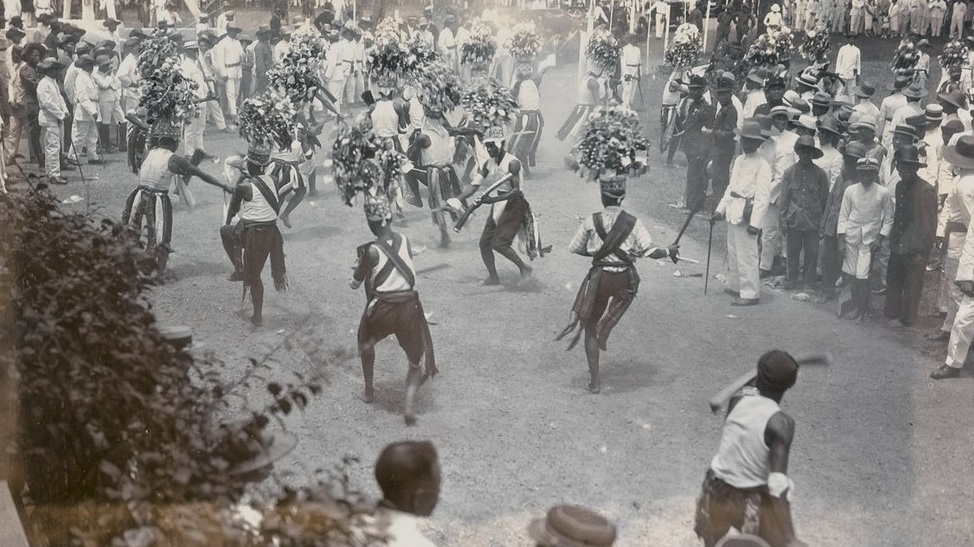
Among the most striking performance traditions is kabasaran, a renowned Minahasan war dance that recalls the region’s former warrior societies. Dancers wear red costumes—once reserved for accomplished headhunters—and perform vigorous movements with swords and shields, accompanied by loud cries. Kabasaran closely resembles the Moluccan cakalele war dance. Another enduring and popular form is the katrili dance, originally of Portuguese origin, which has been fully incorporated into Minahasan culture. Katrili performances typically feature European-style ballroom dresses for women and formal Western attire for men, reflecting the deep historical influence of European contact on Minahasan performing arts.
Spanish influences also persist, particularly in traditions such as Christmas mumming with masked dances and the katrili, a form of square dancing. For competitions, tourism and welcoming ceremonies for honored guests, several dances of indigenous origin have been adapted into secular and modern forms. Group dances (maengket) include maowey kamberu, which depicts the rice harvest; marambak, representing house construction; and lalayaan, which provides opportunities for interaction between men and women.
Minahasan Work, Education and Economic Activity
About 76 percent of the population earns its livelihood from agriculture. Fertile inland valleys with volcanic soils support wet-rice cultivation, but maize grown in swidden fields is the primary staple, supplemented by tubers and peanuts. Farmers also raise cabbage, Chinese cabbage, onions, tomatoes, water spinach, and chilies for local markets. [Source: A. J. Abalahin, “Worldmark Encyclopedia of Cultures and Daily Life,” Cengage Learning, 2009]
Major cash crops include coffee—though its importance has declined since the nineteenth century—coconut for copra and oil, and, since the 1970s, cloves. Demand from the domestic cigarette industry has made cloves highly profitable; during the brief harvest season, nearly all available labor is mobilized, often disrupting schools and offices. Most land is individually owned, though some kin-based holdings remain, and disputes over inheritance are common. Sharecropping is widespread, and villagers may use communal land with the approval of the village head.
Beyond farming, people engage in livestock raising and fishing, usually carried out by family units using outrigger or non-outrigger canoes. Each village typically has at least one carpenter, while tibo brokers buy produce from farmers and transport it to market by cart. Despite its long exposure to European influence, modern Minahasa is not noted for distinctive traditional dress, as indigenous weaving traditions disappeared in the nineteenth century.
Minahasans have historically enjoyed far greater access to formal education than most other Indonesian groups. The Dutch colonial administration and Christian missions actively promoted schooling, and by 1900 Minahasa had roughly one school per 1,000 inhabitants, compared with one per 50,000 in Java. This advantage led to Minahasans being disproportionately represented in the colonial and later national military and bureaucracy. Often avoiding manual labor and commerce, many migrated to other regions to fill shortages of civil servants. By 2005, North Sulawesi’s literacy rate had reached 98.87 percent, a level high by national standards and even exceeding that of the Jakarta region.
Image Sources: Wikimedia Commons
Text Sources: “Encyclopedia of World Cultures Volume 5: East/Southeast Asia:” edited by Paul Hockings, 1993; National Geographic, Live Science, Metropolitan Museum of Art, Natural History magazine, Australian Museum, New York Times, Washington Post, Los Angeles Times, Smithsonian magazine, Encyclopedia.com, Times of London, Library of Congress, The Conversation, The New Yorker, Time, BBC, CNN, Reuters, Associated Press, AFP, Lonely Planet Guides, Google AI, Wikipedia, The Guardian and various websites, books and other publications.
Last updated January 2026