
MENTAWAI LIFE

Mentawai maintain the lifestyle and traditions that their ancestors passed down thousands of years ago. Women and children have traditionally gathered wild yams and other wild food and fruits, raised taro and tubers and gathered shellfish while the men hunted and fished and grew bananas. The Mentawai keep pigs, dogs, monkeys, and sometimes chickens as pets. They live in group organized around clans and clan houses. In recent years many of them have take up rice farming. [Source: “Encyclopedia of World Cultures, East and Southeast Asia” edited by Paul Hockings (G.K. Hall & Company, 1993); Reimar Schefold and John Beierle, e Human Relations Area Files (eHRAF) World Cultures, Yale University, September 1999]
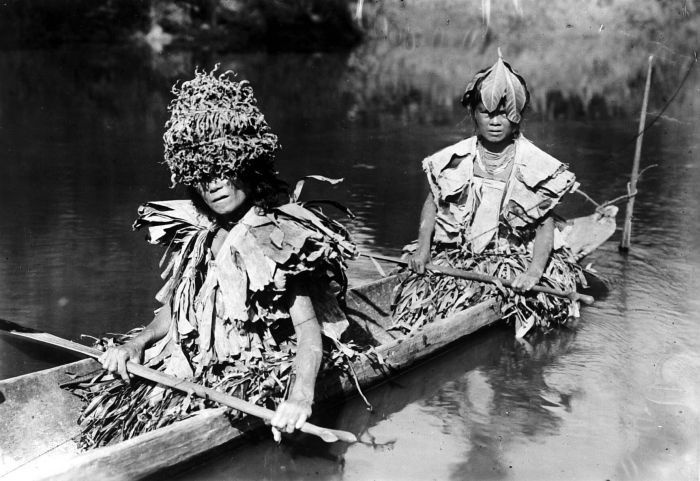
Mentawai men traditionally wore loincloths made from the bark of the breadfruit tree or gum tree and women wore skirts made of the same material and small sleeveless vests made from palm or banana leaves. Both sexes wore red-colored rattan around their arms, fingers and toes, covered their bodies with tattoos and adorned themselves with necklaces and flowers in their hair and ears. Mentawai traditionally wore long hair and sharpened their teeth with a chisel for aesthetic reasons. These customs are now rare.
Mentawai arts were closely tied to daily life and ritual, drawing inspiration from nature, such as the movements and sounds of animals. Singing, dancing, and music accompanied ceremonies like weddings, funerals, and healing rituals led by shamans (sikerei). There were no professional artists, but skill in crafts such as woodcarving was highly valued. Today, many of these traditional art forms are declining.
Illness and death were central concerns in Mentawai life, shaped by high mortality rates. Sickness was believed to result from disturbing forces in the environment, and healing required calming offended spirits and neutralizing their harmful bajou. This work was carried out by shamans, known as kerei, who were trained through elaborate initiation rituals to communicate with spirits. They used special clothing, trance, dance, and ritual objects—often plants with symbolic powers—to heal. Similar methods were believed to be used by practitioners of black magic, but for harmful purposes.
RELATED ARTICLES:
MENTAWAI: HISTORY, LANGUAGE, SOCIETY, FAMILIES factsanddetails.com
MENTAWAI RELIGION CHRISTIANITY, SPIRITS, SHAMAN factsanddetails.com
MENTAWAI TATTOOS factsanddetails.com
MENTAWAI ISLANDS: RAIN FORESTS, SURFING, UNIQUE TRIBES factsanddetails.com
Mentawai Hunting and Food
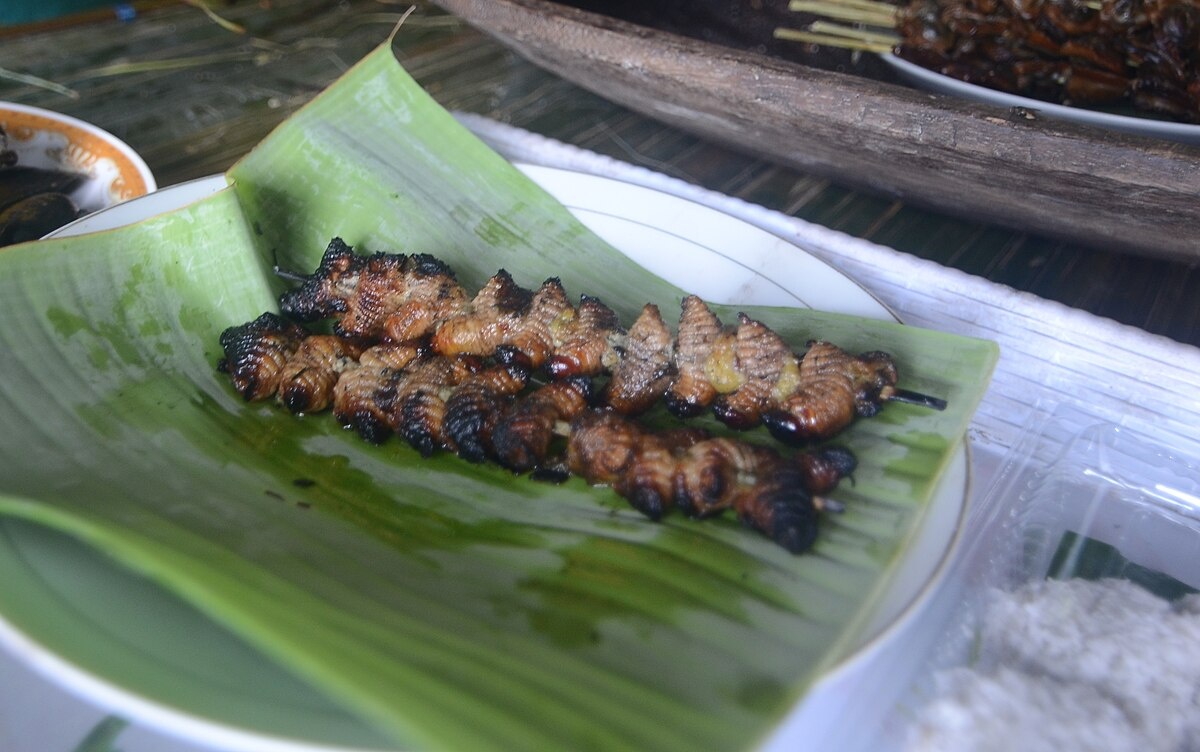
The Mentawai people's staple foods are sago, taro and fish. Sago is a a type of flour from ground palm medulla, which is usually grilled. They obtain sago from the abundant swamp forests surrounding their homes. Pork is one of the Mentawai's traditional foods and is always present, especially at ceremonies and celebrations. Everyday meals are supplemented with fish caught in rivers, swamps, and coastal waters, often by women. [Source: “Encyclopedia of World Cultures, East and Southeast Asia” edited by Paul Hockings (G.K. Hall & Company, 1993); Reimar Schefold and John Beierle, e Human Relations Area Files (eHRAF) World Cultures, Yale University, September 1999]
Men hunt warthogs, birds, deer and primates with dogs, spears, and poisoned arrows. Coastal communities sometimes catch turtles. The meat is often consumed as part of major rituals. Dogs are usually used to spot the animals during hunting, then the prey is shot with a bow and poisonous arrow. The poison comes from a local leaf which has been mashed and mixed with water. Small animals are hunted by women.
Mentawais usually eat sago with other dishes, such as fish and pork. These villages also grow rice. Locals in these villages use wood to cook. They also preserve their tradition of community meals. Each dish is served in a single bowl, and family members typically eat from the same bowl simultaneously.
Mentawai Villages and Housing
Mentawai villages are built along river banks and consist of a communal house surrounded by single-story family houses with several families living in a single unit, with single men living in their own quarters. Society is remarkable egalitarian with decisions on matters affecting the whole community are made in a meetings at the communal house. Large meetings are marked with sacrifices of pigs and chickens and certain normal activities become taboo. ~
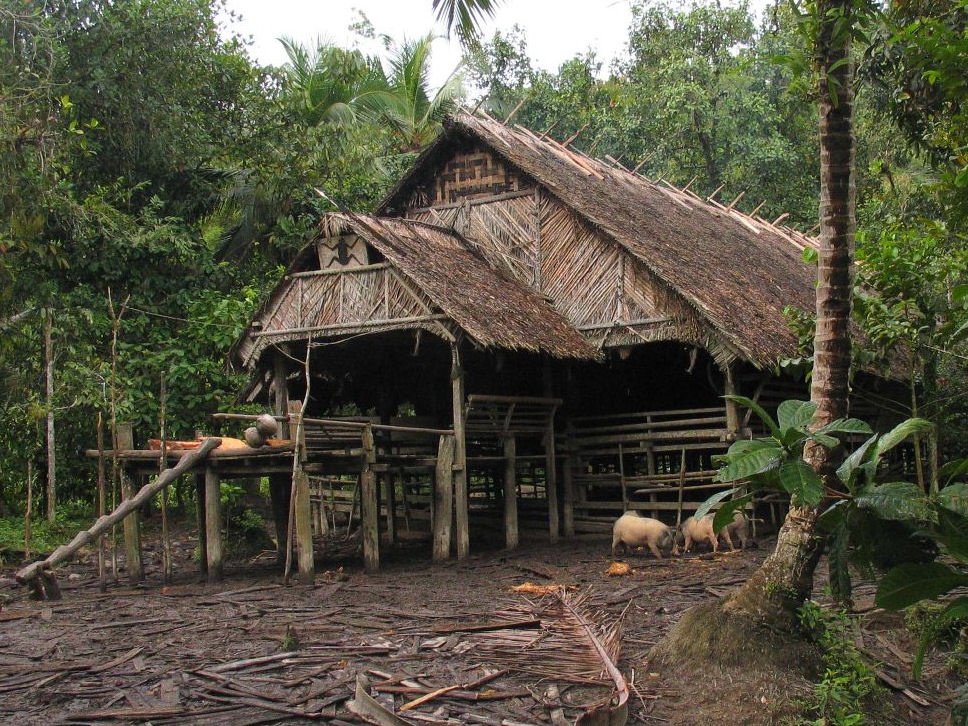
An uma (communal lomghouse) usually housed several families. Smaller dwellings included the lalep, which held a single family, and the rusuk, used by widows and unmarried men. On Siberut, people traditionally lived in local patrilineal groups (uma) of about five to ten families. Each group shared a large communal longhouse, also called umb, which served as the center for rituals and festivals. These uma were scattered along rivers, the main routes of travel and communication. Each uma traced its origins through patrilineal descent to related groups in other valleys and ultimately to an ancestral uma in northwestern Siberut. Daily life, however, often took place in field houses (sapou), where families stayed while working in their gardens.
On Sipora and Pagai, members of different clans traditionally formed larger ritual communities centered on a single, very large uma, sometimes housing more than twenty families. Some families also maintained their own small houses (lalep) beside the communal house. Groups of uma commonly stood close together, forming a village (laggai).
Mentawai Uma
Traditional Mentawai communal longhouses are called "umas". They are made of wooden scaffolds and house several families each. They are built from woven bamboo walls, wooden plank floors raised on stilts, and a grass-thatched roof. Traditionally, it was decorated with the skulls of animals taken in hunts. Due to government restrictions, most traditional longhouses on Sipora and Pagai have disappeared, with only a few preserved in southern Siberut.
The design and use of the uma expressed the Mentawai emphasis on community. All houses stood on stilts and were often richly decorated with carvings and painted panels. Entry was through a notched tree trunk used as a ladder. The front veranda served as a shared space for conversation and receiving guests and was where most men slept. Behind it was a large hall with a central hearth, used for ceremonies, dances, and music, sometimes housing slit drums (tuddukat). A second inner room was reserved for women and small children and contained the bakkat katsaila, a bundle of plants with ritual significance. Cooking for individual families took place there during the day.
Describing his visit to an uma— a traditional Mentawai house, Lars Krutak wrote: “Aman Lau Lau and his youngest son Politik sit beneath the skulls of water buffalo that were killed for his shaman initiation. His uma is massive and houses a family of twelve. Wooden birds dangle from the rafters so that when good spirits (sanitu saukui) come to the uma, they have “toys” to play with.
Aman Lau Lau shows me a death symbol (takep), carved into the trunk of a durian tree, that bears the tracing of the foot of a deceased clan member. Because the dead man was a shaman, the joints of his hands and toes were severed at death so that his magic would leave his body and not enter the uma and cause sickness. Of course, this operation was also necessary since Mentawai shamans hold the souls of their people in their possession. And when they die, they sometimes bring the souls of the living with them into the grave. [Source: Lars Krutak, Tattoo anthropologist +++]
“Game animals that live in the jungle are believed to be the domestic animals of the ancestors. And success in hunting is indicative of the ancestors’ favor. Skulls of monkeys and other animals hang in the uma to please their spirits. Shaman Aman Lau Lau’s beaded headband (luat) serves as a kind of antennae between him and the spiritual realm. It is through these and other devices that the shaman talks to the spirits that visit his uma. Aman Lau Lau’s sister-in-law said, “Our traditional practices are our strength. And they are pleasing to the spirits of our ancestors who invented them.” Python-skinned drums and conch horns announce important messages to people of neighboring umas, sometimes warning them to stay away or challenging them to do better. Successful hunts, a new visitor, a birth or a death are all communicated this way.” +++
Mentawai Subsistence and Economic Activity
The Mentawai support themselves through farming, hunting, fishing, and forest gathering. They clear fields with simple tools and grow crops mainly for daily consumption, including sago, taro, sweet potatoes, yams, vegetables, bananas, coconuts, and other fruits. On Siberut, sago is the main staple and is largely men’s work, while on Sipora and Pagai taro is the main crop and is primarily cultivated by women. Fields are cleared without burning, allowing fruit trees to gradually replace the forest without soil erosion. People also raise pigs and chickens. [Source: Reimar Schefold and John Beierle, e Human Relations Area Files (eHRAF) World Cultures, Yale University, September 1999]
Villagers process sago trees and sometimes trade it for basic foods and motorboats. Forest products such as wood, resin, rattan, cloves, and copra are traded outside the Mentawai Islands. Other necessities are obtained through exchange, especially with traders from Padang. The Mentawai have traditionally not practiced metalworking, weaving, or pottery, but they are skilled carpenters who use complex wooden joints in house construction. In the past they used stone tools, and they continue to make barkcloth for clothing, leaf skirts for women working in gardens, and bamboo utensils, sometimes even for cooking.
Land ownership is organized by clans. A clan claims uncultivated land and waterways discovered by its ancestors, and the branch that settles there works the land and builds an uma. Later arrivals need permission to farm there. Families own the crops they plant as long as the land remains productive, even if they later move, though the land itself returns to the original clan. Land can also be bought—often with pigs—and then becomes the permanent property of the buyer and their descendants.
Impact of Colonialism and Modernization on the Mentawai
Colonial and postcolonial policies severely disrupted Mentawai culture and religion. Before independence, foreign influence weakened indigenous customs, and after independence the Indonesian government continued this process by banning animist religions in 1954, suppressing tattooing, rituals, and Arat Sabulungan. Development programs and religious policies forced integration into mainstream society, leading to the destruction of ritual objects, persecution of shamans (sikerei), and pressure to adopt state-recognized religions and the Indonesian language. [Source: Wikipedia]
Modernization further transformed Mentawai life. Government settlements replaced dispersed longhouse communities, livestock practices were restricted, and only a small minority of Mentawai continued traditional customs, mainly in southern Siberut. Environmental pressures, especially deforestation and threats from logging and plantations, intensified these challenges, compounded by state control over most Mentawai land.
Tourists are encouraged to visit the island of Siberut where they can see "primitive tribal people with tattoos, wearing loincloths." But ironically according to writer Art Davidson the Siberut people are forbidden to wear their traditional tribal clothing unless tourists are around." [Source: "Endangered People" by Art Davidson]
Since 2009, Mentawai communities have increasingly sought to protect their culture and environment. Community-led initiatives, including indigenous education programs, aim to preserve traditional knowledge, strengthen cultural identity, and improve well-being while coexisting with formal national education systems.
Mentawai Life Threatened by Deforestation
Lars Krutak wrote: “Off in the forest, the drone of an illegal logger’s chainsaw is a constant companion. What remains of Siberut’s once vast rain forest is not known, and as deforestation continues to plague the region it not only threatens the natural diversity of the island, but the shamanic religion and tattooing practices of the Mentawai people. [Source: Lars Krutak, Tattoo anthropologist +++]
Aman Lao Lao says, “Mentawai culture, including tattooing practices, depends on the rain forest for its existence and meaning, and the degradation of the forest will destroy it and my people if we cannot stop it.” Aman Ipai, another respected elder said, “I am very worried about losing the forest and our tattooing traditions. Because this leads to the loss of everything else in our culture – fromuma building to sago agriculture.” +++
“But as second class citizens on their own island, the shamans of Butui rarely have the opportunity to voice these and other concerns to the outside world. Regardless, they are their people’s mouthpiece, and their voices will not be silenced or ignored, because they will continue to fight to keep what is rightfully theirs. After all, shamanism and tattooing practices have been the basis of Mentawai culture for millennia, and the Mentawai shaman is the “keeper of the rainforest” and everything associated with it.” +++
Image Sources: Wikimedia Commons
Text Sources: “Encyclopedia of World Cultures Volume 5: East / Southeast Asia:” edited by Paul Hockings, 1993; National Geographic; New York Times, Washington Post, Los Angeles Times, Lonely Planet Guides, Library of Congress, Smithsonian magazine, The New Yorker, Time, Reuters, AP, AFP, Wikipedia, BBC, CNN, and various books and other publications.
Last Updated December 2025