
OTTERS
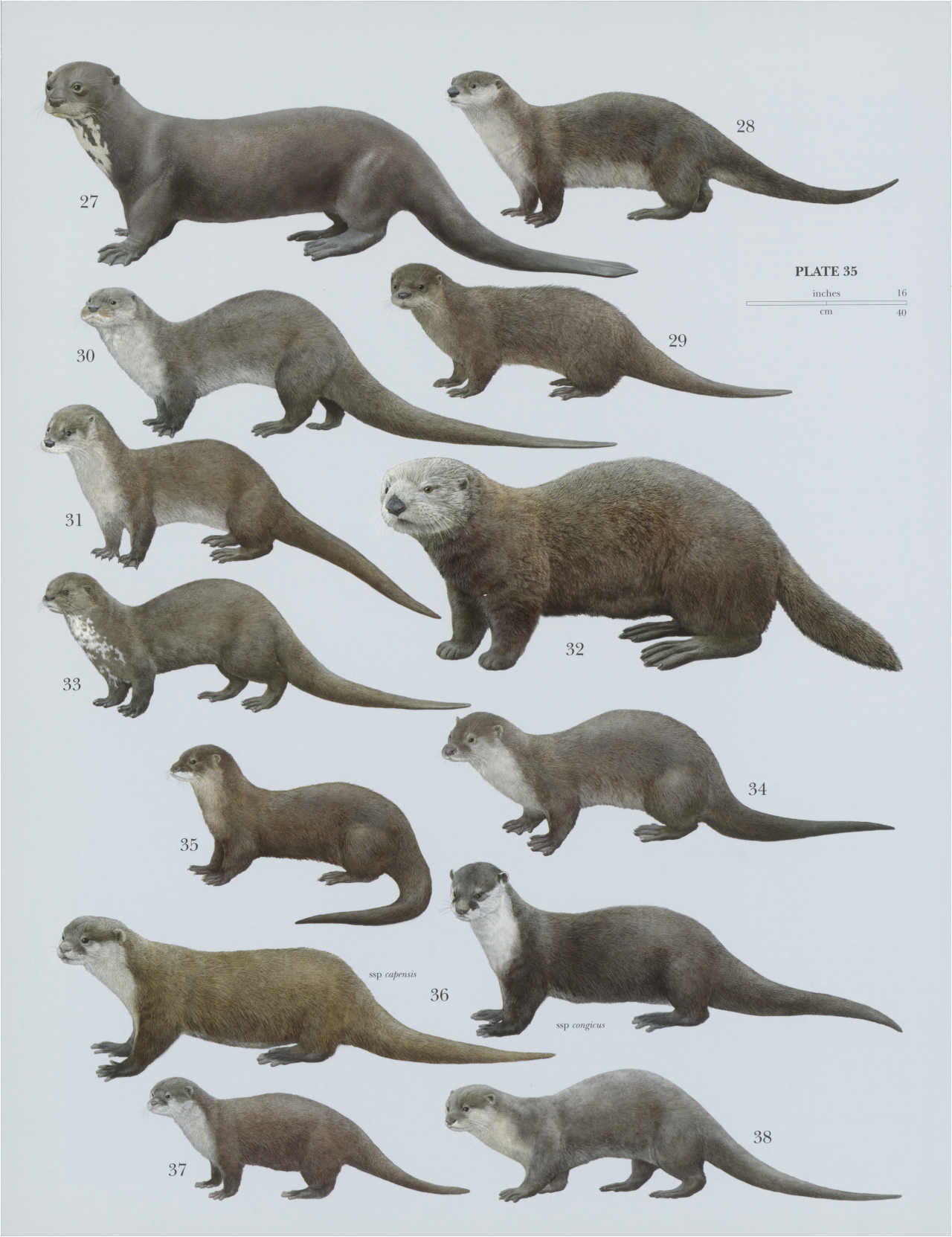
Some Otter species: 27) Giant Otter (Pteronura brasiliensis), 28) North American River Otter (Lontra canadensis), 29) Marine Otter (Lontra felina), 30) Neotropical Otter (Lontra longicaudis), 31) Southern River Otter (Lontra provocax), 32) Sea Otter (Enhydra lutris), 33) Spotted-necked Otter (Hydrictis maculicollis), 34) Eurasian Otter (Lutra lutra), 35) Hairy-nosed Otter (Lutra sumatrana), 36) African Clawless Otter (Aonyx capensis), 37) Asian Small-clawed Otter (Aonyx cinereus), 38) Smooth-coated Otter (Lutrogale perspicillata)
Otters are carnivorous mammals in the subfamily Lutrinae. All 13 extant otter species are semiaquatic, aquatic, or marine. Lutrinae is a branch of the Mustelidae family, which includes weasels, badgers, ferrets, mink, wolverines and other animals. Otters generally make their homes in dens known as holts or couches. Names to used to describe them are like those used for other animals: such as dogs or boars for males, bitches or sows for females, and pups or cubs for offspring. Groups of otters can be referred to as bevies, families, lodges, romps, or rafts when in water, indicating their social and playful nature. Otters are known for their distinct feces, termed spraints, which can vary in smell from freshly mown hay to putrefied fish. [Source: Wikipedia]
Otters are expert swimmers and one of the few animals that can catch fish underwater. Otters generally feed on fish and other water creatures such as frogs. Sometime they also eat land creatures such as snakes and mice. They are also famous for their playfulness. There are two kinds of otters — land otters and sea otters. Land otters of various kinds are found in small numbers, scattered around the globe, in lakes, streams and swamps. Sea otters are found in north Pacific along the coast of California, British Columbia, Alaska and eastern Russia. Otters exhibit a varied life cycle. They can live up to 16 years, with their diet mainly consisting of fish but sometimes eat frogs, birds, or shellfish, depending on the species and habitat. Otters are distinguished by their long, slim bodies, powerful webbed feet for swimming, and their dense fur, which keeps them warm and buoyant in water. They are playful animals, engaging in activities like sliding into water on natural slides and playing with stones.
Otters were hunted and trapped for their pelts using darts, arrows, nets, snares, traps, guns and dogs, especially the otterhounds. In China it was common for the royalty to wear robes made from otter pelts. The tails of otters were often made into items for men’s hats and belts. Some types of mittens for children were made from otter furs. In some Native American cultures, otters are considered totem animals. Norse mythology tells the story of a dwarf named Ótr that took the form of an otter. The otter is held to be a clean animal belonging to Ahura Mazda in Zoroastrianism, and taboo to kill. In popular Korean mythology, it is said people who see an otter (soodal) will attract 'rain clouds' for the rest of their lives. In the Buddhist Jataka tales, The Otters and The Wolf, two otters agreed to let a wolf settle their dispute in dividing their caught fish but it was taken away by the cunning wolf. Otters are still used by humans for fishing in Bangladesh. [Source: Wikipedia]
Otters have disappeared from many places they were once plentiful. They have been hurt by hunting, deforestation and erosion, draining of swamps. water pollution and competition from other animals. The surviving number of Eurasian otters is unknown. They are largely gone from many countries but are making a comeback in some places. Their decline is attributed to habitat loss, pollution, depletion of fish and other food sources. DDT is blamed on the disappearance of otters from some parts of Europe.
RELATED ARTICLES:
OTTER ATTACKS, CANNIBALISM AND INFANTICIDE factsanddetails.com ;
OTTERS IN ASIA: SPECIES, CHARACTERISTICS, BEHAVIOR AND REPRODUCTION factsanddetails.com
SEA OTTERS: CHARACTERISTICS, BEHAVIOR AND REPRODUCTION factsanddetails.com
SEA OTTERS AND HUMANS: HISTORY, PELTS, ATTACKS, CONSERVATION factsanddetails.com
Mustelids
Otters are mustelids (Mustelidae), a diverse family of carnivoran mammals, including weasels, badgers, otters, stoats, mink, sables, ermine, fishers, ferrets, polecats, martens, grisons, wolverines, hog badgers, honey badgers and ferret badgers. Mustelids, make up the largest family within Carnivora with about 66 to 70 species in eight or nine subfamilies and 22 genera. Skunks were considered a subfamily within Mustelidae, but recent molecular evidence has led their removal from the mustelid group. They are now recognized as a their own single family, Mephitidae. [Source: Wikipedia, Matt Wund, Animal Diversity Web (ADW) |=|]
Mustelids inhabit all continents except Australia and Antarctica, and do not live on Madagascar or oceanic islands. They are found in diverse terrestrial and aquatic habitats in temperate, tropical and polar environments — in tundra, taiga (boreal forest), conifer forests, temperate forests, deserts, dune areas, savanna, grasslands, steppe, chaparral forests, tropical and temperate rainforests, scrub forests, mountains, lakes, ponds, rivers, streams. coastal brackish water, wetlands such as marshes, swamps and bogs, suburban areas, farms, orchard and areas near rivers, estuaries and intertidal (littoral) zones.
Mustelids vary greatly in behavior. They are mainly carnivorous and exploit a wide diversity of both vertebrate and invertebrate prey, with different members specializing in certain kinds of prey. Most mustelids are adept hunters with some weasels able take prey much larger than themselves. Many species hunt in burrows and crevices; some species have evolved to become adept at climbing trees (such as martens) or swimming (such as otters and mink) in search of prey. Wolverines can crush bones as thick as the femur of a moose to get at the marrow, and have been seen attempting to drive bears away from their kills. Mustelids typically live between five and 20 years in the wild. |=|
See Separate Article: MUSTELIDS: CHARACTERISTICS, BEHAVIOR, REPRODUCTION, TYPES, SPECIES factsanddetails.com
Otter Characteristics
Otters are semi-aquatic mammals, with long, streamlined bodies, short legs with webbed feet and a cute whiskered face. Weighing around 9 to 11 kilograms (20 to 25 pounds) and reached lengths of 1.4 meters (4½ feet), including their powerful, tapered 60 centimeter (two-foot) -long tail, they have wide, rounded heads, small ears, and nostrils that can be closed underwater. The vibrissae (whiskers) are long and thick, reflecting their importance in sensory perception. Their fur is dark-brown, glossy and thick and features ling, silky guard hairs[Source: Tanya Dewey and Eric J. Ellis, Animal Diversity Web (ADW) |=|]
Otters have powerful webbed feet used to swim. Most have sharp claws on their feet and all except the sea otter have long, muscular tails. They have very soft, insulated underfur, which is protected by an outer layer of long guard hairs. This traps a layer of air which keeps them dry, warm, and somewhat buoyant under water. Several otter species live in cold waters and have high metabolic rates to help keep them warm. David Attenborough wrote: “Otters, anatomically, are very like large weasels. Their sharp spiky canine teeth and shearing carnassials that served them so well on land are equally well suited to dealing with slippery fish. They have dealt with he problems of chilling by developing a very fine fur. Its outer layer is relatively coarse, being made of long guard hairs. Beneath that, however, the fur is thick and so wooly that it traps air and forms very effective insulation indeed.
“Swimmer, needless to say, use their limbs in a very different way from runners. The otters have converted their feet into paddles simply by growing webs of skin between their toes. They have also developed strong muscles at the base of the tail so that they are able too use it like a rudder. The need to breath air, however, is still a major problem for them and they usually have to snatch a breath every half minute or so when they are in the water. Nevertheless, the are much skilled swimmers, so athletic and so bursting with energy, that even with this handicap, they can pursue and out-swim fish."
Otter Hunting and Prey
Some otters are experts at opening shellfish. Others are active hunters, chasing prey in the water or searching the beds of rivers, lakes or the seas. And others are skilled at hunting on land. In Scotland they hunt rabbits and mark land territories with droppings on particularly rocks. They also sometimes hunt in the sea. Prey-dependence leaves otters very vulnerable to prey depletion.
Eurasian otters must eat 15 percent of their body weight each day, and sea otters 20 to 25 percent, depending on the temperature. In water as warm as 10°C (50 °F), an otter needs to catch 100 grams (3.5 ounces) of fish per hour to survive. Most species hunt for three to five hours each day and nursing mothers up to eight hours each day. [Source: Wikipedia]
Prey is captured with the mouth. Mainly slow, non-game fish species such as suckers, are taken. Otters use their long whiskers to detect organisms in the substrate and the dark water. Prey is eaten immediately after capture, usually in the water, although larger prey is eaten on land. North American river otters are sometimes taken by bobcats, coyotes, birds of prey, alligators, and other large predators. They mainly escape predation through their agility in the water and on land, their vigilance, and their ability to fiercely defend themselves and their young. [Source: Animal Diversity Web (ADW)]
Otter Behavior
Otters are natatorial (equipped for swimming), motile (move around as opposed to being stationary), sedentary (remain in the same area), territorial (defend an area within the home range), solitary and social (associates with others of its species; forms social groups). North American river otters otters have large home ranges, between two and 78 kilometers of waterway, and are constantly on the move within this range. Home range sizes vary considerably, presumably based on the abundance of food resources and habitat quality. Despite these large ranges, river otters are only slightly territorial and generally practice mutual avoidance. Males generally have larger home ranges than females. [Source: Tanya Dewey and Eric J. Ellis, Animal Diversity Web (ADW) |=|]
Otters are excellent swimmers and divers, able to stay underwater for up to eight minutes. They are also fast on land, capable of running at up to 29 kilometers per hour. North American river otters normally hunt at night, but can be seen at all times of day. Different species vary in their social structure, some being largely solitary, while others live in groups – in a few species these groups may be fairly large.Individuals live alone or in family groups, typically females and their young. Otters are wide ranging animals. They sometimes venture up to 50 miles from their den in search of food or a mate. They do no hibernate.
Otters are one of the few animals that seems to get a lot of joy out of playing as an adult. Their favorite activity seems to be sliding down muddy river banks. Play activities include mud and snow sliding, burrowing through the snow, waterplay and playing with stones and prey. Many "play" activities actually serve a purpose. Some are used to strengthen social bonds, to practice hunting techniques, and to scent mark. North American river otters are energetic animals. They have very high metabolism rates, and this means they need to eat a lot to keep going.
Although otters have effective adaptions for water, most species of otter spend most of their lives out of water. Most species live beside water, enter it only to hunt or travel, If they spend too much time in the water their fur becomes waterlogged. During the day they are usually asleep in their dens beside a river bank. Even at night, when they do much of their fishing, they tend to rest on he bank for a few hours around midnight,
Otters rest, raise newborns and sleep in dens. They prefer to build their dens in river banks. Many dens have their entrance in the water and an eight to nine meter (26 to 30 foot) tunnel that slants upwards to a place underground above the water level. Sometimes there is also a land exit.Otter generally only mate once a year, in the early spring. The young are raised inside a nest or burrow. North American river otters build dens in the burrows of other mammals, in natural hollows, such as under a log, or in river banks. Dens have underwater entrances and a tunnel leading to a nest chamber that is lined with leaves, grass, moss, bark, and hair. |=|
Otters communicate with vision, touch, sound and chemicals usually detected by smelling. They also leave scent marks produced by special glands and placed so others can smell and taste them. Their large and abundant vibrissae (whiskers) are very sensitive. They are used extensively in hunting, as the sensitivity of smell, vision, and hearing are reduced in water. North American vocalize with whistles, growls, chuckles, and screams. They also scent mark using paired scent glands near the base of their tails or by urinating/defecating on vegetation within their home range. These glands produce a very strong, musky odor. They also use touch and communicate through posture and other body signals. |=|
Otter Mating, Reproduction and Offspring
North American river otters are polygynous (males have more than one female as a mate at one time) and engage in delayed implantation (a condition in which a fertilized egg reaches the uterus but delays its implantation in the uterine lining, sometimes for several months). They engage in seasonal breeding. Breeding occurs once a year, usually in late winter and early spring. The average gestation period is two months but the young may be born up to a year after mating because of delayed implantation. The number of offspring ranges from one to six, with the average number of offspring being two or three. [Source: Tanya Dewey and Eric J. Ellis, Animal Diversity Web (ADW) |=|]
Males and females do not associate except during the mating season. Males often breed with several females, probably those whose home ranges overlap with their own. Young are altricial, meaning they are relatively underdeveloped at birth, and raised inside a nest in the den. Parental care is provided by females. The average weaning age is three months and the age in which they become independent ranges from six to 12 months. Females and males reach sexual or reproductive maturity at two to three years.
Females give birth to, nurse, and care for their young in a den near the water. Births occur from November to May, with a peak in March and April. Otter cubs are born with fur, but are otherwise helpless. They open their eyes at one month of age and begin to leave their mother at six months old.
Otter Species
The 13 species of otter range in adult size from 0.6 to 1.8 meters (2.0 to 5.9 feet) in length and 1 to 45 kilograms (2.2 to 99.2 lb) in weight. The Asian small-clawed otter is the smallest otter species and the giant otter and sea otter are the largest.
The Asian small-clawed otter is found in rivers and marshland in India, southern China and Southeast Asia. The smallest otter, they live in family units and east small aquatic creatures such as crabs and fish. Adults are 40 to 60 centimeters in length and weigh between three and five kilograms. Babies weigh 500 grams at birth. In China and Bangladesh domesticated otters are used to catch fish. They come when called and are playful creatures.
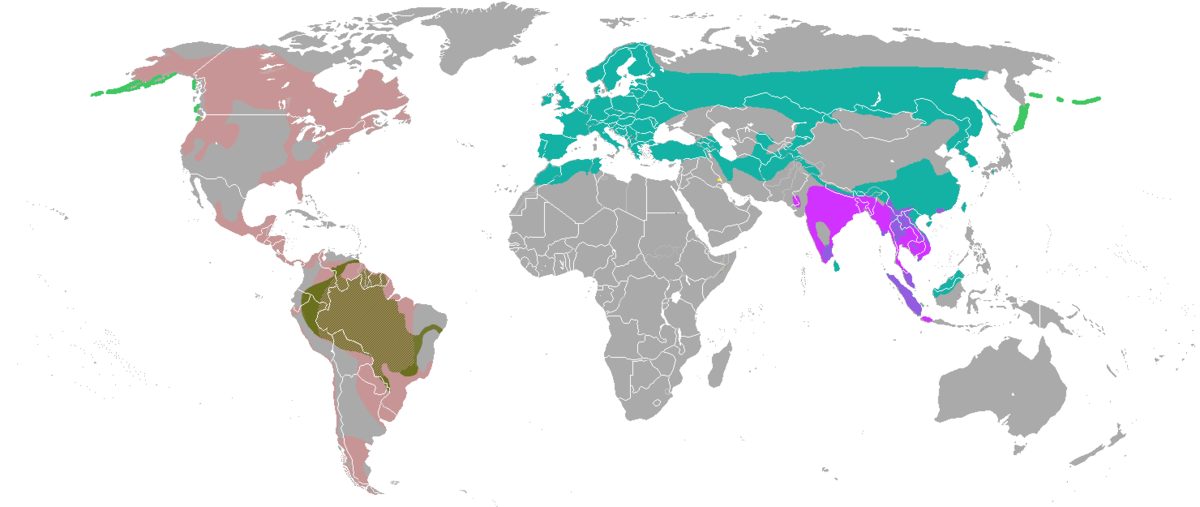
Smooth-coated otters (Lutrogale perspicillata) are found throughout much of southern Asia, south of Himalayass, from India in the west to Vietnam in the east and southward as far as Sumatra and Java. There is a a small isolated population in the marshes of Iraq. They typically live four to 10 years years. One lived in captivity for 20 years and four months.[Source: Timothy White, Animal Diversity Web (ADW) /=]
See Separate Article: OTTERS IN ASIA: SPECIES, CHARACTERISTICS, BEHAVIOR AND REPRODUCTION factsanddetails.com
Eurasian Otters
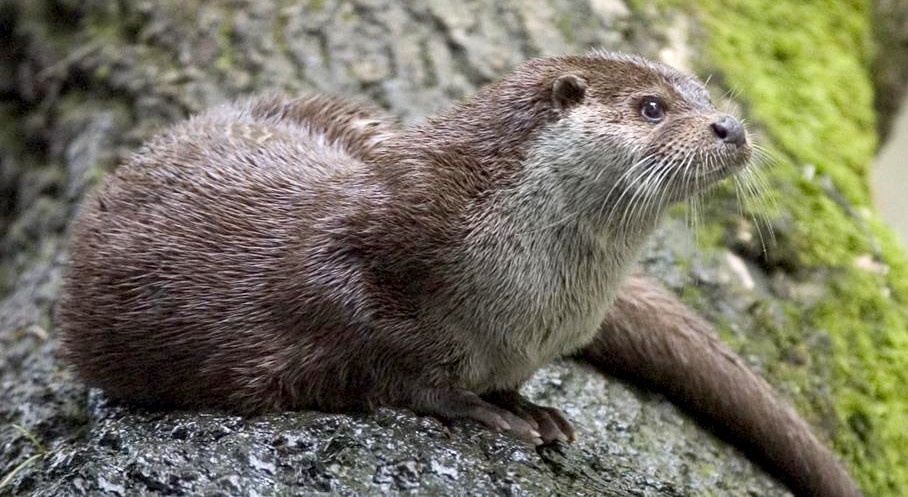
Eurasian otters (Lutra lutra) are also known as the European otters, Eurasian river otters, European river otters, common otters, and Old World otters. They have a head and body length of 60 to 80 centimeters (2 to 2.7 feet), with a 30 to 45 centimeter (1 to 1.5 foot) tail, and weighs 6 to 12 kilograms (13.2 to 26.4 pounds). Rarely seen, they are elusive, largely nocturnal and often live in inaccessible places. Their average basal metabolic rate is 25.104 watts. Their average lifespan in captivity is 22 years.
Eurasian otters are found in and around rivers, lakes, ponds, streams, marshes, coastal areas, seacoasts, freshwater and peat swamp forests, rice fields, fjords, caves, and terrestrial habitats adjacent to waterways in Europe, Asia and North Africa. They inhabits most of Eurasia south of the tundra line. Eurasian otters forage in water and nest on land and make their homes in covered dens and dry resting sites in earth tunnels, tree roots, boulder piles, shrubs, and banks. Within their territory of 2.5 to 10 square kilometers (one to four square miles), each individual otter has fixed locations for getting into and out of the water, rolling, sunbathing, and sliding on "otter stairways". [Source: Susan Kennedy, Animal Diversity Web (ADW) |=|]
Eurasian otters eat fish, crustaceans, clams, small mammals and amphibians, birds, eggs, insects, worms, and a small amount of vegetation. They use their vibrissae (whiskers) as sensing organs underwater to monitor the movements of fishes and other prey. River otters hunt and feed several times a day, consuming about one kilogram of food daily. |=|
On the International Union for Conservation of Nature (IUCN) Red List Eurasian otters are listed as Near Threatened. They are uncommon in many places they were once widespread. They have been overhunted. Their pelts were considered valuable and made into coats and other garments. In the past river otters were killed because they were considered to competition to fishermen. A bounty was paid by the Swiss goverment for each otter killed.
Eurasian Otter Behavior
Eurasian otters are often solitary animals who temporary pair up to mate. Mothers are found with young. Sometimes they form loosely knit groups of up to six animals. They have been observed playing — sliding down mudbanks or snowdrifts on their bellies. Juvenile and adult Eurasian otters play, trot, gallop, slide, and chase each other in water. This behavior is believed to help young otters developed their hunting techniques. [Source: Susan Kennedy, Animal Diversity Web (ADW) |=|]
Eurasian otters can stay underwater for up to two minutes and are most active at dusk and during the night. Their sense of touch via their vibrissae (whiskers) is important for locating fish in the water when hunting. Eurasian otters can be very are vocal. They have more than a dozen identified calls including ones for alarm, greeting, and mating. Among their vocalizations are of short, shrill whistling, yelps, whimpers, and high pitched screams of distress. Eurasian otters have paired scent glands at the base of their tail which give off a heavy, musky smell. Scent markings are a form of communication that provides information on territorial boundaries, identity, and sexual state of each otter. Otters not only mark vegetation and logs with their scent but cover their fur as well.
Eurasian otter females have a continuous estrus cycle. The main mating season is from February to March and in July. Mating can take place either in water or on land. Gestation lasts 60 to 70 days. Young are altricial, meaning they are relatively underdeveloped at birth. Parental care is provided by females. Typically, a female raises one to three cubs alone. Cubs weigh 100 to 122 They open their eyes after one month and they begin to leave the nest after two months. Weaning occurs at around three months. The young stay with their mothers for up to 14 months and reach sexual maturity after two or three years. Mothers teach their young ishing skills and provides other tips for survival. |=|
North American River Otters
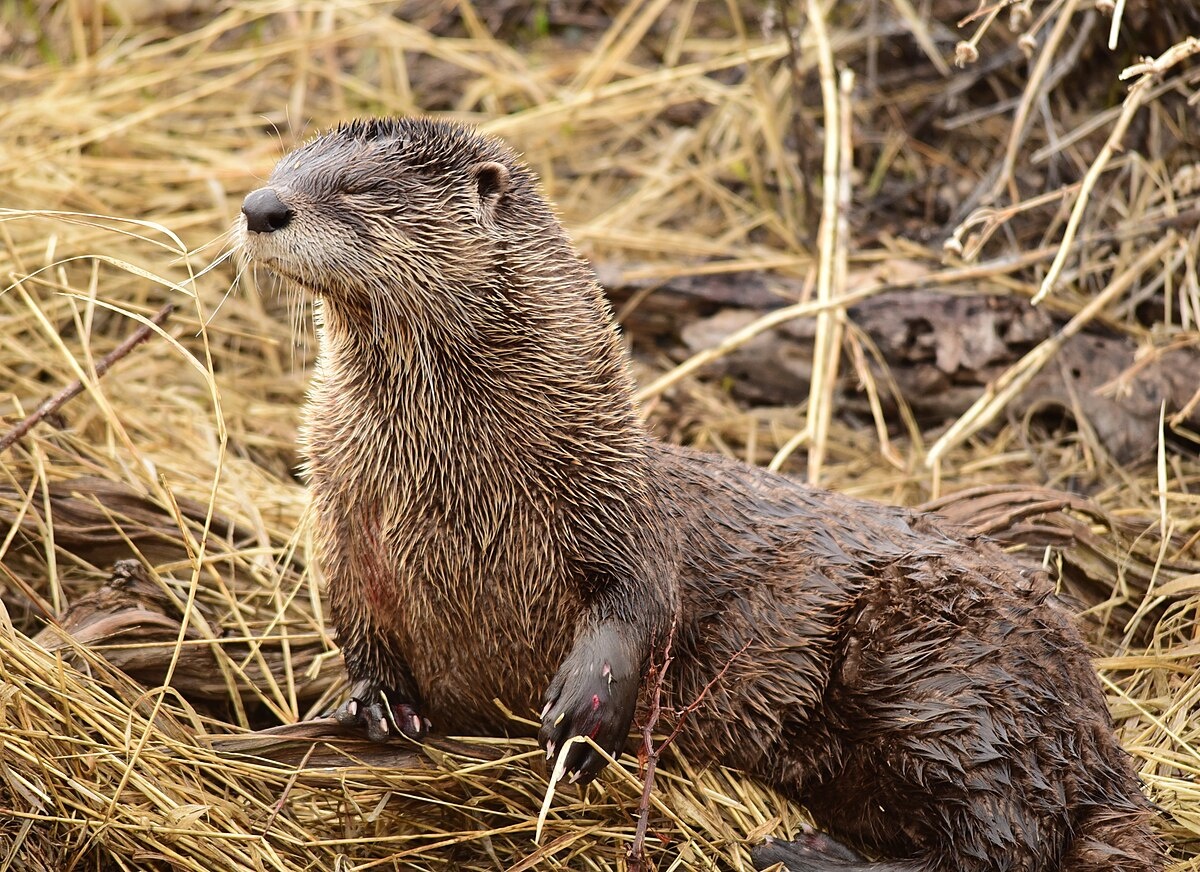
North American river otters (Lontra canadensis) are also known as northern river otters and river otters. They are muscular animals and can weigh up to 14 kilograms (30.8 pounds. Equipped with sharp canines and claws, they have large home territories and may travel many kilometers along a river for food and shelter. North American river otters can live up to 21 years in captivity. They normally live about eight to nine years in the wild.
North American river otters live throughout Canada and the United States, except for dry areas in southern California, New Mexico, Texas, Nevada, the Great Plains and Colorado. In Mexico they are found in the delta areas of the Rio Grande and Colorado river. Otters were locally extirpated from portions of their range but reintroduction and conservation efforts have helped them comeback.
North American river otters are found anywhere there is a good food supply and easy access to water. They can live in freshwater and coastal marine habitats, and are found in rivers, lakes, marshes, swamps, estuaries, ponds, streams, wetlands such as marshes, swamps and bogs, and areas adjacent to rivers and other water bodies. They can tolerate a variety of environments and climates, including cold and warmer latitudes and high elevations. North American river otters do seem to be sensitive to pollution and disappear from areas with polluted waters. [Source: Tanya Dewey and Eric J. Ellis, Animal Diversity Web (ADW) |=|]
North American river otters are not endangered. They are designated as a species of least concern on the International Union for Conservation of Nature (IUCN) Red List. In CITES (Convention on International Trade in Endangered Species of Wild) they are in Appendix II, which lists species not necessarily threatened with extinction now but that may become so unless trade is closely controlled. Populations were once extirpated through many parts of their range, especially near heavily populated areas in the midwestern and eastern United States. Reintroduction and conservation efforts have resulted in recolonization of areas where they were previously extirpated and the stabilization of long-standing populations. Fragmented populations in the midwestern United States and the Appalachian mountains are considered vulnerable.
North American river otters were hunted fairly heavily hunted and trapped until a few decades ago in part for their attractive and durable fur. In the 1983-84 hunting season, 33,135 otters were taken with an average selling price of $18.71 per pelt. Otters are stll an important source of income for many people in Canada. River otters also eat "trash fish" that compete with more economically desirable game fish. |=|
North American River Otter Characteristics and Diet
North American river otters range in weight from five to 14 kilograms (11 to 31 pounds) and have a head and body length ranging from 88 to 130 centimeters (35 to 51 inches). Sexual Dimorphism (differences between males and females) is present: Males are larger than females. [Source: Tanya Dewey and Eric J. Ellis, Animal Diversity Web (ADW) |=|]
The fur is dark brown to almost black above and a lighter color ventrally. The throat and cheeks are usually a golden brown. The fur is dense and soft, effectively insulating these animals in water. The feet have claws and are completely webbed. Body length ranges from 889 to 130 centimeters and tail length from 300 to 507 millimeters. Weight ranges from five to 14 kilograms. Males average larger than females in all measurements. |=|
North American river otters are primarily carnivores (eat meat or animal parts) but are also recognized as omnivores (eat a variety of things, including plants and animals) and piscivores (eat fish). They mainly eat aquatic organisms such as amphibians, fish, turtles, crayfish and crabs. Other animal foods include birds, mammals, amphibians, eggs insects, non-insect arthropods such as spiders and aquatic crustaceans. Among the plant foods they eat are leaves, roots, tubers, macroalgae.
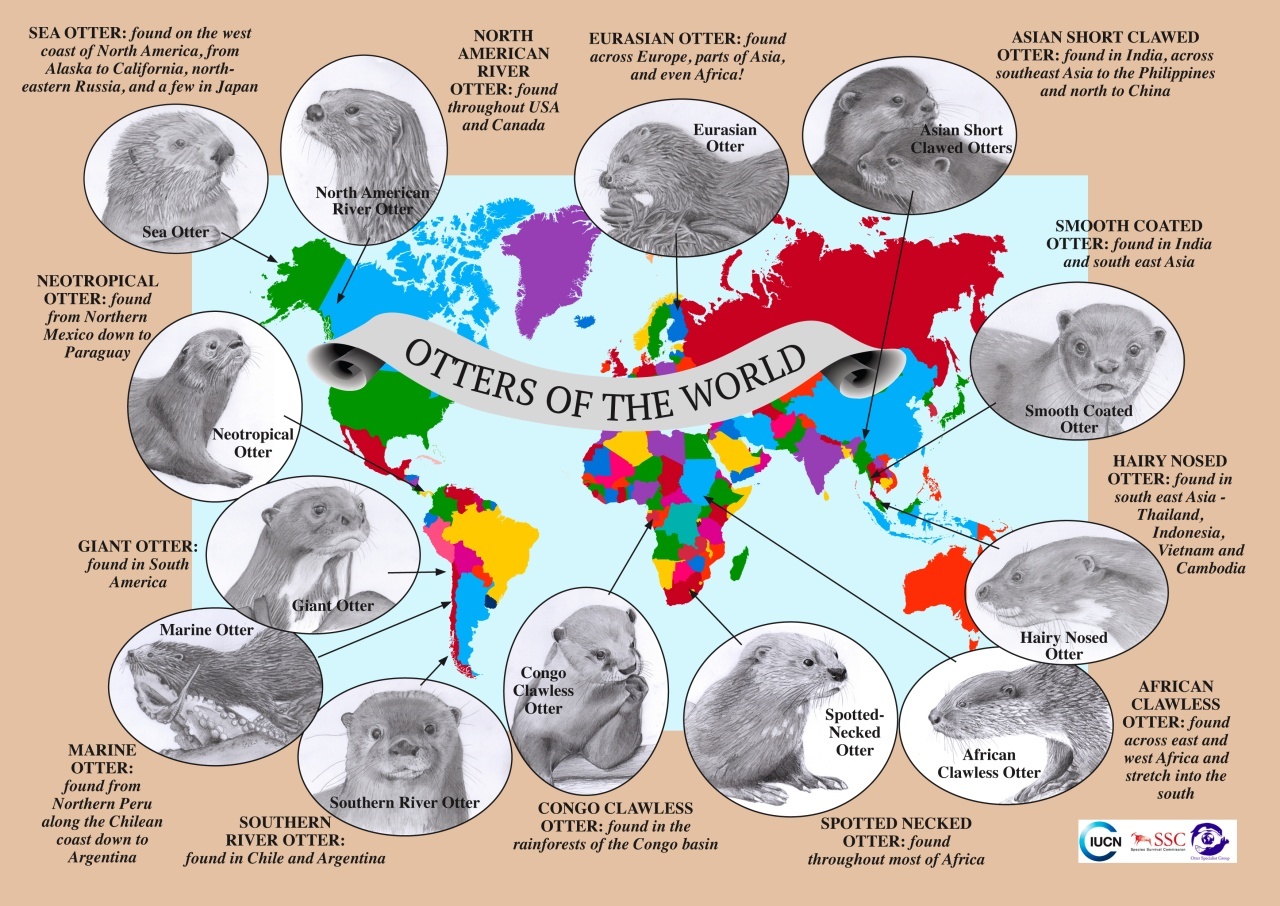
Some Otter species: 27) Giant Otter (Pteronura brasiliensis), 28) North American River Otter (Lontra canadensis), 29) Marine Otter (Lontra felina), 30) Neotropical Otter (Lontra longicaudis), 31) Southern River Otter (Lontra provocax), 32) Sea Otter (Enhydra lutris), 33) Spotted-necked Otter (Hydrictis maculicollis), 34) Eurasian Otter (Lutra lutra), 35) Hairy-nosed Otter (Lutra sumatrana), 36) African Clawless Otter (Aonyx capensis), 37) Asian Small-clawed Otter (Aonyx cinereus), 38) Smooth-coated Otter (Lutrogale perspicillata)
Image Sources: Wikimedia Commons
Text Sources: Animal Diversity Web animaldiversity.org ; National Geographic, Live Science, Natural History magazine, CNTO (China National Tourism Administration) David Attenborough books, New York Times, Washington Post, Los Angeles Times, Smithsonian magazine, Discover magazine, The New Yorker, Time, BBC, CNN, Reuters, Associated Press, AFP, Lonely Planet Guides, Wikipedia, The Guardian, Top Secret Animal Attack Files website and various books and other publications.
Last updated June 2025